





Carrara marble serves as the starting point for a reflection on transformation, ecological loss, and the possibilities for a new relationship between humans and nature. This is the theme of (Yours) in the Undoing (Nel (tuo) disfare), an exhibition on view at mudaC—the Carrara Museum of Arts —from September 6, 2026, to January 10, 2027. The exhibition brings together the works of five artists whose contemporary practice focuses on marble: Anna Multone, Francesca Bernardini, Selene Frosini, Silvia Scaringella, and Verena Mayer-Tasch.
The exhibition opens on September 6 at 6:00 p.m. and stems from a collective curatorial project led by Marco Filomeno, Yi-An Kang, Hunor Máté Mészáros, Chih-Ching Peng, and Uliana Seregina—students in the Master’s Program in Visual Arts and Curatorial Studies at NABA – Nuova Accademia di Belle Arti, Milan Campus—under the curatorial supervision of Professor Emanuele Guidi. The exhibition is on view at mudaC, located at Via Canal del Rio 1 in Carrara, and engages in dialogue with the museum’s permanent collection.
The title draws inspiration from the final words of an imaginary letter written by nature—a letter that human beings will never have the chance to read. In Carrara, according to the curatorial concept, those words are symbolically engraved into the marble at the very moment the material is extracted and falls into the quarries. What remains is an echo that is often ignored in the name of progress. This image sparks a reflection on the meaning of “undoing,” understood on the one hand as ruin and on the other as an act of liberation: breaking down established structures to make way for the construction of new forms of thought.
The project also draws on the concept of“better- -ruination” developed by Joanna Zylinska and explores the possibility that the loss of the known world might lead—rather than fueling romantic visions—toward a form of existence that is more deeply intertwined with and shared by nature. The five artists explore this perspective through different practices, united by their use of marble and their exploration of the processes of transformation and renewal of matter.
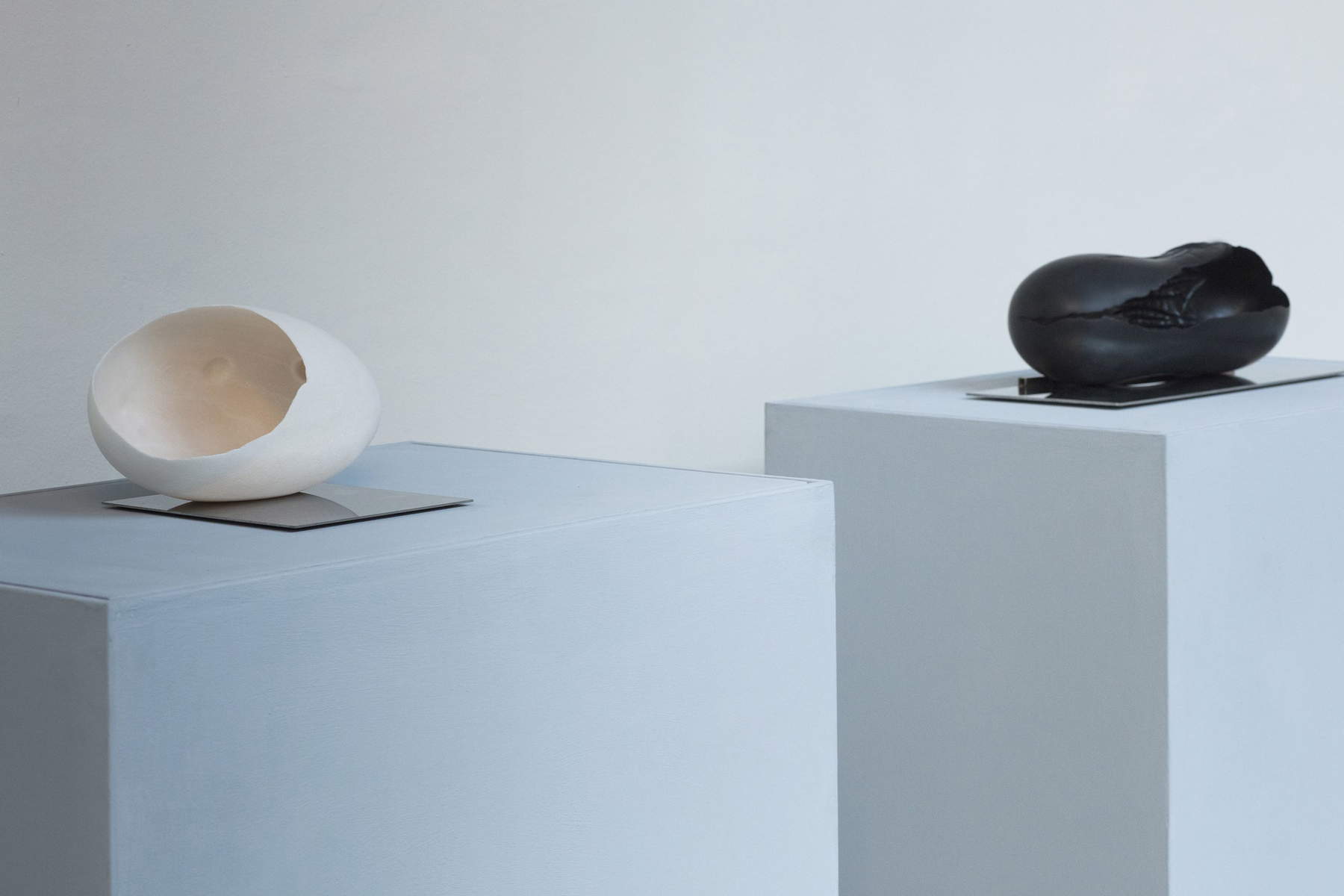
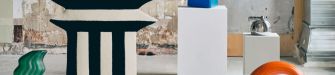
Conceived as a diorama through which the public can move, the exhibition unfolds on the ground floor along a path that leads from ecological loss to the possibility of a new beginning. The itinerary opens with Verena Mayer-Tasch’s series *Fallen Leaves*, composed of leaves carved from marble that evoke a cyclical conception of existence, in which death also represents the condition for new life. Next are *Enwrapping* and *Over the Skin* by Francesca Bernardini, structures designed to protect yet simultaneously open to transformation and rupture.
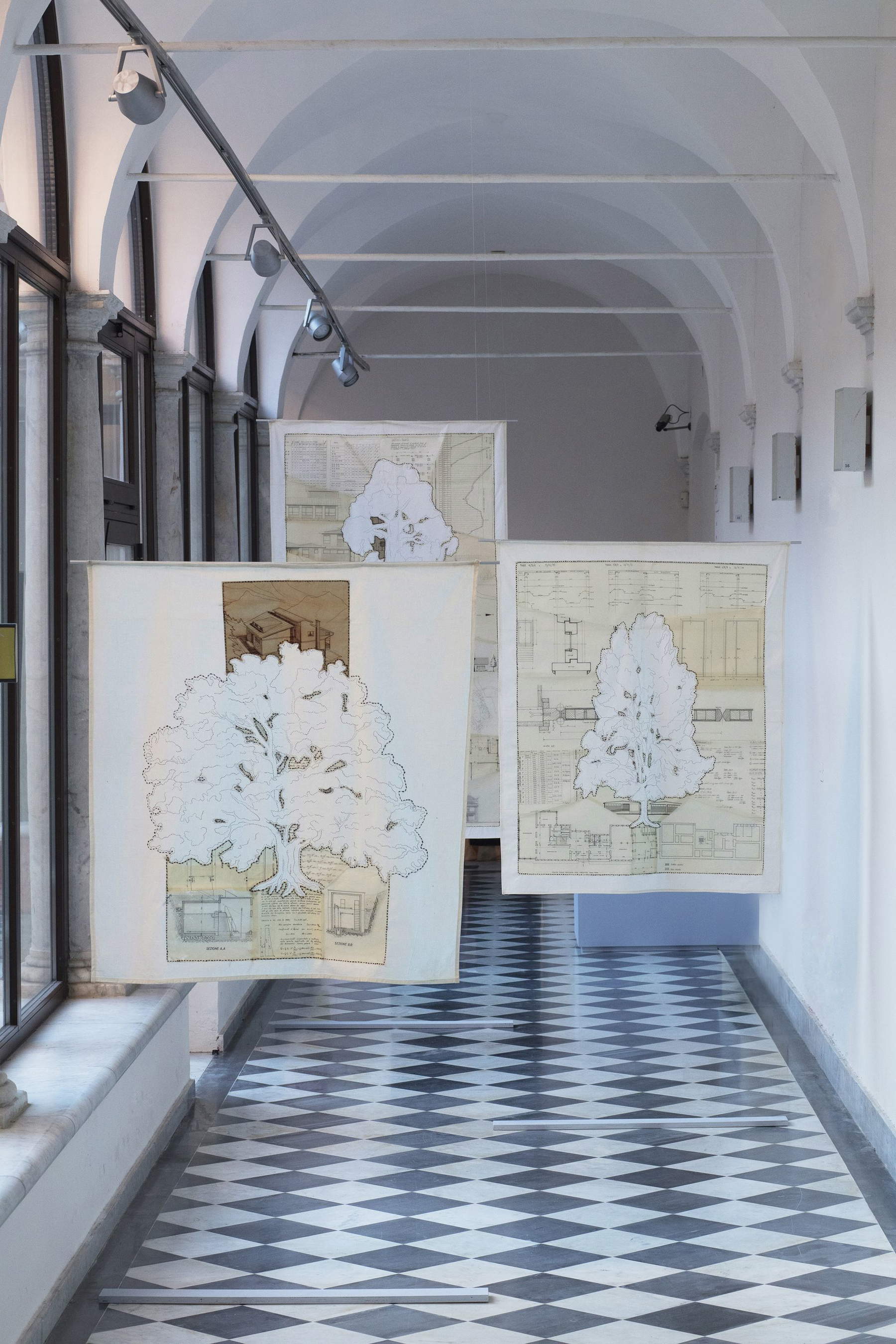
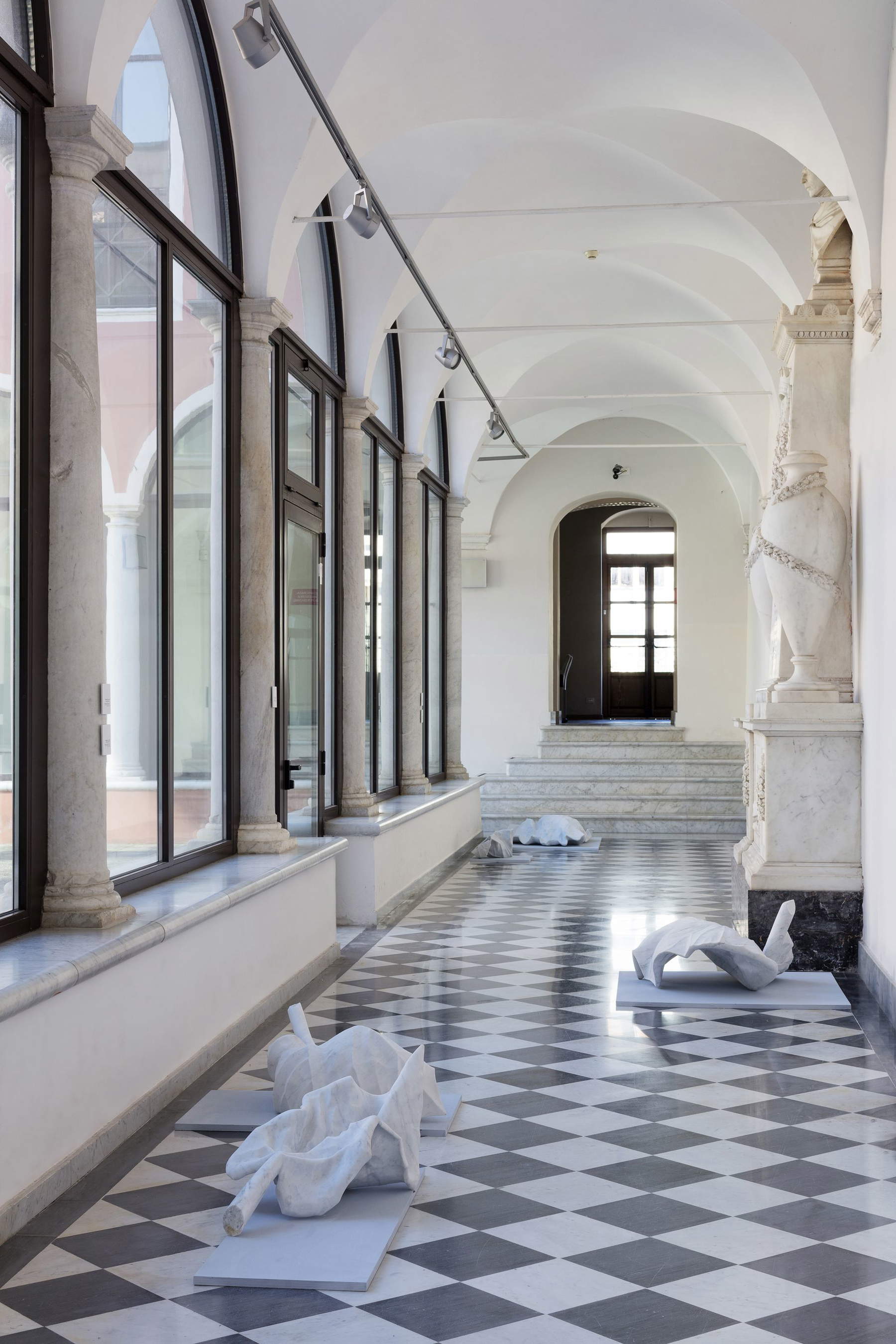
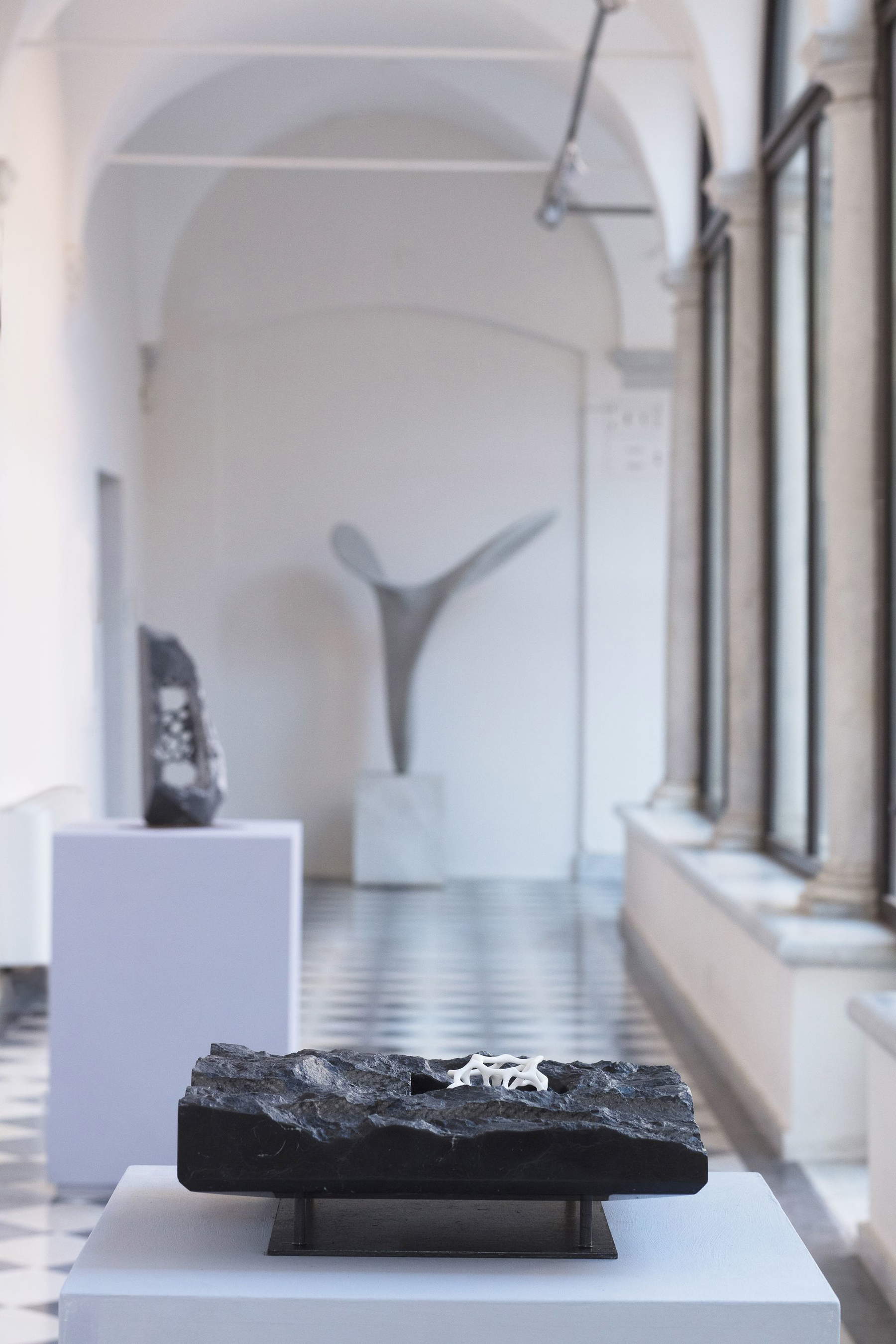
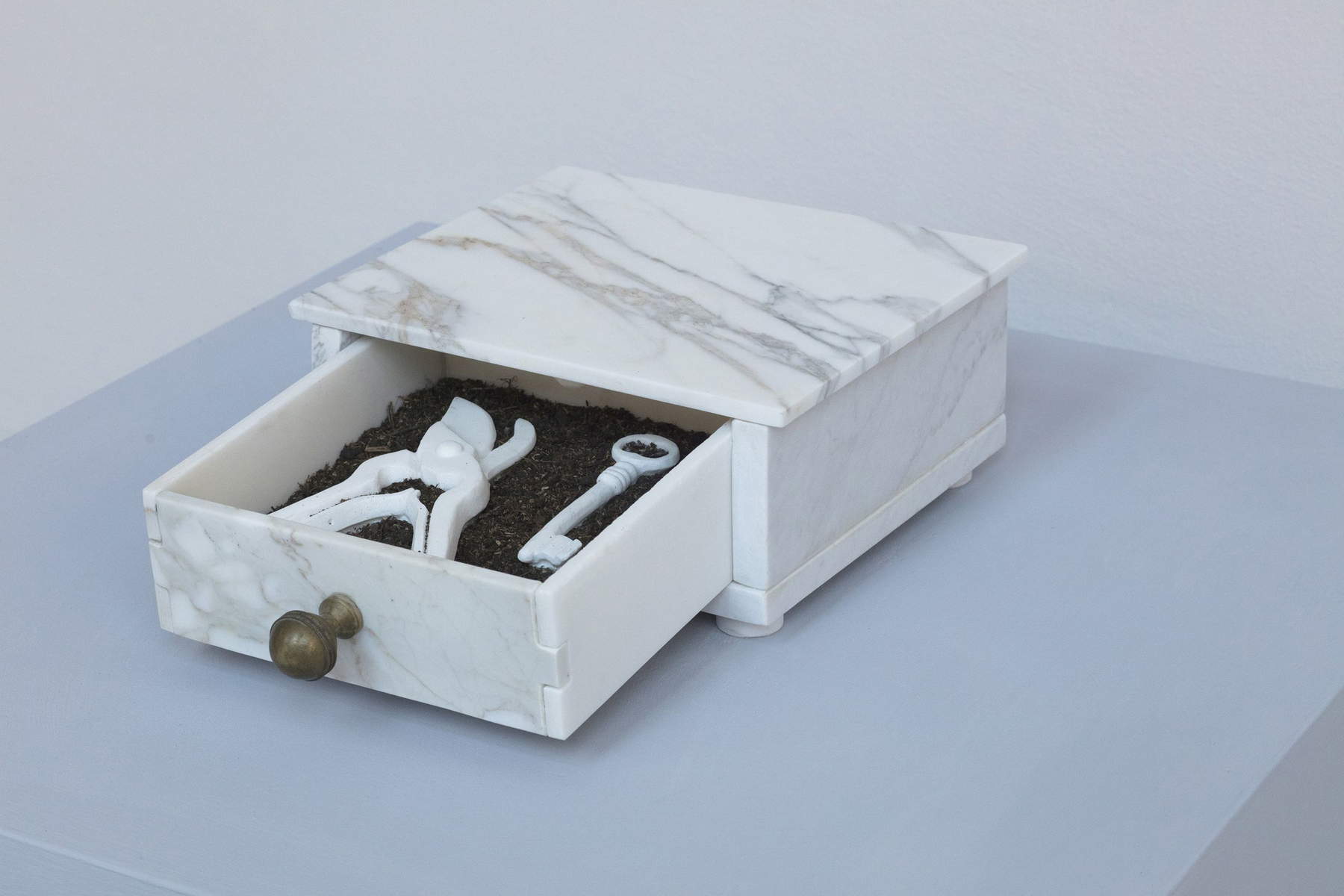
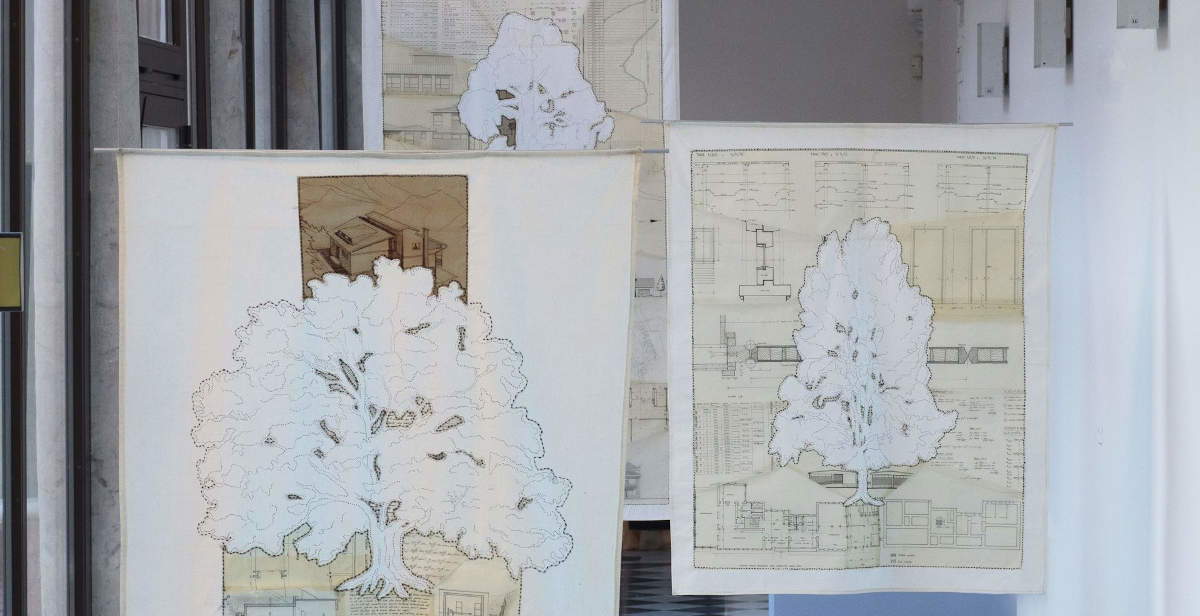
At the center of the exhibition is Memorabilia II by Anna Multone, which presents symbolic tools of human control over nature. The tools are housed inside a drawer that can be opened or closed, evoking the boundary between care and control. At this point, the exhibition changes direction. Silvia Scaringella’s *Planimetrie Naturali* proposes a nature capable of resisting attempts at containment, while Selene Frosini’s sculptures conclude the exhibition with cavities carved into marble, from which organic forms emerge, reminiscent of roots or veins. These are images that evoke new sprouts and the possibility of transforming ruin into a form of rebirth.
The sequence, however, remains deliberately open-ended. If viewed in reverse, in fact, the forms associated with rebirth can be interpreted as a reminder of a world destined to disappear. On the first floor, the exhibition continues by entering into a dialogue with works from mudaC’s permanent collection: forms from the past are juxtaposed with the transformations suggested by the works of the five artists. In this concluding space, “undoing” is once again presented as an opportunity to rethink the relationships between humans, nature, and matter.
The participating artists come from different generations and artistic backgrounds. Anna Multone, born in Borgosesia in 2001, moved to Carrara in 2020 to attend the Academy of Fine Arts. During her studies, she participated in group exhibitions, residencies, symposia, and sculpture workshops in Italy and abroad—in France, Portugal, Greece, and the United States. In 2025, she held her first solo exhibitions, *Terra/Memorie* in Carrara and *Terra/Sacra* at Villa Faraldi, in the province of Imperia.
Francesca Bernardini, born in Carrara in 1974, is a sculptor whose work draws inspiration from the natural microcosm and translates memories, emotions, and personal experiences into organic forms carved from marble. A graduate of the Academy of Fine Arts in Carrara, she trained in the city’s historic workshops and now works at the SGF Scultura studio in Torano, Carrara. Since the early 2000s, her works have been exhibited in Europe, Asia, the Americas, Oceania, and Africa. She has also participated in numerous sculpture symposia, creating monumental works for public spaces.
Selene Frosini, born in Pontedera in 1988, lives and works in Carrara. Her practice explores the expressive possibilities of marble through forms defined by absence, erosion, and spatial tension. A graduate of the Academy of Fine Arts in Florence, she has taken part in international sculpture exhibitions, residencies, and symposia. In 2023, she received the Silver Prize at the LihPao International Sculpture Biennial Award in Taipei.
Silvia Scaringella, born in Rome in 1986, explores in her works the relationships between human and animal behavior, collective systems, and the dynamics of contemporary society. She works primarily with marble, combining anthropological and sociological research with organic sculptural forms. She lives and works between Rome and Carrara. A graduate of the Academy of Fine Arts in Carrara, she also studied at Iwate University in Japan. Her works have been exhibited internationally and are part of permanent public commissions in Italy, Japan, and China, including those at Rome’s Fiumicino Airport and the Fondazione Fiumara d’Arte in Sicily.
Verena Mayer-Tasch, born in Mainz in 1968, is a German sculptor based in Carrara, where she earned her degree in Sculpture from the Academy of Fine Arts in 1996. Her work focuses on the memory of fleeting moments in life—from everyday gestures to objects from childhood, to absent presences and the forms of nature. In 2015, she founded Studio Marmore+ in Carrara. She has participated in international exhibitions and symposia in Europe, Asia, the Middle East, and South America. Her works are included in public and private collections in Argentina, Austria, China, France, Germany, Israel, Italy, Luxembourg, Syria, Turkey, and Uzbekistan.
 |
| In Carrara, five female artists reflect on marble and the transformation of nature |

Warning: the translation into English of the original Italian article was created using automatic tools. We undertake to review all articles, but we do not guarantee the total absence of inaccuracies in the translation due to the program. You can find the original by clicking on the ITA button. If you find any mistake,please contact us.




















 IT
IT FR
FR DE
DE ES
ES CN
CN


