



by Redazione 04/11/2026


Categories: Exhibitions / Disclaimer
In Milan, from November 11 to December 19, 2026, the Doris Ghetta Gallery presents a solo exhibition by artist Alessandro Artini. This new series of paintings features mountains, forests, and waterways that become autonomous landscapes, detached from recognizable places, while a series of portraits introduces a more intimate and psychological dimension.

In Milan, from November 11 to December 19, 2026, the Doris Ghetta Gallery presents *Qui il sentiero si perde* (Here the Path Disappears), a solo exhibition by Alessandro Artini (Tione di Trento, 2000), at its gallery space. The exhibition, which will open on Wednesday, November 11, from 5:00 p.m. to 8:00 p.m., brings together a new series of paintings in which the landscape becomes an entirely imagined space, constructed through memory, personal experience, and painterly invention.


The project marks a shift in the artist’s practice, which until now has been primarily focused on the representation of the Alpine landscape. While in his earlier works Artini maintained a direct connection to existing places, his most recent pieces lack any precise geographical reference. Mountains, forests, waterways, and snow-covered expanses thus compose unprecedented scenes, characterized by an apparent familiarity that, however, finds no counterpart in any real territory.
The exhibition’s title echoes that of the novel of the same name by Antoinette Peské and Pierre Marty, recently published in Italian by Adelphi. In the book, the journey through unknown territories coincides with the gradual loss of points of reference. This theme serves as a metaphor for Artini’s artistic journey: losing one’s way means abandoning predetermined coordinates and opening oneself to new expressive possibilities, allowing the landscape to acquire an identity independent of the observed reality.



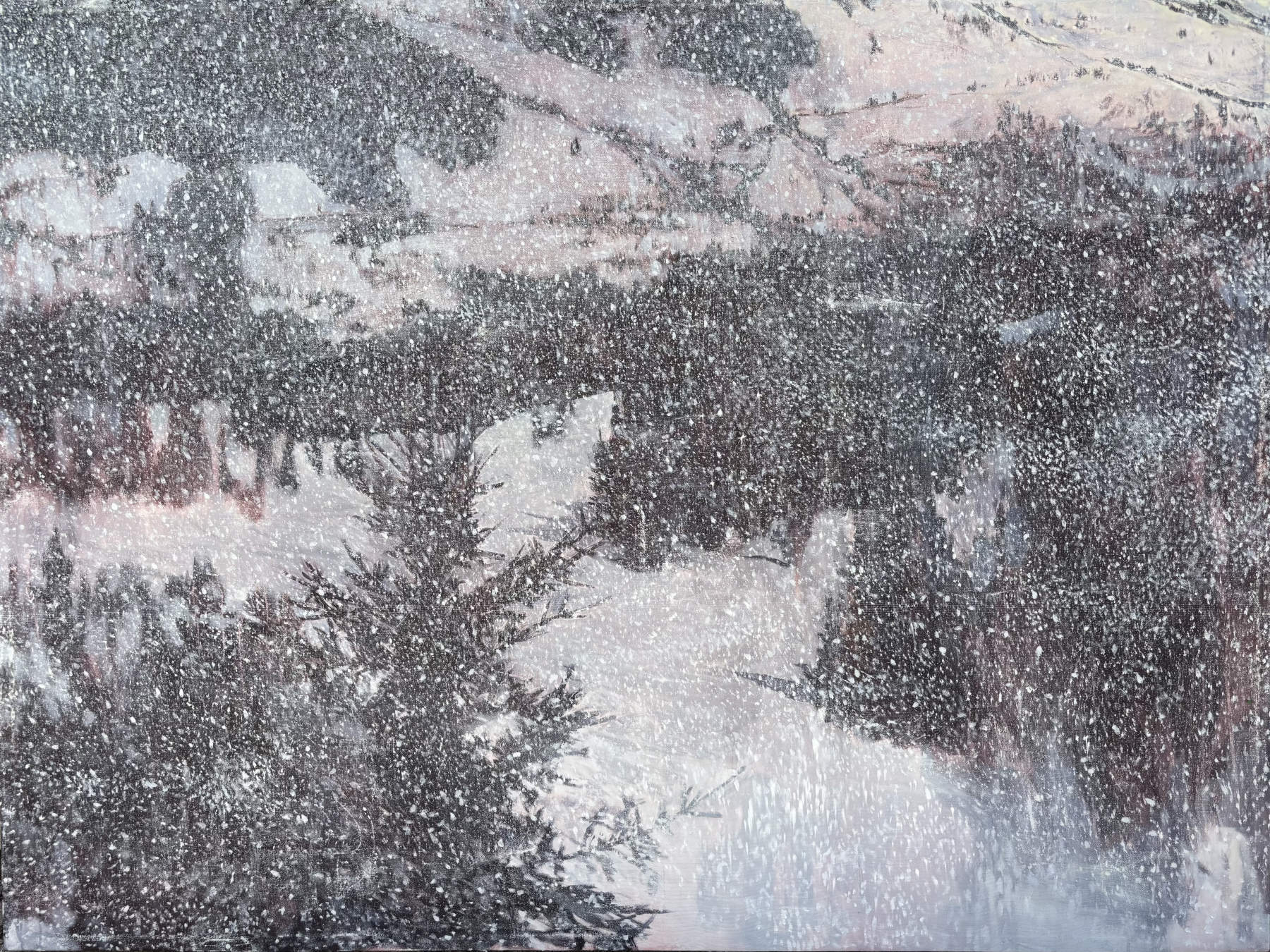
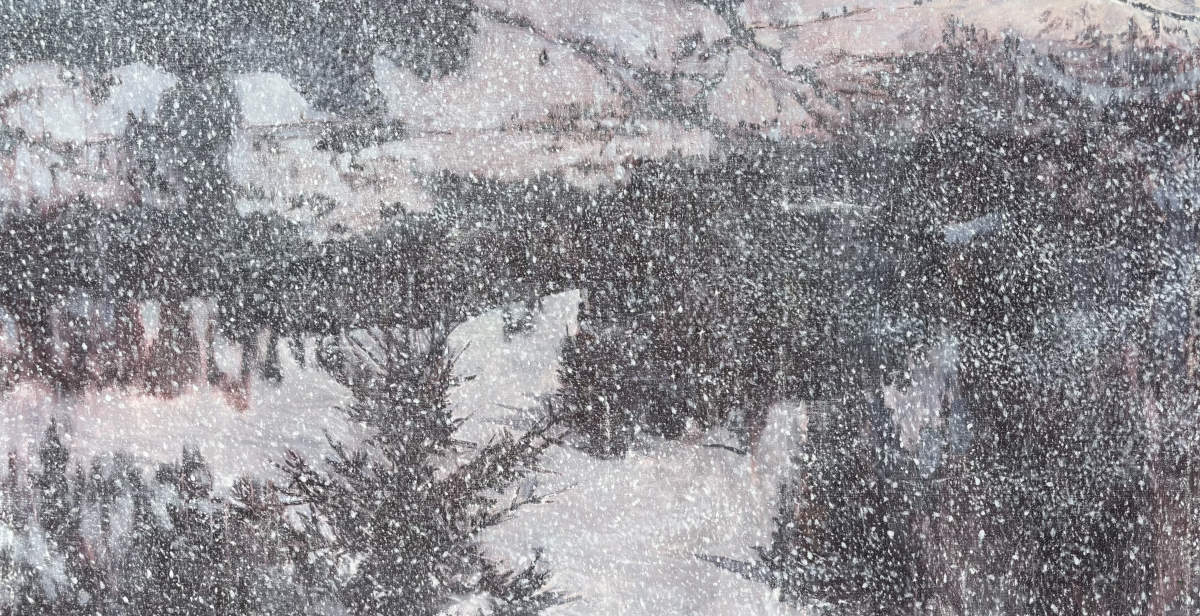
This shift also extends to the painterly language. The palette is enriched with darker, deeper tones, while light takes on a central role in the construction of the images. The atmospheres of dawn and twilight permeate the compositions, alternating between areas of shadow and sudden bursts of light. The result is a series of landscapes with an intimate and introspective quality, in which the recognizability of natural elements coexists with a subtle sense of strangeness.
Alongside the landscapes, the exhibition presents a series of portraits that extend the artist’s exploration into a more intimate realm. The subjects, depicted in mountain attire and sometimes set against snow-covered backdrops, highlight a growing focus on the psychological dimension of the figures. The relationship between the figures and the background maintains a continuity with landscape painting, extending the reflection to the connection between human experience and the natural environment.
*Here the Path Is Lost* deepens a journey begun with *Schneewalzer* (2023) and continued with *It’s Cold Outside* (2025), Artini’s two previous solo exhibitions, both presented by Galleria Doris Ghetta in Ortisei. The Milan exhibition marks another step in the evolution of his artistic language, characterized by a gradual shift away from the direct observation of nature toward a style of painting in which the landscape becomes a personal territory, open to the imagination and expressive freedom.
 |
| In Milan, Alessandro Artini strays from the beaten path and paints landscapes that do not exist |
Warning: the translation into English of the original Italian article was created using automatic tools. We undertake to review all articles, but we do not guarantee the total absence of inaccuracies in the translation due to the program. You can find the original by clicking on the ITA button. If you find any mistake,please contact us.