








From July 30 to November 1, 2026, the underground spaces of the Scavi Scaligeri International Center for Photography in Verona will host a major exhibition dedicated to Dorothea Lange (Hoboken, New Jersey, 1895 – San Francisco, 1965), one of the leading figures in 20th-century documentary photography. Sponsored by the City of Verona and produced by CAMERA – Italian Center for Photography in Turin, the exhibition is curated by Walter Guadagnini and Monica Poggi and brings together approximately 200 photographs, offering a comprehensive overview of the most intense period of the artist’s career.
The exhibition traces the years during which Dorothea Lange documented some of the most dramatic turning points in U.S. history, from the Great Depression to the internment of American citizens of Japanese descent during World War II. Through her lens, themes that remain highly relevant today—such as migration, social inequality, discrimination, and the consequences of environmental crises—emerge, always told through the stories and faces of the people involved.
The exhibition aims to highlight the photographer’s ability to transform the documentation of reality into a powerful human testimony. Each image restores dignity to its subjects and invites the public to reflect on the social transformations and fragilities that characterize contemporary history.
Among the works on display is, of course, *Migrant Mother*, the photograph taken in 1936, which ranks among the most famous photographs of the 20th century. The image, a symbol of the hardships endured during the Great Depression, is considered one of the highest expressions of social photography and continues to this day to represent a universal icon of resilience and the human condition.
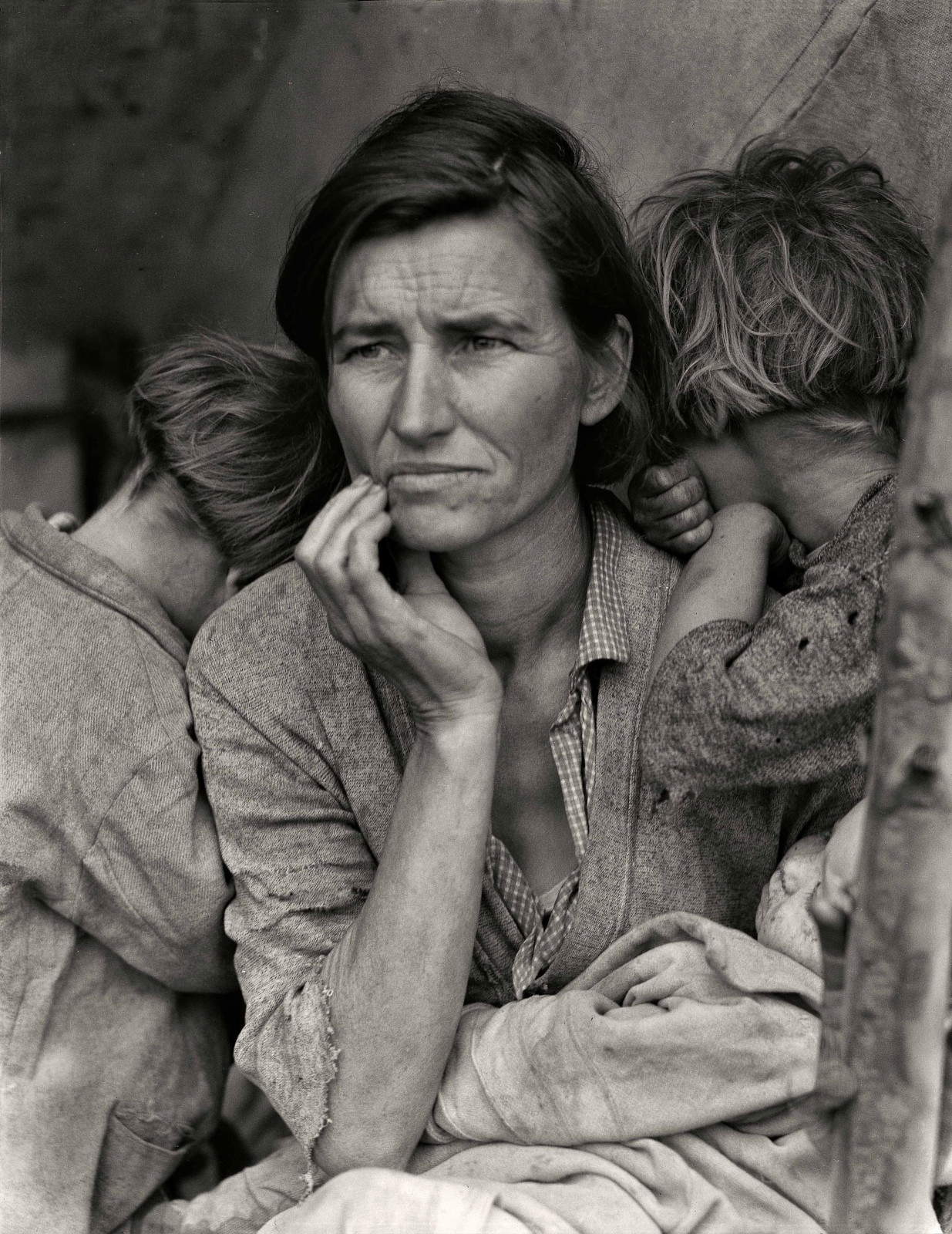
As photography historian John Szarkowski observed, Dorothea Lange was “a social observer by choice and an artist by instinct.” This definition perfectly encapsulates her approach: documentary rigor, profound human sensitivity, and the conviction that photography can be not only a tool for information but also a means of knowledge, memory, and civic engagement.
The exhibition in Verona thus offers an opportunity to rediscover one of the most authoritative voices in 20th-century photography, whose work continues to speak to the present thanks to the power of her images and her extraordinary ability to tell history through people.
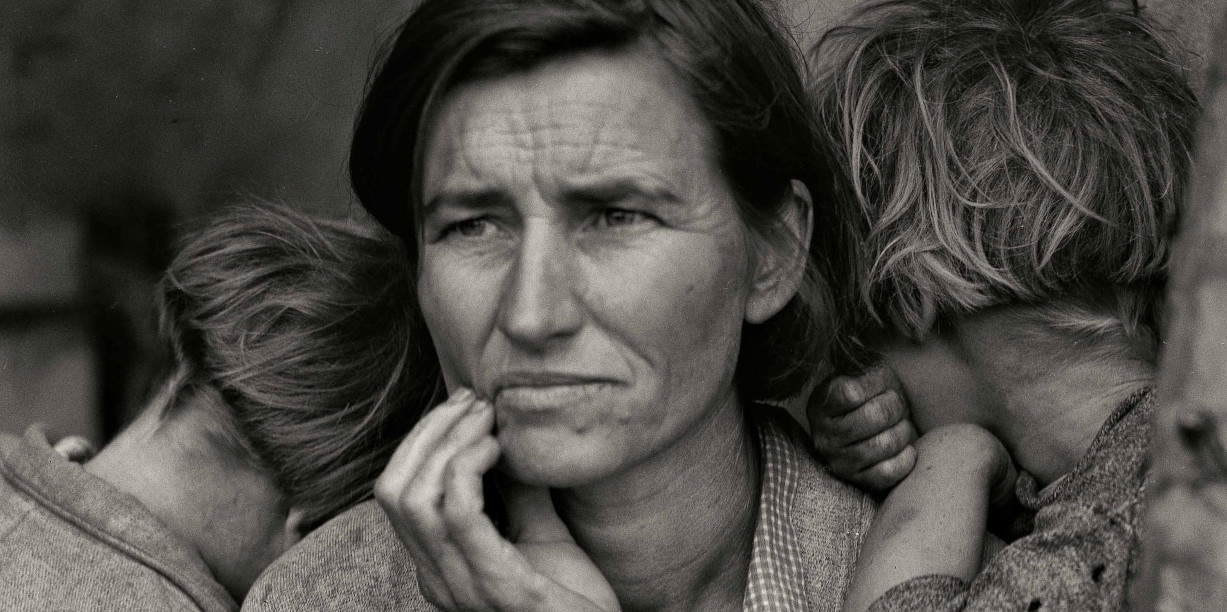 |
| In Verona, a major exhibition dedicated to Dorothea Lange is on view at the Scavi Scaligeri International Center for Photography |

Warning: the translation into English of the original Italian article was created using automatic tools. We undertake to review all articles, but we do not guarantee the total absence of inaccuracies in the translation due to the program. You can find the original by clicking on the ITA button. If you find any mistake,please contact us.
















 IT
IT FR
FR DE
DE ES
ES CN
CN