





From September 15 to October 25, 2026, the Galleria Borghese in Rome presents *All That Changes You. Metamorphosis* (2025), a film installation by British artist and director Isaac Julien, curated by Lorenzo Giusti. The work is presented as part of the exhibition *Metamorphosis: Ovid and the Arts*, a collaborative project between the Rijksmuseum in Amsterdam and the Galleria Borghese, curated by Francesca Cappelletti and Frits Scholten and on view through September 20, 2026.
Designed specifically for the Uccelliera spaces at the Galleria Borghese, the video installation expands the exhibition’s narrative through the language of the moving image. Julien’s work draws inspiration from the cycle of frescoes created by Giulio Romano for Palazzo Te in Mantua and offers a contemporary reinterpretation of the concept of metamorphosis understood as a continuous process of transformation.
The work engages with the central themes of the exhibition dedicated to Ovid’s poem, interweaving myth, different temporalities, and the relationship between the human and the superhuman. Through a complex narrative and visual structure, the film reflects on change as a principle that permeates nature, history, and human experience, offering a contemporary perspective on one of the fundamental themes of Ovid’s *Metamorphoses *.
The film’s protagonists are actresses Sheila Atim and Gwendoline Christie, who portray two celestial and prophetic figures. Their journey spans different eras, landscapes, and architectural settings, guiding the viewer in a reflection on change as a permanent condition of existence and on the possibility of imagining new forms of relationship between human beings, the environment, and other species.
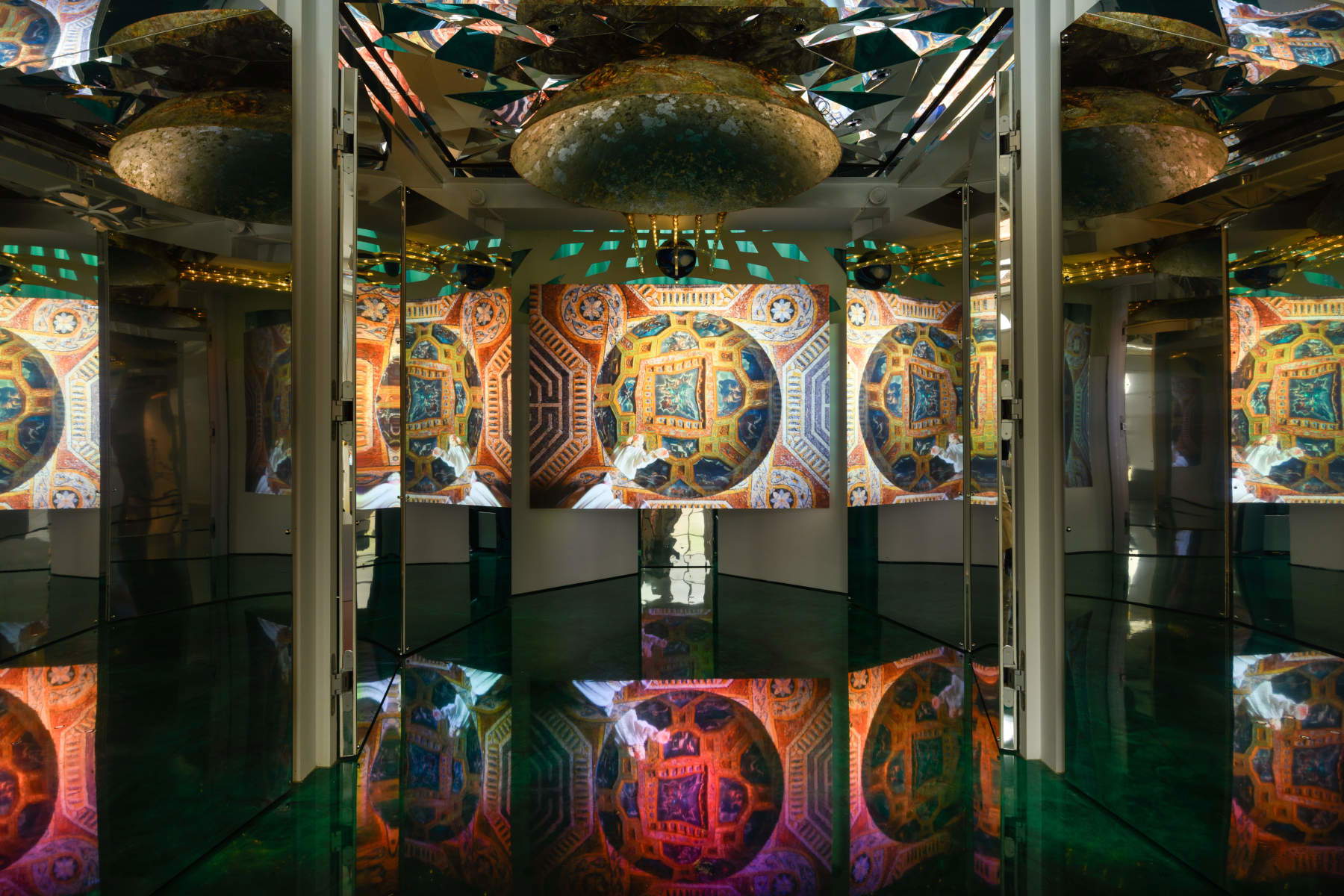
Originally conceived as a ten-screen installation, *All That Changes You. Metamorphosis takes its cue from the architecture of Palazzo Te to traverse a series of places belonging to different times and imaginaries: from Charles Jencks’s Cosmic House in London to the ancient forests of Redwood National and State Park in California, and on to examples of contemporary architecture. The spaces become narrative elements capable of connecting history, landscape, and vision, revealing metamorphosis as a principle common to the natural, cultural, and technological worlds.
The film’s structure is also grounded in various literary and philosophical references. Donna Haraway’s reflections on multispecies relationships, Naomi Mitchison’s fiction, and Octavia E. Butler’s speculative science fiction contribute to a narrative that transcends an exclusively anthropocentric perspective, opening the door to new forms of coexistence and new ways of interpreting the relationship between living beings and the planet.
For the presentation at the Galleria Borghese, Isaac Julien has created a new configuration of the work, adapted to the Uccelliera, a 17th-century building originally designed as a pavilion for the Villa’s exotic birds and characterized by the direct relationship between architecture, garden, and landscape. For this occasion, the artist presents a single-channel version of the film, in which the images are multiplied through a system of mirrors that continuously fragments and reflects their perception.
The installation thus alters the exhibition space, transforming it into a dynamic environment where metamorphosis also affects the viewer’s experience, as they are called upon to engage with images in a state of constant duplication, refraction, and transformation. The new installation establishes a direct relationship with the context of the Galleria Borghese and extends the narrative of the exhibition *Metamorphosis. Ovid and the Arts. While in Ovid’s poem transformation represents a universal law that encompasses humans, deities, animals, and the landscape, Isaac Julien’s work offers a contemporary interpretation of the theme and highlights change as one of the categories through which to interpret the present and imagine the future.
“The exhibition, which celebrates the enduring power and imaginative force of *Metamorphoses* across all times and places, is enriched by the work of one of the most acclaimed and influential international artists,” states Francesca Cappelletti, Director of the Galleria Borghese. “Isaac Julien, drawing on an original perspective on the frescoes of Palazzo Te in Mantua—another extraordinary site of metamorphosis—has truly interpreted one of the fundamental aspects underlying the enduring popularity of Ovid’s poem: its ability not only to convey stories but to speak to all eras, transforming materials and languages.”
“Through the imagination and allegory of this new film installation, I seek to subvert the visual hegemony that dominates the technological regimes of representation,” says Isaac Julien. “Through a visual grammar that weaves together memory, imagination, and poetry, *All That Changes You. Metamorphosis* invites the audience to consider metamorphosis not only as a theme of classical myth, but as a mode of thought capable of generating new imaginaries and new forms of coexistence.”
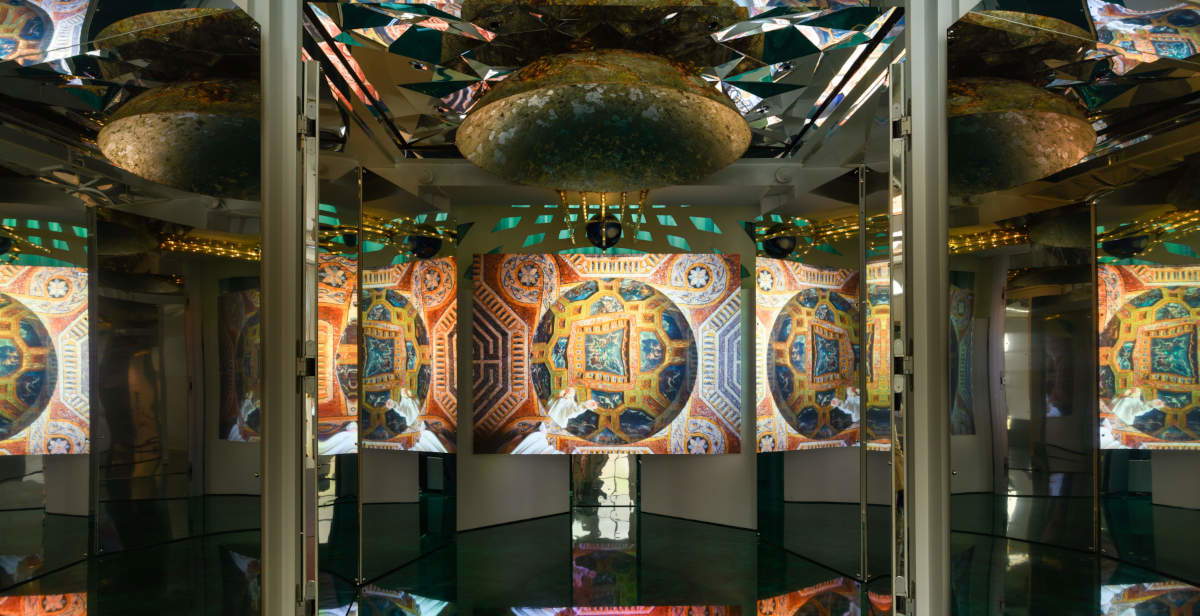 |
| Isaac Julien brings his video installation on metamorphosis to the Galleria Borghese |

Warning: the translation into English of the original Italian article was created using automatic tools. We undertake to review all articles, but we do not guarantee the total absence of inaccuracies in the translation due to the program. You can find the original by clicking on the ITA button. If you find any mistake,please contact us.



















 IT
IT FR
FR DE
DE ES
ES CN
CN


