




For many centuries, the Mediterranean andAsia were not separate worlds, but parts of a complex and ever-changing network of relationships, trade, migration, artistic influences, religious exchanges, and political ties. This is the perspective that serves as the starting point for “Global Antiquity,” the exhibition that Fondazione Prada is presenting in Milan from November 5, 2026, to March 1, 2027, with a press preview scheduled for Wednesday, November 4. Curated by Salvatore Settis, Anna Anguissola, and Chiara Ballestrazzi, the exhibition will be held on the ground floor of the Podium—the main space at the Foundation’s Milan location—in a design conceived by Rem Koolhaas and AMO/OMA. The exhibition offers a reinterpretation of ancient history, roughly spanning from 700 B.C. to 1000 A.D., challenging the notion of closed and geographically isolated cultures and focusing instead on the myriad forms of interaction that connected regions even those far apart. Through more than 150 works and objects from different parts of the world, “Global Antiquity” aims to construct a sort of atlas of relationships in which the place where an artifact was discovered takes on equal importance to the place where it was produced.
The project is part of an investigation that the Prada Foundation has been conducting for over a decade. The initiative began in 2015, when Serial Classic and Portable Classic were presented simultaneously at the Milan and Venice venues, both curated by Salvatore Settis, with Anna Anguissola for the Milan venue and Davide Gasparotto for the Venice venue. In 2022, the investigation continued in Milan with *Recycling Beauty*, curated by Salvatore Settis and Anna Anguissola with Denise La Monica—an exhibition dedicated to the reuse of Greek and Roman antiquities in post-antique contexts, from the Middle Ages to the Baroque period. Underlying this research is a conception of ancient art that does not view it simply as a legacy from the past, but as a still-vital force, capable of influencing the present and even suggesting perspectives for the future. Seriality, reuse, recycling, and globality are concepts closely linked to modernity, yet at the same time they reveal the extraordinary persistence of values, categories, and models rooted in the ancient world.
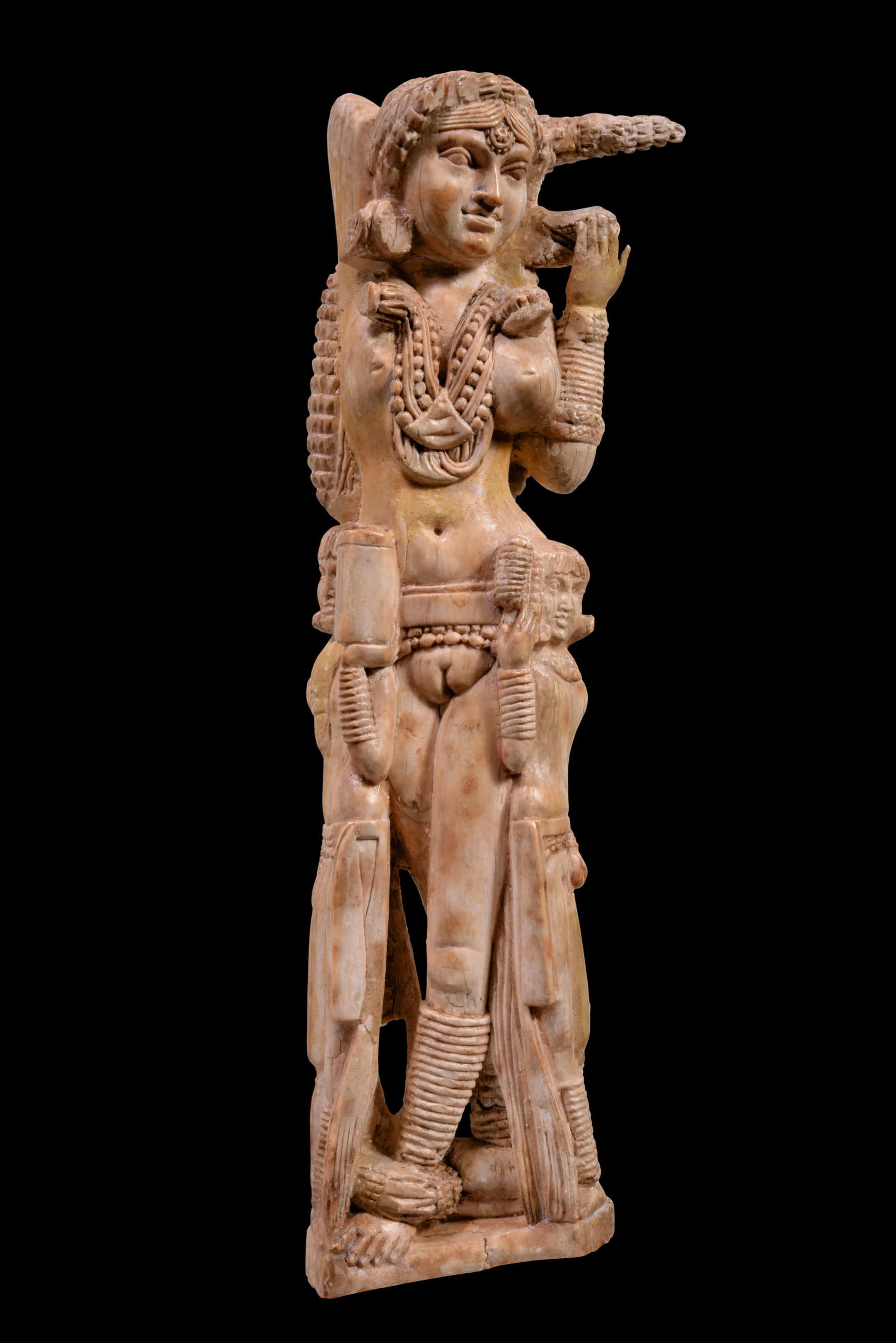
The heart of the exhibition is thus an exploration of the artistic, cultural, commercial, and political relationships that, over the course of more than 1,700 years, have connected peoples and cultures from the Mediterranean to Asia, across continents and seas. The so-called Silk and Spice Routes represent only a part of a much broader network. The maps and objects presented by the Prada Foundation aim to help the public recognize a plurality of routes and trajectories, characterized by political, cultural, economic, and religious ties that developed in different directions and often simultaneously. Global Antiquity, in fact, emphasizes the reciprocity of these relationships. Exchanges did not necessarily follow linear, one-way paths but gave rise to a fluid network of polygonal routes, continually transformed by the encounter between people, goods, ideas, and images. The exhibition’s itinerary thus highlights, for example, unexpected “Mediterranean” presence in China and tells the story of a female statuette originating from the Indian subcontinent that arrived in Pompeii before the eruption of 79 A.D.
The exhibition’s exploration also aims to address a specific contemporary relevance. Two of the central themes of *Global Antiquity*— globality andcultural hybridization—are, in fact, particularly prominent in contemporary political and economic discourse. Globality is today a common—yet controversial—concept, while cultural hybridization lies at the heart of numerous discussions on identity, migration, and relations between different societies. In this regard, the exhibition introduces a distinction between globality and globalization. The former, according to the project’s interpretation, is also present in the ancient world and develops through horizontal, osmotic, and reciprocal dynamics. Globalization, on the other hand, is associated with the modern and contemporary system and with vertical processes driven by economic and political forces operating on a global scale. Comparing these two concepts allows us to observe the past without automatically projecting the categories of the present onto it.
This perspective is further reinforced by a remark from the writer Amitav Ghosh, who states that “it is impossible to imagine a world without global connections. These have always existed, and no place has escaped their influence.” It is precisely the documentation of these connections that allows the exhibition to challenge identity-based rhetoric and contemporary protectionist and isolationist dynamics rooted in the idea that every culture or ethnic group can be conceived as a closed fortress under siege by “others.” The story told by the objects in *Global Antiquity*, however, aims to convey the opposite image: cultures are also shaped through the encounter, appropriation, transformation, and reinterpretation of elements from other contexts. It is therefore not a process of simple transmission from a center to a periphery, but rather a system of exchange in which influences flow in multiple directions.
According to Salvatore Settis, this is the thread that unites the various narratives presented in the exhibition: “This exhibition,” he explains, “offers a constellation of exemplary cases, each marked by its own form of interaction between cultures, but all traceable to the same thread: the polygonal network of trade and influences that spanned Eurasia, extending beyond its borders and fostering mutual awareness and curiosity on a vast scale. From our atlas of micro-stories, a macro-story thus emerges in which the pre-modern global order appears as a state of unstable equilibrium, yet one open to countless possibilities.”
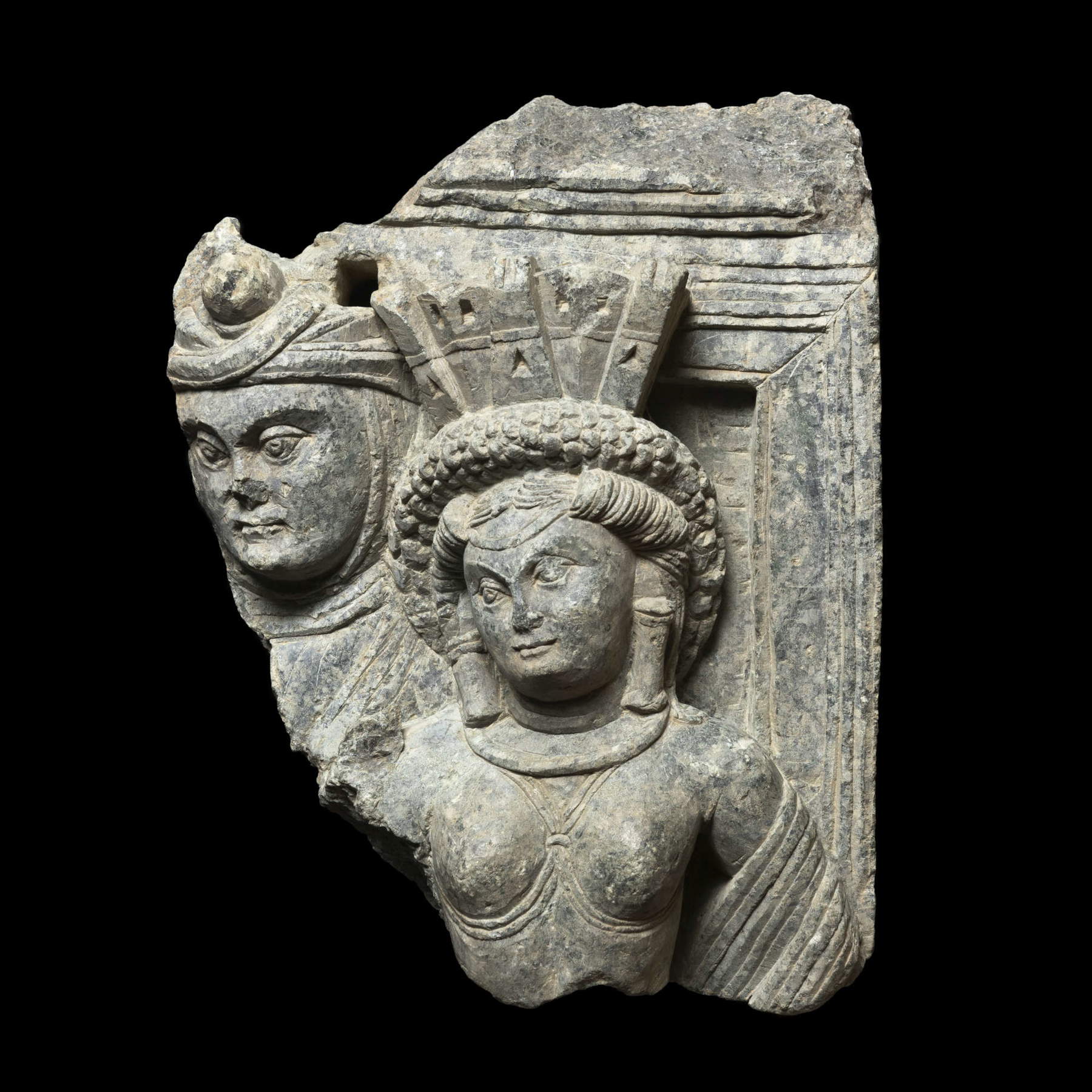
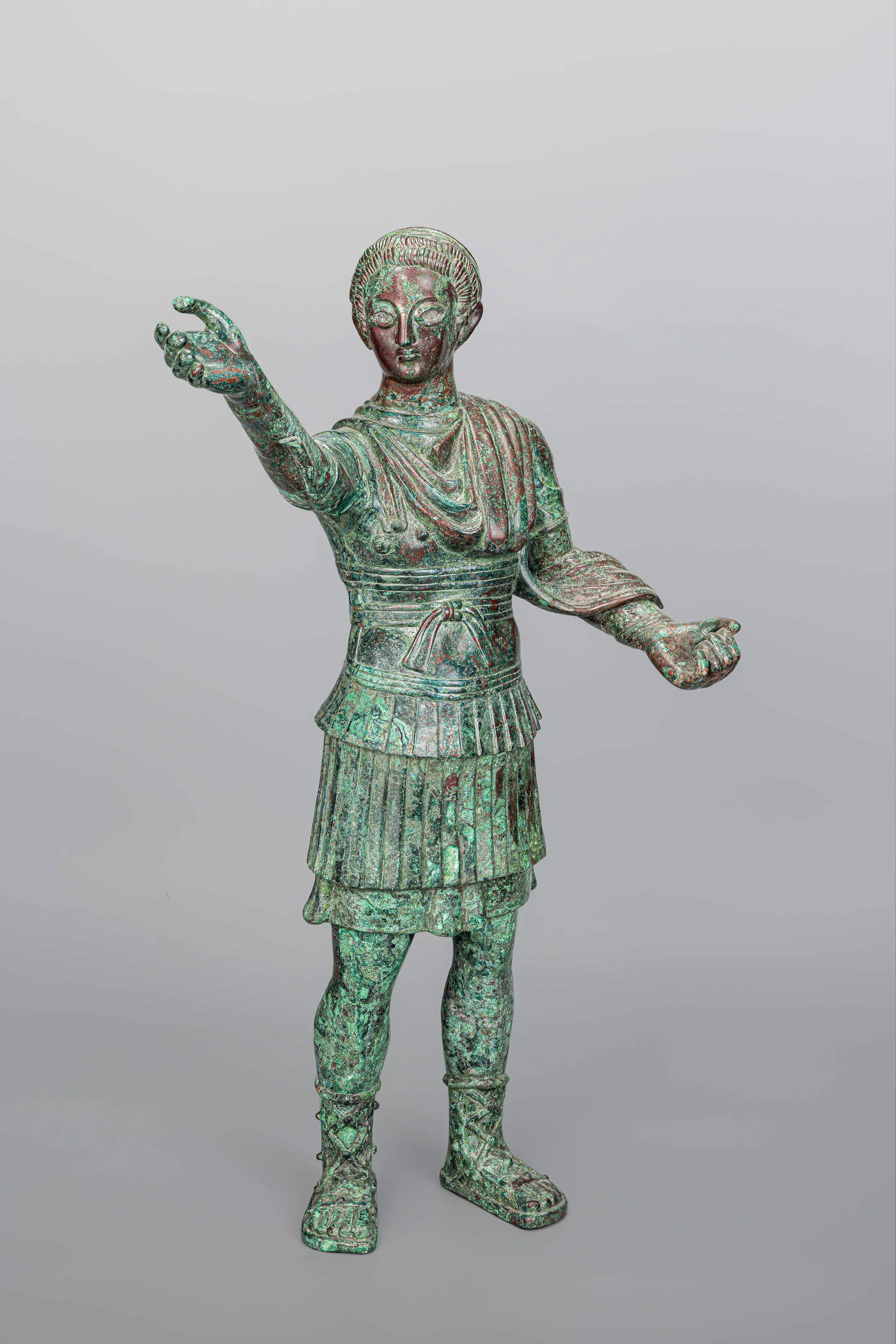
The exhibition design is also conceived to physically convey this idea of a network. Rem Koolhaas, together with Giulio Margheri and the team at the AMO/OMA studio, designed a spatial configuration on the ground floor of the Podium in which individual narratives are presented through distinct displays, reflecting the various networks of exchange. The display stands, made of metal and fiberglass, are arranged within a space that invites the public to explore the objects according to criteria of convergence, symmetry, and intersection.
Convergence is one of the principles through which the project makes the connections between distant territories legible. A significant example is the site of Begram, in present-day Afghanistan, where the discovery of objects from very different geographical contexts demonstrates the existence of intense commercial and cultural ties. The so-called Begram Treasure, discovered in the late 1930s and now housed partly in the Kabul Museum and partly at the Musée Guimet in Paris, includes luxury objects that belonged to the refined local elite and arrived in Begram between the 1st and 2nd centuries CE from a vast area. The sources of these artifacts include the Roman Empire, Western Asia, Han China, India, and the surrounding regions.
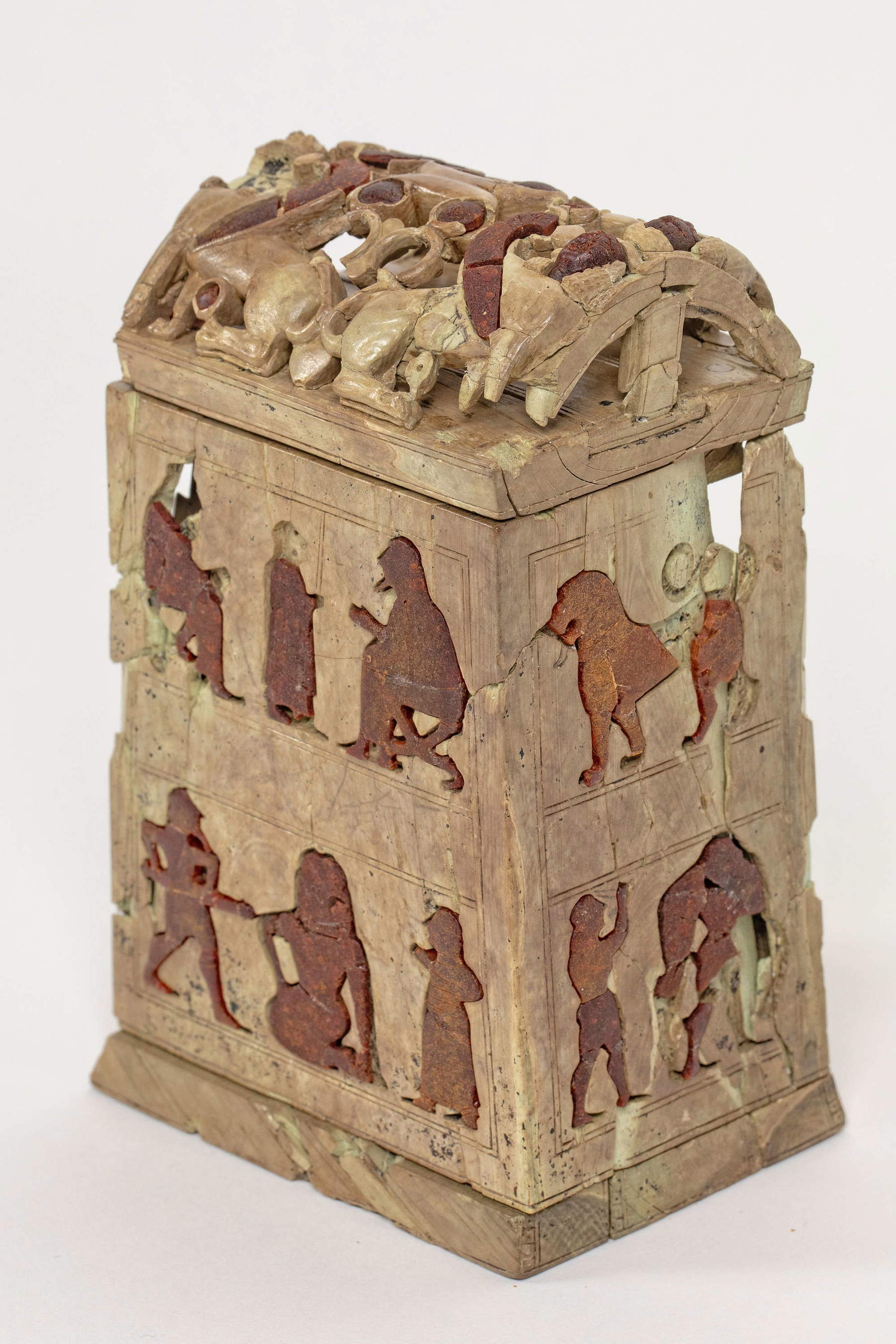
However, this convergence can also be illustrated by a single artifact. Such is the case of the casket discovered in Belmonte Piceno, in the Marche region, crafted between 560 and 540 B.C. and characterized by exceptional ivory work with precious amber inlays. The materials themselves speak to the vastness of the trade networks of the time. The ivory came from Africa or Asia and arrived via the trade routes of the eastern Mediterranean, while the amber came from as far away as the Baltic Sea and, traveling across Europe, reached the Adriatic.
The casket’s decorations also confirm the existence of cultural ties. The scenes and figures from Etruscan and Greek culture do not, in fact, belong to the local Picene tradition and reveal a deep knowledge of Hellenic culture. This knowledge was also made possible by the circulation of Greek black-figure pottery throughout the Mediterranean. Thus, materials, techniques, images, and traditions from different regions come together in a single object.
The principle of symmetry, on the other hand, is evident in the repetition of nearly identical iconography on artifacts from distant eras and geographical areas. Two particularly significant examples are the silver coin depicting Alexander and the Indian king Porus, dated to around 325–323 B.C. and likely minted in Babylon during the time of Alexander the Great, and the cameo of Shapur I, victor over the Roman emperor Valerian, dating to around 260–270 CE and originating from Sassanid Iran. The two objects belong to different cultural contexts but share an ideological function: both demonstrate a ruler’s superiority over a defeated enemy and transform military victory and the subjugation of the adversary into an image intended to legitimize and celebrate power. The silver coin and the sardonic cameo thus employ a similar figurative language, even though they depict a Greek and a Persian ruler, respectively.
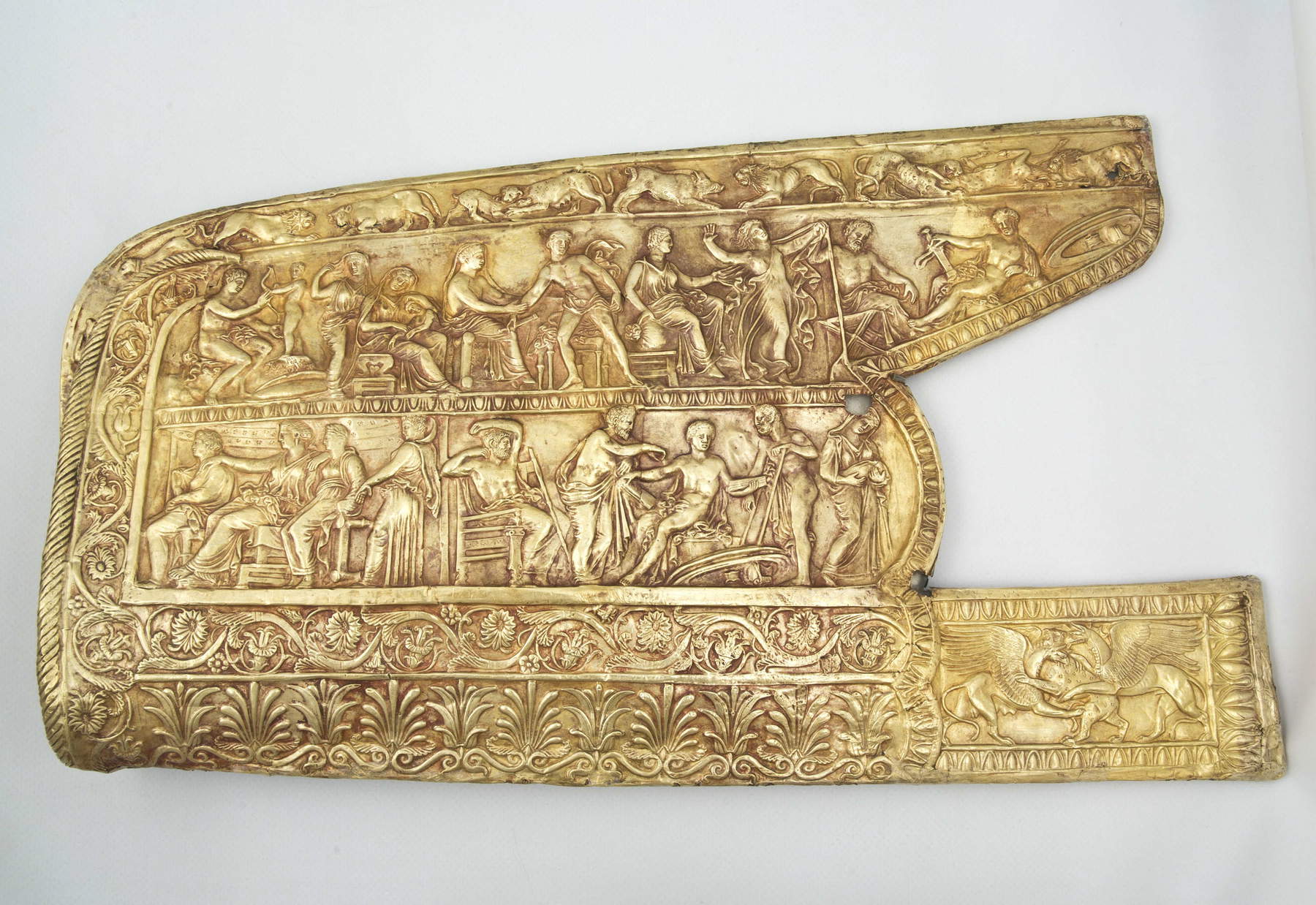
The third principle of the exhibition—thatof intersection—emerges, however, in objects that bear witness to genuine forms of artistic hybridization. Among these is the gold-plated Scythian gorytos, dated to the mid-4th century BCE and discovered in Melitopol, in present-day Ukraine. This is a case for a bow and arrows that was part of the military and ceremonial equipment of the nomadic peoples of Iranian descent who inhabited the Eurasian steppes, from the Black Sea region to Central Asia.
The artifact’s uniqueness lies in its decoration, which features scenes drawn from Greek mythology and, in particular, episodes from the life of Achilles. The technique used—combining repoussé and chiseling—the narrative composition organized into registers, and the ornamental plant motifs also belong to the tradition of Greek goldsmithing. The Gorytos thus serves as concrete evidence of a particularly intense interaction between the Greek world and that of the steppes. In the 4th century B.C., these relationships gave rise to new artistic forms, born from the combination of multiple cultural traditions, and demonstrate that hybridization was not a marginal phenomenon but a significant component of ancient artistic production.
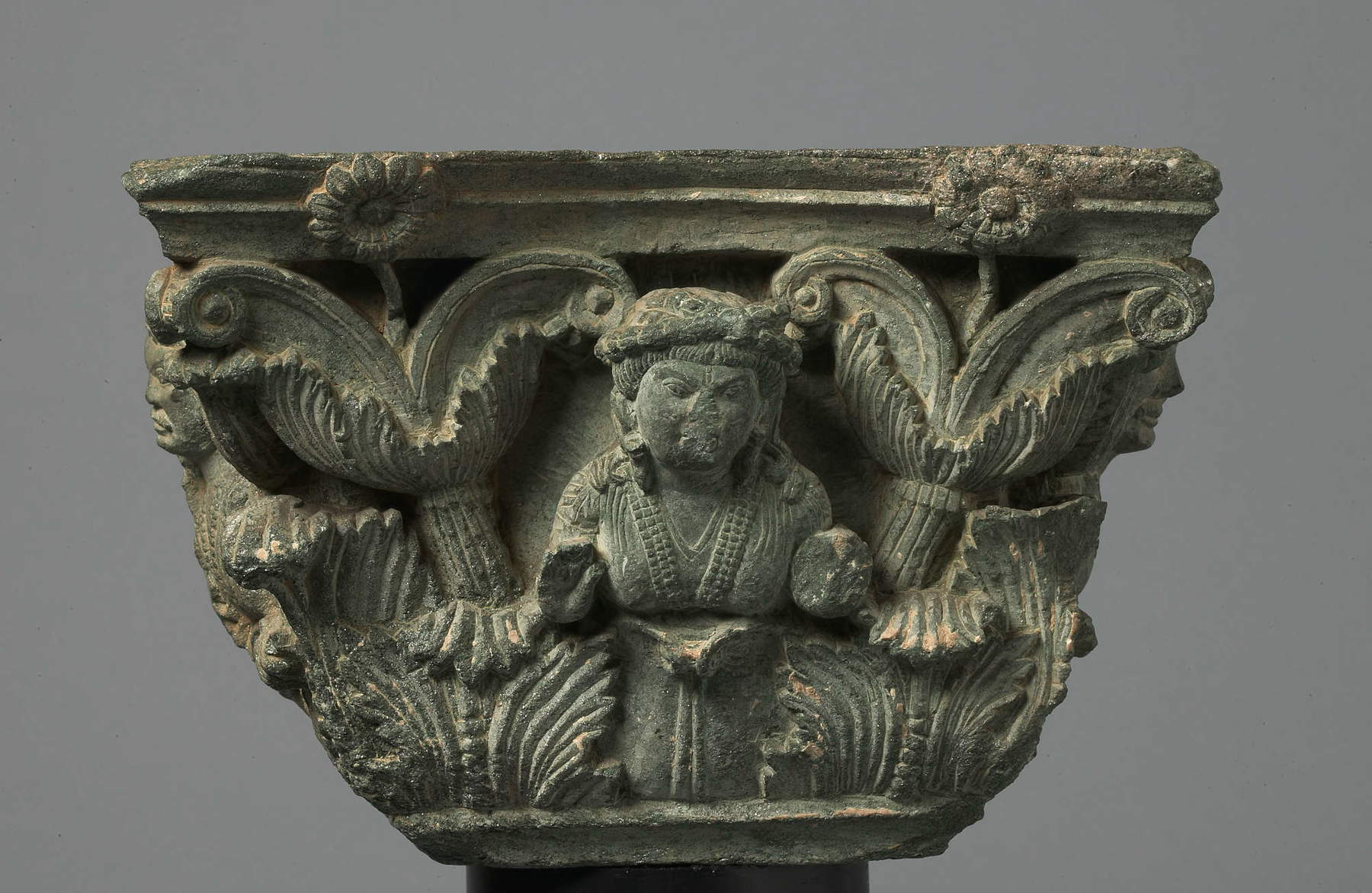
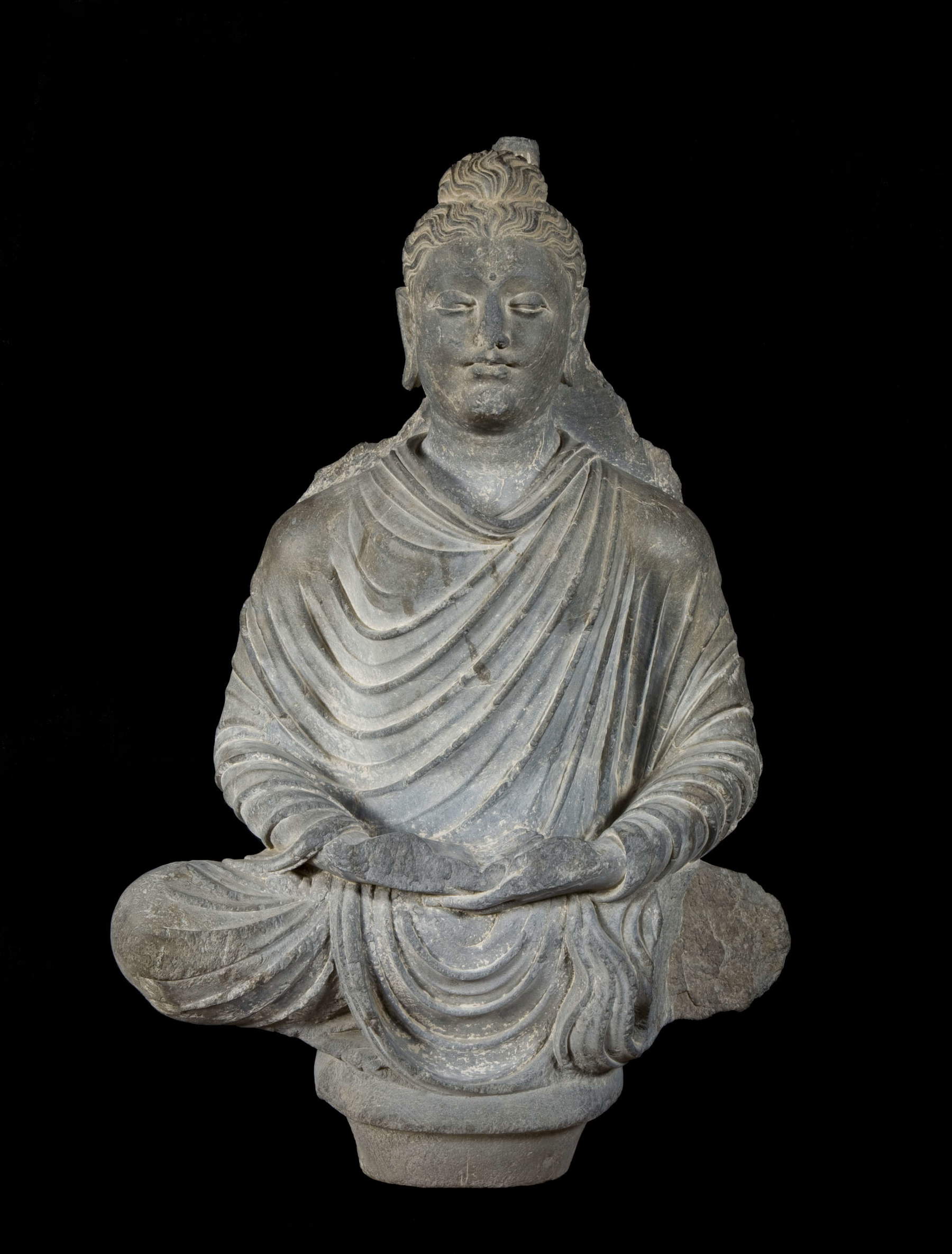
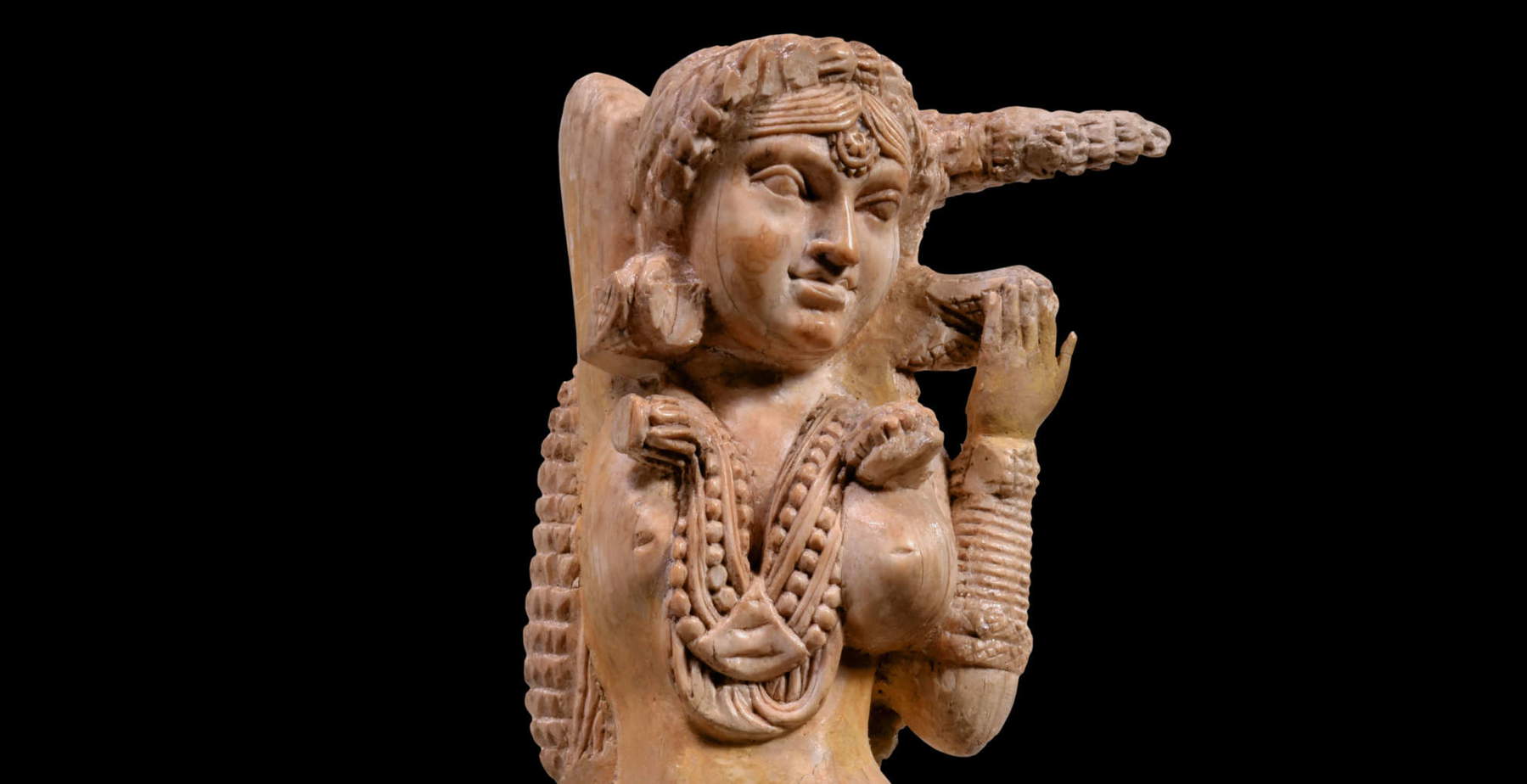
At the center of the Podium, the exhibition route is framed by two groups of works conceived, respectively, as the prologue and epilogue to the exhibition. The first triptych brings together three works that bear witness to the Greco-Roman world’s interest in India and its culture. These are the Roman marble bust of the “Indian Priest,” dated to the late 2nd century CE and housed at the Museo Nacional del Prado; the Buddha seated in meditation in the lotus position, dating to the 2nd–3rd centuries A.D., from the Buddhist tradition of Gandhāra and housed at the Museum of Civilizations in Rome; and a Roman bust from a private collection depicting the Portrait of Apollonius of Tyana, dated to around the 2nd century A.D.
Apollonius of Tyana was a Greek philosopher and miracle-worker who lived during the Roman era and, according to his biographer Philostratus, is said to have traveled to northwestern India driven by a desire to learn about Eastern wisdom. The juxtaposition of these three works aims to highlight the extent to which Indian culture and religion were objects of curiosity and interest in the Greco-Roman world.
The second triptych, on the other hand, addresses a cultural transformation of particular significance: that of the figure of the Buddha into that of a Christian saint. Here, the following are juxtaposed: a standing Buddha in schist, dated to between the 1st and 3rd centuries A.D., from the Gandhāra region and housed at the Museum of Civilization in Rome; a marble slab carved with an apologue from the lives of Saints Barlaam and Iosafat, dated to around 1225–1230 and on loan from the Cathedral Museum of Ferrara; and the icon of Saints Barlaam and Iosafat, originating from Asia Minor and dated 1799, housed at the Byzantine and Christian Museum in Athens. These three works represent three stages in a long process of cultural transmission, assimilation, and reinterpretation in which the figure of the Buddha is progressively transformed, evolving from a model of Indian wisdom to an image of Christian holiness.
The exhibition also includes several specific in-depth sections. One section is dedicated to textiles from various origins, with materials ranging from China to the collections of the Vatican Museums and Qatar. These artifacts are displayed inside an outdoor container connected to the Podium, further shifting the narrative away from the main exhibition space.
Another in-depth exploration concerns the possible Chinese origin of the head of the Lion of St. Mark, which sits atop a column in the Piazzetta next to the Doge’s Palace. This hypothesis, which has recently sparked considerable interest, is used as a case study to investigate the possible artistic and cultural connections that developed along extensive trade and exchange routes.
Rounding out the project is a series of geographical maps dedicated to some of the main routes reconstructed by the exhibition. Among these are the ceramic and glass routes—paths that for centuries have connected the Mediterranean and China in both directions.
The exhibition features statues and sculptural fragments, reliefs, inscriptions, plaster casts, chess pieces, coins, textiles, astrolabes, jewelry, drinking horns, jugs, cups, and other objects of daily and ceremonial use. These items come from private collections and Italian and international museums: among the institutions involved are The Metropolitan Museum of Art in New York, the J. Paul Getty Museum in Los Angeles, the British Museum in London, the Musée du Louvre and the Musée Guimet in Paris, the Museo Nacional del Prado in Madrid, the Vatican Museums, the Museum of Civilization, and the Capitoline Museums in Rome, the Archaeological Park of Pompeii, and the National Archaeological Museum of Naples.
The exhibition will be accompanied by an illustrated volume with graphic design by 2x4, featuring a critical essay by Salvatore Settis and 27 essays by Italian and international scholars. The volume will also contain an extensive collection of in-depth entries dedicated to the works on display, written by over 40 specialists, as well as a series of thematic and historical maps. These maps will trace the geopolitical transformations and connections that developed between Europe, Asia, and the Mediterranean during the period roughly spanning 700 B.C. to 1000 A.D. The book will also be available as part of the new “Dispense” series, which brings together a selection of catalogs published by the Foundation and reissues them in a medium-sized, black-and-white format.
 |
| Milan: The Prada Foundation Hosts “Global Antiquity,” the New Project by Salvatore Settis |

Warning: the translation into English of the original Italian article was created using automatic tools. We undertake to review all articles, but we do not guarantee the total absence of inaccuracies in the translation due to the program. You can find the original by clicking on the ITA button. If you find any mistake,please contact us.

























 IT
IT FR
FR DE
DE ES
ES CN
CN


