




by Redazione 15/10/2026



Categories: Exhibitions / Disclaimer
The Tridentine Diocesan Museum is hosting the first solo exhibition dedicated to Nicolò Dorigati, a Trentino Baroque painter active in the 17th and 18th centuries. On display are restored works and a virtual reconstruction of the presbytery of Santa Croce in Lodrone, decorated with his *Stories of the True Cross*.


To understand what Baroque painting was like in Trentino between the 17th and 18th centuries, one must consider an artist who, despite the vastness of his body of work, remained on the margins of scholarly research for a long time: Nicolò Dorigati (Trento, 1662 – 1740/1742). For nearly fifty years, he worked primarily for churches, convents, and local families, leaving behind altarpieces, decorative cycles, and portraits in numerous locations throughout the region. A widespread presence, yet one that has never before been systematically documented, to which the Tridentine Diocesan Museum in Trento is dedicating its first monographic exhibition, *Nicolò Dorigati: In the Spirit of the Baroque*, scheduled from October 17, 2026, to February 15, 2027.


The project stems from the need to restore unity to an artistic journey that unfolded through various commissions in locations often far apart. The museum brings together a significant collection of paintings from its own holdings, the Buonconsiglio Castle, and other locations throughout the region, including works previously stored in the museum’s vaults and never before exhibited to the public. Several works have also undergone restoration or conservation treatments in preparation for the exhibition. The result is an opportunity to take a close look at a painter who helped shape the character of Trentino’s religious painting during a period of intense artistic activity.


The exhibition itinerary traces Dorigati’s artistic development and the evolution of his style, highlighting his connection to the figurative art tradition of Emilia.His time in Bologna played a significant role in his development: indeed, his paintings reveal references to Carlo Cignani and the traditions of the Carracci and Guido Reni. Dorigati reinterpreted these models within the Trentino context, adapting them to the needs of a predominantly ecclesiastical clientele and to a system of commissions that required works intended for different spaces and functions.


His body of work emerged during a period when religious painting continued to play a central role in the life of communities. Images for altars, the decorations of sacred buildings, and narrative cycles were not conceived merely as objects to be admired: they helped define liturgical spaces and convey the tenets of the faith. In this context, Dorigati’s work takes on a significance that transcends the sum of his individual works: his presence in numerous churches throughout the region attests to an artist’s ability to respond to a broad and complex demand, contributing to the spread of a Baroque style informed by the models of Italian painting.
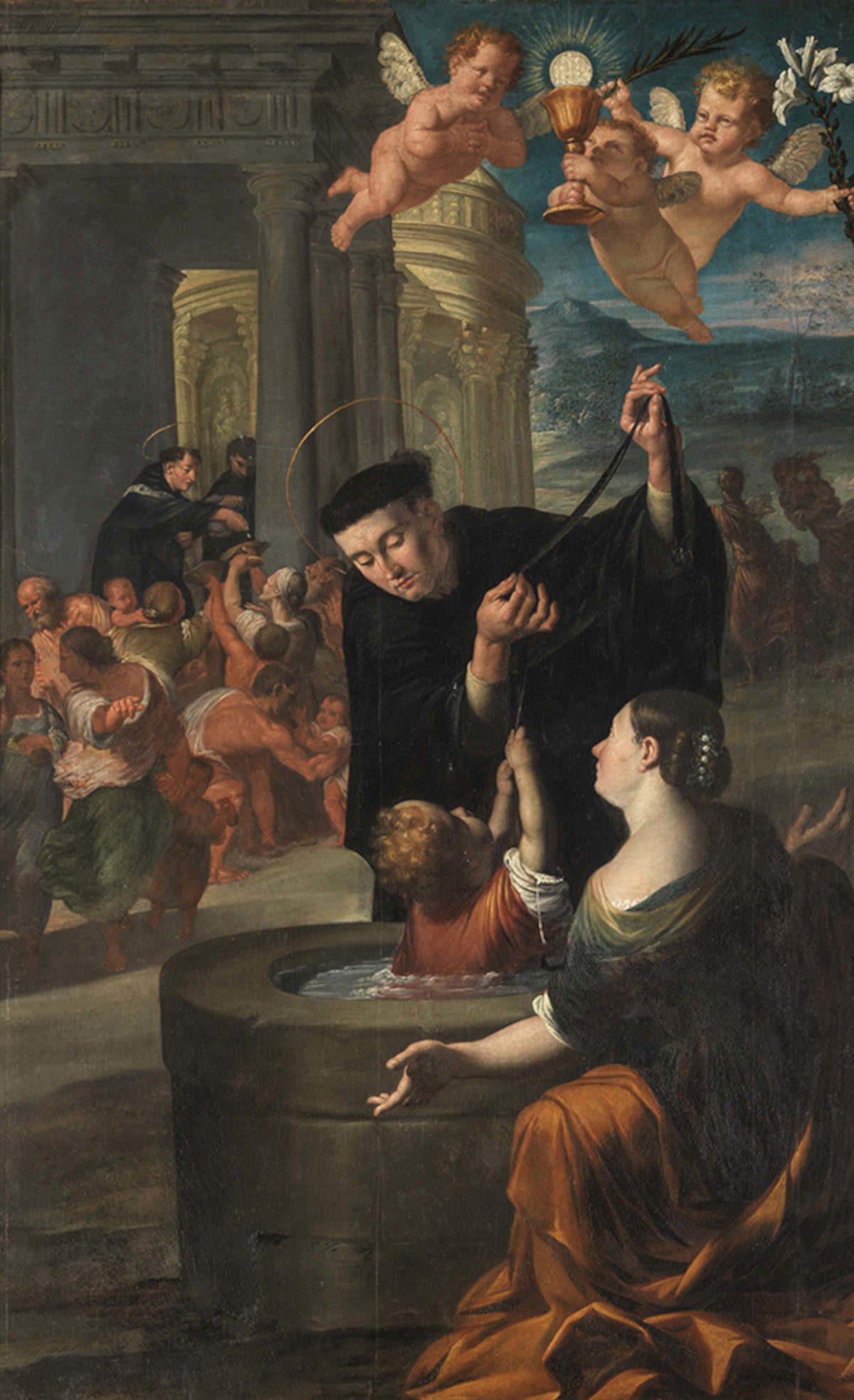
Among his most important commissions, his relationship with the Lodron family stands out, particularly with Carlo Ferdinando Lodron, provost of the Cathedral of Trento and archpriest of Villa Lagarina: the support of a prominent family and a patron embedded within the region’s ecclesiastical institutions was crucial to the development of the painter’s career, and the exhibition allows us to contextualize this relationship within his career and to consider the works not only from a stylistic perspective but also in relation to the settings for which they were created.
It is above all the section dedicated to the Church of Santa Croce in Lodrone that lends the exhibition a dimension of historical reconstruction: the building, now deconsecrated and profoundly transformed during the nineteenth century, once housed in its presbytery an important cycle by Dorigati dedicated to the Stories of the True Cross. These large canvases are now partly housed in the nearby sanctuary of the Madonna dell’Aiuto and can no longer be viewed within the architectural context for which they were conceived; consequently, bringing them together allows us to once again observe the cycle as a whole and to restore, at least in part, a connection that the building’s subsequent history had severed. The theme of the True Cross, linked to the tradition of the discovery and history of the relic of the wood on which Christ was crucified, offered religious painting a vast narrative repertoire. In a cycle intended for the presbytery, the images contributed to the construction of a complex narrative, set within a sacred space and designed to be perceived as a continuous whole. The dispersal of the canvases and the transformation of the church make it difficult today to reconstruct the original experience based solely on the surviving paintings. For this reason, the exhibition pairs the works with the surviving fragments of the monumental sculptural ensemble created by Cristoforo Benedetti.
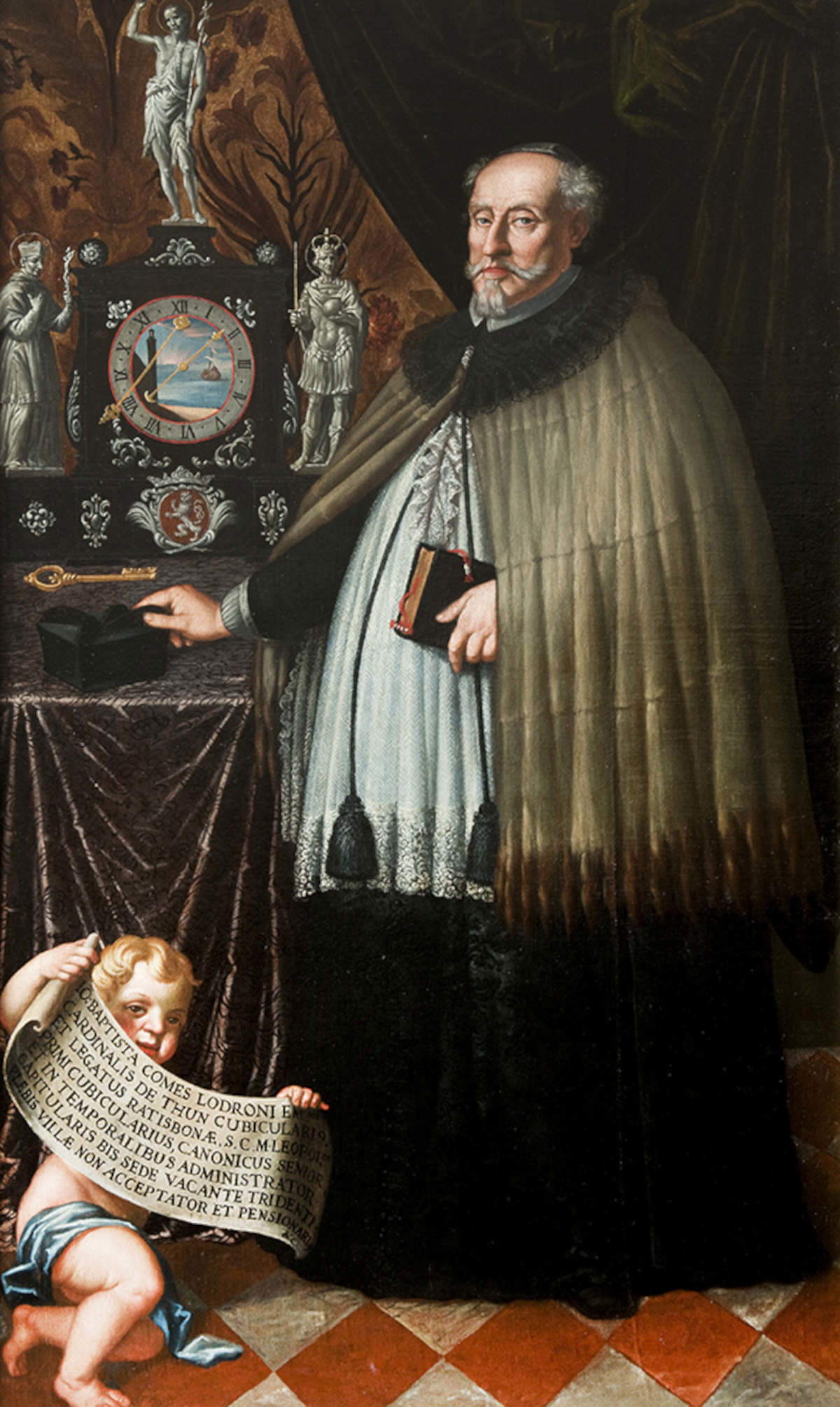
The combined presence of the paintings and sculptural elements allows us to view Santa Croce not merely as a container for paintings, but as a complex decorative project in which painting, sculpture, and architecture all contributed to defining the appearance of the presbytery—an important aspect for understanding Baroque artistic culture, which often relied on collaboration between different disciplines and their integration into the space to ensure the impact of the images. In such cases, the work of art was not limited to a single painting: it was part of an environment designed to engage the viewer through a variety of visual elements.
Rounding out the section dedicated to Santa Croce is a multimedia installation that allows visitors to virtually view the ancient presbytery. The reconstruction conveys an idea of the original decorative layout and helps visitors understand how the works were arranged within the space. This is not merely a matter of adding a technological component to the visit, but of addressing a concrete problem in art history: how to make intelligible a complex that no longer exists in its original form and of which only separate fragments remain. The case of Santa Croce, in fact, demonstrates just how much our understanding of a work can change when we restore the context for which it was created. A painting viewed in isolation retains its pictorial quality but loses part of the function and relationships that shaped its interpretation; therefore, reconstructing the cycle and virtually suggesting the arrangement of the works means restoring part of that environmental dimension, making the role of decoration in the region’s religious and artistic life more comprehensible.
The exhibition is part of a broader research program by the Tridentine Diocesan Museum on the figurative culture of the post-Tridentine era. Previous initiatives dedicated to Giovanni Morone, Andrea Pozzo, and the role of art in religious communication have explored various aspects of the relationship between images, ecclesiastical institutions, and society, while the exhibition on Dorigati shifts the focus to a painter whose career allows us to observe these relationships through the network of commissions and the dissemination of his works in churches and collections throughout Trentino.
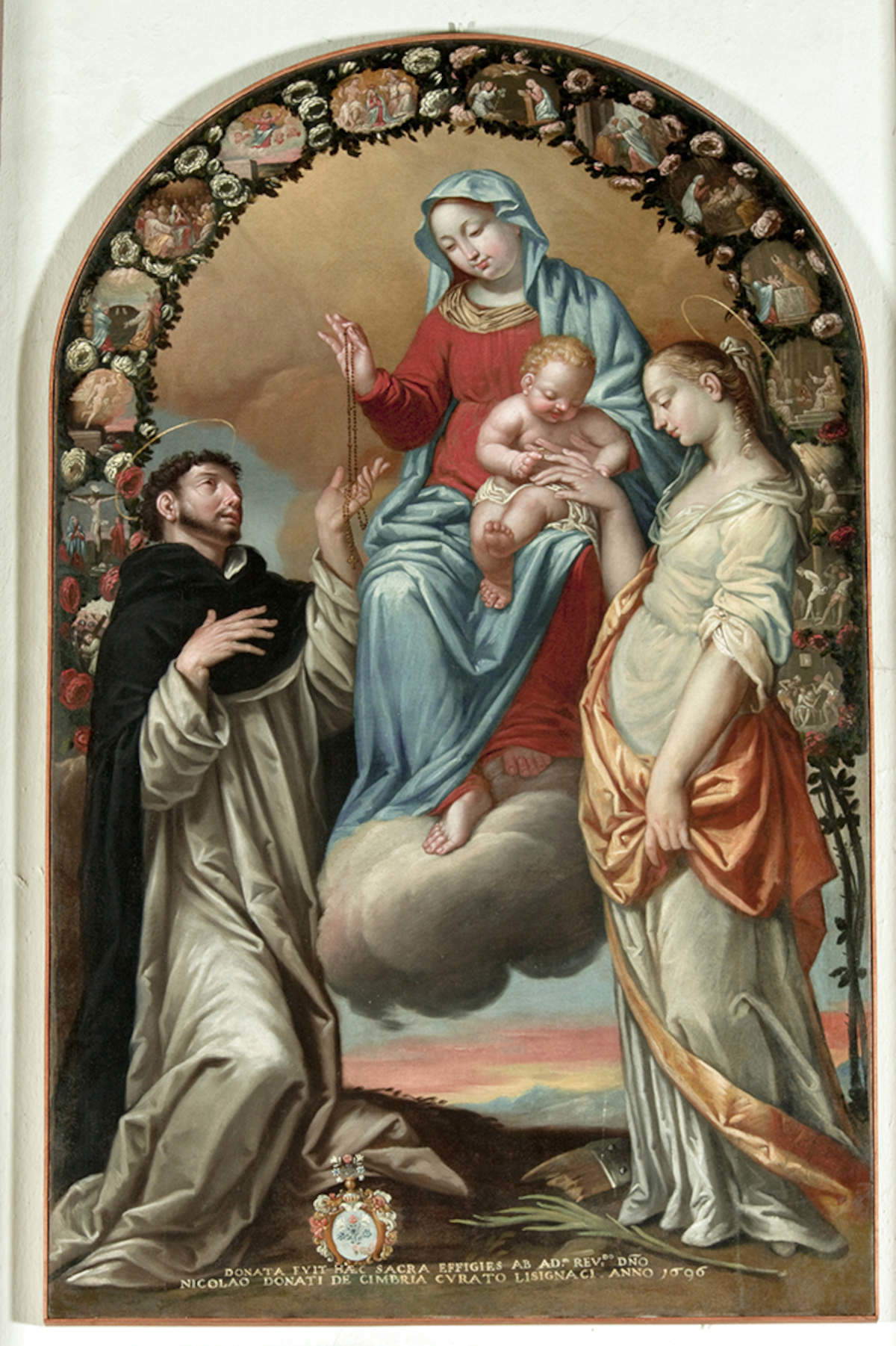
The rediscovery of Dorigati, therefore, is not merely about an individual artist: his career offers a perspective on the art history of a region where religious commissions represented an important source of work and the circulation of artistic models, and the works scattered across numerous locations document the spread of the Baroque style and the role played by artists in translating broader cultural references into solutions suited to local contexts (bringing them together allows us to recognize connections that, when observing the paintings separately, risk remaining less evident). Accompanying the exhibition is the first monograph dedicated to Nicolò Dorigati, featuring a comprehensive catalog raisonné of his work.
The initiative is the result of a collaboration between the Tridentine Diocesan Museum, the Castello del Buonconsiglio – Provincial Monuments and Collections, and the Superintendence for Cultural Heritage of the Province of Trento, with support from the Autonomous Province of Trento. Nicolò Dorigati. In the Spirit of the Baroque opens on Friday, October 16, 2026, at 5:30 p.m. at the Tridentine Diocesan Museum in Trento. Following the opening, the exhibition will be open to the public free of charge until 7:00 p.m. From October 17 to February 15, 2027, admission to the exhibition will be included in the museum’s general admission ticket. Information on hours and related events is available on the Tridentine Diocesan Museum’s website.
 |
| Nicolò Dorigati: The First Monographic Exhibition in Trento for the Forgotten Painter of the Trentino Baroque |
Warning: the translation into English of the original Italian article was created using automatic tools. We undertake to review all articles, but we do not guarantee the total absence of inaccuracies in the translation due to the program. You can find the original by clicking on the ITA button. If you find any mistake,please contact us.