





There are objects we look at every day without really seeing them anymore: a package on the kitchen shelf, a smartphone, a product bought at the supermarket, a cosmetic, a souvenir, the elements that appear in the background of a photograph. They are so familiar that they become almost invisible, but it is precisely this invisibility that is the focus of Robertina’s ( Bucharest, 1996) painting, as she debuts with her first-ever solo exhibition at the Boccanera Gallery in Trento. “Things We Live With – New Idols for Everyday Life” will take place in the gallery’s Project Room from October 10 to December 4, 2026, with an opening reception on Friday, October 9, from 7:00 p.m. to 10:00 p.m.
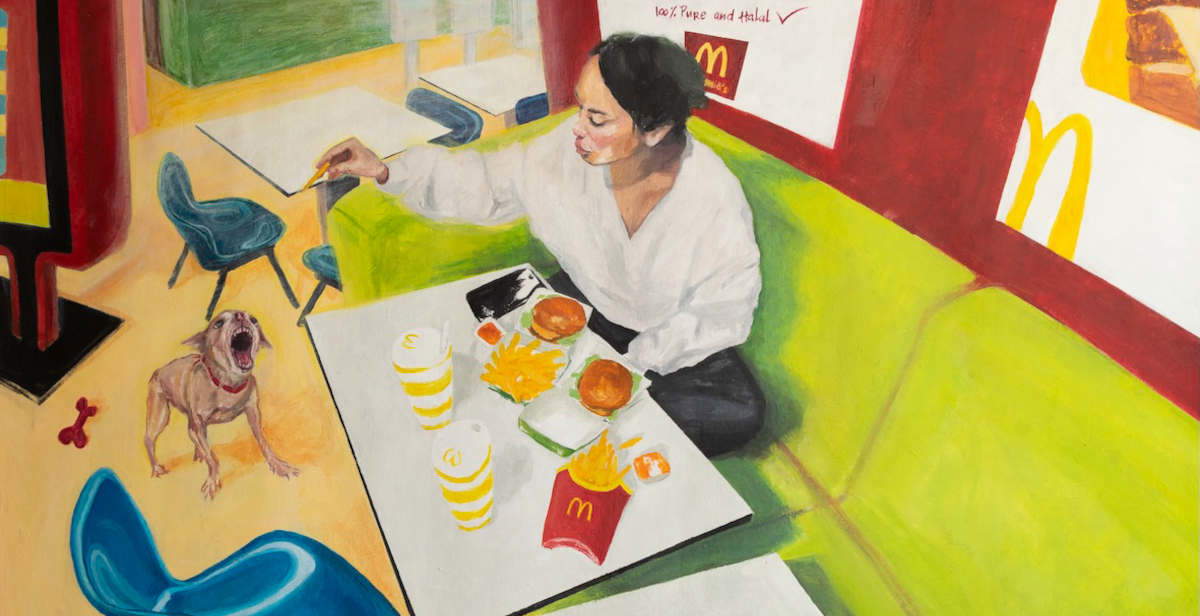
The works brought together in the Trentino space draw on ordinary situations to explore the relationship we have with the objects that surround us—objects that, often without our realizing it, help shape our daily experience. A supermarket aisle, a kitchen, a shared room during a vacation, a person taking a selfie in front of a mirror, a moment of intimacy: Robertina takes recognizable situations and translates them into paintings without turning them into extraordinary scenes. Their appeal stems precisely from their familiarity. What normally goes unnoticed becomes the focal point of the image.
The paintings thus occupy a space that is difficult to define with a single category, as they are at once portraits, still lifes, and autobiographical narratives: people inhabit domestic and everyday settings, but the objects surrounding them are not merely decorative elements; rather, they contribute to the construction of the scene and become clues through which to understand those who inhabit it. Therefore, painting becomes a tool for observing the way objects enter our lives—and we’re not just talking about those we choose to buy or use, but also those that end up accompanying us until they become part of the image we have of ourselves (the spaces depicted by Robertina are, in fact, also places where we present ourselves to others through what we own, use, consume, and choose to display).
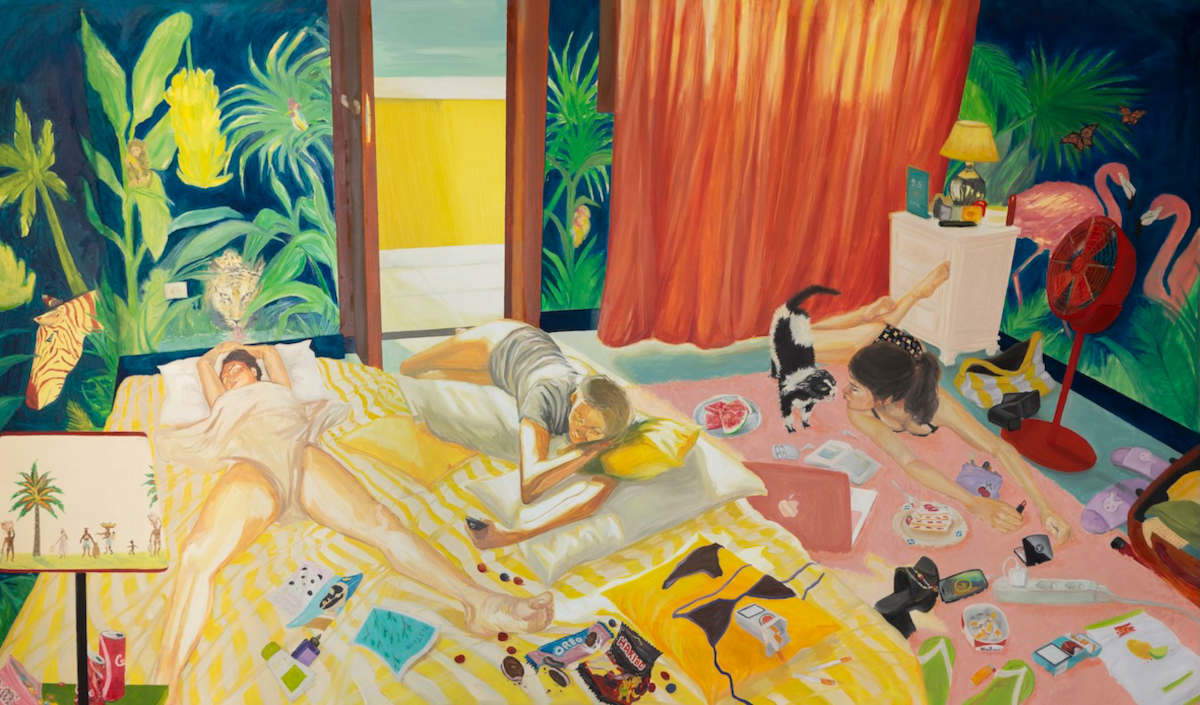
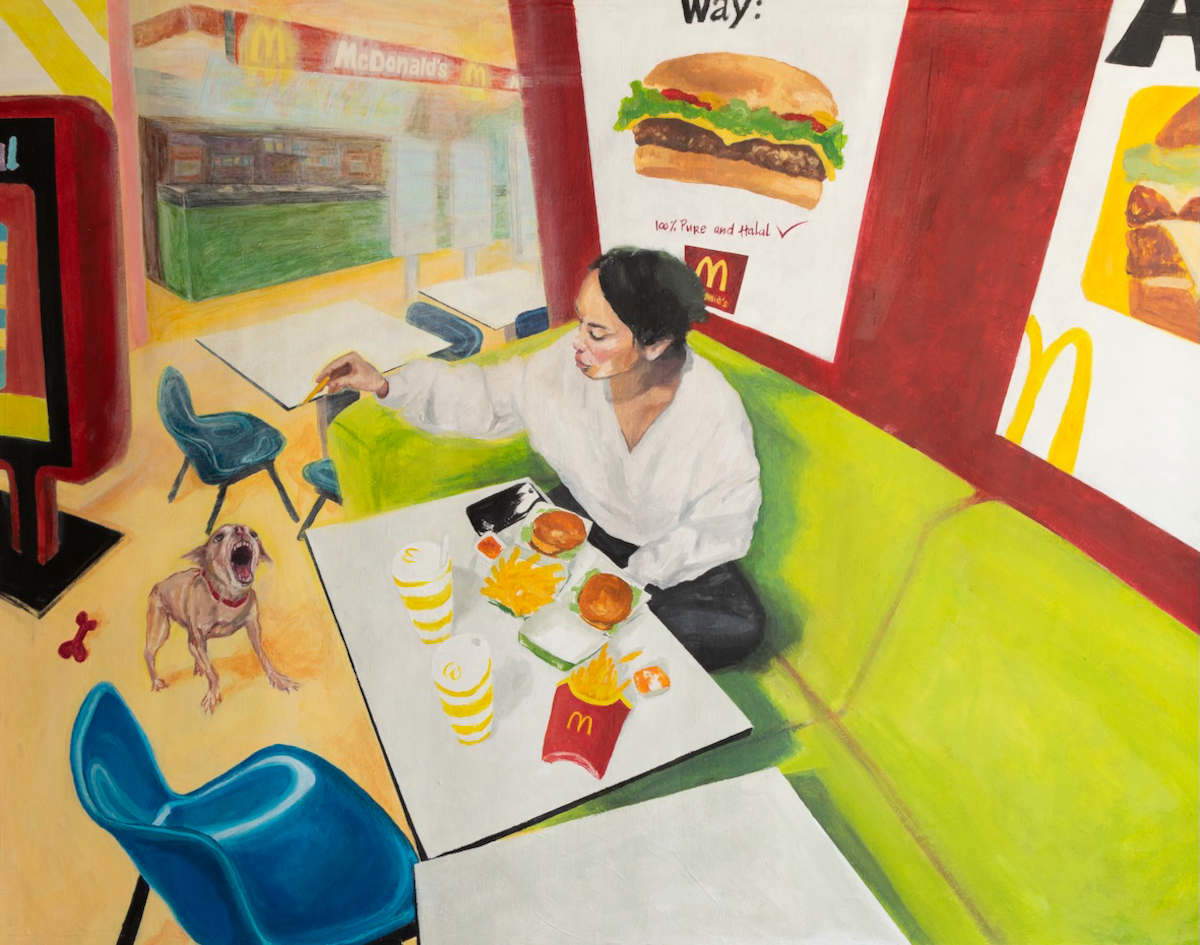
“I’m interested in observing the objects that inhabit our daily lives and the way they end up telling our stories,” says the artist. “They are so familiar that they become invisible, yet they influence the way we live, the way we see ourselves, and the way we relate to others. Through painting, I try to draw attention back to these ordinary things, transforming them into images that invite us to pause and observe more slowly.” This approach is neither a nostalgia for a different past nor an explicit condemnation of contemporary society. Robertina’s gaze remains firmly rooted in the present. In other words, she does not seek to judge the objects of consumer culture or to contrast them with an alternative way of life: she observes them as part of the environment in which we live and as elements through which, consciously or unconsciously, we build our relationships with the world.
From this perspective, the title *Things We Live With* takes on a concrete meaning: “The things we live with” are not only those indispensable to daily life, but also those we choose, accumulate, use, and bring into the spaces where we live. Some end up in front of a bathroom mirror, others appear in a photograph, and still others remain in the background of a room. Painting strips them of their immediate function and makes them visible once again. And it is precisely here that the artist’s work also reveals a connection to the tradition of Vanitas: in 17th-century still lifes, objects were not necessarily just objects; rather, through flowers, hourglasses, books, instruments, or symbols linked to the religious realm, they could allude to time, transience, death, or the precariousness of existence. Robertina engages with this tradition starting from a completely different repertoire. In place of hourglasses and wilted flowers, we see commercial products, technological devices, brands, and images belonging to contemporary visual culture. It is the objects of our present that become carriers of meanings that go beyond their function.
The difference lies not only in what is represented but also in the relationship we have with these objects. The icons of contemporary life are not necessarily symbols that remind us of death or the brevity of life. They are elements that speak to the way we inhabit the present, the desires we cultivate, the consumption patterns we follow, and the images through which we choose to present ourselves. A package or a smartphone, taken out of their everyday context, can thus become part of a narrative. Not because the artist necessarily attributes a single, unambiguous meaning to them, but because their presence alongside people and within environments allows us to observe the relationships that form between individuals and objects.
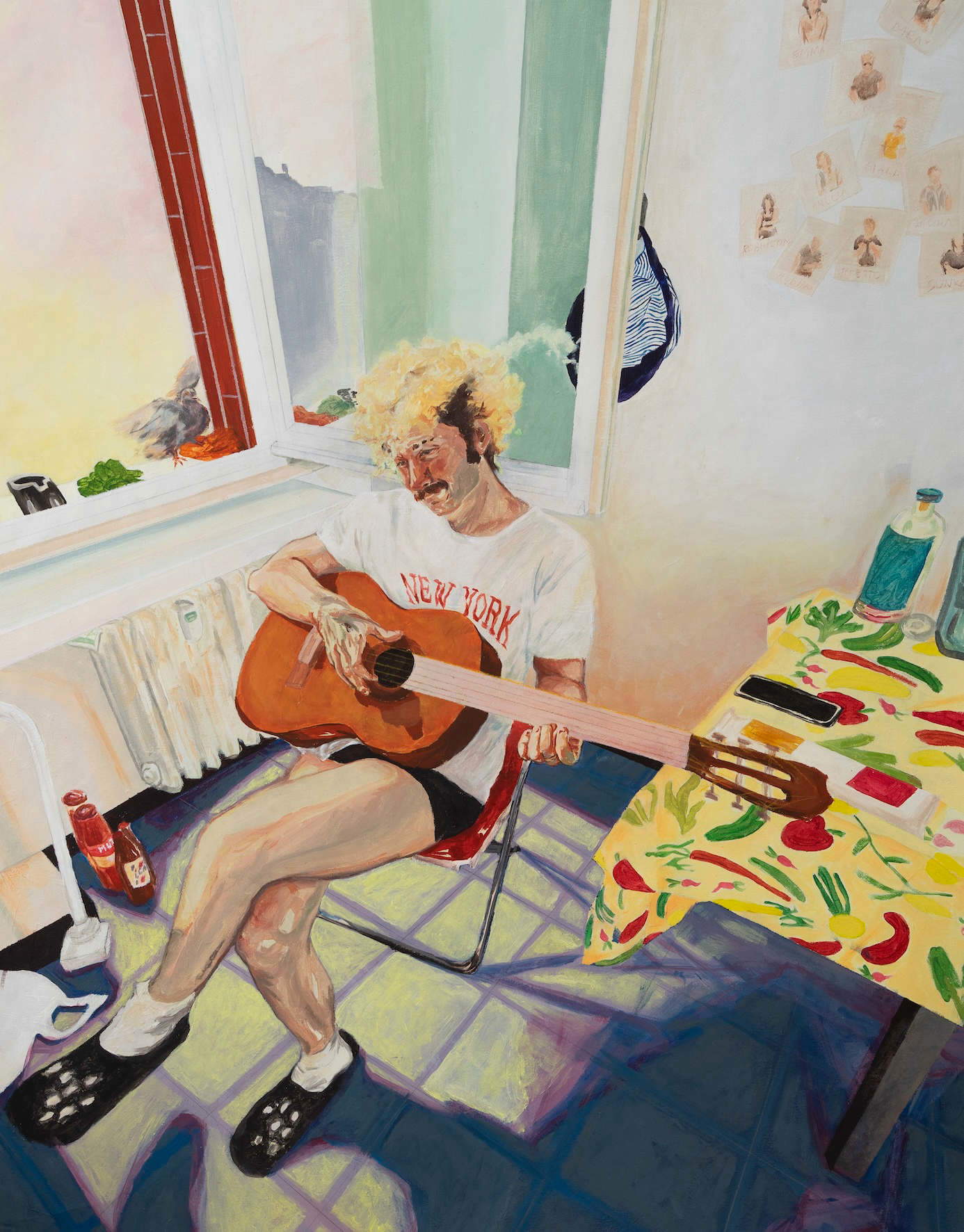
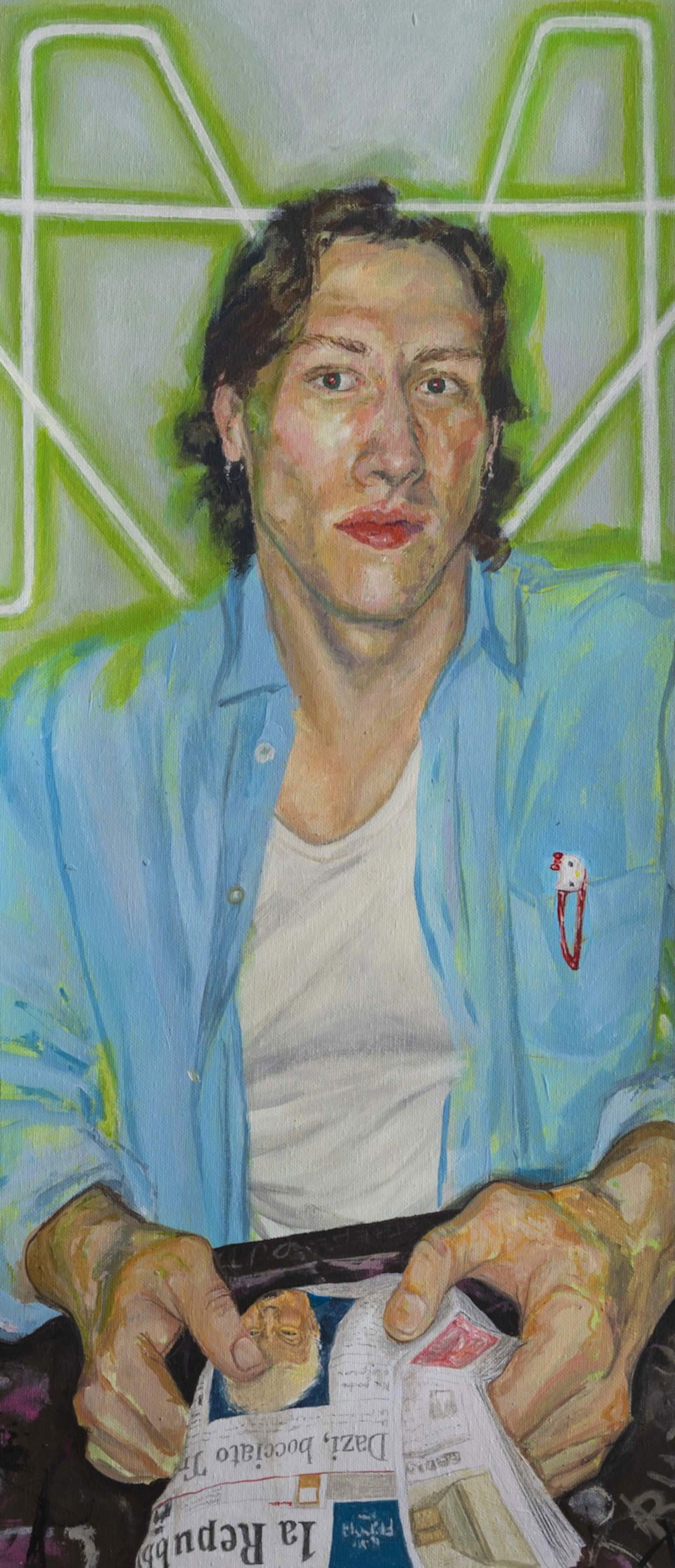
The autobiographical dimension of the works also stems from this: the situations depicted are common and recognizable, but their combination produces images in which private life becomes a way to speak about a broader experience. The kitchen, vacation, bathroom, supermarket, and domestic space are not merely settings: they are places where habits and identities are formed. The fundamental gesture remains that of slowing down: objects that are quickly passed by, consumed, or ignored in daily life are fixed on the canvas and invite a longer gaze; thus, an image that might seem trivial requires closer observation, because every element of the environment can contribute to the construction of the scene. The result, ultimately, is a body of work that takes seriously what we normally consider secondary.
The opening on October 9 will feature a program that pairs the exhibition with a musical performance. Amid the artwork, a “Secret Live” performance will take place featuring an unannounced guest, in a setting described as intimate and up-close. The musical accompaniment will blend contemporary indie pop, cinematic compositions, and melodies evoking nostalgia and romance. During the same evening, the new catalog dedicated to *Smell, baby*, Davide Quartucci’s solo exhibition currently on view at the Milan location of Boccanera Gallery and open through November 7, 2026, will also be presented.
Robertina, born in Romania, grew up in Rovereto: after earning her diploma in Multimedia Arts from the Fortunato Depero Art High School in Rovereto, she is currently completing her studies in Painting at the Brera Academy of Fine Arts in Milan. Between 2019 and 2021, her work was featured in JCE – Jeune Création Européenne, a traveling exhibition project dedicated to the young European art scene, with stops in France, Denmark, Latvia, Romania, Spain, and Portugal. In 2021, she participated in an artist residency at Le Beffroi Montrouge in France and subsequently lived in Paris for several months, where, between October 2021 and March 2022, she worked in the studios of L’Orfèvrerie. Also in Paris, in 2022, she presented her works in a couple of exhibition projects. The exhibition at Boccanera Gallery is her first solo show.
 |
| Paintings of Everyday Family Life: Young Robertina Makes Her Debut in Trento |

Warning: the translation into English of the original Italian article was created using automatic tools. We undertake to review all articles, but we do not guarantee the total absence of inaccuracies in the translation due to the program. You can find the original by clicking on the ITA button. If you find any mistake,please contact us.
















 IT
IT FR
FR DE
DE ES
ES CN
CN


