





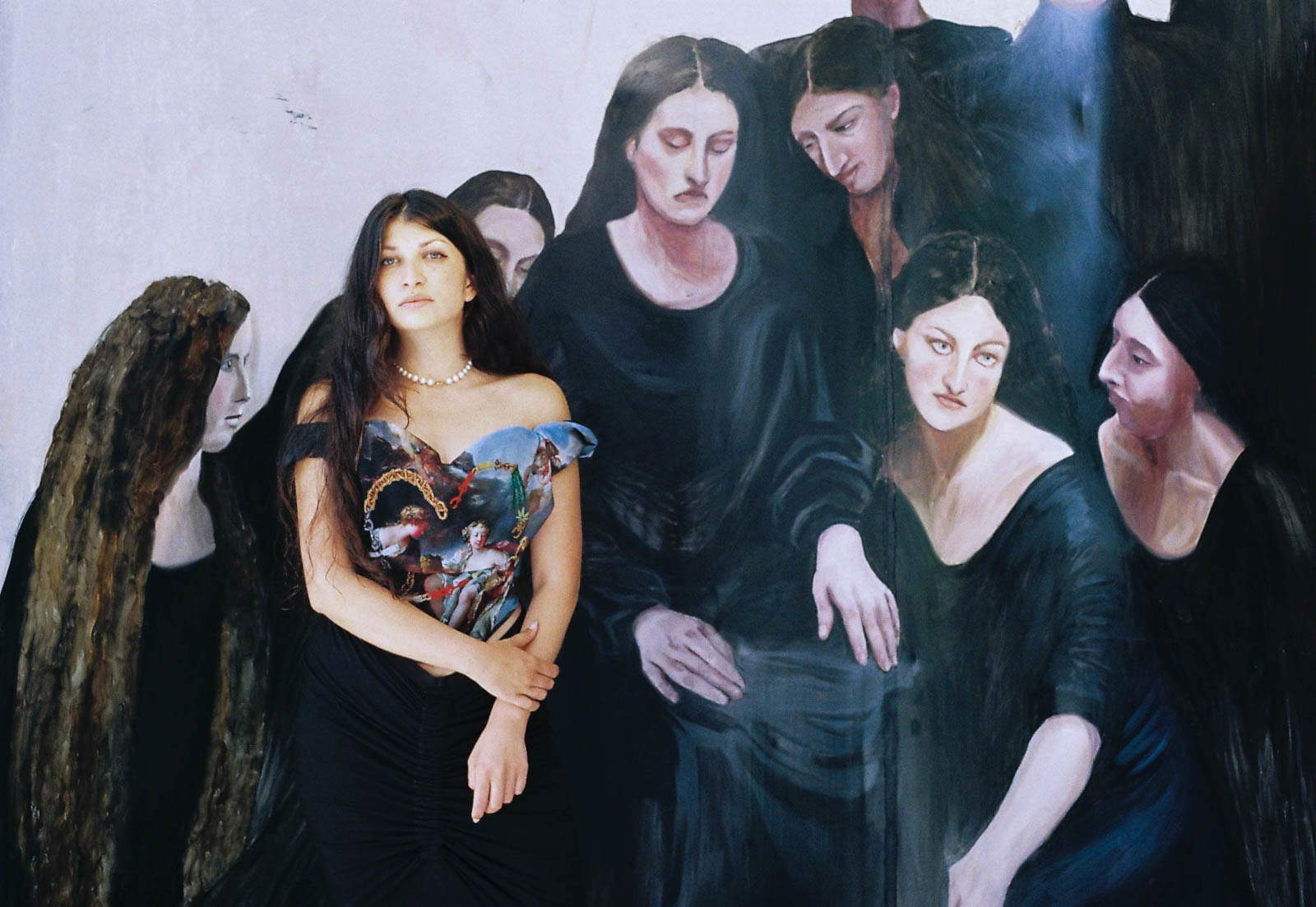
GAMeC—Bergamo’s Gallery of Modern and Contemporary Art —is dedicating the exhibition *1000 Tears* to Selma Selman, scheduled to run from October 1, 2026, to January 24, 2027, in the museum’s Spazio Zero. This is the Bosnian artist’s first solo exhibition at an Italian institution, bringing to Bergamo a body of work deeply rooted in memory, history, and the possibility of rewriting one’s identity.
Born in 1991 in Bihać, Bosnia and Herzegovina, Selma Selman has built her artistic career often drawing on her personal experiences and the history of her family and community. Her works address issues such as discrimination, marginalization, representation, and identity, interweaving autobiographical narrative with a broader reflection on the social and political conditions that shape how individuals are perceived and represented.
Within this body of work, war is a constant presence, even when it does not appear directly in the images. The conflict continues to resurface in memories, bodies, and family relationships, becoming a mark that is difficult to erase and a lens through which to examine the present.
At the heart of *1000 Tears* is a photograph taken during the war in Bosnia and Herzegovina. The image shows Selma Selman as a child alongside several family members. Years later, that photograph becomes for the artist a sort of archive to be reopened: not merely an image of the past, but an opportunity to reconnect with the people portrayed, listen to their stories, and reflect on how time has altered identities, memories, and narratives.
From conversations with the subjects of the photograph emerges a new series of graphic works created specifically for the GAMeC. These personal accounts are transformed into images that occupy a space between documentation and invention, where memory is not reconstructed in a linear fashion but emerges through fragments, associations, and evocations. A special role is assigned to hands and gestures. They are what make visible what words cannot always convey: hands that seek each other out, that clasp together, that support or protect a body, that hide a glance, or that grip a Kalashnikov. The gesture thus becomes a form of memory and, at the same time, a language capable of conveying emotions and traumas.
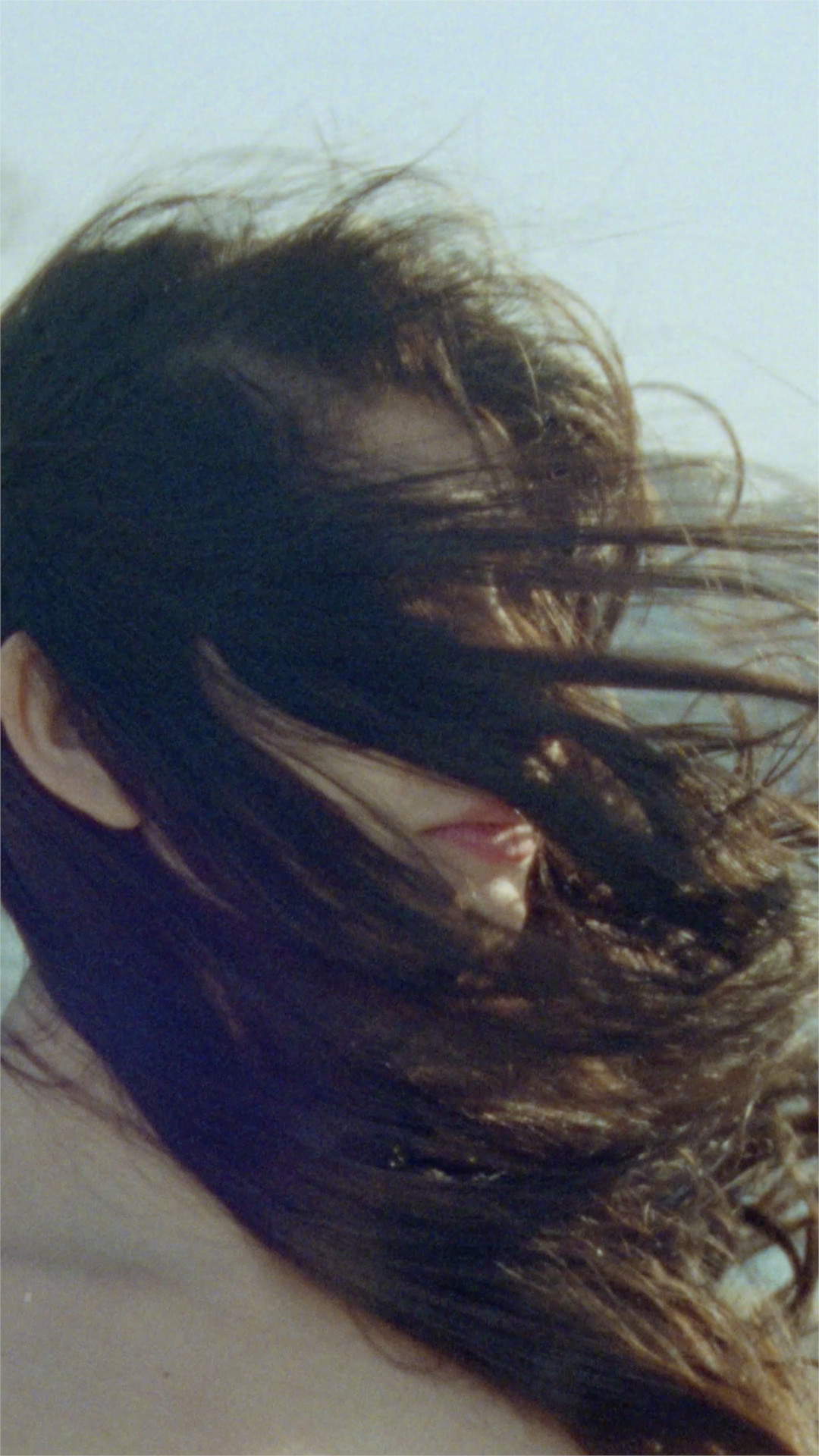
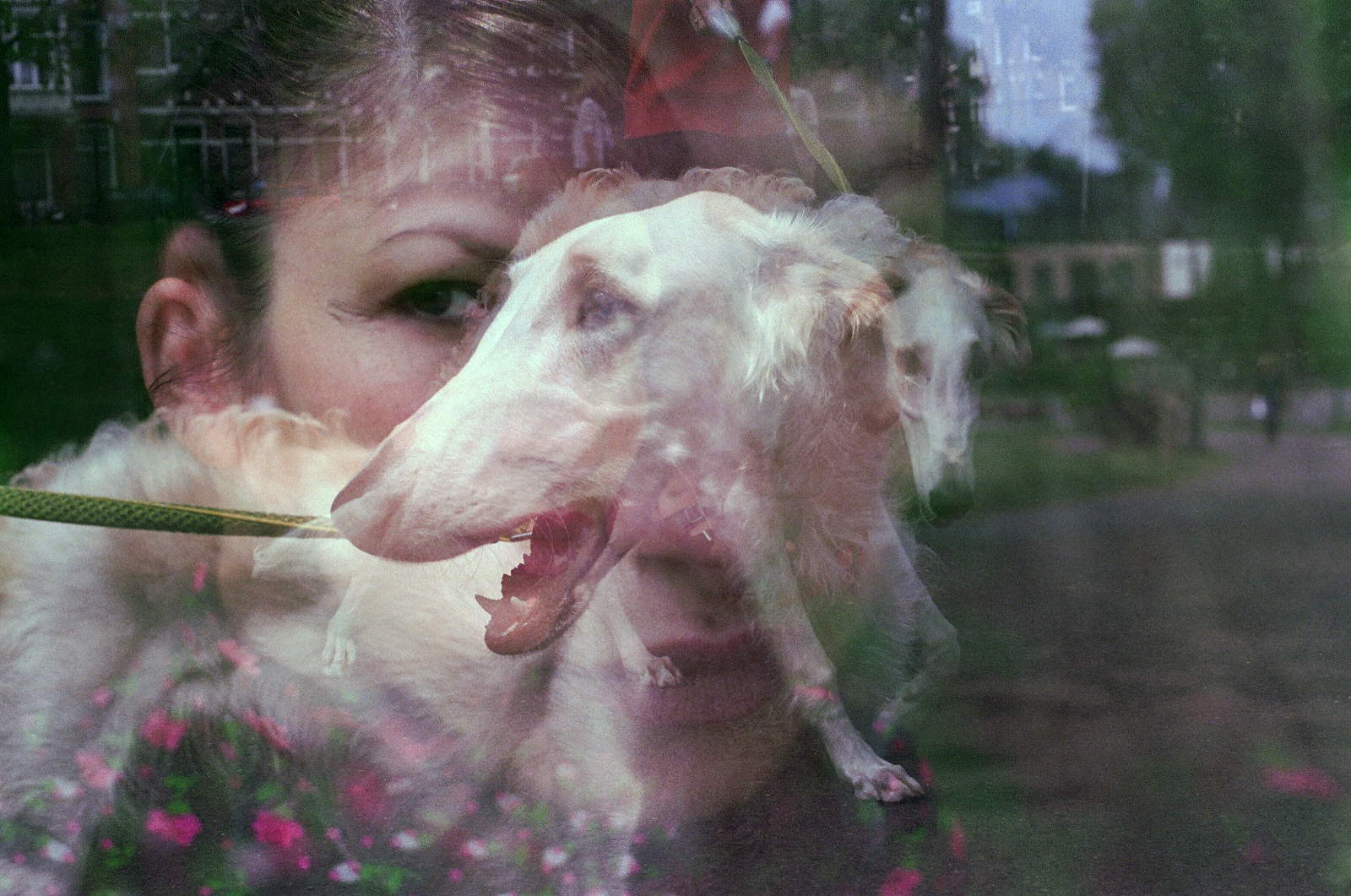
In the center of the exhibition space, a new excerpt from *Crossing the Blue Bridge*—a 2024 film inspired by a memory the artist experienced in 1994—will also be presented. During a ceasefire, Selma’s mother crossed the Bihać Bridge, known as the “Blue Bridge,” with her daughters. The path was then littered with corpses and the carcasses of dogs. In an effort to shield the little girl from that scene, her mother covered her eyes with one hand while holding the supplies she had just purchased with the other. The wind kept blowing her hair into her face, making it even harder to take in what was happening around her. Thirty years later, Selma returns to the same bridge and retraces her mother’s steps. The film emerges from this return and transforms a childhood episode into a reflection on the relationship between memory, trauma, and perception. The sequence is projected in a loop, keeping the artist’s face hidden. The viewer sees a figure from behind running toward something that cannot be distinguished, without knowing whether that movement signifies approaching or fleeing. The absence of what should be seen thus becomes an integral part of the image: the place is inhabited by an invisible presence, evoked but never fully revealed.
The relationship between what is shown and what remains hidden continues in the paintings on metal, a recurring material in Selman’s practice and one closely tied to her family history. For generations, the artist’s family has been involved in the collection and trade of scrap metal. The metal surfaces used in the works therefore bear scratches, dents, and marks from their previous existence. On these materials, Selman paints bodies and faces, transforming a material marked by time into a space where fragility and resilience coexist. Metal thus becomes more than just a support: it is a surface that preserves traces, just as memory preserves what time cannot completely erase.
Another component of the exhibition is *Letters to Omer*, a project Selman launched in 2021. At its core is a series of letters addressed to Omer, an imaginary correspondent to whom the artist entrusts thoughts, desires, memories, anger, and visions of the future. Omer never replies, but it is precisely this absence that allows the writing to become a space for personal reflection. In the letters, the intimate dimension is constantly intertwined with collective history and with the themes that run through the artist’s entire body of work. Over time, the letters have taken on different forms: they have appeared on social media, been transferred onto metal surfaces, and become performances and sound installations. For GAMeC, Selman will create a new environmental installation inside the Spazio Zero corridor. The texts will be made available to visitors, who will be able to pick them up and take them with them, transforming the act of reading into an experience of direct engagement with the work.
The exhibition also highlights the role of female genealogy and Romani history in Selma Selman’s practice. The recovery of memories often excluded from official narratives becomes a tool to counteract processes of erasure and build alternative perspectives. For the artist, retelling the past also means changing the way we view the present and creating the possibility of a different future. This perspective ties into GAMeC’s annual program, “Pedagogy of Hope,” and in particular to the principle of “learn to unlearn.” Through his practice, Selman invites us to question established categories and images, reclaiming marginalized experiences and experimenting with new ways of interpreting reality.
This drive toward self-determination is not confined to the realm of art. In 2017, the artist founded “Get the Heck to School” in her hometown, a project dedicatedto providing educational access for Romani girls. The initiative offers academic support and awareness-raising activities, using education as a tool for personal empowerment and social change.
With *1000 Tears*, GAMeC brings to Bergamo a body of work in which individual memory and collective history converge. Photographs, films, paintings, letters, and installations weave a narrative that confronts the wounds of the past without limiting itself to their mere representation, transforming them into the raw material for a new story. The exhibition is also organized with the support of the Club GAMeC, an association of friends of the Gallery that has been contributing to the museum’s activities and the promotion of contemporary artistic research since 2005.
|
| Selma Selman at GAMeC in Bergamo: the artist’s solo exhibition, exploring the memory of war and the power of rebirth |

Warning: the translation into English of the original Italian article was created using automatic tools. We undertake to review all articles, but we do not guarantee the total absence of inaccuracies in the translation due to the program. You can find the original by clicking on the ITA button. If you find any mistake,please contact us.















 IT
IT FR
FR DE
DE ES
ES CN
CN


