



by Redazione 20/11/2026


Categories: Exhibitions / Disclaimer
The Prado Museum is dedicating an exhibition to Hans Baldung Grien, one of the painters of the German Renaissance. At the heart of the exhibition are two famous, recently restored paintings that explore the relationship between beauty, the passage of time, and death.


The beauty of youth set against the gradual decay of the body and the inevitability of death: this is the central theme of the exhibition that the Museo Nacional del Prado in Madrid is dedicating to Hans Baldung Grien (Schwäbisch Gmünd, c. 1485 – Strasbourg, 1545), one of the most original figures of the German Renaissance. From November 20, 2026, to March 7, 2027, the exhibition offers a journey through the artist’s body of work, placing his pieces in the context of the figurative tradition of the time, the teachings of Albrecht Dürer, and the direct study of nature.

Curated by Christine Seidel, head of the museum’s section on Flemish and Northern European painting from 1500 onward, the exhibition takes its starting point from two paintings in the Prado’s permanent collection: *Harmony* (*The Three Graces?*) and *The Ages of Woman and Death*. Created during the final years of Baldung’s career, these two works represent some of the most complex expressions of his artistic exploration and form the centerpiece of an exhibition that brings together fifteen works —including paintings, drawings, prints, sculptures, and works on paper—from the museum and major national and international institutions.


Notable loans include *The Seven Ages of Woman* from the Museum der bildenden Künste in Leipzig, *The Three Ages of Woman and Death* from the Musée des Beaux-Arts in Rennes, and *Death and the Maiden* from the Kunstmuseum Basel. These are joined by *Adam and Eve* from the Museo Nacional Thyssen-Bornemisza in Madrid, *The Judgment of Paris* by Lucas Cranach the Elder, on loan from the Staatliche Kunsthalle Karlsruhe, and *Death (Memento mori) * from the Cathedral of Salamanca.


The exhibition explores three fundamental aspects of Baldung’s work: his relationship with the artistic legacy of Albrecht Dürer andhis observation of nature; the depiction of the different stages of life and the transformations of the human body; and the juxtaposition of youth, beauty, and death. Trained in Dürer’s workshop in Nuremberg, the artist successfully assimilated his master’s teachings while developing an independent and recognizable artistic language. Through his reinterpretation of models and iconographic themes from the German Renaissance, he addressed issues related to the nude, sensuality, morality, and the human condition, with a particular focus on the human figure and its relationship to the natural world.
The two central works of the exhibition, *Harmony* (*The Three Graces?*) and *The Ages of Woman and Death*, establish an intense visual and conceptual dialogue. Traditionally regarded as a pair, they present two seemingly opposing visions of existence: on the one hand, the serenity of an ideal beauty; on the other, the depiction of the body subject to the passage of time, leading to old age and death. Through this contrast, Baldung explores the transience of life and the fragility of earthly beauty—recurring themes in late medieval and Renaissance culture. The history of the two panels is particularly interesting. After training in Dürer’s workshop, Baldung made a name for himself primarily in Strasbourg, where he worked during the first half of the 16th century. With the spread of the Protestant Reformation and the resulting decline in ecclesiastical commissions, the artist increasingly turned to a private, cultured clientele attuned to humanist culture. It was precisely for this circle that he created works of an enigmatic nature, in which moral and philosophical themes intertwine with a sensual and at times unsettling depiction of the human body. The two paintings initially passed from the ownership of a count from Hesse—an ally of the Schmalkaldic League—to that of a commander of Charles V’s troops, following the surrender of Frankfurt am Main in 1547. Their presence in the Alcázar of Madrid is documented as early as 1600, prior to their subsequent inclusion in the Prado’s collections.
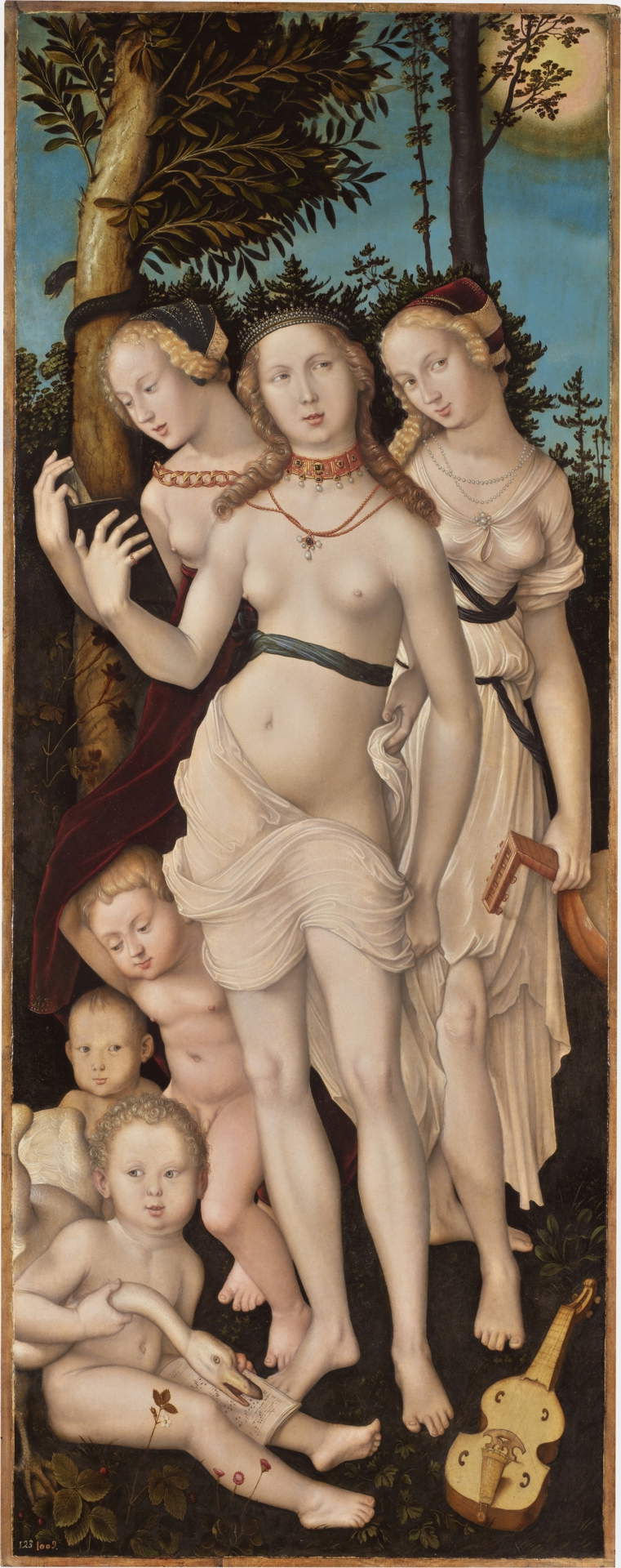
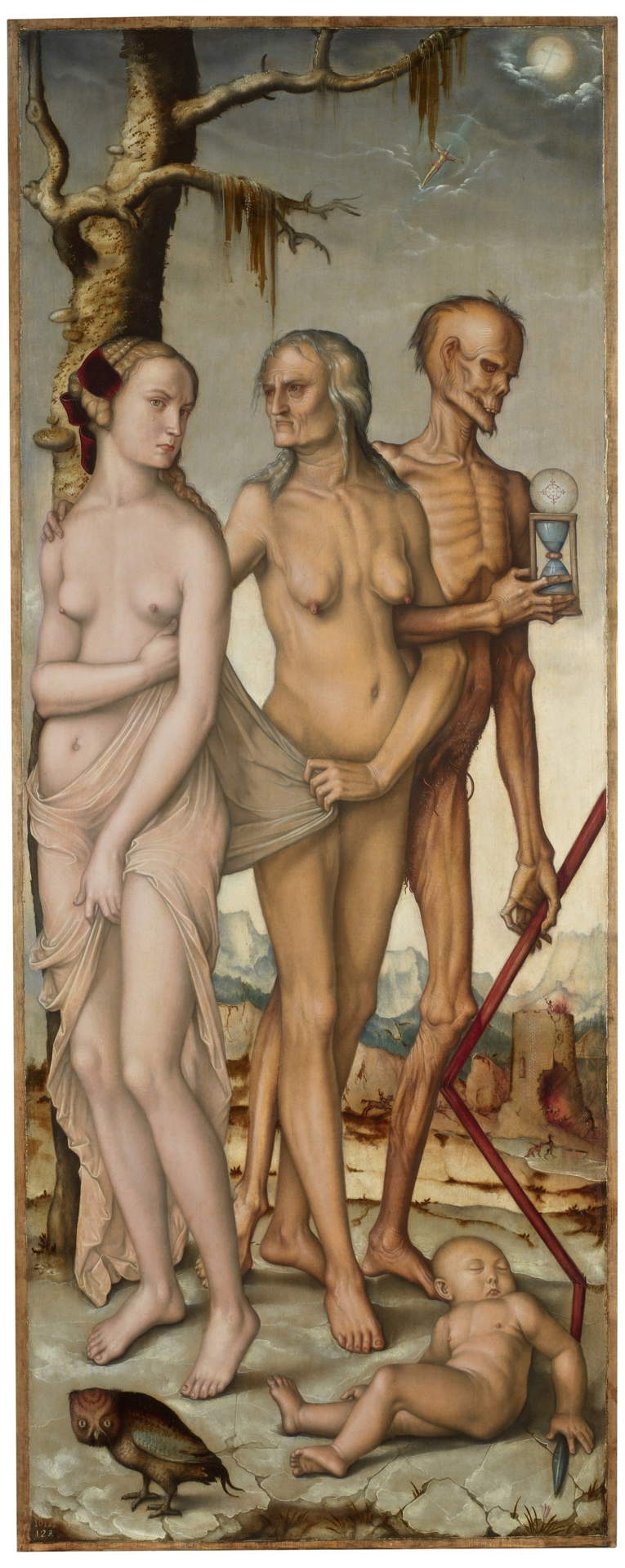
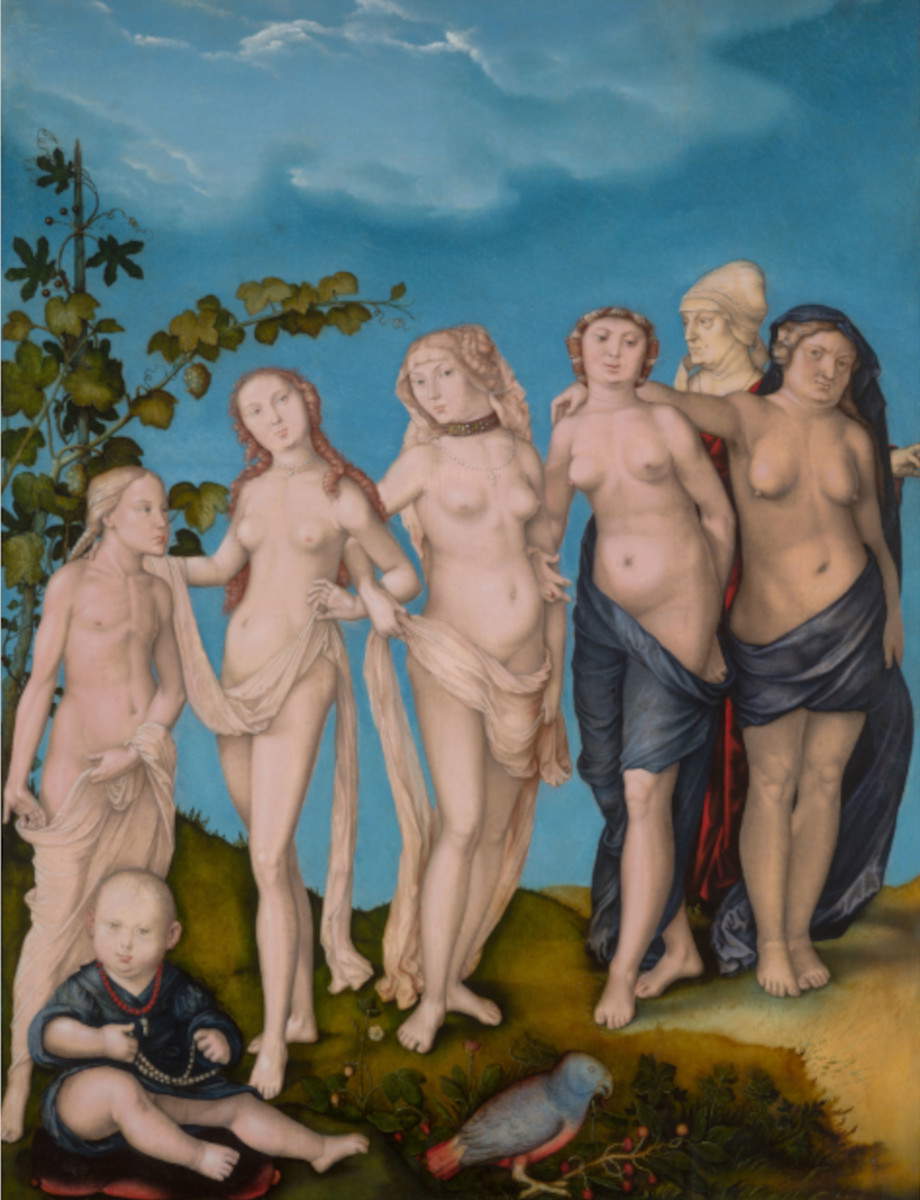
A significant section of the exhibition is also dedicated to the results of recent diagnostic studies and the restoration of the two panels—interventions that have made it possible to restore the chromatic quality of the compositions and numerous details, including botanical elements. The studies have also provided new insights into the artist’s techniques, the materials used, and his working methods.
Technical studies have revealed that Baldung executed his preparatory drawings directly on the chalky surface of the panels, likely using a dry material such as black chalk. The traces, dark enough to remain visible beneath the thin paint layer, were further examined using infrared reflectography. The images reveal a creative process characterized by numerous light, repeated marks, used to progressively define the figures before being traced over with quicker, more incisive outlines. The rendering of the bodies and faces, marked by wrinkles, appears particularly free in *The Ages of Woman and Death*, where the artist sketched the entire composition directly onto the support.
The restoration also revealed a significant difference in the use of color between the two paintings. In *Harmony* (*The Three Graces?*), the figures are rendered through modeling characterized by dark shadows, achieved through the use of black pigments. In the other panel, however, the skin tones take on reddish-brown hues that become progressively more intense with advancing age, emphasizing the physical transformation of the bodies. This chromatic contrast helps reinforce the dialogue between the two works, juxtaposing idealized youth with the deterioration of the body and the transience of existence.
A further element of insight is provided by the so-called Karlsruhe Sketchbook, a volume measuring 21.6 by 16.3 centimeters that contains over one hundred silverpoint drawings created by Baldung in Strasbourg between 1511 and 1545. The pages include preparatory studies for portraits, geometric motifs, landscapes, cityscapes, suits of armor, animals, plants, and anatomical details such as hands, feet, and faces. These are valuable testimonies to the artist’s constant focus on observing from life and studying nature. Some of these drawings, particularly those depicting botanical elements, musical instruments, and faces, have been linked to the compositions of the two Madrid paintings and to *The Seven Ages of Woman*, housed in Leipzig. This comparison provides a better understanding of how Baldung reworked and transformed previously developed motifs, adapting them to new compositional solutions. The sketchbook also documents the artist’s interest in scientific and naturalistic study, which likely developed during the years he spent in Dürer’s workshop in Nuremberg and was shared with the humanist circles he frequented in Strasbourg. After Baldung’s death, his drawings—originally collected in various sketchbooks—were incorporated into the collection of Sebald Büheler (1529–1595), a chronicler of the city of Strasbourg, who had them bound into a single volume, now known as the Karlsruhe Sketchbook.
By comparing paintings, drawings, and works by other leading figures of the Northern Renaissance, the Prado exhibition reveals the complexity of Hans Baldung Grien’s artistic exploration. His ability to combine ideal beauty with a raw depiction of reality, sensuality with moral reflection, scientific study with symbolic imagination, emerges in an exhibition that addresses one of the most universal themes in art history: the relationship between time, the body, and death.
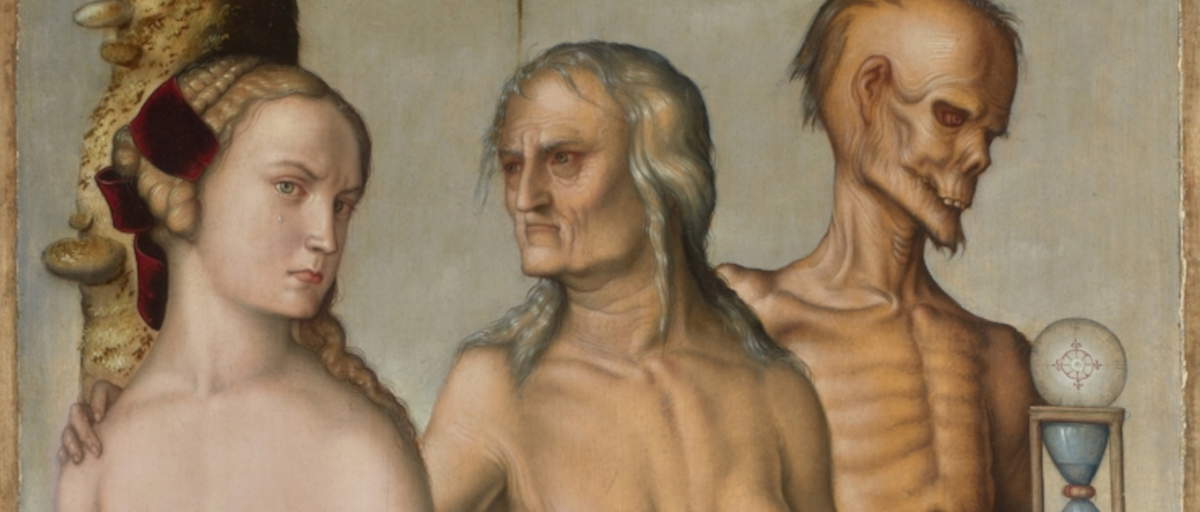 |
| The Restless Charm of Hans Baldung Grien: An Exhibition at the Prado Exploring Beauty, Youth, and Death |
Warning: the translation into English of the original Italian article was created using automatic tools. We undertake to review all articles, but we do not guarantee the total absence of inaccuracies in the translation due to the program. You can find the original by clicking on the ITA button. If you find any mistake,please contact us.