





After more than ten years of closure, the underground archaeological site at Palazzo Forti in Verona is once again open to the public. The reopening—made possible by restoration work carried out by the Superintendence of Archaeology, Fine Arts, and Landscape for the provinces of Verona, Rovigo, and Vicenza—will be accompanied by the exhibition project *Affioramenti*. The Basaldellas: Between Sign, Matter, and Space, scheduled from October 1 to 31, 2026. The initiative is organized by the Achille Forti Gallery of Modern Art in collaboration with the Cariverona Foundation, the Afro Archive Foundation, and the Galleria dello Scudo.
The reopening of the archaeological site is part of the “Secondo Tempo | Palazzo Forti” program, launched with the goal of rediscovering the complex through its layers of art, architecture, and archaeology. The restoration of the underground area was carried out under the supervision of the Superintendence of Archaeology, Fine Arts, and Landscape for the provinces of Verona, Rovigo, and Vicenza, in collaboration with the City of Verona and the Cariverona Foundation. The work involved a careful reorganization of the spaces and the securing of the edges of the domus’s mosaic floors, while also laying the groundwork for a stratigraphic reinterpretation of the remains.
In fact, artifacts from different eras are preserved beneath the palace. Roman-era streets and domus coexist with medieval structures and modern-era artifacts, forming an archaeological stratigraphy that documents the site’s various phases of transformation. The reopening of the area to the public thus marks a new stage in the restoration of Palazzo Forti, in which the preservation of historical artifacts is complemented by projects dedicated to contemporary artistic expression.
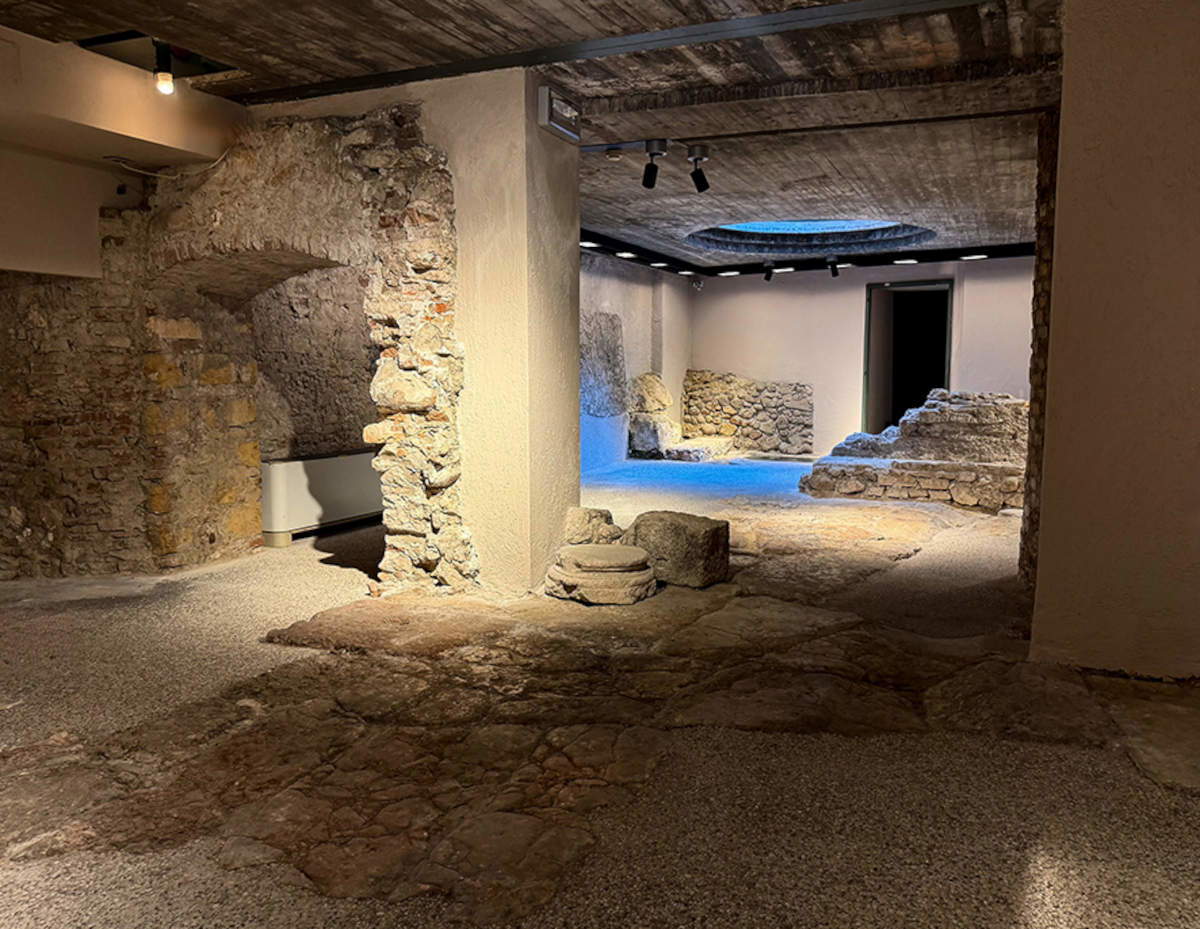
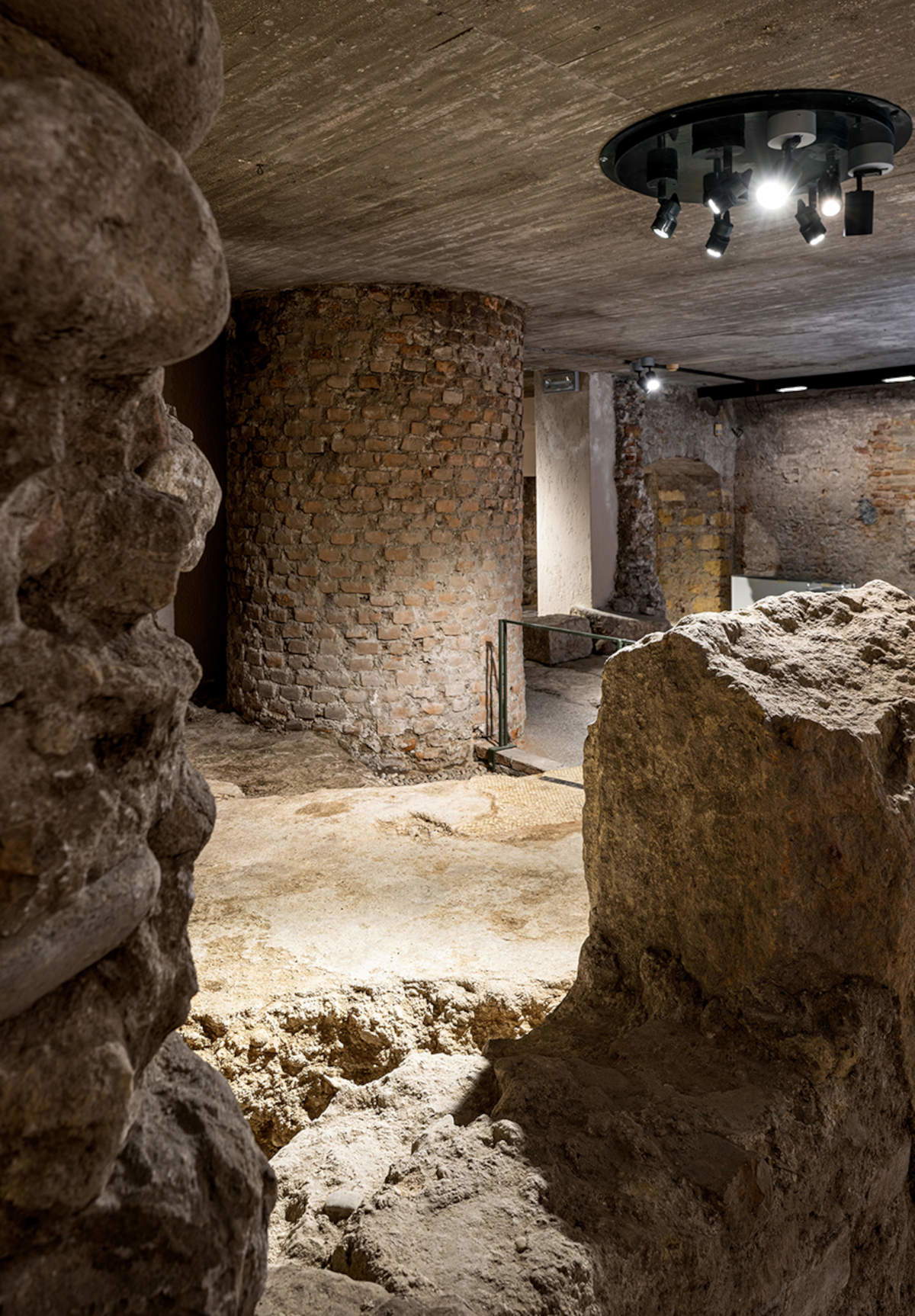
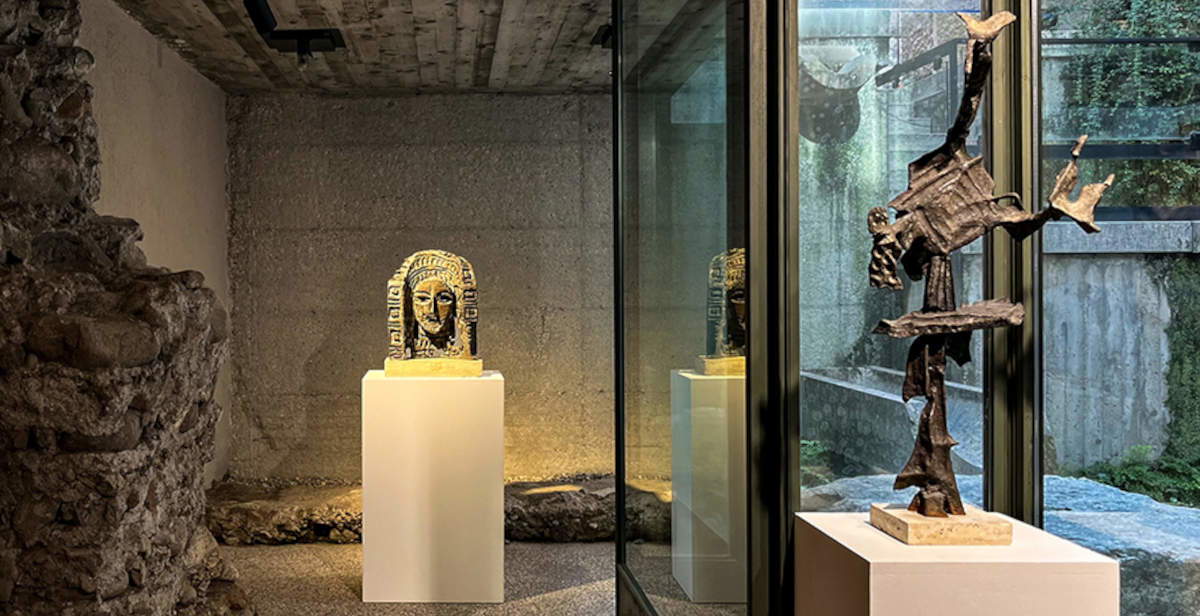
It is within this context that *Affioramenti* takes place, presenting for the first time a direct comparison between the archaeological excavation and a body of works by Mirko Basaldella belonging to the Fondazione Cariverona, complemented by two works from the collection of the Fondazione Archivio Afro in Rome. The project also includes works by Afro and Dino Basaldella, from the Galleria dello Scudo in Verona and the collection of the Fondazione Archivio Afro in Rome, respectively.
The exhibition’s title refers to the vestiges that the excavation brings to light and restores to the knowledge of the present, but also to the materiality of the works by the three Basaldella brothers, in which forms, colors, and structures develop through an exploration of the possibilities of the mark and of matter. The project thus connects two forms of memory: that embedded in ancient remains and that produced by 20th-century artistic exploration.
The core of the exhibition consists of sculptures by Mirko Basaldella, featuring works that document his artistic exploration of the 1960s and his earlier production. The exhibition is complemented by two works dedicated to his brothers Afro and Dino, thus bringing the three artists together in a project that explores their distinct approaches to form and material. Mirko elevates the figure to a symbolic and archaic dimension; Afro develops a painterly practice grounded in the freedom of color and line; while Dino focuses his work on the inseparable relationship between form, volume, and space.
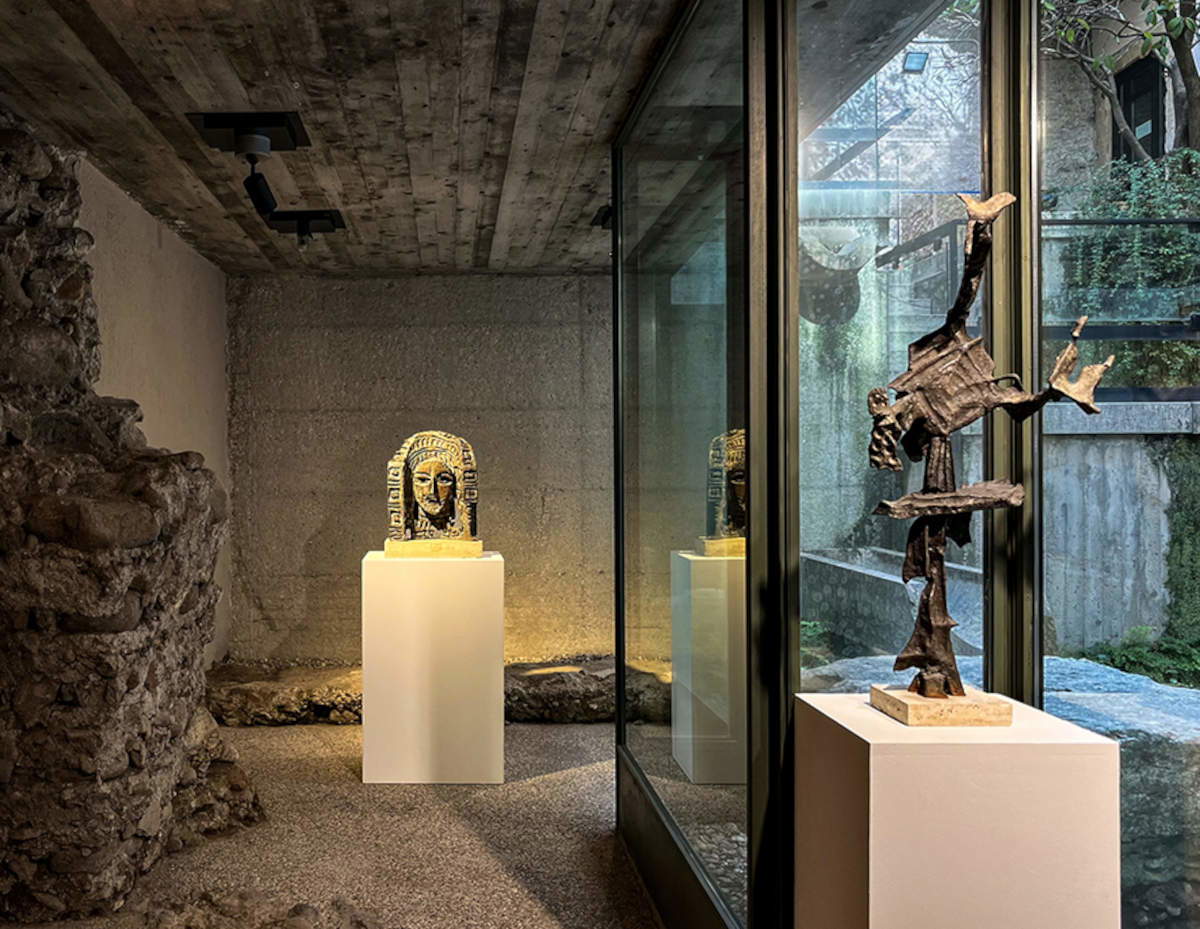
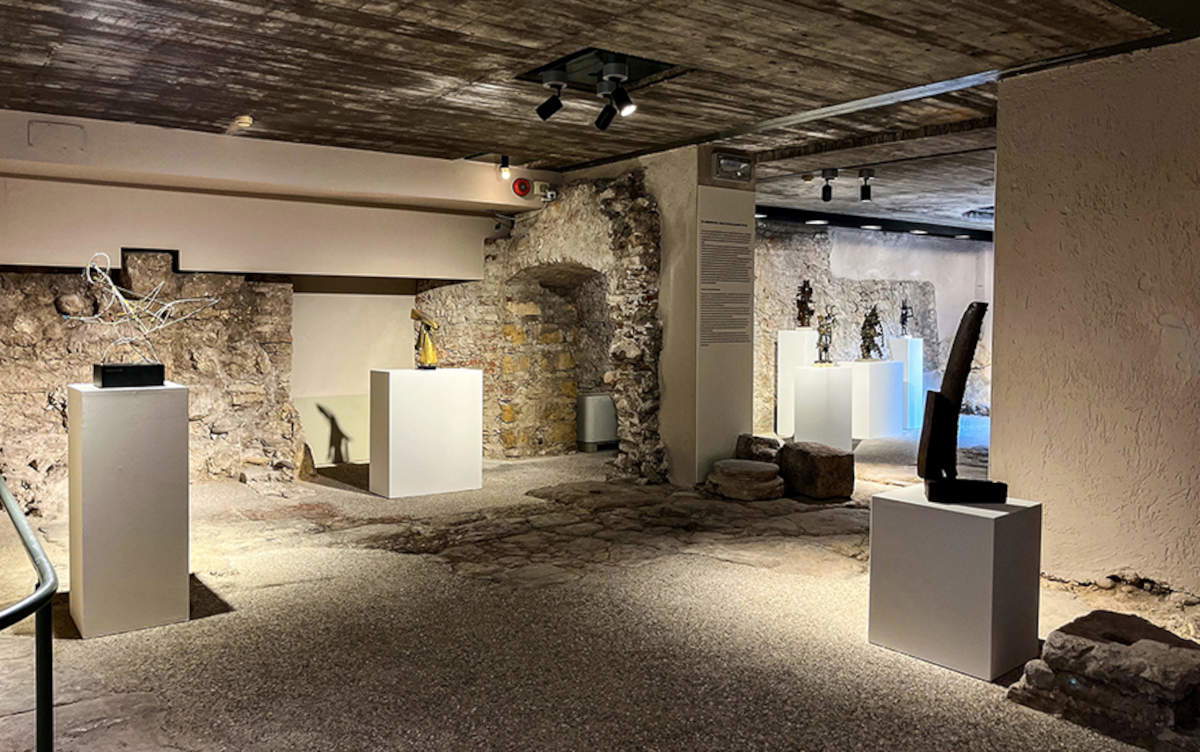
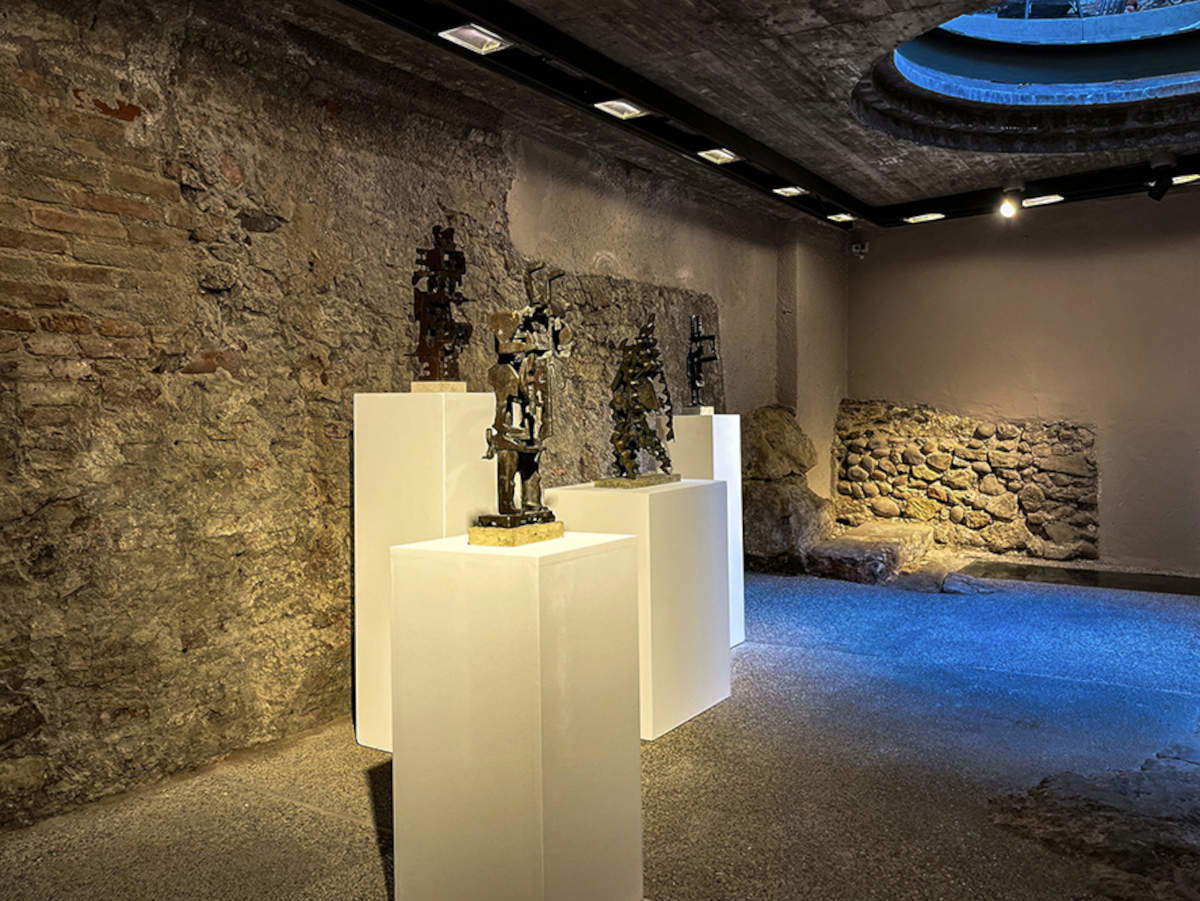
The exhibition begins with Afro’s *Giardino d’infanzia*, placed in dialogue with the Roman ruins and their dimension of memory and stratification. The sculptures by Dino and Mirko, on the other hand, are arranged at the edges of the archaeological site. Their placement preserves the autonomy of the works and, without interfering with the ancient remains, helps to visually define their boundaries. The project thus establishes a spatial relationship in which the modern works highlight the presence of the archaeological remains, while the materiality of the ancient ruins provides the context for interpreting the Basaldellas’ formal exploration.
The reopening of the archaeological site and the exhibition project will be accompanied by the presentation of the *Palazzo Forti 2025–2026* catalog, dedicated to the process of returning the complex to the city. The publication documents the various phases of the spaces’ reopening and the projects that have accompanied the Palazzo’s new cultural program.
The process began with the reopening of the Piano Nobile and the exhibition *Ápeiron | Senza confini* (Ápeiron| Without Borders), a project that brought together the Fondazione Cariverona’s contemporary collection with works from the Achille Forti Gallery of Modern Art, addressing themes related to the complexity of the present. This project was complemented by *Voci Forti*, a series of guided tours led by experts, art historians, and professionals who have contributed to the history and promotion of the Palazzo and its collection. The Sala delle Vasche, meanwhile, was reopened with *CHIMERA. Novello Finotti*, an exhibition dedicated to the Italian sculptor, featuring works created from the 1960s through his most recent pieces. During the summer, the courtyard hosted “Serate Forti,” a program dedicated to film, music, and literature, while the Third Floor was dedicated to experimentation with the installation and participatory initiative“The Lawn” by Elena Guerreschi and “Lascia un segno” by So Bright.
Open to the public: October3 –October 31, 2026; Every Saturday and Sunday, 11 a.m.–6 p.m.
Free admission
 |
| Verona: The archaeological area at Palazzo Forti Reopens, Featuring Works by the Basaldella Brothers |

Warning: the translation into English of the original Italian article was created using automatic tools. We undertake to review all articles, but we do not guarantee the total absence of inaccuracies in the translation due to the program. You can find the original by clicking on the ITA button. If you find any mistake,please contact us.























 IT
IT FR
FR DE
DE ES
ES CN
CN


