



by Noemi Capoccia 02/09/2026



Categories: Interviews / Disclaimer
Founded in Paris in 2024, MIRA Latino Art Fair aims to showcase emerging art scenes in Latin America. In this interview with Noemi Capoccia, Manuela Rayo discusses the fair’s philosophy, the new image of Colombian art, and the potential contribution of her network to the Colombian Pavilion at the 2028 Venice Biennale.
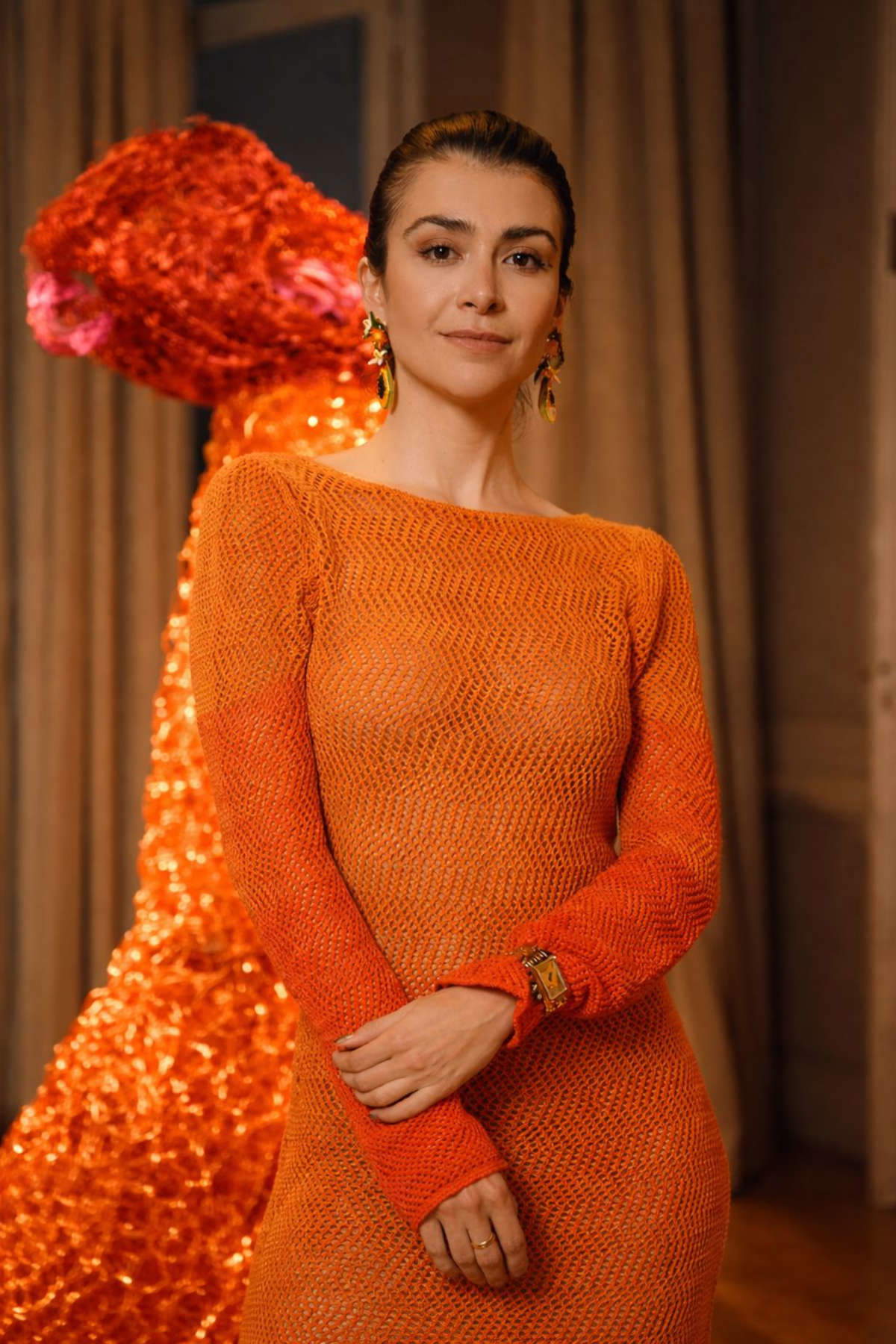
MIRA Latino Art Fair, a project launched in 2024 with the aim of giving greater visibility to Latin American contemporary art, is today one of the most interesting art fairs dedicated to artists from emerging countries. It was founded and is directed by Manuela Rayo, who was born in Colombia and is now based in Paris: after a career in public relations at institutions such as the Louvre and the Grand Palais, and collaborations with international art fairs including Art Paris, FIAC, and Paris Photo, she chose to put her experience to work for a platform dedicated to cultural and curatorial dialogue, with a particular focus on South American artists. The debate on the future of the Colombian art scene also found a forum for discussion last May at Palazzo Smith – Casa Art Events (headquarters of Art Events), a venue management and event production company chaired by Filippo Perissinotto. In this interview with Noemi Capoccia, Rayo reflects on the philosophy that guided the creation of MIRA, explaining how the fair aims to serve as a curatorial framework capable of highlighting the cultural distinctiveness of Latin America, and addresses the topic of the future Colombian Pavilion, the potential contribution that the network built around MIRA can offer to the project, and the need to present the European public with an interpretation of contemporary Colombian art free from stereotypes—one capable of conveying its richness, diversity, and vitality.
NC. MIRA Art Fair was founded in Paris in 2024 with a strong focus on emerging art scenes. What needs within the contemporary art scene did you aim to address and fulfill with this project?


MR. As you mentioned, the Mira Foundation was established a few years ago with the idea, from the very beginning, of bringing together artists associated with new trends and long-term projects. I believe this distinction is important because it allows us to separate those who are emerging—with a language still in formation—from established entities linked to a more structured and enduring approach. In this context, we can mention names such as Galleria Continua and the Garden della Mora project. Returning to the theme of the parallel between emerging artists and figures who lend prestige to the platform, the goal is to clarify that Mira is not structured as a marketplace. I define it rather as an art fair and a curatorial platform designed to highlight cultural specificities, particularly those of Latin America. Furthermore, Mira is hosted at the Maison des Arts de l’Amérique Latine, a splendid historic building in the Saint-Germain-des-Prés neighborhood of Paris. It is a highly prestigious venue, especially given the quality of the content and programming it hosts.
The future Colombian Pavilion represents an opportunity for international visibility. What image of contemporary Colombian art do you consider essential to present to the European public today?
As the founder of Mira, this emerging project is particularly close to my heart. For me, it is essential to bring to the Parisian scene—and more broadly into the discourse on Latin American arts—what is most current and vital in Colombia today. The aim is to present an extremely diverse, deeply contemporary, and, in a certain sense, even daring scene. What I want to showcase is a rich, multi-layered landscape capable of expressing a powerful cultural energy and a fully modern sensibility. It’s about presenting a fresh, up-to-date perspective that tells the story of Latin American art without nostalgic filters or conventional interpretations, but through a direct gaze at the present.
How can the project for the Colombian Pavilion at the 2028 Biennale engage with the experience of the MIRA Art Fair in Paris, particularly in shaping a contemporary vision of Colombian art on an international scale?
Perhaps there is no direct link at this time: MIRA is not involved in the pavilion project and, as things stand, is not part of it, although it may be in the future. It is clear, however, that experiences, methods, and visions can engage in dialogue and find common ground: MIRA is a space open to the business world and institutional partners, with an approach that integrates cultural and entrepreneurial dimensions in support of the arts. In this sense, we are seeking to create a connection between different platforms that, while maintaining distinct identities, share certain affinities in vision and method, as in the case of the Colombia Pavilion in Trento.
Are there already ideas on how to present a new interpretation of contemporary Colombian art at the 2028 Venice Biennale?
Structurally, the project is based on a comprehensive network that includes collectors, brands, and a broader audience of art enthusiasts and cultural stakeholders. Within this ecosystem are figures such as María Wille, a highly experienced curator and former director of the Banco de la República collection in Colombia. Alongside her, Anna Shimi collaborates on a permanent basis with Mira as a curator. The result is a complex curatorial system in which diverse areas of expertise continually intersect and integrate. Looking ahead, Mira will be able to make its network and connections available in preparation for the pavilion planned for 2028. Without anticipating roles or definitions that have not yet been formalized, a shared path is nevertheless taking shape—one that remains open and evolving, with significant scope for future development.
What is and what will be your main role within the Colombian Pavilion project?
My role cannot easily be defined by a single label. I am not the curator, I am not the public face of the project, and I do not even see myself as an artist directly involved. Rather, I consider myself more of a behind-the-scenes presence, playing a strategic and relational support role. My contribution therefore focuses on building and developing connections between the project, the brands, and the institutional and private partners.
Warning: the translation into English of the original Italian article was created using automatic tools. We undertake to review all articles, but we do not guarantee the total absence of inaccuracies in the translation due to the program. You can find the original by clicking on the ITA button. If you find any mistake,please contact us.