





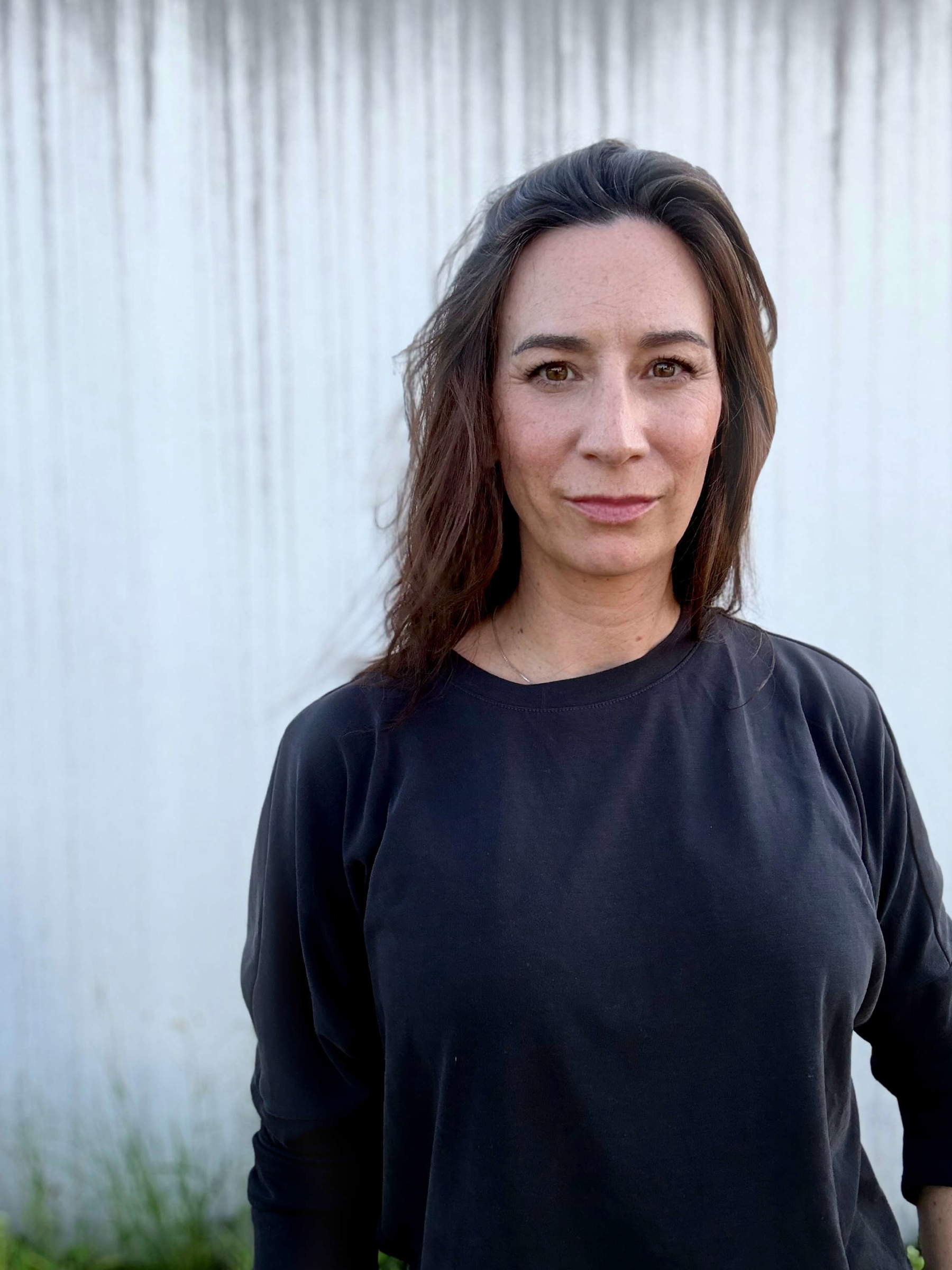
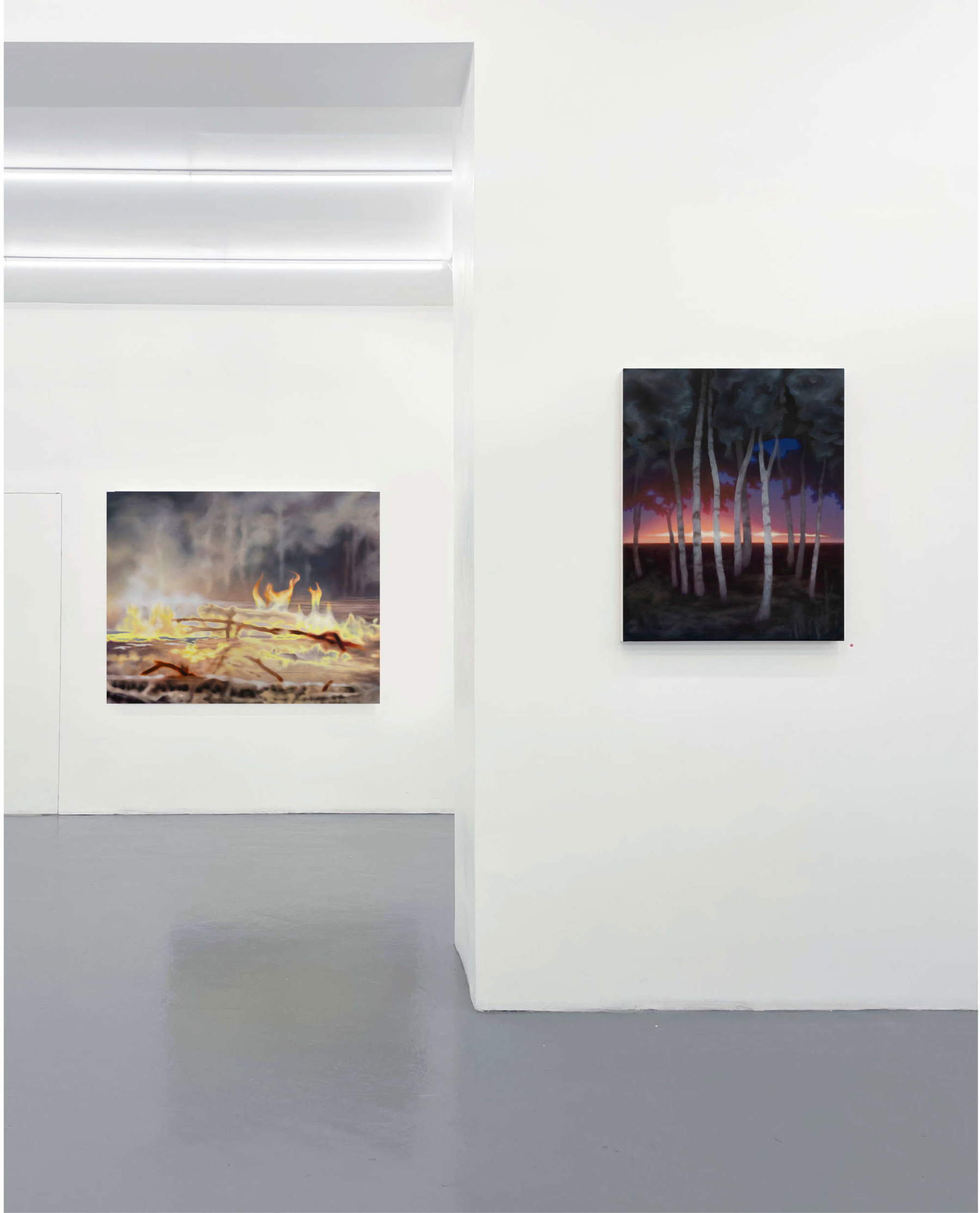
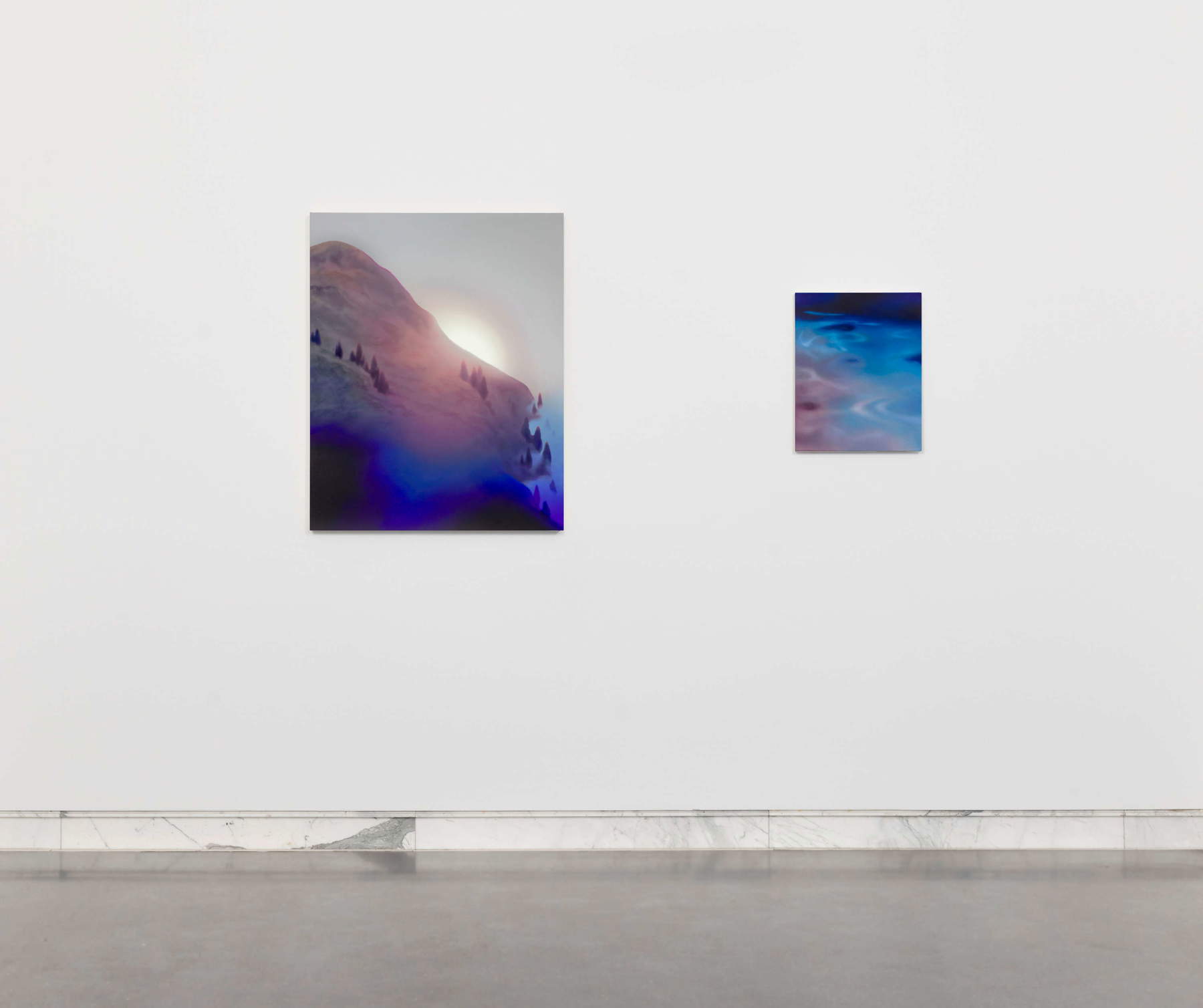
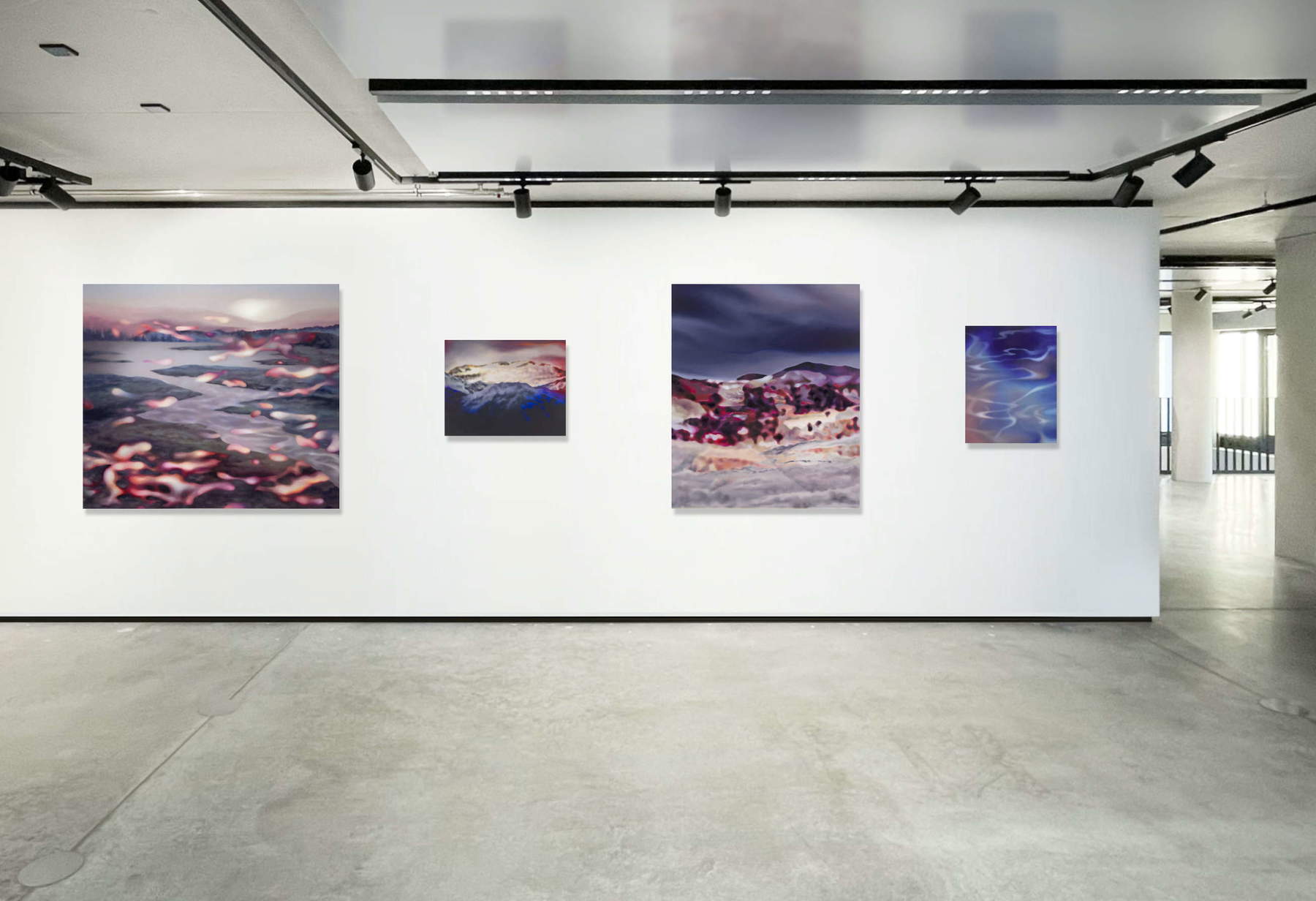
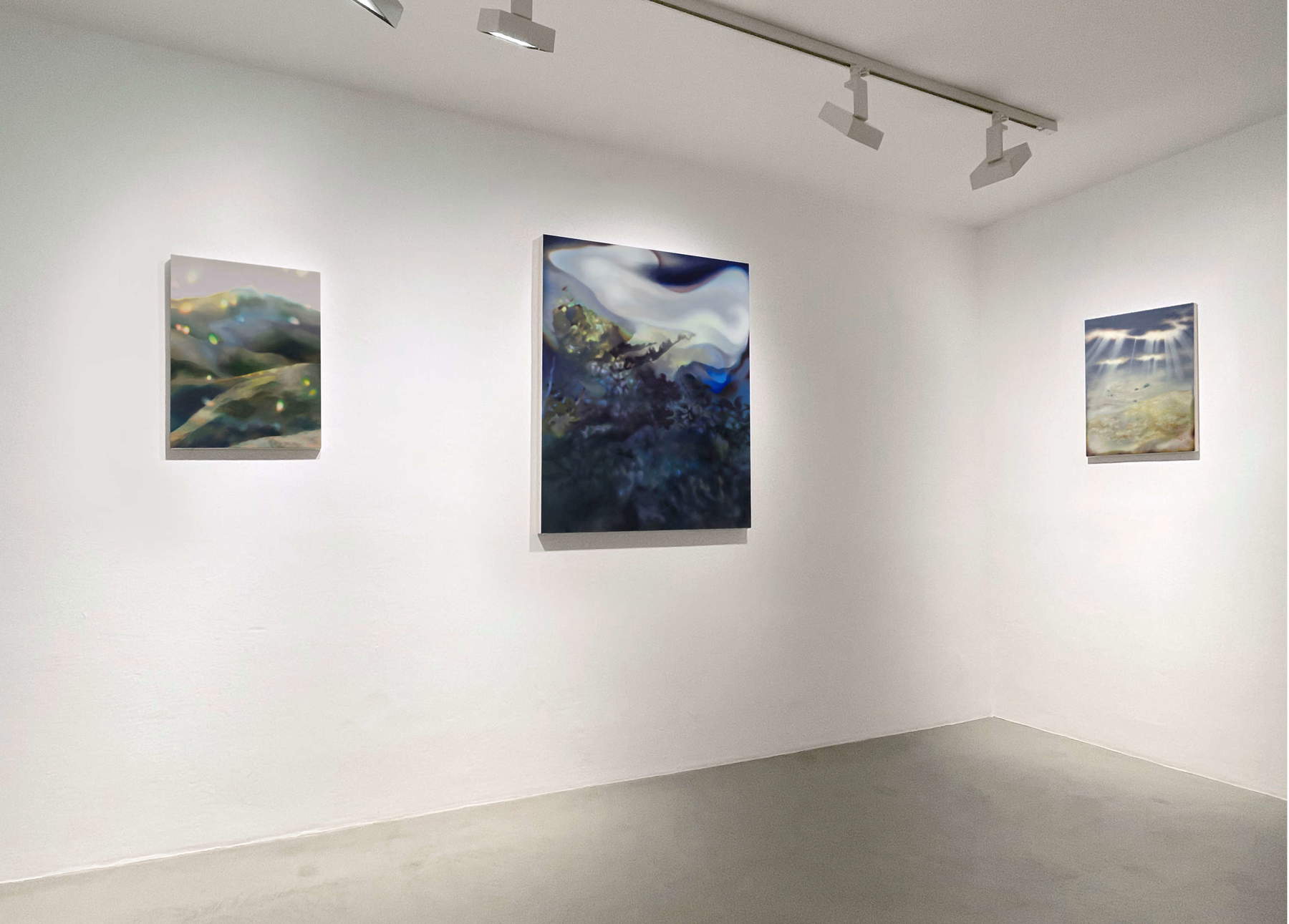
Lena Keller (Heidelberg, 1980) belongs to a generation of artists who came of age during the transition from analog to digital, but her painting defies any technological simplification. In her work, landscape is not presented as an objective reality but as a cultural construct shaped by collective experience, imagination, and modes of representation. Keller has developed a visual language that oscillates between abstraction and figuration, in which colour assumes a central role: preceding the word, it engages the viewer first through sensory perception. Her artistic practice engages with the landscape genre as a pictorial field shaped by current socio-ecological conditions and the impact of digital image culture. Rooted in a historical genre that reflects social change, her oil paintings respond to the present state of affairs with a sense of urgency and quiet reflection. Keller, who currently lives and works near Munich, develops her works through processes of mutation and translation, in which image and reference gradually lose their hierarchy and merge into a new pictorial reality. The intrinsic ambiguity of her works offers viewers a point of reference within their own sphere of experience. Her works have received numerous awards and have been exhibited internationally in museums, galleries, and art fairs, including the Pinakothek der Moderne in Munich and the Museum Kunsthaus in Fürstenfeldbruck. She has held solo exhibitions at the LSS Gallery (New York), Galerie Bayasli (Paris), Kornfeld Galerie (Berlin), and Galerie Heckenhauer (Munich). Her works are included in public collections, including the Kunstsammlung des Deutschen Bundestag (Berlin) and the Staatliche Graphische Sammlung in Munich. In conversation with Gabriele Landi, the artist reflects on the milestones of her artistic development, considers the significance of landscape in contemporary painting, and offers insight into her artistic practice, inviting viewers to question and rediscover their own perception.
For most artists, childhood is the golden age when the first signs of interest in art begin to appear. Was this also the case for you? Tell us about it.
LK. I painted, drew, and made things from an early age. I loved building miniature worlds from plant fragments, wood, paper, stones, and wire. When I started school, my notebooks were covered in drawings. My parents often took us to interesting places: I remember meeting the Belgian artist Peter Hodiamont in his studio, walking through the gardens of Giverny or visiting Dalí’s home in Cadaqués for example.
Did you have a first artistic love?
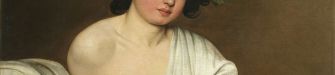
The first work that made a lasting impression on me as a child was da Vinci’s Lady with an Ermine which I saw as a replica in a classmate’s home. It left me both perplexed and fascinated. The depiction of the figure with its barely perceptible brushstrokes almost seemed photographic to me while it was at the same time clearly belonging to a long bygone era. Later I encountered Richard Hamilton’s I’m dreaming of a black Christmas at the Tate. More than the subject, the partially concealed methods of its production sparked my curiosity. It was the first time I began to think about the role of painting in a multimedia age.
What did you study?
I graduated from Akademie der Bildenden Künste München in 2022 as Meisterschülerin after 6 years of studies in Fine Art / Painting.
Were there any important encounters during your training?
As a student, I had a fortunate encounter with a collector who noticed my work. His encouragement helped me to overcome the tendency to judge my own work too harshly. Today, doubt becomes a source for development more and more.
How has your work developed over time?
My early work was predominantly abstract, perhaps reflecting a reluctance or inability to clearly define my artistic position. Currently, my paintings stand on the threshold between abstraction and representation, a space I find both challenging and productive.
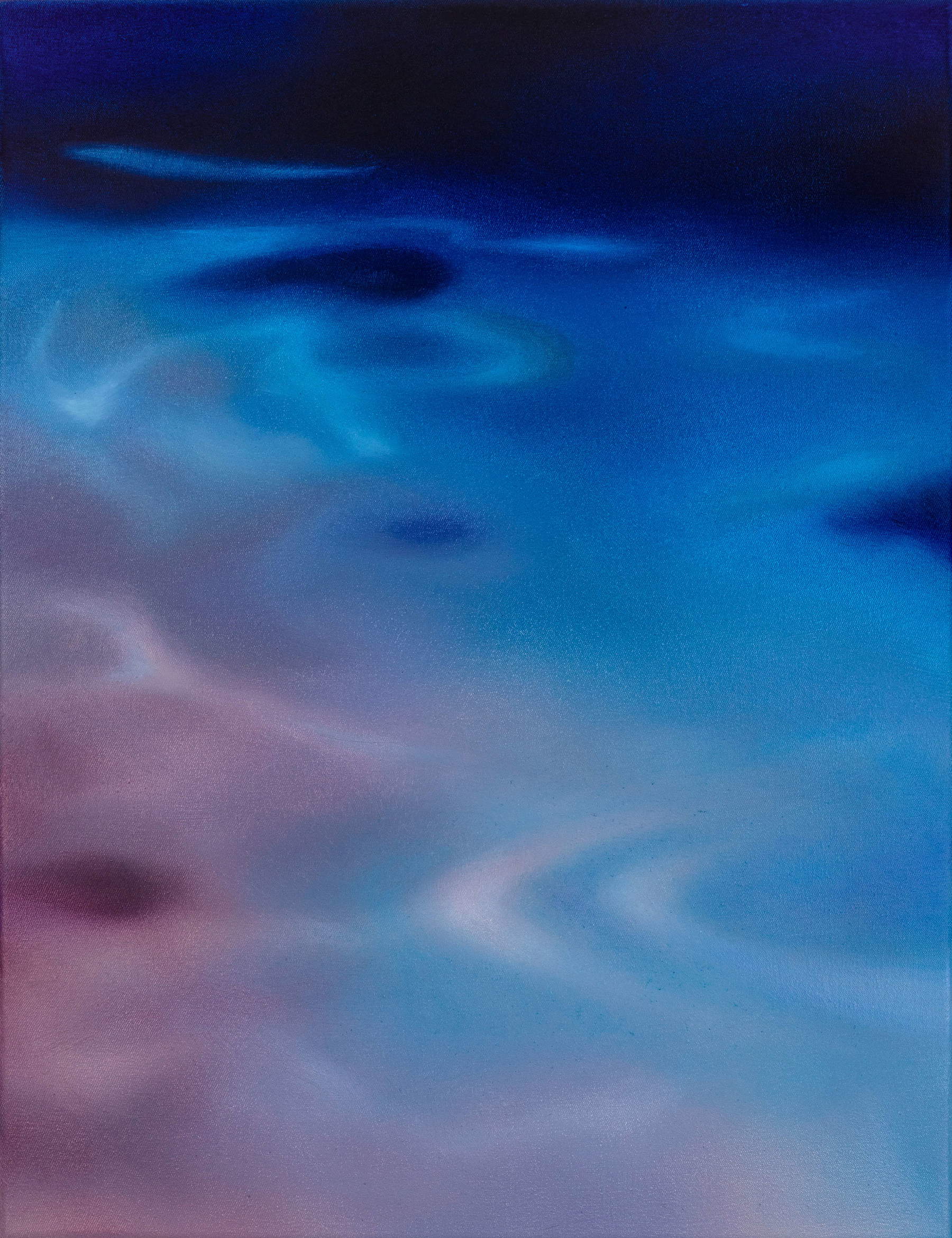
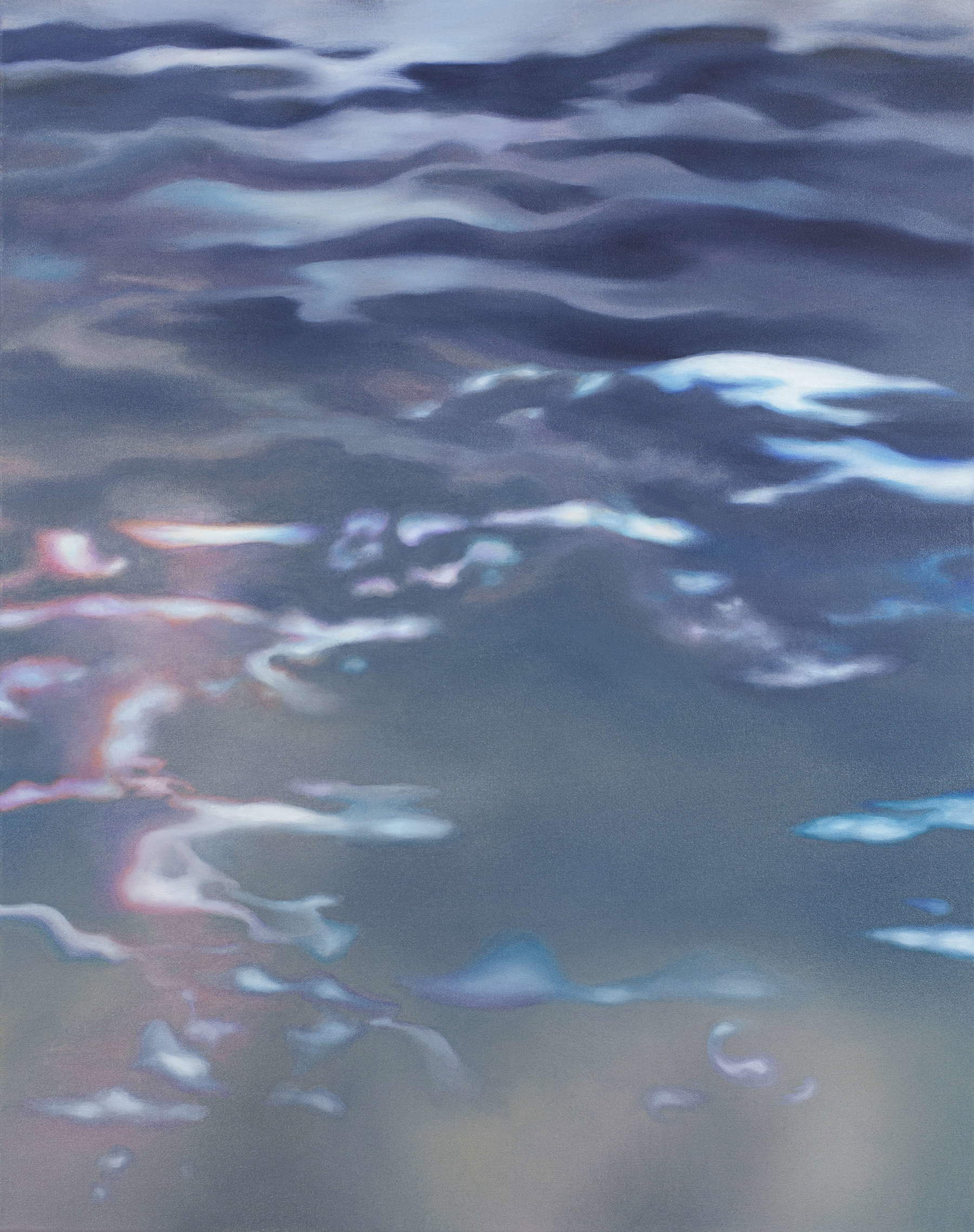
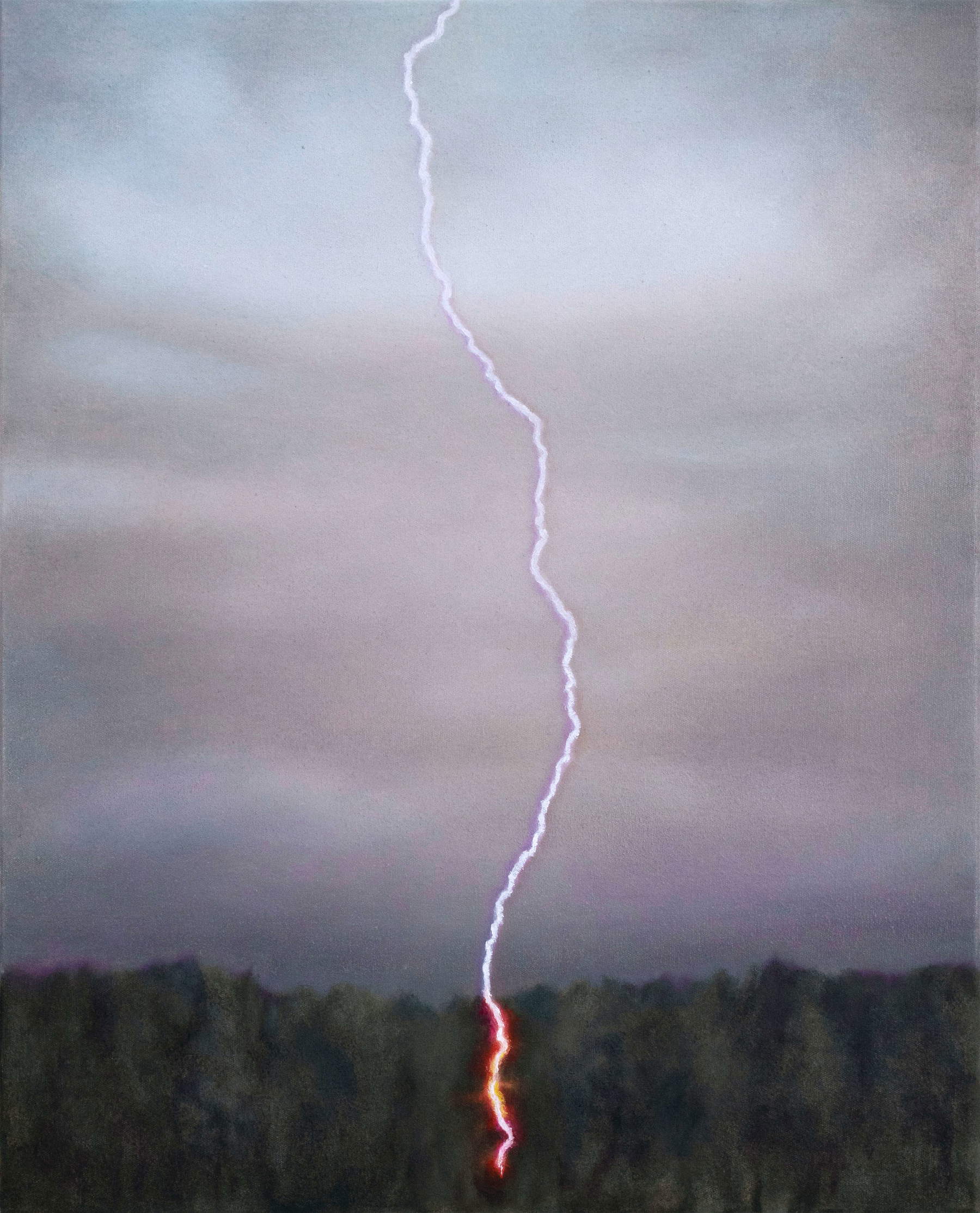
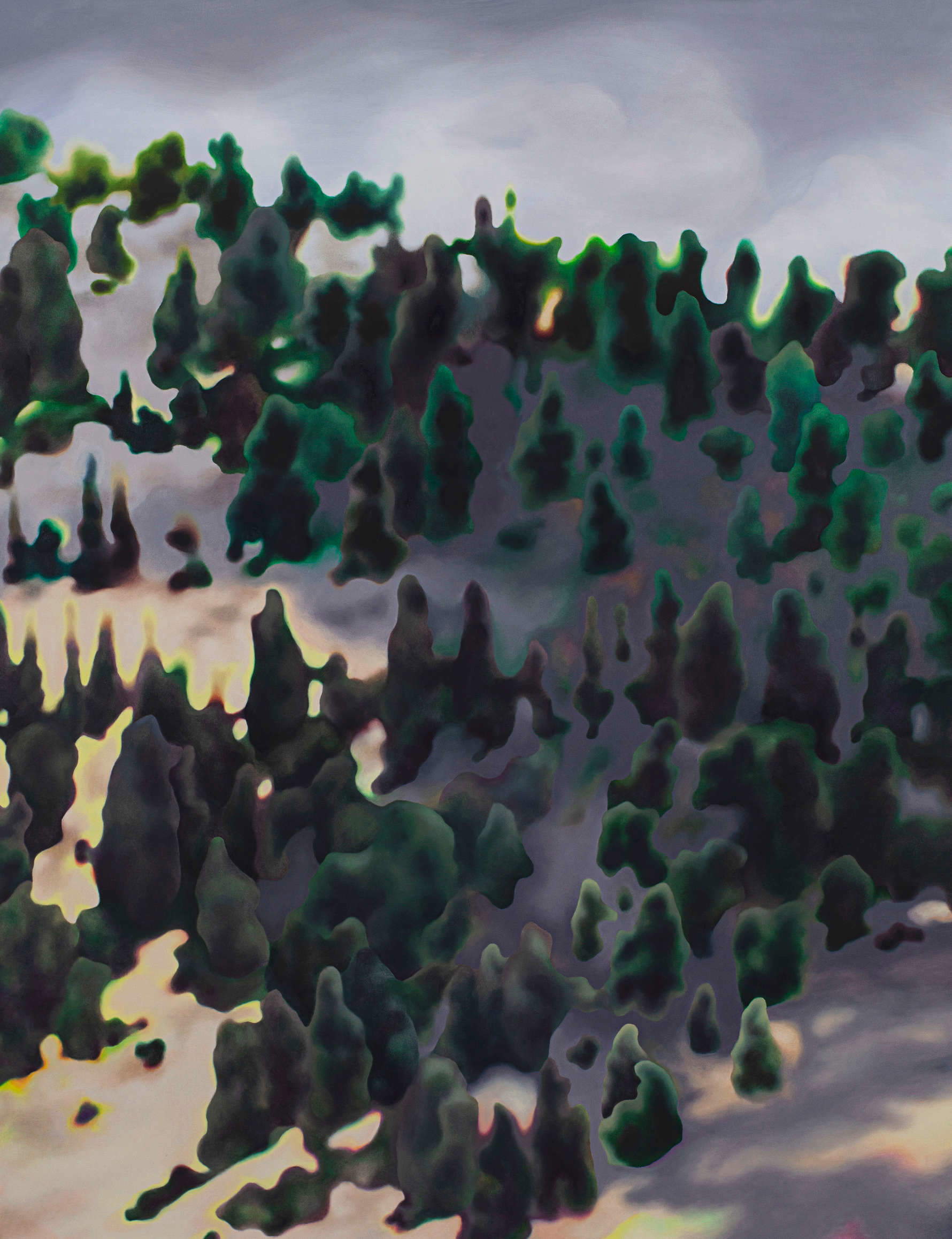
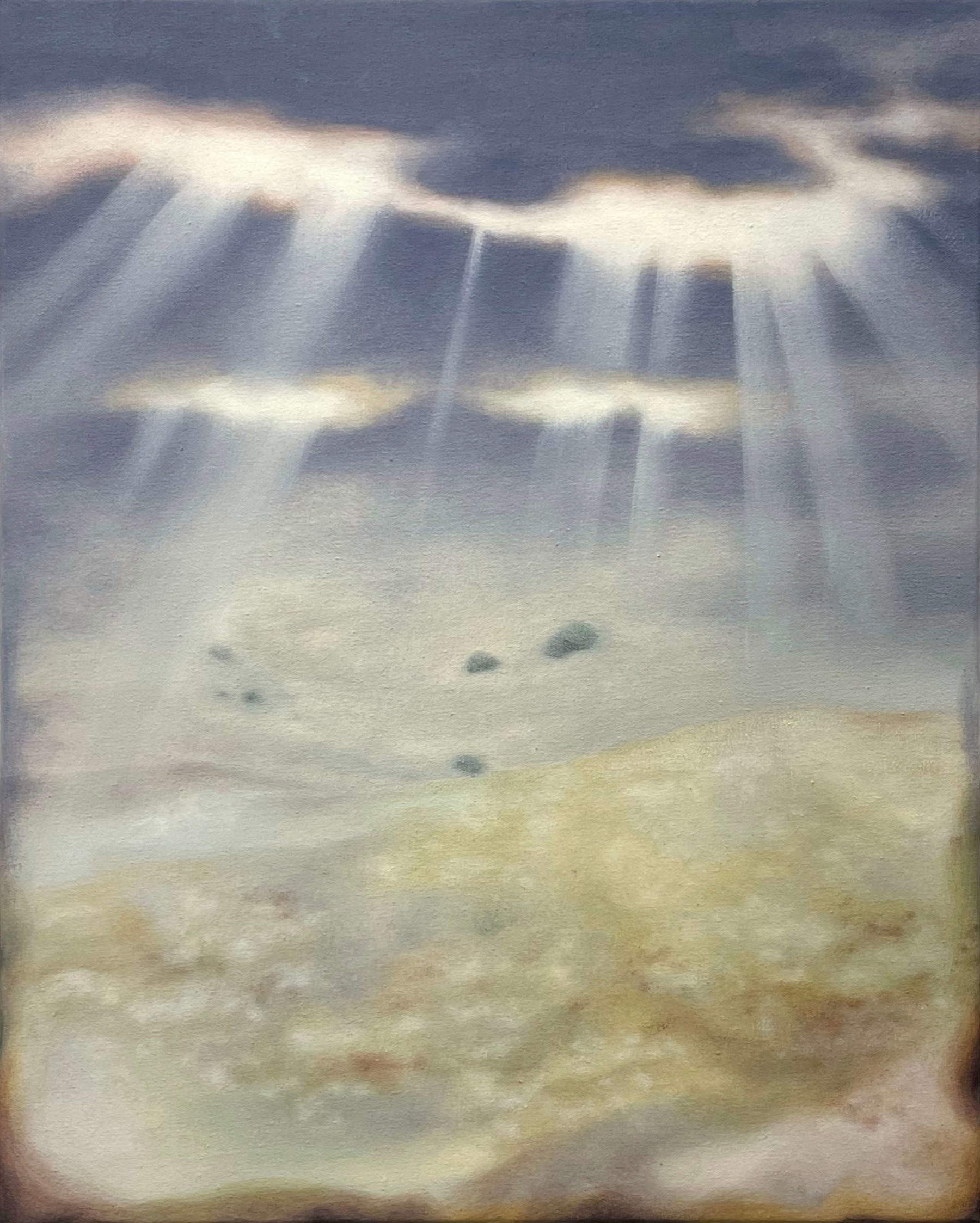
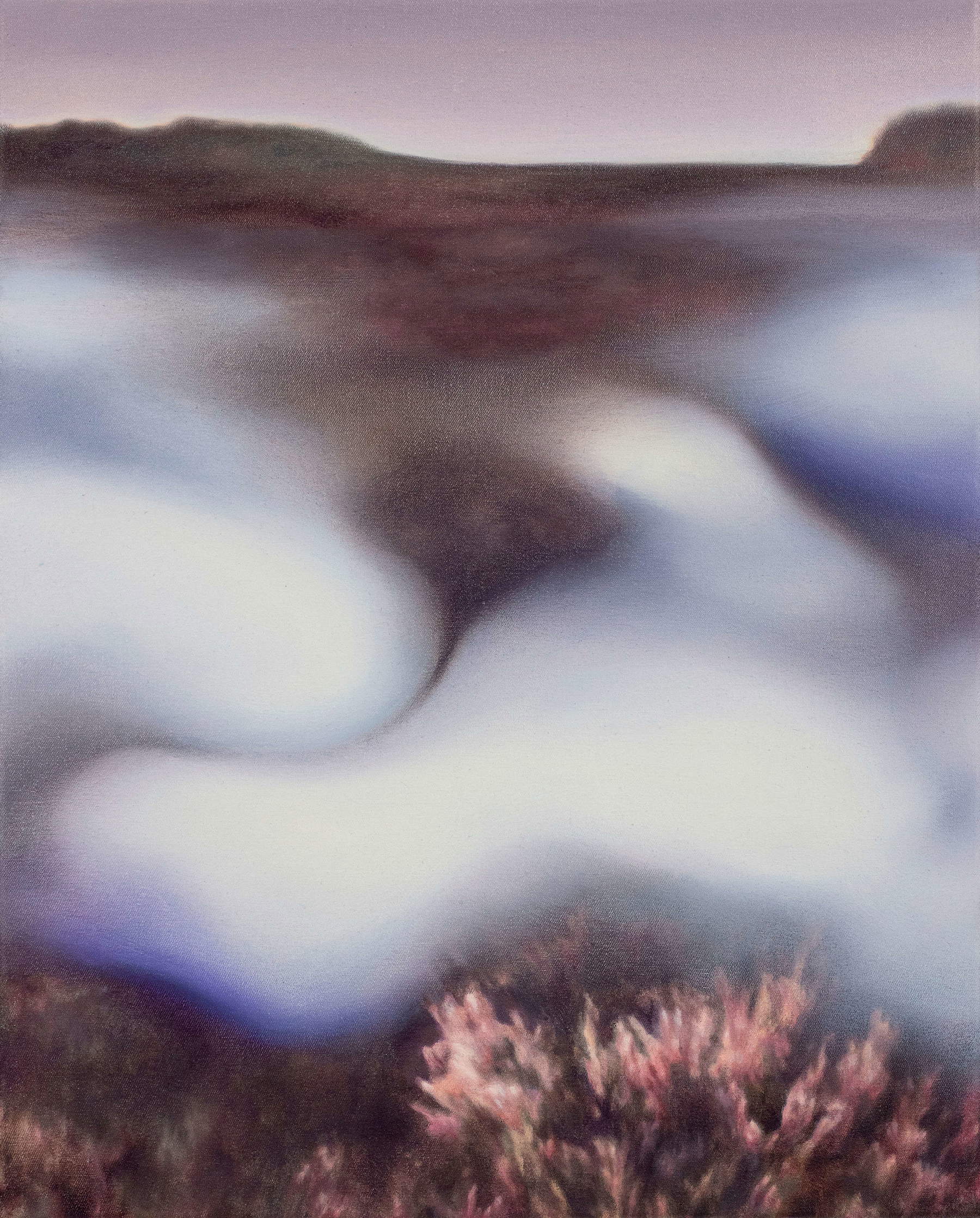
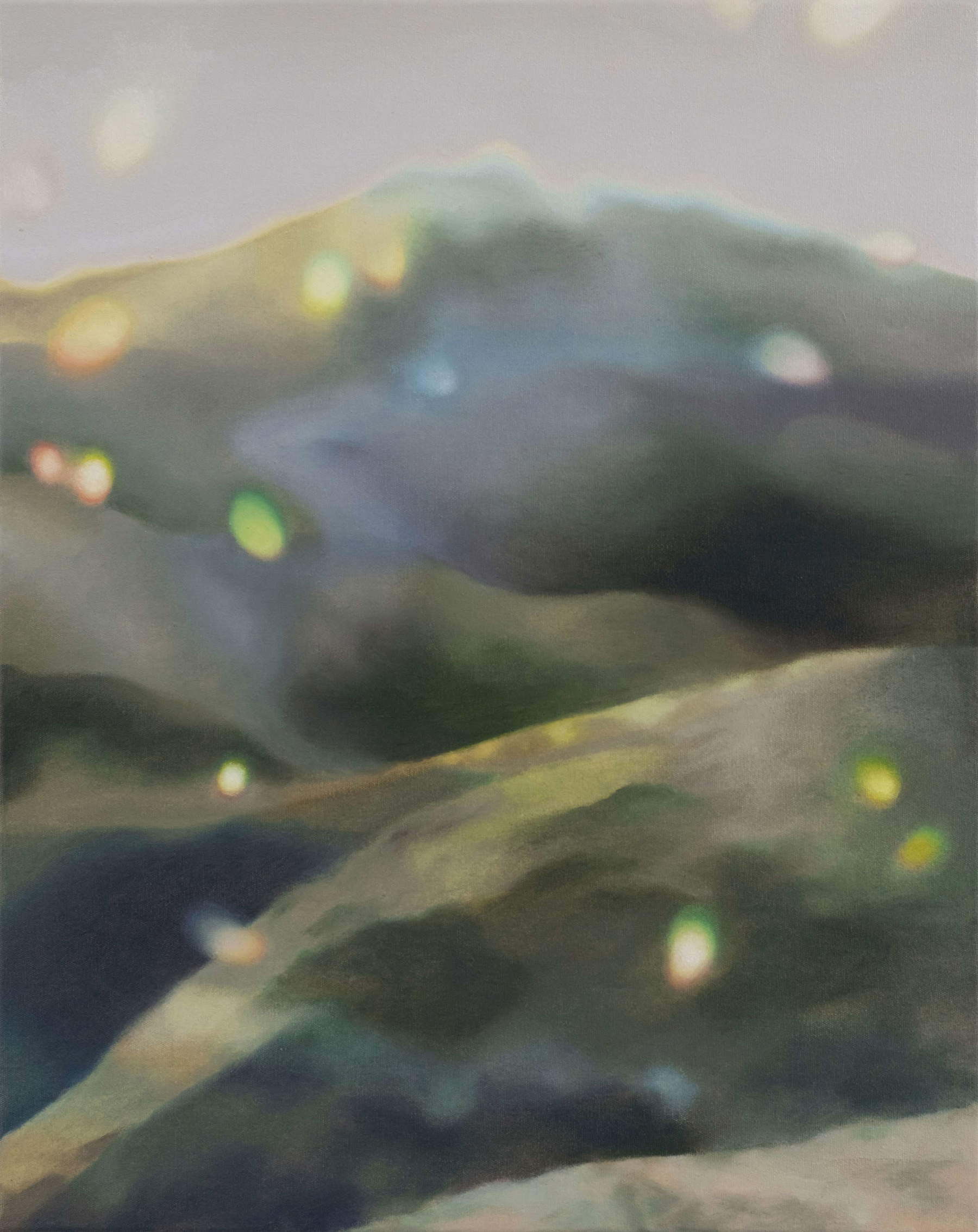
What is the origin of the images you paint?
The initial impulse for a work is often a visual impression in my surrounding that resonates on a deeper, intuitive level.
What is your idea of nature?
There is an essay about our relationship with nature by Alexander Kluge that I adore. It is titled Die Sehnsucht der Zellen (The longing of cells). Kluge frames longing as a formative principle of life. Human desire might be nourished by an unconscious memory of a lost state of unity with nature, preserved within the body across evolutionary time. I like this idea as a perspective that shapes the way I relate to nature as a person and artist.
Landscape is a theme that has a long tradition in painting and often recurs in your work. How do you approach it?
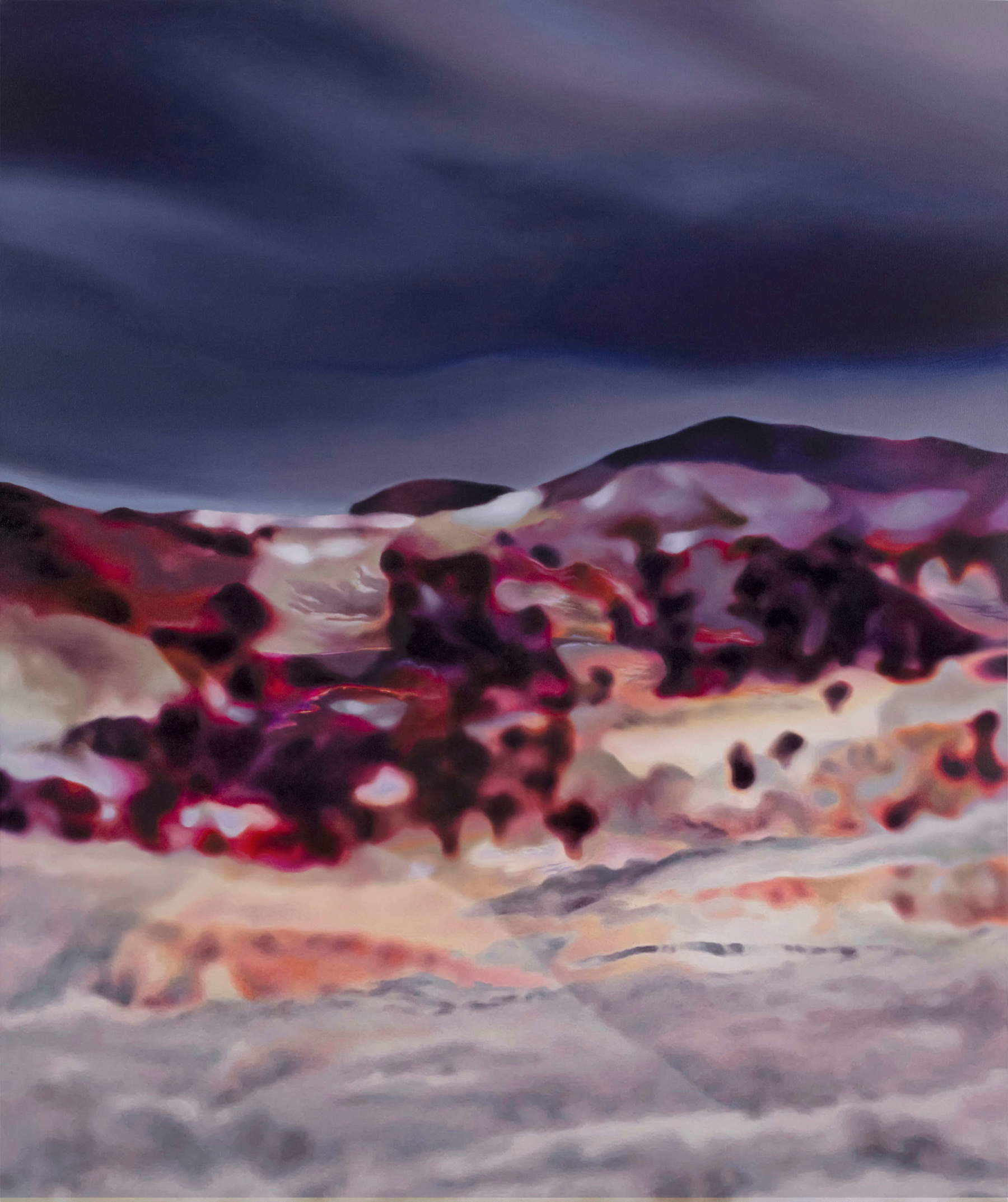
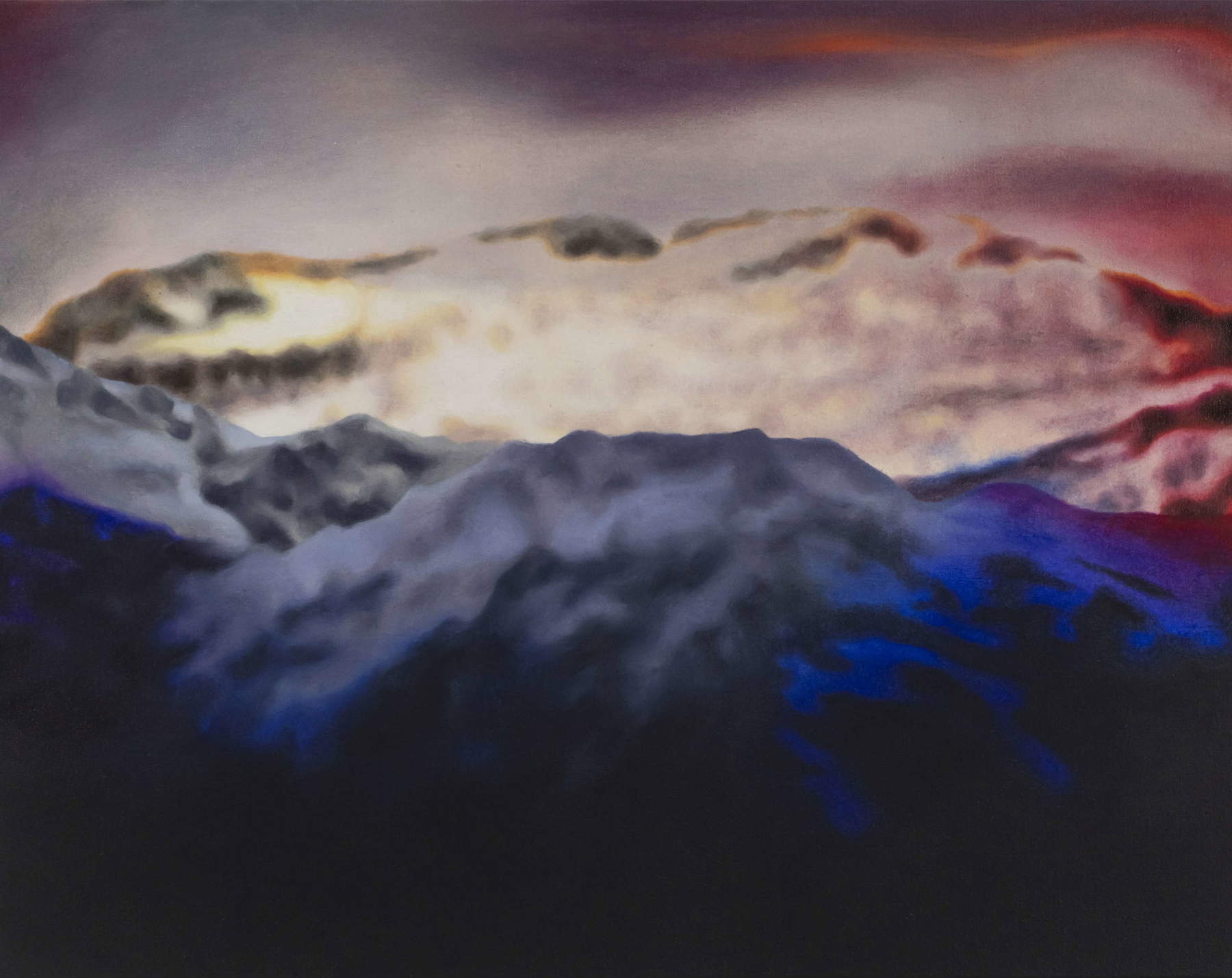
Landscape is not an objective entity; it is a cultural perspective rather than a neutral view of the world. Think of the meticulously observed, perspectival landscapes of the Dutch Golden Age, for example.They differ completely from the symbolic and ornamental treatment of nature found in many Middle Eastern artistic traditions. Landscape is an image produced by a society through experience, framing, and depiction. And this conception is informed by the societal conditions, and the environmental realities of their time. I focus on landscape as a model of perception in the context of our current relation with nature. What is at stake and how does it affect us? My thoughts revolve around environmental pressures, our alienation from nature, and how technology informs the ways we perceive, remember, and construct the concept of nature today.
Are you interested in the pictorial aspect?
My subjects are not direct representations of reality. I seek to evoke references to the visual experience of a motif and trace its underlying tensions and paradoxes with nuance and sensitivity. To me, the greatest ability of painting is to convey subtle aspects and emotional registers that lie beyond verbal articulation.
How important is the technical aspect in your work?
I belong to a generation that grew up during the transition from analog to digital, shaped by an increasingly fragmented and aestheticized world. I draw on these conditions to construct my own pictorial reality. I’m not regarding them as limitations but as produ ctive elements of my practice.
How important is colour in your work?
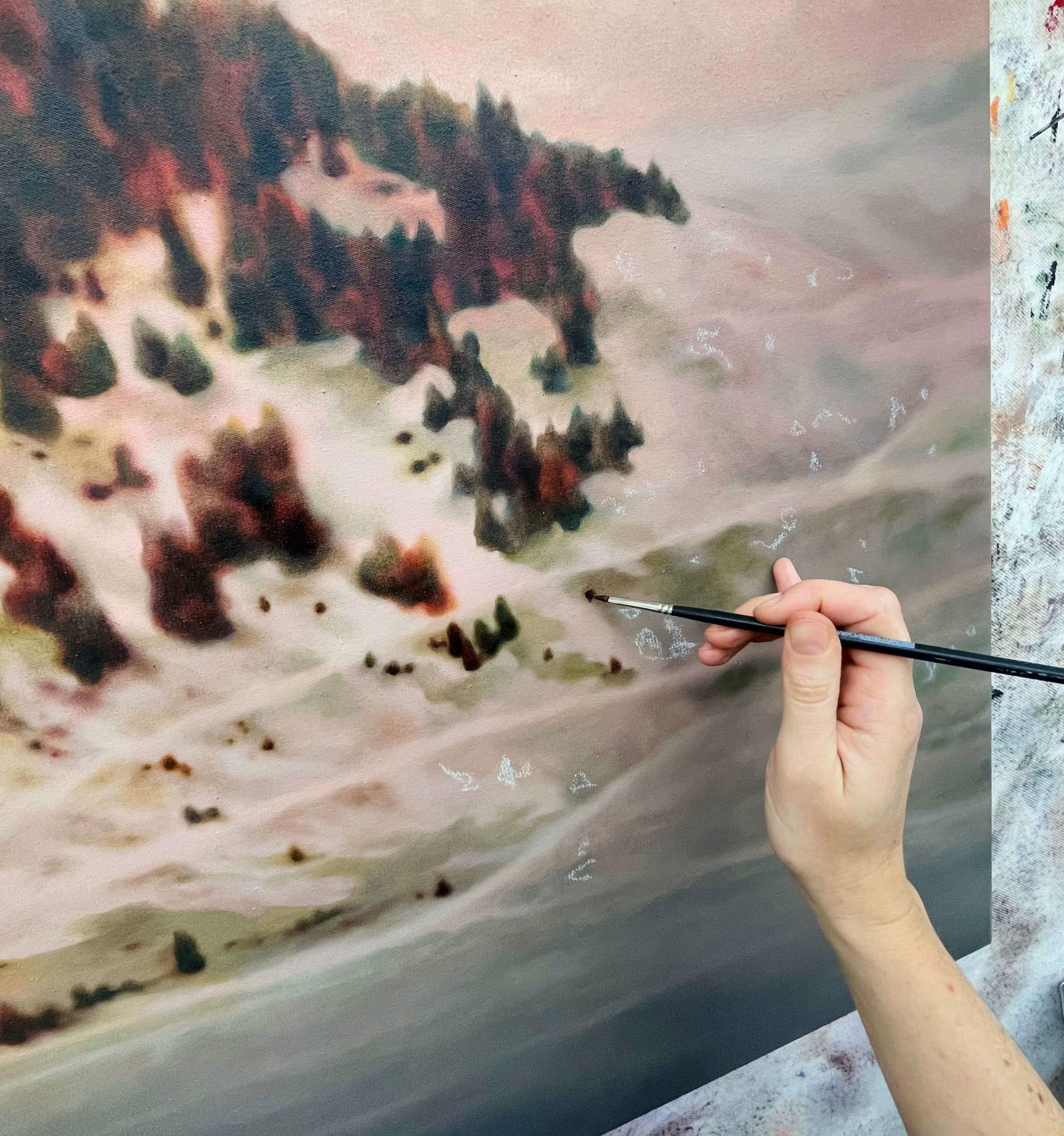
Before you see anything you perceive colour. It speaks to us directly, before conscious thought. Although I have a concept in mind, colour is the most intuitive part of my painting which I give the most space. Colour gradients and tonal transitions are a fundamental element in my paintings, drawing links and defining boundaries within the image or, conversely, dissolving them in ways that defy conventional visual habits.
Are you interested in the spiritual dimension?
Not really. I would describe my view as agnostic. The basis of my practice probably comes from curiosity and exploration.
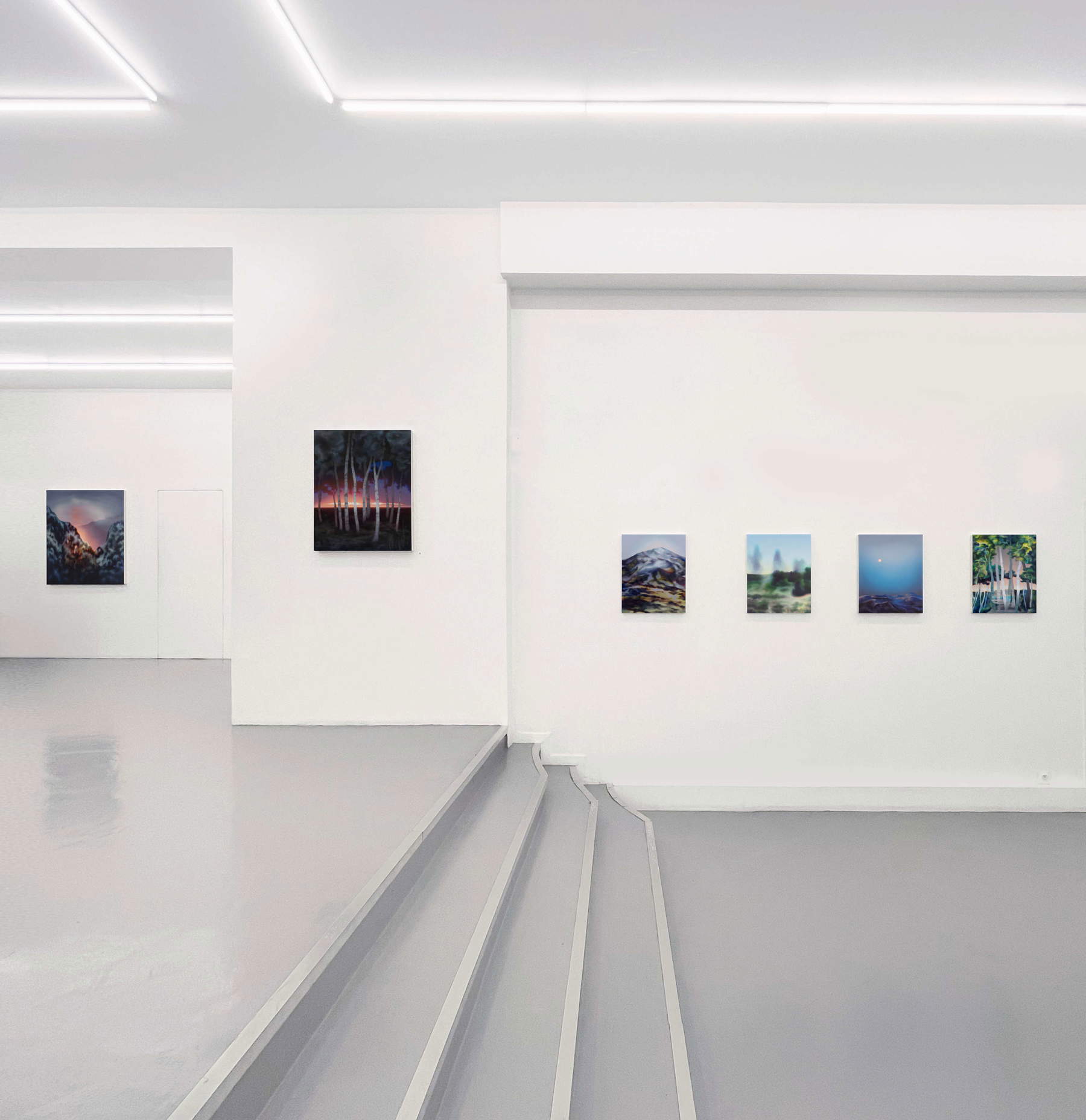
What role does the studio, understood as the physical place where the artist’s work takes place, play for you?
Above all, it’s my workspace. It separates me from the world and allows focus. I can give space to my work, look at it from different perspectives or with a distance, and understand how the pieces relate to one another. My studio is my refuge, where I protect my ideas and works from pressure and judgement until we’re ready.
When you start a work, do you already have a clear idea of how it will develop, or is there room for changes along the way?
I draw from an archive of sketches, texts, and photographs, both found and personally taken. Before I start painting, I develop numerous preparatory studies, both on paper and in digital form, to shape my ideas. Once I begin painting, the process becomes more open but still guided by a clear underlying vision.
Do chance and accident play a role in your work?
I have a strong connection to my intuition. But that doesn’t mean I paint intuitively. Pursuing the vision for a painting requires focus and perseverance. Chance and accidents are characteristic for the medium and add variety to the process, but I don’t actively encourage them. When they do occur, it is stimulating and often pushes the painting further.
Do you work in series, focusing on one painting at a time, or do you create several at the same time?
I don’t work in series, but on several paintings at the same time because of the drying process. This often results in groups of works that are loosely related to one another. For me, these groupings are open formations, whereas I see series as more rigid, thematically fixed structures that feel too restrictive for the way I work.
What kind of dialogue do you seek with the viewer who stands in front of your works?
I am not interested in conveying a fixed message or narrative. Instead, I hope to create a space in which viewers can reflect on their own relationship with the world and its challenges. I believe painting speaks a language of its own, transmitting a sensual information through image and the preserved process.
Some artists stand to the side of what they do, others, such as performers, are often at the centre of it, then there are those who look at their work from above or below, or vice versa... how do you position yourself in relation to what you do?
The work emerges from my perspective, the way I perceive the world. Painting allows me to step both into and out of that experience—to be involved in it while also observing it. In that sense, I occupy a shifting position: part participant, part observer.

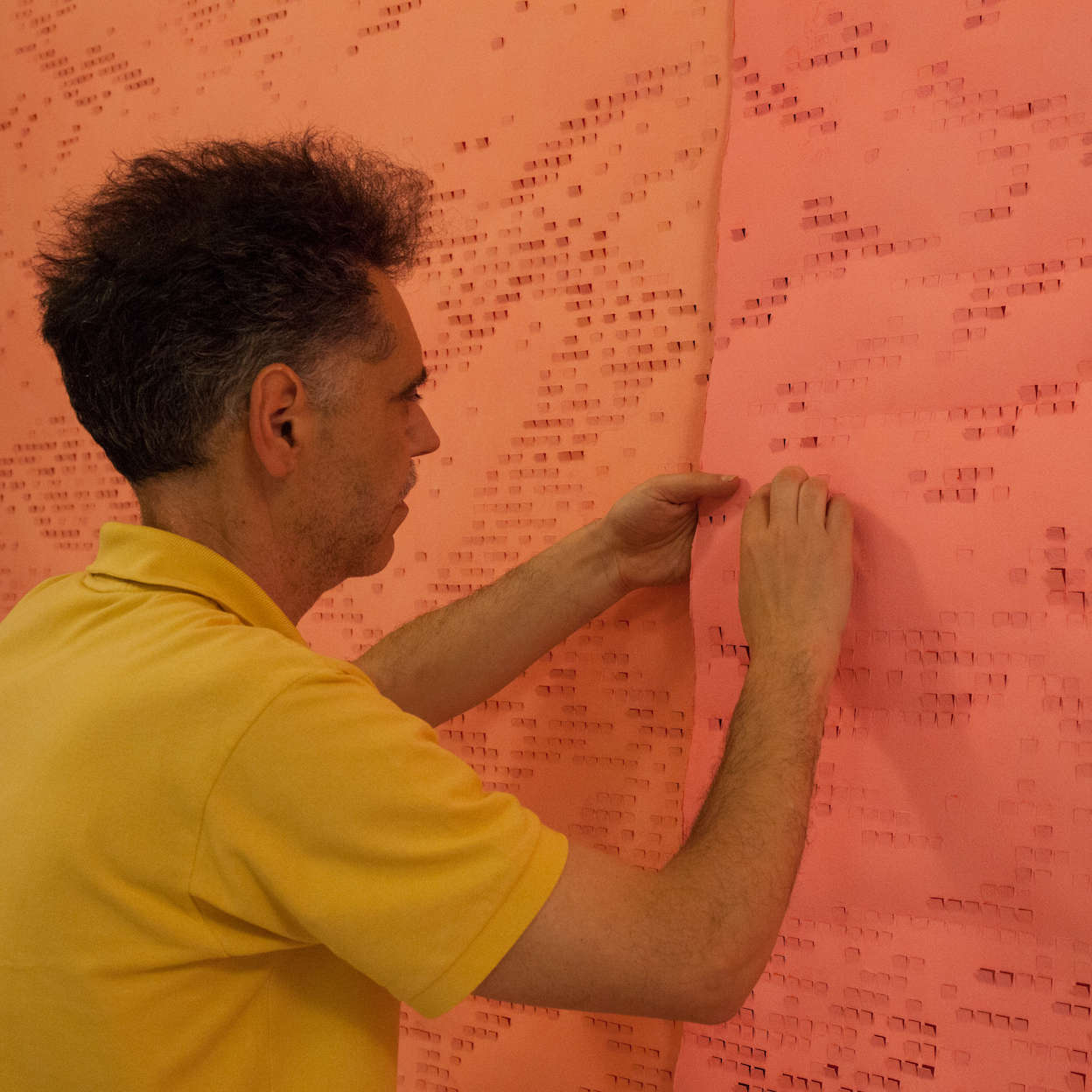
The author of this article: Gabriele Landi
Gabriele Landi (Schaerbeek, Belgio, 1971), è un artista che lavora da tempo su una raffinata ricerca che indaga le forme dell'astrazione geometrica, sempre però con richiami alla realtà che lo circonda. Si occupa inoltre di didattica dell'arte moderna e contemporanea. Ha creato un format, Parola d'Artista, attraverso il quale approfondisce, con interviste e focus, il lavoro di suoi colleghi artisti e di critici. Diplomato all'Accademia di Belle Arti di Milano, vive e lavora in provincia di La Spezia.Warning: the translation into English of the original Italian article was created using automatic tools. We undertake to review all articles, but we do not guarantee the total absence of inaccuracies in the translation due to the program. You can find the original by clicking on the ITA button. If you find any mistake,please contact us.














 IT
IT FR
FR DE
DE ES
ES CN
CN


