




by Redazione 02/09/2026



Categories: Museums / Disclaimer
Starting September 3, 2026, L’Aquila will once again be home to one of its most beautiful palaces: Palazzo Farinosi Branconi, which will house a permanent exhibition spanning five centuries of art from central and southern Italy, bringing part of the Cassa di Risparmio della Provincia dell’Aquila collection back to the city and reopening the Sala di San Clemente to the public.

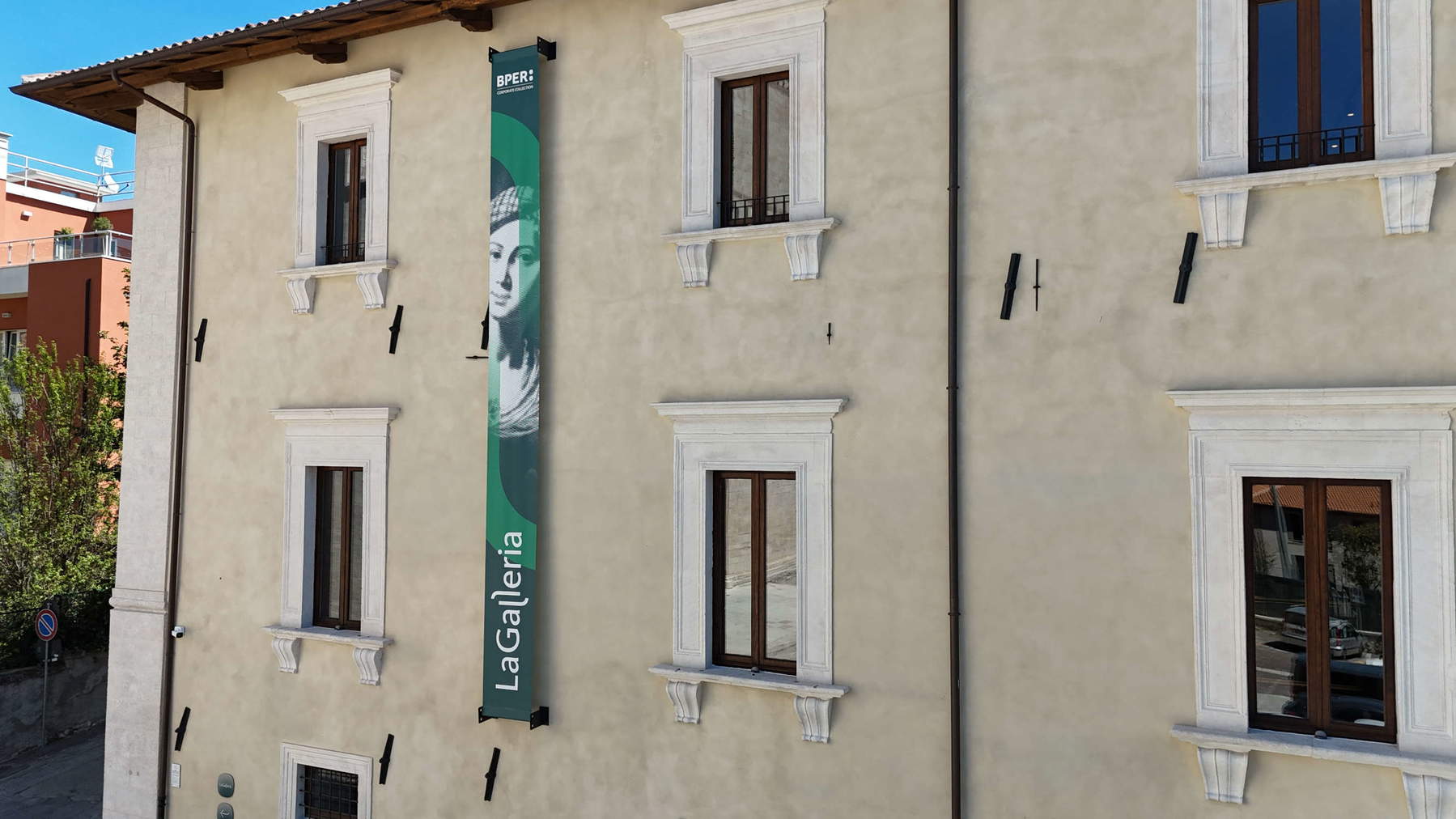
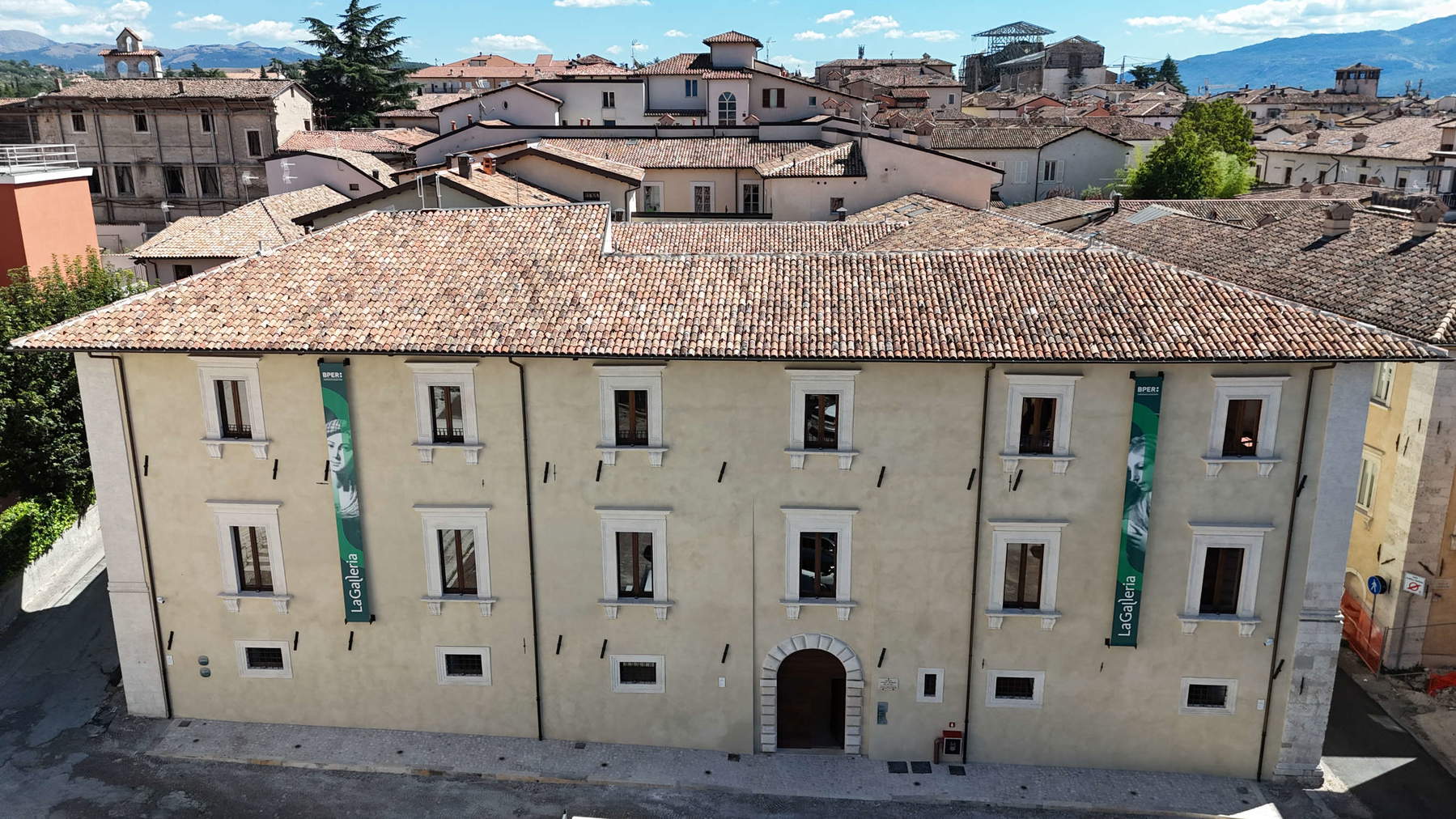
L’Aquila is reclaiming one of its most beautiful buildings: starting Thursday, September 3, 2026, Palazzo Farinosi Branconi will reopen its doors to the city as the new home of the La Galleria BPER Cultural Center, following a comprehensive project of restoration, renovation, and repurposing. The historic building, overlooking Piazza San Silvestro in the heart of the city center, will now house a permanent exhibition dedicated to five centuries of art from central and southern Italy, returning to the public beautifully decorated rooms of great historical significance, including the Sala di San Clemente.

The opening brings back to L’Aquila a significant portion of the collection that once belonged to the Cassa di Risparmio della Provincia dell’Aquila, thereby reestablishing a direct link between the works and the region where much of the collection was formed. The new cultural center stems from the convergence of the palace’s history, the city’s cultural memory, and a heritage that allows visitors to trace the artistic connections between Abruzzo, Marche, Umbria, Rome, Naples, and the rest of Southern Italy. The permanent exhibition, the temporary exhibition on the history of the building, the educational activities, and the cultural program have received the patronage of the City of L’Aquila and are part of the initiatives for L’Aquila 2026, Italian Capital of Culture. The project is also being developed through a memorandum of understanding signed by BPER Banca, the Carispaq Foundation, and the Department of Human Sciences at the University of L’Aquila. This agreement links heritage, research, and education by overseeing the scientific curation, cataloging of the collection, production of content, and the involvement of students and young scholars in promoting the region’s artistic heritage.


The initiative marks a new phase in the development of the BPER Cultural Hubs System, the program through which the banking group is showcasing its artistic, archival, and architectural heritage by transforming several historic locations into permanent cultural centers open to the public. Coordinated by La Galleria BPER, the system stems from a process launched in 2017 to make one of Italy’s leading corporate collections accessible through exhibitions, scientific research, educational programs, and initiatives aimed at local communities.


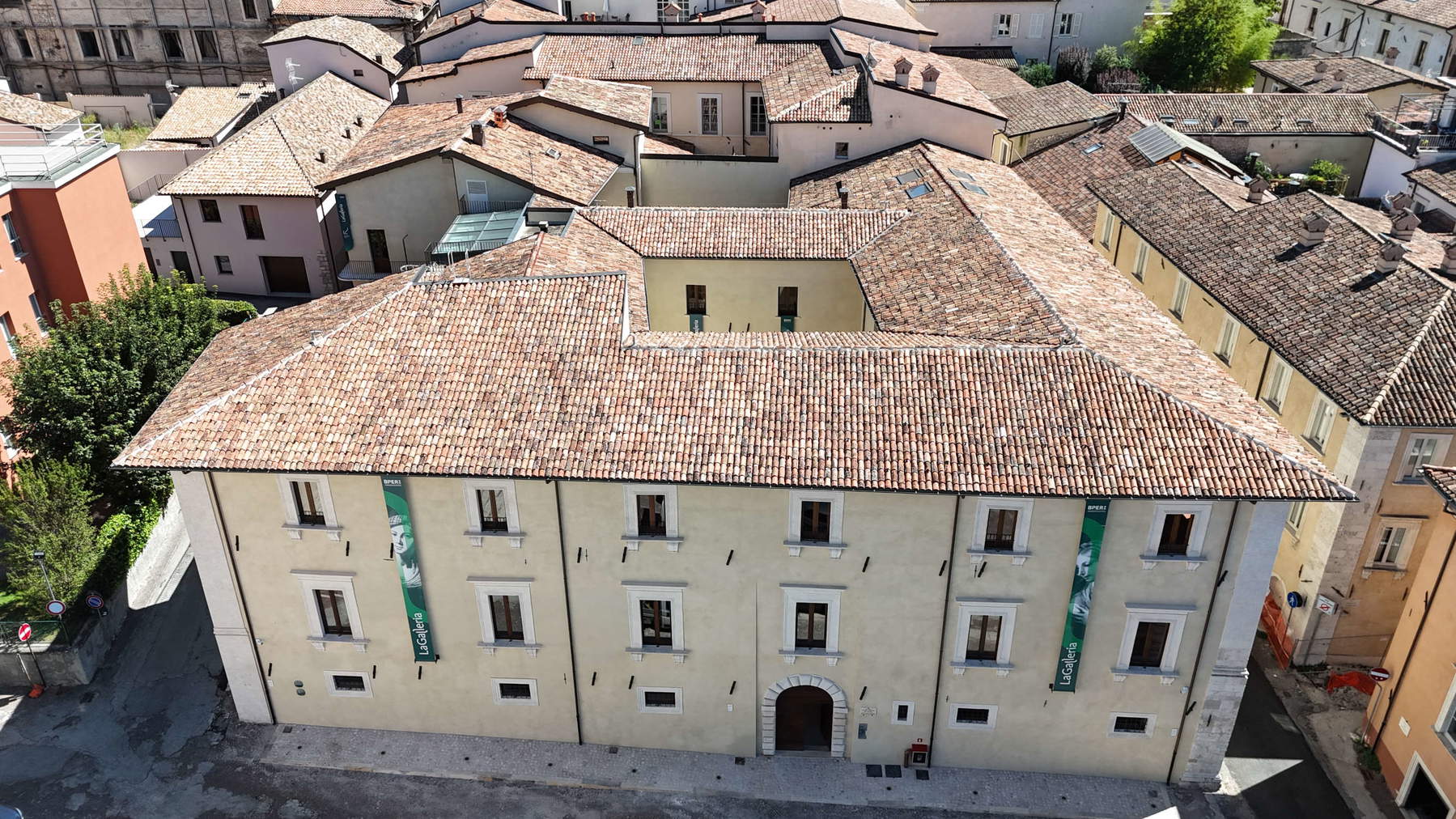
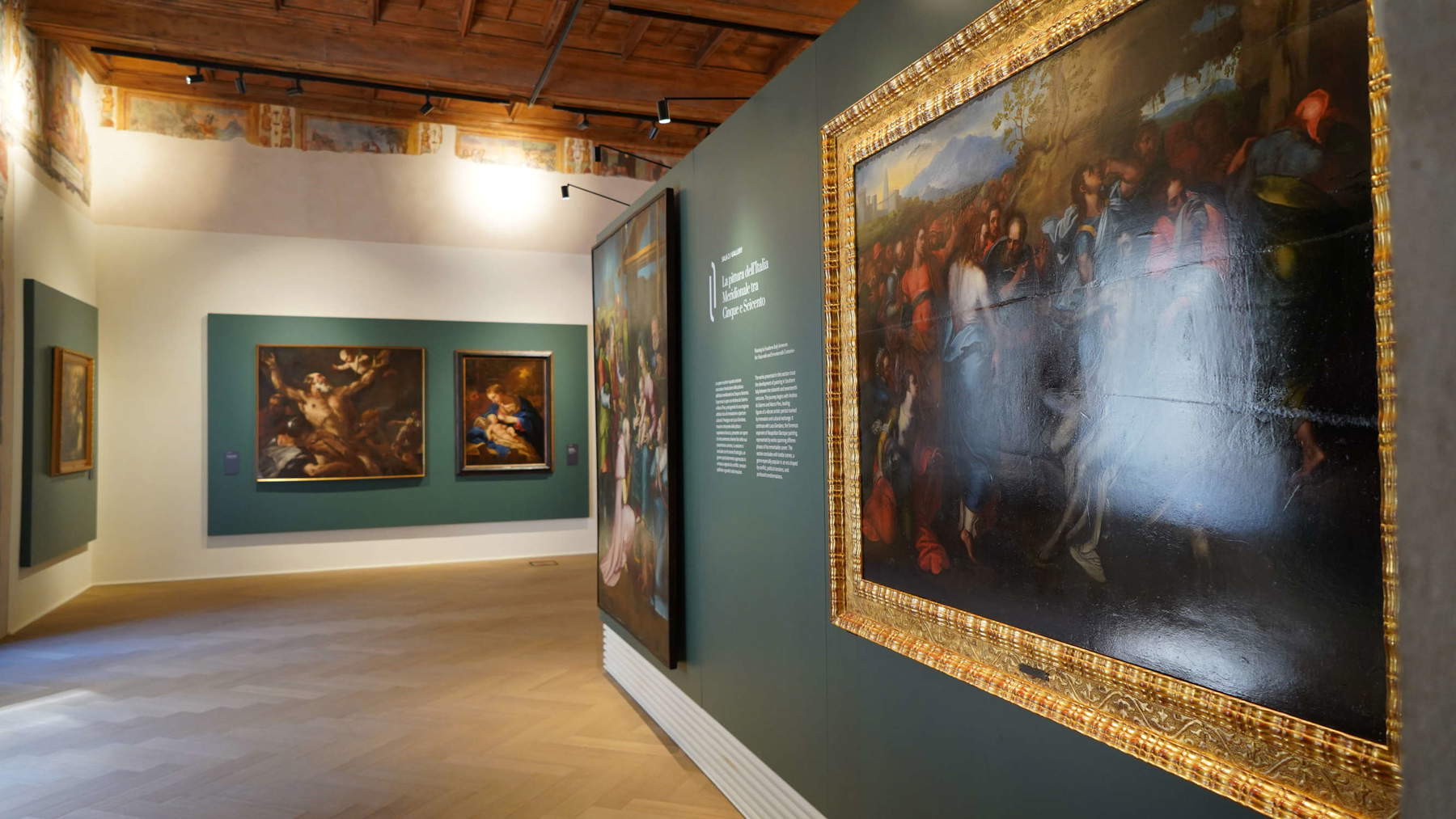
Through its L’Aquila location, the project forges a particularly close bond with its host site: the building’s architecture, its frescoed rooms, and its wooden ceilings become an integral part of the exhibition experience, as does the history of the Branconio family, which over the centuries helped integrate L’Aquila into the cultural networks of the Italian Renaissance. A central figure in this story was Giovan Battista Branconio, a goldsmith and trusted advisor to Pope Leo X, a friend and executor of Raphael’s will, who painted the famous Visitation for the family—intended for the Church of San Silvestro in L’Aquila—and designed the Palazzo Branconio dell’Aquila in Rome, which was later demolished to make way for the colonnade of St. Peter’s.
The earthquake of April 6, 2009, had severely compromised the building’s structure and its decorative elements. The restoration project sponsored by BPER Banca combined architectural consolidation, conservation, and repurposing, with the goal of preserving the complex’s historical identity while restoring its public function. The project, which began in 2013 with initial studies, initially called for the restoration of the building for use as administrative offices; However, it was the in-depth historical, architectural, and conservation analysis conducted during the design phase that brought to light the building’s cultural and identity value, leading BPER Banca—in agreement with the relevant authorities—to decide in 2023 to transform it into a museum open to the public. Located in an area at high risk of earthquakes, the building underwent a comprehensive structural consolidation program that included the restoration of the historic masonry, the repair of cracks, reinforcement with basalt fibers and steel, the stabilization of the vaults, and the reinforcement of the structural connections to prevent overturning. In addition, the frescoes in the Hall of Saul and David and the Hall of the Putti, or Hall of Landscapes, were restored, along with the painted wooden ceilings and decorative elements, while the restoration of the Hall of Saint Clement is still underway. Finally, the building has been brought up to contemporary museum standards with climate control and thermo-hygrometric control systems, a lighting design tailored to the visitor route, video surveillance and intrusion detection systems, an elevator, and accessible pathways. Among others, the following organizations participated in the project: the San Silvestro 2009 Consortium, BRT Branconi, the Carpi Construction Workers and Laborers Cooperative, the Migliore+Servetto architectural firm, the Fratelli Ettore & Carlo Barattelli construction company, UPM Group, and RED Exclusive Design.
Tracing the main milestones in the building’s history: the palace was built in the 16th century, when the Branconio family established a presence in the area around Piazza San Silvestro; in the 17th century, the decorative elements were created, including the cycle of frescoes in the Sala di San Clemente; in 2009, an earthquake severely struck the historic center of L’Aquila, damaging the building and making it necessary to remove the frescoes to secure them; Between 2019 and 2026, an architectural restoration, conservation, and repurposing project sponsored by BPER Banca was carried out, which now concludes with the opening to the public on September 3, 2026.
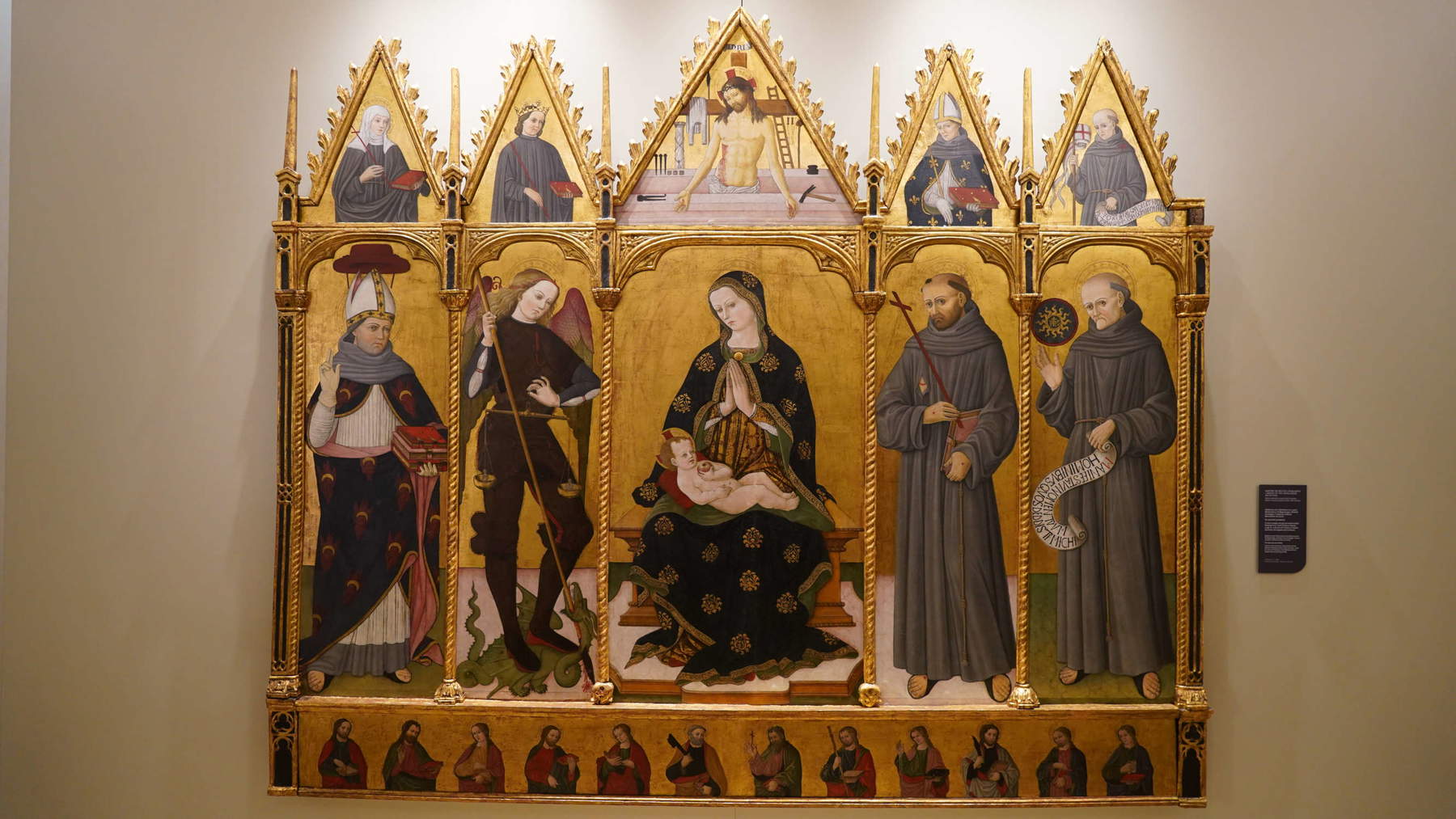
The new permanent exhibition, titled “A Treasure Trove of Memories: Landscapes, Color, and Tradition—Five Centuries of Southern Italian Art,” brings together works from various parts of the BPER corporate collection, illustrating the artistic connections that spanned central and south-central Italy from the 15th century to the early 20th century. The starting point is, in fact, the return to L’Aquila of a portion of the historical collection of the Cassa di Risparmio della Provincia dell’Aquila, which was formed through acquisitions, cataloging, and subsequent research and owes a significant part of its identity to the vision of art historian Ferdinando Bologna, whose choices helped build a core collection capable of documenting the complexity of Abruzzo’s figurative culture and its connections with Italy’s major artistic centers. These works are complemented by paintings from other banking collections that have been incorporated into BPER’s holdings, broadening the perspective and restoring L’Aquila’s role as a crossroads of artists, patrons, and artistic languages, rather than that of a peripheral region.
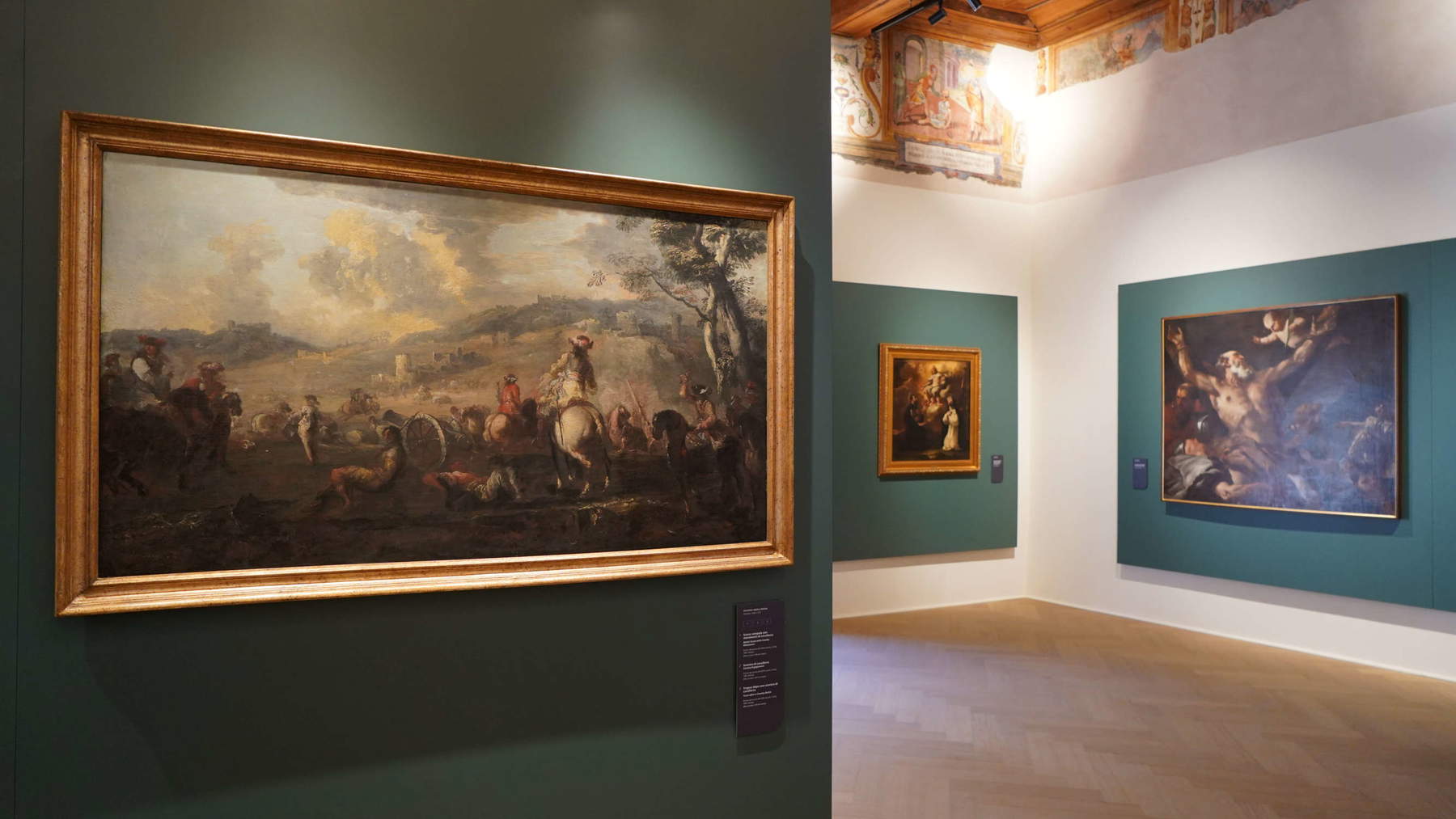
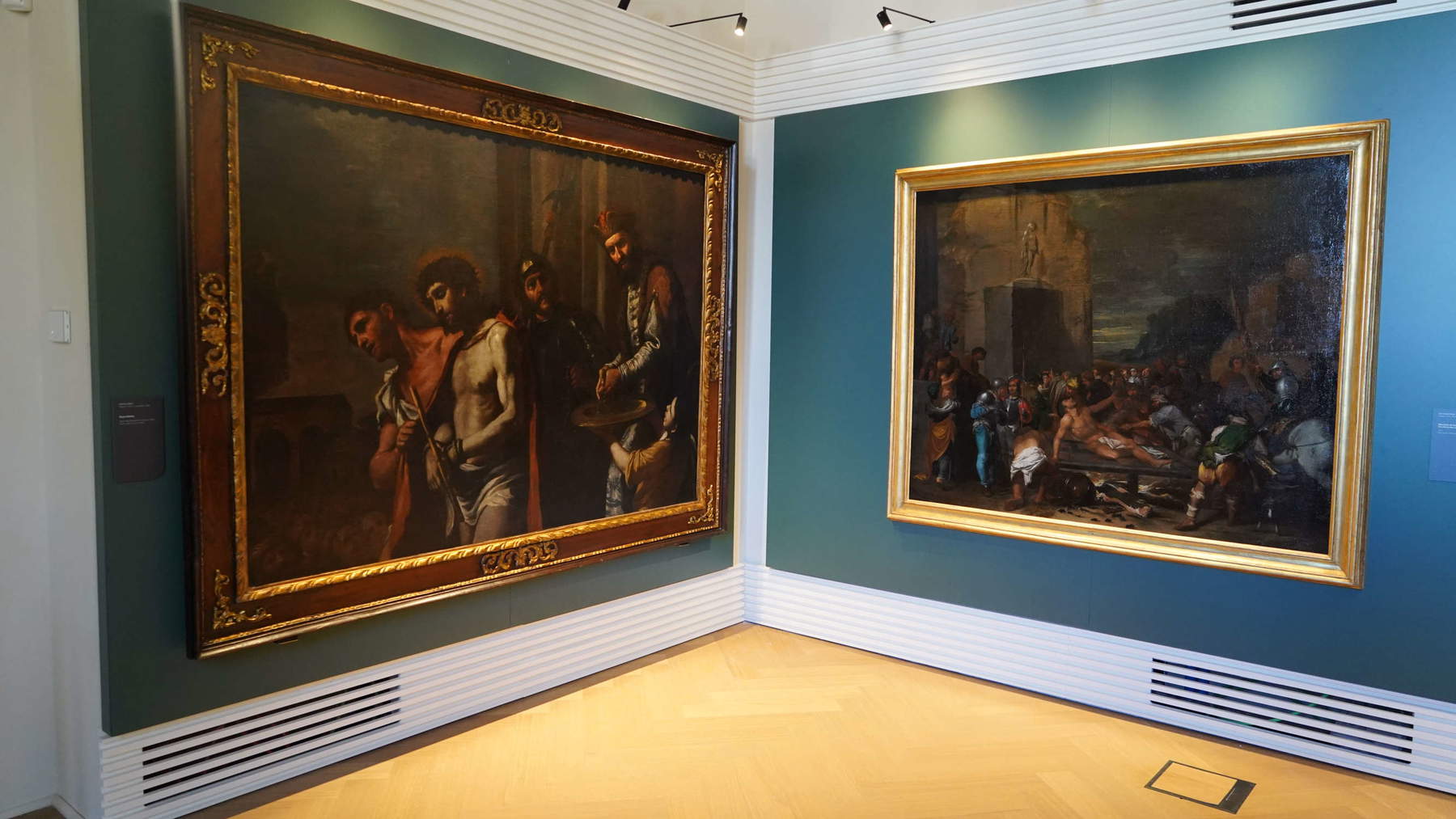
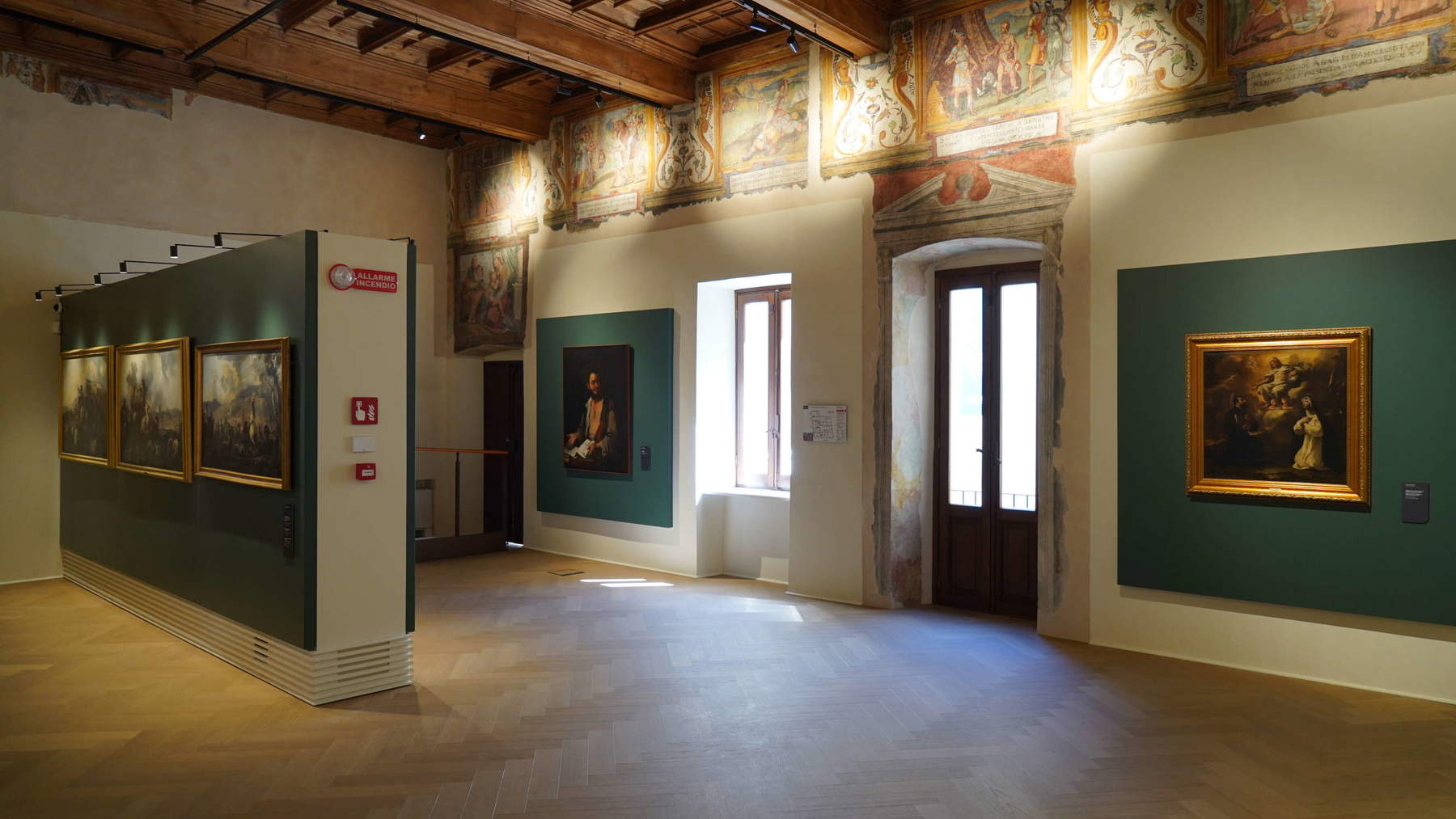
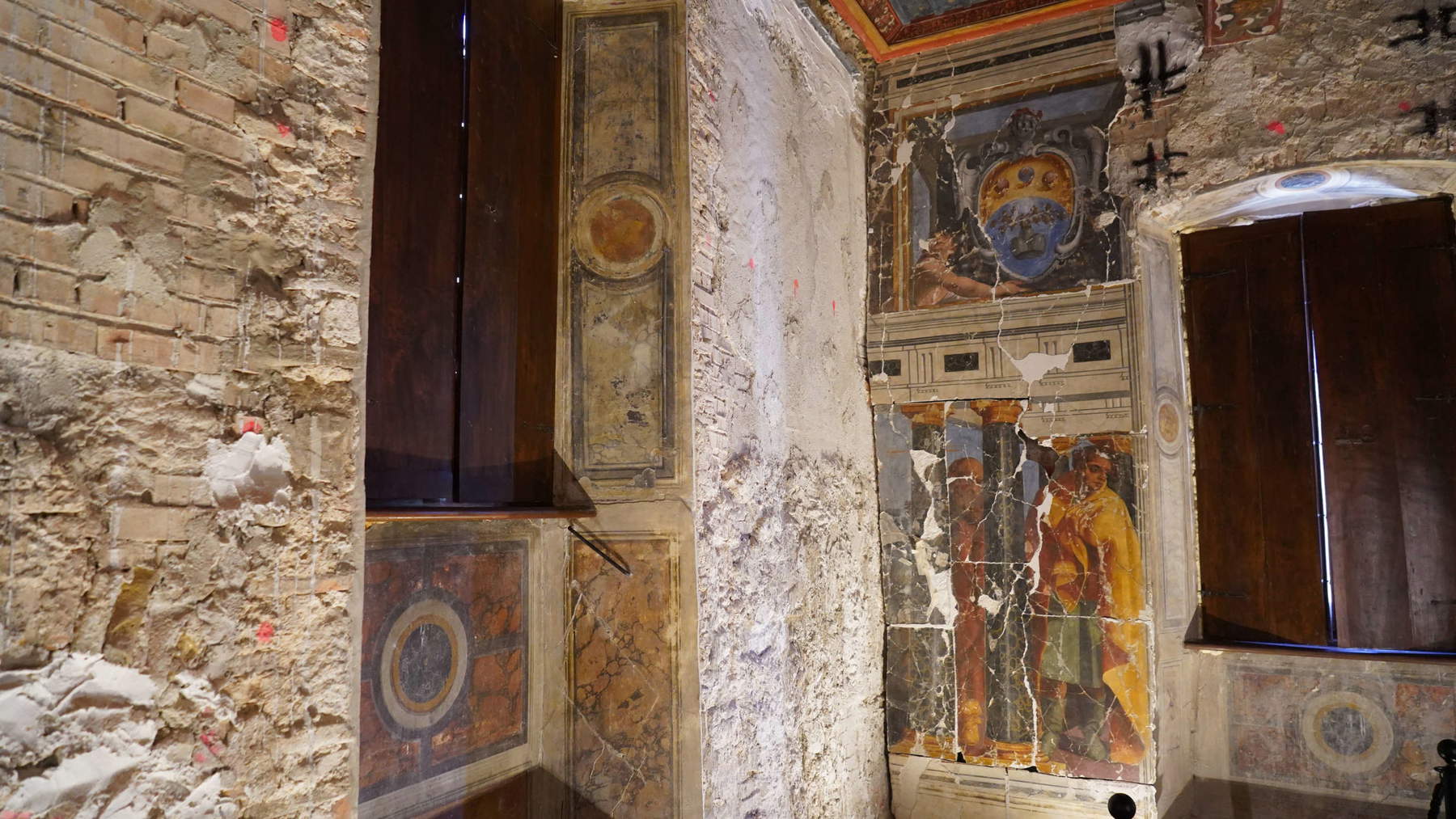
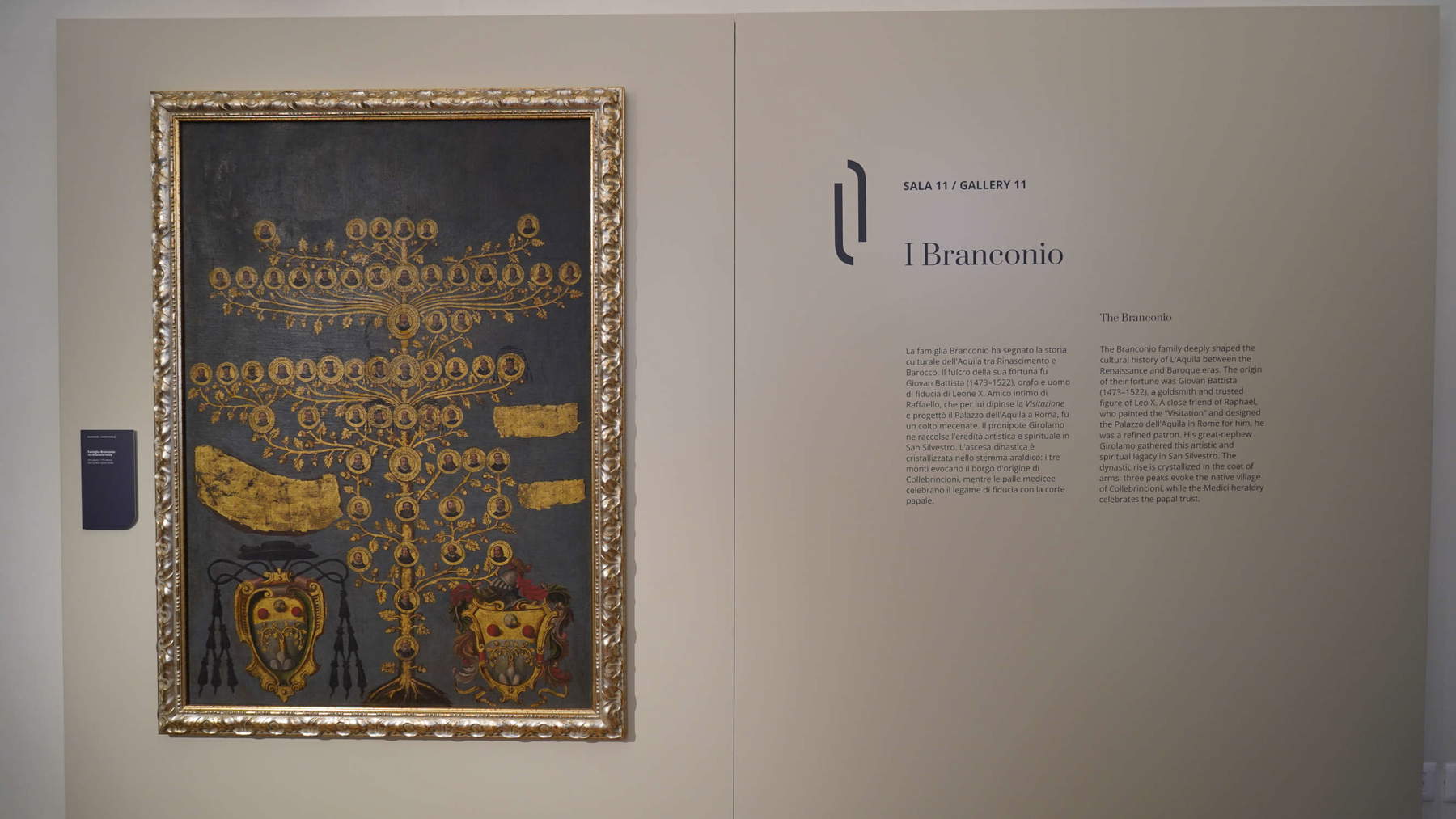
The exhibition unfolds across eleven rooms. The first room, which introduces the exhibition’s overall theme, showcases art from L’Aquila during the 15th and 16th centuries—a period of great vitality open to the artistic traditions of Rome, Naples, and Florence following the reconstruction after the 1461 earthquake. Key figures of this period include Silvestro dell’Aquila, Saturnino Gatti, Cola dell’Amatrice, and Pompeo Cesura, as well as Raphael’s *Visitation* for San Silvestro, which serves as an emblem of the cultural network of the time. In the second room, dedicated to the late 16th-century cycle of Saul and David, biblical episodes alternating with grotesques develop a theme centered on divine election and the legitimization of power, reflecting the work of a workshop attuned to the models of central Italy. The third room traces the evolution of Southern Italian painting between the 16th and 17th centuries, from Andrea da Salerno and Marco Pino to Luca Giordano and battle scenes, while the fourth is dedicated to Southern Italian naturalism between the 17th and 18th centuries, featuring works by Mattia Preti, Salvator Rosa, Giacinto Brandi, Onofrio Palumbo, and Paolo De Majo. Next is the landscape gallery, which documents L’Aquila’s artistic revival in the 18th century following the 1703 earthquake, featuring works by Francesco De Mura, Girolamo Cenatiempo, Vincenzo Damini, Paolo De Matteis’s allegorical self-portrait, and Francesco Solimena’s large canvas depicting Perseus and Phineus; the room also takes its name from the frieze featuring idealized views of the Branconio family’s estates, dating from before 1620. The sixth room, dedicated to Saint Clement, houses the cycle dedicated to the saint, commissioned in the early 17th century by Girolamo Branconio, while the subsequent rooms are dedicated, respectively, to Teofilo Patini, a central figure of 19th-century Abruzzo who trained in Naples and was associated with the School of Arts and Crafts in L’Aquila, and to Francesco Paolo Michetti, who, in his work spanning the late 19th and early 20th centuries, captured Abruzzo’s landscapes, faces, and traditions through photography as well. The eighth room features works by Giacinto Gigante, Vincenzo Irolli, Filippo and Nicola Palizzi, Tito Pellicciotti, Giuseppe Casciaro, Vincenzo Canino, and Attilio Pratella—artists who embodied the “culture of realism” developed in Naples and disseminated throughout Abruzzo—while the ninth room is dedicated to the Master of the Crivelleschi Polyptychs, an anonymous late-15th-century painter whose name was coined by Ferdinando Bologna in 1948. The tenth room introduces the temporary exhibition *The Colors of Time: The Rediscovered Splendor of Palazzo Farinosi Branconi*, set up on the second floor with display panels and, in the coming months, new digital content; Finally, the eleventh room is dedicated to the Branconio family, centered around Giovan Battista, and to his great-grandson Girolamo, who carried on the family’s artistic and spiritual legacy at San Silvestro, as commemorated by the coat of arms featuring the three mountains of the village of Collebrincioni and the Medici balls.
Among the most significant interventions carried out in the palace is the restoration of the Sala di San Clemente, one of the most precious rooms in the complex, conceived as a place for study, meditation, and reception. After the 2009 earthquake, the frescoes were removed to allow for the building’s stabilization; their reinstallation required complex historical and artistic research, accompanied by high-precision three-dimensional surveys, digital reconstructions, and technological solutions designed to restore the room’s original configuration while respecting the historical material. The reopening of this room therefore represents not only the restoration of an important decorative cycle but also the first step toward restoring one of the palace’s most iconic spaces; a dedicated dossier is available for journalists interested in the technical and historical-artistic aspects of the project.
The L’Aquila Cultural Center is designed as a space open to citizens, scholars, schools, families, and visitors, complemented by a program of events that includes a series of thematic talks, family-oriented initiatives, and special guided tours organized with the involvement of students, as part of a collaboration with the Cassa di Risparmio della Provincia dell’Aquila Foundation and the Department of Human Sciences at the University of L’Aquila. The program also extends beyond the building’s walls, through itineraries developed in partnership with some of the city’s leading cultural institutions, and is constantly updated on the La Galleria BPER website.
On the educational front, La Galleria BPER offers free educational programs for schools of all levels, as part of a project that connects the new centers in L’Aquila and Ferrara with the historic locations in Modena, Genoa, Brescia, and Milan. The program, with a particular focus on accessibility and students with disabilities or special educational needs, offers the following courses for preschool: “A Museum Full of Animals” and “I Paint Like the Palizzi!”, designed for children ages three to five; for elementary school, the programs “Discovering Our Roots” and “Landscape and Stories of Abruzzo”; for middle school, “What If…? ” and “A Woman’s Perspective,” focused on identity and representation; and for high school, “Reading Images.” “Sacred Art According to Panofsky” and “L’Aquila: Capital of Culture 2.0,” dedicated to the languages of art and the relationship between cultural heritage, territory, and citizenship.
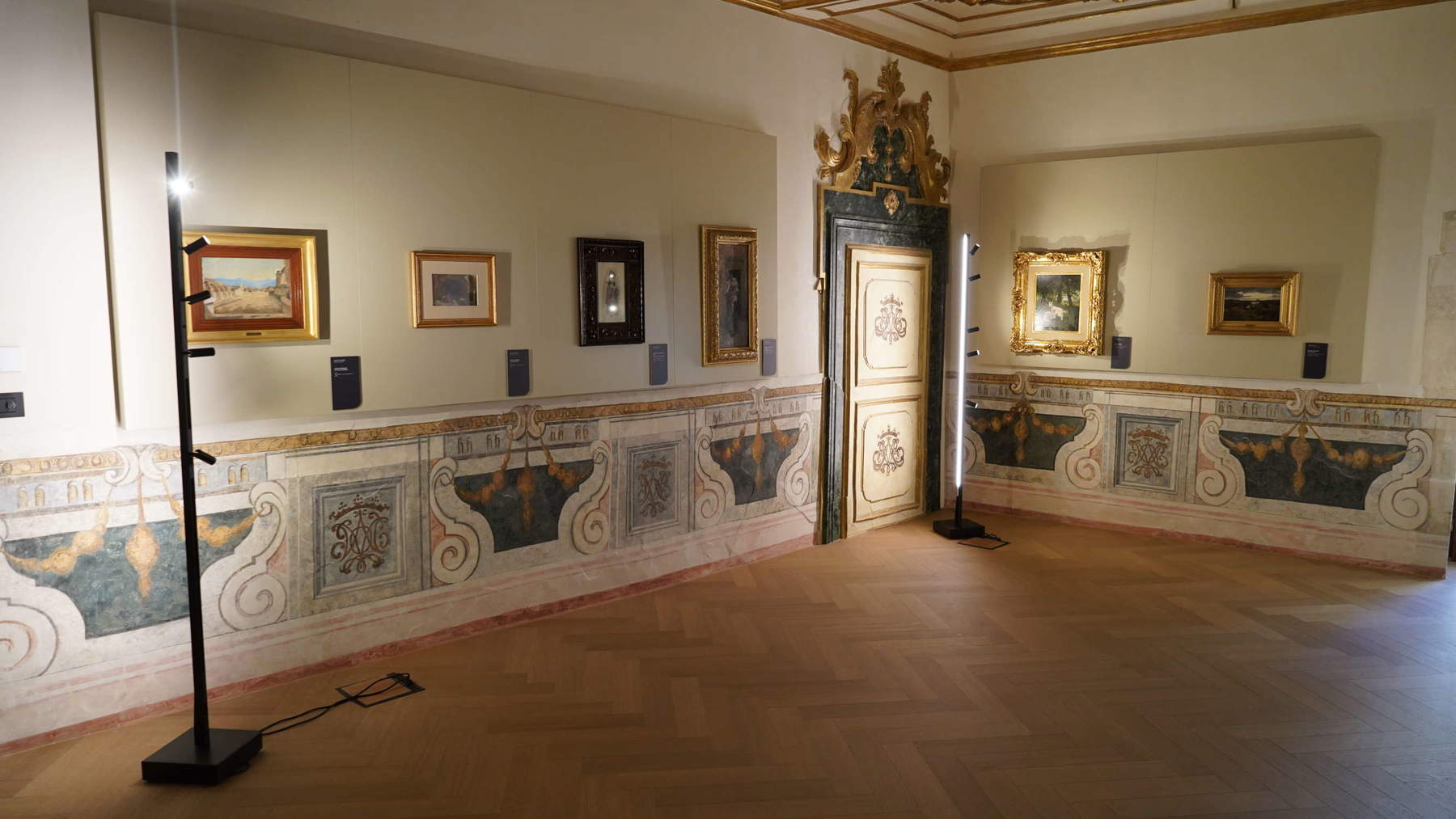
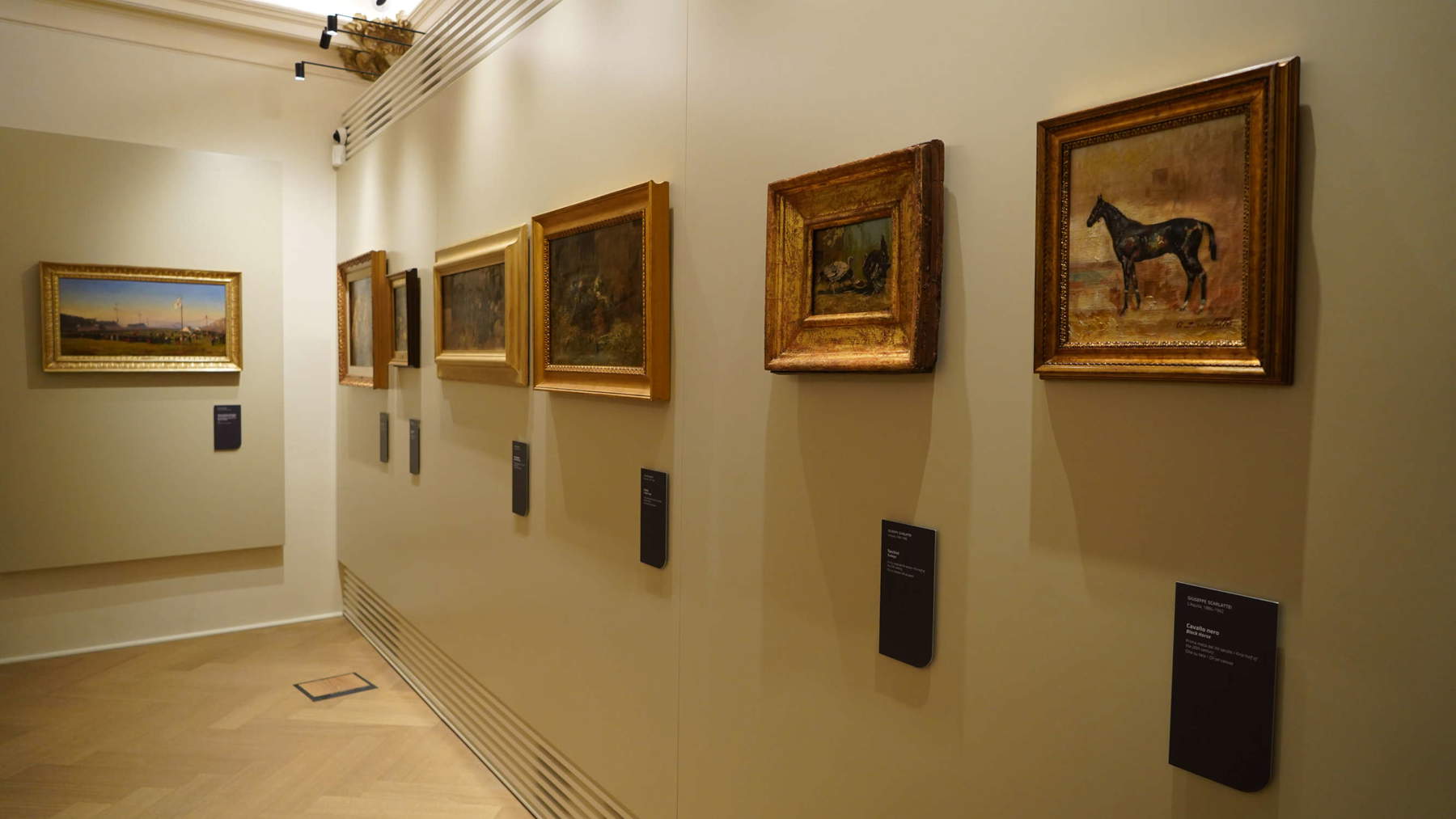
Accessibility is an integral part of the cultural mission of La Galleria BPER, which for several years has been working to make its spaces and content accessible to audiences with diverse needs, addressing architectural barriers, developing educational tools, and training staff. At Palazzo Farinosi Branconi, this focus has guided the building’s renovation from the design phase onward, creating a physically accessible route. This is complemented by a program of initiatives for sensory and cognitive accessibility—some already in place and others planned for the coming months—which includes a tactile map of the main floor, tactile reproductions of certain works using the Minolta technique, audio descriptions, and sign language video content dedicated to specific works, as well as specialized staff training and the design of dedicated workshops.
The BPER Gallery is the organization that oversees the cultural centers and corporate collection of the BPER Group. It was established to make accessible a heritage built up over time through the history of the banking group and has been active since 2017 in a program that combines corporate identity with social responsibility. The opening in L’Aquila follows that in Modena and precedes the inauguration of the Ferrara center, housed in the historic Palazzo Barbantini-Koch, which will be inaugurated on October 6, 2026, and open to the public starting October 8 with a tour of the permanent collection and the exhibition *Vanitas. “Flowers and Symbols, from Hayez to Casorati,” organized in collaboration with Il Sole 24 Ore Cultura. Concurrently, the exhibition “Χάος – Caos. Spaces and Poetics of Informal Art, scheduled from September 18, 2026, to February 7, 2027, and in Brescia, the exhibition dedicated to Antonio Ligabue, from October 23, 2026, to January 11, 2027.
The museum is open on Thursdays from 2:00 p.m. to 7:00 p.m., with the last tour starting at 6:00 p.m., and from Friday through Sunday from 10:00 a.m. to 7:00 p.m., with last admission at 6:00 p.m. Each tour, lasting about fifty minutes in total, is led by museum staff and departs on Thursdays at 2:00 p.m., 3:00 p.m., 4 p.m., 5 p.m., and 6 p.m., while on other days, tour start times are 10 a.m., 11 a.m., 12 p.m., 1 p.m., 2 p.m., 3 p.m., 4 p.m., 5 p.m., and 6 p.m. The complex complies with physical accessibility regulations and provides tools and aids for people with sensory, multisensory, or cognitive disabilities, with staff trained in these areas. The bookshop follows the same opening hours as the museum.
|
| L'Aquila: Palazzo Farinosi Branconi Reopens as a New Museum of the BPER Cultural Hubs Network |
Warning: the translation into English of the original Italian article was created using automatic tools. We undertake to review all articles, but we do not guarantee the total absence of inaccuracies in the translation due to the program. You can find the original by clicking on the ITA button. If you find any mistake,please contact us.