



by Redazione 22/10/2026


Categories: Museums / Disclaimer
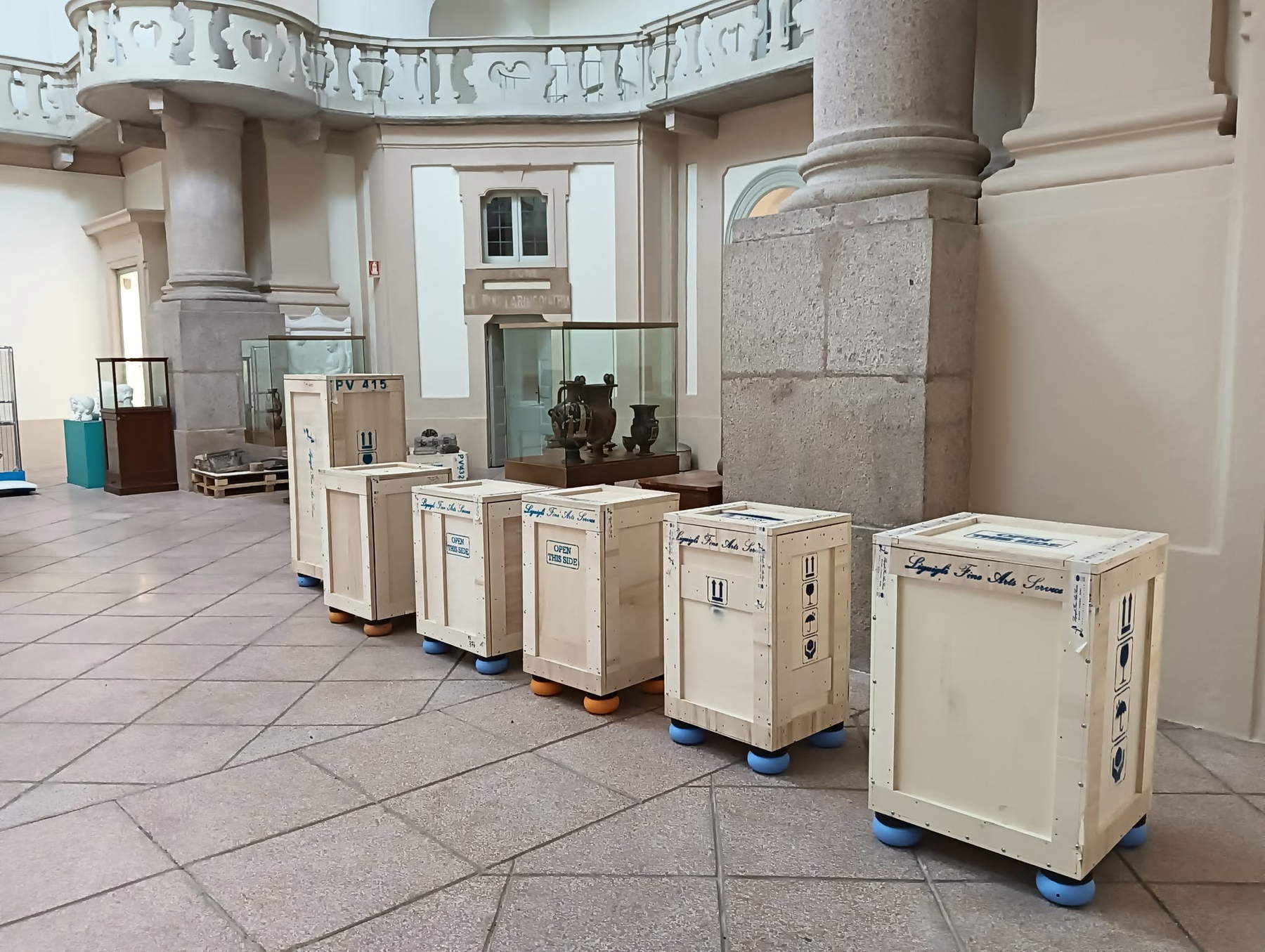
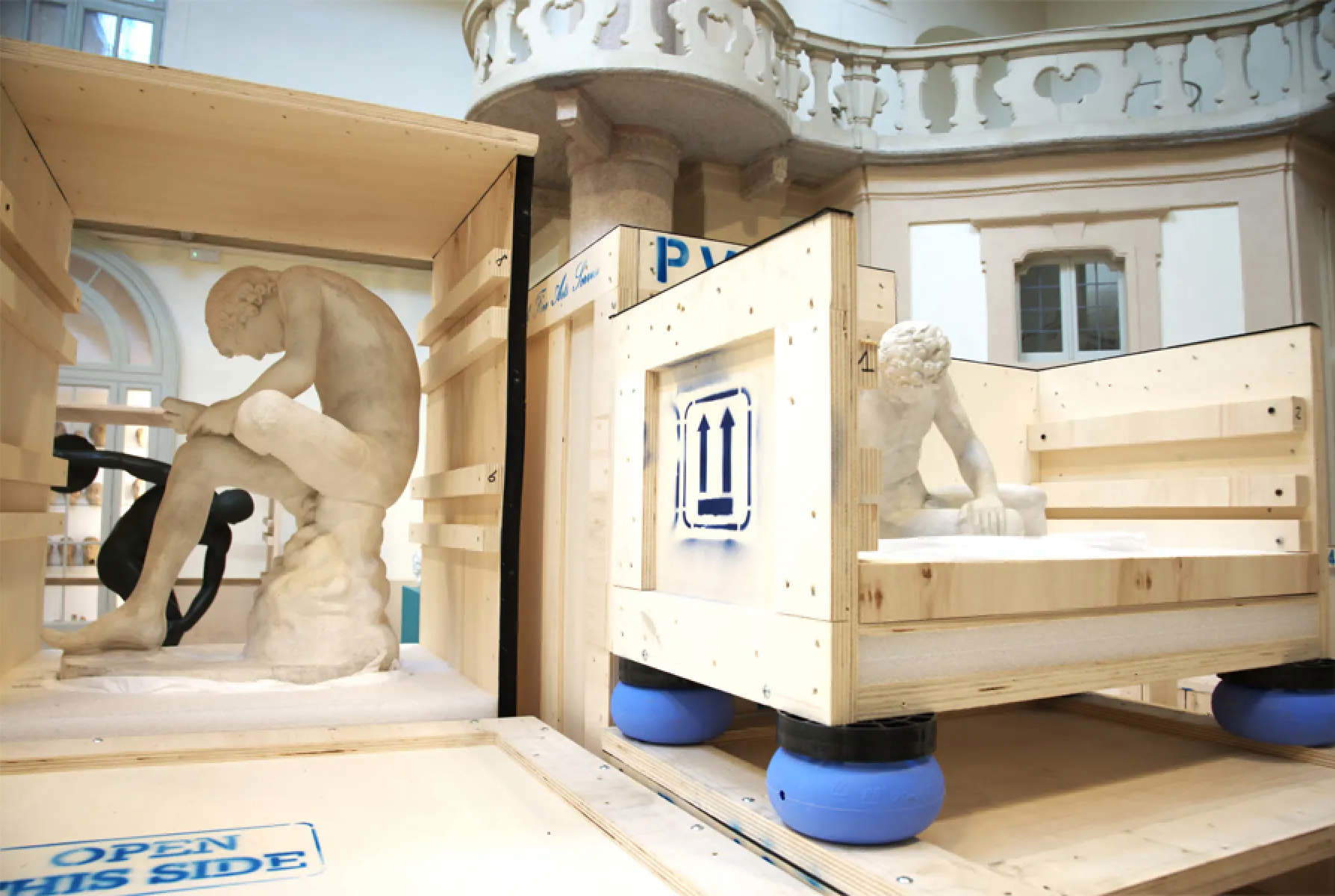
The University of Pavia’s Museum of Archaeology has reopened after a two-year closure, featuring a very unique temporary exhibition: the artifacts have been left in the crates used to store and transport them, some of which are still sealed. Here’s why.


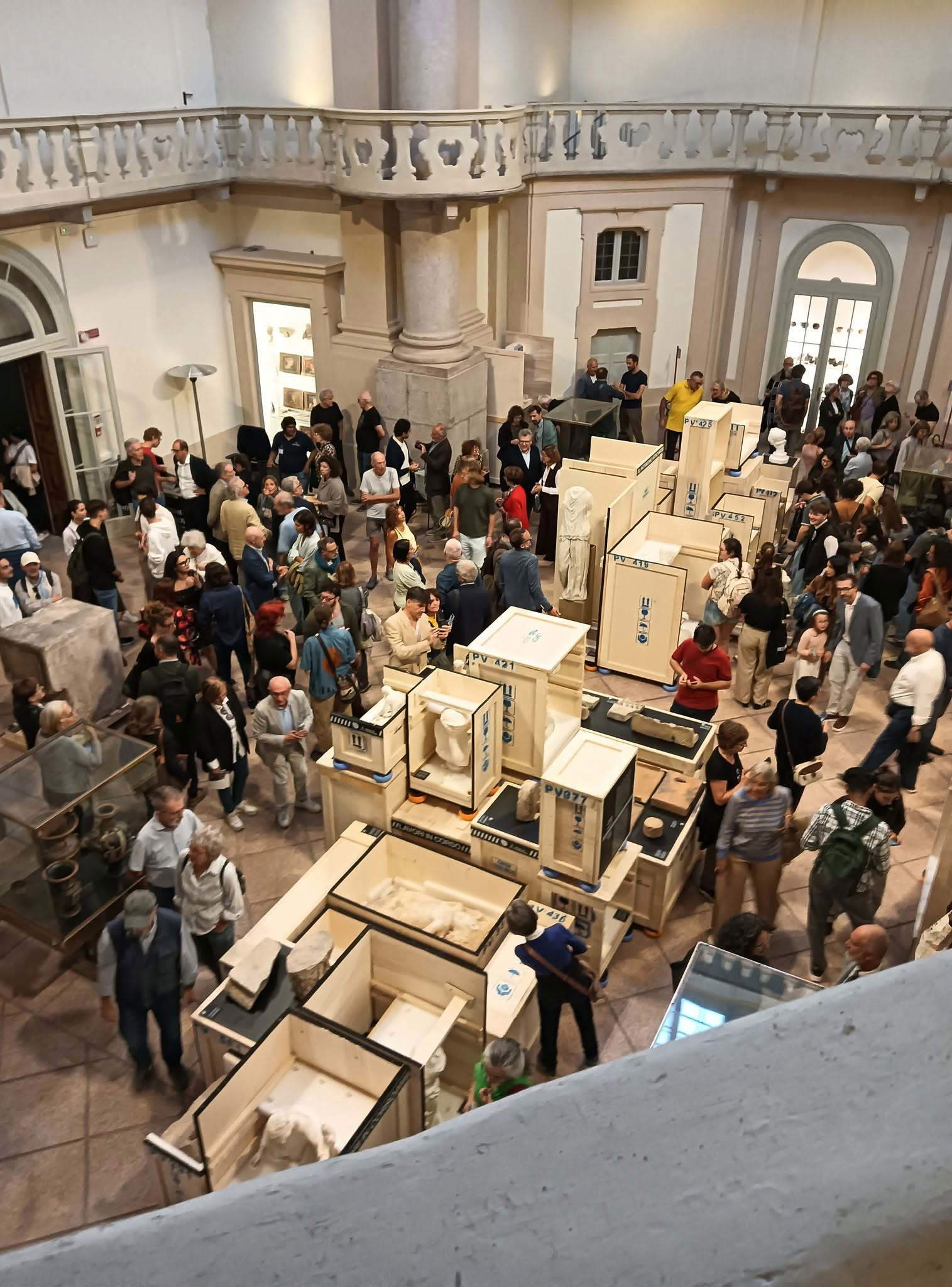
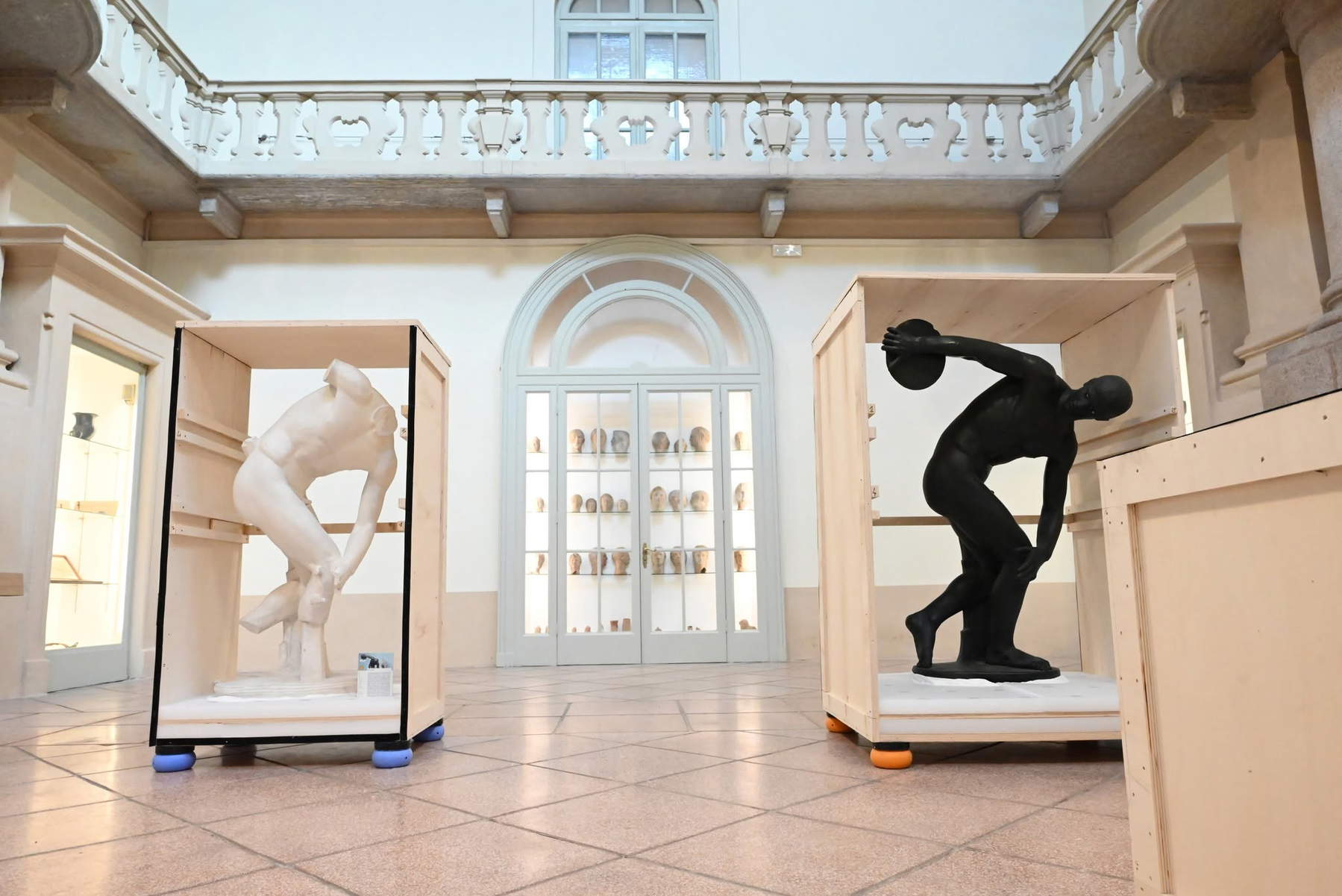
A visit to a museum can begin even without seeing the works of art. It can simply start with… a still-sealed crate. This is one of the unique features of the new temporary exhibition at the University of Pavia’s Museum of Archaeology, which has returned to its historic location following a major restoration project. The crates used over the past two years to store the artifacts were not simply removed to make room for display cases; instead, they have become the visual centerpiece of the exhibition—an integral part of a layout that preserves the collection’s historical order while offering a glimpse of what the museum of the future will look like: an institution in the midst of transformation. The Museum of Archaeology is thus once again open to the public in the Crociera of the 15th-century San Matteo Hospital, located within the Central Building of the University of Pavia at Strada Nuova 65. The new exhibition layout, conceived as a transitional phase leading up to the final installation, was inaugurated on October 2 but officially reopened last Saturday, October 17.

The idea of leaving the storage crates on display stems from a suggestion by architect and museum designer Massimo Ferrari. Their presence aims to change the way the public encounters the collection: alongside the archaeological artifacts, the tools used for their conservation also become visible elements of the exhibition. Not everything is on display right away, and part of the collection remains to be discovered. As Elena Calandra, director of the Museum of Archaeology, explains, “not all the display cases are open: some will reveal their contents in the future, because a museum thrives only if it transforms itself and, through these changes, is able to attract and engage visitors.”


The grand opening of the permanent exhibition is scheduled for spring 2027: until then, the museum presents itself as a work in progress, where the exhibition layout is destined to evolve.

A Collection Spanning Eras and Civilizations
The history of the University of Pavia’s Museum of Archaeology is intertwined with that of archaeology education in Italy. It was founded in 1820, when the archaeologist Pietro Vittorio Aldini (Cesena, 1773 – Pavia, 1842) established the museum alongside the first chair of archaeology in Italy. From its very beginnings, the collection served a distinct educational purpose, designed to link the study of artifacts with their direct observation.
The University Archaeological Museum’s collection includes artifacts from Italy and other parts of the world, with finds ranging from prehistory to ancient Egypt, from the civilizations of ancient Italy to the Roman era, and up to the Renaissance. The collection is complemented by an extensive plaster cast gallery, which helps define the character of a museum founded in part to support university education.
It is precisely this relationship between the collection and education that constitutes one of the cornerstones of the ongoing renovation. The return of the collections to their original location represents not only the restoration of accessibility following the renovations but is also part of a broader program of the University of Pavia Museum System, which is committed to the structural and educational renewal of the exhibition itineraries at the university’s museums. The stated goal is to highlight the university’s historical and scientific heritage and encourage broader engagement with the collections, particularly among students from schools of all levels and university degree program students. With this in mind, the museum aims to be not only a place for conservation and research but also a space where visitors can gain hands-on experience with archaeological methods.
Exposure to original artifacts, casts, and historical contexts can offer high school students—as well as university students— direct access to the study of past civilizations and to the scientific work that makes it possible to reconstruct their history. The renewal of the exhibits is therefore also linked to the desire to strengthen the museums’ role in guiding students, providing a close-up look at the disciplines and educational opportunities offered by the university.
From a Historical Museum to an Evolving Project
The new exhibition is part of a process of transformation concerning the very role of university collections. The preservation of artifacts and research remain central, but are now complemented by a greater focus on public engagement, hosting school groups, and dialogue with the local community.
For the Pavia Museum of Archaeology, the reopening thus marks a return to full accessibility, while maintaining its connection to its educational roots: the goal is to consolidate activities aimed at students and the general public, while collaboration and research projects are being developed with the aim of strengthening the museum’s presence on the international stage.
The University of Pavia’s Museum of Archaeology is located in the University’s Central Building at Strada Nuova 65, with the entrance in the passageway between the Cortile delle Magnolie and the Cortile Sforzesco. On Saturday, October 17, 2026, the museum will be open to the public from 10 a.m. to 6 p.m., with a guided tour at 4 p.m. led by Anna Letizia Magrassi Matricardi. For weekday opening hours, please consult the calendar on the website archeologia.unipv.eu. For more information: museo.archeologia@unipv.it.
 |
| Pavia: The Archaeological Museum Reopens with Artifacts Still in Their Crates—the Move Becomes Part of the Exhibition |
Warning: the translation into English of the original Italian article was created using automatic tools. We undertake to review all articles, but we do not guarantee the total absence of inaccuracies in the translation due to the program. You can find the original by clicking on the ITA button. If you find any mistake,please contact us.