




by Redazione 14/10/2026



Categories: Museums / Disclaimer
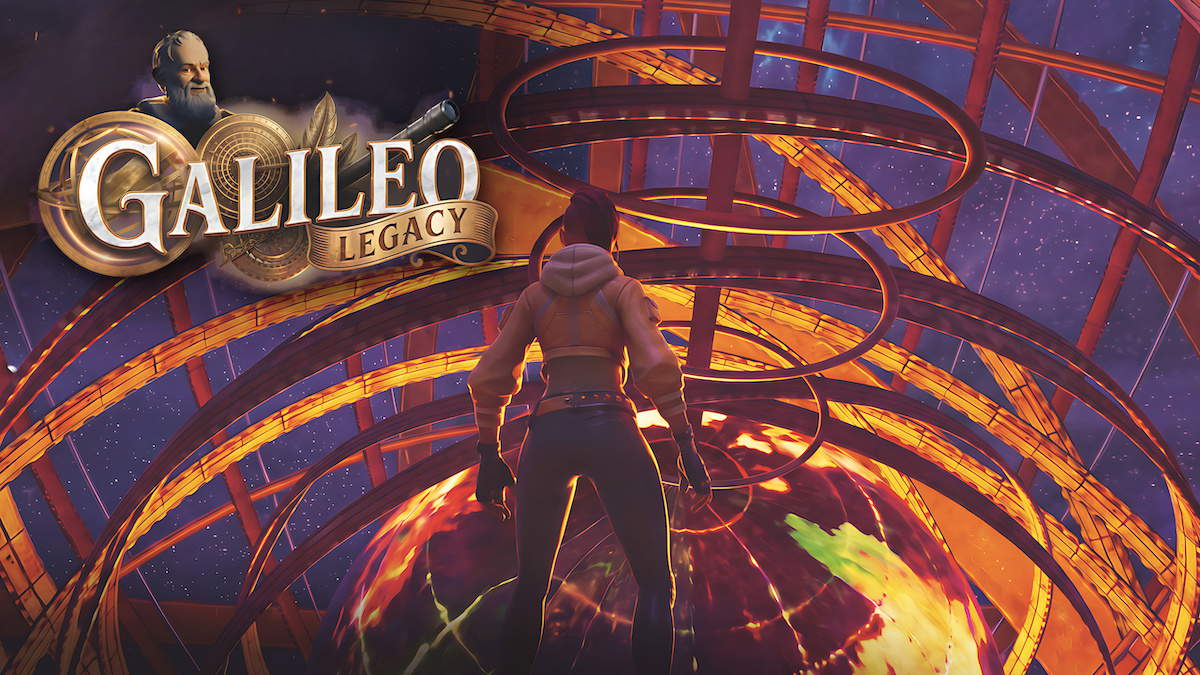
Funded by the Ministry of Culture as part of the PNRR and developed in collaboration with Dot Beyond, “Galileo Legacy” brings the historical instruments of the Museo Galileo in Florence to Fortnite, transforming astronomy, experiments, gravity, and time measurement into interactive experiences designed for schools as well.


The Galileo Museum in Florence is entering the world of video games with “Galileo Legacy,” a new Fortnite island featuring an interactive journey through the history of science. Unveiled on Tuesday, October 13, at the museum’s headquarters in Piazza dei Giudici, the project was developed in collaboration with the agency Dot Beyond and funded by the Ministry of Culture as part of the National Recovery and Resilience Plan (PNRR). The goal is to introduce younger generations to scientific heritage through puzzles, virtual experiments, and challenges inspired by the instruments preserved in the museum’s collections.


To access the experience, all you need is a free Fortnite account: once you’ve launched the game on a PC or console, simply search for “Galileo Legacy” to go directly to the island. The project goes beyond simply bringing museum objects online; it uses their characteristics and functions to create an environment where observation, intuition, and problem-solving become an integral part of the learning process. The content ranges from physics to astronomy, from mathematics to timekeeping, blending play and education.
The experience has also been designed foruse in schools. A guide for teachers offers activities to be carried out in the classroom—including via the interactive whiteboard (IWB) and team challenges—or individually at home. Students can then bring their observations and insights about the instruments they encountered during the game back to the classroom. The project thus aims to create a link betweendigital exploration and a visit to the museum, where students can see the original objects and learn more about their history.




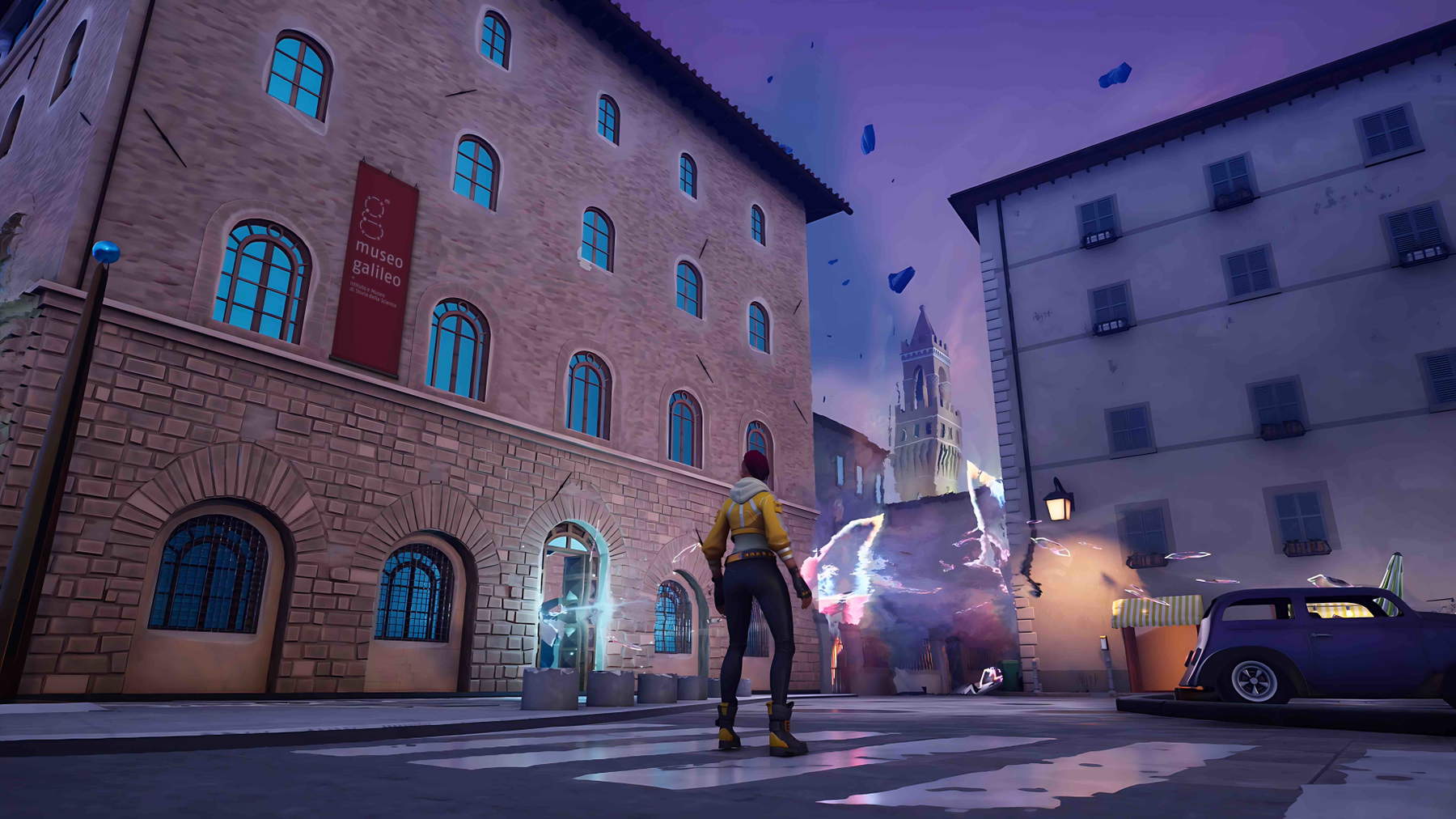
The centerpiece of Galileo Legacy is the Hall of Seals, which provides access to four independent Wings that can be tackled in any order: Astronomy, Experiments, Gravity, and Time. Each path features specific settings and challenges. Completing each Wing earns a Seal; collecting all four allows players to conclude the adventure and solve the mystery that runs through the game.
In the Astronomy Wing, players explore ancient cosmological models and navigate using a compass, map, and coordinates, eventually passing through a large, moving armillary sphere. The experience connects geography, physics, and the history of science. In the Experiment Wing, on the other hand, participants take on the role of researchers: they follow a procedure at the Chemistry Lab to prepare ink and decipher a hidden message using a historical cipher, combining experimentation, mathematics, and language.
The Gravity Wing is dedicated to Galileo’s discoveries regarding the motion of bodies and offers experiments based on the concepts of acceleration, inertia, and gravity, including the famous Experiment of the Weights. Finally, in the Wing of Time, players reach a large night-time clock and, by locating the North Star and the Big Dipper, must determine the time, exploring the relationship between astronomical observation and the measurement of time.
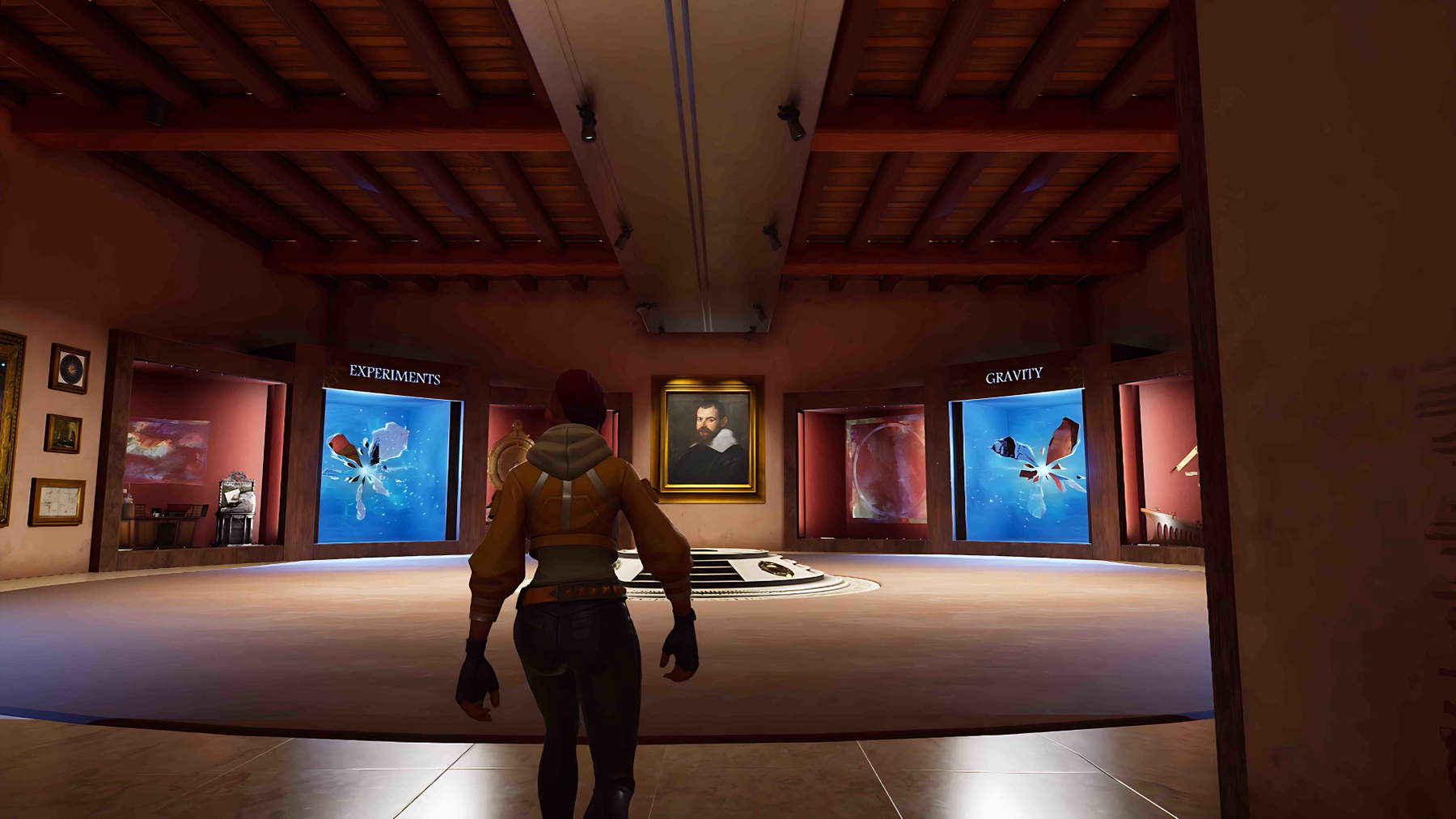
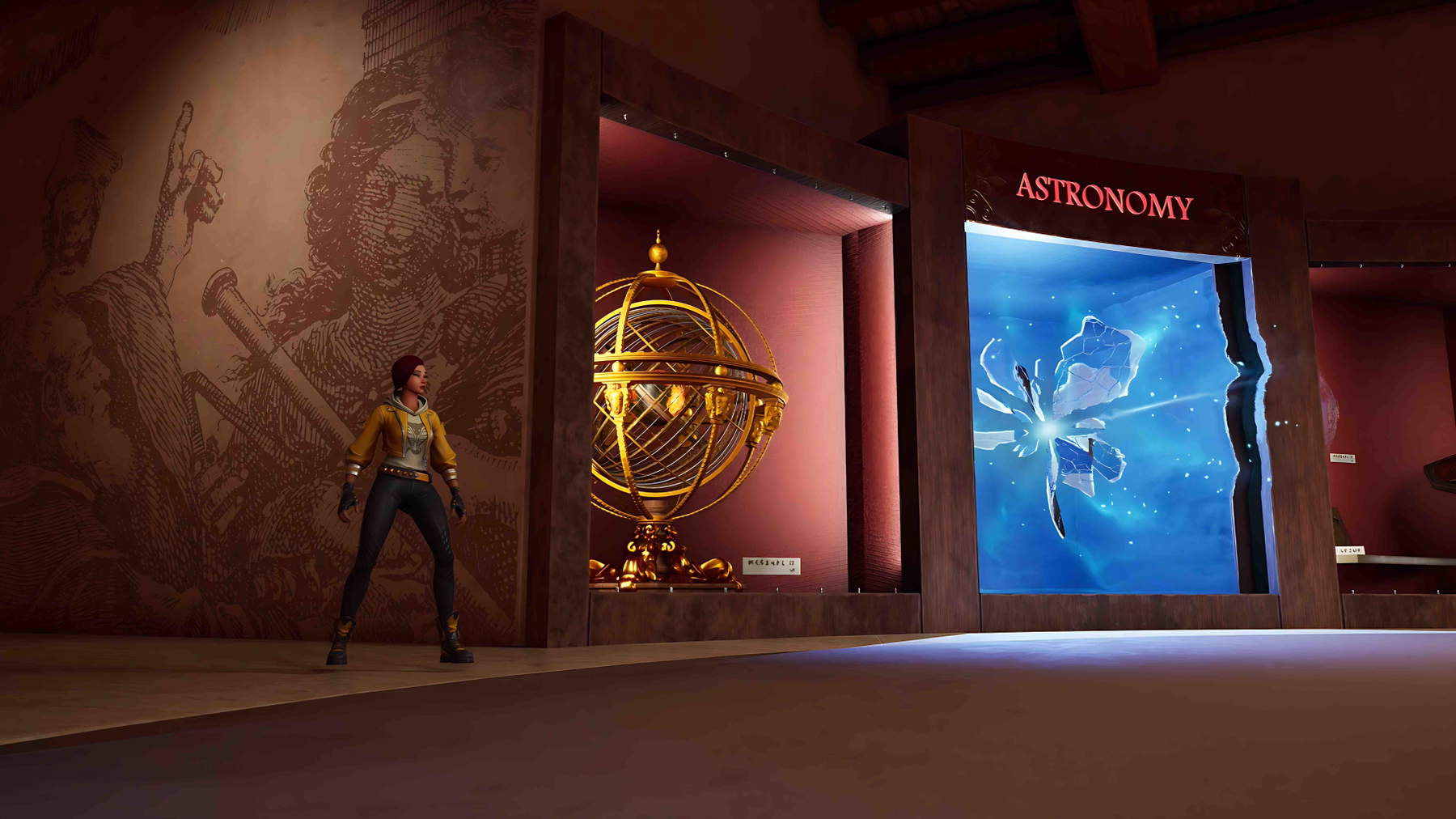
The instruments, therefore, do not merely serve as the backdrop for the settings but also determine the game mechanics. Telescopes, astrolabes, armillary spheres, microscopes, and other objects from the collections have been reproduced using three-dimensional models from the digitized heritage, maintaining a connection to their original function.
Speakers at the press conference included Roberto Ferrari, executive director of the Museo Galileo; Luca Mercuri, from the Ministry of Culture; Giovanni Bettarini, councilor for culture for the City of Florence; Riccardo De Angelis, a developer at Dot Beyond; and Pietro Polsinelli, director of Open Lab. During the event, a live gameplay session was also demonstrated to illustrate how to explore the island and the mechanics developed for Galileo Legacy.
“We are very eager to experiment with a new form of interaction with a young, international audience, whom we hope to welcome soon at Palazzo Castellani,” said Roberto Ferrari, executive director of the Museo Galileo.
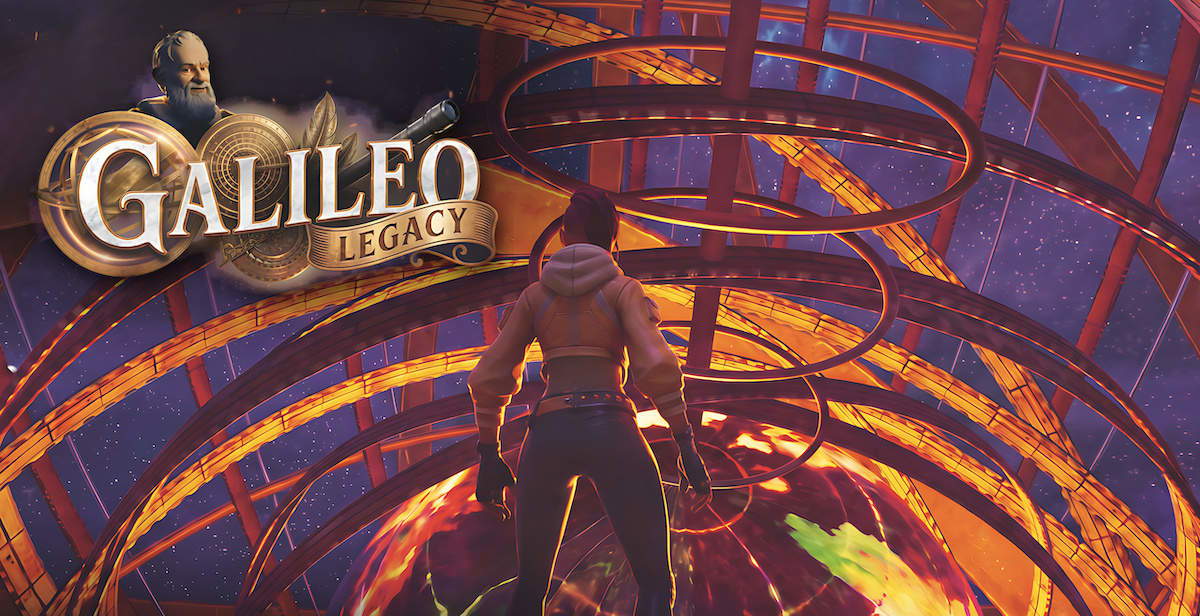 |
| The Galileo Museum Comes to Fortnite: An Island to Explore the History of Science |
Warning: the translation into English of the original Italian article was created using automatic tools. We undertake to review all articles, but we do not guarantee the total absence of inaccuracies in the translation due to the program. You can find the original by clicking on the ITA button. If you find any mistake,please contact us.