




by Redazione 15/10/2026



Categories: Museums / Disclaimer
Starting March 21, 2027, Palazzo Grassi will host over one hundred works from the Pinault Collection in a permanent exhibition. At Punta della Dogana, an exhibition dedicated to Tadao Ando will bring together the Japanese architect’s photographs and the artistic explorations of the Mono-ha movement.


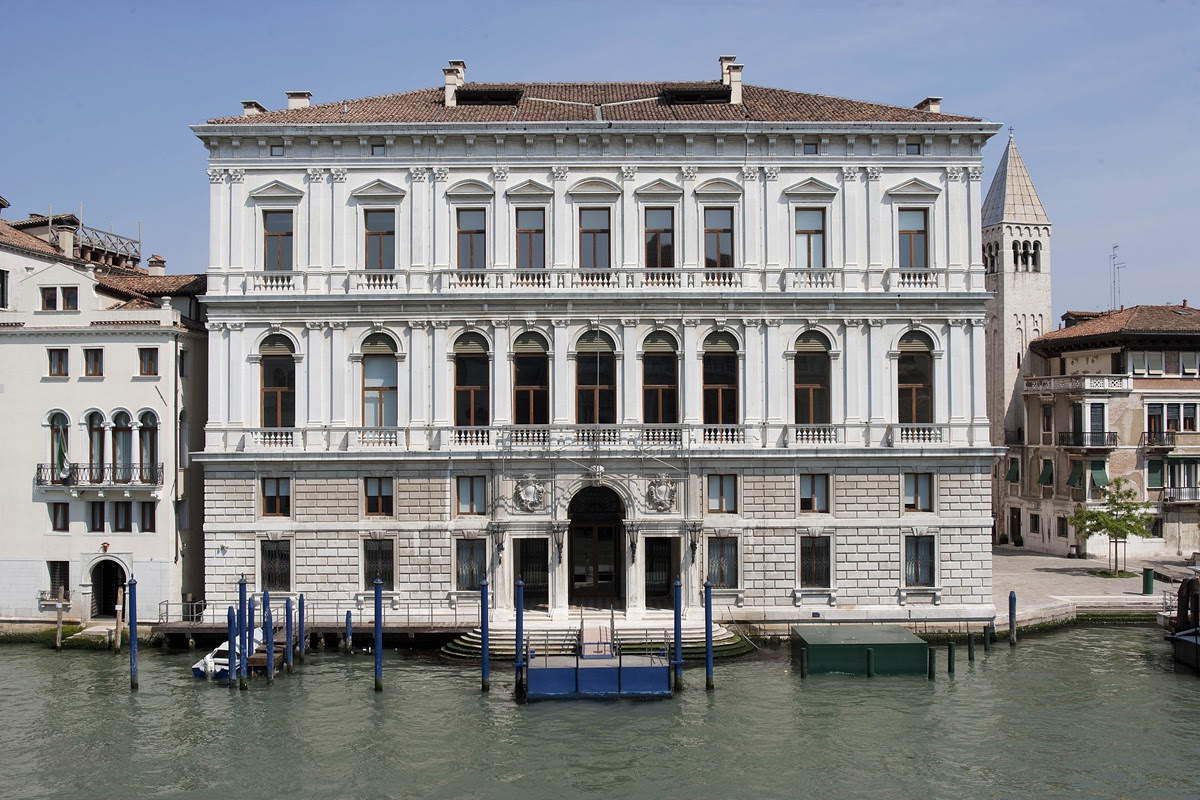
Starting March 21, 2027,Palazzo Grassi in Venice will become the home ofa permanent exhibition dedicated to a selection of over one hundred key works from the Pinault Collection. This decision marks a new phase in the cultural project launched by François Pinault in the city in 2006, when the French entrepreneur and collector inaugurated his exhibition program in the historic building overlooking the Grand Canal. Starting in the spring of 2027, the galleries of Palazzo Grassi will be dedicated to an exhibition that brings together works of particular significance in the history of the collection, some of which have, over time, become landmarks of contemporary art.


Since its opening, Palazzo Grassi has hosted twenty-seven exhibitions. The decision to transition to a permanent exhibition aims to offer a new way of engaging with the collection assembled by Pinault, providing visitors with an experience that prioritizes the opportunity to view the works at a more leisurely pace. In a context characterized by a constant flow of images and stimuli, the project invites visitors to slow down, linger over the works, and grasp the relationships that develop between artistic languages, sensibilities, and worldviews.


The exhibition will be curated by EmmaLavigne, director and chief curator of the Pinault Collection, together with the collection’s curatorial team. The exhibition aims to provide a comprehensive overview of the identity of François Pinault’s project, shaped over more than half a century of discoveries, encounters, and personal choices. The collection, comprising more than 10,000 works of modern and contemporary art, encompasses various artistic movements and expressive languages and is regularly presented at the three museum venues associated with the collector: Palazzo Grassi and Punta della Dogana in Venice, and the Bourse de Commerce in Paris.


The Venetian initiative is part of a history of architectural and cultural interventions that have transformed historic buildings into spaces dedicated to contemporary artistic production. In 2006, Pinault launched the project with Palazzo Grassi, entrusting its transformation to Tadao Ando, a Japanese architect who is among the leading figures in contemporary architecture. In 2009, Punta della Dogana was inaugurated, having been restored through a minimalist renovation by the same architect, while the Teatrino at Palazzo Grassi was completed in 2013. The journey continued in Paris in 2021 with the transformation of the Bourse de Commerce into the collection’s third exhibition venue.
For Pinault, art offers an opportunity to examine the human experience, highlighting its fragility, impulses, doubts, and resources. Artworks can alter the way we view our surroundings, prompting a reevaluation of our certainties and habitual perspectives. Within this vision, the collection embodies an autonomous and demanding form of patronage, dedicated to shaping its own era and open to continuous evolution.
The opening of the permanent exhibition at Palazzo Grassi will be accompanied by a second exhibition at Punta della Dogana, where the exhibition *Tadao Ando & Mono-ha. The Five Elements. Curated by Jean-Marie Gallais, curator of the Pinault Collection, and Nicolas-Xavier Ferrand, a researcher at the same institution, the project will draw parallels between the architect’s photographic work and the works of several key figures in the Japanese Mono-ha movement (“The School of Things”), an avant-garde movement that emerged in the late 1960s and remains relatively little known outside specialized circles.
The exhibition focuses on the photographs Ando took of his own architectural works, a lesser-known aspect of his practice. Through several hundred images—some of which are being shown for the first time—the exhibition will trace the architect’s exploration of the relationship between image, architecture, and the experience of space. Photographic prints and slide projections will be displayed in the galleries of Punta della Dogana, highlighting Ando’s attention to variations in light, the relationship between shadow and surface, and the effects produced by the passage of time.
Born in 1941, Tadao Ando has been collaborating with François Pinault for over twenty-five years. This relationship, founded on trust and mutual respect, has given rise to a series of projects in which contemporary architecture engages with the history of the buildings and the works on display. Palazzo Grassi, the Teatrino, Punta della Dogana, and the Bourse de Commerce are the key milestones of this collaboration, which has assigned new cultural functions to existing structures through interventions capable of redefining their spaces without erasing their history.
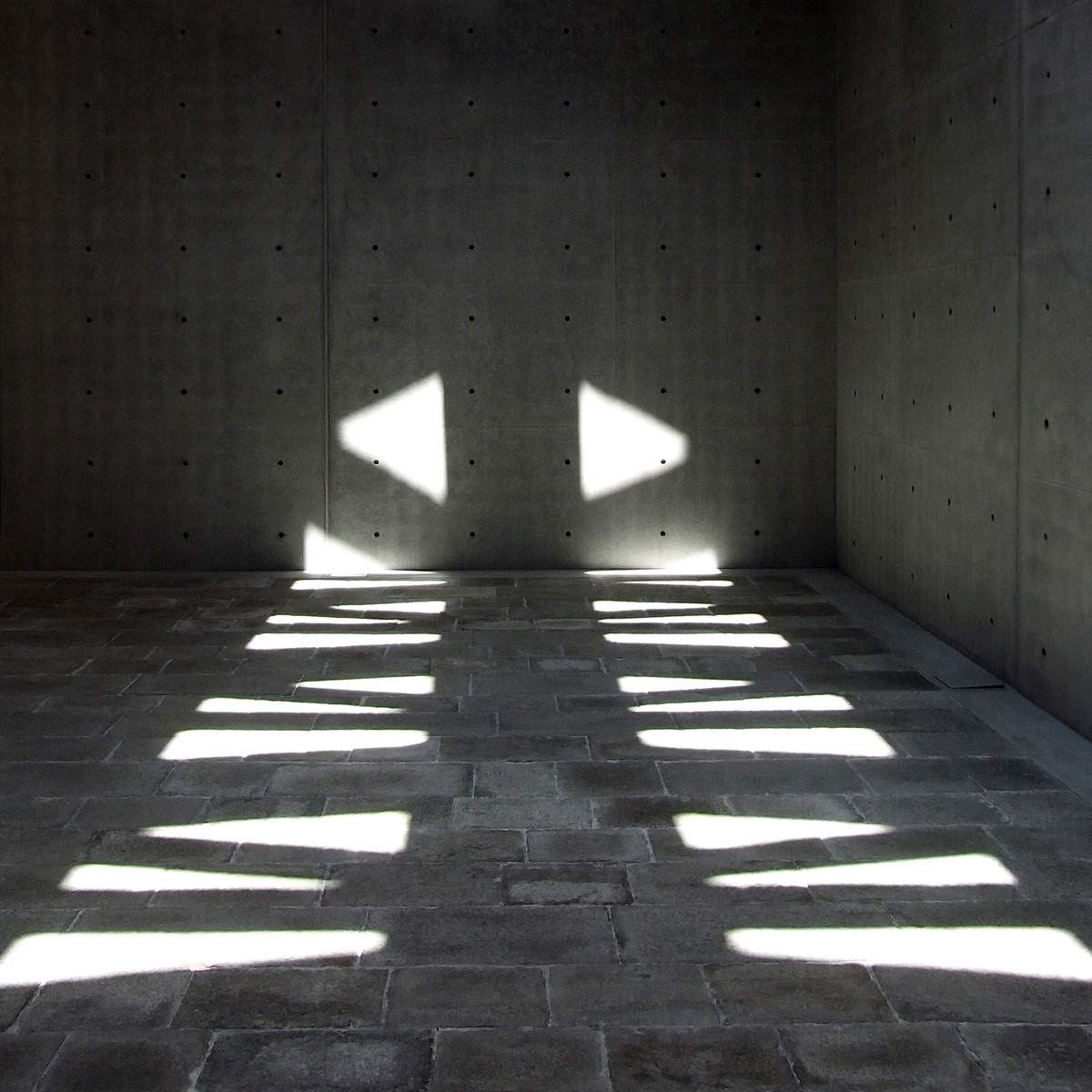
The exhibition’s title refers to five elements that form the central theme of the exhibition: air, earth, water, fire, and concrete. Air refers to emptiness and the Japanese concept of ma, understood as the space between things; earth evokes context and history; water evokes fluidity; fire alludes to the transformation of materials such as glass and metal; concrete, on the other hand, represents the medium through which Ando gives concrete form to principles of order and abstraction.
These themes relate to the explorations of Mono-ha, a movement that took shape in 1968 in Tokyo, within the circles of the Tama and Tokyo art universities. Artists such as Nobuo Sekine, Kishio Suga, Lee Ufan, and Jiro Takamatsu developed a radical practice grounded in materiality, the relationships between objects, space, and the perception of reality. Their work aimed to define a contemporary aesthetic independent of Western models, through the use of simple, everyday materials arranged in installations with essential forms.
Against the backdrop of the expansion of consumer society and the mass media, Mono-ha refocused attention on the very existence of “mono”—a Japanese term meaning “things”—considered in terms of their material presence and the relationships they establish with their environment and with the observer. The goal was to foster a deeper sensitivity toward the non-human elements that make up the world, removing them from the routine of the gaze and making their intrinsic qualities perceptible.
“In my view, Tadao Ando is practically the only Japanese architect to have grasped the essence of this school of thought [Mono-ha],” declared architect Arata Isozaki in 1985.
The decision to juxtapose Ando’s photographs with the works of Mono-ha is based on the affinities between their respective approaches: a focus on the characteristics of materials, the centrality of spatial experience, and the role of natural phenomena. The Punta della Dogana building, renovated by the architect in 2009, also becomes an integral part of the project, thanks to an architectural design that highlights these parallels.
Statements
“I have always believed it is necessary to give works time: time to be seen, revisited, and sometimes understood in a different light,” says François Pinault. “Twenty years after the opening of Palazzo Grassi, I wanted to give some of these works a permanent home. Not to set the Collection in stone, but to allow the works to continue to challenge us and renew our perspective on the world.”
“I believe it is essential to continually question the principles behind things; that is why I often feel in tune with the demanding, reflective attitude of contemporary artists,” says Tadao Ando.
 |
| Venice: Palazzo Grassi to Become the Permanent Home of the Pinault Collection Starting in 2027 |
Warning: the translation into English of the original Italian article was created using automatic tools. We undertake to review all articles, but we do not guarantee the total absence of inaccuracies in the translation due to the program. You can find the original by clicking on the ITA button. If you find any mistake,please contact us.