




A network of third-sector organizations dedicated to addressing the issue of accessibility to cultural heritage through educational, training, and artistic initiatives. It’s “A porte aperte.” New perspectives for a cultural heritage that is inclusive and accessible to all—a project conceived and promoted byFAI (Italian Environment Fund) in collaboration with Dynamo Camp, the Mus-e Italia Foundation, the IBVA Foundation, and the Friends of FAI Association, with funding from the Ministry of Labor and Social Policies. Launched in April 2026, the project will run through October 2027 and will involve students, families, volunteers, and professionals, with a particular focus on people with disabilities, those from immigrant backgrounds, and those facing socioeconomic vulnerabilities.
The initiative brings together expertise and tools developed in the social, cultural, and educational sectors, with the goal of addressing the various barriers that can limit participation in cultural life. Historical and artistic heritage is utilized as a space for encounter and participation through programs promoting active citizenship, training courses, scholarships, guided tours of cultural sites—starting with those managed by the FAI—art workshops, and multimedia projects. The project thus aims to systematize practices designed to reduce cognitive, socioeconomic, physical, and linguistic barriers, viewing diversity as an integral part of communities and access to culture as a potential tool for autonomy, dialogue, and shared growth.
The planned initiatives involve diverse audiences and regions. Starting in September, artistic programs and workshops led by approximately twenty professional artists will begin, organized by Mus-e Italia in collaboration with the FAI and the Associazione Amici del FAI. The program will involve 25 elementary school classes in Milan, Brescia, Florence, Sant’Elpidio a Mare (in the province of Fermo), Fermo, and Ceriale (in the province of Savona). Dance, music, theater, and the visual arts will be used as educational languages and tools for inclusion. The programs will also include presentations for families and the community.

In October, the IBVA Foundation’s “Italian for Everyone ” program will offer a B2/C1-level Italian language course for foreigners. The course will alternate sessions dedicated to the Italian language with cultural explorations and guided tours of Milan’s historical and artistic sites. Registration will remain open until September 30. The program also includes a training course specifically for FAI volunteers and another for the organization’s staff.
Starting in November, the FAI, in collaboration with CSV Milano, will also launch a series of six online training sessions for volunteers and cultural professionals. The sessions will focus on accessibility and inclusion for people with disabilities and health vulnerabilities at cultural sites. The program will resume the following spring with Dynamo Camp, expanding the discussion on these topics.
Dynamo Camp has already developed art-based and recreational therapy activities over the summer. The Art Factory program, held at the Limestre Camp in the province of Pistoia, and the Art Lab program, active at the City Camps in Milan, Genoa, and Naples, are aimed at families with children and teens who have serious or chronic illnesses, neurodevelopmental disorders, or disabilities. The workshops will resume in June 2027 and will feature collaborative creative activities led by contemporary artists alongside the Dynamo staff. The goal is to create a space where the artistic experience can be accessible and inclusive. Dynamo families will also have the opportunity to participate in tours of FAI heritage sites.
The project also aligns with the activities the FAI already carries out in the field of education for active citizenship. During the 2026–2027 school year, the “Apprendisti Ciceroni” program—an initiative launched in 1996 that involves tens of thousands of students each year—will continue. The program includes an initial phase of classroom study, together with teachers and FAI volunteers, focused on learning about significant sites in their local area, and a second phase in which students become guides for those sites during the FAI Spring and Fall Open House Days. The upcoming FAI Fall Open House Days are scheduled for Saturday, October 10, and Sunday, October 11.
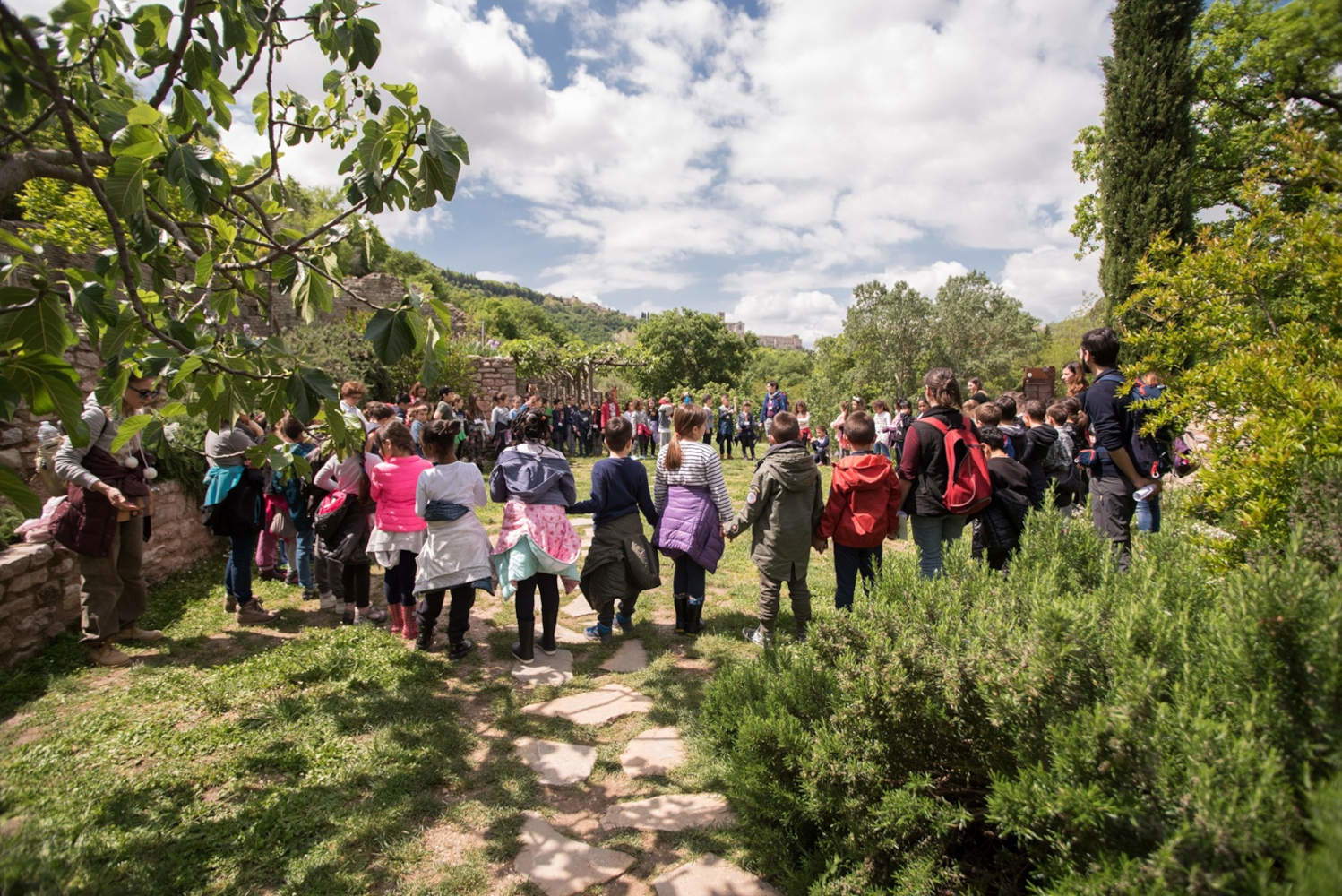
With the start of the new school year, school visits to 32 FAI sites will also continue, featuring multidisciplinary content and activities designed to meet diverse needs, opportunities for cultural enrichment, and hands-on experiences. Heritage education thus goes hand in hand with initiatives specifically dedicated to physical, sensory, cognitive, and linguistic accessibility.
In terms of accessibility, the FAI is currently producing video guides in LIS (Italian Sign Language), designed to support independent visits to certain sites. The content will be available online starting in the fall via a dedicated website. Guided tours in LIS are also planned at numerous FAI sites, organized on a regular basis and by reservation. The planning and implementation of these tours will take place in collaboration withthe National Deaf Association.
Another initiative focuses on people with visual impairments and those with intellectual disabilities of all ages. In collaboration with UICI—the Italian Union of the Blind and Visually Impaired—tactile and multisensory tour routes and specific tactile information panels will be designed and implemented at Casa Noha in Matera. The goal is to expand opportunities to experience the site through tools that engage different senses.
The FAI is also working on accessibility for people with mobility impairments. The Foundation’s properties are being equipped with portable ramps, designed to facilitate access to the spaces while respecting conservation requirements. Among the sites involved is Villa Della Porta Bozzolo in Casalzuigno, in the province of Varese. Folding chairs will also be made available along the tour routes to allow visitors to rest more easily.
For the entire duration of “A porte aperte,”the Associazione Amici del FAI will develop inclusive cultural programs aimed at vulnerable audiences, including citizens with immigrant backgrounds, young people, and those in vulnerable situations. The program will have a specific focus on Milan and will involve art mediators of foreign origin, trained by experts in inclusive education.
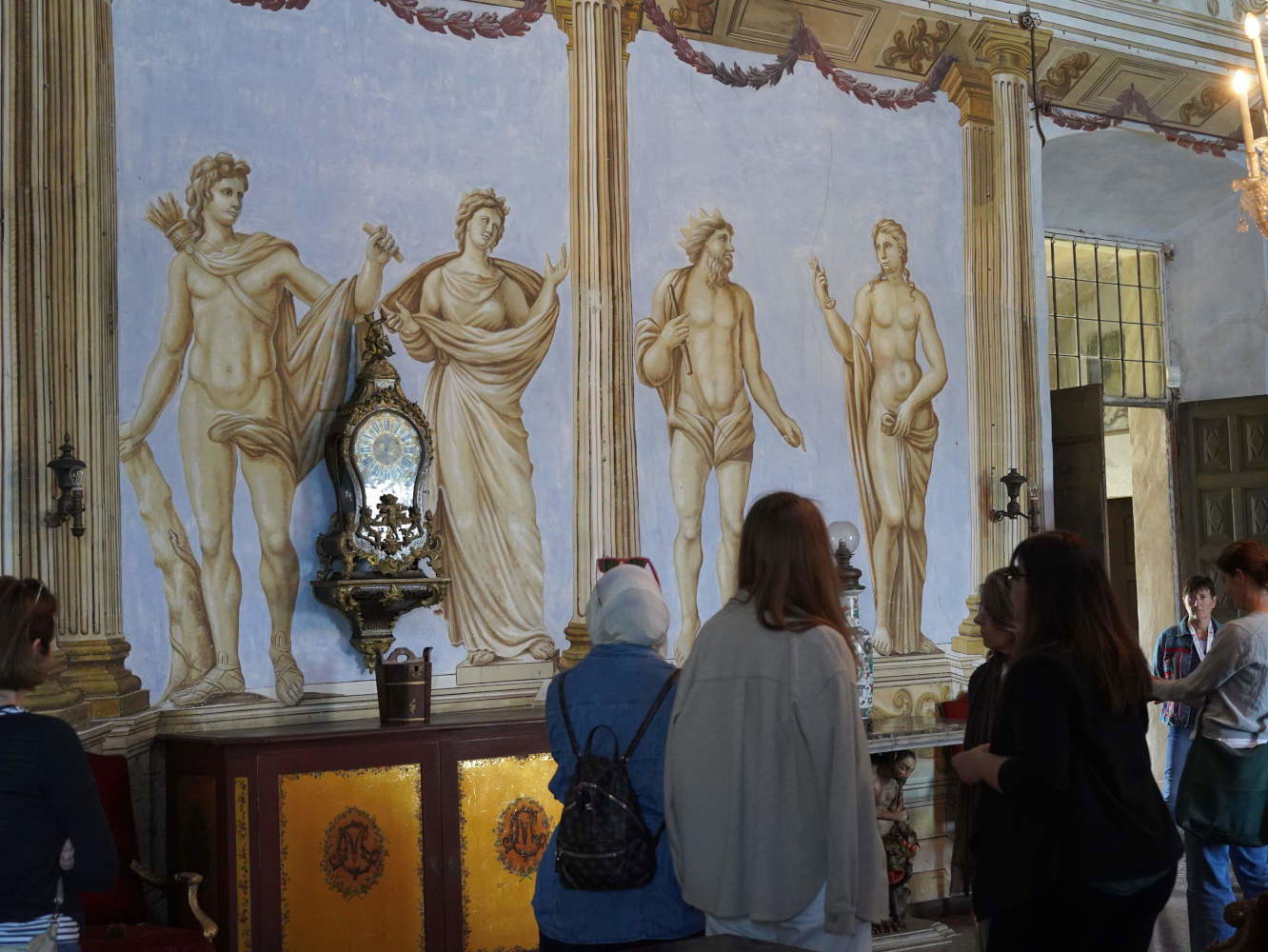
The Association will also take action on the right to education and on combating early school leaving. In September, two scholarships will be awarded for the 2026–2027 academic year, intended for deserving students of migrant background and from socioeconomically disadvantaged backgrounds residing in the Metropolitan City of Milan or in Brescia and its province. The recipients will be students who have passed the high school graduation exam and intend to continue their studies at the university level.
Part of this same initiative is “A più voci: New Cultural Pathways of Proximity and Creativity, ” a project carried out by Amici del FAI, FAI, and the IBVA Foundation, scheduled to conclude in February 2027. The initiative involves new foreign residents in Italy from Chinese, Persian, Turkish, Ukrainian, Spanish, Russian, Portuguese, and Arab communities. Participants are tasked with professionally producing, in their native languages, audio guides in the form of podcasts dedicated to select FAI properties: the Monastery of Torba, La Velarca, and the Castle and Park of Masino.
The materials will be produced following an in-depth study program and guided tours of the sites and will subsequently be made available online, with the goal of making them accessible to both migrant communities and foreign visitors.
The project *Open Doors: New Perspectives for a Cultural Heritage That Is Inclusive and Accessible to All* is therefore structured around initiatives aimed at schools, families, volunteers, cultural professionals, and members of the public facing various vulnerabilities. The list of initiatives—which is currently being updated—and information on how to participate are available on the project’s dedicated website. This initiative was carried out with funding from the Ministry of Labor and Social Policies granted for the year 2025 pursuant to Article 72, paragraph 1, of Legislative Decree No. 117/2017, as amended and supplemented.
 |
| "A porte aperte" is launched: the FAI network to make cultural heritage more accessible |

Warning: the translation into English of the original Italian article was created using automatic tools. We undertake to review all articles, but we do not guarantee the total absence of inaccuracies in the translation due to the program. You can find the original by clicking on the ITA button. If you find any mistake,please contact us.



















 IT
IT FR
FR DE
DE ES
ES CN
CN


