



by Redazione 16/08/2026



Categories: News / Disclaimer
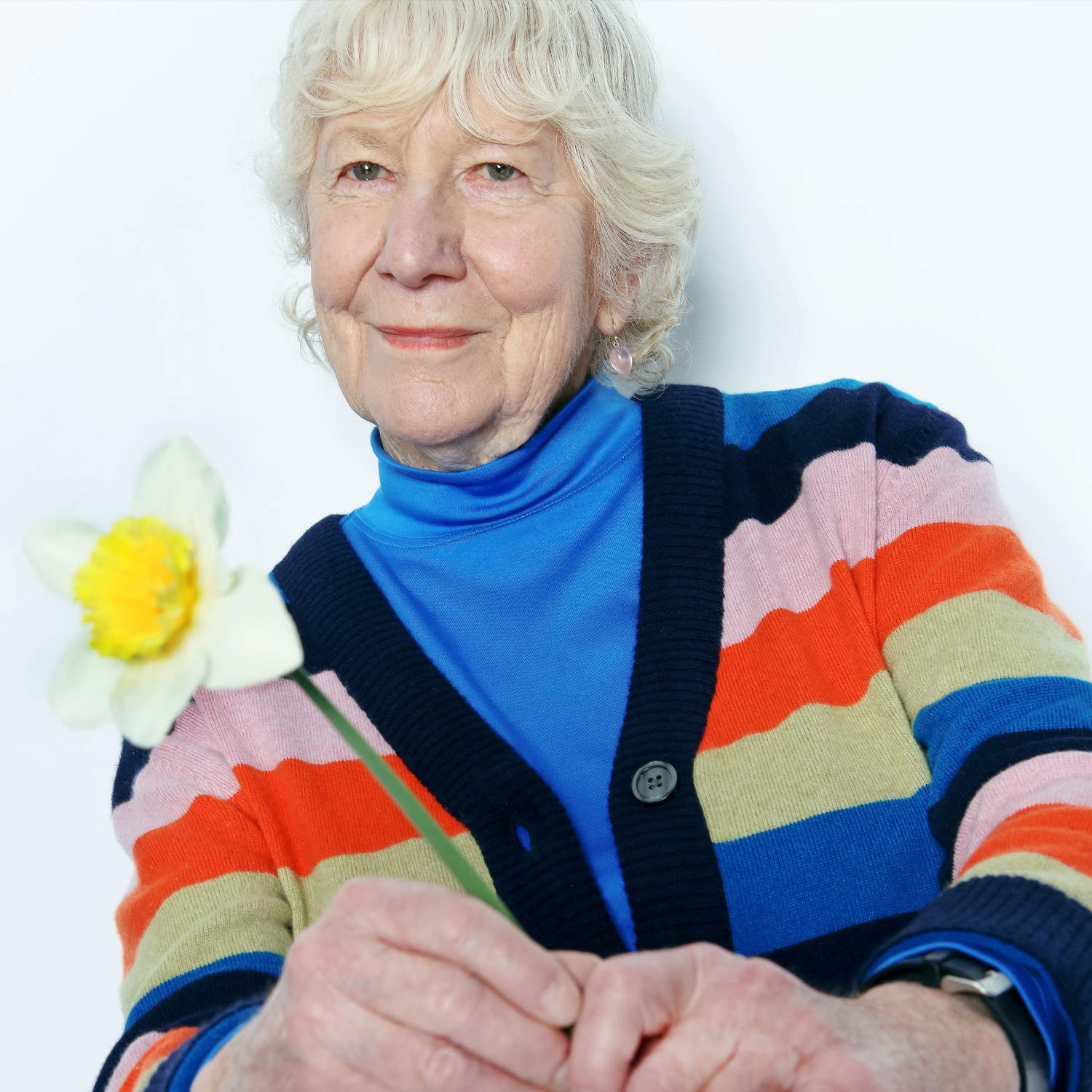
American artist Mary Heilmann passed away on August 14, 2026, at the age of 86. Drawing on Minimalism, Beat culture, and the Californian spirit, Heilmann developed an original, ironic, and deeply personal painterly language.
She passed away on August 14, 2026, at the age of 86, following complications from a fall, Mary Heilmann, one of the most significant figures in contemporary American abstract painting, whose body of work helped profoundly renew the relationship between color, form, and the painterly gesture.
Born in 1940 in San Francisco, California, Heilmann earned a Bachelor of Arts degree from the University of California, Santa Barbara, in 1962, and went on to earn a Master of Arts degree from the University of California, Berkeley, in 1967. Over the course of her long career, she participated in three editions of the Whitney Biennial—in 1972, 1989, and 2008—and her works have been included in the permanent collections of major international institutions. These include the Museum of Modern Art in New York, the Whitney Museum of American Art, the San Francisco Museum of Modern Art (MoMA), the National Gallery of Art, the Bonnefanten Museum in Maastricht, and the Städel Museum in Frankfurt. In 2017, she was elected a member of the American Academy of Arts and Letters. Among the numerous honors she has received are the Oliver Fellowship from United States Artists, awarded in 2014; the Anonymous Was a Woman Foundation Award in 2006; and grants from the National Endowment for the Arts and the Guggenheim Foundation.


Heilmann is considered one of the most influential abstract artists of her generation. Her work has successfully brought together the rigorous geometric structure of Minimalism with the freedom and spontaneity of the Beat Generation, creating an unconventional and vibrant style of painting. Her artistic vision was also shaped by her experiences in California during the 1960s and 1970s: the counterculture, the free speech movement, and the spirit of surf culture became fundamental elements of an artistic sensibility capable of transcending the rigidest categories of abstraction.
His work is distinguished by a free, intuitive, and often ironic use of color and form, in which geometry is never perceived as something cold or rigidly planned.
One of the most distinctive aspects of Mary Heilmann’s work is her ability to transform the simplicity of forms into a source of expressive power. The contours of her compositions are not always sharp and well-defined. On the contrary, this apparent imprecision introduces a spontaneous and unpredictable dimension, far removed from the geometric perfection traditionally associated with abstraction. In some works, soft, amorphous forms seem to merge into one another, as if they were liquid matter or wax slowly melting. Color is applied with great freedom: brushstrokes, smudges, and irregular edges become an integral part of the composition.
This apparent immediacy, however, conceals a much more complex construction, which gradually reveals itself to the viewer. The traces of the painterly gesture remain visible on the surface, giving the works a strong physical and material presence.
Throughout her career, Mary Heilmann has helped challenge the boundaries of abstract painting by introducing personal, emotional, and everyday elements into the minimalist language. Her work has demonstrated how color, geometry, and gesture can coexist in a painting that appears spontaneous yet is capable of constructing sophisticated visual relationships. Heilmann thus leaves a significant legacy in the history of American contemporary art, with a language that was at once rigorous and playful, structured and unpredictable.
“Mary’s life was marked by a dedication to her artistic practice, gratitude for her four decades of fellowship in AA/NA, devotion to the legions of former art students, and her joy in the natural world,” reads an Instagram post by Liane Thatcher, director of the Mary Heilmann Studio. “She had a talent for creating art that fosters connection—community-oriented, intimate, and local. Now she has embarked on her final journey, which, in her own words, ‘has no linear time.’”
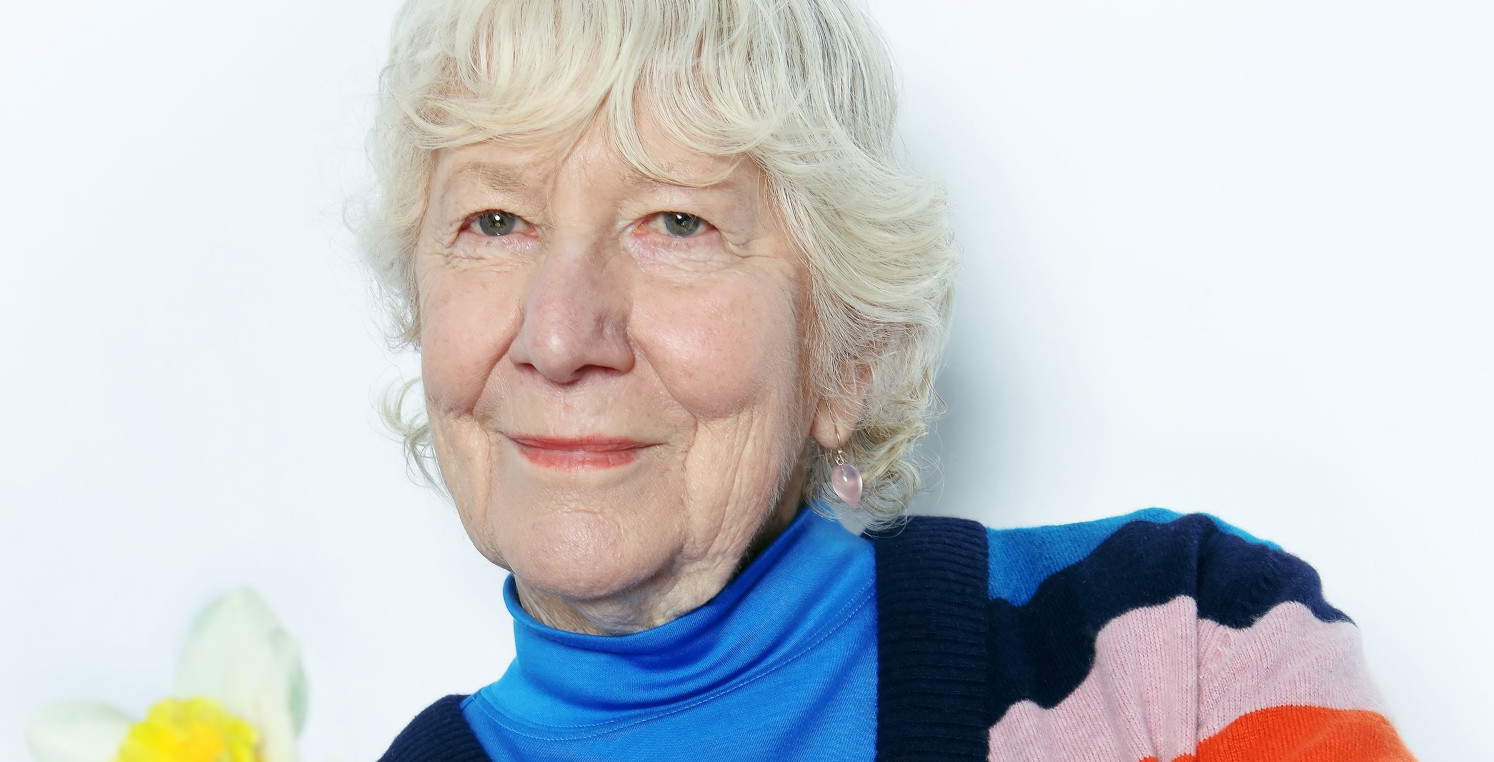 |
| Farewell to Mary Heilmann, a painter of contemporary American abstract art |
Warning: the translation into English of the original Italian article was created using automatic tools. We undertake to review all articles, but we do not guarantee the total absence of inaccuracies in the translation due to the program. You can find the original by clicking on the ITA button. If you find any mistake,please contact us.