





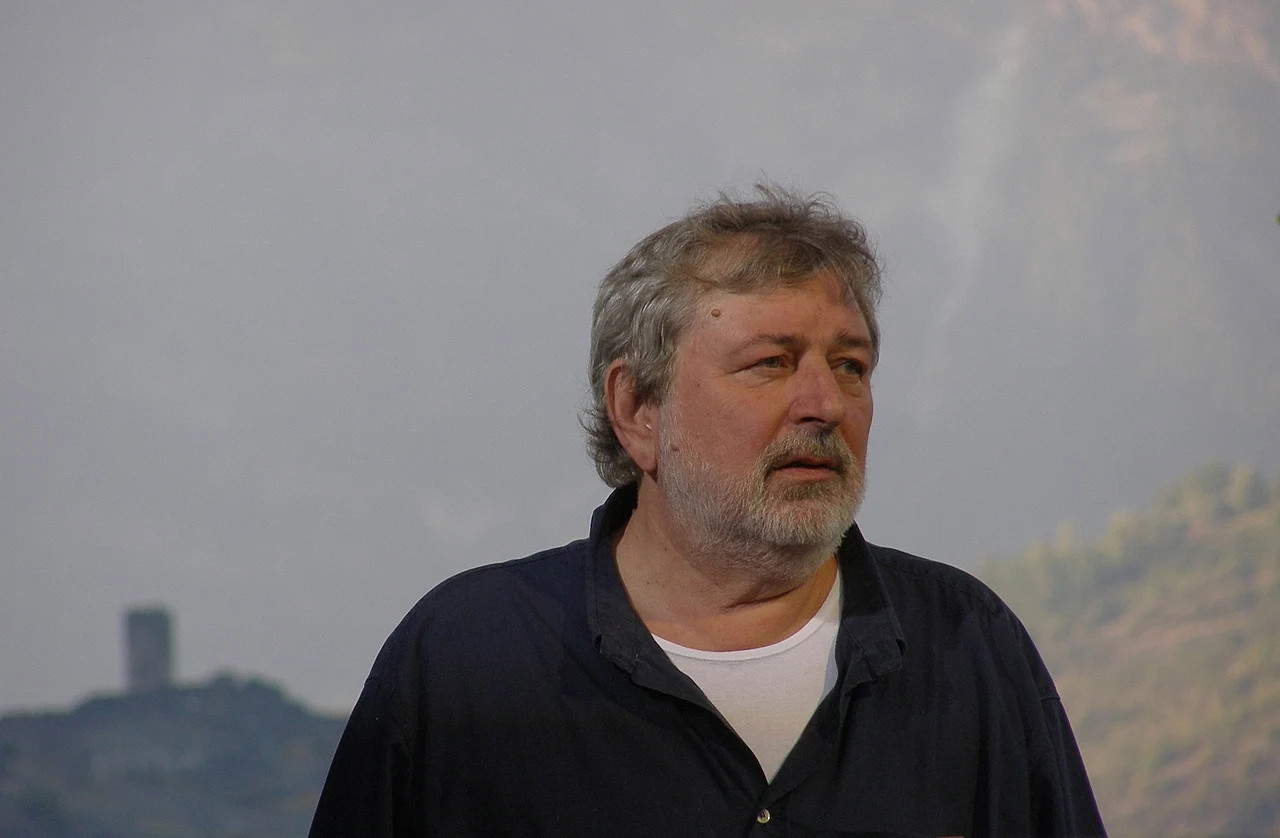
The world of music and culture mourns Francesco Guccini. The singer-songwriter, writer, and poet of Italian singer-songwriter music passed away this morning at his home in Pavana, in the Tuscan-Emilian Apennines, at the age of 86, surrounded by his loving family. The news was announced by the family itself in a brief statement.
Born in Modena on June 14, 1940, and raised between the city and Pavana—the small village in the Apennines that would remain his refuge and spiritual home throughout his life—Guccini was one of the most influential singer-songwriters in Italian music. Before establishing himself as a singer-songwriter, he had held various jobs: teacher, reporter for the *Gazzetta di Modena*, and advertising executive. His entry into the music world happened almost by chance and with some reluctance, initially as a songwriter for other artists. It was Caterina Caselli and, above all, iconic bands of the Italian beat scene—such as Equipe 84 and Nomadi—who brought success to some of his early compositions, including “Auschwitz, ” “Per fare un uomo,” “Dio è morto,” and “Noi non ci saremo,” songs destined to define an era.
In the 1970s, he moved to Bologna, becoming one of the leading figures of the era of singer-songwriters committed to civil and social causes. His ever-present parka became a generational symbol, while his concerts turned into lengthy narratives in which songs and reflections blended together.
His repertoire has given us some of the most beloved songs in Italian music: *La locomotiva*, *Il vecchio e il bambino*, *Vedi cara*, *Incontro*, *Autogrill*, *Canzone per un’amica*, *Cirano*, *L’avvelenata*, and *Piccola città* are just a few of the works that have resonated across entire generations. Guccini’s artistic output has always stood out for the depth of its cultural references. His lyrics bring together Italian poetry, the works of Jorge Luis Borges, Bob Dylan, and the Beat Generation, the Bible, Cervantes, Alexandre Dumas, and Roland Barthes, in a blend of high culture and popular language that helped define a new way of portraying reality through song.
After announcing his retirement from the music scene in 2012, he devoted himself to literary writing.
With the passing of Francesco Guccini, one of the most influential voices of Italian culture in the second half of the 20th century is gone. A singer-songwriter, storyteller, and intellectual, he portrayed his country with a free, ironic, and deeply human perspective, leaving behind an artistic legacy destined to continue speaking to future generations. The funeral will take place in a strictly private setting in the coming days; a public memorial service is planned for September.
|
| Farewell to one of the greatest singer-songwriters in Italian music: Francesco Guccini has passed away at the age of 86 |

Warning: the translation into English of the original Italian article was created using automatic tools. We undertake to review all articles, but we do not guarantee the total absence of inaccuracies in the translation due to the program. You can find the original by clicking on the ITA button. If you find any mistake,please contact us.



























 IT
IT FR
FR DE
DE ES
ES CN
CN


