




by Redazione 27/08/2026



Categories: News / Disclaimer
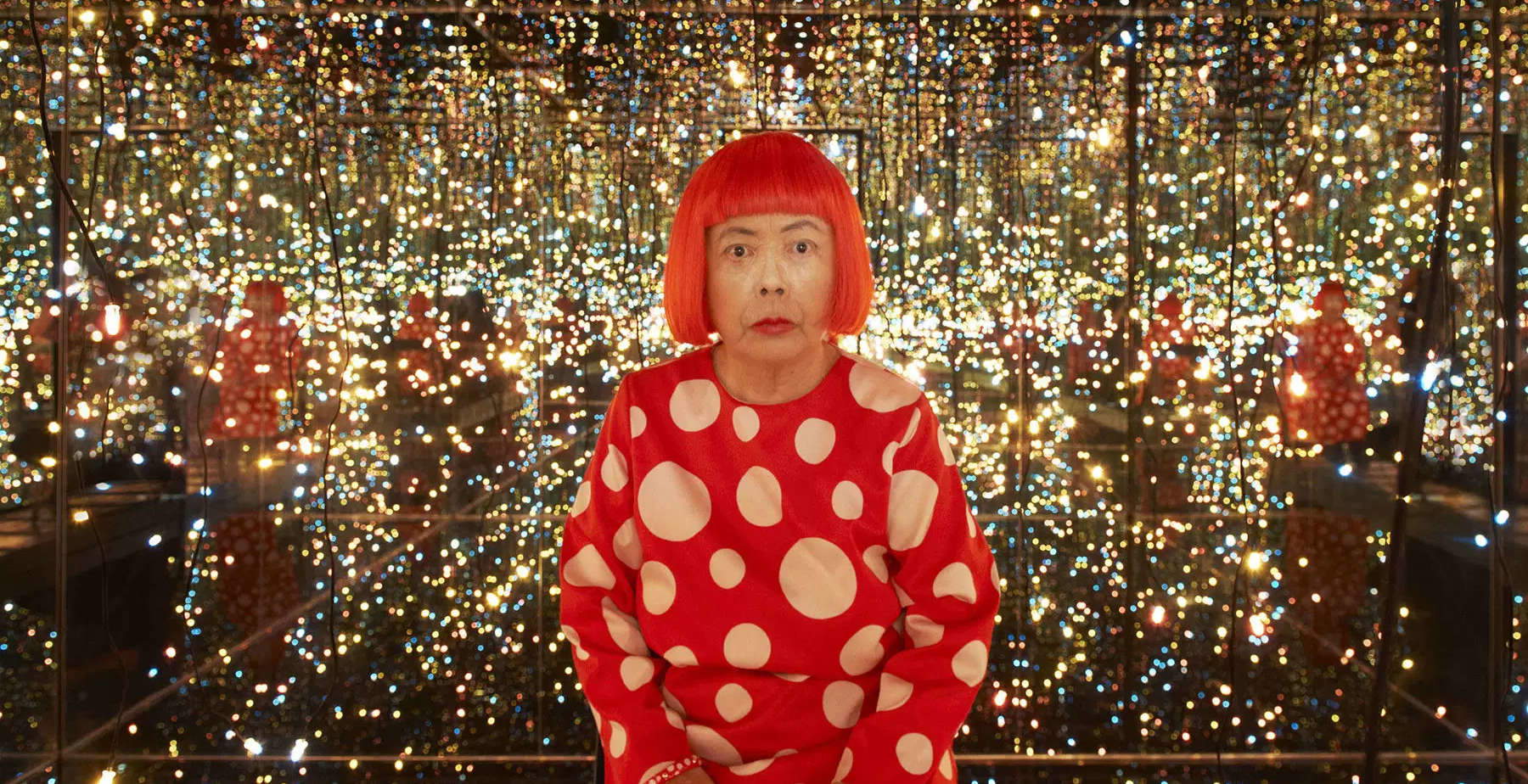
Farewell to Yayoi Kusama: The Japanese artist passed away on August 14 at a hospital in Tokyo. Her death was announced today by the foundation. She had transformed hallucinations, polka dots, pumpkins, and mirrors into an artistic language recognized around the world.

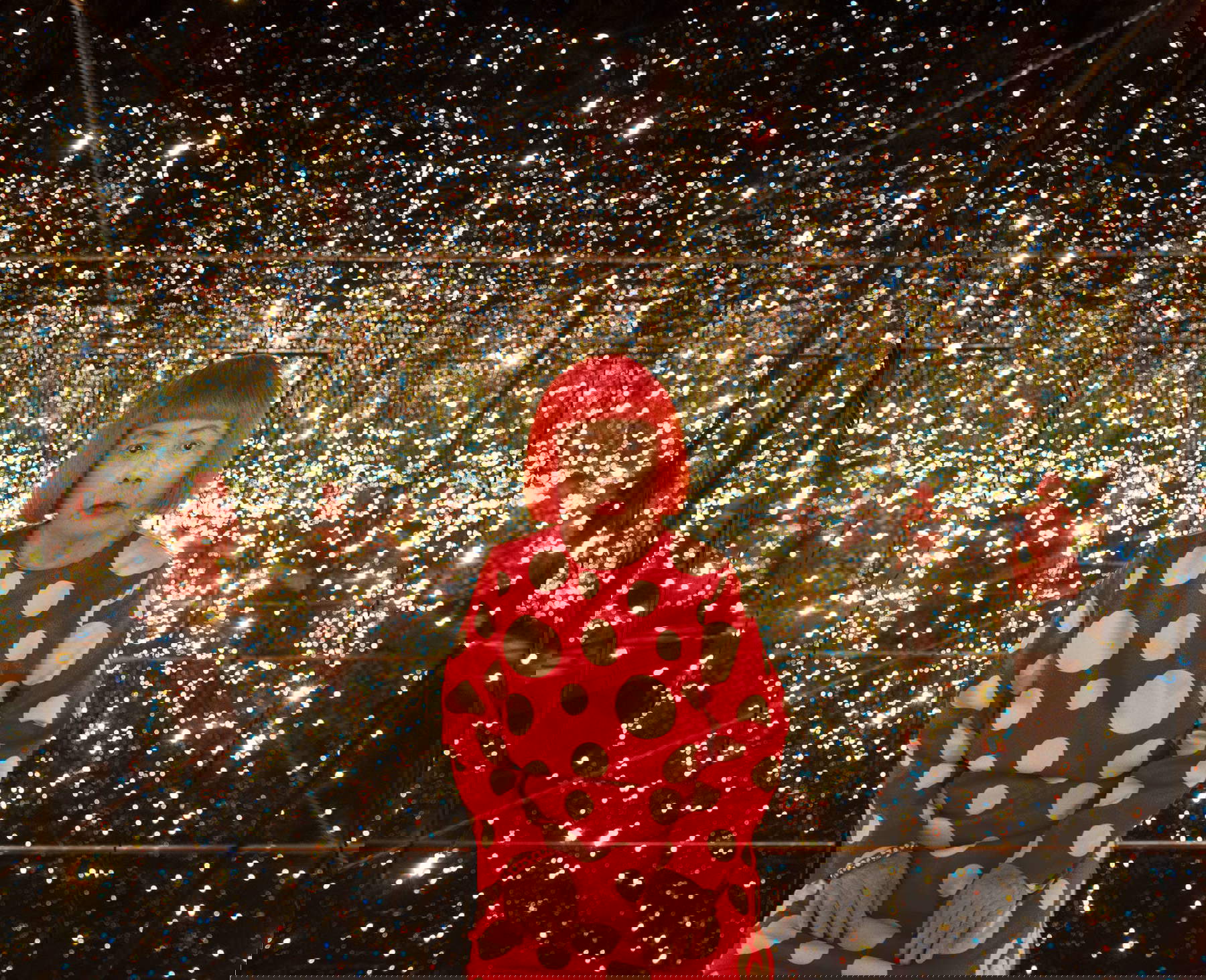
Yayoi Kusama has passed away at the age of 97: the Japanese artist, known worldwide for her polka dots, pumpkins, and mirror installations that infinitely multiply space, passed away on August 14, 2026, at a hospital in Tokyo. The news was announced today, August 27, by the Yayoi Kusama Museum and the Yayoi Kusama Foundation. “It is with deep sorrow that we announce that Yayoi Kusama passed away at a Tokyo hospital on August 14, 2026, at the age of 97,” the foundation stated. “In a life entirely dedicated to creation, Kusama built an international career as an avant-garde artist, working not only in the visual arts but also in performance, fiction, and poetry. She continued to paint until her final days, never putting down her brush, and remained convinced that love could save the world.” The foundation stated that it intends to carry on in accordance with her wishes, using art to bring hope and strength to people around the world.

Kusama was born in 1929 in Matsumoto, Nagano Prefecture, the youngest of four children of Kamun and Shigeru Kusama. The family owned a thriving farm in the area, dedicated to the production and wholesale of vegetables, seeds, and plants. The artist began drawing and painting at the age of ten, and from childhood onward she developed a fondness for dots and repetition that would become one of the most recognizable characteristics of her work. Her childhood experiences played an important role in shaping her artistic language (here is a more in-depth look at her artistic philosophy). Kusama recounted that, when she was a child, her mother would come up behind her and snatch her drawings from her hands. The fear and sense of panic associated with those interruptions, along with the need to quickly finish what she was drawing before it was taken away from her, influenced her way of working, driving her toward a rapid, intense, and almost obsessive creative practice. She eventually obtained permission to attend art school, but only on the condition that she also take etiquette classes. Kusama formally accepted the compromise but never attended those classes, devoting herself instead assiduously to the study of nihonga painting, characterized by strict formal rigor. This choice, too, contributed to the conflicts with her mother.


Among the decisive influences of her formative years was Georgia O’Keeffe. Kusama saw some of the American artist’s works and decided to write to her personally. The two began a correspondence, and O’Keeffe’s encouragement contributed to Kusama’s decision to move to the United States.
In 1957, at the age of 27, the artist left Japan for New York, where she found herself confronting an art scene dominated by men and in which she also had to navigate her identity as a woman and a Japanese artist. Her early years in New York were difficult. Kusama recounted that she was very poor and painted every day, finding in painting a form of fulfillment and the sole purpose of her existence. Her work began to attract attention, and she was even given the opportunity to exhibit at the Brata Gallery, which had previously served as a launching pad for artists such as Franz Kline. Critics began to recognize the distinctiveness of her works, which diverged from the models of Abstract Expressionism then dominant. It was in New York that she created some of the series that would define her career. In 1958, she created *Pacific Ocean*, a work she herself considered the origin of the *Infinity Net* series. The following year, she produced the first large paintings in the series—canvases that could reach nearly ten meters in length and on which a densely woven pattern of repeated marks constructed a seemingly endless surface.
Repetition, the dot, and the multiplication of the same element would become tools for representing the infinite and , at the same time, for questioning the boundaries of the individual. The perceptual experiences she had had since childhood—including hallucinations of lights, dots, and flowers—fed directly into her practice. One episode she recalled involved a field of flowers on her family’s farm: the experience of being surrounded by flowers and feeling almost overwhelmed by their presence would remain a fundamental motif in her work. Kusama sought to convey in her works that sensation of loss within the physical environment—of the dissolution of the self within a constantly expanding space. Her hallucinations were thus not merely depicted but transformed into a method for constructing images and environments capable of engaging the viewer.
In the 1960s, her work expanded in many directions. Kusama created paintings, drawings, sculptures, installations, happenings, performances, fashion, and films, challenging the traditional boundaries of the artwork. In 1964, she presented *One Thousand Boat Show* at Gertrude Stein’s gallery, an installation in which the artist used countless phallic forms to challenge patriarchal culture. Beginning in 1966, she also staged numerous provocative performances, often characterizedby the use of polka dots on the participants’ bodies or by their physical involvement within the works. Kusama also participated in anti-war activities and political protests that were prevalent in the New York art scene of the 1960s.
That same year, 1966, saw one of her most famous events at the Venice Biennale. Arriving uninvited, Kusama placed 1,500 floating spheres in the city’s canals as part of *Narcissus Garden*, a work that would become one of the iconic images of her career. The performance also demonstrated her ability to intervene directly in public space, interweaving art, spectacle, commerce, and a critique of the conventions of the art world.
In 1969, Kusama also founded Kusama Enterprises, a commercial venture through which she sold clothing, handbags, and even automobiles. These objects, too, were characterized by her unmistakable aesthetic—featuring polka dots, densely packed patterns, and repetitions used to evoke a sense of infinity. In 1973, she returned to Japan, where she also began writing surrealist poems and novels. In the years that followed, she continued to work in painting, sculpture, installations, and performance art, maintaining a steady output despite personal difficulties. Beginning in 1977, she voluntarily lived in a psychiatric hospital in Tokyo, though she continued to go to her studio to work. Her artistic practice did not cease; on the contrary, it remained at the center of her existence.
In 1993, Kusama represented Japan at the Venice Biennale with an installation featuring mirrors and pumpkins—two elements destined to become central to her artistic vision. Pumpkins, in particular, took on an almost autobiographical role over time, becoming a sort of alter ego for the artist. Since then, Kusama has created numerous commissioned works, including large sculptures of colorful flowers and plants, while her works have been included in the collections and exhibitions of major international museums.
Among her most famous works are the Infinity Mirror Rooms, spaces in which mirrored surfaces multiply the body and the elements present in the space, creating a perception of infinity. The transition from the two-dimensional surface of the canvases to the immersive environment allows the viewer to physically enter the artistic installation, transforming repetition into an experience. Another significant installation is *Gleaming Lights of the Souls*, a room entirely covered in mirrors from whose ceiling dozens of flickering LED lights descend, creating an environment in which the boundaries of space seem to dissolve.
Kusama’s artistic language is rooted in conceptual art and incorporates elements traceable to feminism, minimalism, surrealism, art brut, pop art, and abstract expressionism. What unites such diverse experiences is, above all, the technique of repetition, embodied by polka dots and infinite grids. In her sculptures and installations, infinity is not merely represented but constructed through the multiplication of forms, lights, surfaces, and reflections.
Kusama’s fame grew even further beyond the strictly artistic sphere. In 1994, she collaborated with Peter Gabriel on the music video for “Lovetown,” in which her visual universe—composed of polka dots, grids, food, and sexual references—entered the world of the former Genesis member’s song. Another major opportunity for international exposure came in 2012, when Marc Jacobs, then creative director of Louis Vuitton, enlisted Kusama for one of the most celebrated collaborations between a contemporary artist and a major fashion house. The project brought her large, colorful polka-dot patterns and the distinctive ribbed textures of her works to handbags, small leather goods, bracelets, shoes, beach towels, sarongs, and scarves. For the handbags, the Monogram Vernis Dots Infinity leather was used instead of the traditional Monogram canvas.
The relationship between her artistic practice and daily life, however, remained central. Kusama painted almost daily in her Shinjuku studio, maintaining a work rhythm that did not wane even in her later years. Her output continued to include painting, sculpture, installations, and environmental works, while the Infinity Mirror Rooms grew increasingly popular with international audiences.
Her works are now on view in major international museums, from the Museum of Modern Art in New York to the Walker Art Center in Minneapolis, from the Tate Modern in London to the National Museum of Modern Art in Tokyo. In 2017, the Yayoi Kusama Museum, dedicated to her work and located in the Shinjuku district, also opened in Tokyo.
Kusama’s fame has long transcended the boundaries of the contemporary art world. Her immersive installations, polka dots, and pumpkins have become instantly recognizable images even to the general public, while her work has achieved enormous international and commercial success. Her influence has extended to generations of artists and to contemporary visual culture, with an increasingly strong presence in museums, public spaces, and fashion. Kusama has thus transformed deeply personal experiences into a language capable of speaking to a global audience. The dot, repeated to the point of losing its individuality; the pumpkin, transformed into a monumental form; the mirror, capable of multiplying the body; and the net, which extends beyond the limits of the canvas—have all become tools through which the artist has explored infinity, the dissolution of the self, and the relationship between the individual and the environment. With the passing of Yayoi Kusama at the age of 97, one of the most radical, recognizable, and enduring chapters in the avant-garde art of the late 20th and 21st centuries comes to a close.
 |
| Farewell to Yayoi Kusama: The Queen of Mirrors and Polka Dots Has Passed Away |
Warning: the translation into English of the original Italian article was created using automatic tools. We undertake to review all articles, but we do not guarantee the total absence of inaccuracies in the translation due to the program. You can find the original by clicking on the ITA button. If you find any mistake,please contact us.