





By the end of the year, Turin will have a new cultural hub set to transform the face of the Valentino district. Centered around the new Central Library, built on the site of the former Torino Esposizioni, VALE will take shape—a hub that will connect some of the city’s leading cultural, academic, and scientific institutions: from Valentino Park to the Teatro Nuovo, from the Borgo to the new Polytechnic Campus, and from the Botanical Garden to the university buildings. The name VALE directly references the Valentino, but it also serves as a reminder not to lose sight of the value of culture. The new hub was conceived with the ambition of creating an open and inclusive space capable of engaging diverse audiences and weaving together education, research, art, reading, the environment, and community participation.
The first calendar of events will be available on the valetorino.it website and , starting in November, will feature a series of events at some of Turin’s most iconic cultural landmarks. It will serve as a sort of prelude to VALE’s official programming, which is set to get underway in early 2027.
Major banking foundations are also contributing to the launch of the new hub. Fondazione CRT has invested 7 million euros in projects related to the transformation of Valentino Park and the construction of the new Central Library. Fondazione Compagnia di San Paolo, on the other hand, will be involved in the revitalization and management of the renovated Borgo through a special public-private partnership agreement, with XKE SI as a special partner. The project calls for an investment of 24 million euros, to which will be added approximately 2 million euros per year allocated through philanthropic contributions for its management.
The new Valentino will thus take shape as a large space dedicated to culture, education, and research, with a particular focus on the student community. In fact, Turin’s universities are among the key players in the project.
For the Polytechnic University of Turin, the project represents a strategic step toward expanding the campus dedicated to architecture, design, and urban planning. The new university hub will be created through the redevelopment of the historic pavilions 1, 3A, and 3B of the former Torino Esposizioni and will complement the existing spaces at the Castello del Valentino and the “Galileo Ferraris” Institute. The university’s investment amounts to approximately 50 million euros. The project will bring new classrooms, study spaces, and areas dedicated to campus life to the heart of the park—all designed to engage with the city. The redevelopment will follow sustainability criteria by increasing green spaces, restoring courtyards, removing impervious surfaces from certain areas, and adopting high energy and environmental standards. The goal is to create a major green corridor connecting the Polytechnic’s historic and new campuses, linking the Baroque and 19th-century heritage of the Valentino Castle—included on the UNESCO World Heritage List since 1997 as part of the Savoy Residences— with the architectural complex of the former Torino Esposizioni. The entire area will be conceived as a large-scale living lab dedicated to experimentation in the design of the built environment.
The University of Turin will also play a central role. For over three centuries, the Valentino area has been one of the key sites in the university’s history. Since 1729, it has been home to the Botanical Garden, which spans approximately three hectares and features thousands of plant species and botanical specimens from around the world. Last year alone, the garden was visited by nearly 50,000 people.
On the opposite side of the park, along Corso Massimo d’Azeglio, there are also four 19th-century university buildings originally designed with a strong scientific focus. Over time, these spaces have been the setting for important discoveries and have hosted great scholars, including three Nobel Prize winners. Today, they also house significant scientific collections and museums, ranging from the Cesare Lombroso Museum of Criminal Anthropology to the “Luigi Rolando” Museum of Human Anatomy, from the “Francesco Garnier Valletti” Fruit Museum to the Museum of Physics, in addition to historic libraries. The University plans to renovate these historic buildings through a project designed both to meet the new demands of scientific research and to enhance their role as museums. The relocation of the Department of Chemistry to the new Science and Environment Campus in Grugliasco will also free up new spaces to be used for study and social interaction by students, faculty, and technical and administrative staff.
VALE’s cultural program will be curated by the Fondazione per la Cultura Torino, under the direction of Maurizia Rebola, and will benefit from the support of Reale Mutua, the hub’s partner for the 2026–2028 period.
While awaiting the opening of the new Central Library, the program will kick off with several events as early as November. The first series, “The Imaginary Library,” will invite writers and authors to reinterpret great literary classics. In 2027, the main program will kick off with *Bosco Civico* (Civic Forest), a series that will explore the connections between nature, science, and literature across the spaces of the Central Library and Valentino Park. Trees, roots, and forests will thus serve as the starting point for reflecting on the relationship between the environment, individuals, and society.
The new complex will also become a key venue for some of Turin’s major cultural events. From April 7 to 11, it will serve as the headquarters for the tenth edition of the Biennale Democrazia 2027. Subsequently, the VALE spaces will host initiatives linked, among others, to the Turin Jazz Festival, the Turin International Book Fair, MITO SettembreMusica, MITO per la Città, and the Giornate della Legalità. The development of this new cultural calendar is also part of Turin’s bid to become the European Capital of Culture 2033, with the Fondazione per la Cultura Torino committed to planning and promoting VALE’s program.
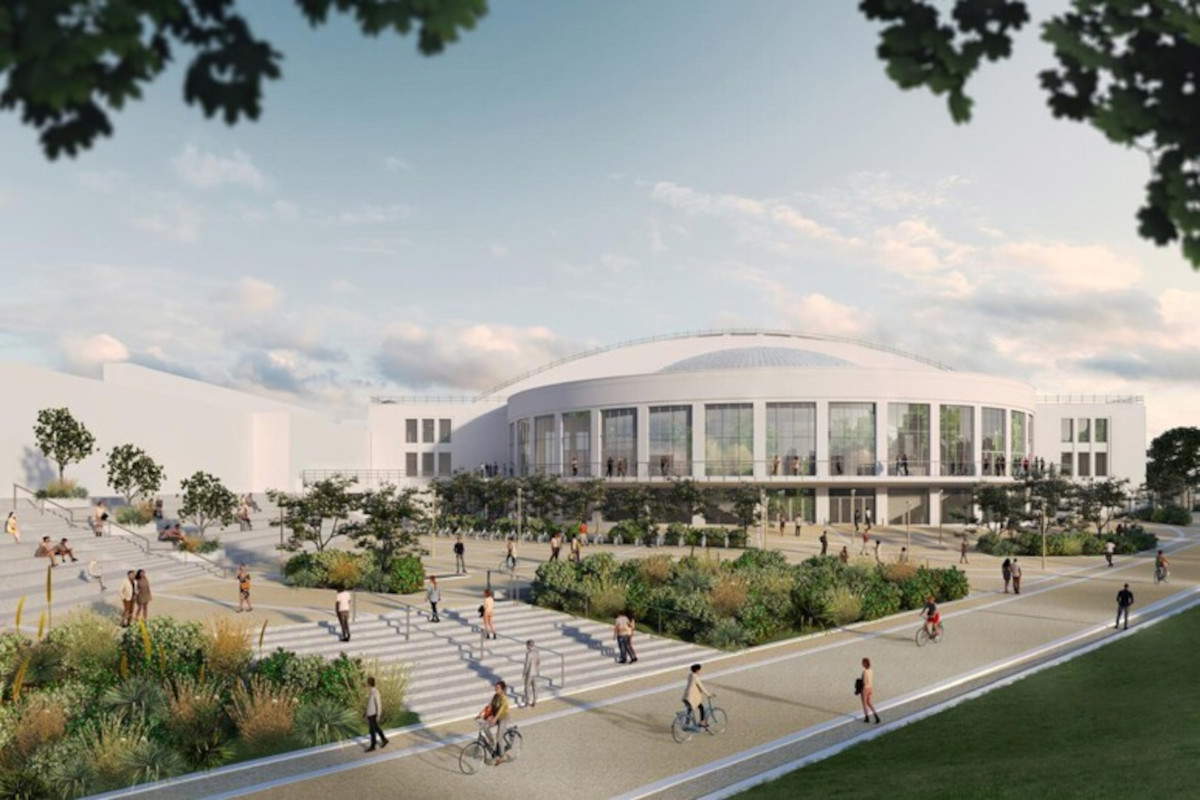
At the heart of the entire system will be the new Turin Central Library, set to open to the public by the end of the year. Built as part of the major transformation of the former Torino Esposizioni site, with an investment exceeding 100 million euros from funds complementary to the municipal government’s National Recovery and Resilience Plan (PNRR), it will serve as the main hub of Turin’s network of public libraries. Overlooking the Po River and Valentino Park, the library will be free and open to everyone, with spaces designed not only for reading and studying, but also for socializing, learning, creativity, and skill development. Its two entrances will connect it directly to the city and the park, encouraging daily use of the facilities. The new facility will house the city’s documentary heritage, including historical and special collections, and will offer traditional library services—registration, consultation, borrowing, returns, and reservations—along with bibliographic assistance and digital reproduction. Wi-Fi, computer stations, databases, and online collections will further expand access to information.
Great attention will also be paidto accessibility. Books will be available in various formats, along with resources for people who are blind, visually impaired, or have dyslexia, as well as assistive technologies. The library will also house “Più,” the City’s Unified Information Center, where residents and visitors can receive information on municipal and district services, tourism, and public transportation, as well as support for digital services and reporting issues. The spaces have been designed to meet the needs of different age groups. The Sottsass Pavilion will house the entrance, a café, a bookstore, and a 100-seat hall. The Piazza of the Nervi Pavilion will be dedicated specifically to children and families, with spaces for reception, non-fiction, current events, information, and “Growing Together” activities. The Teche will be designated for reference, individual study, and group work, while the Galleries will feature fiction, poetry, comics, manga, film, music, and audiobooks. The Ipogeo will house historical and special collections, exhibitions, materials from the storage areas, a Virtual Library, and digital narratives. Finally, the Garden will feature workshops, makerspaces, and areas for audio and music production. The Nervi Hall, with more than 300 seats, will be the largest reading room in Europe. Throughout the facility, approximately 1,400 seating areas—both formal and informal—will be available, designed to accommodate different uses: from focused work to collaborative projects, from conversation to simply taking a break. Wayfinding, furnishings, technology, acoustic comfort, and green spaces will help ensure accessibility, autonomy, and well-being.
The Library will also be a hub for cultural production, hosting events, book clubs, exhibitions, workshops, and school programs organized in collaboration with universities, institutions, associations, and communities. The goal is to transform it into a true cultural welfare infrastructure. The renovation of the former Torino Esposizioni also holds special significance for the architectural history of the complex, linked to the designs of Ettore Sottsass and Pier Luigi Nervi. The combination of architectural heritage, large spaces, collections, and new technologies makes the Central Library one of the most distinctive features of the new cultural hub.
VALE’s programming will be complemented by activities organized directly by the City’s Library Service. The calendar will be structured around three main themes: programs for schools included in the “Crescere in Città 2026–2027” catalog, initiatives for families and adults organized by the NBC-Rag group, and projects selected through the public call for proposals dedicated to the New Central Library. Special attention will be given to children and families, with a program that goes beyond school activities and becomes a permanent part of the Library’s life. Readings, workshops, games, creative activities, and opportunities for discovery will cater to different age groups, making use of the “Crescere insieme” spaces, the Garden, and other areas designed for young people.
Seven activities have already been presented in the “Crescere in Città 2026–2027” catalog for the new location; these will involve the youth space, the balconies, the Ipogeo, the area dedicated to historical and special collections, the family and immersive reading space, the 4-6 Apse, the newspaper archive, and Valentino Park.
Among the proposals is “Not ‘Just’ Moms,” a weekly event designed as a space for mothers with children aged zero to twelve months to meet and share experiences. These initiatives will be complemented by ongoing activities such as reading groups, workshops, library visits, collection tours, and programs dedicated to information and digital literacy. The program will target a broad and diverse audience, including families, teenagers, young adults, seniors, new residents, and people with disabilities. The public call for proposals will, in turn, help expand the program’s offerings through projects focused on reading and storytelling, featuring meetings, language workshops, writing and drama courses, picture books, and activities for schools. Alongside these, there will be opportunities for music, theater, and film, featuring festivals, lecture-concerts, open rehearsals, and screenings.
Another strand will be dedicated to local history and culture, with a particular focus on the history of Turin and the relationships between the Library, the Valentino, and the area’s cultural institutions. Finally, there will be programs focused on intercultural exchange, inclusion, and linguistic diversity, through Italian language instruction and activities that use images, symbols, videos, and tactile tools alongside writing.
The final calendar will be finalized in the coming months and will launch in early 2027, alternating between one-off events, series of meetings, workshops, school activities, film festivals, and ongoing programs. VALE aims to transform the Valentino into a major urban cultural space, where universities, libraries, research, heritage, nature, and artistic production can engage in daily dialogue with the city.
|
| VALE: Turin to Be Home to the New Valentino Cultural Hub—Featuring a Library, University, Art, and Events |

Warning: the translation into English of the original Italian article was created using automatic tools. We undertake to review all articles, but we do not guarantee the total absence of inaccuracies in the translation due to the program. You can find the original by clicking on the ITA button. If you find any mistake,please contact us.
























 IT
IT FR
FR DE
DE ES
ES CN
CN


