



by Pino Boresta 20/11/2026


Categories: Opinions / Disclaimer
In 2026, the Danish Pavilion will present a reflection on biology and sperm at the Biennale. But research on bodily fluids already had a history in Italian art: the artist himself, Pino Boresta, discusses this in this article, comparing these two trajectories of semen in art.


There is an invisible line—drawn with bodily fluids and intellectual provocation—that runs through the last three decades of contemporary art (even though it all began much earlier, as I have recounted). It is a line that begins with the clandestine and visceral actions of the 1990s in Italy and extends, with the force of institutional recognition, to the historic pavilions of the Giardini at the 2026 Venice Biennale. At the center of this trajectory lies a decidedly unusual and inherently unsettling substance: semen. But this time, it’s not mine.

Every artist, when visiting the Biennale, is captivated by installations and works that intersect with their own research; it’s almost inevitable that one’s attention will turn to related artistic paths. And that’s exactly what happened to me with the Danish Pavilion. One thus ends up seeking out and studying the parallels, the resonances, and the invisible threads that connect one’s own work to what others have done or are doing.
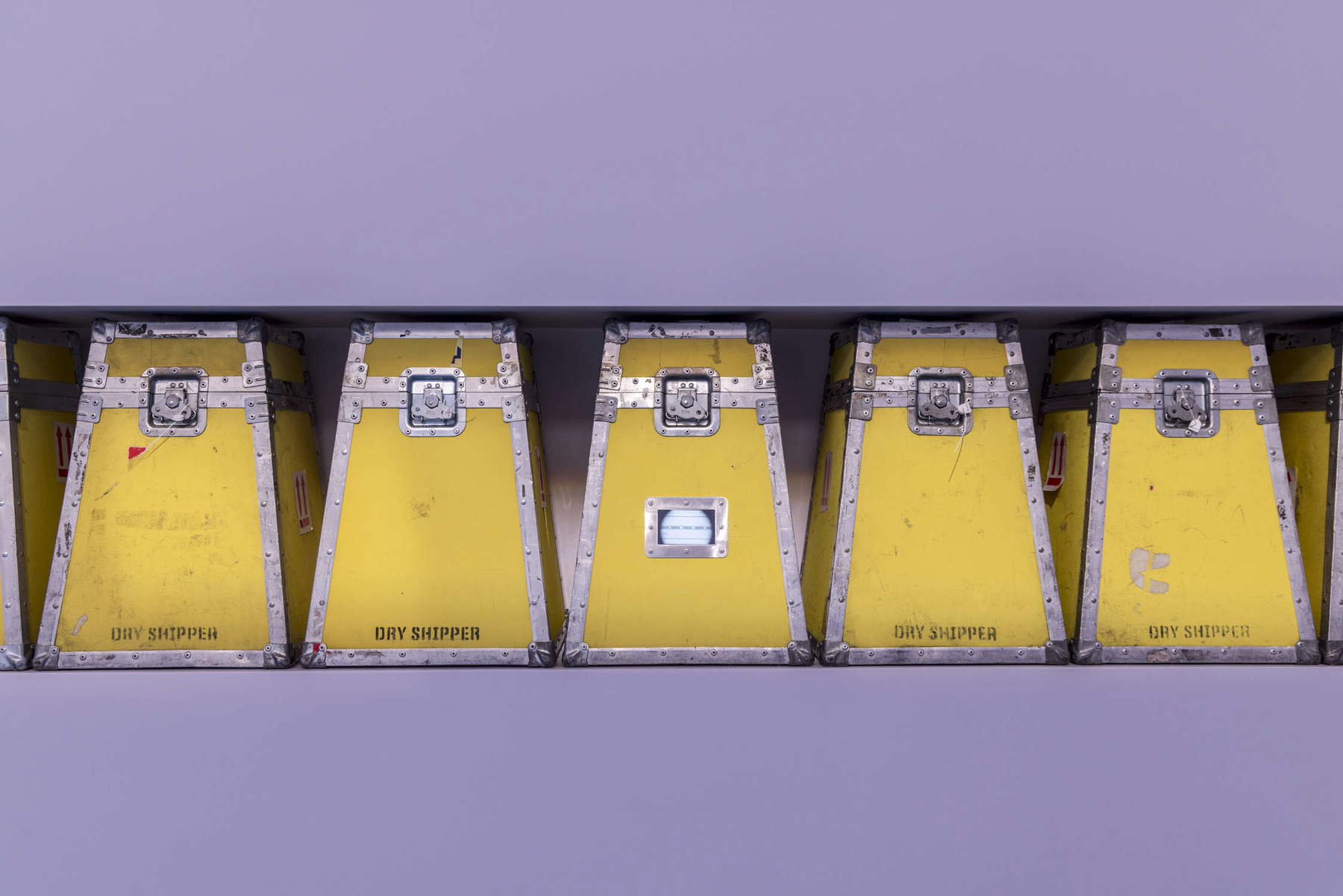
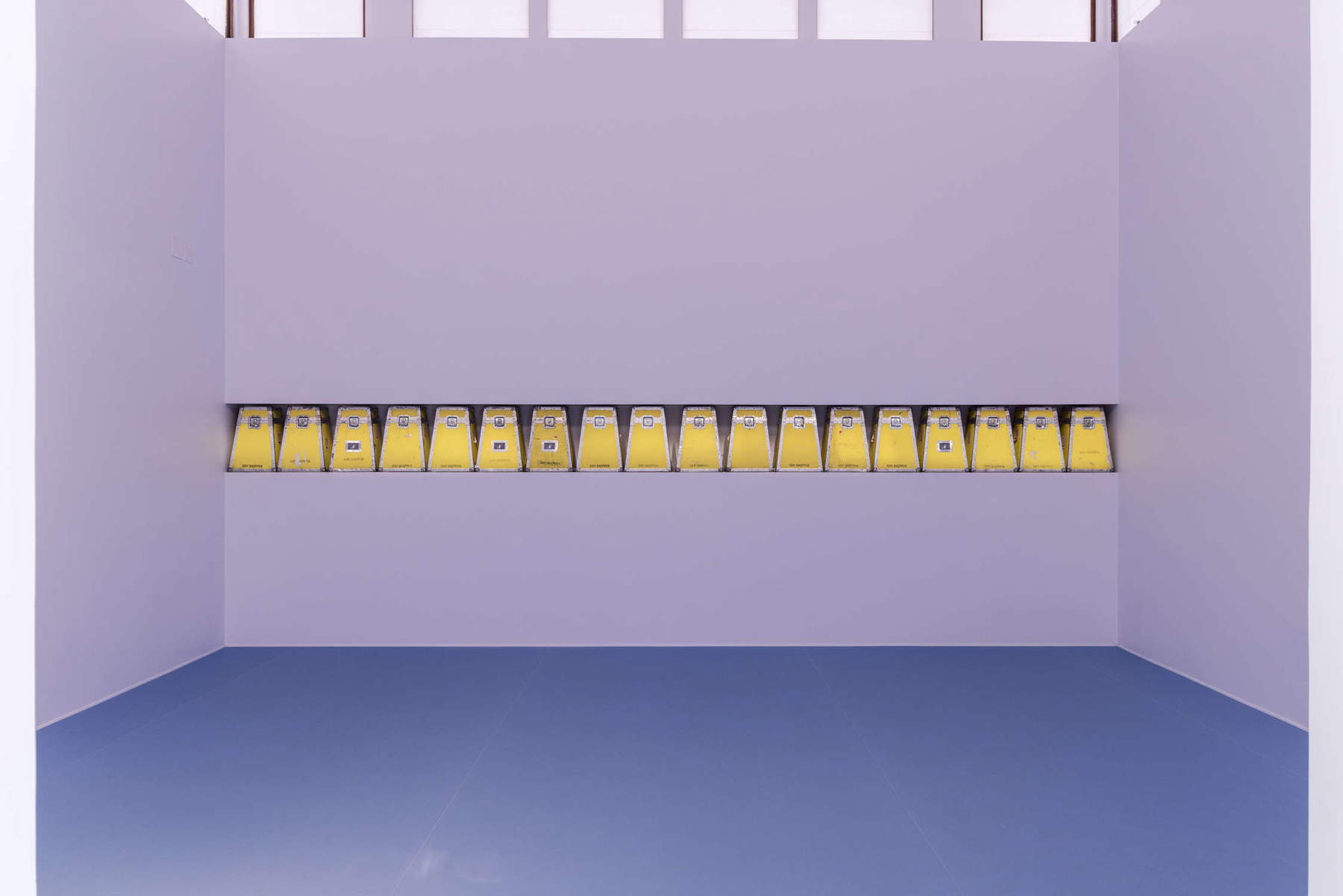
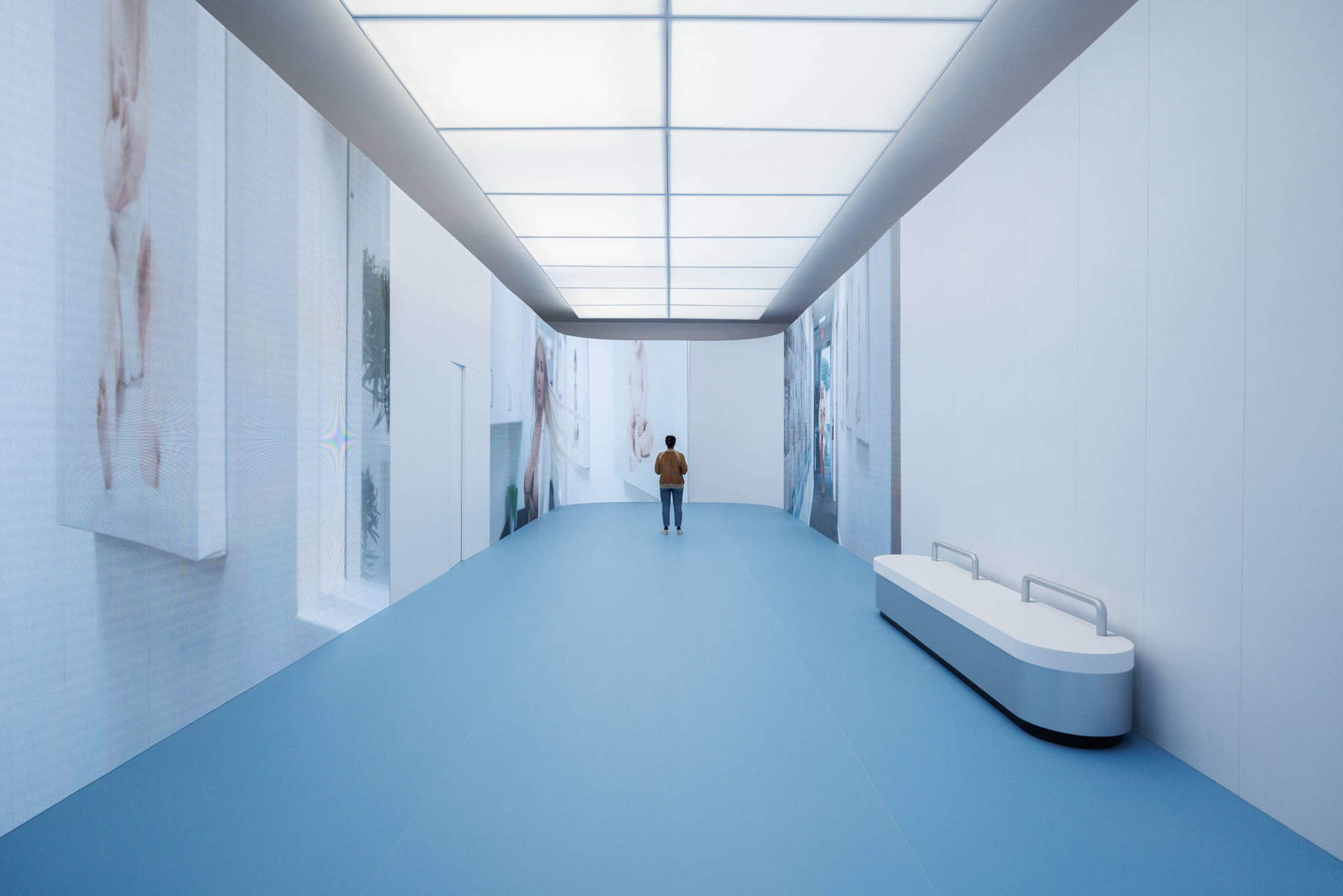
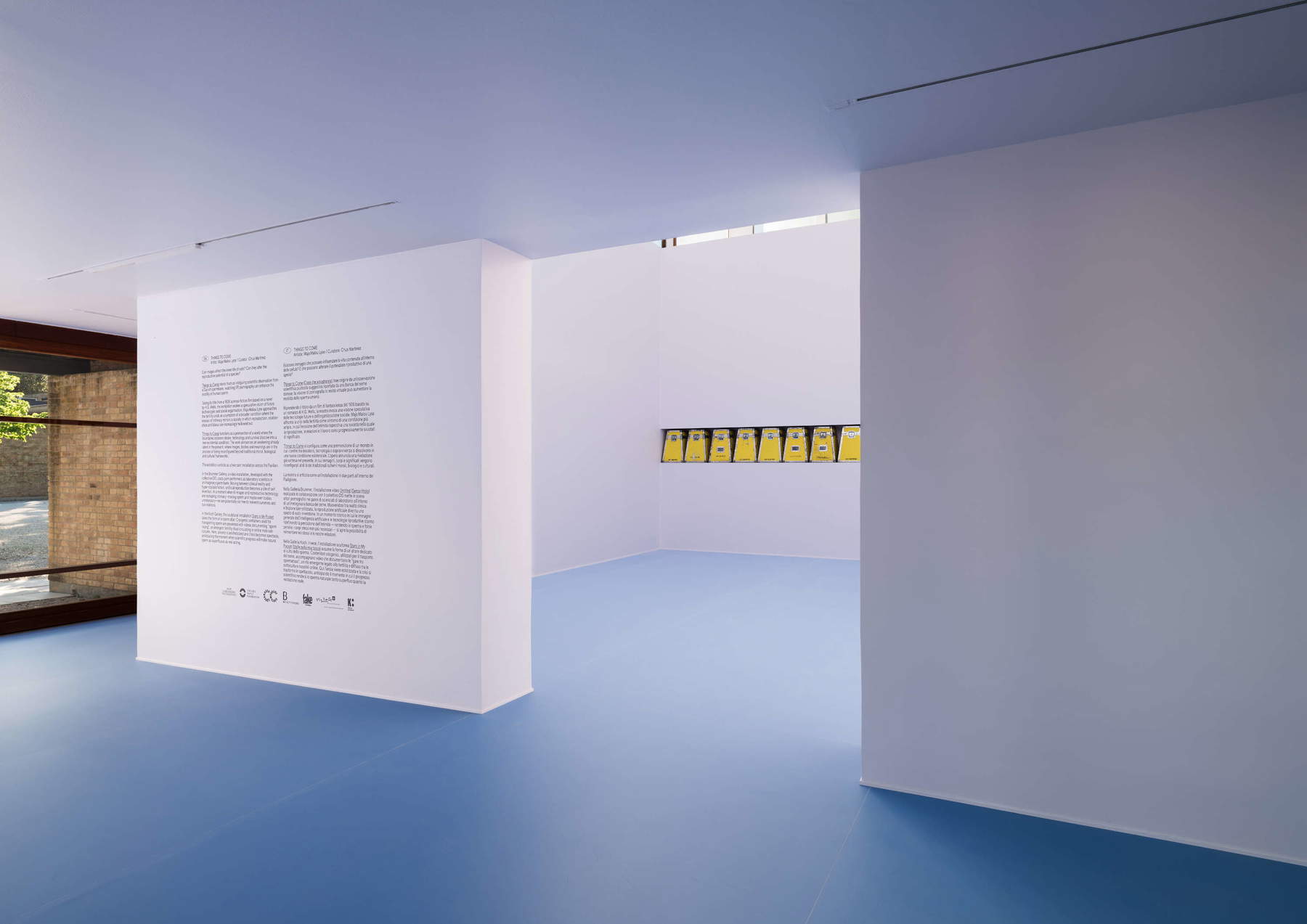
When I see that the Danish Pavilion is now capturing international attention with Maja Malou Lyse’s *Things to Come*, I can’t help but feel a sense of conceptual déjà vu. Long before digital trends and post-internet reflections legitimized the discourse on biotechnology within official art circles, I, too, had already explored that same biological material, elevating it to serve as both a medium and an artistic message.



The Archive of the Body and the Seminal Signature
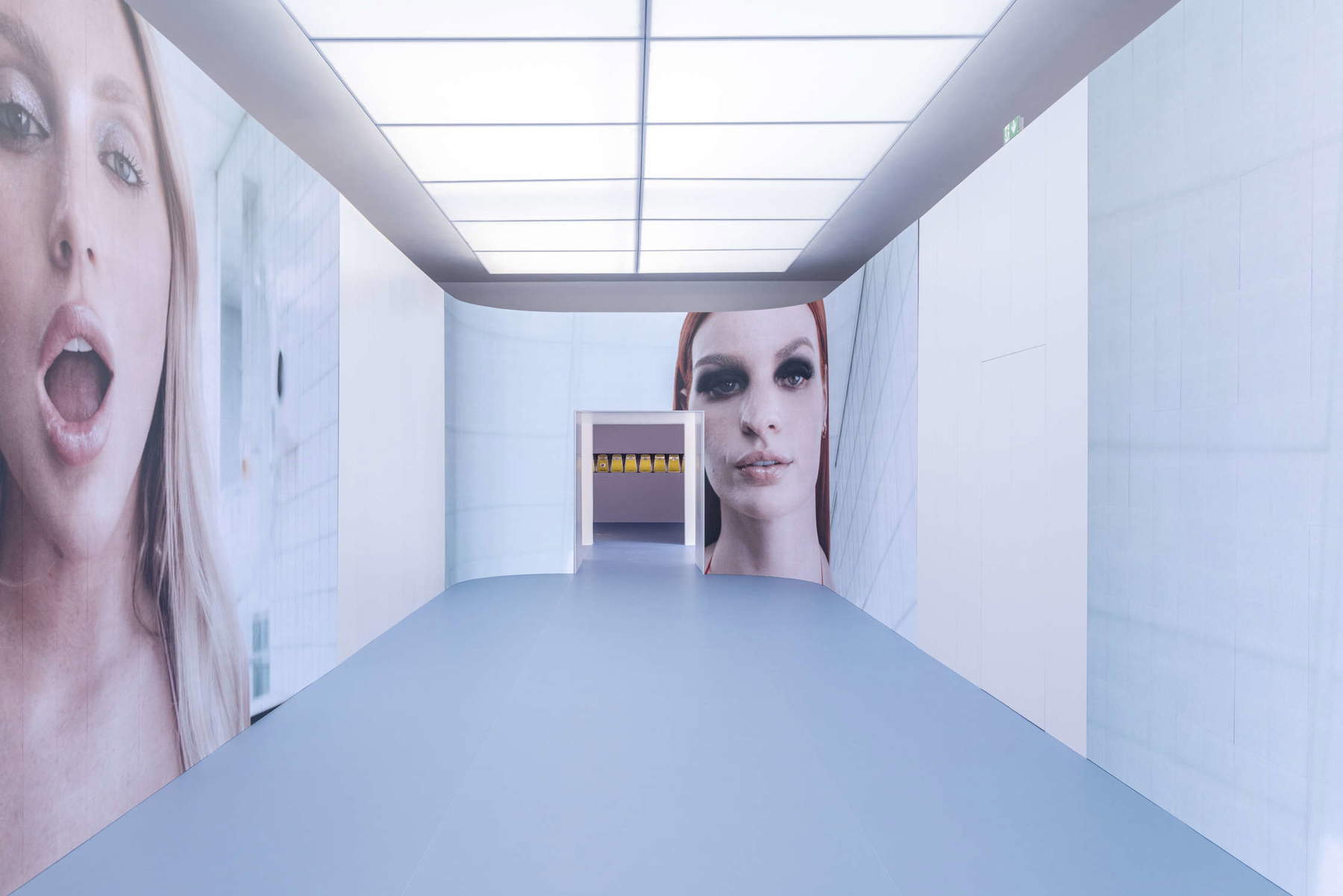
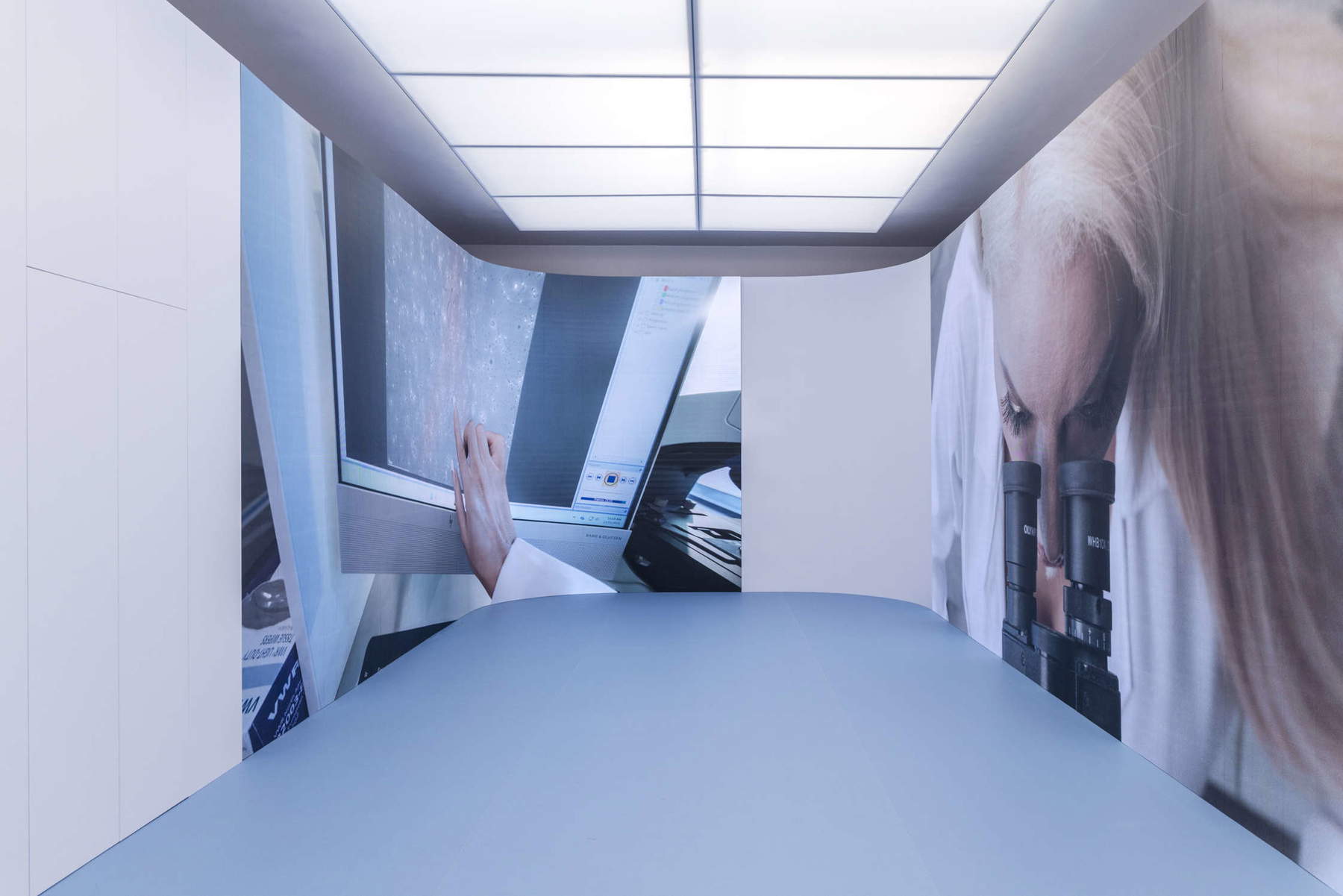
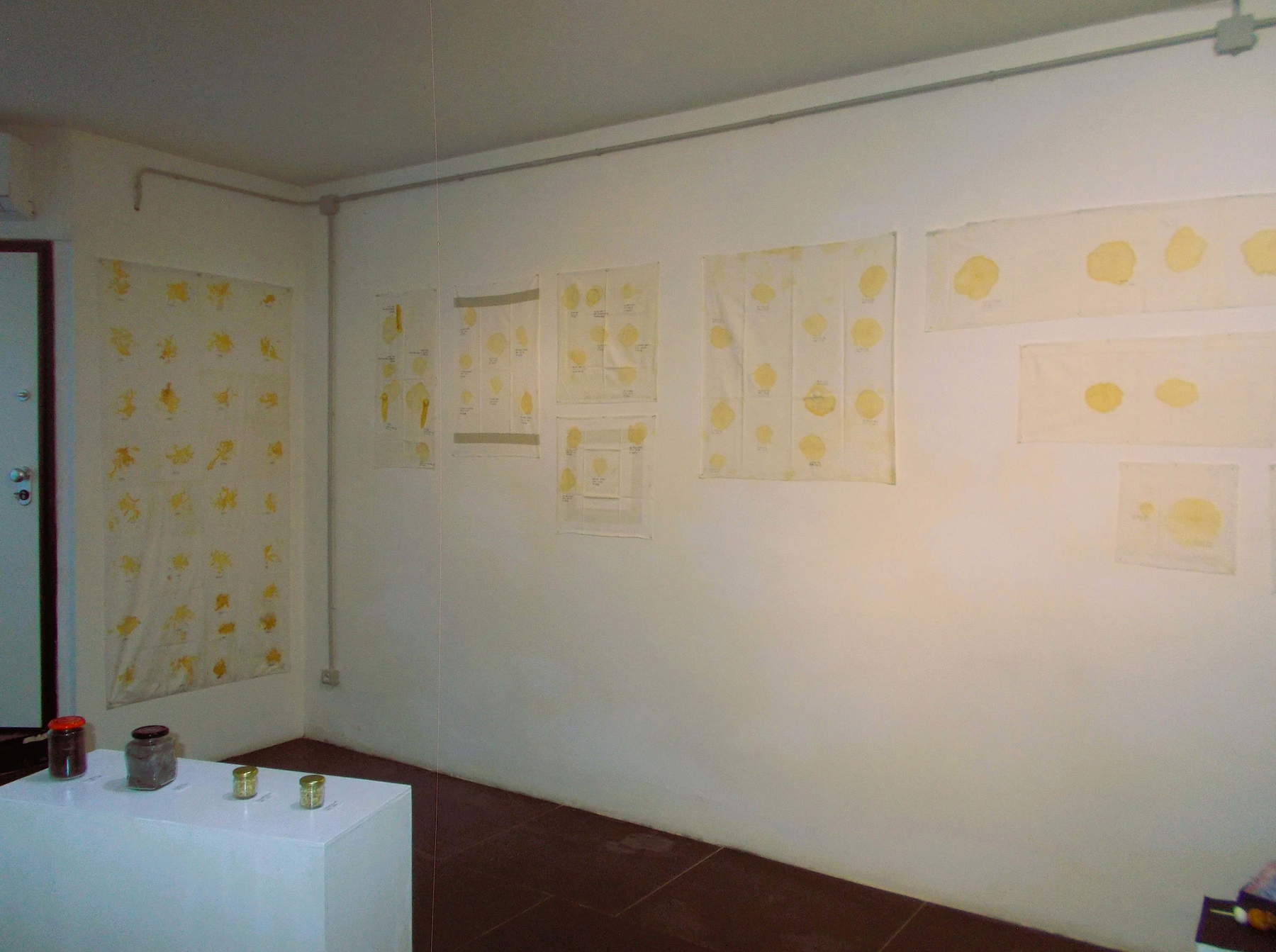
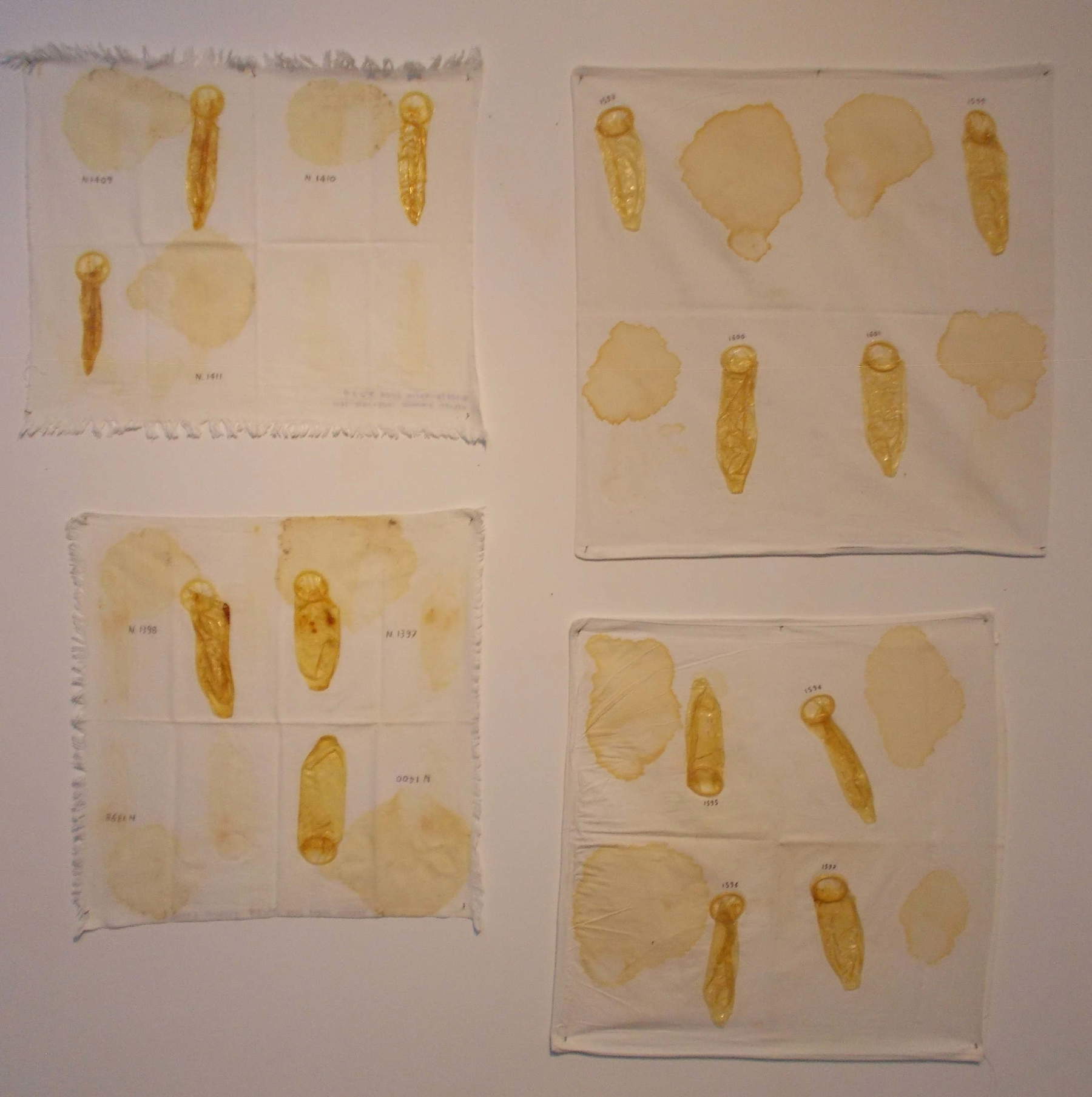
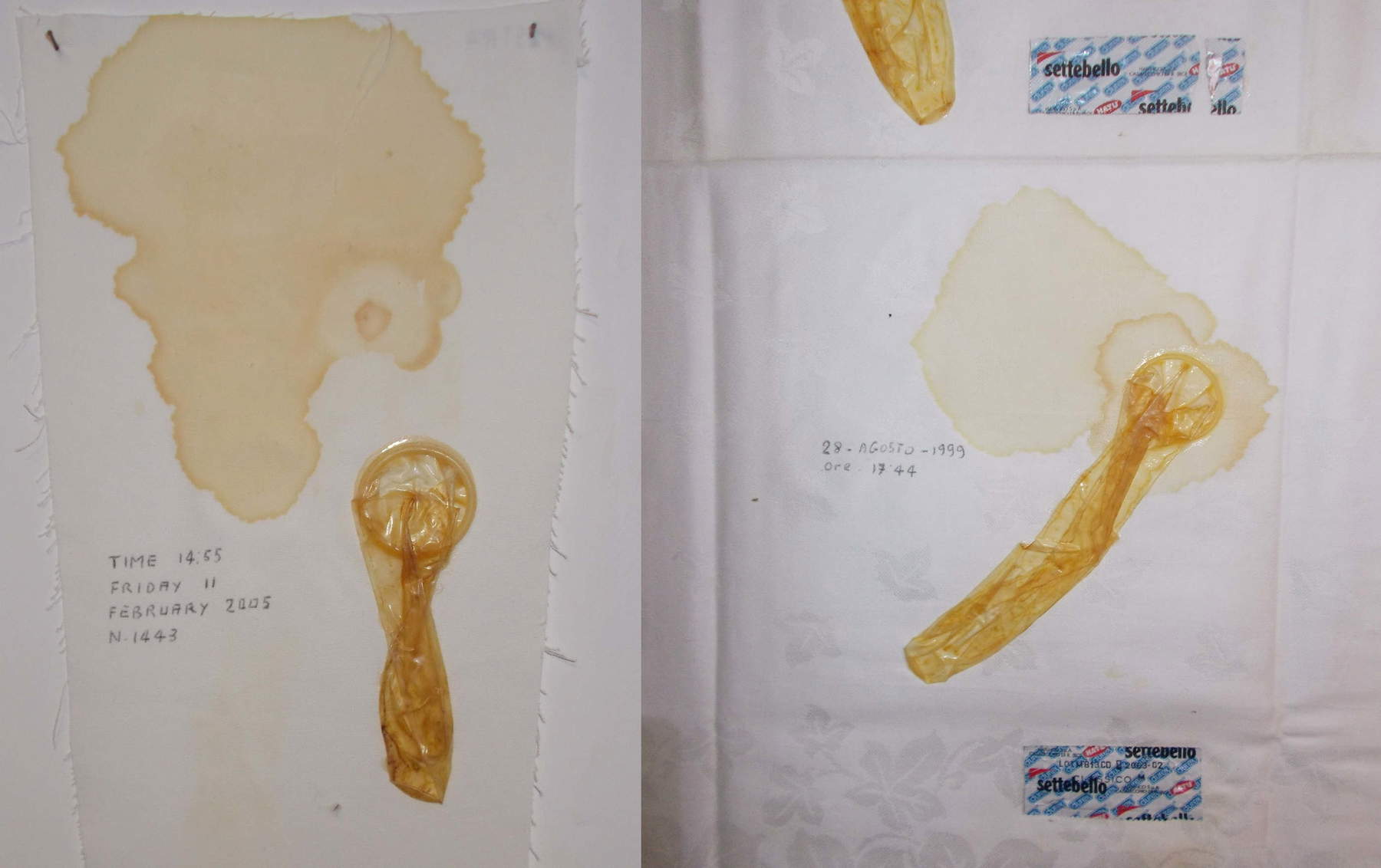
As early as between 1997 and 2000, I decided to formalize the use of my sperm by depositing it directly onto fabric. I contextualized this within a broader and more extreme investigation of bodily residues. It was a time when digital technology was taking its first steps and Body Art was seeking paths beyond physical pain. I saw seminal fluid as a relational and identity-forming device, not a fetish. One of my early Net Art projects was titled, not coincidentally, *Where Do Sperm End Up When They Don’t Reach the Egg?*. I approached it with bitter and irreverent irony. For me, the isolated or deposited spermatozoon was not a pop trophy, but a trace of presence. A “formless self-portrait” destined for decay.
And it didn’t stay just online. That aesthetic action also engaged in a close dialogue with my clandestine and unauthorized incursions right into the Venice pavilions. There, I brought my stickers and my books to “infect” the sanctity of the institution, to remind people that art is born from the individual known as the artist, who puts themselves on the line personally with their own face and body.
This same urgency later found a fundamental physical and institutional historicization in my solo exhibition *Il Corpo di boresta*, curated by Raffaele Gavarro at the Micro space in Rome, owned by Paola Valori. On that occasion, I formally exhibited those traces of semen deposited on fabric for the second time, after having presented them for the first time at the Il Graffio gallery in Bologna in 1998.
Biological Feedback: Denmark’s Post-Digital Version
A quarter of a century later, the Danish Pavilion curated by Chus Martínez revisits the same biological element but reverses the direction of its flow. While in my work the artistic act began with the body—first as a means of authentication and then as a document and work of art, both analog and early web-based—in Maja Malou Lyse’s installation, it is the artificial and digital stimulus that alters biology. “Things to Come” scientifically analyzes how the consumption of online pornographic images and the aesthetics of contemporary media directly affect sperm motility and global fertility rates. With a clean, hyper-technological, and at times science-fiction-like aesthetic—developed in collaboration with the architecture firm Common Accounts—Denmark institutionalizes seminal fluid. It transforms it into a mirror of a global, demographic, and anthropological crisis.
Two Mirrors of the Same Matter
As I was driving home from Venice—as always when I’m behind the wheel—my thoughts gave rise to a series of reflections and conjectures that I usually have to jot down on the fly. This time, however, to give them substance, I didn’t risk my life by jotting them down on loose scraps of paper; instead, I decided to use the voice recorder on my smartphone.
Well, I identified three elements of parallelism between these two approaches that show how such a radical subject can lend itself to mirror-like interpretations over time.
The direction of the impact: I use sperm as an output, a biological trace projected against the art system to attest to its human fallibility. Lyse analyzes it as an input, a plastic element modified by the visual bombardment of the internet.
The irony of failure: we both reject the rhetoric of virility and the sanctity of life. I satirize the biological “waste” of sperm lost in a vacuum; the Danish pavilion stages the crisis of contemporary fertility through a parody of digital subcultures.
The institutional stance: my actions arose from a deeply personal reflection that soon, however, turned toward the underground realm of disruptive actions and pioneering Net Art. Lyse’s research is now embraced as the centerpiece of the official critical discourse of a sovereign state at the Biennale.
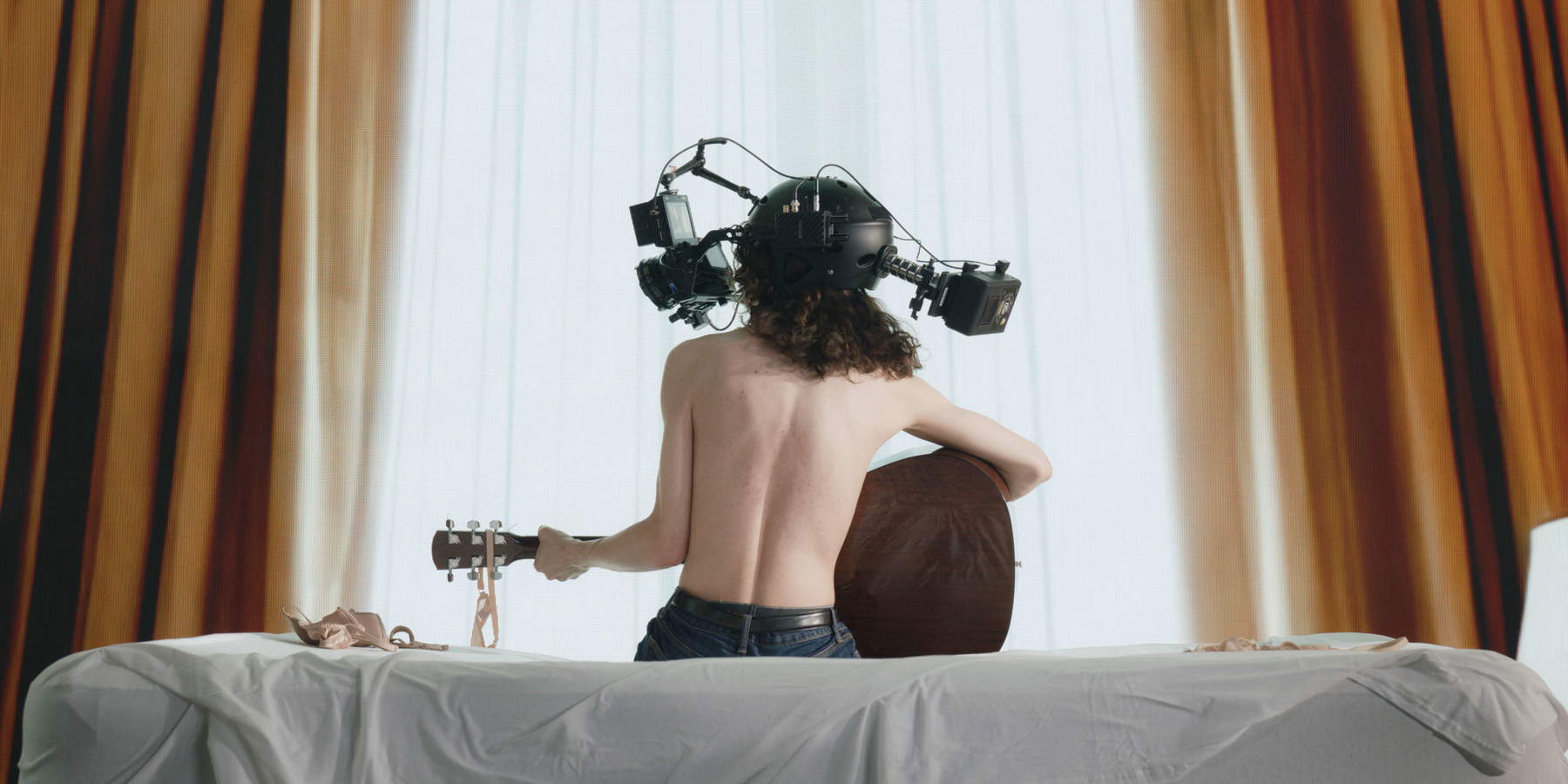



And so what remains—or perhaps it would be more accurate to say: what bo-remains?
This comparison confirms a golden rule of art history: the sharpest and most unsettling insights often arise on the margins, in the solitary practices of those who know how to seize them on the fly rather than let them slip by. And who, despite the social difficulties this might entail, cultivates them from the very beginning, without worrying too much about present implications, much less future ones.
And to think that, despite being a staunch Bergsonian, I’ve always told my children—perhaps imprecisely or mistakenly—that our brain is like a sort of hard drive into which we simply have to input as much information and as many programs as possible to make it function at its best. Yet real-world experience tells us the opposite. To truly approach knowledge, it’s not enough to accumulate data: we must complement logical and systematic structures with the more opaque pathways of intuitive thought—that is, those less controlled processes that operate below the threshold of consciousness. It is in this gap that the enactive approach comes into play, revealing that the mind is not a static container to be filled, but a dynamic process that learns and shapes itself solely through action and lively interaction with the world.
This enactivity draws deeply from sensomotor experience, in which perception is never a passive reception of external stimuli, but a continuous cycle where bodily movement and sensations condition one another, co-creating the surrounding reality. It is precisely through this synergy that the work of art becomes the bearer of a true episteme, since it does not merely represent or catalog visible reality as a digital file archive would, but rather reveals its profound dynamics, translating the rigor of formal structure through the generative and mysterious power of the artist’s intuition. This bodily dynamic is fully reflected in the encounter between the viewer and the exhibition space: the visitor does not merely experience the artwork with the detached gaze of someone observing a screen, but inhabits and moves through it. It is precisely by walking, physically reacting to the stimuli, and adapting their movements to the environment that the audience experiences and co-creates the profound meaning of the work itself. In this continuous exchange, the artist acts upon the space and is, in turn, transformed by it.
Such an evolution of the mind and of art is not merely theoretical; it is perfectly reflected in my personal history. The trajectory linking my intuitions from the 1990s to today’s reflections at the Danish Pavilion demonstrates a simple truth: what was then a contested biological taboo has now become one of the most effective tools for gauging the cultural, political, and technological climate of our time.
A temperature that becomes even more radical when art rejects passive consumption and transforms into pure conceptual provocation—just as is happening, in conjunction with this Biennale, in an exhibition dedicated to Duchamp in Venice. A destabilizing invitation that repels those seeking only easy answers or archives to collect—and that seems to shout one final, inescapable truth right in our faces: “This exhibition is not for you!” After all, the audience is sometimes just an optional detail… or is it?
Warning: the translation into English of the original Italian article was created using automatic tools. We undertake to review all articles, but we do not guarantee the total absence of inaccuracies in the translation due to the program. You can find the original by clicking on the ITA button. If you find any mistake,please contact us.