



by Matteo Rapanà 20/11/2026


Categories: Opinions / Disclaimer
Adopting artificial intelligence is not enough: museums must learn to use it responsibly, verifying information and preserving their scientific authority. This is a particularly significant challenge for smaller institutions. An opinion piece by Matteo Rapanà.


Artificial intelligence represents one of the most significant transformations currently facing the diverse world of museums. The question, however, is not simply whether these technologies should be introduced into cultural institutions: this process is already well underway, affecting many areas of museum operations and management. In the author’s view, the real challenge lies in understanding how to manage these tools so that they can strengthen the museum’s mission without altering its fundamental nature and values.

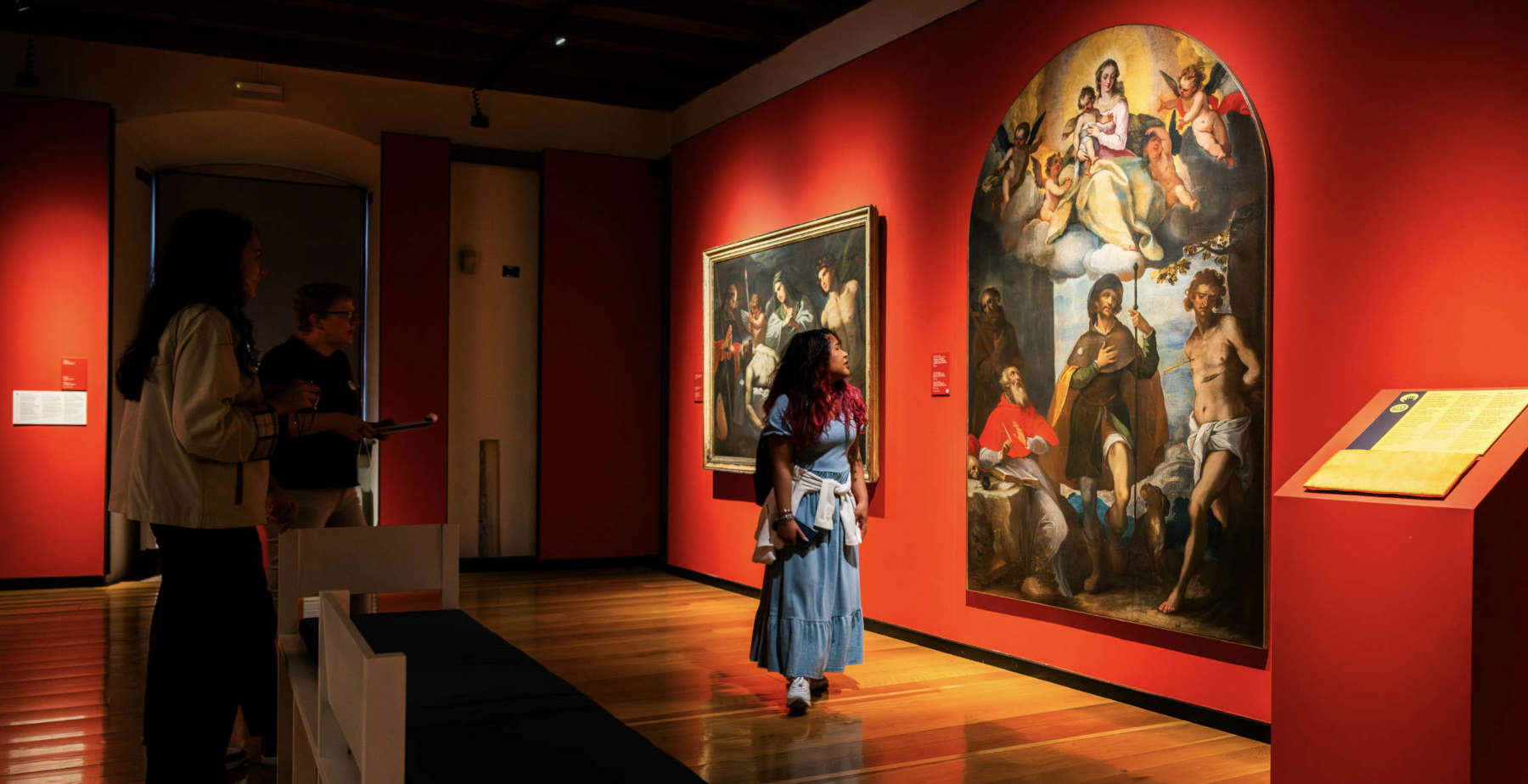
In fact, a museum’s objective is not only to produce content but also to build and transmit scientifically grounded knowledge. From this perspective, artificial intelligence should not be viewed as a substitute for professional expertise, but rather as a tool capable of amplifying its impact. Research must necessarily be entrusted to scholars, curators, conservators, and museum educators; AI, on the other hand, can help make this knowledge more accessible, understandable, and tailored to the needs of different audiences.


This potential takes on particular significance in small museums, such as civic museums, which form the backbone of the national museum system, where knowledge of the collections is often entrusted to a small number of professionals who have a direct and in-depth relationship with the heritage but who do not always have the time or the necessary communication tools to adapt that knowledge to different audiences. Content intended for a scholar, a student, a family, a casual visitor, or a person with a physical, cognitive, or sensory disability requires, in fact, different languages, levels of depth, and narrative approaches. In this context, artificial intelligence can serve as an important tool to support cultural mediation: it does not create new knowledge nor does it replace scientific interpretation, but it can help reformulate content, adapt language, offer different levels of depth, facilitate translations, and contribute to the creation of more inclusive communication tools. Its value, therefore, does not lie in its ability to replace the expert, but in its potential to expand the museum’s capacity to communicate what it already knows.

In addition to its role in communication, AI can also make a significant contribution to the internal operations of museum institutions. Processing large amounts of data, supporting cataloging, organizing documentation, producing administrative documents, analyzing visitor information, and managing scientific materials can all be areas where these tools help optimize time and resources. For small museums, in particular, AI could represent an opportunity to better leverage the expertise available within the institution, freeing up time to devote to research, conservation, direct engagement with the public, or museum management processes.
Precisely because a museum is a place founded on trust and scientific authority, however, the use of artificial intelligence requires special attention. Algorithms can produce inaccurate content, oversimplifications, or interpretations lacking a proper foundation. For this reason, all information intended for the public must be verified and validated by professionals in the field. Artificial intelligence can contribute to the form of communication, but responsibility for the content of the knowledge must remain with the museum.
Transparency is also essential in the relationship with the public. When a visitor encounters content generated or processed by artificial intelligence systems, they must be able to understand the role that technology played in its production and the role of specialized staff. Trust in the cultural institution, in fact, also depends on the clarity of the processes through which information is constructed and presented.
There is also a broader issue concerning the relationship between technology and the museum experience. The museum remains a place for direct encounters between people and the works, objects, and stories they tell, as well as between the people themselves—whether they are visiting the museum or participating in the same activity. Digital tools can foster greater participation, accessibility, and inclusion, but they must be designed to guide visitors toward the cultural heritage, not to replace the experience of encountering it. The risk, in fact, is that technology will become the center of attention, shifting the focus from the artwork to the tool that should instead facilitate its understanding.
For these reasons, the question is not merely whether Italian museums are ready to adopt artificial intelligence, but whether they are ready to govern its use. While technological tools are increasingly available today, the quality of data, staff training, the establishment of control procedures, and a thoughtful consideration of the ethical and legal aspects related to their use remain fundamental.
Artificial intelligence, therefore, does not represent a new mission for museums, but rather an innovative tool through which to pursue their original mission: to preserve, study, interpret, and convey cultural heritage. Its value will depend not on the power of the algorithms, but on the institutions’ ability to use it with competence, critical thinking, and responsibility. Only in this way can innovation help make museums more accessible and central to people’s lives, while preserving what makes them indispensable: the centrality of knowledge, human connection, community participation, and the authentic experience of cultural heritage.
Warning: the translation into English of the original Italian article was created using automatic tools. We undertake to review all articles, but we do not guarantee the total absence of inaccuracies in the translation due to the program. You can find the original by clicking on the ITA button. If you find any mistake,please contact us.