





Nestled among the pink folds of the Belluno Dolomites, where the Veneto region borders Friuli-Venezia Giulia, lies the Cadore: a land suspended between dizzying cliffs, shimmering bodies of water, and a rich historical heritage. Its identity has been shaped by a centuries-old role as a border region, straddling Slavic, Latin, and Nordic linguistic traditions, which has made it at once a barrier and an obstacle—or, conversely, a meeting point.
Cadore’s fate in the 15th century, however, was inextricably linked to that of Venice. With the collapse of the Patriarch of Aquileia’s power and the rapid advance of the Serenissima, the people of Cadore chose the protection of Doge Tommaso Mocenigo; thus, on July 31, 1420, a unique pact was forged between the two territories: in exchange for loyalty and the “green gold” of the Dolomites—the prized timber that rafters floated down the Piave River to build the ships of the Arsenale and the foundations of the Lagoon—Venice granted broad autonomy, respect for local laws, and the right to trade in salt. With its “Dedication to the Most Serene Republic,” Cadore effectively emerged from the Middle Ages and rightfully entered modern history. Despite the brief resistance of the Castle of Pieve, the union between Cadore and the Venetian Republic was a long one that lasted a full 377 years—celebrated by Cesare Vecellio in a painting now housed in the Palazzo della Magnifica Comunità del Cadore—and was interrupted only by the fall of Venice in 1797.
Today, Cadore embodies this entire legacy and still presents itself as a mosaic of contrasts: on one hand, the pinkish limestone walls (due to the “enrosadira” phenomenon) of the Dolomites, a UNESCO World Heritage Site; on the other, the Piave River, whose course has been reshaped over the decades by dams and reservoirs. A region of clear skies and starry nights so spectacular that they have enchanted NASA, as evidenced by the photographs of Cadore-based astrophotographer Alessandra Masi, but also marked by shadows and silences that invite reflection. To discover this land and immerse yourself in its history, simply follow a short itinerary in stages.
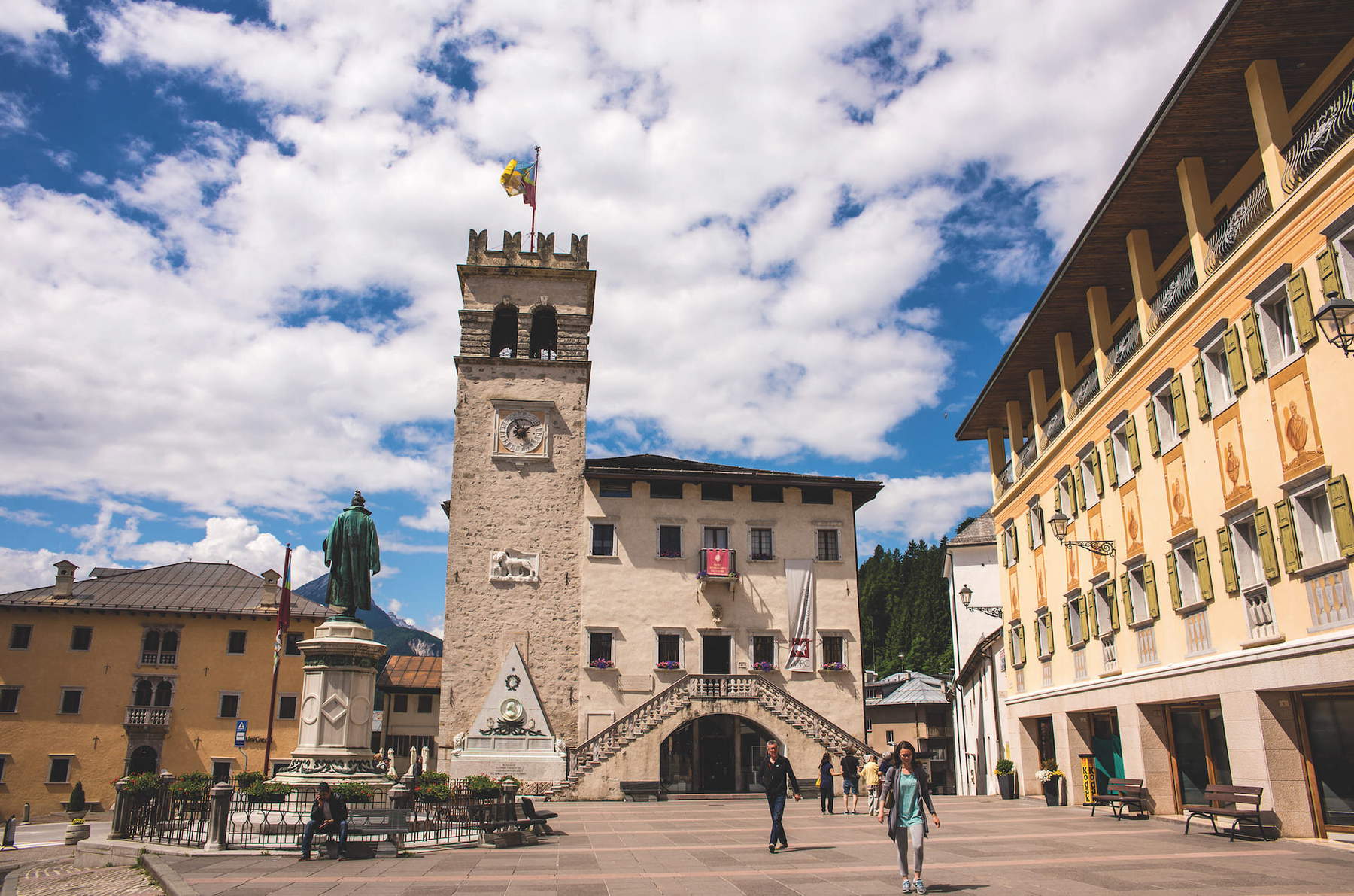
The journey begins along the Boite Valley, the northern gateway to our itinerary. Nestled between the imposing walls of Mount Pelmo and Mount Antelao, San Vito welcomes visitors with an authentic Alpine atmosphere. Whether strolling along the shores of Lake Mosigo or exploring the 14th-century Chiesetta della Difesa, the deep connection between humanity and nature is palpable here.
The small church of the Blessed Virgin of the Defense is, in fact, a precious testament to Cadore’s artistic heritage. Rich in works of art—including tombstones, votive offerings, paintings and frames, altars and triptychs, and vibrant frescoes such as the one depicting riddles—it was built at the end of the 15th century following the war between the Venetians and Maximilian of Austria, and subsequently renovated in the 17th century. The style is Late Gothic, and it welcomes us with a splendid triptych on the high altar attributed to Francesco Vecellio, Titian’s brother, though it has been extensively altered to fit the rear frame.
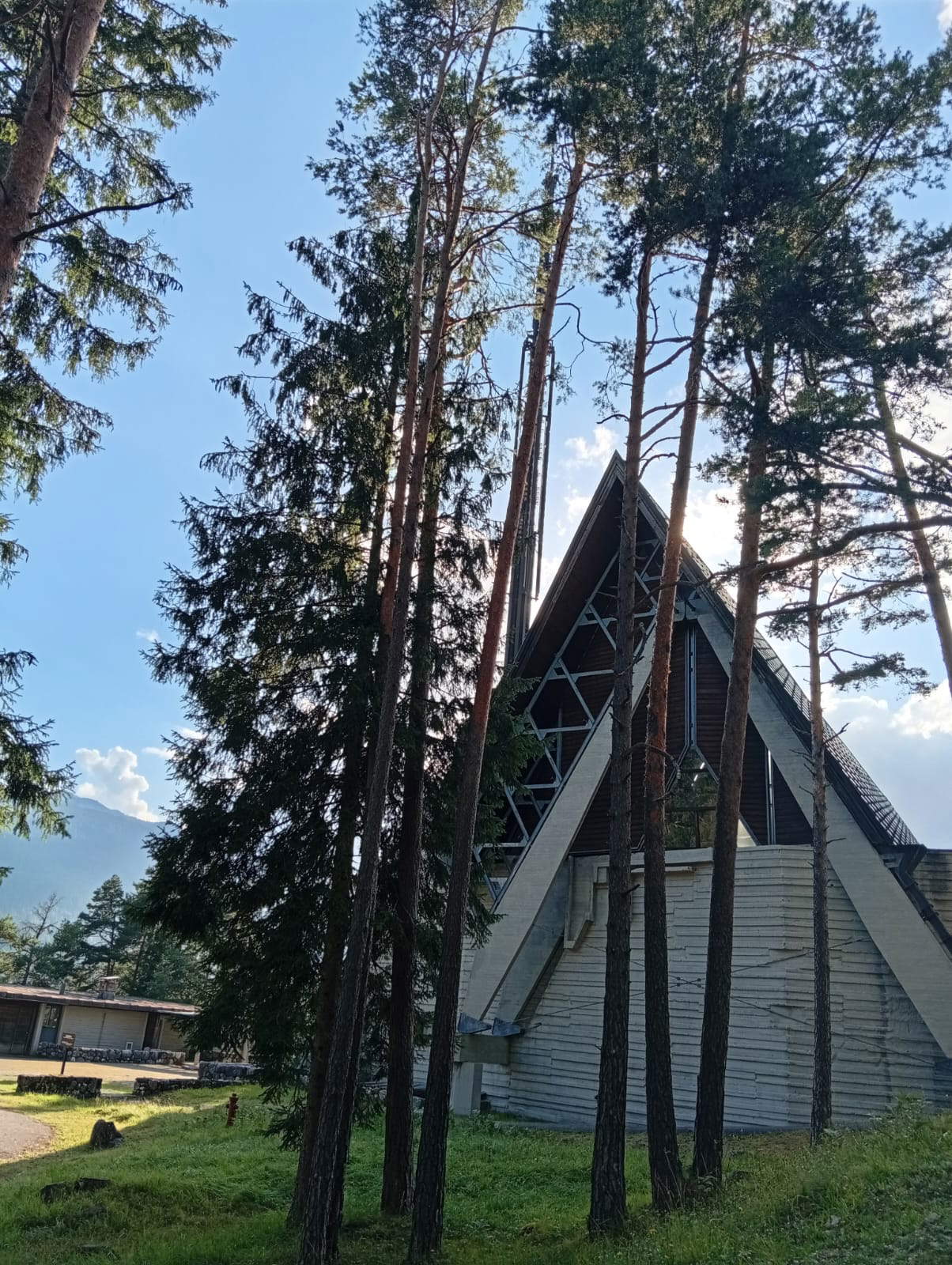
Leaving the main road for a few kilometers brings you to Borca di Cadore. On the slopes of Mount Antelao stands a striking example of 20th-century utopian architecture, commissioned by Enrico Mattei and designed by Edoardo Gellner. The complex blends seamlessly into the forest and culminates in the Church of Our Lady of Cadore, a modern masterpiece born from the collaboration between Gellner and the extraordinary architect Carlo Scarpa. It’s a detour well worth taking.
Mattei’s dream lives on, because the village has been restored and the little houses among the trees are all inhabited. Thus, at least in part, his vision of corporate welfare is being realized—a project of social justice modeled on modern urban planning integrated into nature.
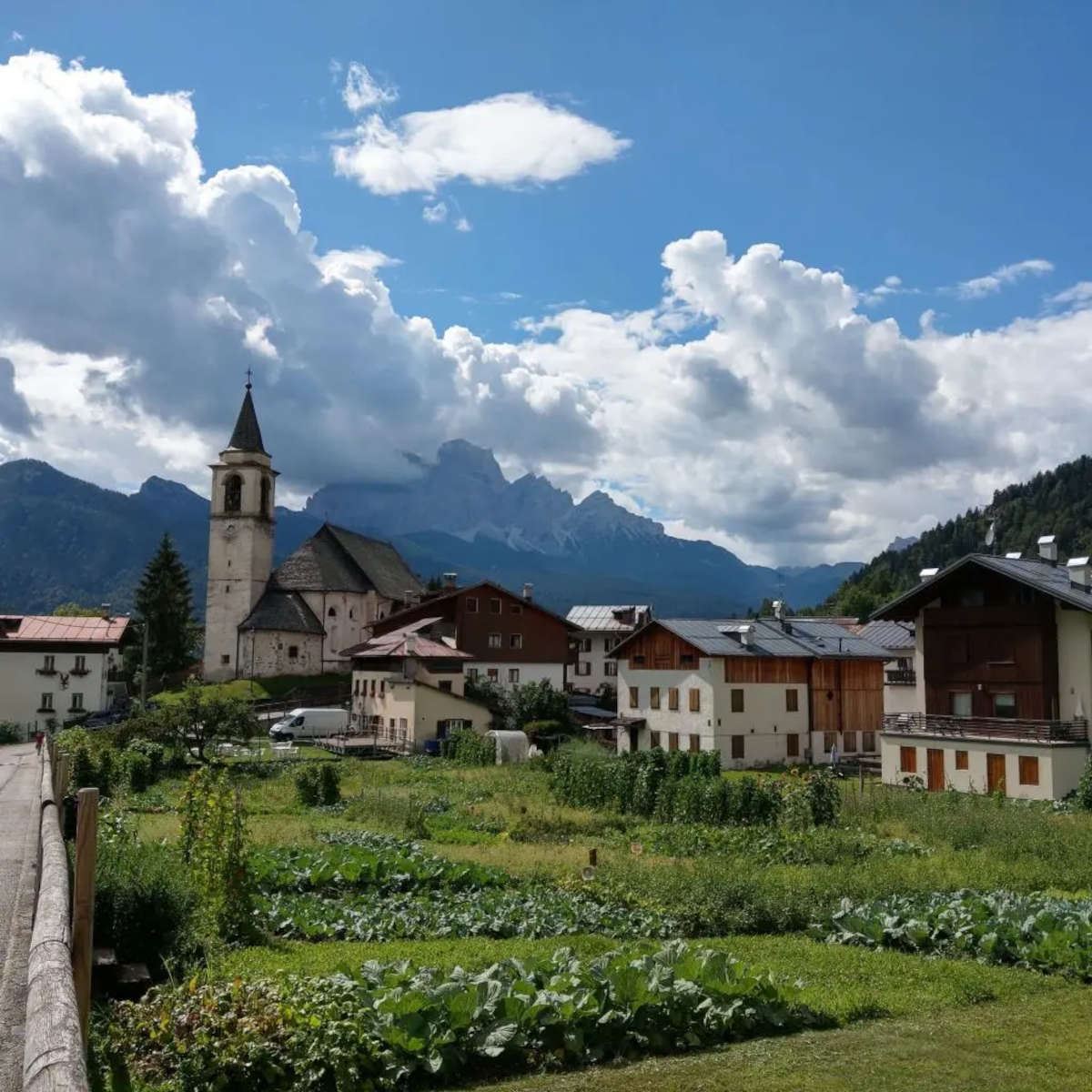
The itinerary continues. With a brief detour, we head up toward Vinigo, a hamlet perched on a natural, sun-drenched terrace. This small village preserves the charm of bygone days in its ancient alleyways, traditional crops, and churches, offering an intimate glimpse into mountain life.
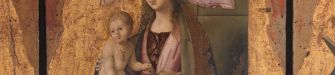
The Church of St. John the Baptist is definitely worth a visit; it has been listed as a national monument since 1929. Built in 1493 but consecrated only in 1515, the church was later expanded with a new nave in the early 1700s and reconsecrated thirty years later. Inside, there are two altarpieces from the Vecellio workshop: the one on the high altar is attributed to Francesco Vecellio, *Madonna and Child with Saints John the Baptist and John the Evangelist* (1548); the altarpiece on one of the side altars is by Tommaso Vecellio, *Madonna and Child with Saints Anthony the Abbot and Margaret* (1618).
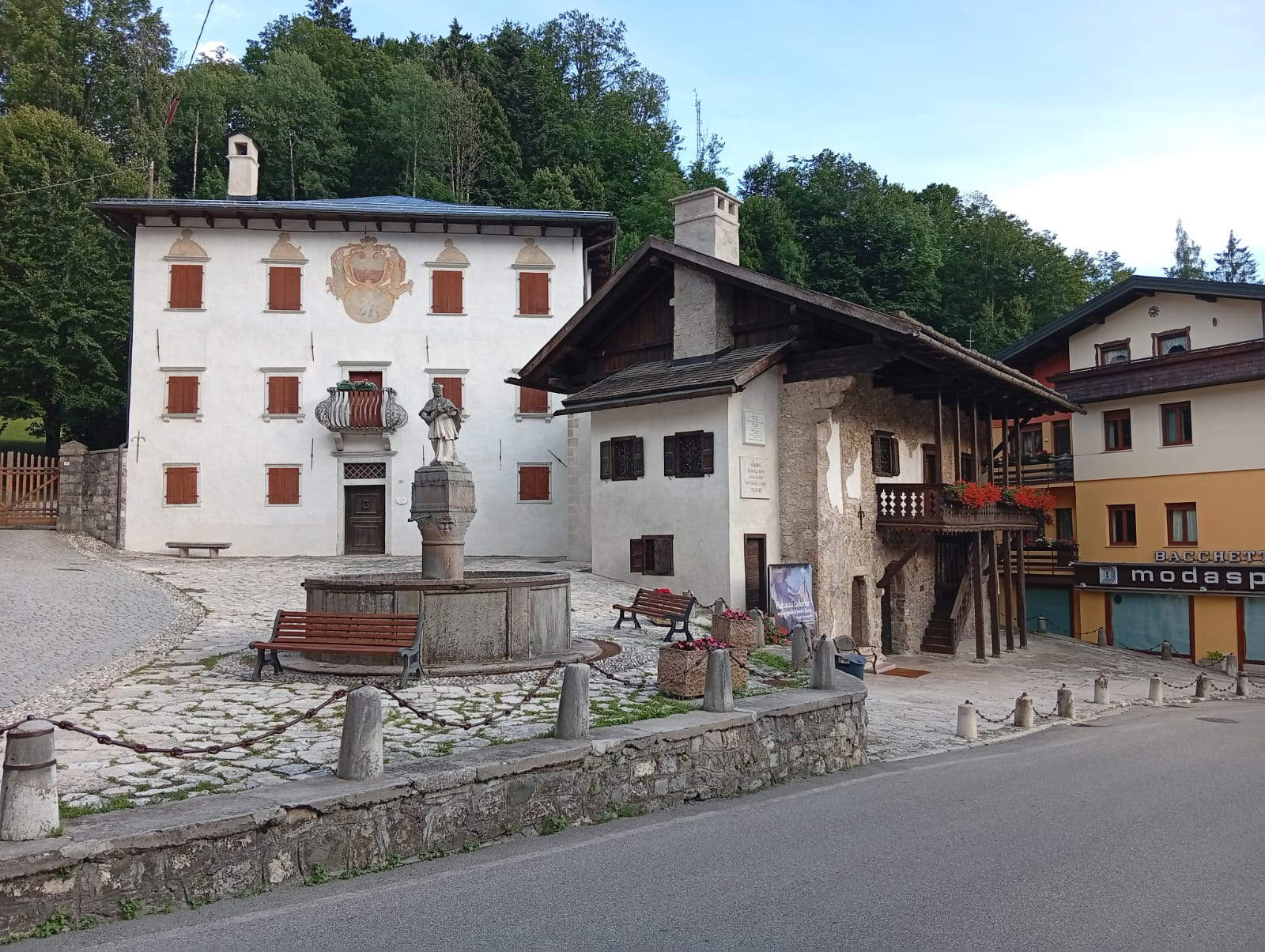
At the junction of the Piave and Boite valleys lies Pieve di Cadore, the historic heart of the region. A city of art and the birthplace of Titian Vecellio, Pieve embodies a millennia-old spirit, as evidenced by the Celtic, Venetian, and Roman artifacts housed in the Archaeological Museum (MARC) on the second floor of the 15th-century Palazzo della Magnifica Comunità di Cadore. It is surprising to discover from these ancient artifacts (small metal plates, weapons, bronze warriors, and simpula— a type of ladle)—most of which come from the Sanctuary of Lagole di Calalzo, active from the 5th to the 4th century B.C.—that before the advent of Rome, the deities we know did not exist, but the only entities venerated—even through ritual sacrifices—were water sources, particularly the healing Venetian deity Trumusiati Sainati, whose epithet is linked to the nature of the surroundings.
Not far from the MARC, the extraordinary Archdeaconal Church of Santa Maria Nascente, home to several beautiful paintings by the Vecellio family, conceals a fascinating story linked to the theft and subsequent daring recovery of its most precious work, the altarpiece depicting the Madonna and Child between Saints Titian and Andrew, located in what must have been the family chapel. Its authorship has been definitively attributed to the brush of the master Titian himself—and no longer to his school—following thorough diagnostic investigations and studies of the painting’s technique and historical data, which emerged as a result of the most recent restoration in 2023, carried out by Francesca Faleschini under the supervision of the Superintendence of Archaeology, Fine Arts, and Landscape of the Venice metropolitan area and the provinces of Belluno, Padua, and Treviso.
But Pieve is above all the town of Titian, and his birthplace bears witness to this through the memory of the rooms and spaces where Titian likely lived during his childhood and to which he returned when he was living in Venice. The building fortunately escaped the reprisals of German soldiers. However, subsequent renovations—including the expansion and demolition of the front wing—while on the one hand permanently compromised the original structure, on the other hand brought the ancient doors and windows back to light.
Don’t miss a visit to the Titian and Cadore Study Center, founded in 2003, whose library houses rare 16th-century books, Cesare Vecellio’s *Habiti*, as well as the illustrated manuscript on Pieve Castle and the churches of Cadore; Roccolo Park, where you can go hiking and enjoy the spectacular view of the Dolomites up close, and the Eyewear Museum—Pieve is the cradle of the Italian eyewear industry.
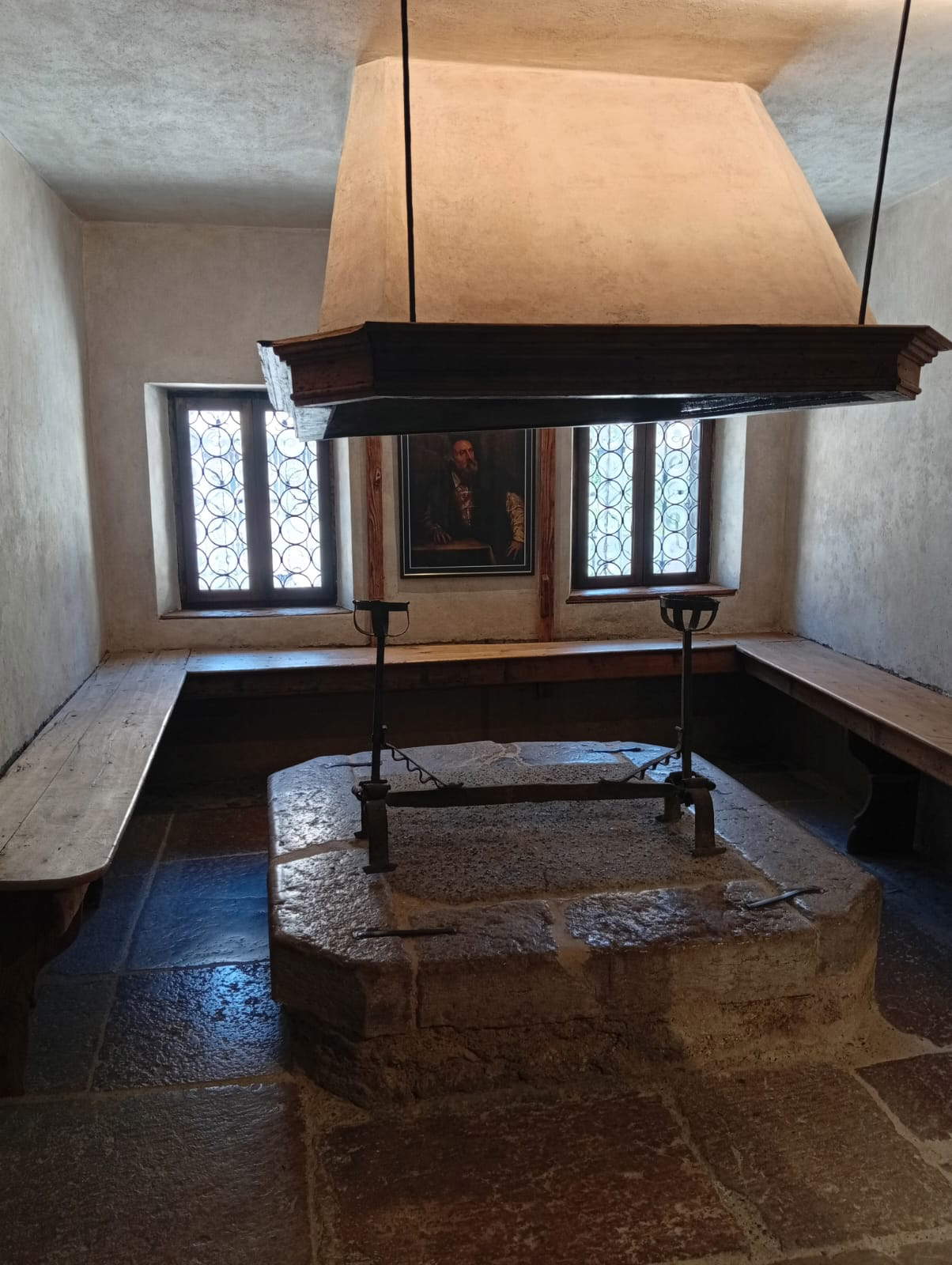
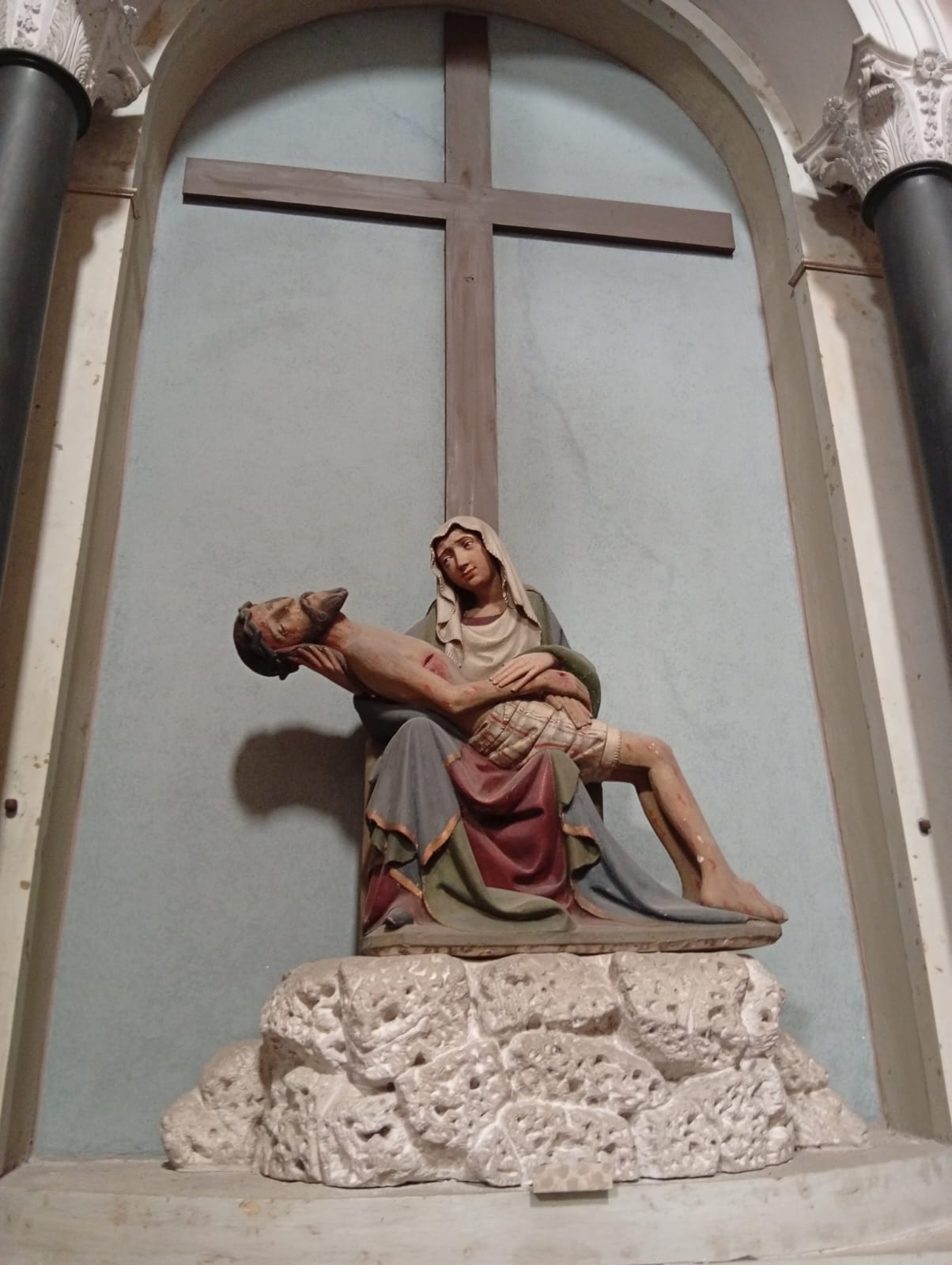
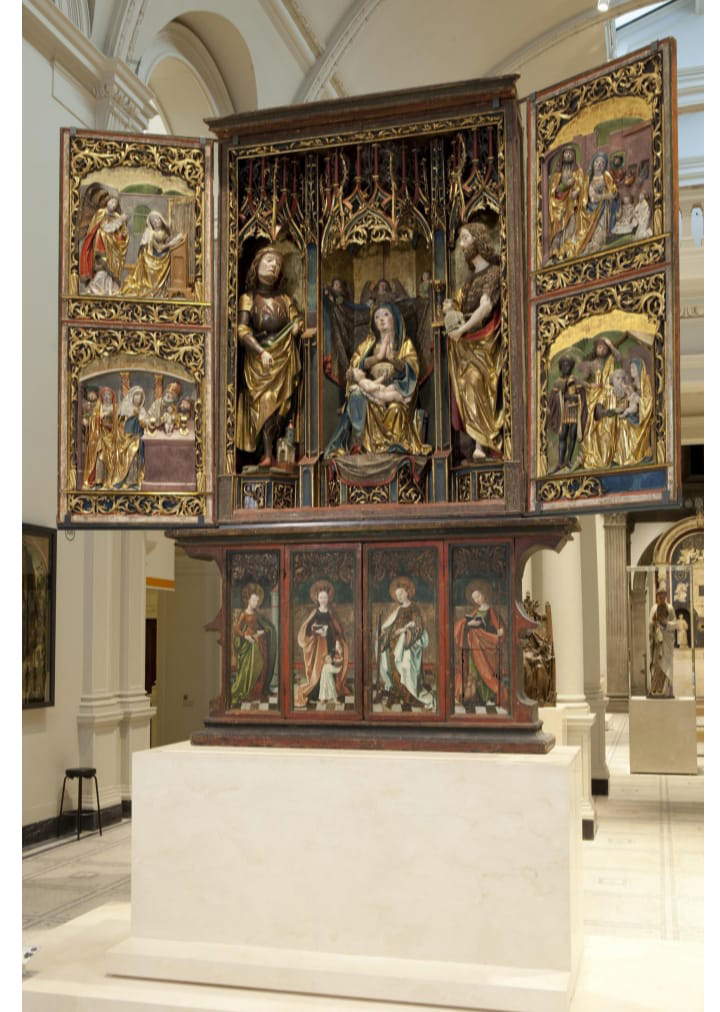
Heading east, you enter the Oltrechiusa area, on the side facing Carnia and the Friuli border. Here lies Vigo di Cadore with its most precious gem: the Church of Sant’Orsola. Built in the 14th century, the church houses an extraordinary cycle of frescoes from the Giotto school that captivates with the vibrancy of its colors and the intricate details of the lapis lazuli ceiling panel, adorned with golden stars—a feature that has led to comparisons with the Scrovegni Chapel in Padua. Commissioned as a funerary chapel by Ainardo, the son of the podestà of Cadore, a remarkable cycle of paintings runs along its walls—unfortunately interrupted by the construction of the Chapel of San Lazzaro in the 16th century and the sacristy—depicting the legend of Saint Ursula, a virgin and martyr, a Breton princess who converted to Christianity and was killed in Cologne by the Huns. Inside the church, we also find a 16th-century carved wooden winged altar, which was later incorporated into a Baroque altar.
But in Vigo there is also the Church of the Defense, built in 1513 in the Alpine Gothic style to ask the Virgin Mary for protection from Austrian invasions. Here we discover that, in addition to the well-known ones, another “civilization” existed in these parts— an oikumene that unified the territories of Carnia, Cadore, and Friuli, known as the “Little Maso.” In 1846, after two millennia under Aquileia, the boundaries of this “community” were shifted to the province of Belluno thanks to Monsignor Da Rin, whose portrait by a local artist hangs inside the small church.
Finally, the Church of Santa Margherita, built in 1250, is probably the oldest in Cadore. Having remained almost intact after the great fire that destroyed the ancient village in the mid-16th century, it still retains its original square floor plan and, inside, a remarkable cycle of Byzantine-style frescoes dating from the 13th–14th centuries depicting the Nativity of Christ.
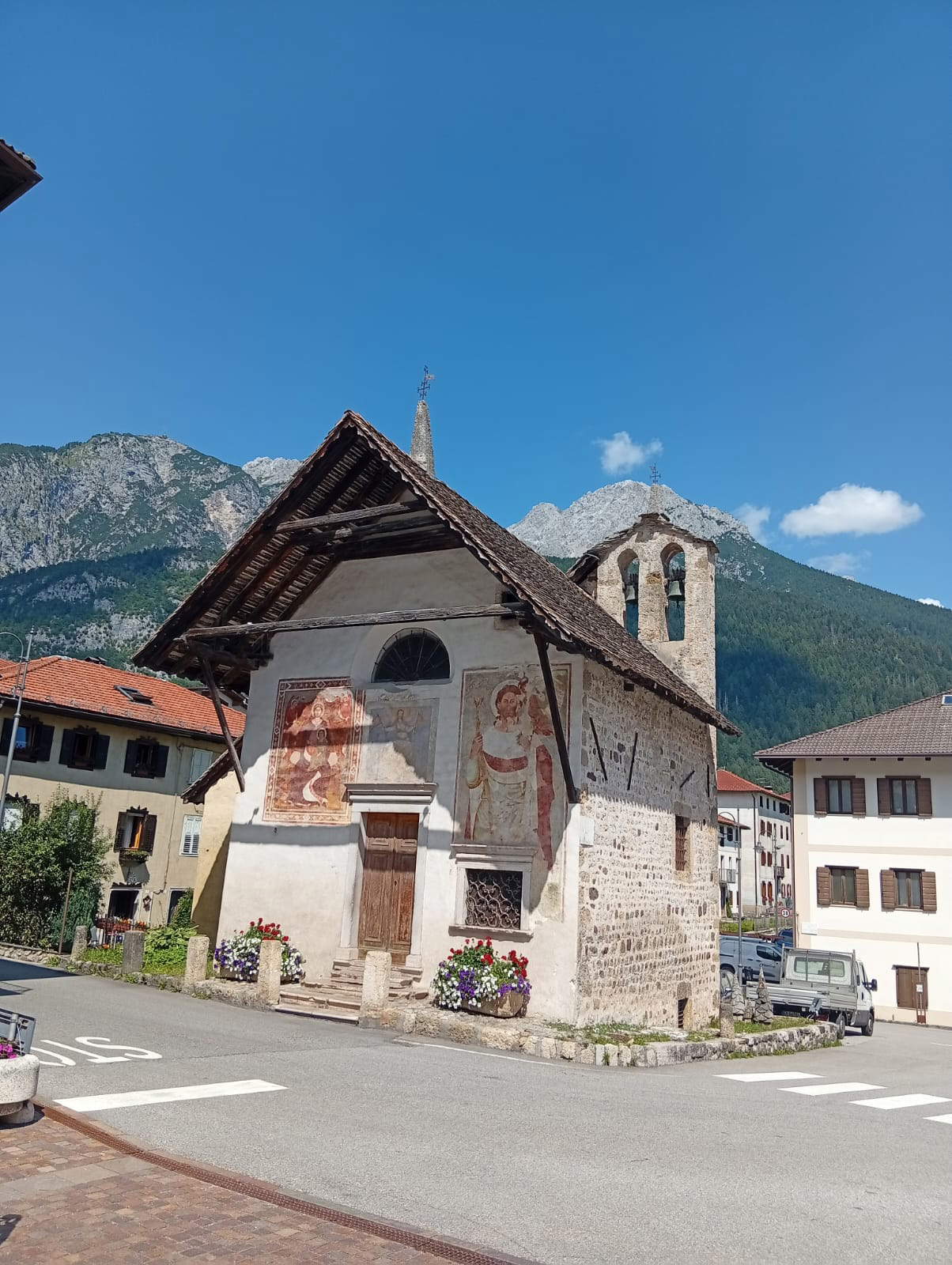
The tour continues with a series of stops along a true “Vecellian itinerary.” Beyond Pieve, Vigo, and San Vito, there are villages such as Cortina d’Ampezzo, featuring a painting of John the Baptist by a follower of Titian; Zoppé di Cadore and the Church of Sant’Anna, Valle di Cadore and Perarolo, Calalzo and Domegge, Danta, San Pietro, and Comelico, where you can see up close works by the entire Vecellio family—from Fabrizio to Marco and Francesco, and from Cesare to Orazio.
At the end of the itinerary, leaving Cadore behind and continuing southward, still following the course of the Piave River past the rebuilt town of Longarone, our brief journey finds its most moving conclusion at the Vajont Dam. The walkway along the dam’s crest, the view of the sheer face of Mount Toc, and the “Path of Remembrance” allow us to retrace the tragedy of 1963: an open wound in Italian history that even today not only challenges our sense of responsibility toward nature but also offers an opportunity to remember the role that people and communities can play as stewards: their duty outweighs the lack of courage shown by those who failed to protect those valleys.
Because it is not—and should not be—only the rocks and peaks that protect the beauty and memory of these places, but also their “sentinels.” Italy can preserve its heritage thanks to quiet figures who work with dedication—and who, in fact, abound in Cadore: passionate locals like Sandro, Willy, and Mario, supported by professors, curators, and professionals (whom we’ll discuss in another article dedicated to the exhibition on Titian and the landscape) such as Maria Giovanna, Diego, Luca, Thomas, and Bernard. What unites such diverse souls is a shared impulse: a deep sense of community. It is this invisible force that drives the guardians of these places to share the story of and protect their land, knowing that only by caring for it can they pass on to future generations the most authentic part of their—and our—extraordinary heritage.


The author of this article: Anna de Fazio Siciliano
Anna De Fazio Siciliano è una scrittrice, storica e critica d’arte, docente e redattrice specializzata nella comunicazione e nella divulgazione dell’arte. Nel corso della sua attività didattica ha insegnato Storia dell’arte antica e contemporanea, Estetica e Mercato dell’arte presso istituzioni accademiche. I suoi interessi comprendono la ricerca storico-artistica, la critica d’arte, la progettazione curatoriale e lo studio dei linguaggi dell’arte moderna e contemporanea. Durante il periodo di formazione presso la Galleria Borghese di Roma ha approfondito la diffusione del gusto egizio nell’arte italiana, a partire dalla decorazione della Sala Egizia del museo. A questo ambito di ricerca ha dedicato il volume Il gusto egizio, pubblicato da Pellegrini Editore. È autrice di saggi dedicati all’arte contemporanea e ai suoi protagonisti. La sua produzione comprende inoltre articoli, recensioni, interviste e testi critici per cataloghi e progetti espositivi. Recentemente il Direttore di Palazzo Madama di Torino, il Professore Giovanni Carlo Federico Villa ha presentato al Salone Internazionale del Libro di Torino il suo volume dedicato alla tutela del patrimonio, Diario di bordo Scoppa, Frammenti di un patrimonio perduto, edito da Gangemi International e impreziosito in quarta di copertina da un commento di Salvatore Settis. Ha collaborato sia con contributi online che su cartaceo con riviste specializzate quali «Exibart», «Art e Dossier», «Finestre sull’Arte», affrontando temi legati all’arte antica, moderna e contemporanea, alla tutela del patrimonio culturale e alla presenza femminile nella storia dell’arte. Nel 2015 ha fondato Artpressagency, realtà attiva nei settori dell’ufficio stampa, della comunicazione culturale, della critica d’arte e dell’editing. Attraverso questa attività ha collaborato con musei, fondazioni, archivi, istituzioni culturali, curatori e organizzazioni impegnate nella produzione e nella promozione di mostre ed eventi artistici. È stata inoltre membro del Comitato tecnico-scientifico degli Archives Legales Amedeo Modigliani, del FATA Museum e del GAL delle Terre Locridee dedicando la propria attività alla ricerca, alla comunicazione e alla valorizzazione della figura di Amedeo Modigliani e del patrimonio storico-artistico italiano.Warning: the translation into English of the original Italian article was created using automatic tools. We undertake to review all articles, but we do not guarantee the total absence of inaccuracies in the translation due to the program. You can find the original by clicking on the ITA button. If you find any mistake,please contact us.























 IT
IT FR
FR DE
DE ES
ES CN
CN


