



by Redazione 09/11/2026


Categories: Travel / Disclaimer
From the 19th-century villas along the coast to the heritage parks in the inland areas, the Network of Historic Residences and Parks of the Marche—sponsored by the Fondazione Marche Cultura—brings together eight sites in the province of Fermo that tell the story of the region. Here’s a look at them.


From the 19th-century villas along the coast to the historic parks in the inland region, the Network of Historic Residences and Parks of the Marche—promoted by the Fondazione Marche Cultura—brings together eight sites that tell the story of the province of Fermo. Stately villas, country residences, religious complexes, and parks bear witness to the social and political changes in the region, the stories of the families who lived there, and the interplay between architecture and landscape. Some overlook the sea, while others are nestled in the hills, far from the most popular tourist routes.


To raise their profile, the Region has entrusted the Fondazione Marche Cultura with the task of cataloging and promoting the region’s historical, architectural, and landscape heritage. Active since 2023 and continually expanding, the Network now includes 34 sites across the five provinces, categorized as castles, monumental and architectural-landscape complexes, mansions, parks and gardens, and villas.
The project collects and organizes information on individual sites, reconstructs their history, and makes this information accessible through texts, images, and other content. It connects different sites, owners, managers, institutions, and local areas to raise awareness of this heritage and, where possible, encourage visits. In the Fermo area, the following are part of the Network: Villa Vitali and its park in Fermo, Villa Lina and its park in Montegranaro, Villa Clarice and Villa Santa Maria al Poggio in Porto San Giorgio, the park of Villa Baruchello and Villa Il Castellano in Porto Sant’Elpidio, the Santa Maria del Piano complex and the Parco della Pace in Servigliano.




Fermo, Villa Vitali and Park
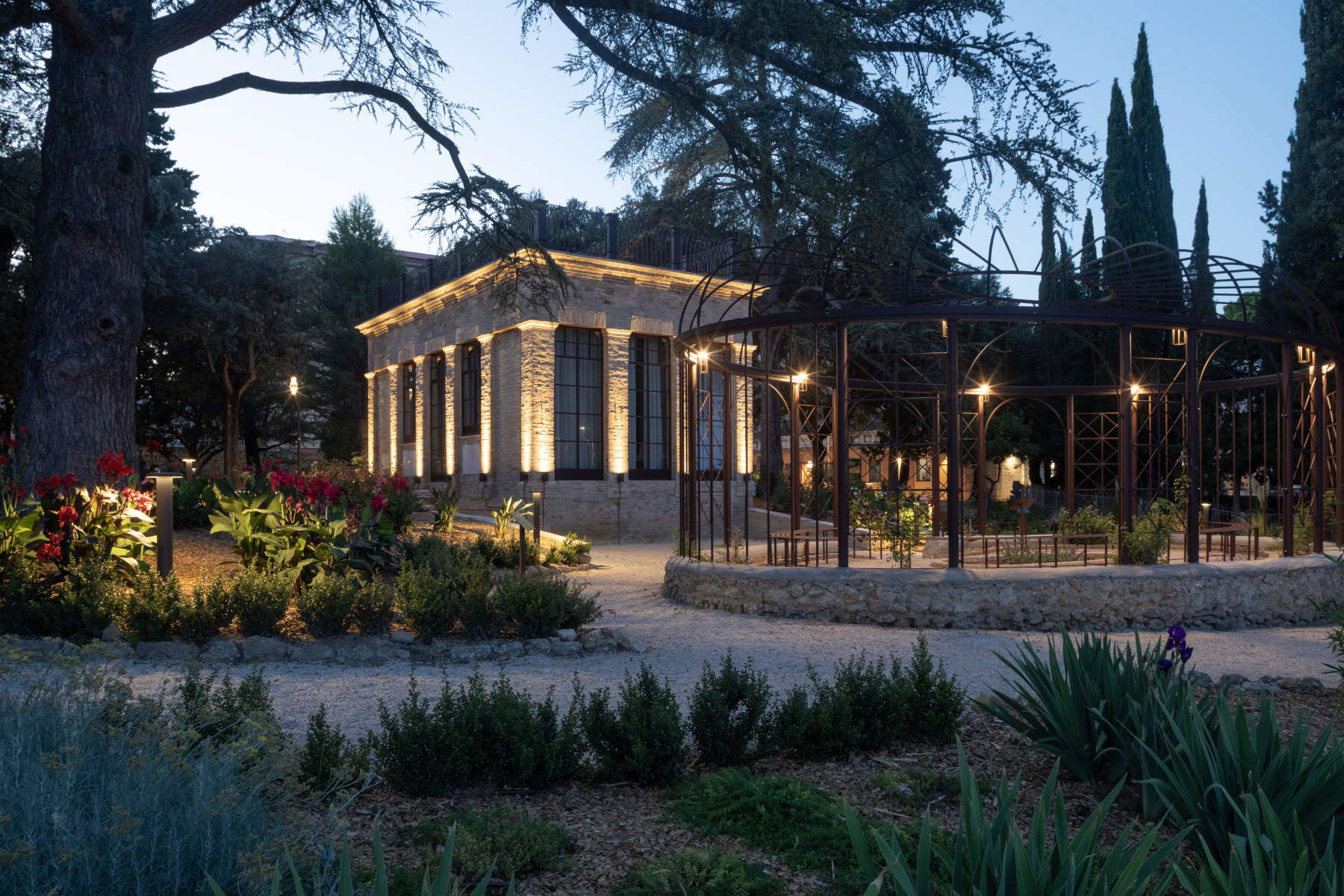
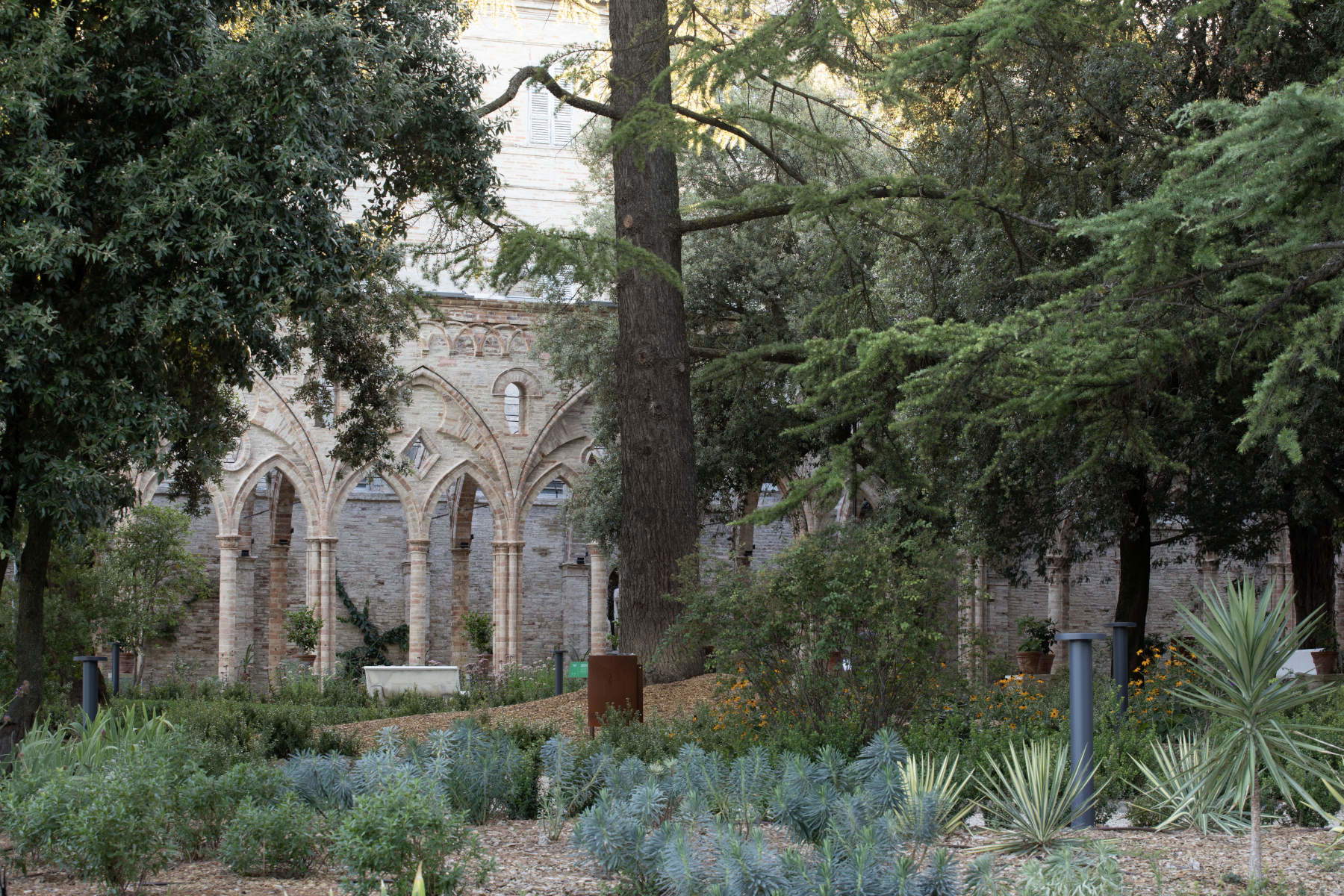
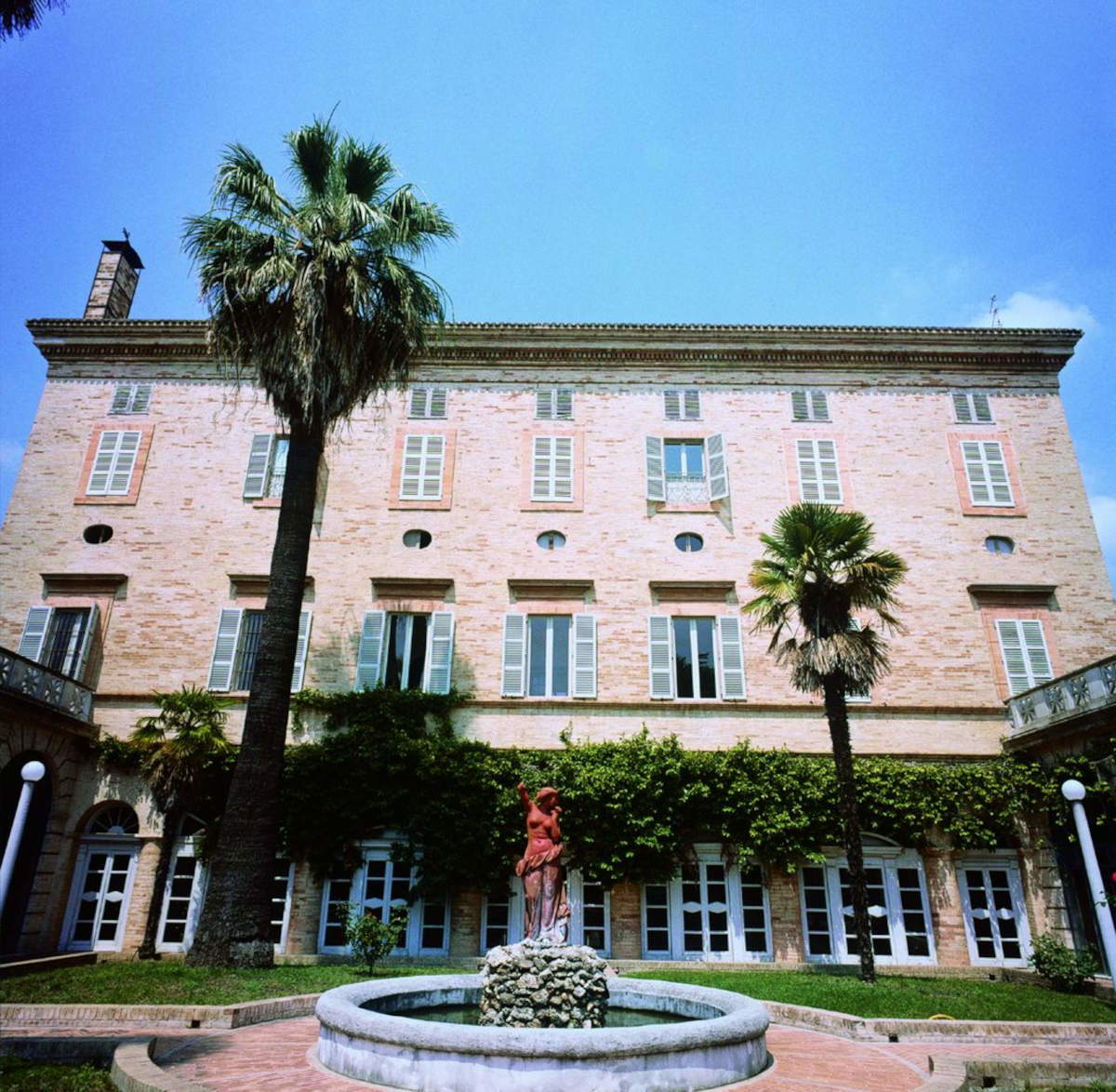
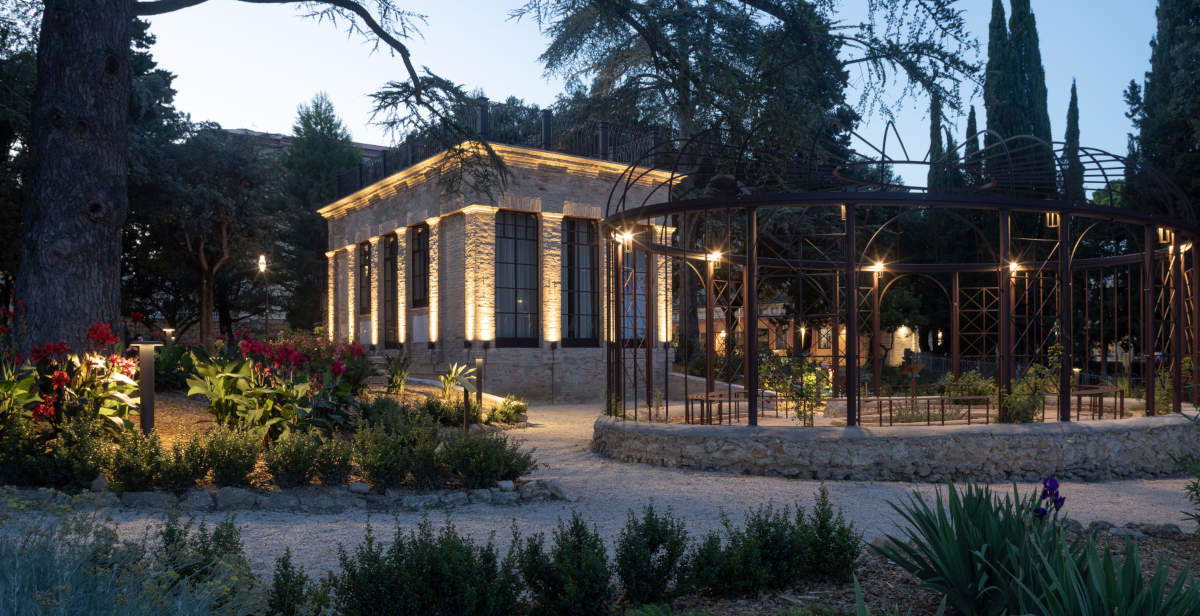
Located on Viale Trento, Villa Vitali was built in 1854 when architect Gaetano Manfredi redesigned a pre-existing farmhouse for the Vitali family. The result is a compact, three-story rectangular central block in the neoclassical style, to which two side wings were later added: porticoes with round-arched colonnades, terraced, and enclosed by glass walls, designed as winter gardens. Purchased in 1976–1977 and home to the city’s science museums since 1993, the villa is now largely unusable following the 2016 earthquake, which necessitated the transfer of the collections to Palazzo Paccaroni. Surrounding the villa is the park, designed in 1860 by Francesco Vitali as a botanical garden. Restored in 2025 with funds from the Next Generation EU PNRR, it features holm oaks, cypresses, and cedars over a century old and combines local flora with species from the East, the Americas, and South Africa, in keeping with 19th-century collecting tastes. The recent restoration project involved planting thousands of new plants, including exotic species and local rarities such as Stachys thirkei, meticulously recreating the traditional flower displays.
Montegranaro, Villa Lina and Park
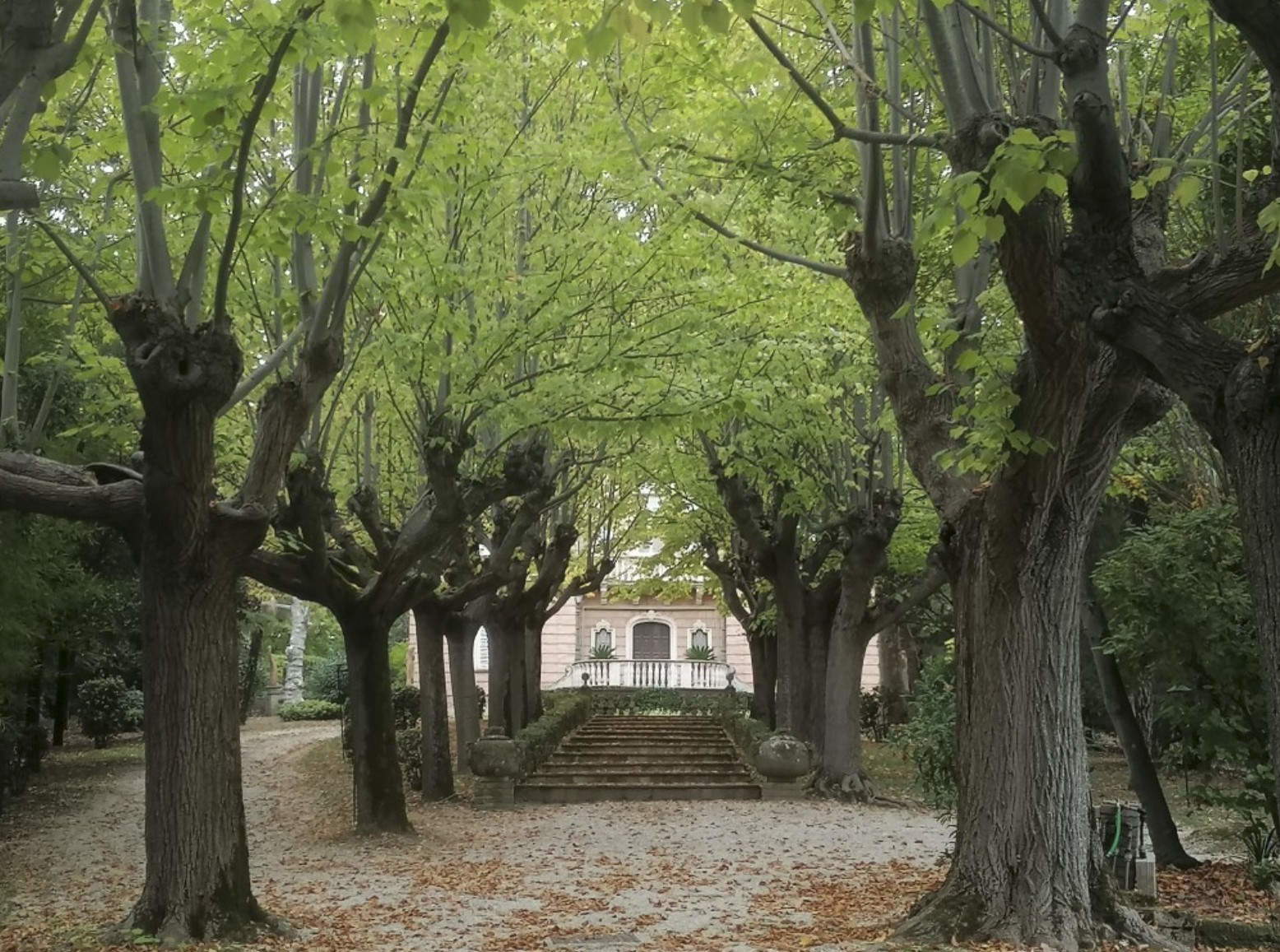
Located on Via Monte Vettore, Villa Lina is a stately residence built between the late 19th and early 20th centuries by the Ranier Luciani family. Considered a fine example of early Art Nouveau still rooted in classical taste, it features a rectangular floor plan with four slender corner towers, exposed brickwork, and tall Renaissance-inspired stone bases, and reflects the style of architect Giovanni Battista Carducci. The interiors preserve decorations and paintings created entirely by the artist Egidio Coppola. The structure rests on solid solid-brick walls, with ceilings largely made of wood and a roof renovated in the 20th century, where modern materials blend with traditional wooden elements. Privately owned, the villa is currently undergoing restoration and is not open to the public.
Porto San Giorgio, Villa Clarice
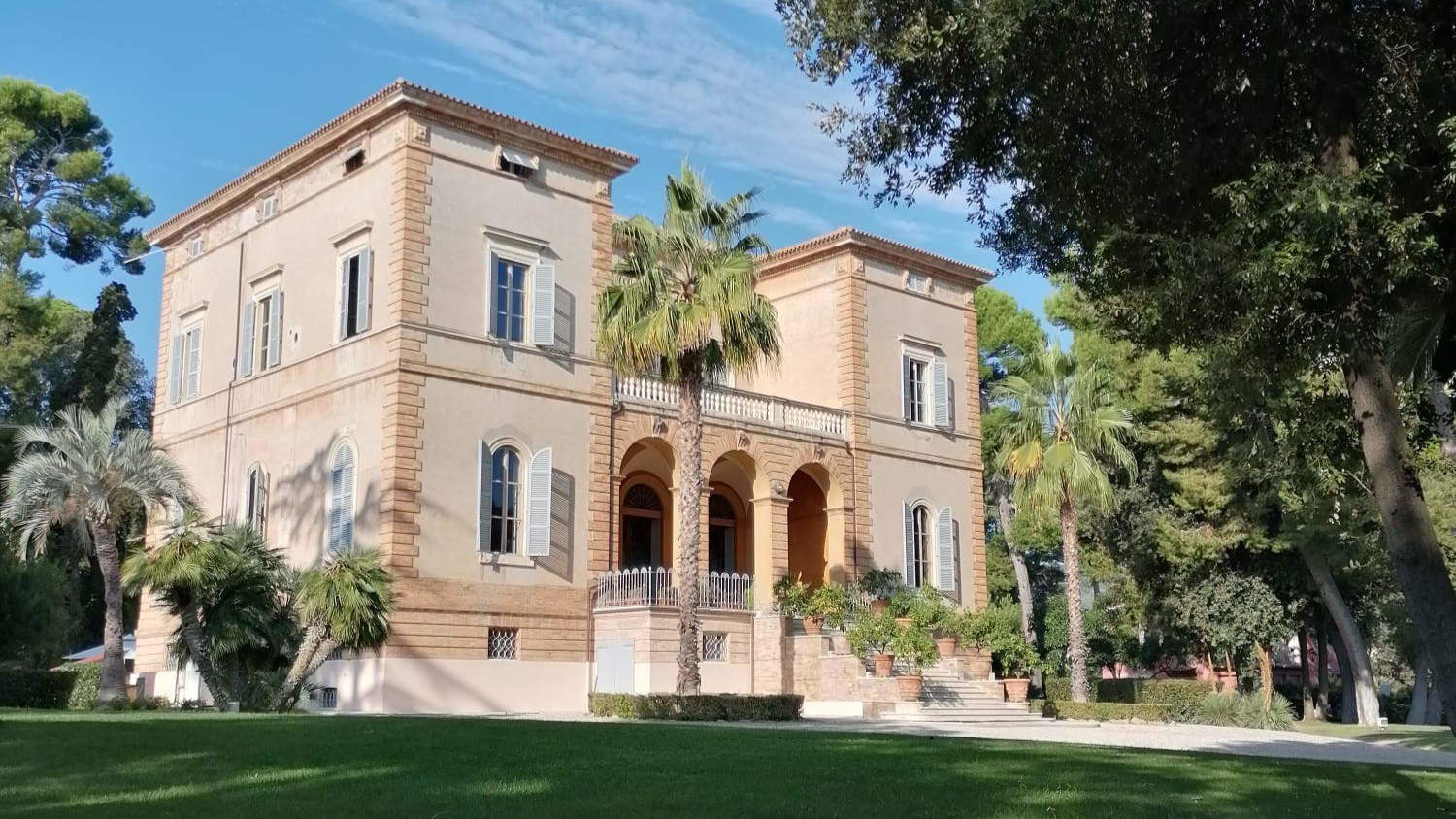
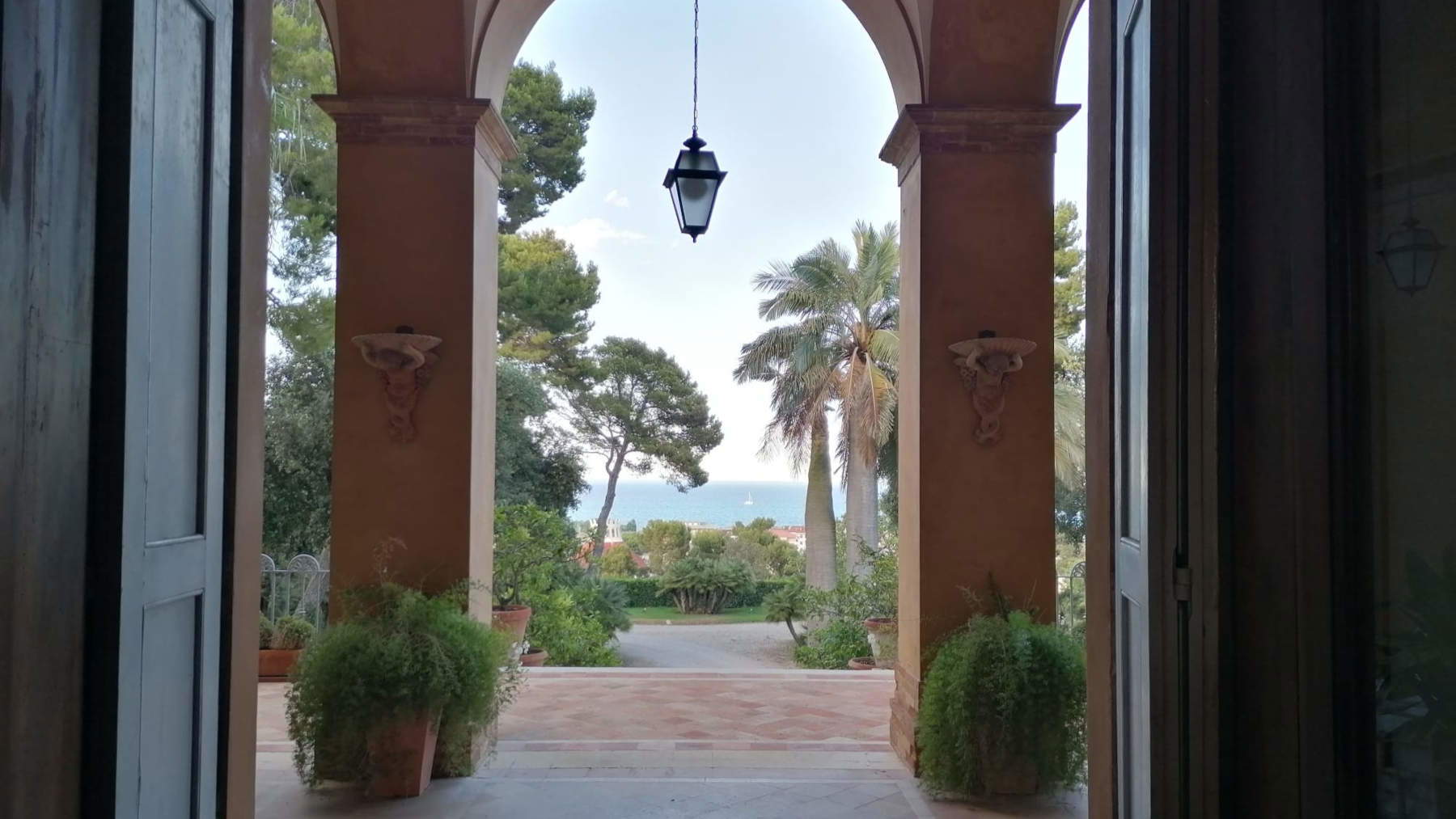
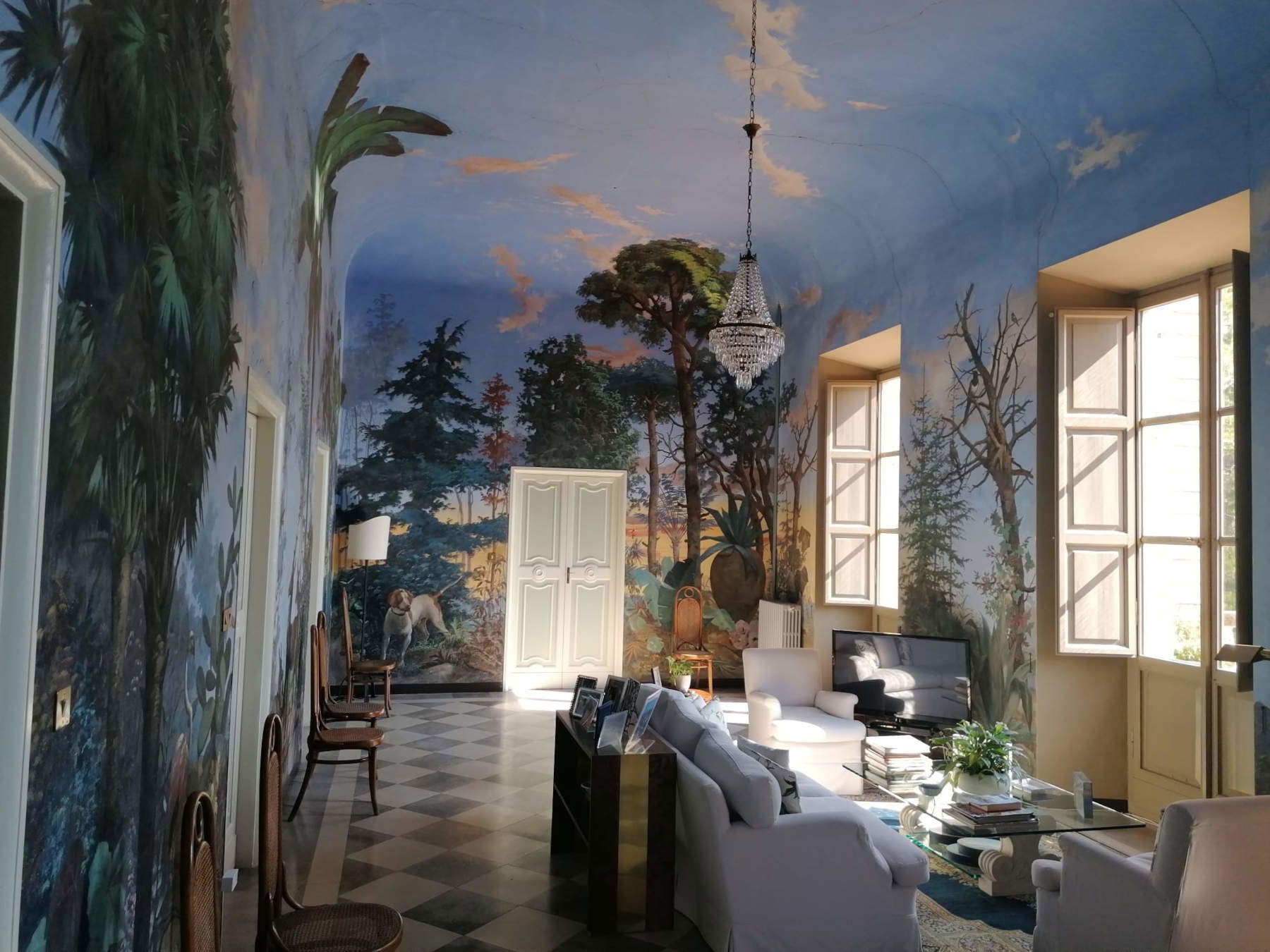
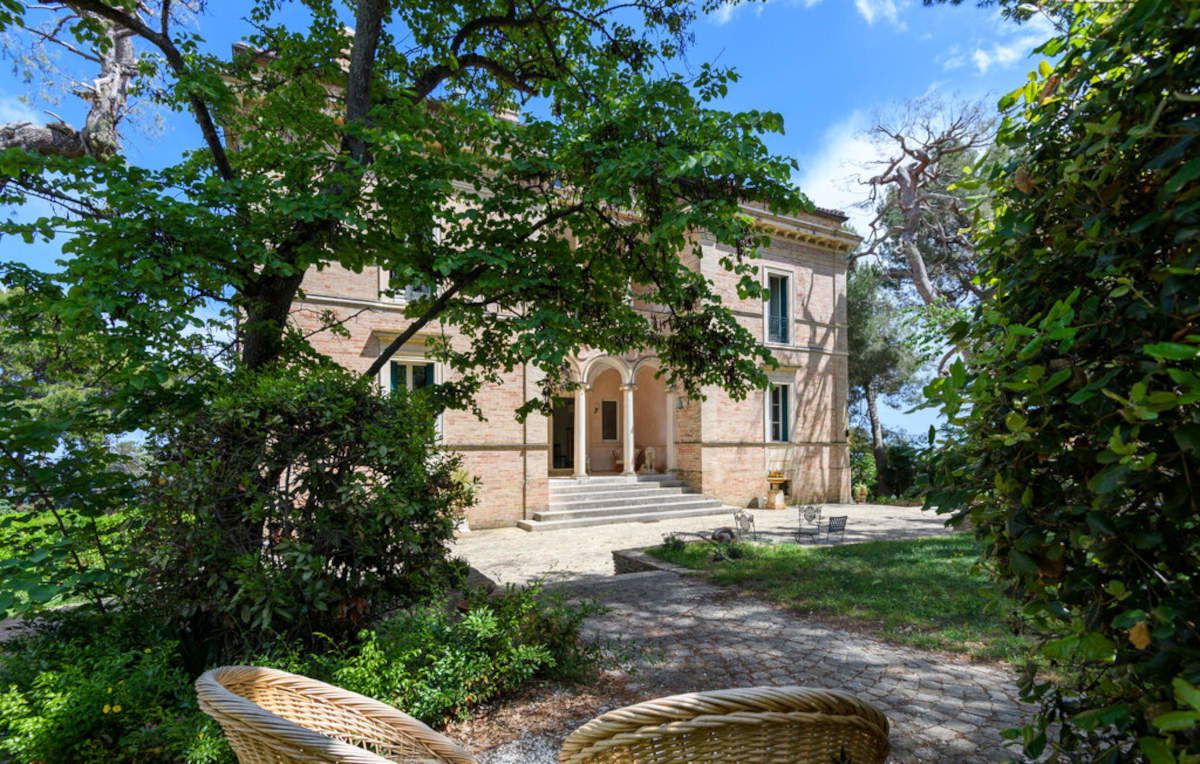
Perched on a panoramic hill north of Porto San Giorgio, Villa Clarice stands in a park spanning approximately 30,000 square meters, featuring monumental trees and Mediterranean flora. It was built in the second half of the 19th century by Clarice Bonafede, with a layout reminiscent of 16th-century villas such as the Farnesina and the Galleria Borghese: a set-back central body, projecting side wings, and a spectacular staircase leading to the entrance loggia. The building, with a rectangular floor plan, spans five levels, including a basement with pillars, arches, and brick vaults; the main floor houses salons, a study, and private rooms, while the second floor features a gallery decorated with floral and faunal motifs. The interiors were almost entirely frescoed by Egidio Coppola between 1885 and 1893, featuring trompe-l’œil perspective views; only one room, in the Roman School style, features Pompeian grotesque decorations. The complex is rounded out by a greenhouse, the gardener’s house, and service buildings.
Porto San Giorgio, Villa Santa Maria al Poggio
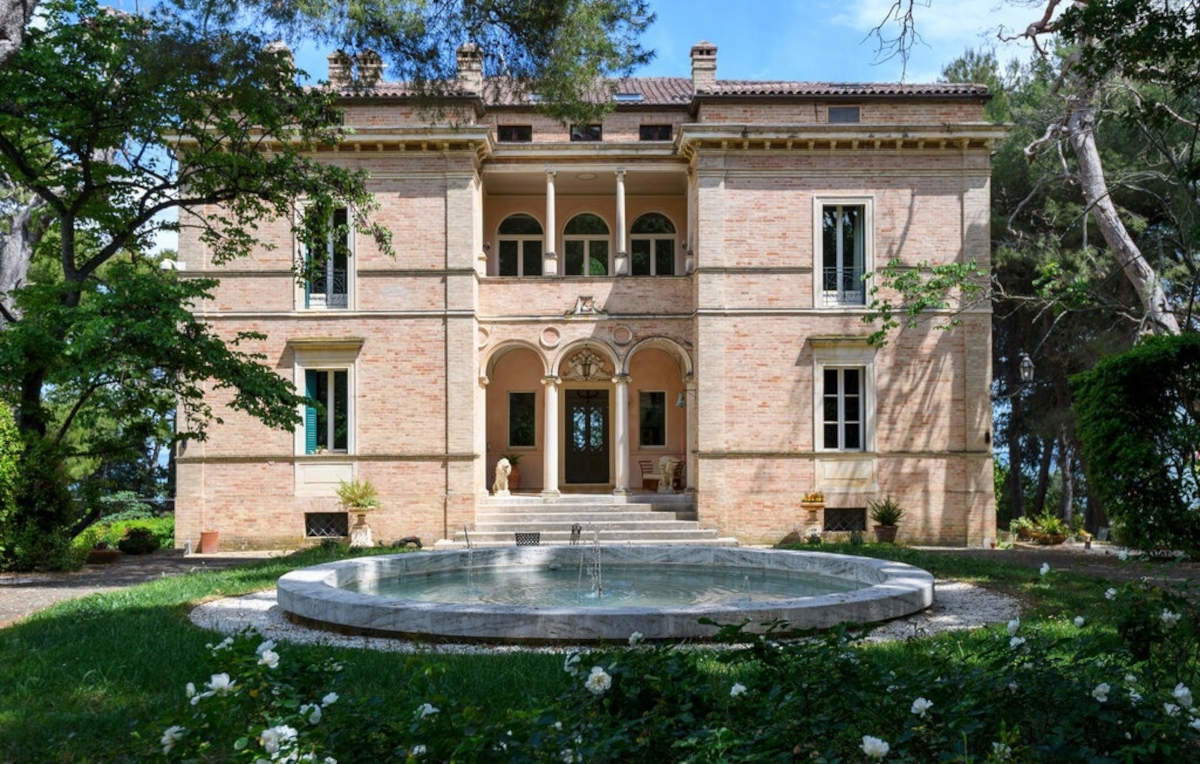
Located on the western hills of Porto San Giorgio, Villa Santa Maria al Poggio is nestled within a park spanning approximately two hectares. The building, constructed between 1860 and 1870 during the height of the Art Nouveau period with classical influences, shares characteristics with other historic residences in the area and is likely the work of the renowned Eugeni family of master builders. It spans three floors plus an attic and features large reception halls, dining rooms, a library, guest rooms, and a small private chapel. What makes it particularly fascinating are the underground tunnels which, according to local sources, once connected it to Fermo and other noble residences in the surrounding area—though they are, unfortunately, now blocked off. The villa remains a precious testament to the elegant 19th-century stately homes of Porto San Giorgio.
Porto Sant’Elpidio, Villa Baruchello Park
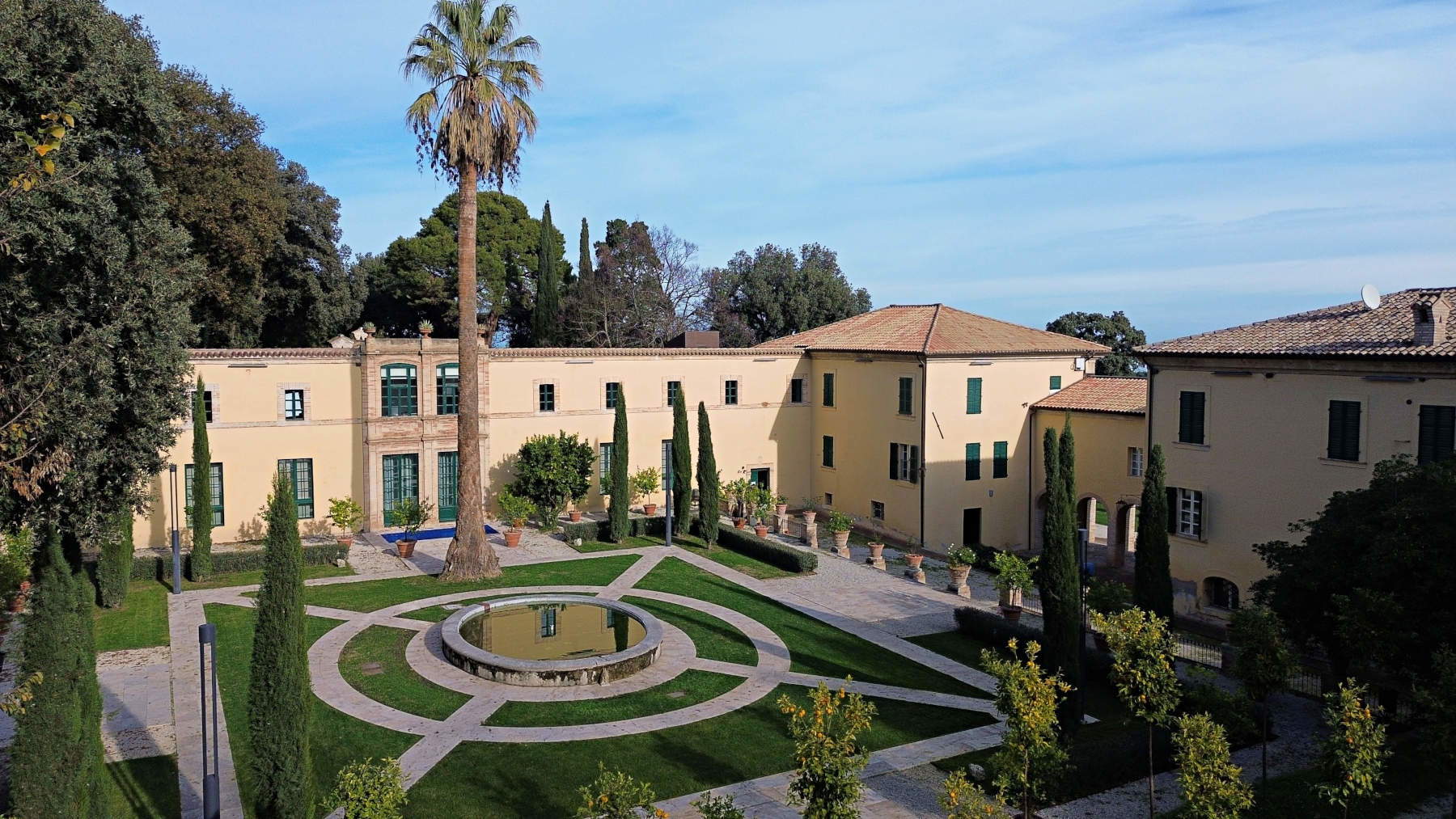
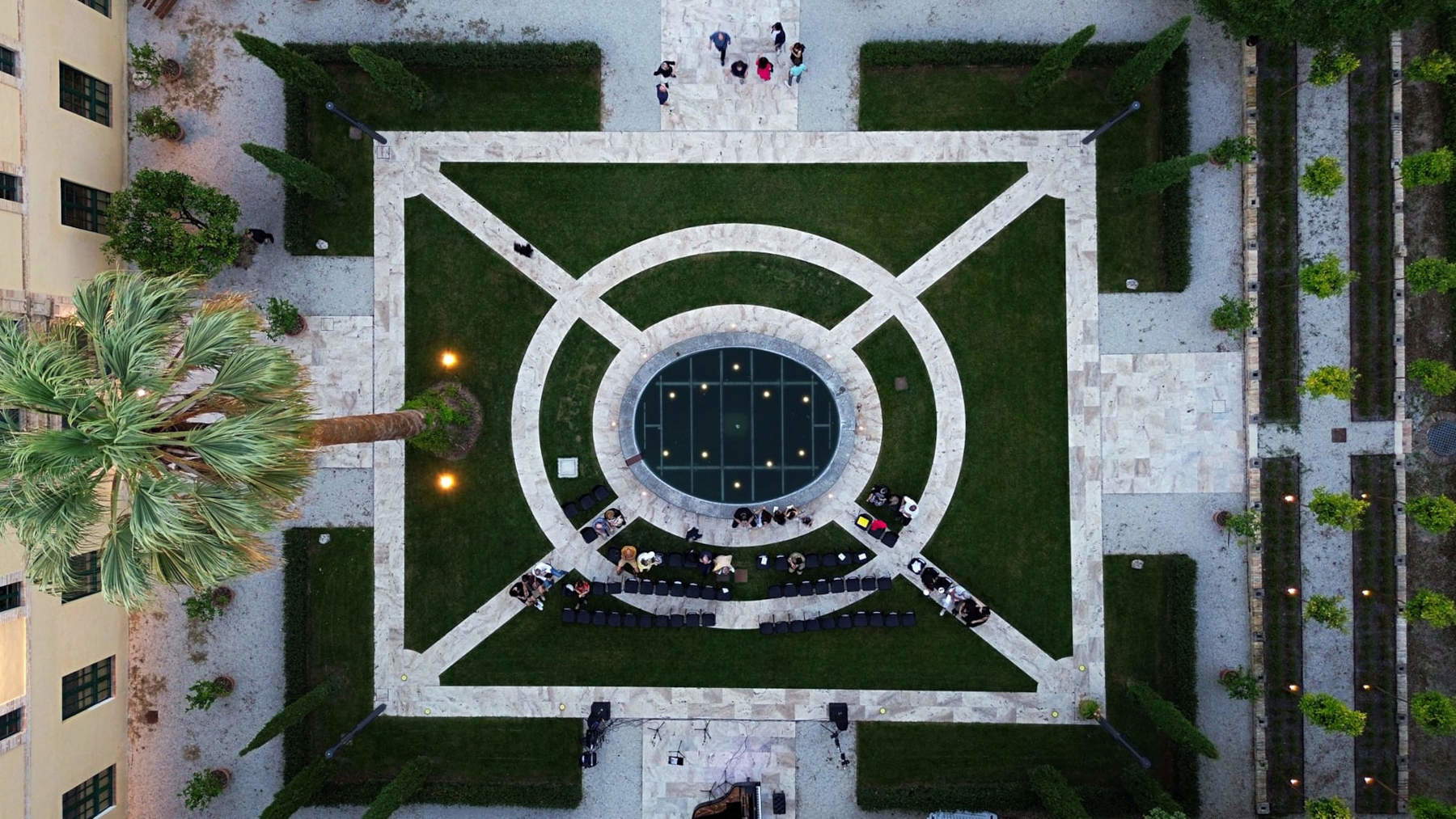
Villa Baruchello owes its name to its last owners, but it was originally called Villa Fonteserpe (as inscribed on the columns at the entrance), due to the abundant underground water: one of its springs served as the coast’s main water supply before the Tennacola aqueduct was built. Built in the late 18th century on a plateau inhabited since the Iron Age, it served primarily as a vacation home for various noble families, including the Fabretti family, who hunted in the park and had the small watchtower built—known to the children as Rapunzel’s tower. In 1933, it was purchased by Antonietta Coppini, wife of Mario Baruchello; their daughter Annalena donated it to the municipality—which has owned it since 1980—rather than selling it to private individuals. The garden, protected as a botanical garden, is one of Italy’s most beautiful parks.
Porto Sant’Elpidio, Villa Il Castellano
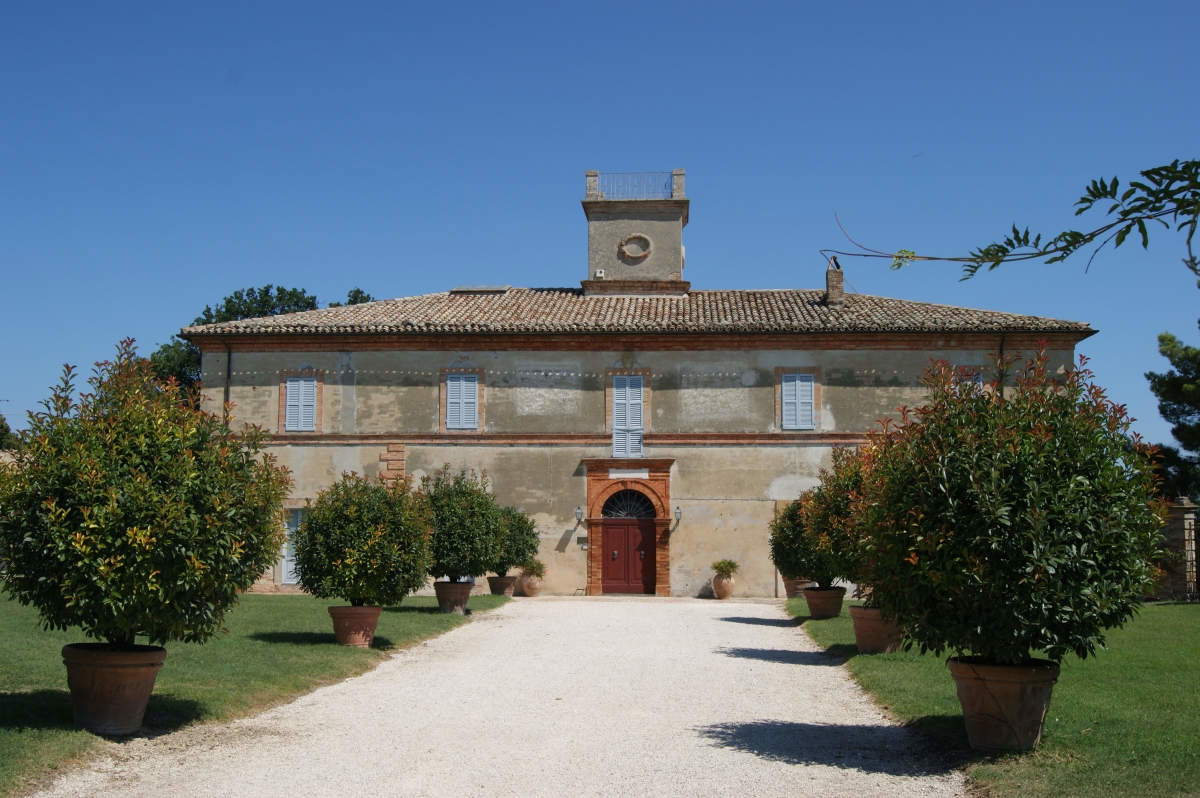
Located between the Chienti and Tenna rivers, Villa Il Castellano is a rare 17th-century country residence: a large square building with a panoramic turret on the roof, a style that is extremely rare in the Marche region. It stands on the ruins of a Roman outpost and a medieval castle belonging to the Diocese of Fermo and was expanded in 1625 by the Fermo nobleman Annibale Guerrieri, who built the central wing with a watchtower. In the 18th century, the Maggiori family added a private chapel, family tombs, and two side wings, transforming it into a noble residence at the heart of a large farm. The estate includes the main house, guest quarters and servants’ quarters, storage areas, and garages covering approximately 3,500 square meters, as well as a raised garden with a greenhouse for lemon trees. Now owned by the Scoccini family, it once hosted Vittorio Emanuele I of Savoy, Joachim Murat, and Gerolamo Bonaparte. Alessandro Maggiori (1764–1835), one of the first Italian art historians, lived there; his collection was later dispersed.
Servigliano, Santa Maria del Piano Complex
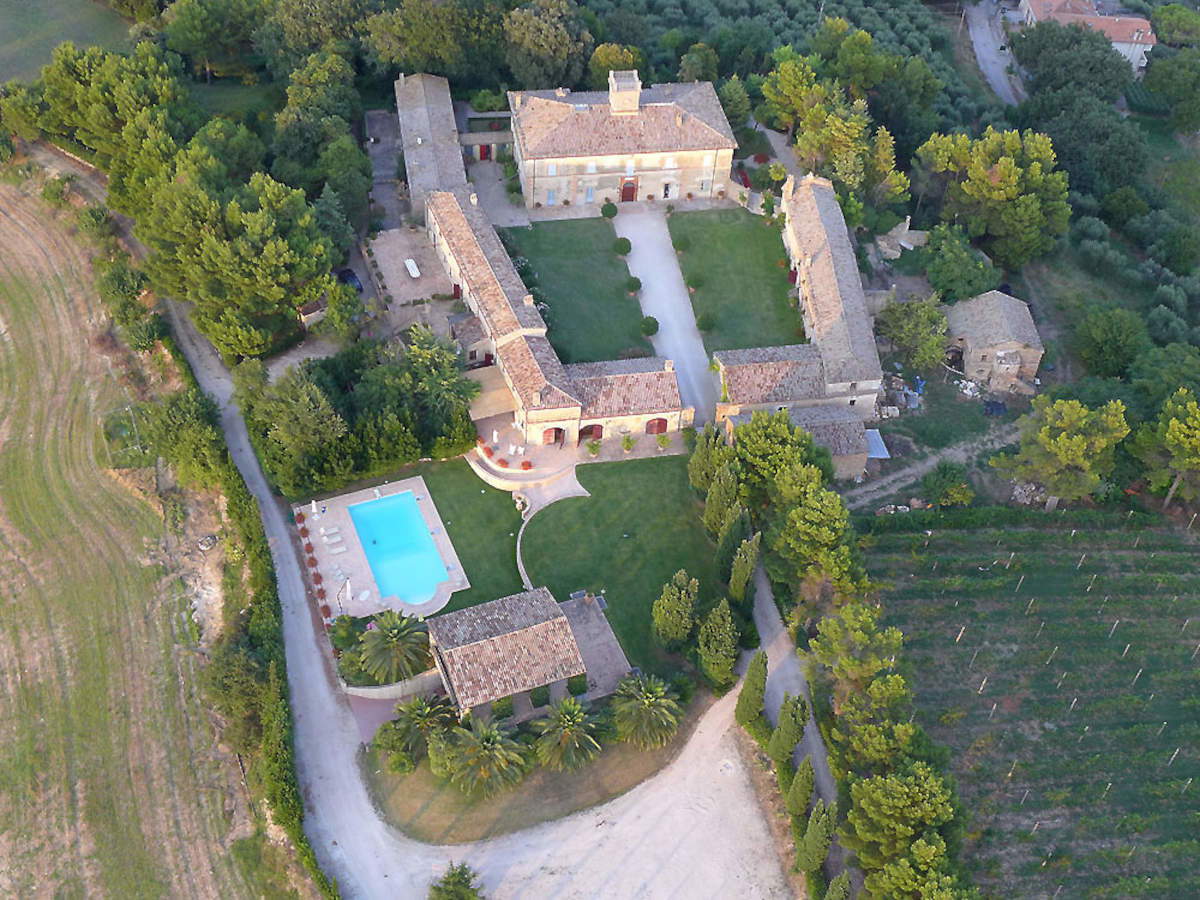
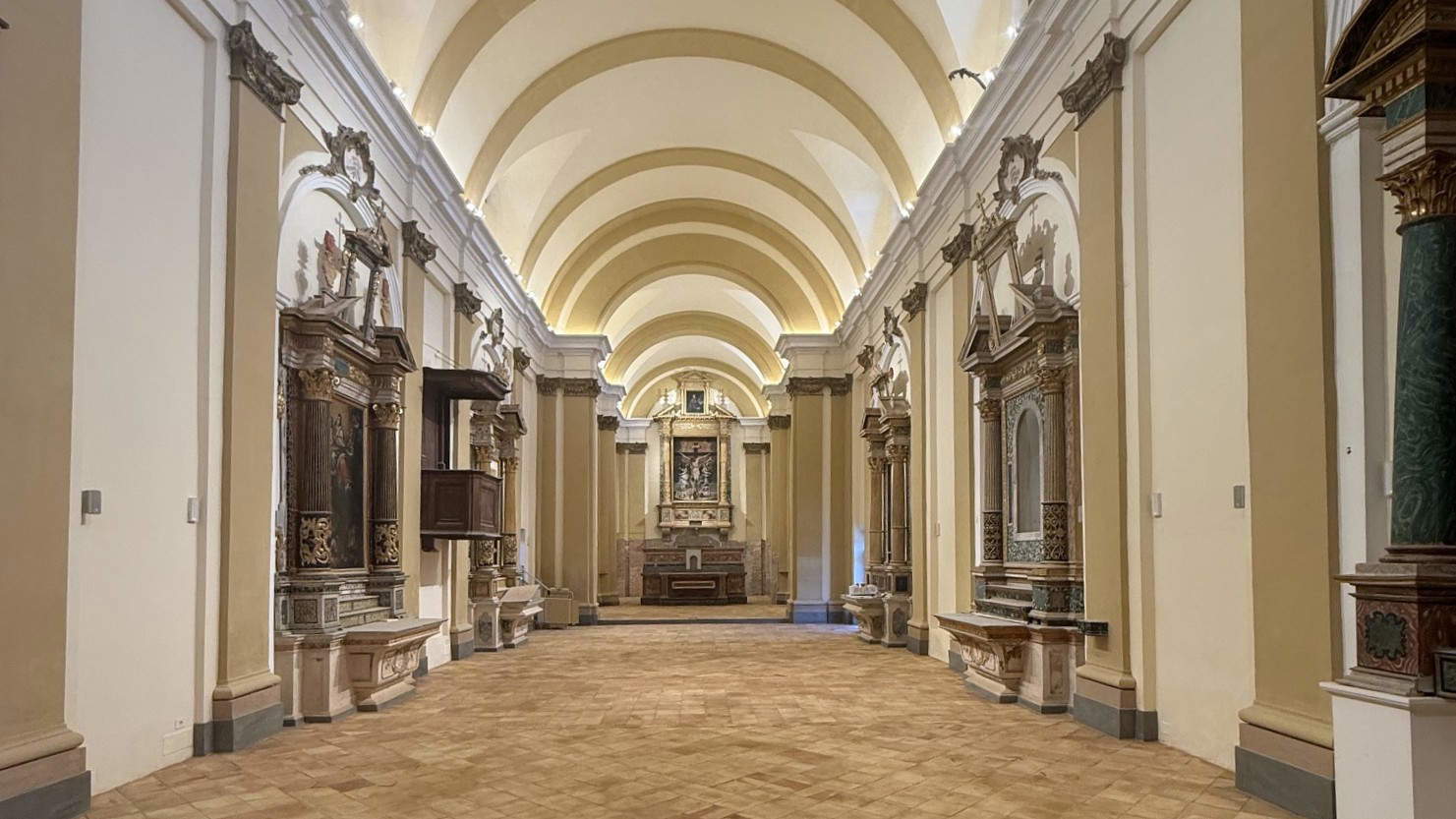
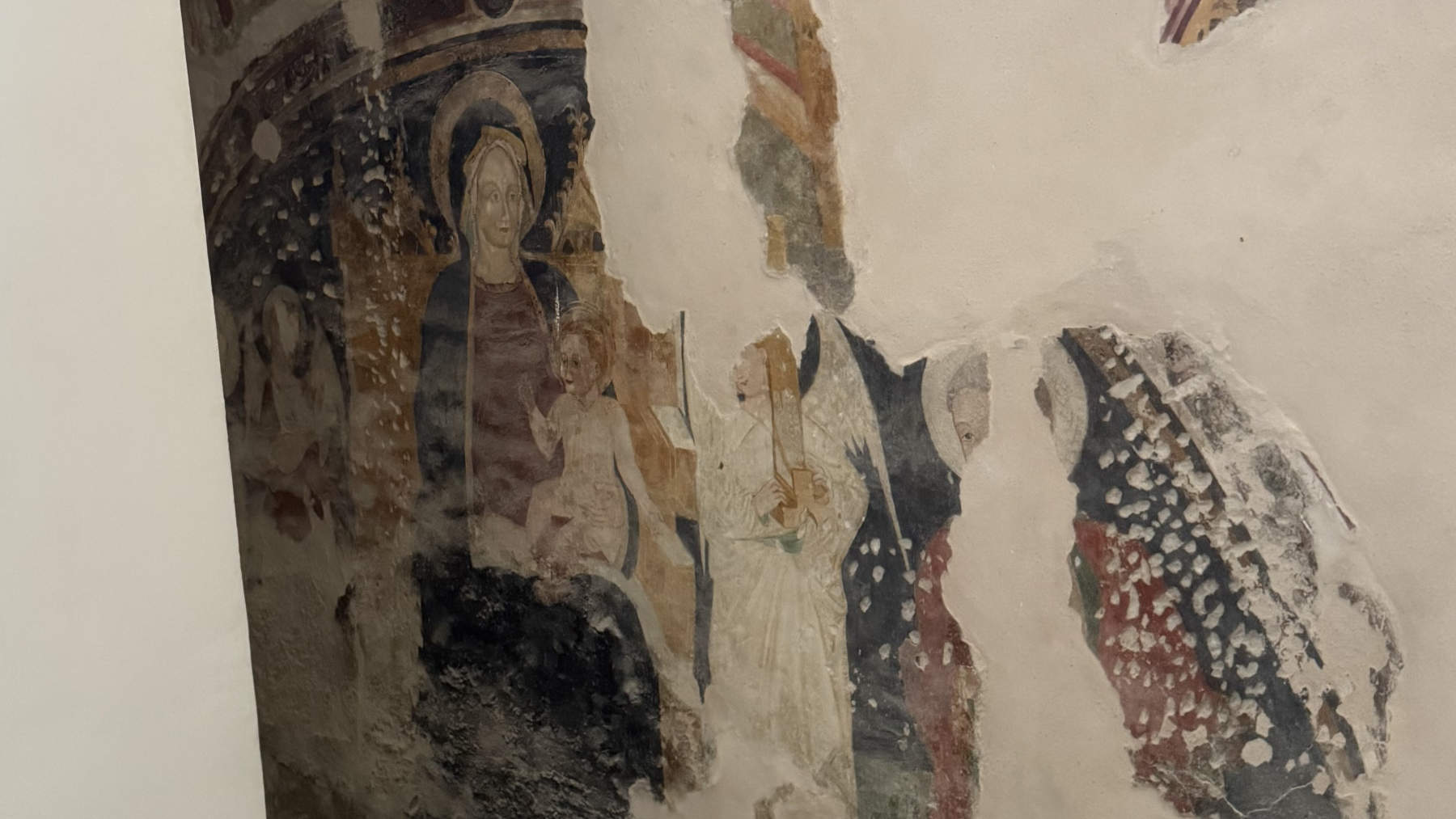
Along the Faleriense Road between Fermo and Amandola, near the Tenna River, stands the Santa Maria del Piano complex, consisting of a church, a convent with a cloister, a bell tower, and a former hospital. Built on Roman ruins and already a place of worship since the early Middle Ages, it took on its current form between the 16th and 19th centuries thanks to the work of the Observant Friars Minor, who lived there until its expropriation in 1865. It played an important role in the founding and development of Servigliano and preserves 18th-century structures, 15th-century frescoes attributed to Maestro Cola di Santa Vittoria, and valuable furnishings. In the 18th century, thanks to agricultural prosperity and the reconstruction of Castel Clementino, the church was expanded to include the chapel, the church façade, and the bell tower, which was completed in 1787.
Servigliano, Parco della Pace
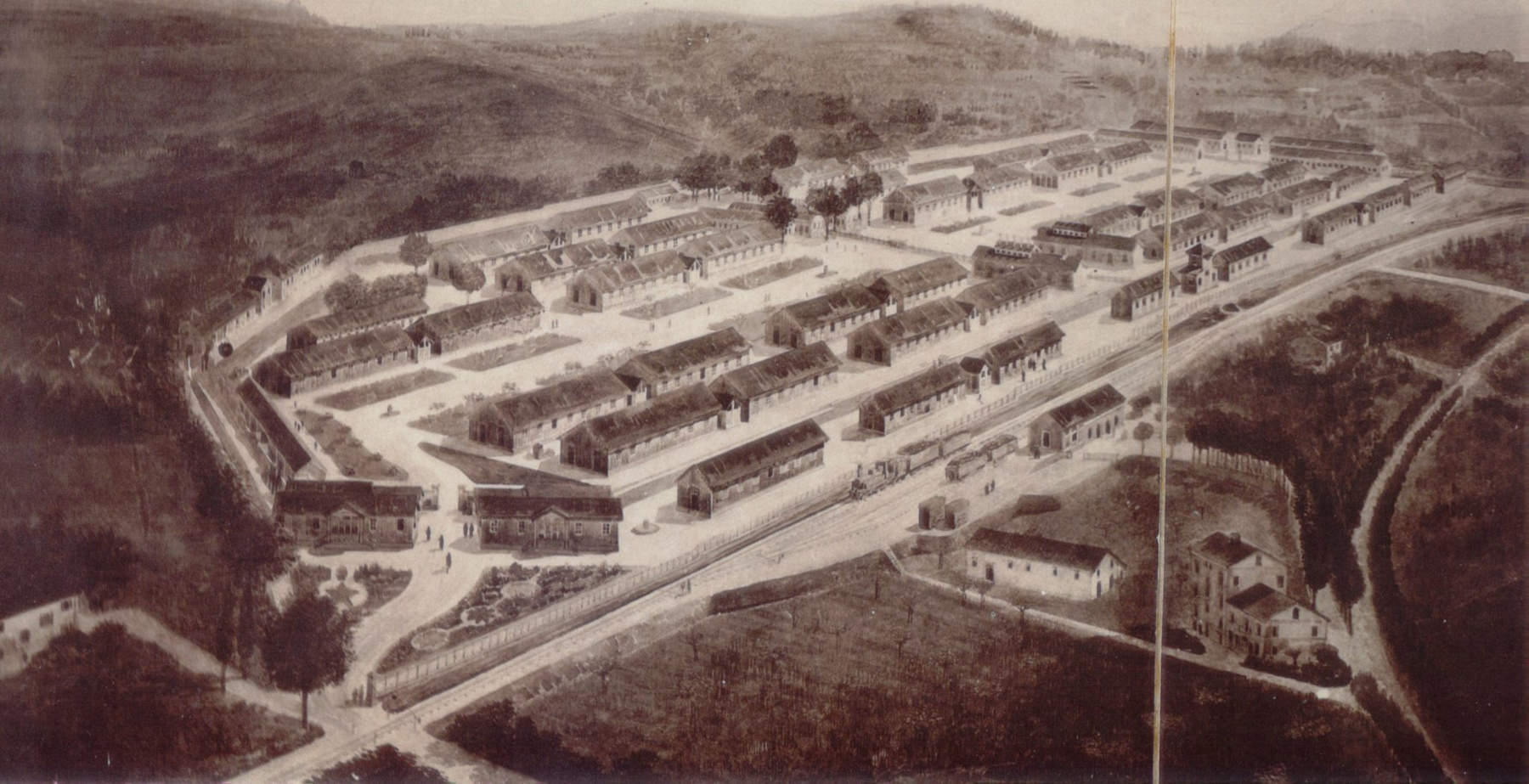
The Parco della Pace occupies the site of the former prison camp established in 1915 next to the train station to hold up to 4,000 Austro-Hungarian soldiers, featuring 32 barracks and a high wall topped with barbed wire. Used by the Fascists as a weapons depot and then again as a prisoner-of-war camp, after the armistice of September 8, 1943, it was the scene of one of only two mass escapes from an Italian camp (the other at Fontanellato) and became an internment camp for civilians, many of whom were Jews destined for German concentration camps. Liberated in June 1944, it housed Polish soldiers, refugees, and families returning from the former colonies—many from Istria and Dalmatia—until its closure in 1955. Abandoned until the 1970s, today it is a green space with sports facilities, where the original fence with the 1943 breach, some barracks, and the guard towers still stand: a vital site of historical memory.
 |
| Marche: Eight Historic Sites to Discover in the Province of Fermo—Villas, Parks, and Monumental Complexes |
Warning: the translation into English of the original Italian article was created using automatic tools. We undertake to review all articles, but we do not guarantee the total absence of inaccuracies in the translation due to the program. You can find the original by clicking on the ITA button. If you find any mistake,please contact us.