



by Redazione 07/09/2026


Categories: Ancient art / Disclaimer
A rare calligram by Ignazio Muligino—a calligrapher active in France and Italy in the late 17th century—has been rediscovered; it makes use of the microscope to reveal a text that is nearly illegible to the naked eye. It depicts Pope Innocent XI and will be on display at the Museo Galileo in Florence.


A recently rediscovered, precious calligram will enrich the “Mirabilia Graphica” exhibition. “The Micrographic Calligrams of Ignazio Muligino,” on view through October 18, 2026, at the Museo Galileo in Florence, curated by Filippo Camerota, is dedicated to a calligram by Francesco Ignazio Muligino, a calligrapher active in France and Italy in the late 17th century, who utilized the properties of the microscope to make a text—almost invisible and illegible to the naked eye— readable.

Starting Wednesday, September 9, visitors to the exhibition will be able to admire a work recently identified and attributed to Ignazio Muligino’s body of work. From a private collection, it depicts Pope Innocent XI, born Benedetto Odescalchi, and offers an extraordinary example of the technique developed by the artist in the 17th century. The calligram, created in 1699, combines drawing skills, micro-writing, and optical technology, presenting a sort of visual biography through the portrait of the pontiff. At the heart of the narrative is also a historical event destined to shape European history: the defeat of the Ottoman forces at the gates of Vienna in 1683.


The work is executed in pencil, ink, and gold dust on parchment and is housed in an elegant aedicule frame made of wood and semi-precious stones. What makes the work particularly remarkable is the presence of writing so minute that it is invisible to the naked eye. The words, which can be read with the aid of a microscope, form the portrait while simultaneously recounting the exploits of Benedetto Odescalchi, highlighting his role in the Christian victory over the Ottoman Empire. The calligram is signed and dated November 13, 1699, a detail that contributes to the reconstruction of the body of work by an author who has remained completely unknown until now.
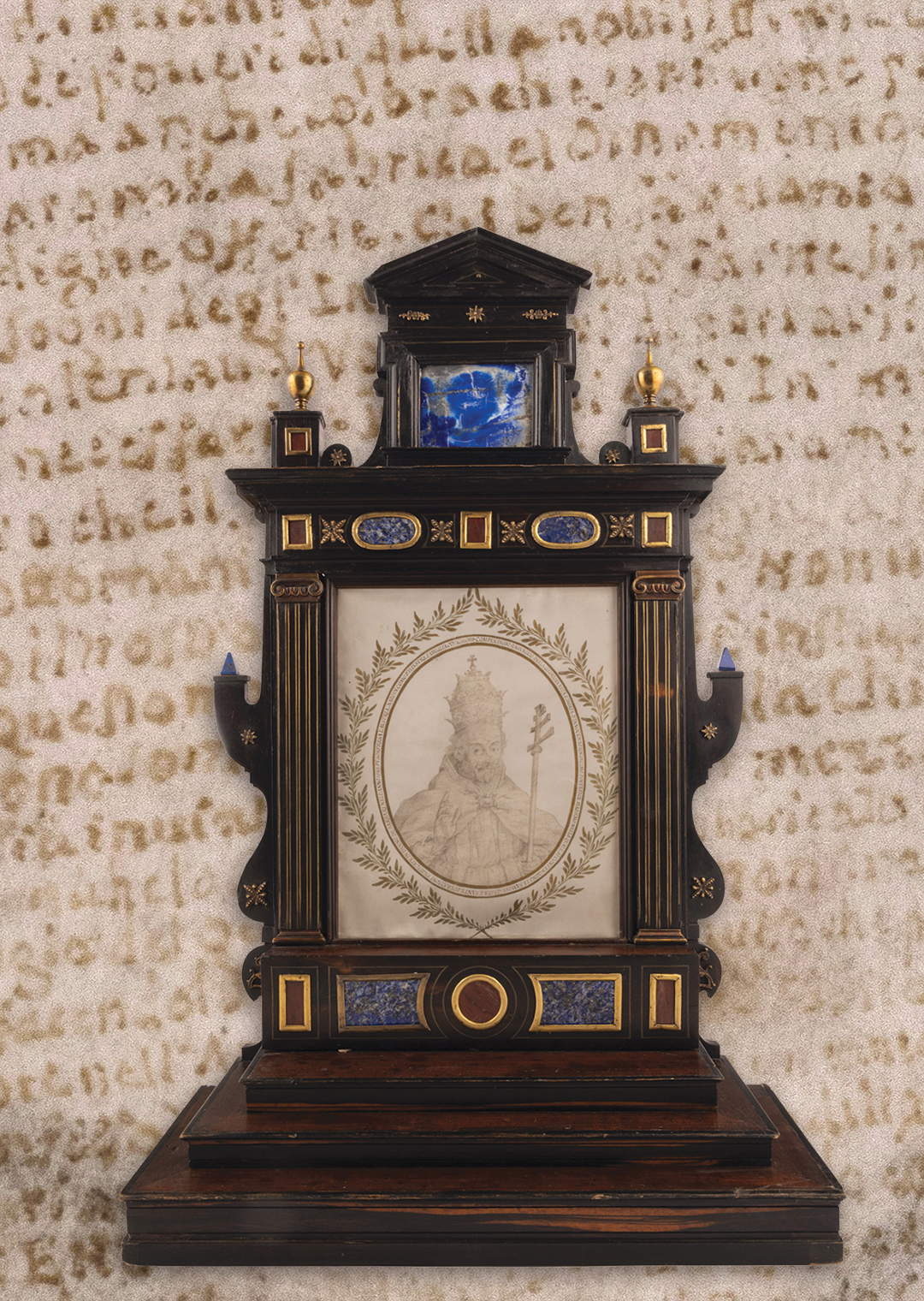
The depiction of the pontiff also presents a unique feature. Muligino does not, in fact, resort to the customary image of Innocent XI wearing a mozzetta and camauro, but instead portrays him with the triple-tiered tiara and the papal mantle, adopting an unusual iconographic approach.
The identification of this calligram provides further insight into the figure of Ignazio Muligino and helps reconstruct his artistic career. The artist, who still lacks a known biography, is distinguished by a technique of exceptional complexity, which transforms writing into a tool for constructing images.
The inclusion of this work in the *Mirabilia Graphica* exhibition thus expands the narrative of the show and allows visitors to closely examine one of the most striking examples of this unique form of graphic art. Organized with the support of the Fondazione CR Firenze, the exhibition explores the unique interplay between the visual arts, calligraphic virtuosity, and scientific innovation in Baroque Europe. The most original aspect of Muligino’s work is his use of the microscope as a tool in the service of artistic creation. His works, in fact, transform micro-writing into a compositional element capable of generating images recognizable only through magnified observation. According to current knowledge, the calligrams created by Muligino represent the only known examples of this specific artistic application of the microscope.
His work thus fits into the broader culture of wonder that characterized the seventeenth century, when science, technology, art, and curiosity converged in the experimentation with new modes of observation and representation. It is no coincidence that the exhibition’s title evokes *Mirabilia Graphica*, a term used in the 17th century by the Jesuit Gaspard Schott to describe those ingenious forms of writing and visual representation that combined technical skill and wonder.
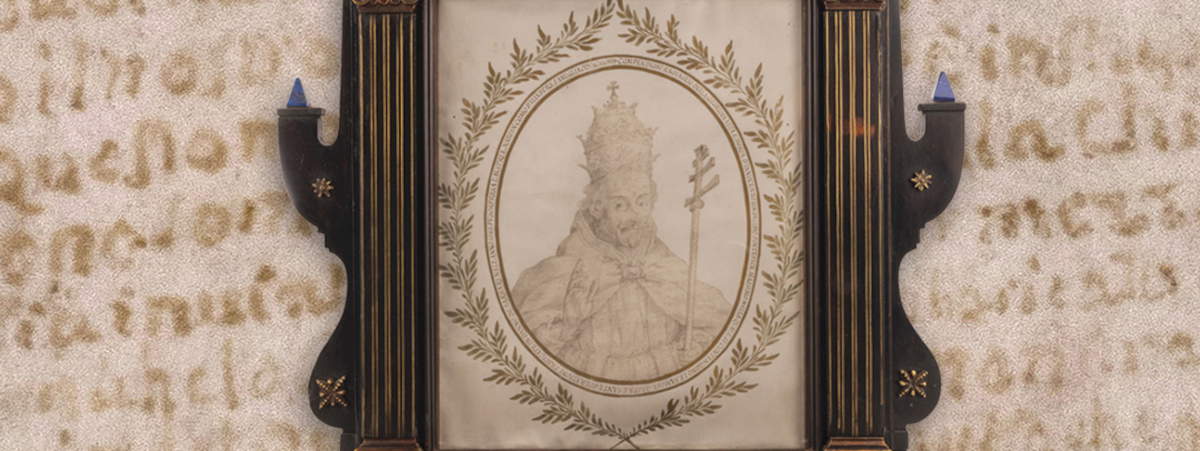 |
| A calligram by Ignazio Muligino has been rediscovered. It will be on display at the Museo Galileo in Florence |
Warning: the translation into English of the original Italian article was created using automatic tools. We undertake to review all articles, but we do not guarantee the total absence of inaccuracies in the translation due to the program. You can find the original by clicking on the ITA button. If you find any mistake,please contact us.