



by Redazione 21/10/2026


Categories: Ancient art / Disclaimer
In Savona, the San Giacomo complex has been returned to the city after a long period of neglect, thanks to a three-year restoration project. The restoration removed incongruous structures dating back to the building’s military use (the church had, in fact, been converted into a barracks) and restored the 16th-century frescoes in the choir and presbytery, attributed to Ottavio Semino.


For years it served as a barracks, then it was abandoned, and now, in Savona, a three-year restoration project is returning one of Liguria’s most important Renaissance churches to the public. This is the Church of San Giacomo, a Franciscan complex founded in the 15th century and linked to the history of the city and the popes of the Della Rovere family: It underwent a three-year restoration project, from 2023 to 2026, funded through the National Recovery and Resilience Plan (PNRR) and a grant from the City of Savona. The completion of the work was celebrated on October 9, 2026, and, as part of the FAI Fall Open House, on Saturday, October 10, and Sunday, October 11, the church and the complex’s spaces were opened for guided tours, and for the first time in years, the public was given the opportunity to rediscover a building that had long been used for purposes unrelated to its original intent.

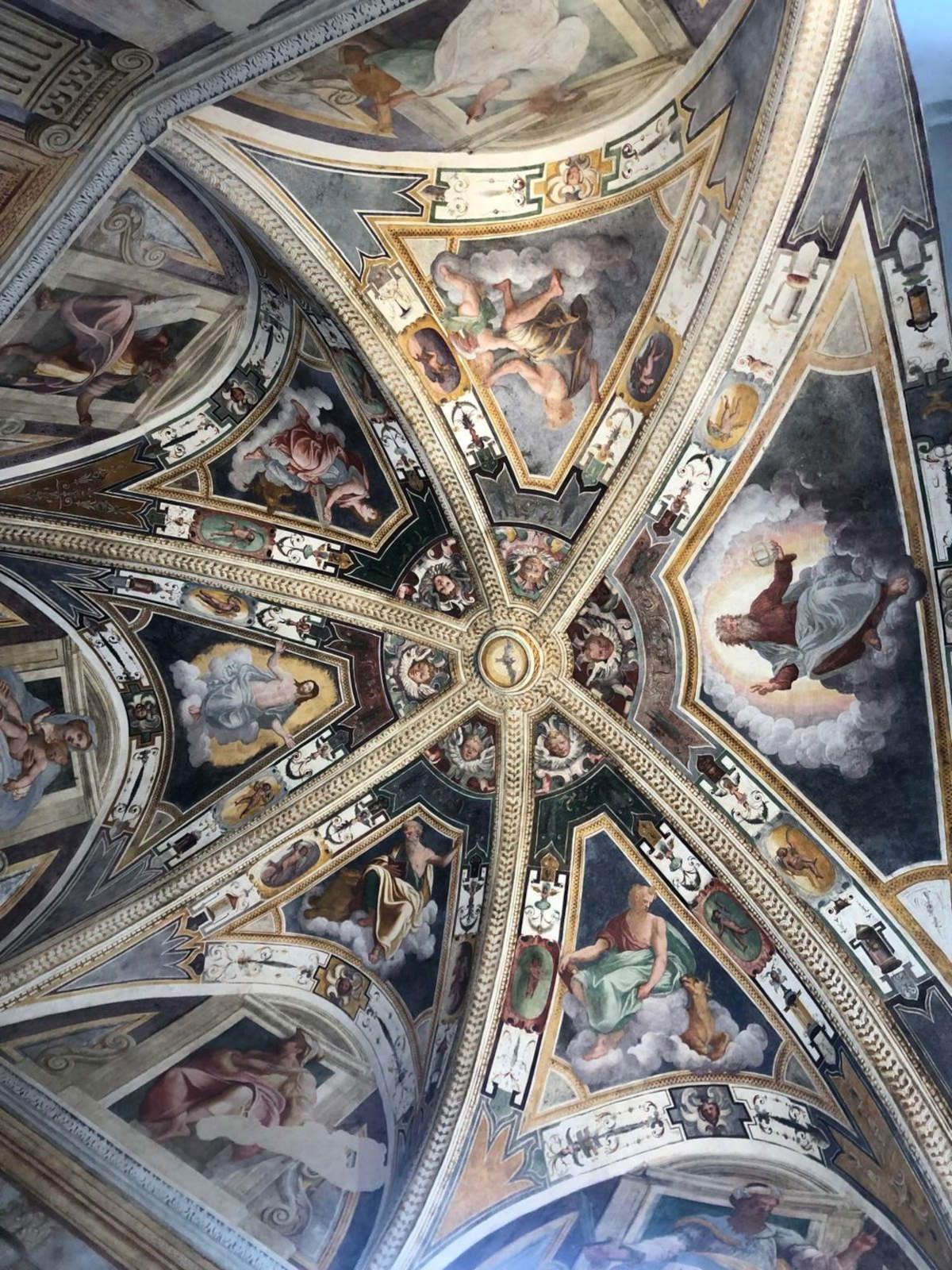
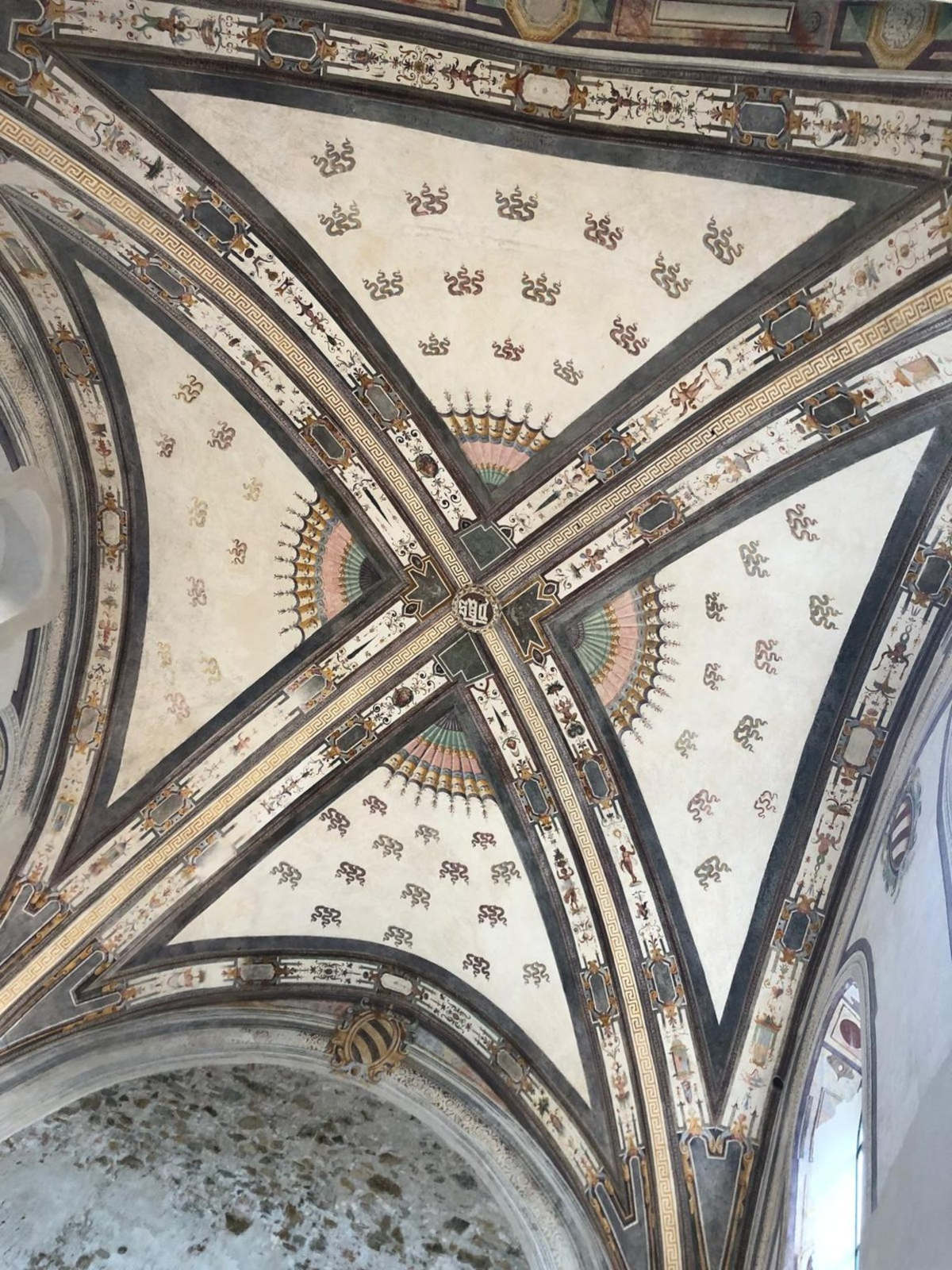
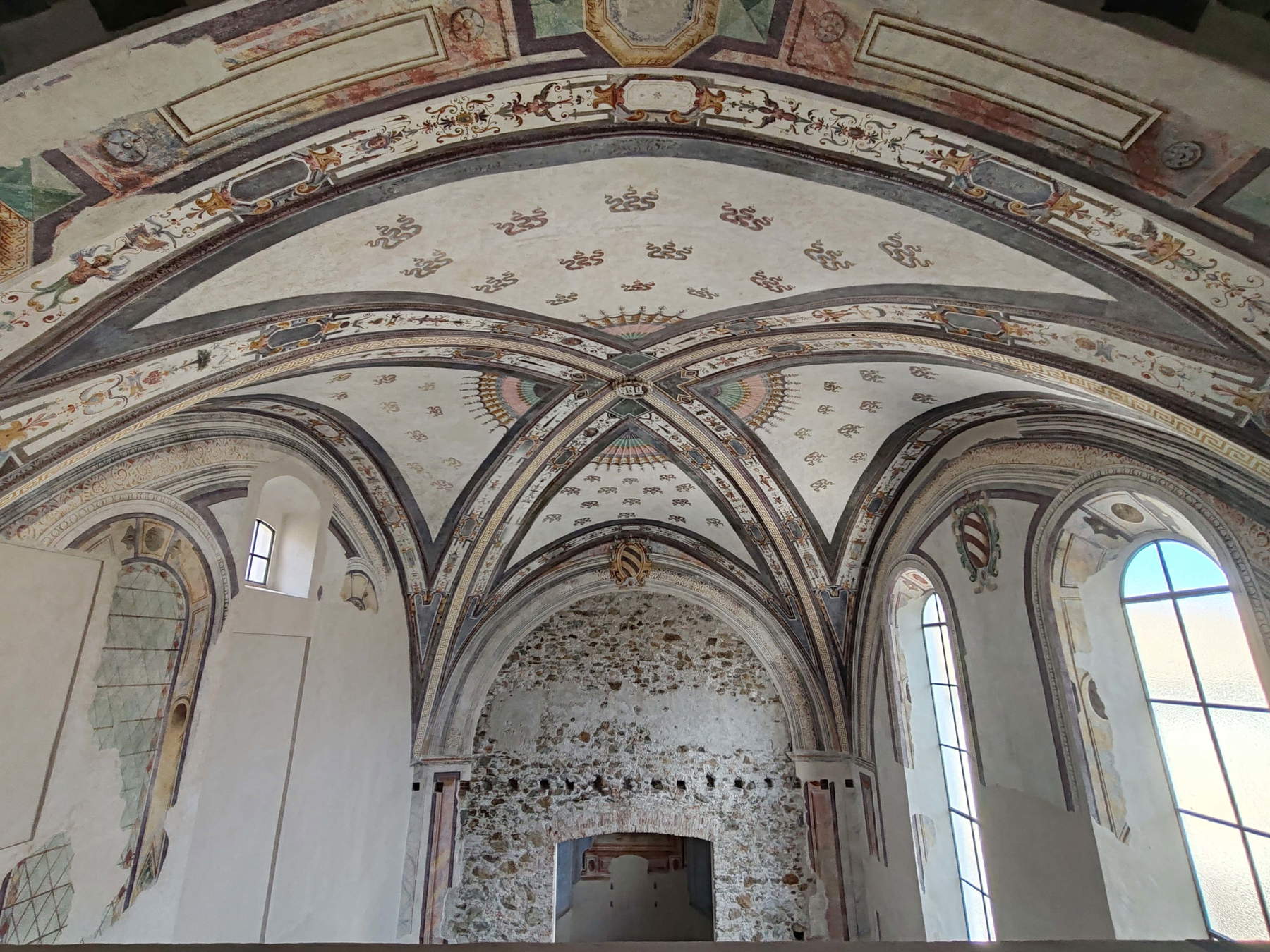
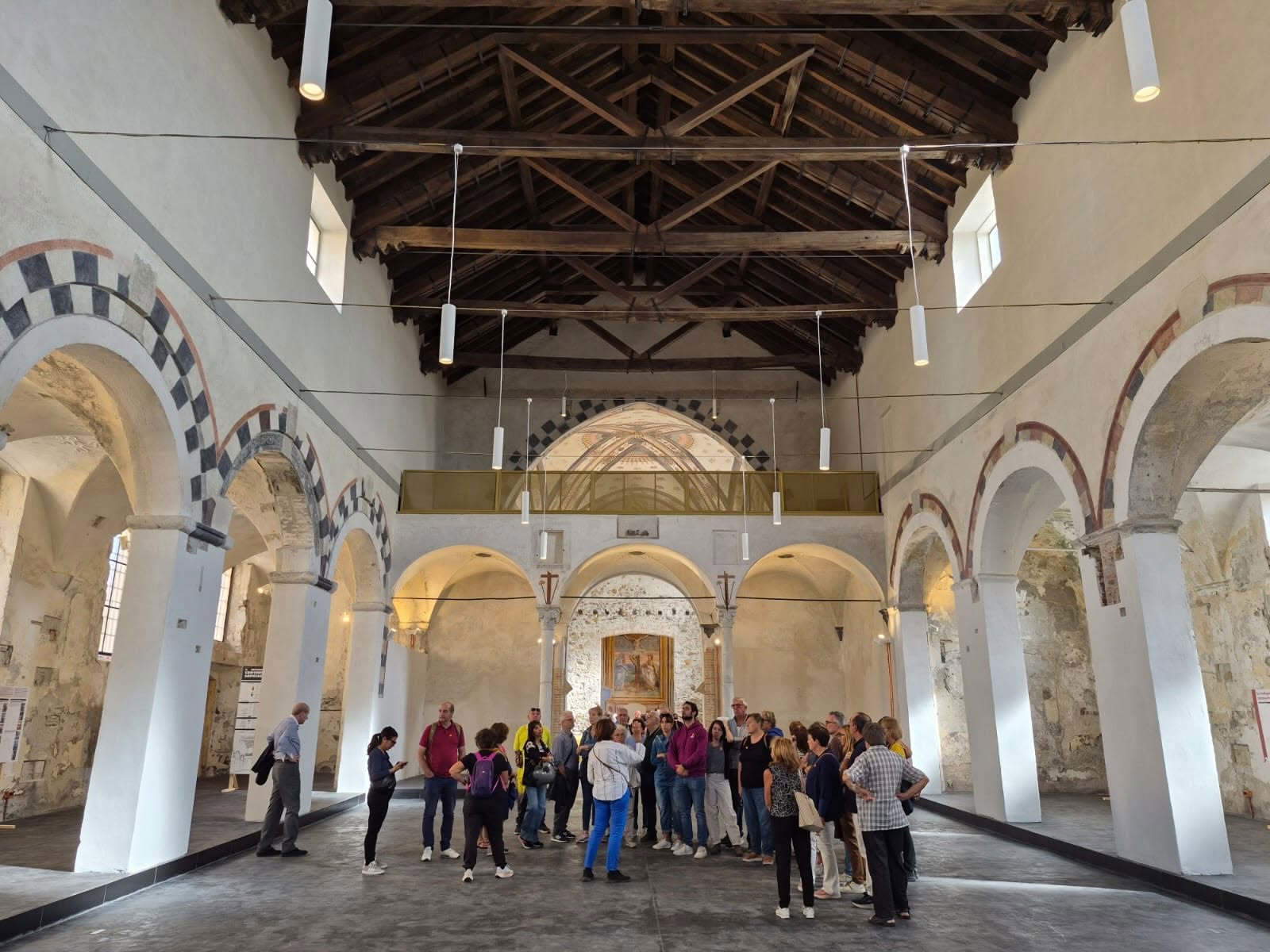
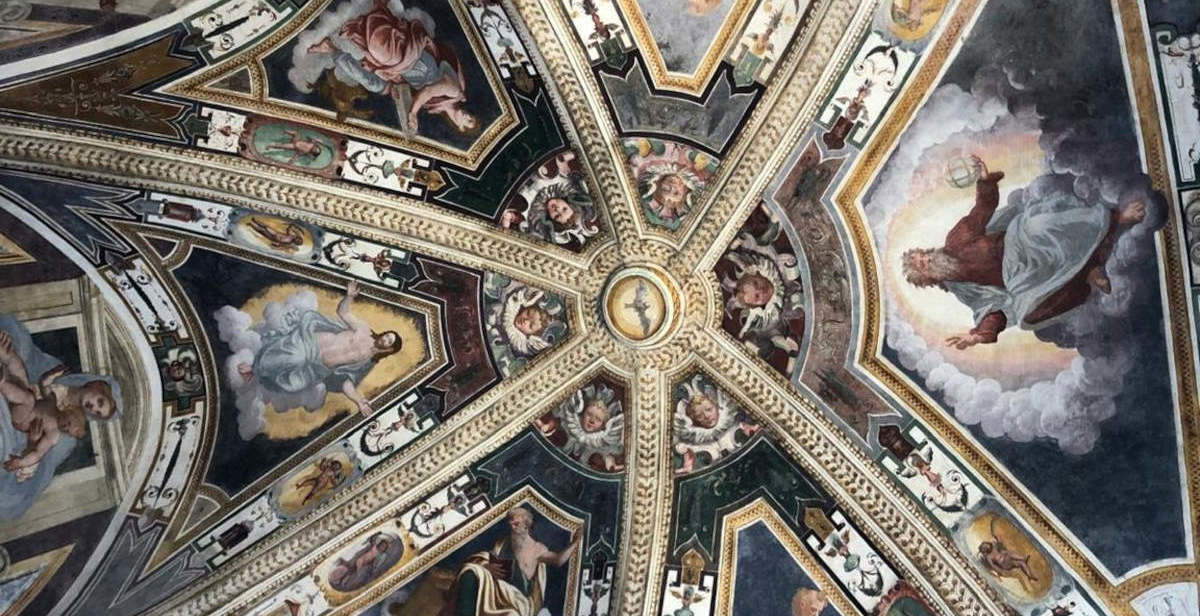
The project involved the former church, the chapel, and the cloisters, including the restoration of decorative elements and structural and mechanical upgrades. Inside the church, the incongruous structures added during the period when the building was used as a barracks were removed, a process that restored the original spatial layout of the 15th-century nave. Particular attention was paid to the frescoes in the choir and the presbytery, painted by Ottavio Semino (Genoa, c. 1530–1604) in the 16th century: they are among the most significant works by the Genoese painter.


The restoration project also provided an opportunity for in-depth historical and scientific study of the monument. The work was overseen by the Superintendence of Archaeology, Fine Arts, and Landscape for Liguria, with architect Andrea Canziani handling the architectural and art-historical aspects, and archaeologists Francesca De Cupis and Silvana Gavagnin contributing their respective expertise.
A 15th-century church linked to the Della Rovere family
The history of the San Giacomo complex begins in 1470, when the Ospedale della Misericordia of Savona donated a plot of land in the village of Valoria—on the outskirts of what is now the city’s historic center—to the Observant Franciscan Friars Minor. A small chapel and a building used by a hermit already stood on the site, and the donation allowed the friars to build a new church and the quarters necessary for monastic life on the site, with the authorization of Pope Paul II. Construction of the church began in 1472 and was completed in 1476 under the supervision of Friar Angelo da Chivasso: the monastery thus developed during a significant period for Savona, a city linked to the Della Rovere family, which would produce two popes during those years: Sixtus IV, born Francesco della Rovere, and Julius II, born Giuliano della Rovere. It was precisely the support of Sixtus IV that proved decisive for the complex and its connections to the city: in 1479, the pope had a four-arch bridge built to facilitate access to the hill of San Giacomo, a panoramic vantage point from which one can see the city, the port, and the Ligurian Sea.
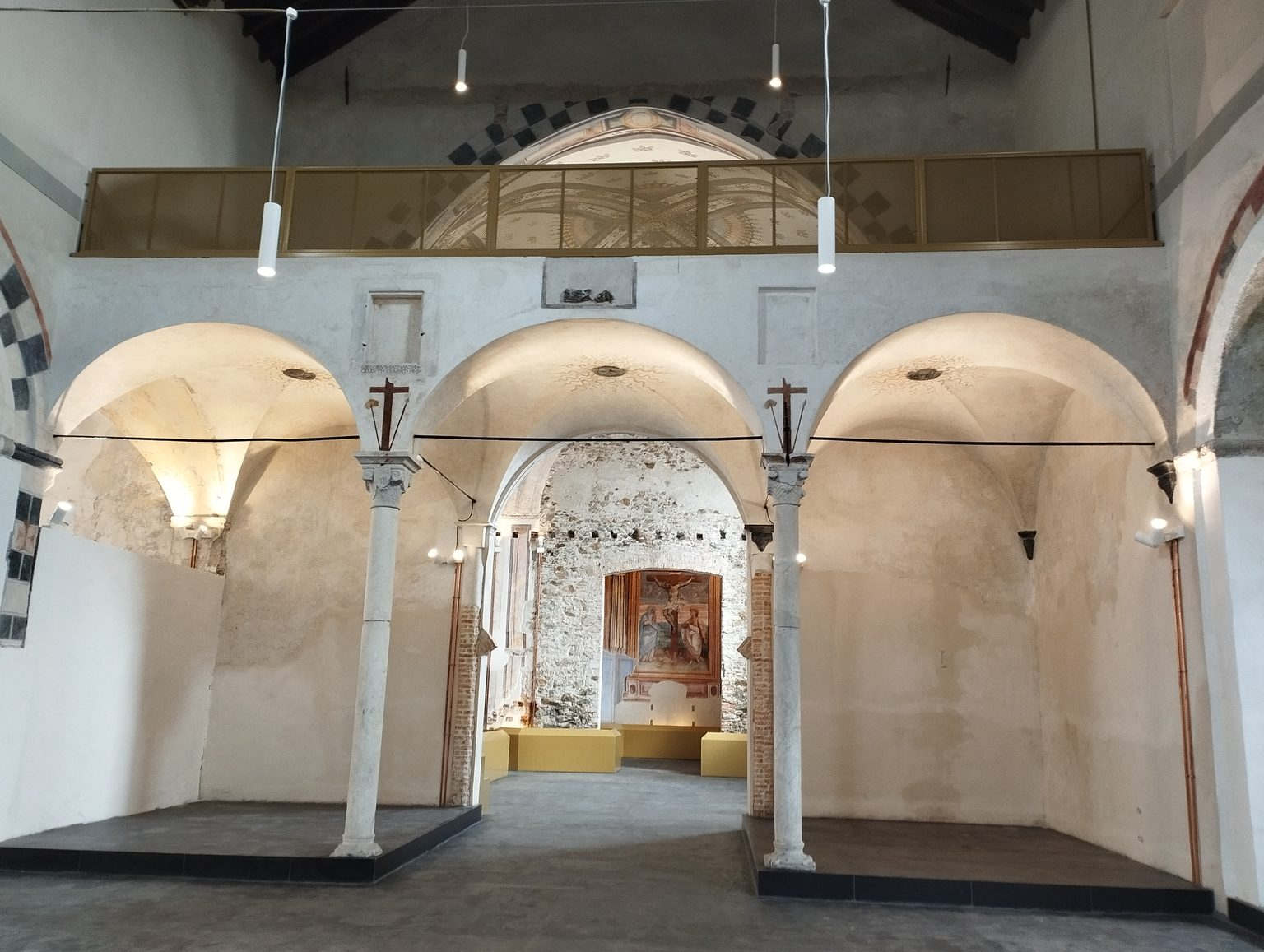
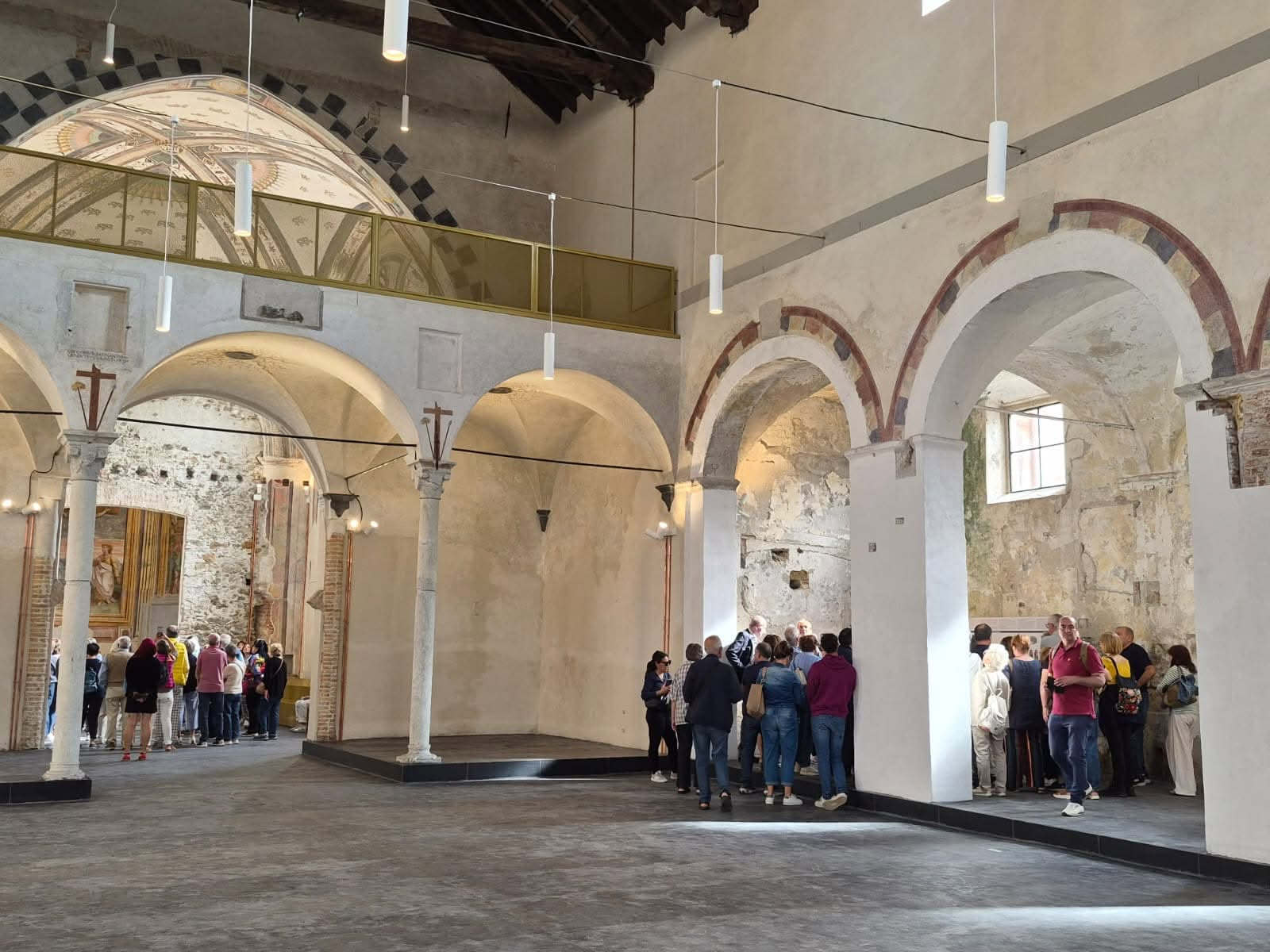
The building retains the characteristics of Franciscan architecture of the period. The church is therefore organized as a single nave covered by a wooden roof with exposed trusses, flanked by side chapels and culminating in the presbytery and apse, while the convent is arranged around two cloisters. The structure, in its basic layout, has retained a clarity that still makes the various parts of the complex recognizable despite the transformations it has undergone over the centuries.
One of the most significant architectural elements is the gallery, or jubé, a structure that separated the nave from the presbytery and could be used as a raised platform for musicians and preachers. San Giacomo preserves one of the rare Italian examples of this architectural element, which became less common after the Council of Trent, which encouraged its phasing out within churches. The gallery is covered by three cross vaults supported by slender columns and constitutes one of the building’s distinctive features: its presence, in fact, allows us to understand the original organization of the religious space, where the nave intended for the faithful was distinct from the area reserved for the monks’ choir and liturgical services.
San Giacomo also served as a burial site for Savona’s noble and merchant families: the side chapels were linked to the patronage of local families, who enriched them with paintings and other works of art. Among the artists who worked on the complex were Giovanni Mazone, Ludovico Brea, Lorenzo Fasolo, and Tuccio d’Andria—names representative of Ligurian and Lombard painting of the period. Among the chapels mentioned in historical sources are those of the Sacco, Boccalandri, Chiabrera, and Multedo families, as well as those associated with other Savona families, who commissioned many of the greatest Renaissance artists to paint them. The Chiabrera Chapel, for example, was decorated by Ludovico Brea, while Lorenzo Fasolo worked on the Multedo Chapel.
It is precisely the loss of a large part of the complex’s pictorial heritage that constitutes one of the most glaring wounds in its history. During the Napoleonic era, following the suppression of religious orders, numerous paintings were stolen or moved elsewhere. Some works are now housed in the Savona Civic Art Gallery and the Cathedral Museum, while others were transferred outside of Italy, including to the Louvre (where there is a painting from the school of Lorenzo Fasolo, featuring the rare iconographic subject of the Family of the Virgin, likely painted for the Multedo Chapel in the Church of San Giacomo and then removed and sent to Paris in 1812), according to historical accounts regarding the dispersal of the collections. The church has obviously not fully recovered the decorative elements that originally characterized it, but the restoration has nonetheless made it possible to work on the remaining elements, starting with the cycle of frescoes in the apse and the presbytery.
Ottavio Semino and the Frescoes of the Presbytery
The decoration of the presbytery and the apse is attributed to Ottavio Semino, a Genoese painter who lived from 1520 to 1604 and worked in various cities throughout northern Italy. His work includes projects in Genoa, in palaces such as those of the Cicala, Doria, and Spinola families; in Milan, where he worked, among other places, at Palazzo Marino, Santa Maria delle Grazie, and San Maurizio Maggiore; and in Pavia, at the Certosa. In Savona, he also created works in the Della Rovere and Imperiali palaces. The St. James cycle serves as a testament to the complex’s 16th-century pictorial decoration: the frescoes in the apse follow the tradition of preaching through images, while their placement in the presbytery directly links them to the space designated for religious services.
The restoration of the decorative elements is one of the most significant achievements of the recently completed project: the restoration work made it possible to treat the paintings and reveal to the public a significant portion of the original decoration within a building that had lost most of its artwork over time. The two cloisters also feature lunettes frescoed by Carlo Giuseppe Ratti (Savona, 1737 – Genoa, 1795), depicting scenes from the life of St. Francis. Their history has also been marked by traumatic events: in 2009, the northern wing of one of the cloisters collapsed, taking part of the frescoes with it. In the following years, urgent repairs were carried out, including work on the church’s roof in 2012 to limit water infiltration.
One of the richest libraries in northern Italy
The prestige of San Giacomo did not depend solely on its architecture and works of art. The monastery also possessed a particularly rich library, described in ancient sources as one of the largest in Northern Italy: it housed precious codices and manuscripts, and, according to tradition, Gabriello Chiabrera—one of the greatest poets of the 16th and 17th centuries—and the future Pope Julius II also studied there.
One episode illustrates the importance of the library collection: in 1563, the monastery sent King Philip II of Spain approximately sixty Greek manuscripts intended for the library at El Escorial. These volumes have not yet been found in the Spanish library, but the news of the donation gives an indication of the cultural wealth the complex had attained in the 16th century. The library and scholarly activities thus contributed to making San Giacomo a religious and cultural center that extended beyond the local sphere. In the 17th century, the description of the monastery provided by Friar Dioniso da Genova in 1647 mentioned two dormitories, the cloister, the refectory, and a well-stocked library, as well as the presence of twenty-five friars, including students of philosophy and theology.
From Napoleonic Suppression to Restoration
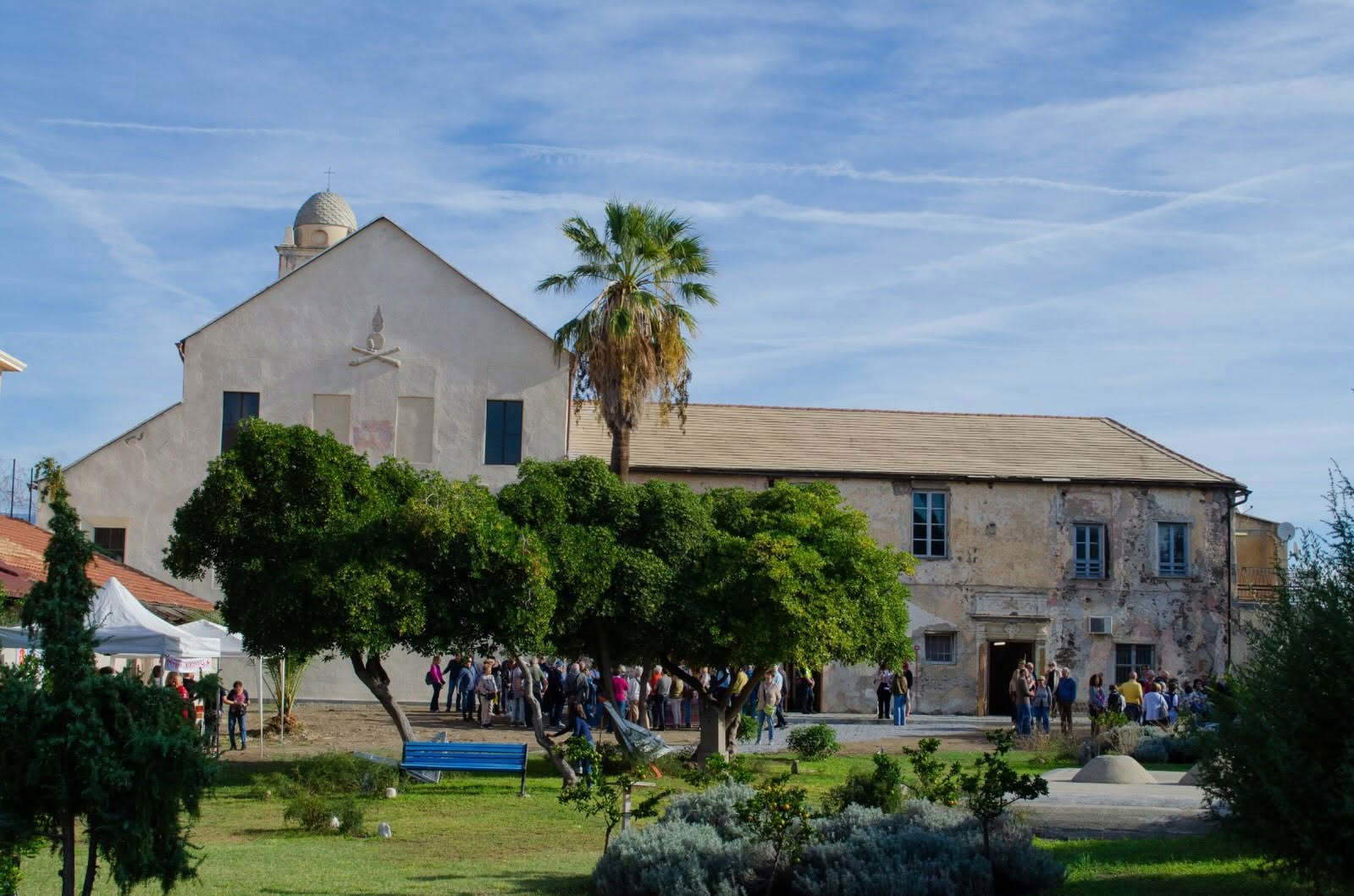
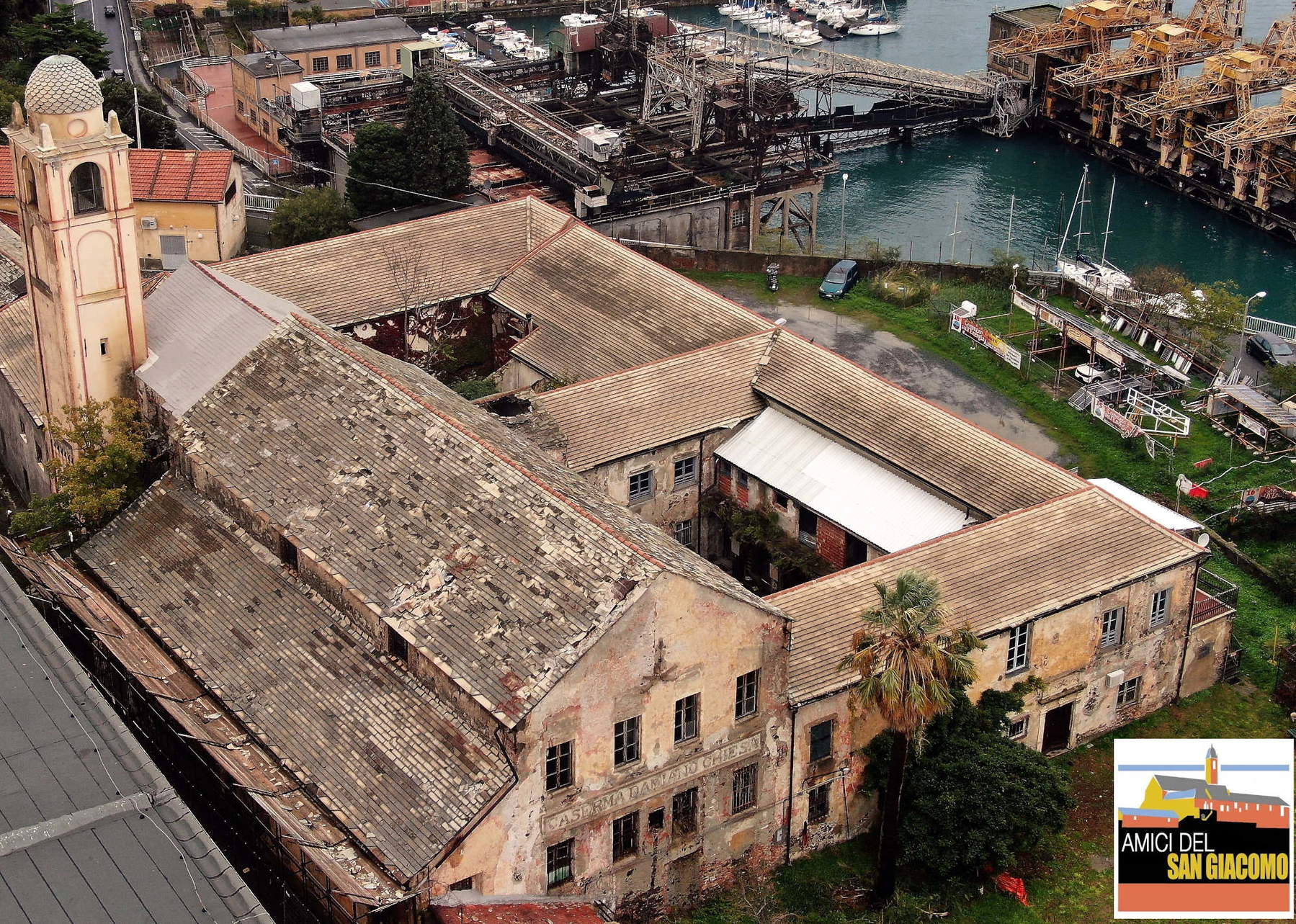
The decline of San Giacomo began with the suppression of religious orders during the Napoleonic era. In 1811, the convent was repurposed for uses other than its original one: it served as military quarters, a workshop, a sail-making factory, and a military prison. Later, the adjacent spaces and land were used for the construction of the “Damiano Chiesa” artillery barracks, whose name is still visible on the facade. Subsequently, the complex was also put to other uses: for example, some rooms were temporarily leased to sports clubs and recreational associations. All these changes, however, led to a deterioration in the building’s condition, ultimately resulting in its being declared unfit for use.
A turning point in the complex’s history came in 2016, when the “Amici del San Giacomo” association was founded, with the goal of drawing the attention of institutions and the public to the monument’s historical and artistic value and promoting its restoration: Over the years, the association has organized tours and events to keep interest alive in a complex that, in addition to its architectural significance, also offers a panoramic view of the city.
The construction project launched in 2023, supported by PNRR funds for urban regeneration and municipal resources, represented the first concrete step toward a new phase: the project is part of the initiative launched in connection with Savona’s bid to become the Italian Capital of Culture, a project in which San Giacomo was assigned a specific role as a venue dedicated to art and cultural activities.
The completion of the restoration therefore marks more than just the reopening of a historic building: the project envisions that the restored spaces will host events and initiatives—with a particular focus on music, theater, and dance—restoring the complex’s public function. Now, after decades of misuse, deterioration, and the loss of artworks, San Giacomo is once again accessible as a site of history and culture. The restoration of Ottavio Semino’s frescoes, together with the restoration of the architectural spaces, allows for the rediscovery of an important part of Savona’s heritage and paves the way for a new purpose for one of the city’s most significant religious complexes.
 |
| In Savona, a 15th-century church has been restored after decades of neglect |
Warning: the translation into English of the original Italian article was created using automatic tools. We undertake to review all articles, but we do not guarantee the total absence of inaccuracies in the translation due to the program. You can find the original by clicking on the ITA button. If you find any mistake,please contact us.