




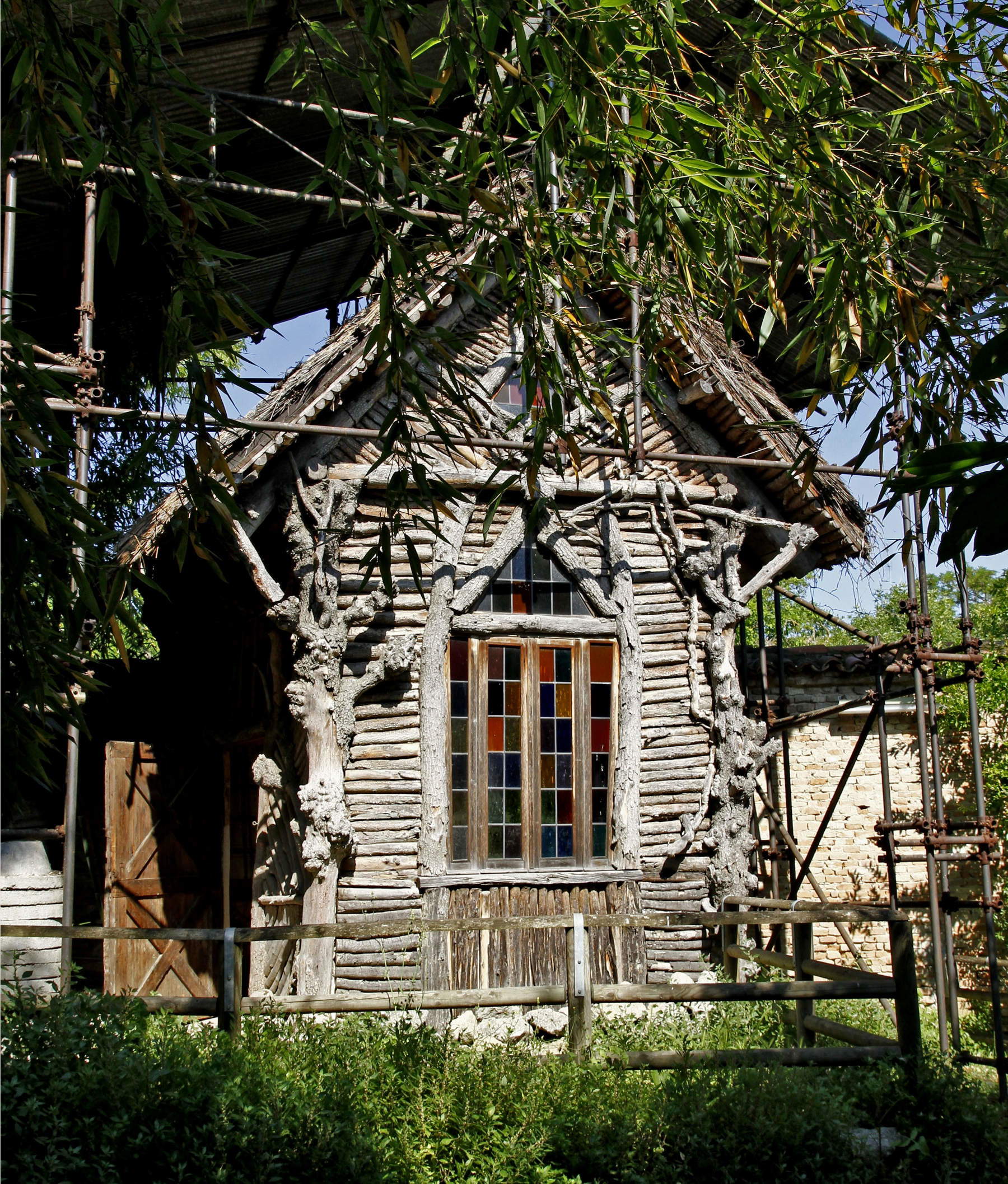
A fundraising campaign through the Art Bonus program has kicked off in Faenza to fund the restoration of the painted walls of the Capanna rustica at Palazzo Milzetti. The initiative is sponsored by the National Museums of Bologna and the Regional Directorate with the goal of supporting, through public-private collaboration, the restoration of a structure that was once part of the romantic garden of Palazzo Milzetti and which, after being separated from the complex following World War II, was recently reintegrated into the museum’s holdings thanks to an acquisition by the Ministry of Culture. Once the restoration work is complete, the structure will be opened to the public.
The campaign will be presented to the public on Saturday, September 26, at 6:00 p.m., during an event open to citizens, local business operators, companies, entrepreneurs, and the media. Speakers will include Luigi Gallo, director of the National Museums of Bologna, and Elena Rossoni, director of Palazzo Milzetti. This will be followed by a technical presentation of the restoration work led by Maria Lucia Masciopinto, a staff architect.
During the event, the historical and artistic value of the rustic hut will be highlighted, along with the process leading to its acquisition, the various methodological phases planned for the restoration project, and the ways in which citizens, organizations, and businesses can support the project through donations, taking advantage of the tax benefits provided by the Art Bonus. The restoration of the painted surfaces constitutes the first phase of a broader project aimed, over time, at the redevelopment and comprehensive restoration of the historic garden of Palazzo Milzetti.
The Art Bonus is a tax incentive introduced to encourage charitable donations in support of culture and the performing arts. The program provides a tax credit equal to 65% and allows citizens, organizations, and businesses to contribute to the conservation, restoration, and enhancement of cultural heritage while benefiting from the associated tax incentives. Information on the regulations and how the Art Bonus works is available on the initiative’s official website.
Palazzo Milzetti, home to the National Museum of the Neoclassical Era in Romagna, is a complex dating back to the 15th century and associated with Italian Neoclassical culture. The building became the property of the Milzetti family in 1602, and after it sustained severe damage in the 1781 earthquake, Nicola Milzetti began an initial phase of renovation, which was later continued by his son Francesco. Francesco entrusted the complete decoration of the rooms to Felice Giani, one of the most renowned artists of his time.
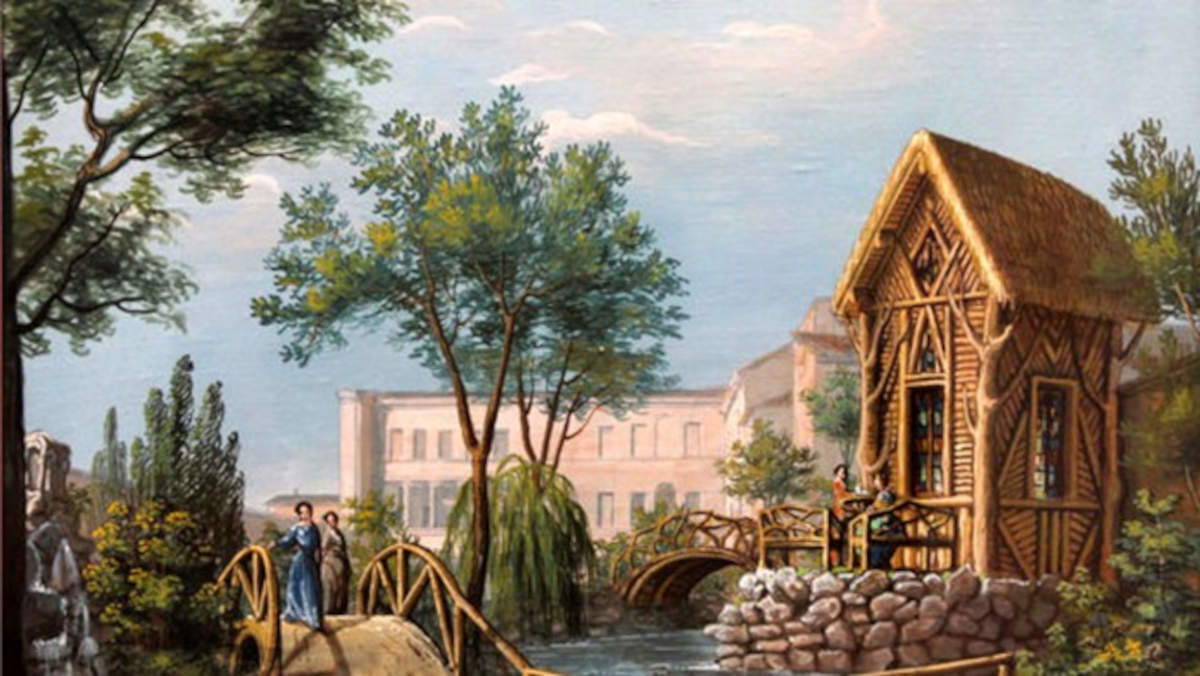
The estate was sold in 1808 and subsequently passed to various families, including the Rondinini family, who purchased it in 1817. It was the Rondinini family who commissioned further construction work and, around the mid-19th century, created the distinctive romantic English-style garden, within which the rustic cottage was also incorporated.
The structure belongs to the tradition of rustic wooden and thatched architecture inspired by Norman and Flemish styles, which became widespread in France during the second half of the 18th century. These small buildings, known as hameaux, were placed in picturesque settings with the aim of evoking distant places and atmospheres. The most famous example is the“hameau de la Reine” built in the park of the Palace of Versailles.
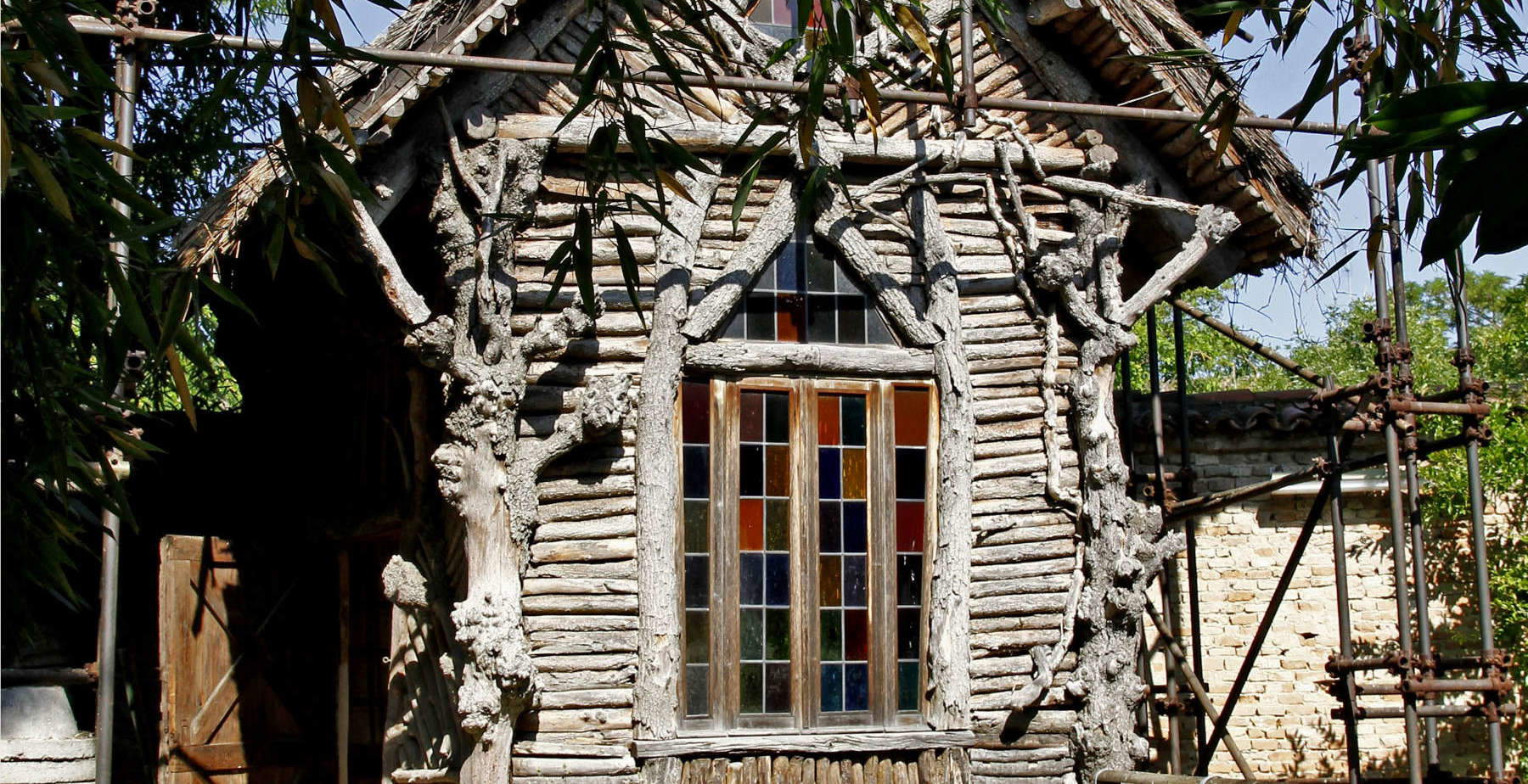
At Palazzo Milzetti, the rustic hut is situated on a raised area, resembling a small hill, and is surrounded by a system of small bridges beneath which streams originally flowed. The structure, built around the mid-19th century, is supported by elm logs set directly into the ground and secured at the base by boulders. Inside, the roof features wooden planks covered with hard marsh reeds, while the exterior roofing is made of straw.
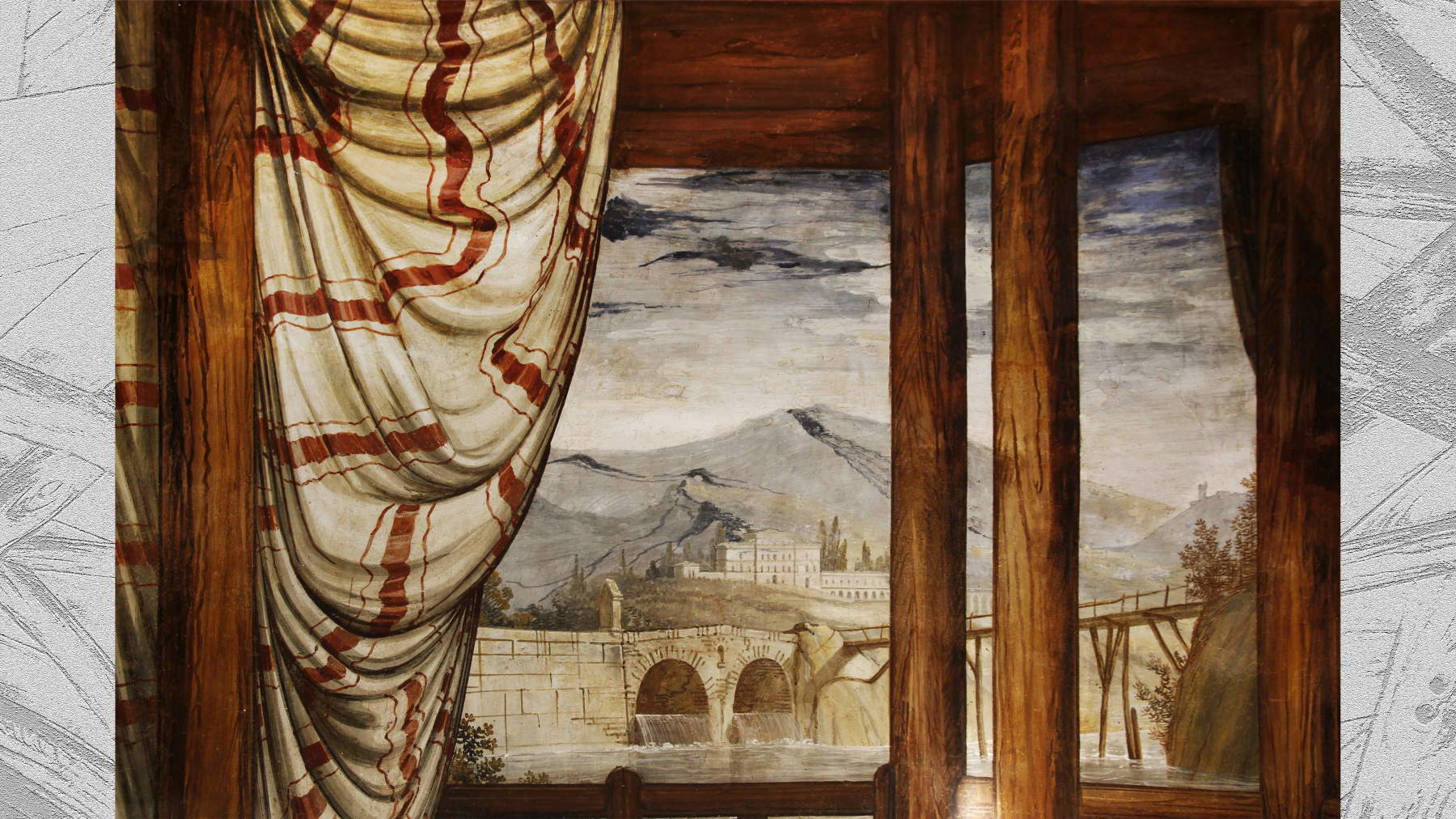
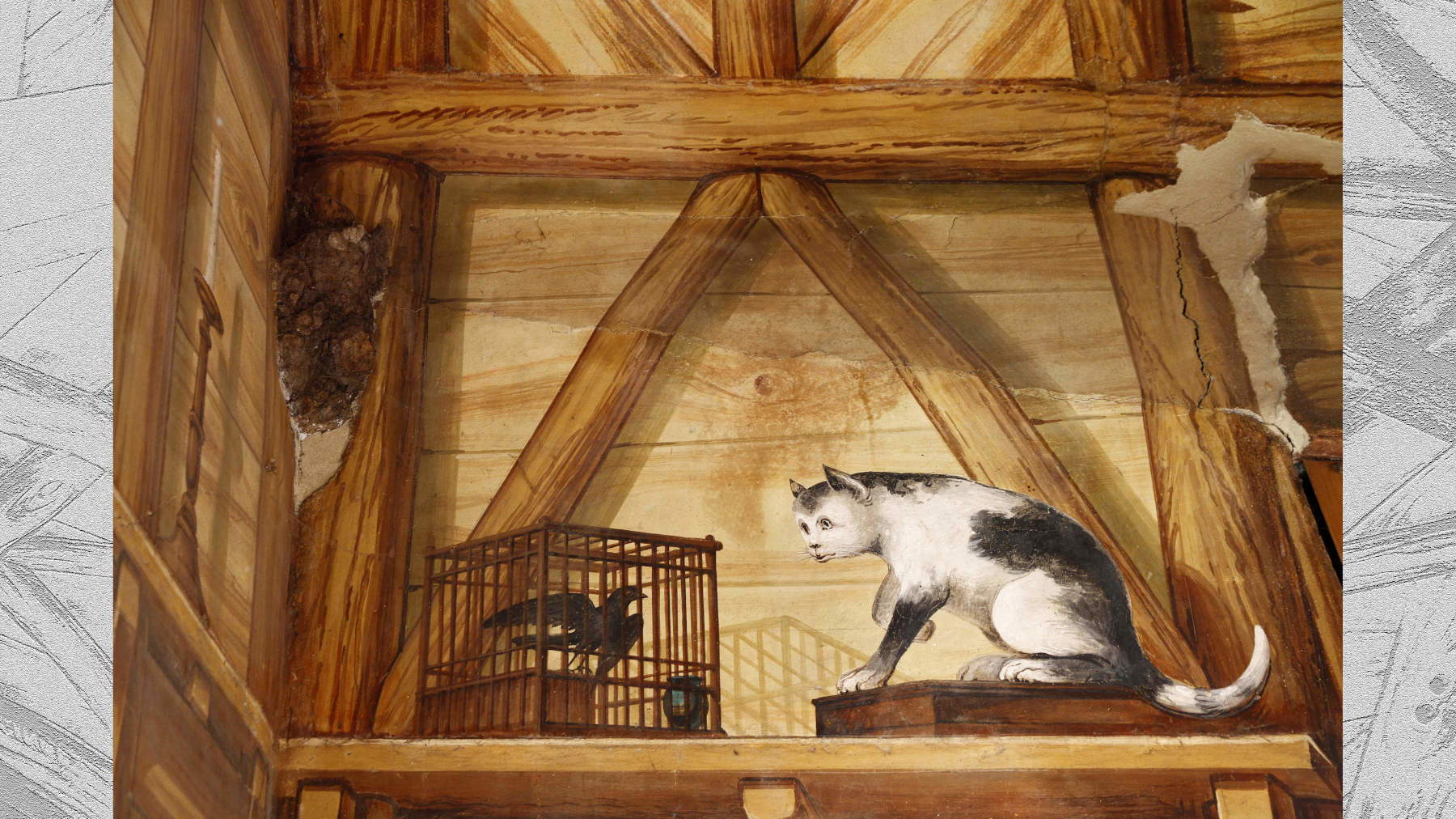
Of particular note are the interior walls, prepared with plaster and lime and decorated with paintings attributed to the painters Romolo and Tancredi Liverani, father and son, who were active during that period. The decorations employ illusionistic techniques. On the wall to the right of the entrance is depicted a small balcony with a picket fence, sheltered by a large curtain, from which a view opens onto a mountain landscape crisscrossed by bridges and streams and dominated by a castle. A ledge running along three sides of the room holds baskets, pottery, and bottles, flanked by gardening tools. The ensemble evokes the function of a shelter intended for a gardener, lending the structure a decorative character consistent with the context of the Romantic garden.
Separated from the Palazzo Milzetti complex after World War II, the rustic hut, along with the land belonging to it, was purchased thanks to funding from the Ministry of Culture in 2026. This acquisition made it possible to reunite the structure with the original complex. Its restoration and subsequent inclusion in the museum’s tour route are therefore among the museum’s top priorities.
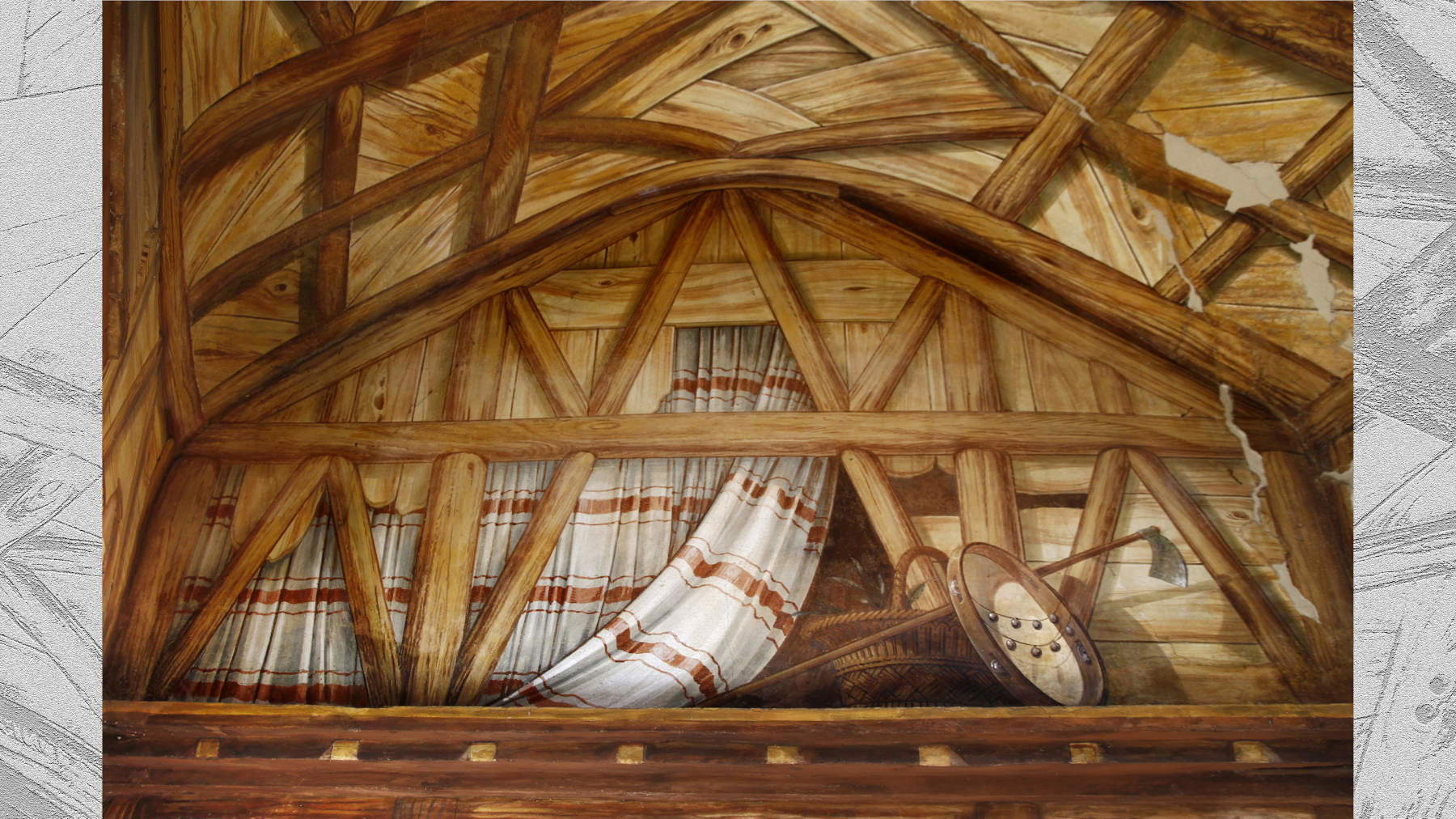
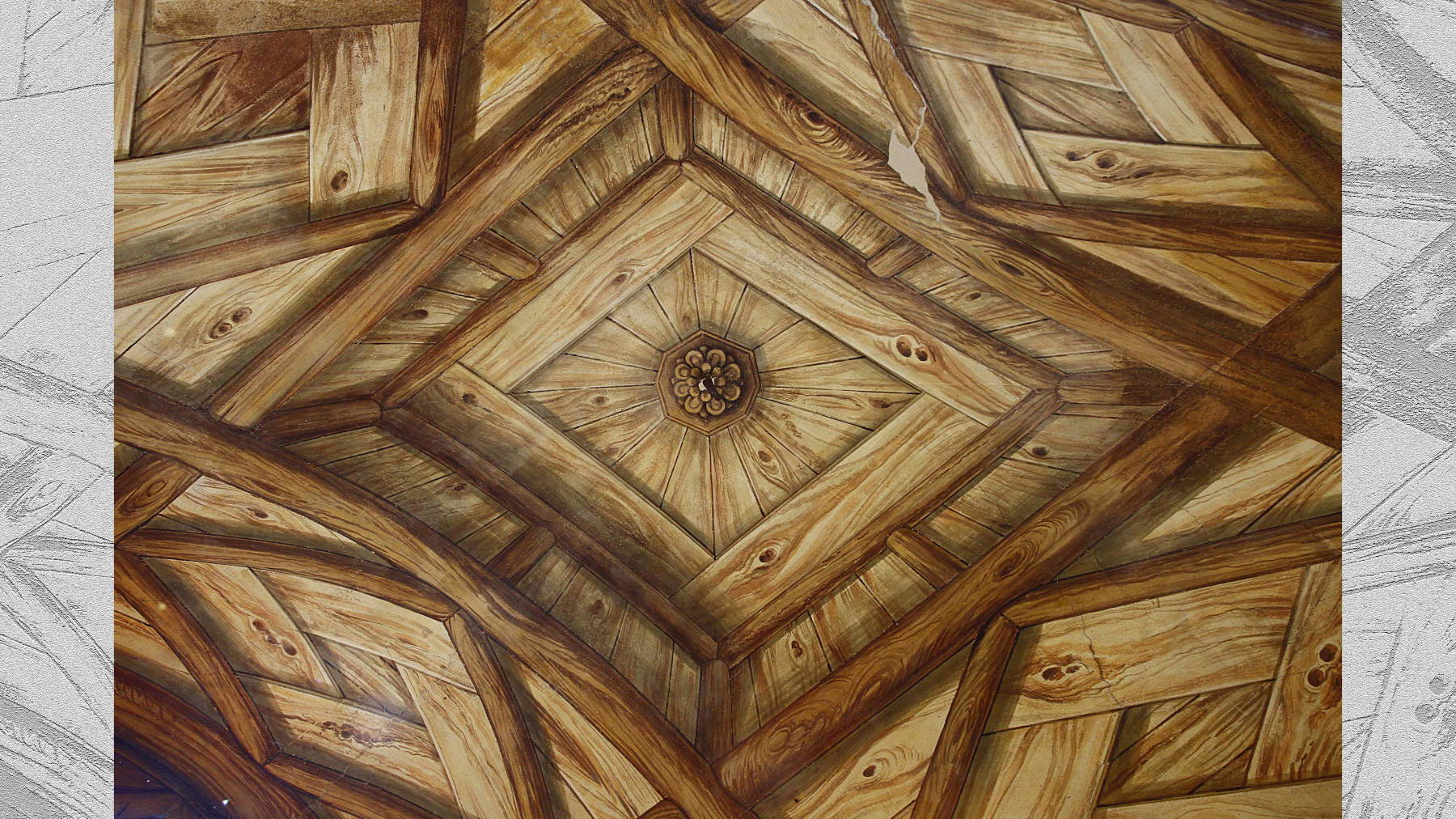
The current state of preservation necessitates restoration work on the decorated surfaces. The hut shows signs of severe instability, and the complete detachment of the interior structure from the points where the vault’s weight is transferred has left the plaster dangerously self-supporting. This has caused deformations and cracks, particularly evident in the lower sections of the north and south walls, putting the painted surfaces at risk.
The estimated cost for the restoration of the paintings totals 40,000 euros. The restoration is part of a broader project to restore the Romantic garden and will be preceded and accompanied by work already underway to secure the surfaces. This first phase, carried out and directed by restoration specialist Elena Arlotti, involved applying two layers of tissue paper over the entire surface of the decorations, a necessary step to prevent the detachment and falling of fragments from the paint film.
Following the work on the supporting framework—funded directly by the National Museums of Bologna—the project will proceed with the decorated surfaces. The work will include deep consolidation of the areas affected by the detachment of the plaster base, the removal and reconstruction of the old stucco work, and painting retouching aimed at restoring the work’s aesthetic unity. For more information on the Art Bonus campaign dedicated to the Rustic Hut at Palazzo Milzetti, please refer to the relevant page on the official Art Bonus portal.
 |
| Palazzo Milzetti: The Art Bonus Program Kicks Off to Restore the Paintings in the Capanna Rustica |

Warning: the translation into English of the original Italian article was created using automatic tools. We undertake to review all articles, but we do not guarantee the total absence of inaccuracies in the translation due to the program. You can find the original by clicking on the ITA button. If you find any mistake,please contact us.


























 IT
IT FR
FR DE
DE ES
ES CN
CN


