





A new enigmatic tablet has been discovered during archaeological excavations at Lucone di Polpenazze (Brescia), one of the most important pile-dwelling sites in northern Italy. The artifact, found intact during the excavation of the charcoal-rich layer US 1015, represents a discovery of particular interest to archaeological research. No enigmatic tablet had been found at the Lucone since 2019. This is also the third such tablet discovered at Site D, bringing the total number of enigmatic tablets found in the Lucone plain to twenty-one, confirming the site as the one that has yielded the highest number of them to date.
The so-called enigmatic tablets are distinctive artifacts, generally made of clay but also found in stone, characterized by incised lines and impressions or engravings featuring geometric motifs of various shapes.
The specimens come in various shapes. Among the most common profiles are lenticular and rectangular ones, often decorated with horizontal lines along which numerous geometric motifs appear, including triangles, circles, squares, and rectangles, sometimes enhanced by various fill patterns. The oldest examples, on the other hand, appear to be characterized primarily by impressed dots.
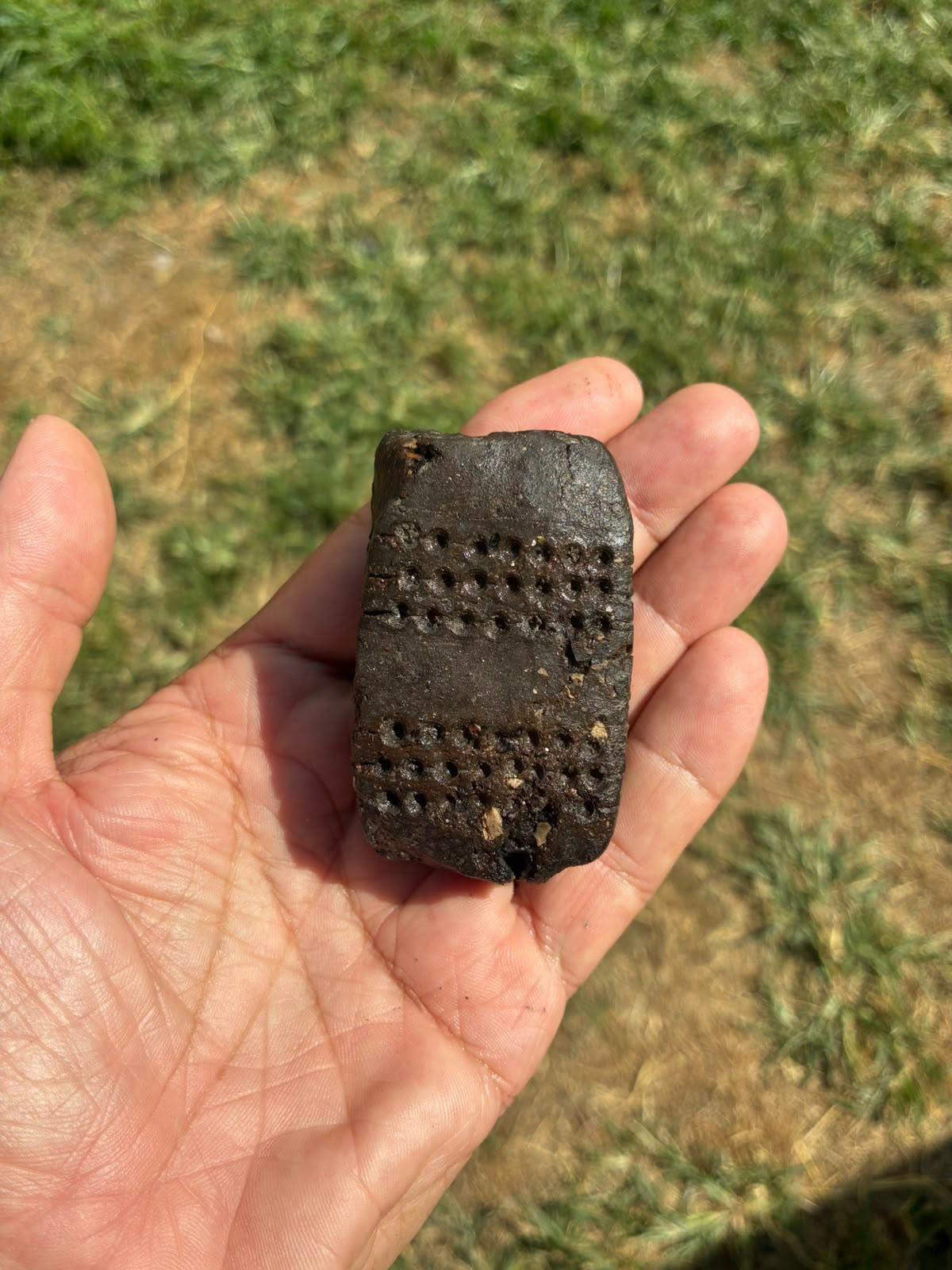
Their meaning remains uncertain to this day and represents one of the most fascinating aspects of theseBronze Age artifacts. Over the years, archaeologists have put forward various hypotheses regarding the function of these enigmatic tablets. They have been interpreted as possible calendars, counting tools, or forms of proto-writing. A ritual function has not been ruled out either, extending to the hypothesis that they might have been used as a sort of sacred amulet. One of the most intriguing interpretations today, however, links them to the management of trade, suggesting a function comparable, in some respects, to modern shipping documents used to identify specific goods (perhaps metal).
The Lucone site in Polpenazze holds a particularly significant distinction: it is, in fact, the site from which the largest number of known enigmatic tablets originate. This concentration is of great interest to scholars, especially since Lucone was an ancient pile-dwelling village dating back over 4,000 years. The presence of such a large number of these artifacts could provide new insights into the economic, social, and cultural relationships of the community that inhabited the settlement.
The enigmatic tablets are not exclusive to northern Italy. Their distribution actually spans a much wider geographical area, extending into central Europe. Finds of this type have also been identified in Switzerland, Germany, and the Danube-Carpathian Basin, and may document ancient long-distance trade routes.
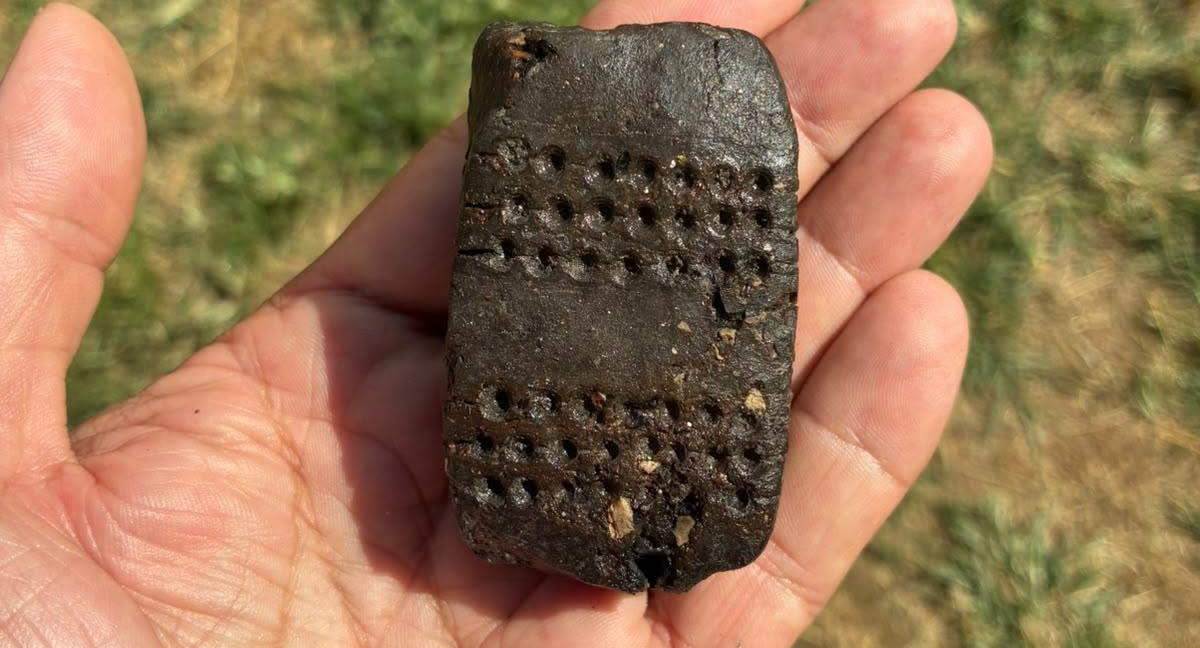 |
| A mysterious tablet has been discovered at Lucone di Polpenazze. The artifact dates back to the Bronze Age. |

Warning: the translation into English of the original Italian article was created using automatic tools. We undertake to review all articles, but we do not guarantee the total absence of inaccuracies in the translation due to the program. You can find the original by clicking on the ITA button. If you find any mistake,please contact us.





























 IT
IT FR
FR DE
DE ES
ES CN
CN


