



by Redazione 26/11/2026



Categories: Archaeology / Disclaimer
In Rome, in the heart of the Central Archaeological Area, the new CARME Visitor Center has opened in the historic building on Via dei Cerchi. A free multimedia tour guides visitors through the New Archaeological Promenade and the transformations of Rome’s monumental archaeological center.


A new space dedicated to exploring Rome’s archaeological heritage is opening in the capital: starting November 27, 2026, the CARME Visitor Center—the Archaeological and Monumental Center of Rome—will open its doors free of charge in the historic building on Via dei Cerchi, in the heart of the Central Archaeological Area. The center offersan immersive experience featuring digital installations, video mapping, maps, and historical accounts.


Created with funding from the PNRR Caput Mundi program by the Capitoline Superintendence for Cultural Heritage, in collaboration with the Department of Digital Transformation, the Visitor Center serves as a hub for orientation and in-depth exploration of Rome’s archaeological heritage. The facility also serves as a gateway to the New Archaeological Walk, a project aimed at connecting and highlighting the city center’s main historical sites, providing a comprehensive overview of them.
The opening also marks the opportunity to access certain rooms of the Palazzo dei Musei, a building that, throughout the 20th century, housed the Museum of the Roman Empire and the Museum of Rome. Overlooking Piazza Bocca della Verità, between the Circus Maximus, the Palatine Hill, and the Capitoline Hill, the palace stands in the ancient Velabro area, one of the symbolic sites of early Rome.




A Multimedia Journey Through the Central Archaeological Area
The Visitor Center features an exhibition itinerary dedicated to CARME and the vision guiding its development. Through digital tools and interactive content, visitors can gain an understanding of the extentof the Central Archaeological Area, its historical stratifications, and the objectives of the project to enhance Rome’s historical and artistic heritage. The installations, projections, and historical maps allow visitors to interpret the area as a cohesive whole of monuments, landscapes, and urban spaces, moving beyond the perception of individual sites as isolated places.
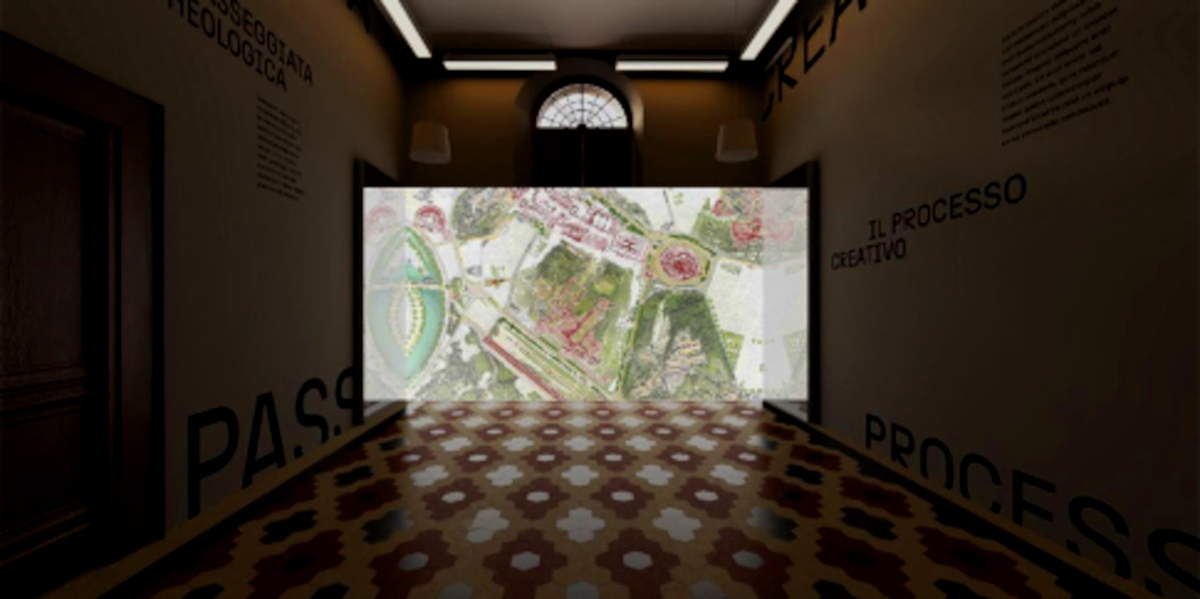
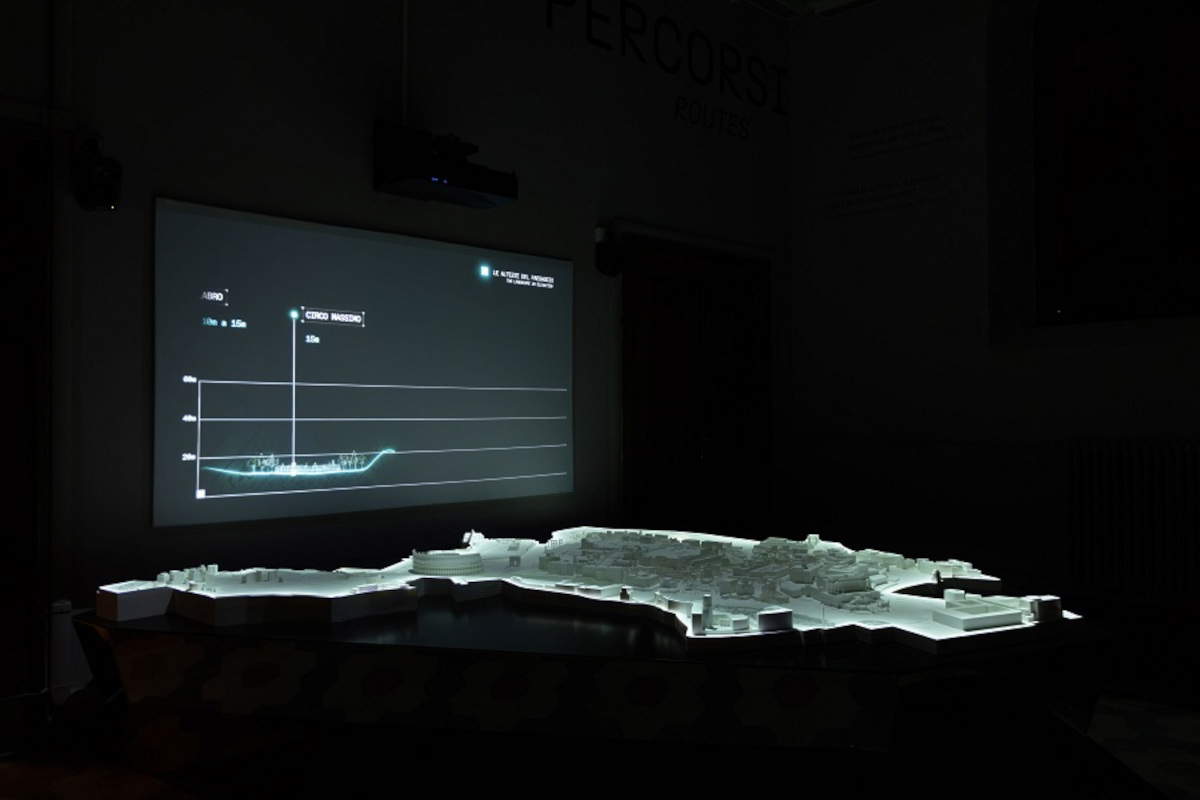
The exhibition unfolds across four rooms, each dedicated to a different aspect of the project. The first room introduces the complexity of the historical-archaeological landscape through a multi-layered interpretation: from the underground and archaeological dimensions to the contemporary city, viewed from above. The room also illustrates the significance and route of the New Archaeological Promenade, the main initiative planned by CARME. The second room serves as the centerpiece of the immersive experience. At its center is a three-dimensional model of the Central Archaeological Area, created specifically for the Visitor Center on a 1:500 scale. The model depicts the current layout of this part of Rome and offers a representation of the monumental context that visitors can explore outdoors. A video-mapping system—which also highlights the route of the New Archaeological Promenade—and a projection on one of the walls allow visitors to identify the main historical and archaeological sites and understand the connections between them. The third room is dedicated to the people and professionals who contributed to the project’s realization. Through a series of testimonials, the various fields of expertise involved—from archaeology to urban planning to public administration—are highlighted as they worked together to define a shared vision for the city’s future. The fourth and final room offers a journey through the history of Rome across the centuries. A selection of historical documents and maps, accompanied by an immersive projection, illustrates the transformations of the Central Archaeological Area and how its landscape has changed over time.
The New Archaeological Promenade connects seven monumental landscapes
The CARME Visitor Center is also designed as the starting point for the New Archaeological Walk, the pedestrian route that connects the seven historical-archaeological landscapes of Rome’s monumental center: the Capitoline Hill, the Forums, the Velia, Oppian Hill and the Colosseum, the Caelian Hill, the Palatine Hill and the Circus Maximus, and the Velabrum. The route, which is free and open to the public, aims to restore continuity to the world’s largest urban archaeological landscape, fostering a new connection between monuments, archaeological sites, and public spaces. This project allows visitors to rediscover the historic heart of the capital as a unified system, rich in historical evidence and layers spanning millennia of history.
The CARME Visitor Center on Via dei Cerchi will be open to the public free of charge starting November 27, 2026, every Friday, Saturday, and Sunday, from 10 a.m. to 4 p.m.
“One of CARME’s goals is to give Romans and visitors to Rome the tools to understand where they are walking as they traverse the monumental center, what lies beneath the streets they walk on, and how the places they encounter are connected to one another. The new Visitor Center on Via dei Cerchi, with its engaging digital narrative, helps achieve all of this. It explains the CARME project, allows visitors to trace the different eras that have transformed this area, and helps them better appreciate the New Archaeological Promenade, designed to bring the ancient heart of Rome to life as part of today’s city. “The opening of these rooms is also the first step in a broader project. The renovation of the historic building on Via dei Cerchi will continue, and here we plan to create the City Museum to tell the story of how Rome, over the centuries, took on the form we know today,” said Rome’s mayor, Roberto Gualtieri.
“The opening of the CARME Visitor Center has significance that goes beyond the inauguration of a new visitor space. The building on Via dei Cerchi, located in one of the most symbolic sites of ancient Rome—the Forum Boarium—becomes a privileged gateway to understanding the city’s heritage,” said Claudio Parisi Presicce, Capitoline Superintendent of Cultural Heritage. “From here, visitors can grasp the vision guiding CARME and begin exploring the New Archaeological Walkway, which connects archaeological contexts and urban landscapes often perceived as separate. The Visitor Center on Via dei Cerchi also represents something more: it is the first step toward the creation of the future City Museum, a project through which we intend to tell the story of Rome through its urban history, its transformations, and the extraordinary heritage preserved by the Capitoline Superintendency. Opening these spaces to the public today means taking concrete steps toward the creation of a new permanent venue dedicated to understanding and telling the story of the city.”
|
| A new space is opening in Rome to help visitors navigate and explore the capital’s archaeological heritage |
Warning: the translation into English of the original Italian article was created using automatic tools. We undertake to review all articles, but we do not guarantee the total absence of inaccuracies in the translation due to the program. You can find the original by clicking on the ITA button. If you find any mistake,please contact us.