



by
Federico Giannini  @federicogiannini1
22/11/2026


Categories: Opinions / Disclaimer
Three claims that a work is by Caravaggio in just a few days have fueled public debate. But when a hypothesis becomes news, the line between scientific research and media spectacle risks becoming blurred. An editorial by Federico Giannini.


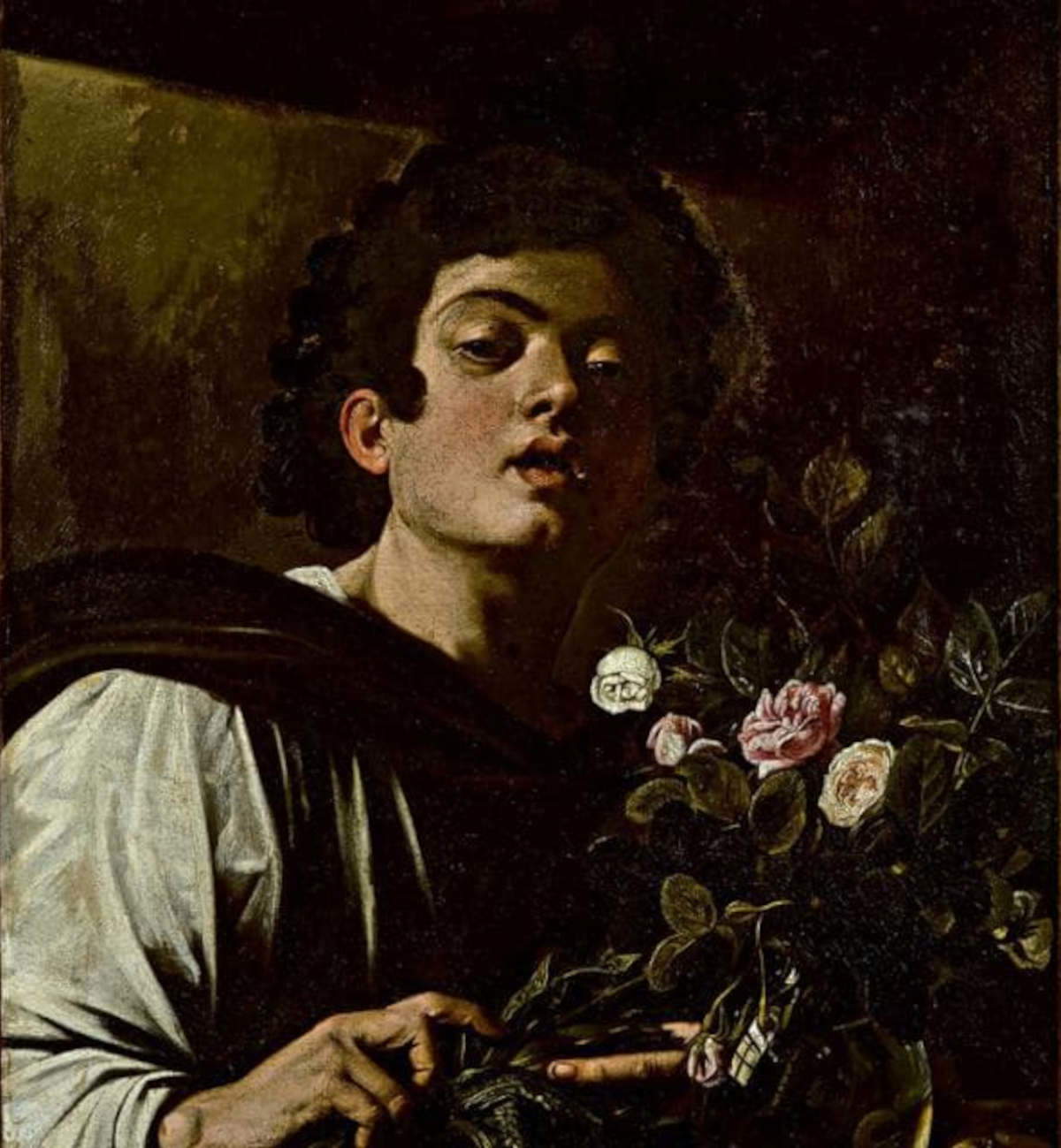
It’s amusing and intriguing to see three works attributed to Caravaggio in the span of less than a couple of weeks (and two of them just twenty-four hours apart): the sequence of events we witnessed between late October and early November may have no comparable precedent in the history of Caravaggio scholarship. It is also curious because it has likely covered the entire possible spectrum of ways in which a proposed attribution can be communicated to a more or less broad audience—one that can therefore be presumed to be more or less informed, specialized, or interested. In the case of the “Togged Orator ” (or “Demosthenes ,” if one accepts the identification of the subject), the three proponents (Carmelo Occhipinti, Michele Frazzi, and Mario Bigetti) took the most formal and traditional route: they presented their proposal in a volume of over 300 pages, published as part of the editorial program of an accredited scholarly journal in art history recognized as a top-tier publication. In the case of the *Portrait of a Young Man*, Gianni Papi previewed his arguments during an academic conference and, apparently, has chosen not to comment until the proceedings are published—or at least that is how we understood it. Finally, regarding the *Young Man with a Pitcher of Roses*, Maria Cristina Terzaghi came out of the blue with an article she authored in one of the major national daily newspapers, accompanied by another article, written by the journalist responsible for the art section of that newspaper, which was essentially a rapid succession of not-so-subtle congratulations to the alleged discoverer.

I say “alleged” not to downplay Terzaghi’s merits, but because anyone who specializes in 17th-century art and has a Meta account these days could not have failed to come across the videos of another scholar, Franco Moro, who, ever since Terzaghi’s article appeared in *La Repubblica*, has not stopped turning on the front-facing camera of his phone to claim credit for the discovery. Of course, the chronological sequences that Moro has duly and thoroughly illustrated in his self-recorded videos may be helpful for understanding how long work on this painting has been underway, but it must be reiterated that for those who study and for those who write, what matters is what gets published; and for now we can say, assuming, of course, that anyone might find this race to be first useful or elegant, that Terzaghi and Moro simultaneously anticipated the discovery (it was March 2025: Moro, in an article on Giovanni Agostino da Lodi published in his magazine *Filo d’Arianna*, wrote that “we will soon be able to appreciate in its autograph version” what he calls the Boy Pricked by an Artichoke Thorn , thus interpreting the subject; and at the same time, in the same month, the catalog of the Caravaggio exhibition was on sale at the Palazzo Barberini bookshop, and in a note in his essay published in that volume, Terzaghi reported the existence of a “fifth version of the highest quality” of the *Boy*, “which I have identified as an autograph, preserved in France in a private collection”). The spat is, however, the natural consequence of his personal foray into a mainstream daily newspaper with a piece that is little more than a brief mention—which, of all the ways to report on a proposed attribution, is certainly the most irregular. On the other hand, the scholar knows that his proposal, once it leaves his office, will eventually take on a life of its own—with all the consequences that such autonomy entails—first and foremost the possibility of being picked up by the press (as was the case with the *Parlatore* and the *Portrait*, proposals that came to the public’s attention because, in the first case, the leak reached the journal for which I write—which obtained a copy of the volume—and in the second because the editorial staff was aware that the conference where the proposal was made was an event worth keeping an eye on). And the press, being the press, does its job: it filters what comes into the newsroom, selects what might meet the criterion of public interest—one of the three fundamental pillars of journalism—conducts the necessary verifications, and publishes if it deems the conditions for doing so to be met.


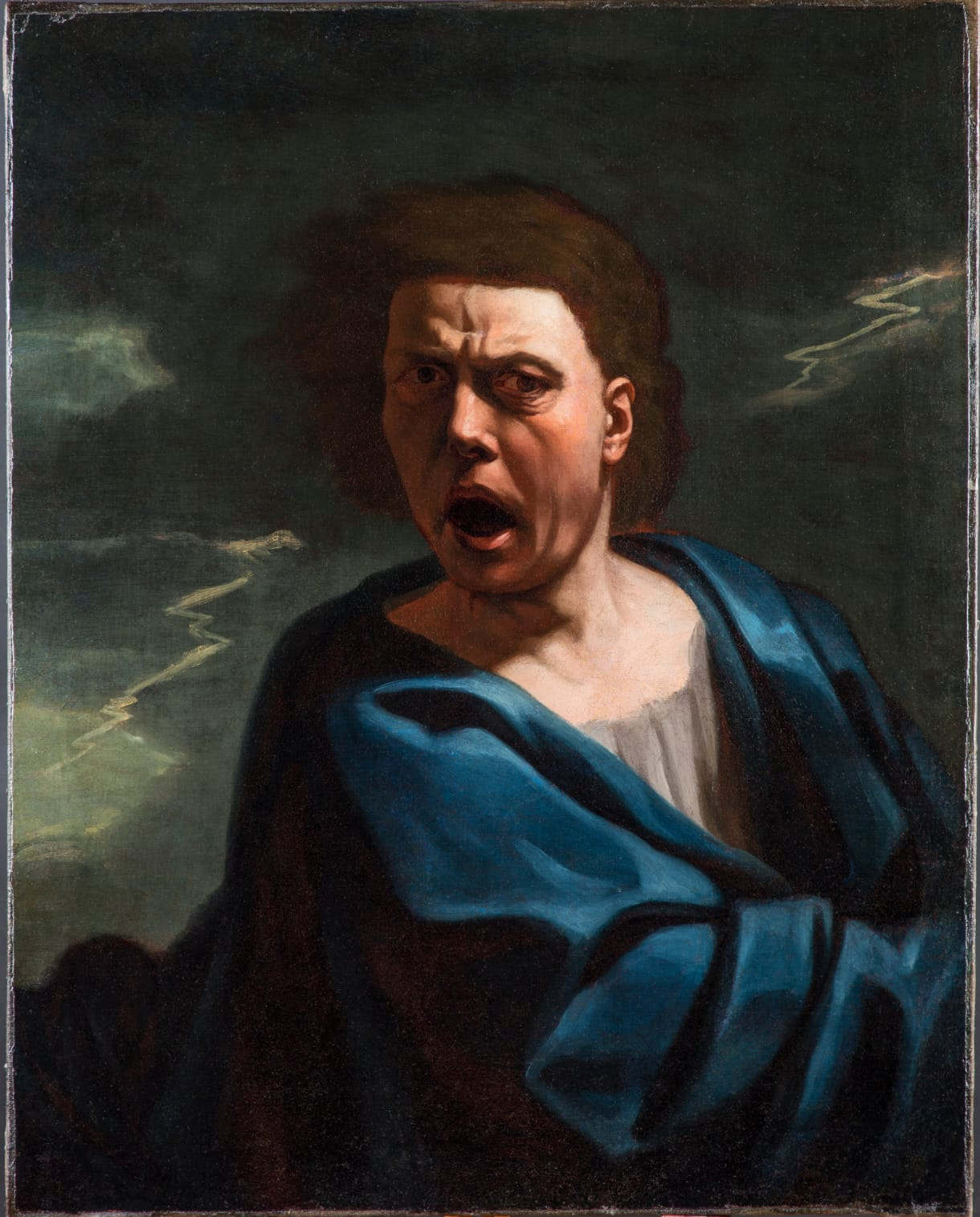
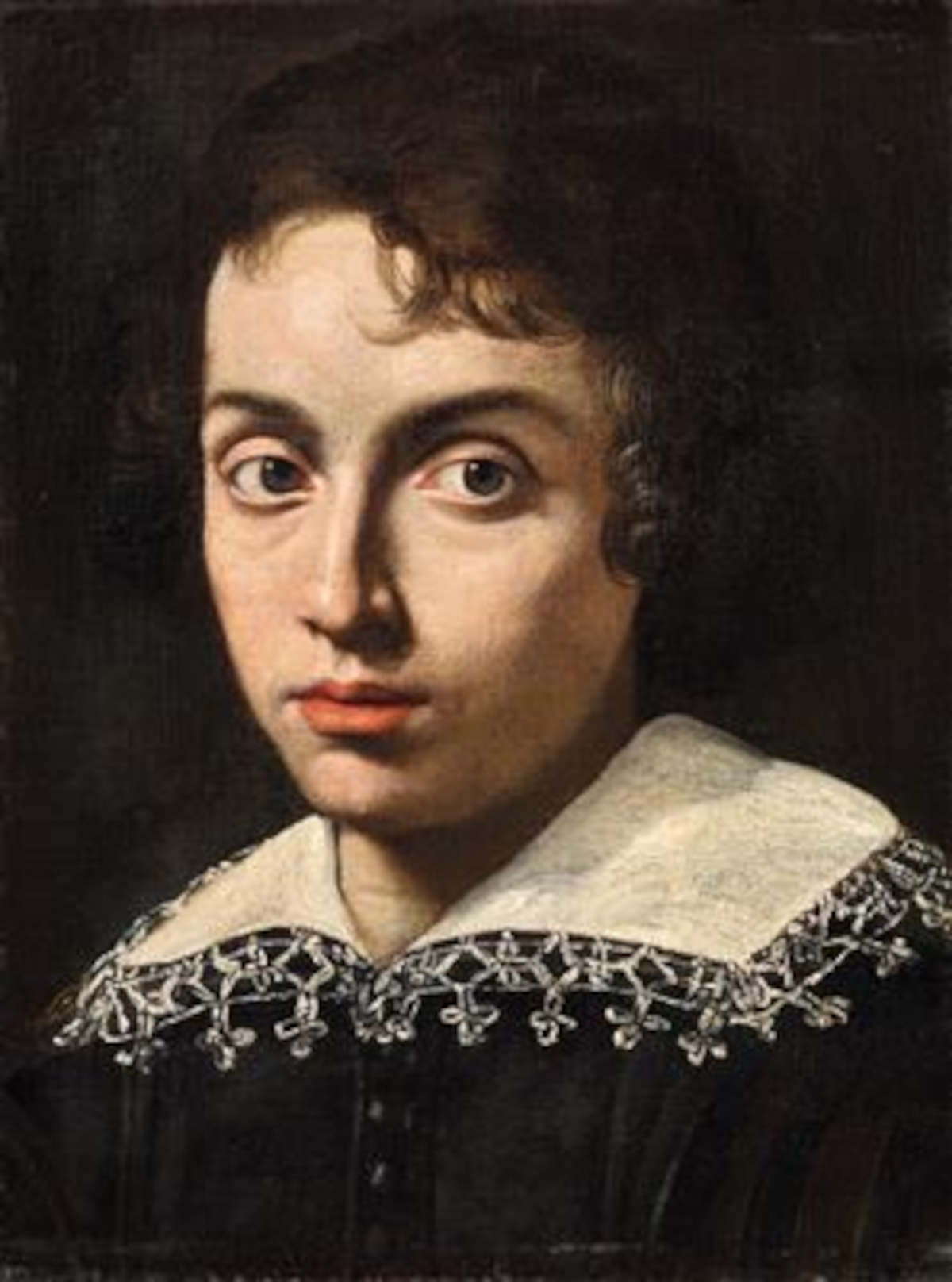
Obviously, this is not a matter of recklessly publicizing the claims of just any unknown artist who, driven by the desire to pass off an unpresentable daub as a masterpiece, writes to the editorial staff—a topic that has, moreover, been discussed frequently here: it is, however, natural that a scholarly publication authored by three well-known figures in the field (the “Speaker”) or a scholar’s presentation at a conference—who, however reluctant to fully develop his proposal before it is due, chooses a public forum to put forward his hypothesis (the “Portrait”)—provides the basic conditions for the editorial staff to consider the news to be of public interest. In other words: there is a scientific publication sponsored by a public university that proposes attributing a painting to Caravaggio, and there is a recognized scholar who puts forward another hypothesis at a conference. It is almost inevitable that the story will end up being covered.

If anything, one must wonder what happens next. An example: regarding Terzaghi’s proposal, the ever-alert Pietro Di Loreto had the foresight to immediately reach out to a large group of Caravaggio specialists to ask for their immediate impressions and initial assessments to be published on Aboutartonline. The reaction of all those who had not seen the work in person was more or less the same: congratulations to our colleague, the proposal is interesting, the painting could be an authentic work by Caravaggio, but to make a definitive judgment, one would need to see the work with one’s own eyes. And this is precisely the attitude one generally adopts when faced with a proposal for attribution (especially if accompanied by photographs of modest quality)—or at least one adopts it when the proposal isn’t blatantly baseless, arbitrary, or specious.
Proposals for attribution, therefore, unless they are entirely baseless hypotheses, require an appropriate period of reflection. What’s new is that today, proposals attributing works to Caravaggio (and to any other artist) also circulate within that diverse art spectacle known as social media, which seems to have a twofold effect. First, for some inscrutable reason, they evidently give certain scholars the impression that they are authorized to abandon the decorum expected of those whose profession requires them to maintain order, and to greet a proposal with derision (Tomaso Montanari, for example, commented on *Il Parlatore* with a laugh—which isn’t exactly the most appropriate reaction for someone whose job involves discussing attribution proposals: certainly, one might say that a hypothesis is so unfounded that it must be dismissed with a laugh in an Instagram comment—which is perfectly legitimate—but on the one hand, this will end up fueling the “second effect,” which we’ll discuss shortly, and on the other hand, it won’t do a good service to those who, having little expertise in 17th-century painting, and might want to know why a hypothesis should be dismissed—which is precisely why, on these pages, every improbable attribution proposal, even the most absurd, that has gained some traction in the press, has always been refuted with reasoned arguments and never with mockery). Second, even in the art world, the dynamics of social media tend to reinforce the polarization typical of the field: for most people, therefore, if a painting, let’s say, isn’t of the same quality as the Caravaggios in the Borghese Gallery, then it will inevitably be dismissed as a shameless daub, when in reality it could be, say, a good Battistello Caracciolo, a good Bartolomeo Cavarozzi, or a good Bartolomeo Manfredi. For example, Antiveduto Gramatica’s *Concerto* , which entered the Sabauda Gallery in Turin a few years ago, had previously been attributed to Caravaggio: the fact that someone later intervened to restore it to its rightful author—because the attribution to Caravaggio was unfounded—does not automatically make that painting any more mediocre. But the painting is still the same one.
It goes without saying that making an attribution does not mean having proven it beyond a shadow of a doubt. The proposal may be scientifically argued and published in an authoritative venue (which, however, is not in itself a filter of reliability— otherwise the proposals wouldn’t even be worth discussing), put forward by a recognized scholar, and worthy of further investigation—but this does not equate to a conclusion accepted by the scientific community. The problem, therefore, does not arise from the proposal itself: it arises when a proposal that has yet to be verified is cloaked in the language typically reserved for an established discovery. Especially if the name in question is Caravaggio’s (for example, the very recent attribution to Pontormo of a Christ painting housed in Bologna—whose authorship was even supported by one of the curators of the Scuderie del Quirinale exhibition—went largely unnoticed). I fear, then, that the only guarantee we can offer the public is that of fair and balanced reporting. And so, to dress up the article with all the standard conditionals and question marks (which, in the end, aren’t really standard at all, since the press often tends to present a proposed attribution as a discovery that has already been essentially ratified), with the awareness that even a proposal presented in a scientific context can be debatable, fragile, can be subsequently refuted, and can even fall apart. I believe, then, that art history does not emerge defeated or weakened by a media circus simply because a proposed attribution—even the most absurd one—has been discussed: the body of art history is abused when the subject matter is bent to the binary logic of social media, when works fall victim to the cronyism that exists in art history as it does everywhere, and when a proposal is passed off as certainty.
Warning: the translation into English of the original Italian article was created using automatic tools. We undertake to review all articles, but we do not guarantee the total absence of inaccuracies in the translation due to the program. You can find the original by clicking on the ITA button. If you find any mistake,please contact us.