


by Redazione 26/10/2026


Categories: Archaeology / Disclaimer
New archaeological discoveries in Butrint, Albania, one hundred years after the site’s rediscovery: new excavations conducted by the University of Bologna, in collaboration with the Archaeological Institute of Tirana and the University of Siena, have brought to light numerous structures previously unknown.

The ancient city of Butrint, in Albania, continues to surprise archaeologists. One hundred years after its rediscovery by the Italian scholar Luigi Ugolini, new investigations have brought to light numerous structures previously unknown, both within the Archaeological Park and in the surrounding area. The discoveries are the result of a campaign of topographic surveys and reconnaissance that has identified buildings, water supply systems, fortifications, and ancient burials, expanding our understanding of a historical landscape that has been layered over the centuries.


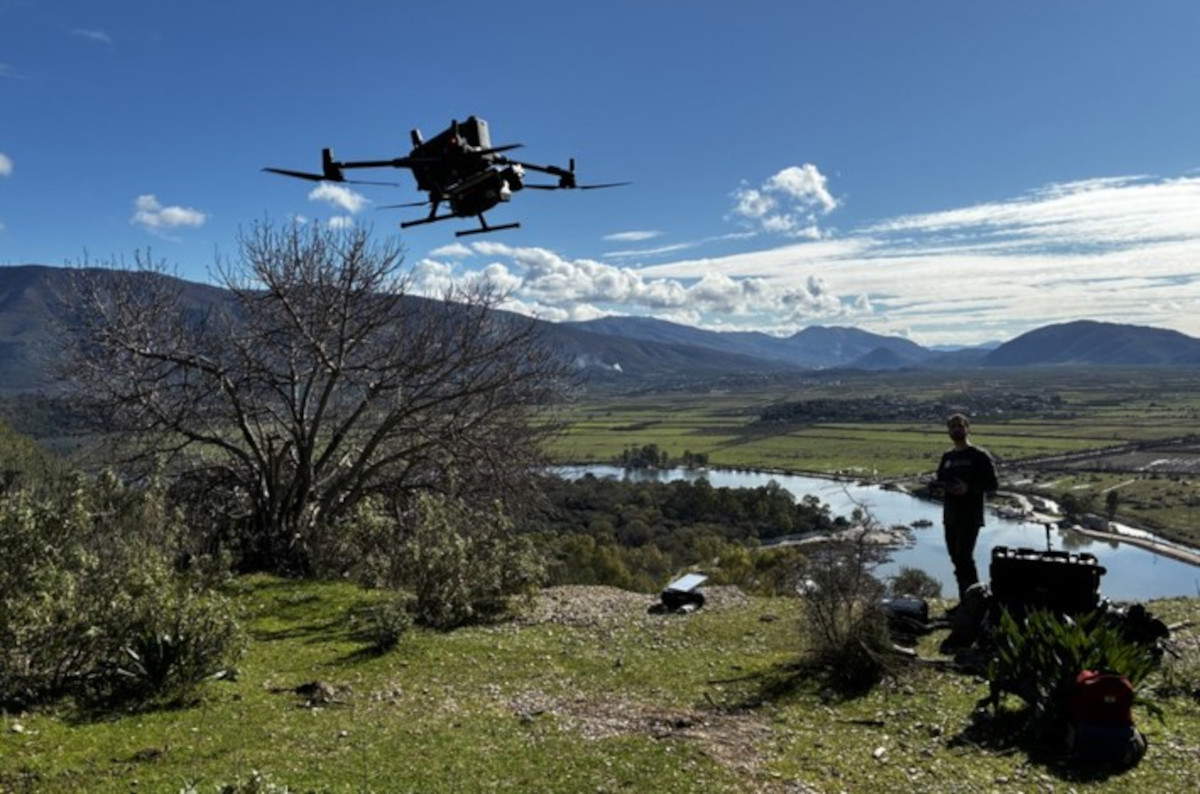
Enrico Giorgi, a professor in the Department of History, Culture, and Civilizationat the University of Bologna, is coordinating the archaeological mission alongside Belisa Muka of the Department of Antiquities atthe Archaeological Institute of Tirana. Furthermore, to make this new phase of research possible, a collaboration has been established with the Laboratory of Landscape Archaeology and Remote Sensing at the University of Siena, directed by Professor Stefano Campana. The project involves creating the first comprehensive survey of the Butrint Archaeological Park and the nearby Ksamil Peninsula using LiDAR technology, a tool that allows for the investigation of the terrain even where vegetation makes direct exploration difficult.


LiDAR, an acronym for Light Detection and Ranging, is a laser-based surveying system that, when mounted on a drone, allows for highly precise measurements of the ground surface, distinguishing soil characteristics from vegetation cover. The data collected is used to create a very high-resolution digital model, which provides a representation of the landscape as if trees and shrubs were not present.
“Butrint is an extraordinary place: a promontory overlooking a lagoon, inhabited almost continuously for millennia,” explains Enrico Giorgi. “However, it is also a difficult place to investigate because large portions of the park and the surrounding hills are covered by dense, natural vegetation, which hides the ground and whatever lies beneath it.”
Even the smallest variations in the terrain can thus become visible. Depressions, alignments, and unusual geometric shapes are identified as possible anomalies—that is, clues to structures that may have been built by humans and subsequently covered by vegetation or soil. The technology, however, is only the first step. Each anomaly must be verified directly by archaeologists, who make their way through the vegetation—often dense and difficult to traverse—to reach the marked locations, using GPS and surveying equipment. It is preciselyfrom the combination of technological surveying and field observation that the new discoveries at Butrint emerge. “We advance with difficulty, one meter at a time, our gaze shifting from the GPS screen to the tangle of vegetation blocking our path, as the distance to the target shortens and anticipation grows,” says Giorgi. “The clue doesn’t always lead to a discovery: in some cases, a regular shape turns out to be a fallen tree trunk or a natural rock outcrop, but in many cases, once we’ve made our way through yet another tangle of shrubs and freed ourselves from the brambles caught in our clothes, we suddenly find ourselves face-to-face with ancient structures, often never documented before”.
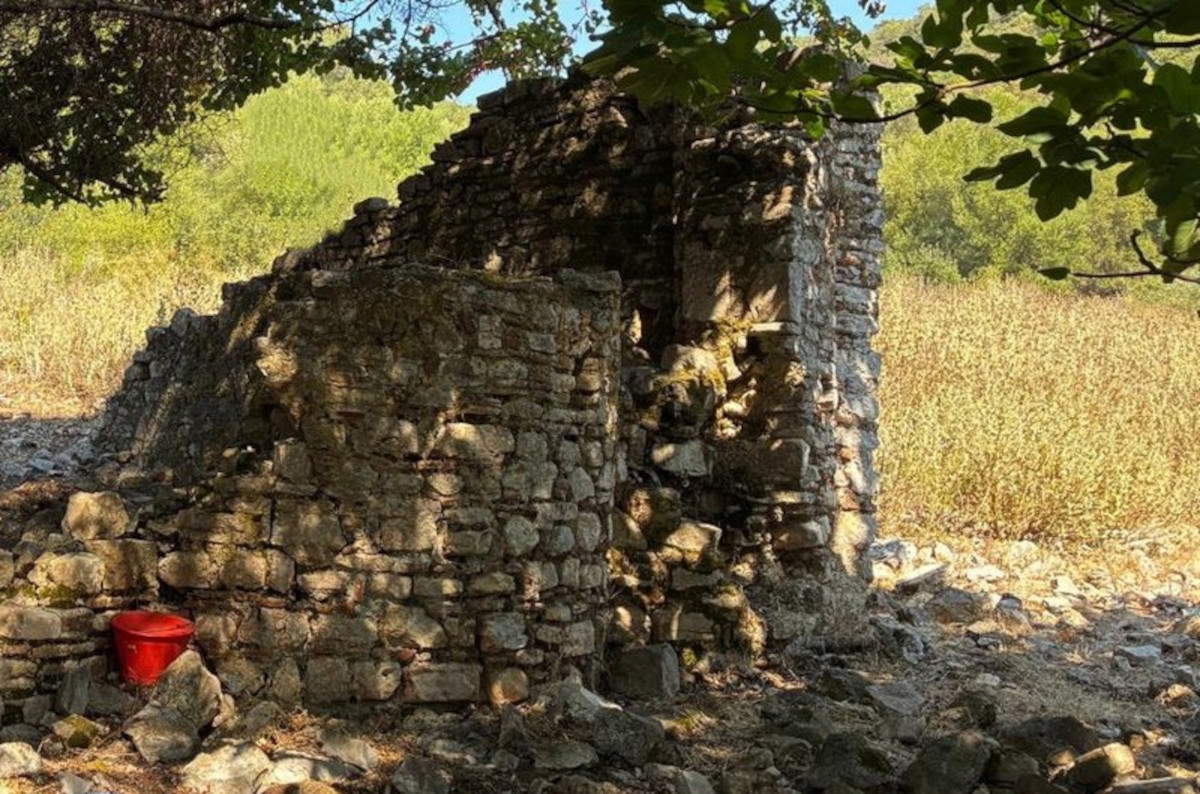
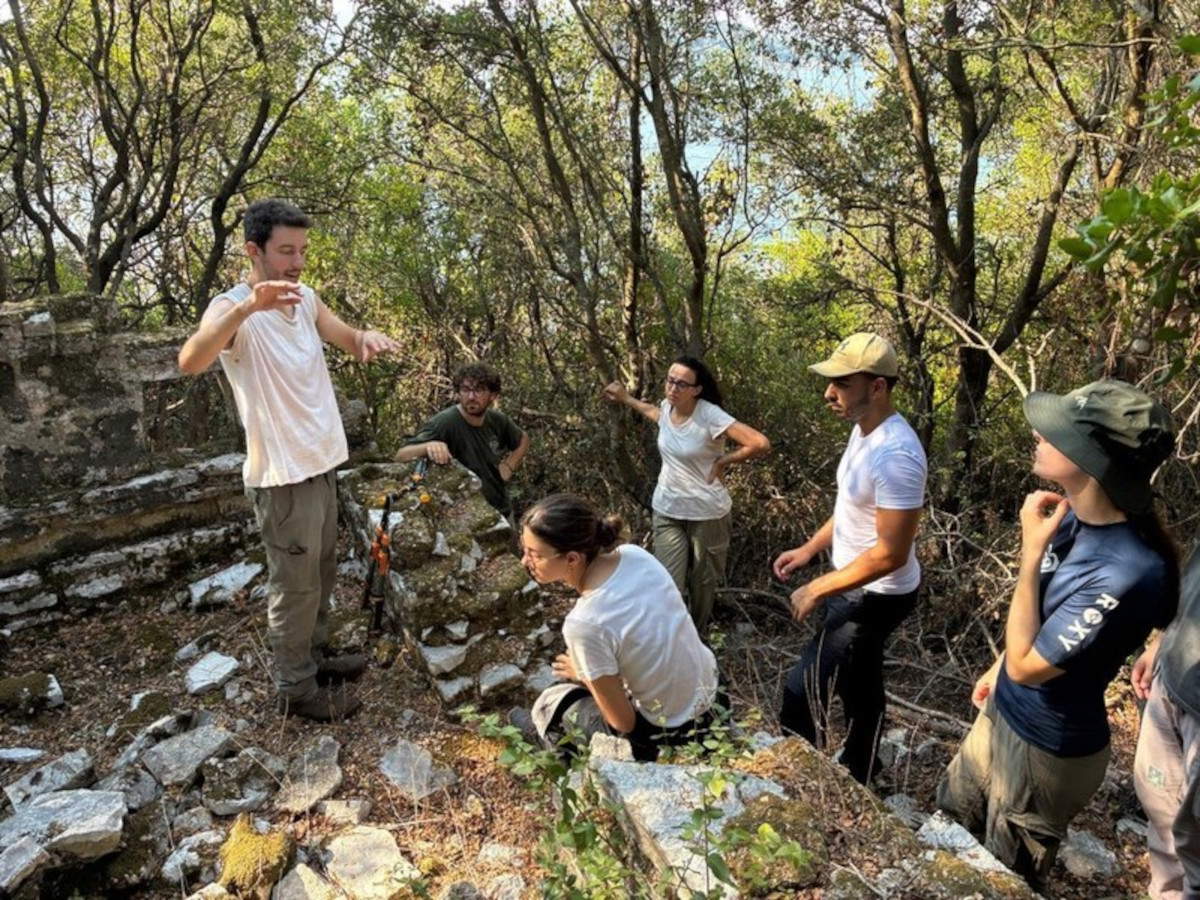
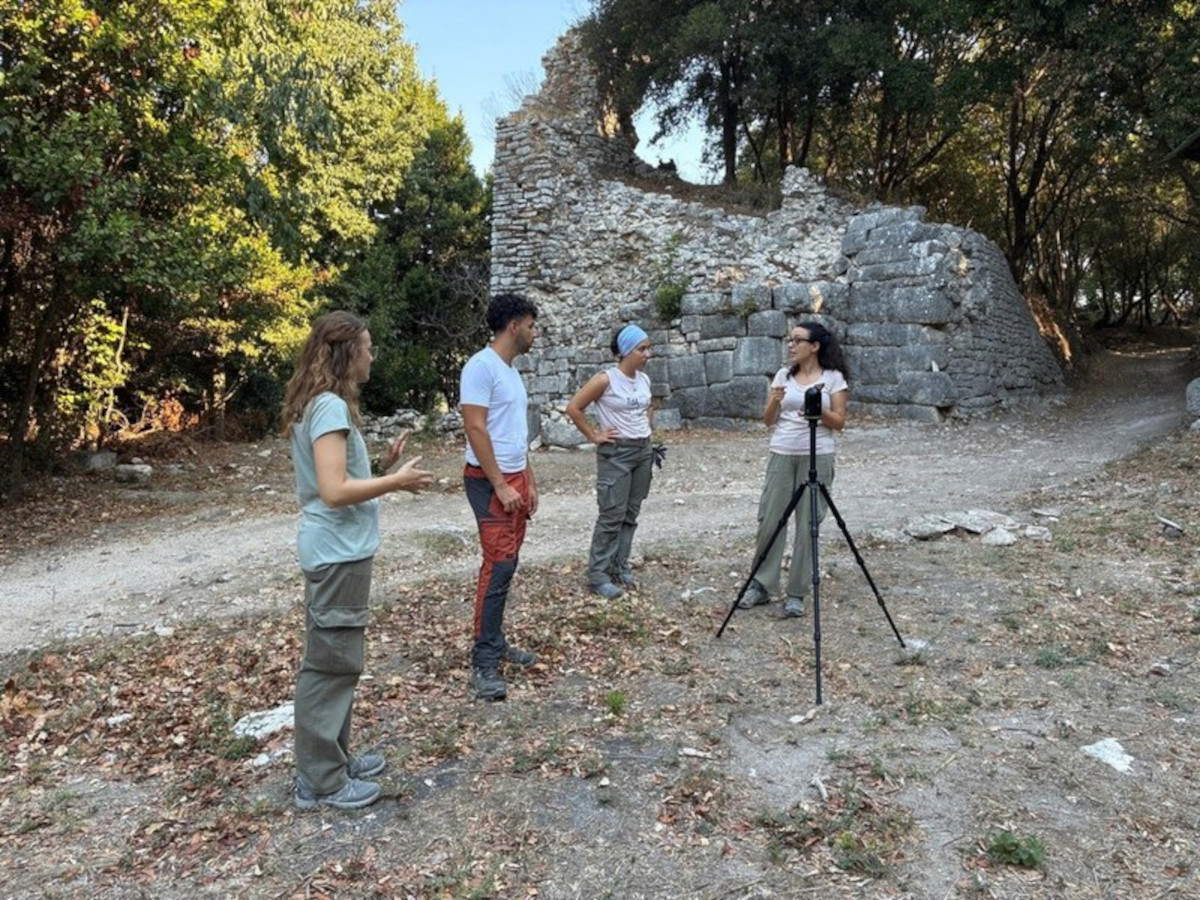
A building with two apses and new structures near the Roman Forum
Within the Archaeological Park, excavations have uncovered several findings of particular interest. Among these is a building with two apses, parts of which are still preserved to a height of nearly two meters. The construction technique bears striking similarities to that of the Great Basilica, one of Butrint’s most iconic monuments, suggesting a possible connection to the city’s late antique phase. This hypothesis will need to be verified through further studies.
The surveys also led to the identification of a well with an opening constructed from limestone blocks and, on the northwestern slopes of the park, a large depression that turned out to be a circular cistern lined with hydraulic mortar, a method used to waterproof the structure and contain water.
Another significant finding emerged while ascending toward the acropolis, where the Italian-Albanian Mission conducted excavations between 2019 and 2024. In this area, what appears to be a new section of the Hellenistic-period fortification walls, built with large, squared stone blocks, has been identified.
Also of particular interest is the discovery immediately east of the Roman Forum, where a rectangular depression revealed a large building divided into two rooms, likely constructed during the same phase as the nearby monumental complex. Inside, traces of plaster, a terracotta slab floor, and a stone threshold with steps leading to an outdoor space equipped with benches are still visible. The presence of these elements seems to suggest that the building served a public function, although its precise purpose will require further investigation.
The investigations were not limited to the perimeter of the Archaeological Park but also extended to the hills and surrounding areas, which had been less explored until now. Here, vegetation grows undisturbed, and the LiDAR survey detected a particularly high number of anomalies, providing researchers with new targets to verify on the ground.
The surveys led to the identification of other ancient buildings and numerous burials, some of which were carved directly into the rock. Alongside these vestiges of antiquity, more recent traces of Albanian history have also come to light, including bunkers and long trenches, which document the transformations of the territory throughout the 20th century. Among the ancient structures, particular attention was given to a church with three apses—whose walls reach heights exceeding two meters in some places—and to an adjacent building that may have been constructed during the Roman period.
The new discoveries confirm the potential of Butrint, a site of extraordinary importance for understanding the history and transformations of the Albanian territory. The ability to identify structures hidden by vegetation using LiDAR allows for a gradual expansion of knowledge about the area, linking already known monuments, previously unknown buildings, and traces from different eras.
“Butrint is one of the most extensively studied sites in the Mediterranean, and it has not yielded previously unknown monuments of this magnitude in a long time,” concludes Giorgi. “This year’s campaign demonstrates that the ancient city has not yet been fully uncovered: integrating remote sensing with field verification allows us to quickly and non-invasively identify what vegetation had concealed for centuries.”
|
| Albania: New Archaeological Discoveries in Butrint—Previously Unknown Structures Unveiled |
Warning: the translation into English of the original Italian article was created using automatic tools. We undertake to review all articles, but we do not guarantee the total absence of inaccuracies in the translation due to the program. You can find the original by clicking on the ITA button. If you find any mistake,please contact us.