



by Redazione 10/11/2026


Categories: Archaeology / Disclaimer
Following its restoration, the ancient hypogeum of the Church of St. Augustine—now the Shrine of St. Rita—is once again open to the public, featuring five burial chambers. The site has joined the Pulcherrima circuit, which brings together six historic and religious sites in Catania.


Three and a half meters below the historic center of Catania,five burial chambers connected by corridors and ancient staircases are once again open to the public.The Ancient Hypogeum of the Church of St. Augustine—now the Diocesan Shrine of St. Rita, located at 318 Via Vittorio Emanuele II—was inaugurated on Monday, November 9, having been restored and reopened to the city. The site is now part of “Pulcherrima,” a cultural tourism itinerary promoted by the Archdiocese of Catania in collaboration with Kalatà, which connects several of the city’s historical and religious heritage sites.


Present at the opening ceremony were the Metropolitan Archbishop of Catania, Monsignor Luigi Renna; Mayor Enrico Trantino; and Lina Scalisi, Vice Rector of the University of Catania and President of the Academy of Fine Arts. Also in attendance were Archbishop Emeritus Salvatore Gristina, Vicar General Vincenzo Branchina, Prefect Emerita Maria Carmela Librizzi, Superintendents Emerita Donatella Aprile and Rosalba Panvini, Superintendent Maurizio Auteri, and the president of the Archaeological Park, Giuseppe D’Urso, along with representatives from institutions, the cultural world, and the church community.
The event was opened by Father Massimiliano Parisi, rector of the Shrine, who has overseen the restoration of the complex. Engineer Mauro Scaccianoce and architects Francesco Anfuso and Marco Bertolone—the designers and construction managers—outlined the details of the project, the discoveries made, and the challenges faced during the restoration.




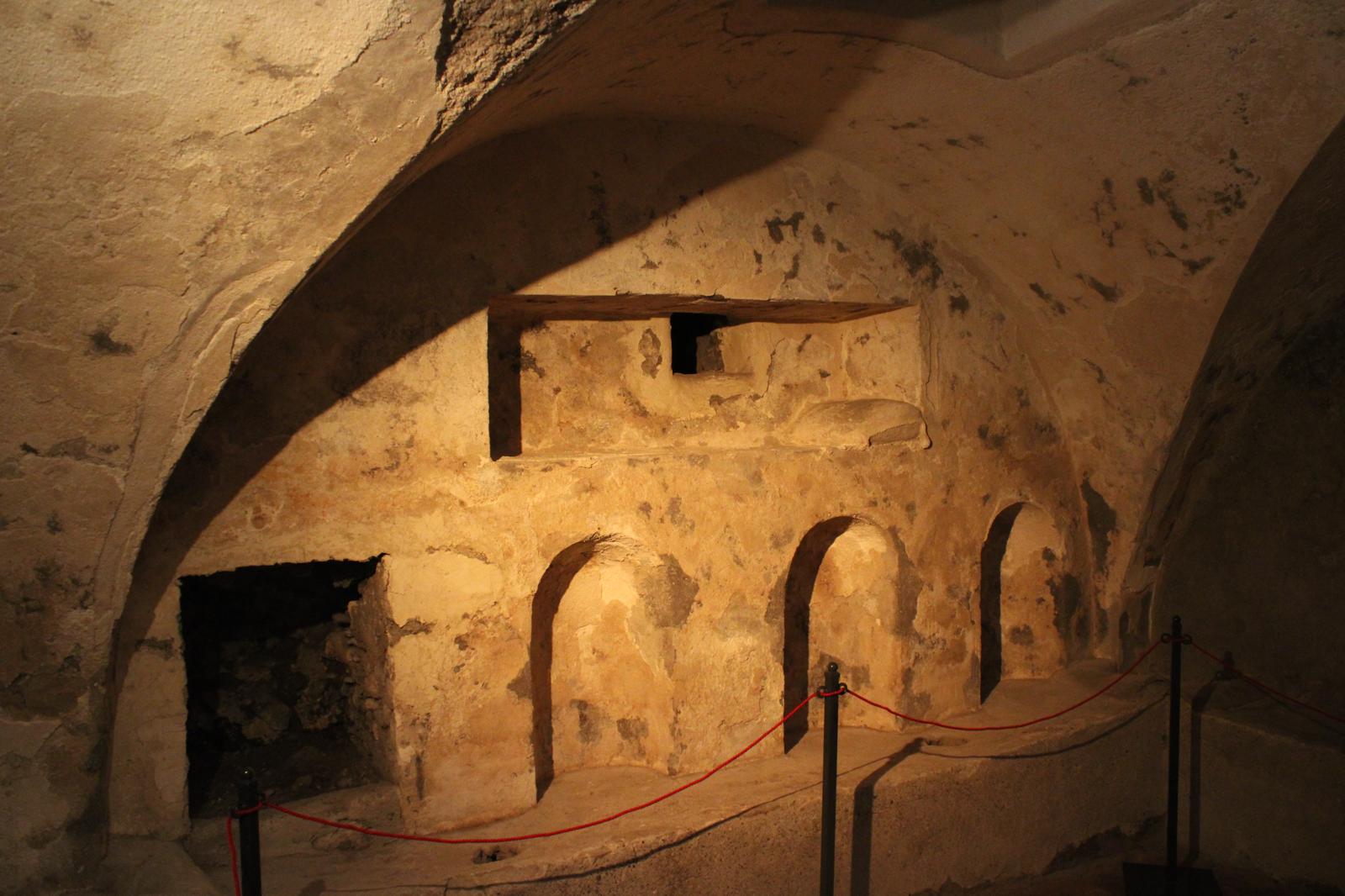
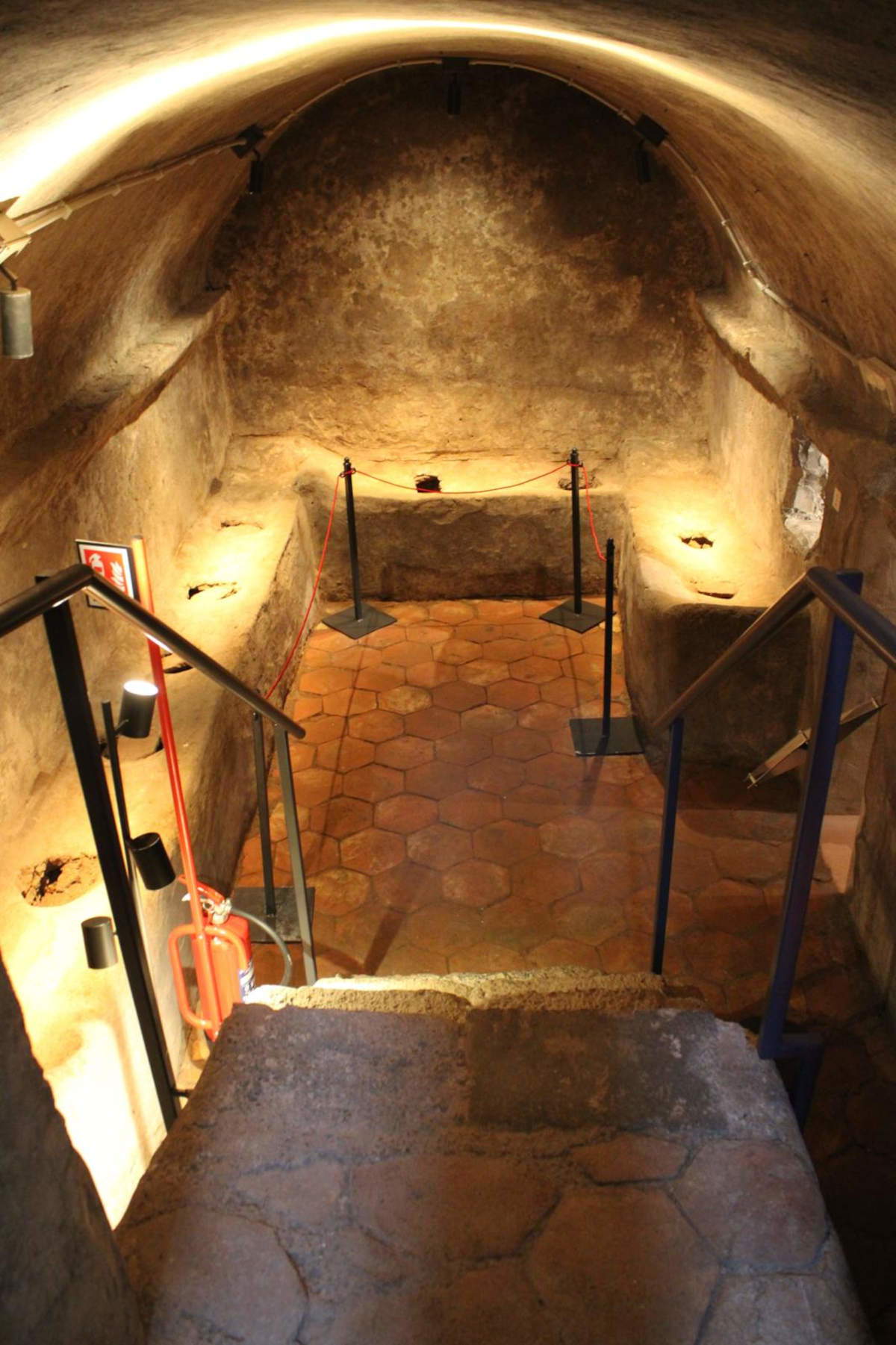
The hypogeum contains five burial chambers, characterized by barrel and cross vaults, terracotta floors, niches, and ossuaries. The chambers are connected by a system of corridors and staircases and document burial practices common between the 18th and 19th centuries. Among the most significant structures are the so-called “colatoi,” used for the preparation of the bodies prior to the final interment of the remains. The complex thus serves as a testament to the city’s funerary customs and religious history.
During the inauguration, a video produced by the Academy of Fine Arts in Catania was previewed, introduced by Professor Gianpiero Vincenzo. Using artificial intelligence, the video reconstructs the various historical phases and functions attributed to the hypogeum: from evidence dating back to Roman times to the funeral practices of the Augustinians, up to the use of the spaces as an air-raid shelter. The ceremony also featured a performance by the San Giorgio Polyphonic Choir, conducted by Paolo Cipolla and Franco Lazzaro. Following the official speeches and closing remarks by Archbishop Luigi Renna, the ribbon-cutting ceremony officially marked the reopening, followed by a tour by the authorities and the opening to the public.
The inclusion of the hypogeum in the Pulcherrima circuit expands an itinerary that, with a single ticket, allows visitors to explore six sites of Catania’s ecclesiastical heritage. The itinerary includes the terraces and dome of the Abbey of Sant’Agata, the lantern tower of the same abbey, the Church of San Giuseppe al Duomo, the Church of Santa Rita with its ancient hypogeum, the Church of the Holy Trinity with the nuns’ ancient choir, and the Church of Santa Maria dell’Aiuto with the adjoining Casa di Loreto, a replica of the Holy House of Loreto.
Starting in December, the tour will also feature an exhibition dedicated to the artist Salvatore Incorpora, held in the Church of Santa Maria dell’Aiuto and included in the single admission ticket. The itinerary thus offers an exploration of the city’s heritage that combines Baroque architecture, places of worship, evidence of monastic life, and underground spaces, with the aim of expanding visitation opportunities for residents and tourists alike.
The Ancient Hypogeum of St. Augustine, located at the Sanctuary of St. Rita at 318 Via Vittorio Emanuele II, will be open to visitors on Mondays, Wednesdays, Fridays, and Saturdays from 3:00 p.m. to 6:00 p.m. and on Sundays from 9:30 a.m. to 12:30 p.m.
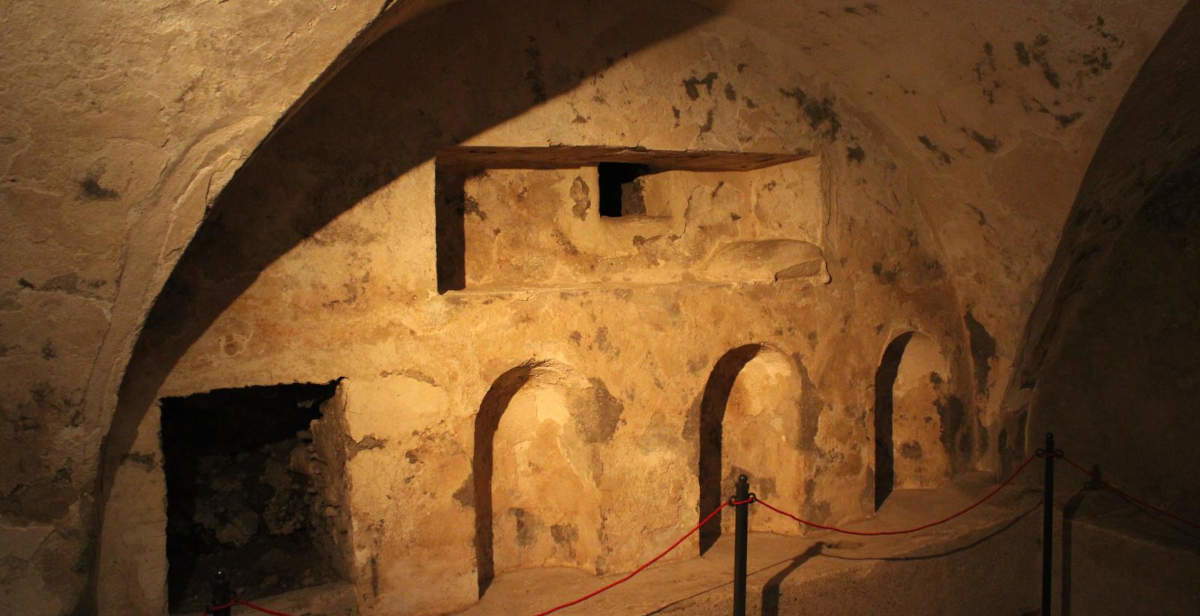 |
| An ancient underground tomb has reopened in Catania: five burial chambers three meters below the city |
Warning: the translation into English of the original Italian article was created using automatic tools. We undertake to review all articles, but we do not guarantee the total absence of inaccuracies in the translation due to the program. You can find the original by clicking on the ITA button. If you find any mistake,please contact us.