



by Redazione 16/11/2026


Categories: Archaeology / Disclaimer
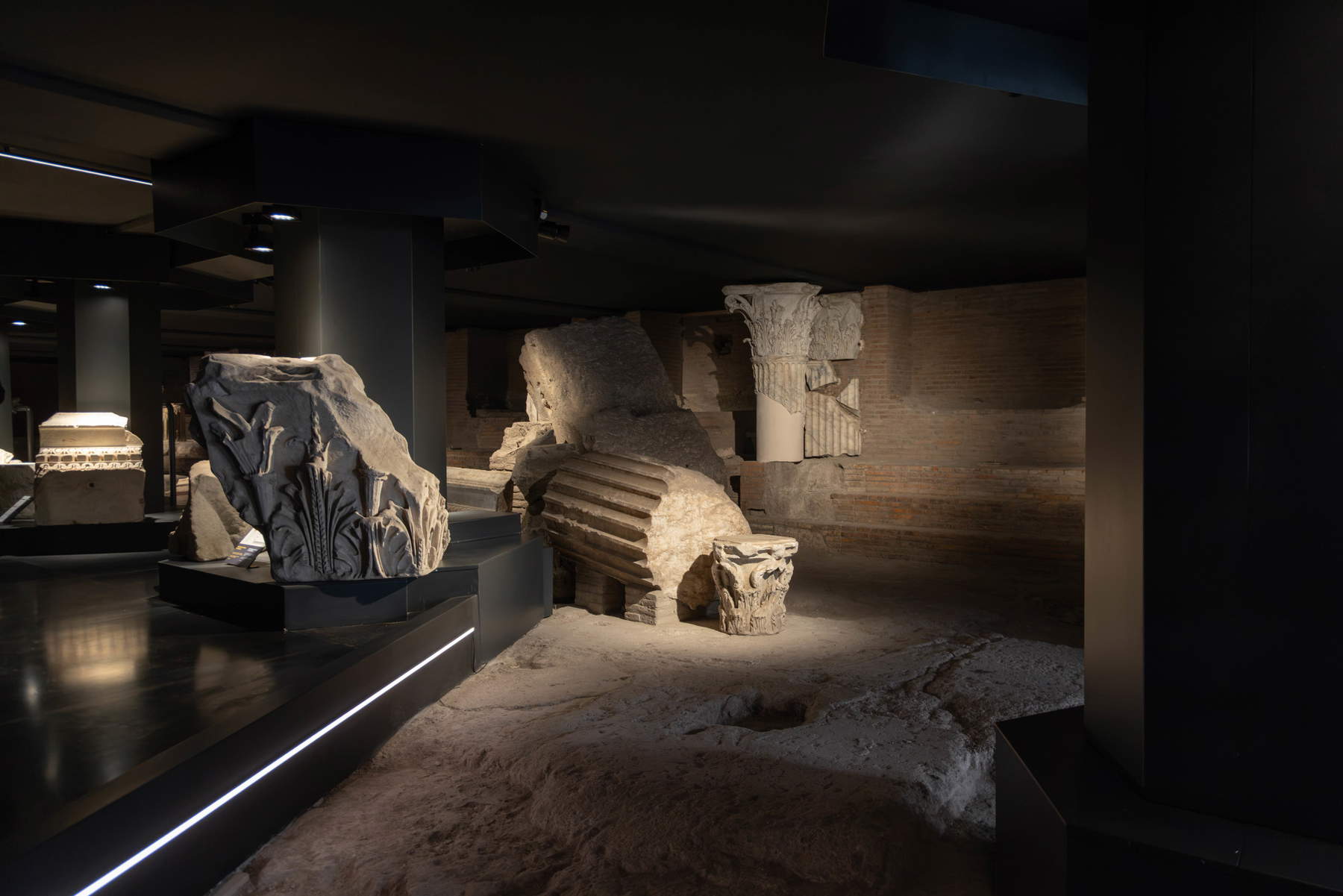
In Rome, the Western Library of Trajan’s Forum is opening to the public for the first time: a vast underground hall that has been restored and revitalized through a major restoration and enhancement project. It features marble floors, monumental artifacts, and immersive reconstructions of its history.


A monumental underground space that has never been open to the public is now part of the Imperial Forums tour. In Rome, the Western Library of Trajan’s Forum is opening to visitors for the first time, a vast underground hall of great archaeological value traditionally identified as one of the libraries flanking Trajan’s Column, restored through a major conservation and enhancement project promoted by the Capitoline Superintendence for Cultural Heritage as part of the PNRR Caput Mundi program.

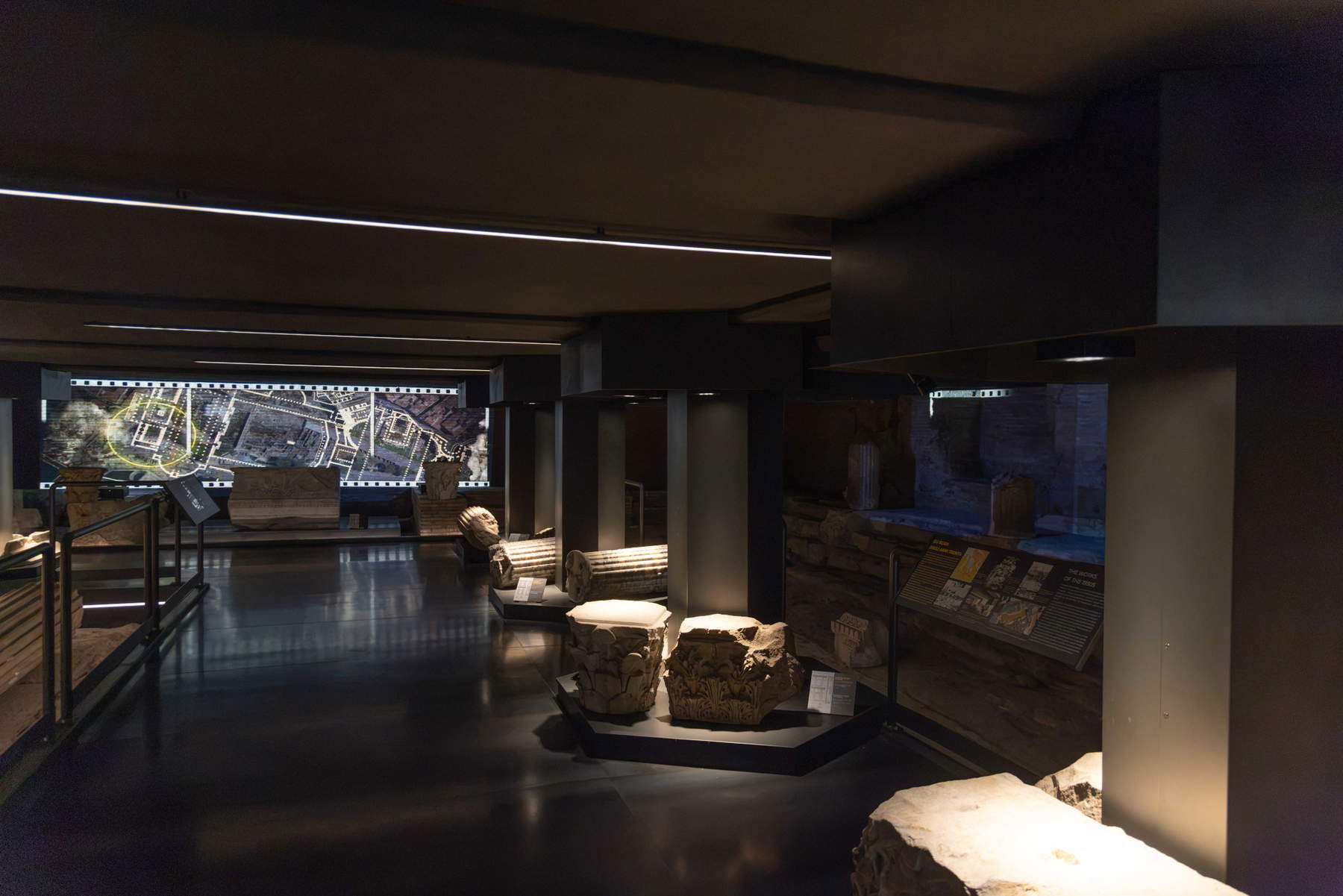
The opening allows visitors to explore one of the least-known areas of the monumental complex commissioned by Emperor Trajan and inaugurated in 112 AD, expanding the archaeological itinerary and returning to the city a site that had long remained inaccessible. The project, funded with a total investment of 1,755,000 euros, has transformed a space used for years as a storage area into a permanent museum space, where artifacts, multimedia installations, and educational displays guide visitors through the historical and architectural history of the Forum.


The Ulpia Library and Questions About Its Function
The building is traditionally recognized as one of the two libraries flanking Trajan’s Column. Ancient sources mention the Bibliotheca Ulpia, one of the most important book collections in ancient Rome, intended to house literary works, administrative documents, and legal texts. However, the most recent scholarly interpretations have proposed a more complex understanding of the original purpose of these spaces, fueling an ongoing debate among scholars. After the fall of the Roman Empire, the hall underwent a long period of neglect and transformation. The ancient structures were gradually incorporated into new buildings and settlements, leading to the formation of the Alessandrino neighborhood. It was not until the 20th century, with the demolitions associated with the opening of Via dell’Impero and subsequent archaeological campaigns, that the monumental complex gradually came to light, along with traces of the transformations that had altered its appearance over the centuries.


Restoration and New Technologies to Protect the Underground Spaces
The restoration of the Western Library required extensive conservation and consolidation work, which involved the historic masonry, existing structures, and the roof slab. High-performance contemporary technologies were employed to ensure the stability of the spaces and improve their conservation conditions.
One of the main problems was water seepage from the gardens above on Via dei Fori Imperiali, which had long been affecting the underground spaces. To address this, a waterproofing and roof protection system was installed, based on an innovative crystallizing technology capable of acting directly within the concrete matrix to prevent the penetration of water and contaminants. This solution was essential for preserving the spaces and making them suitable for public use.
Among the most interesting aspects of the project is the decision to preserve and highlight the various historical layers. The hexagonal reinforced concrete pillars, added during 20th-century renovations, were not concealed or removed but reinterpreted as central elements of the design. Traces of the various eras thus become an integral part of the site’s architectural and historical narrative.
Particular attention was also paidto accessibility. An elevated, fully reversible walkway allows visitors to traverse the spaces without compromising the existing archaeological features, while at the same time offering new vantage points for observing the artifacts and historical evidence uncovered during the work.
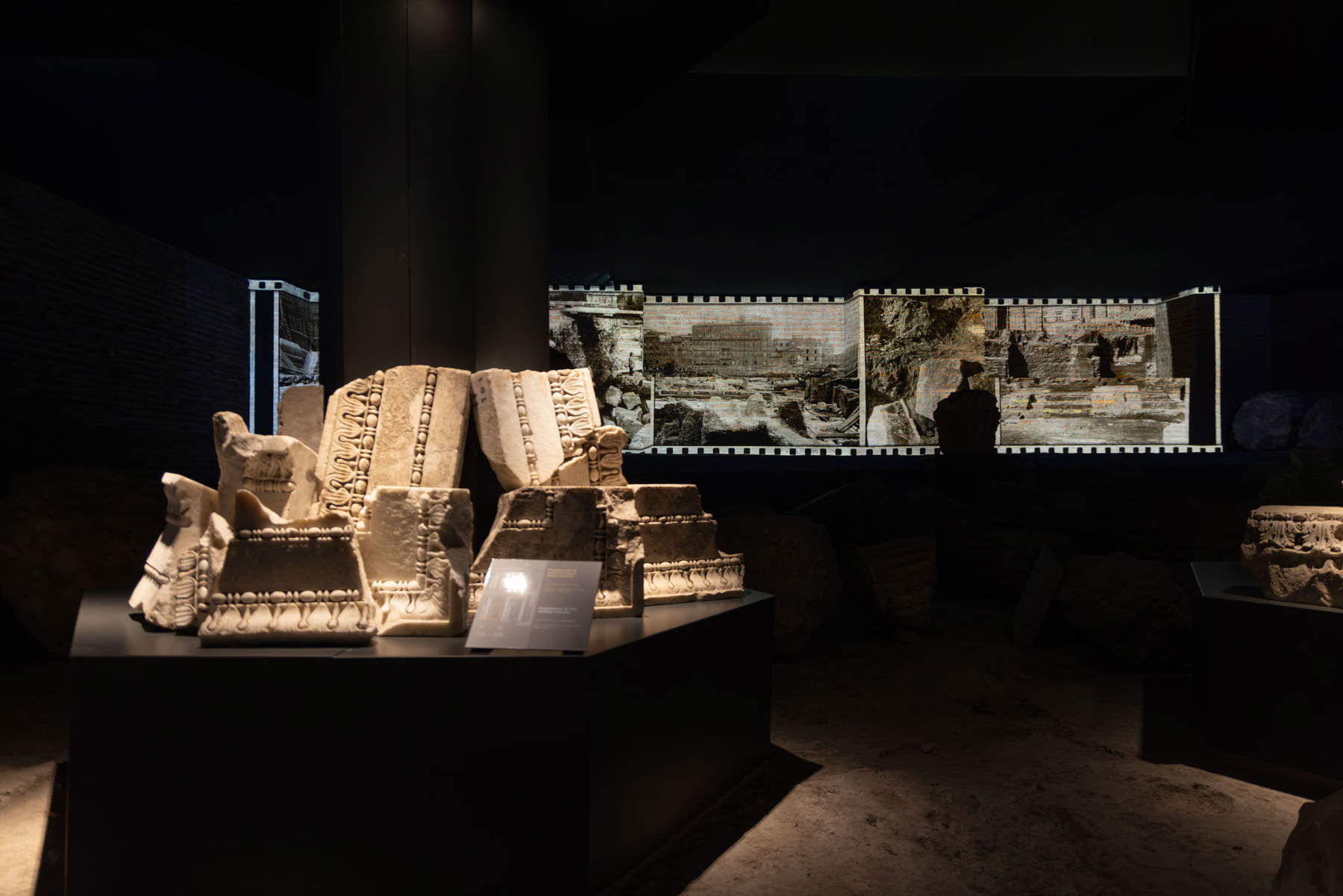
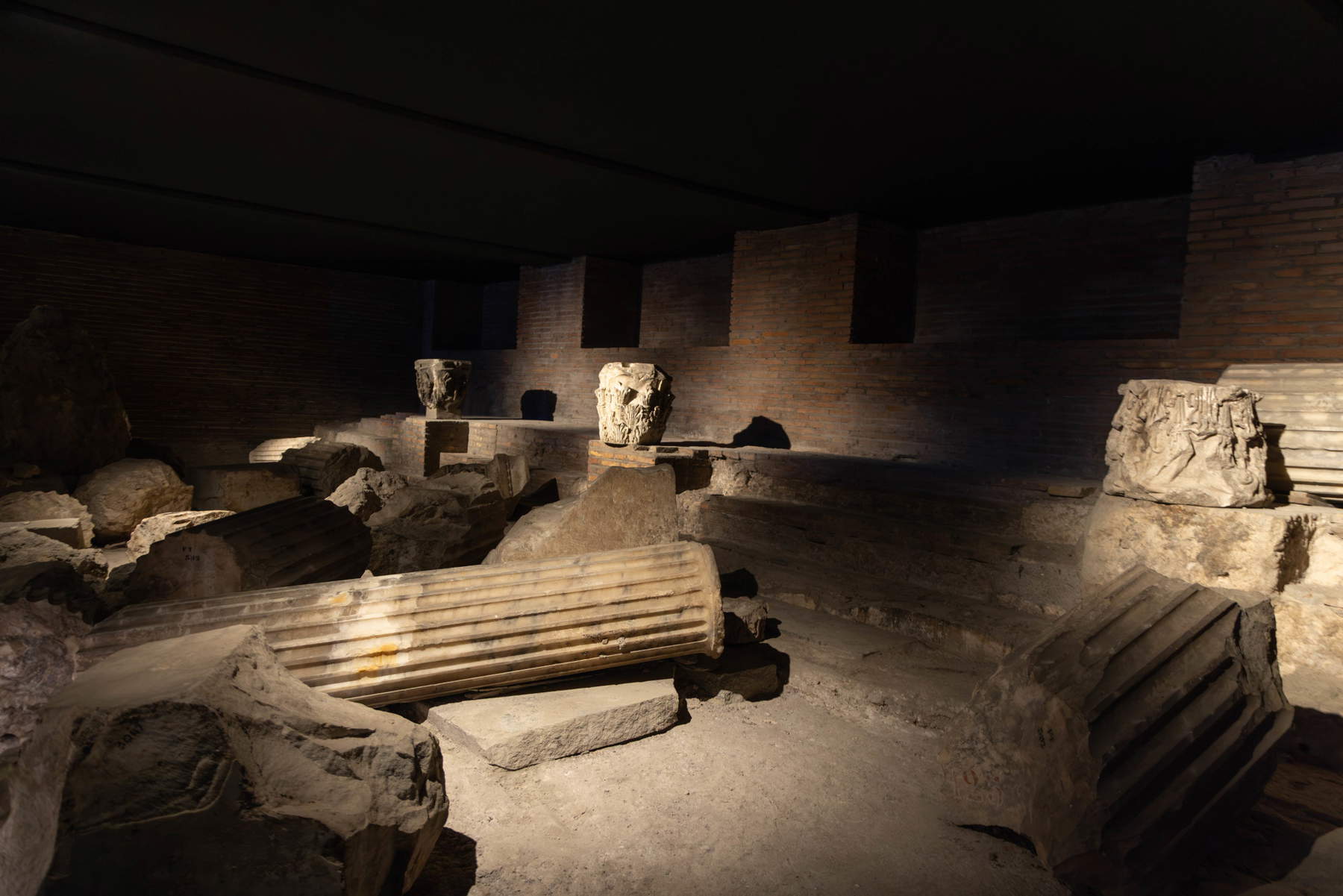
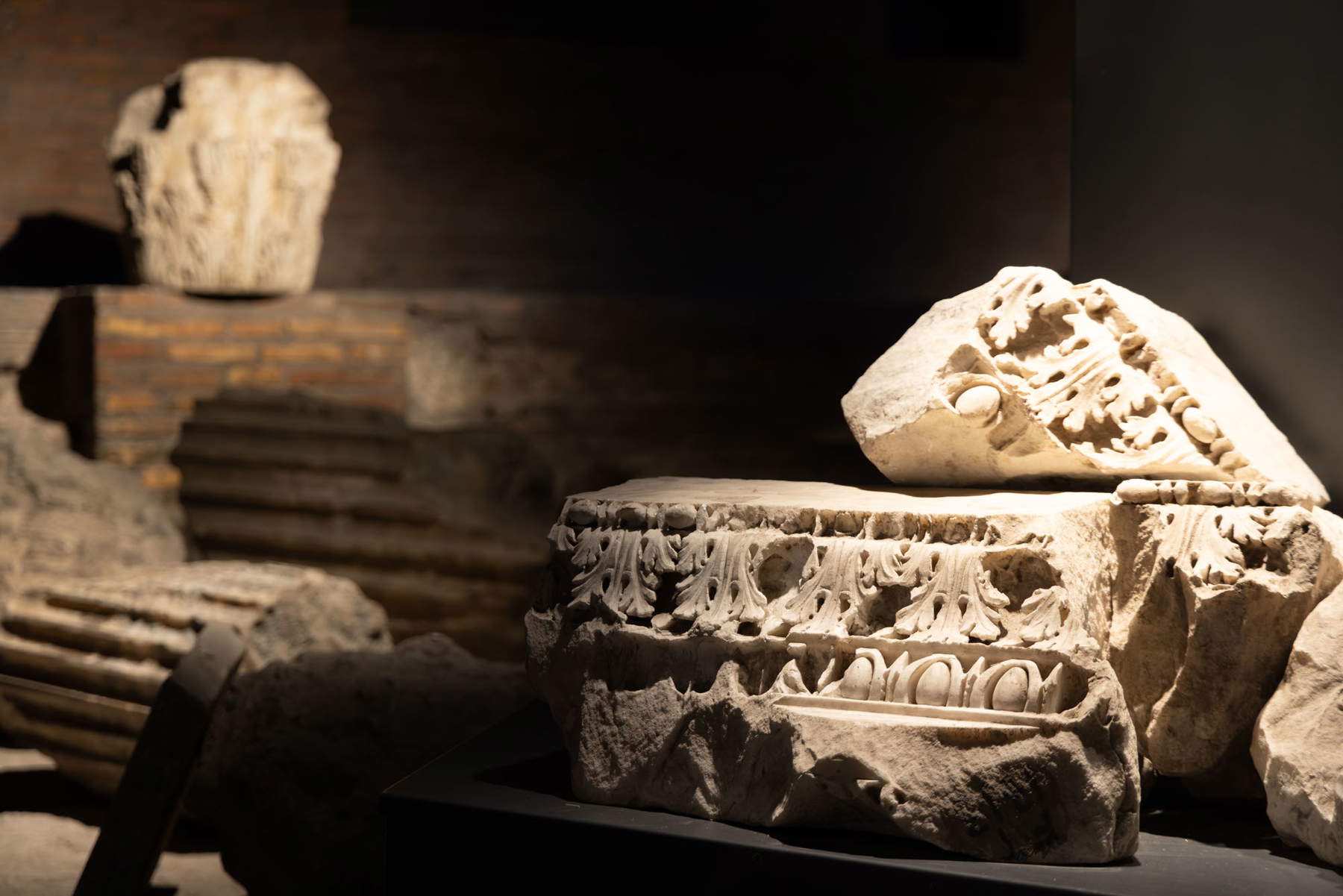
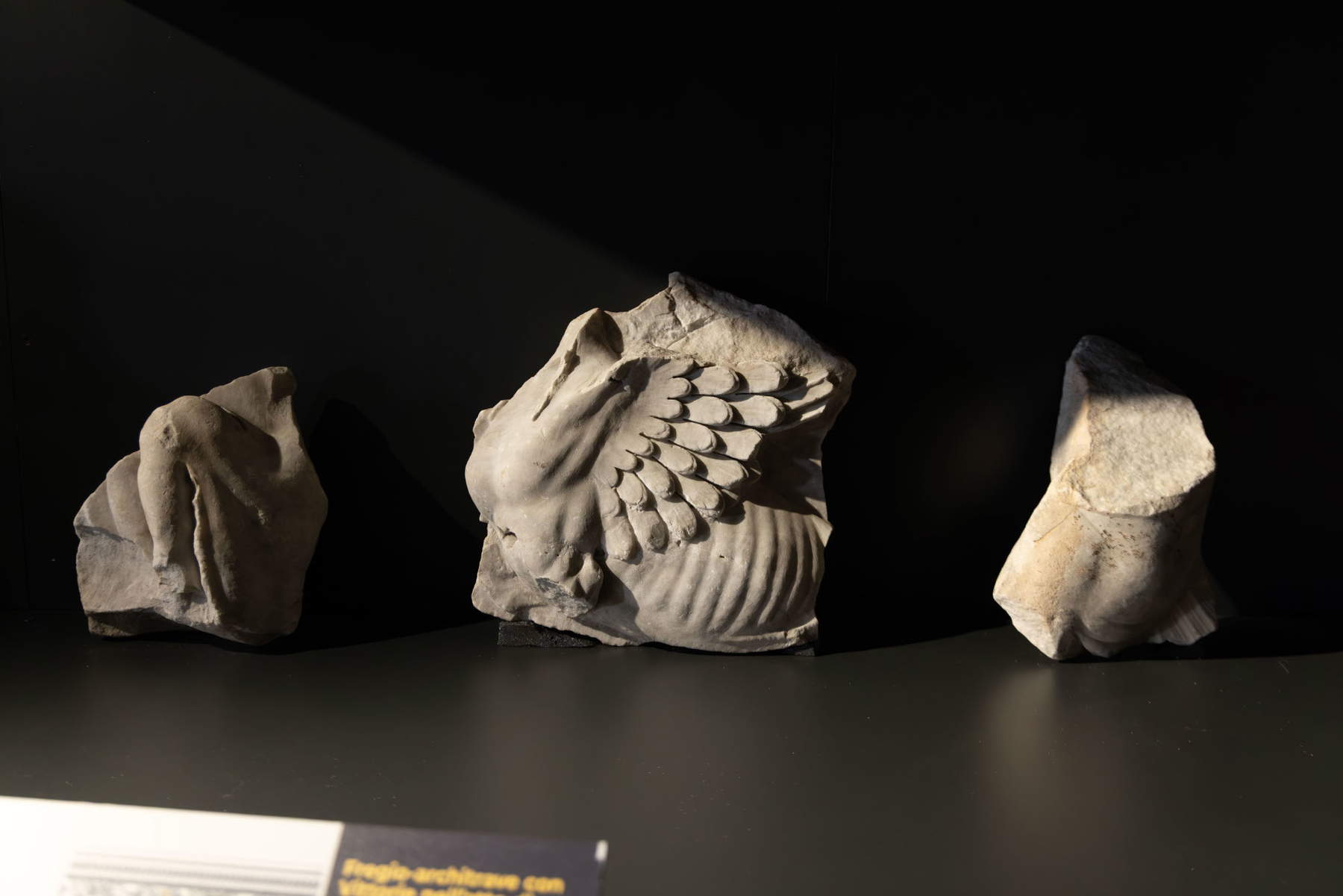
Among the most significant discoveries is a section of the ancient floor of the hall, crafted from precious polychrome marble and now highlighted by a specially designed lighting scheme. The tour also includes important architectural fragments from the library, such as a large pillar capital from the entrance portico, marble decorations from the niches, and other valuable elements discovered in the area of Trajan’s Forum.
An immersive video mapping installation, designed to virtually reconstruct the original appearance of the rooms and illustrate their subsequent phases of use and transformation, makes the visit even more engaging. Through images and multimedia content, visitors will be able to more easily understand the function of the spaces and their role within the large monumental complex.
The reopening of the Western Library thus represents an important opportunity to delve deeper into the history of Trajan’s Forum and the urban transformations that have shaped this part of Rome over the centuries. A space previously excluded from public tours is now becoming part of the capital’s accessible heritage, enriching the Municipal Museum System and offering a new perspective on the history of the Imperial Forums.
The Western Library of Trajan’s Forum will be open to visitors on Fridays, Saturdays, and Sundays, with organized access for groups of up to 20 people and tours departing every 40 minutes. The first tour begins at 9:20 a.m., while the last tour begins at 3:20 p.m.
|
| An underground site from ancient Rome is opening to the public: it is the Western Library of Trajan's Forum |
Warning: the translation into English of the original Italian article was created using automatic tools. We undertake to review all articles, but we do not guarantee the total absence of inaccuracies in the translation due to the program. You can find the original by clicking on the ITA button. If you find any mistake,please contact us.