



by Redazione 24/07/2026



Categories: Archaeology / Disclaimer
In Egypt, an Egyptian archaeological mission has identified a new burial complex in the Tell Quesna necropolis, in the Menoufia Governorate, containing artifacts that document funerary practices, religious beliefs, and trade relations during the Late Period and the Greco-Roman era.
In Egypt, a new burial chamber has been discovered in the necropolis of Tell Quesna, in the Menoufia Governorate, in the Nile Delta. The discovery was made by the Egyptian archaeological mission of the Supreme Council of Antiquities, which is conducting scientific excavations at the site, and has yielded a collection of artifacts that help reconstruct the funerary practices and the cultural and economic dynamics that developed in the region during the Late Period and the Greco--Roman period.
According to Egyptian Minister of Tourism and Antiquities Sherif Fathy, the discovery confirms the archaeological significance of the Tell Quesna necropolis, considered one of the main burial sites for people of the Central Delta. The collection of finds offers new insights into the religious and economic life of the communities that inhabited the area during this historical period.
The new funerary structure features a complex architectural layout: it consists of a main hall connected to several chambers with vaulted entrances. The preserved elements have allowed archaeologists to hypothesize the original presence of vaulted ceilings and to reconstruct part of the complex’s floor plan.


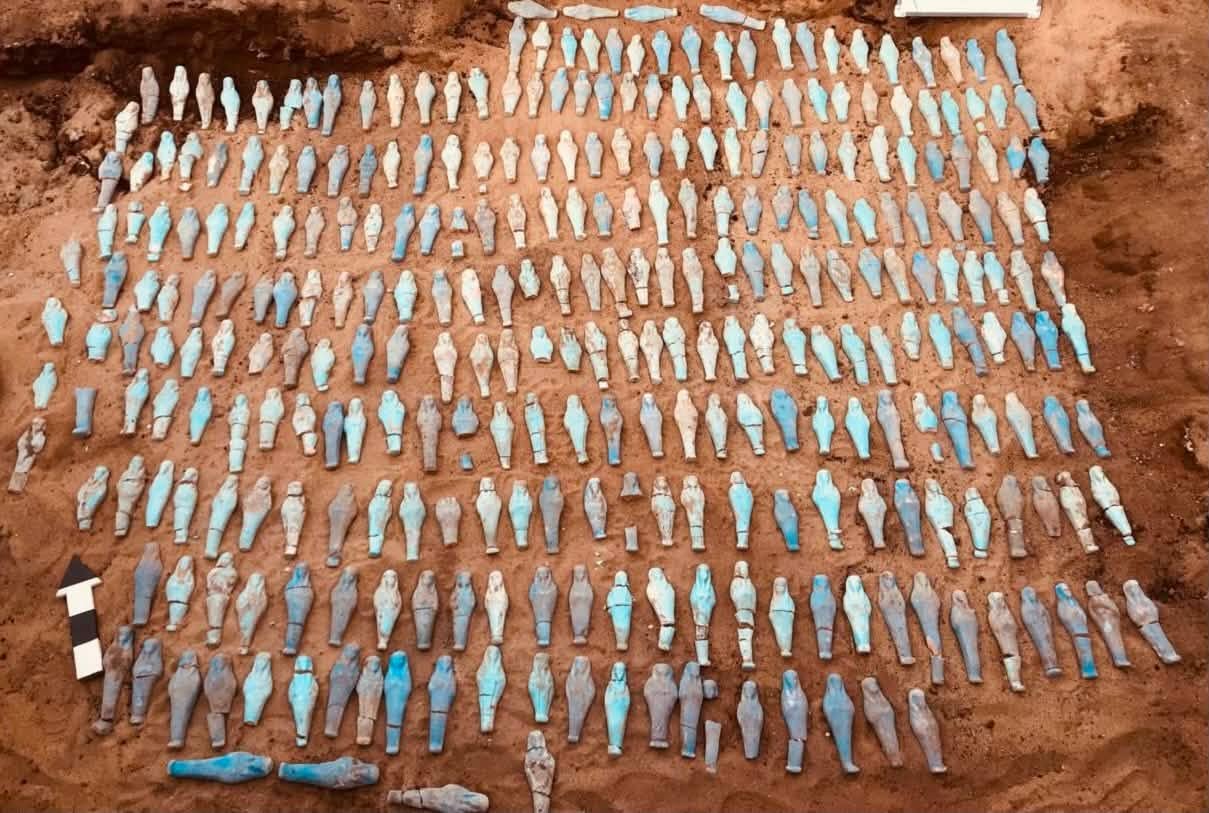
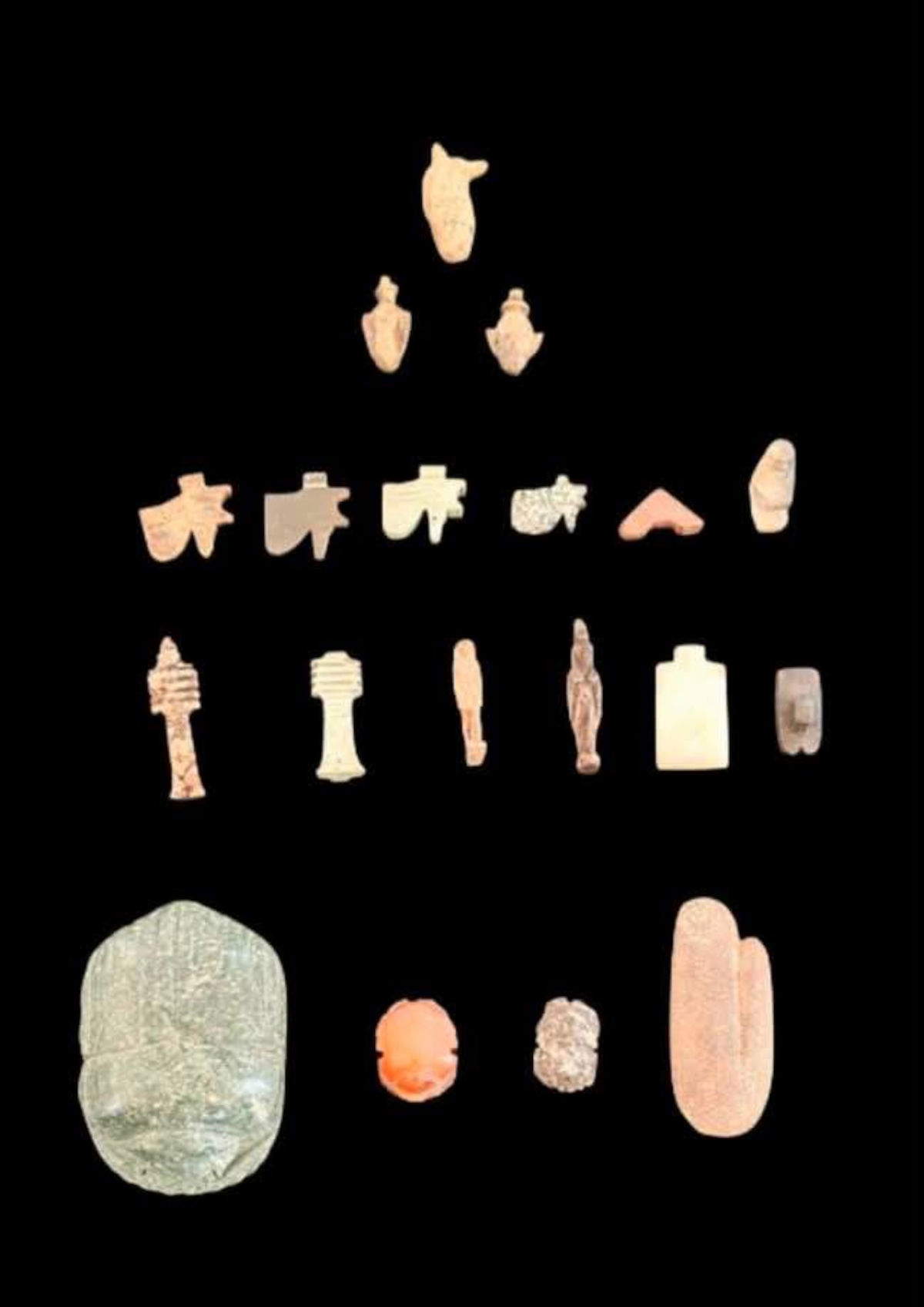
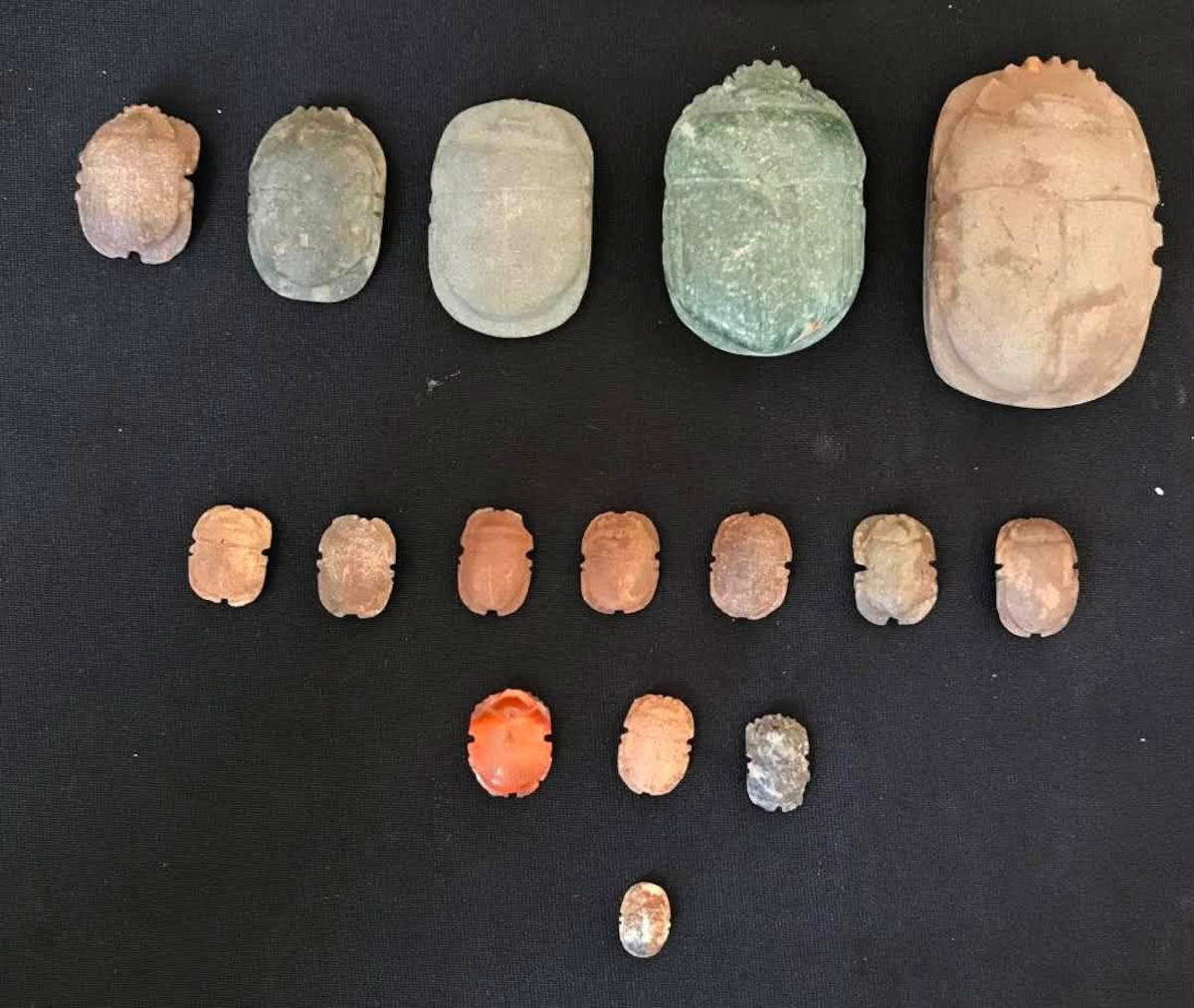
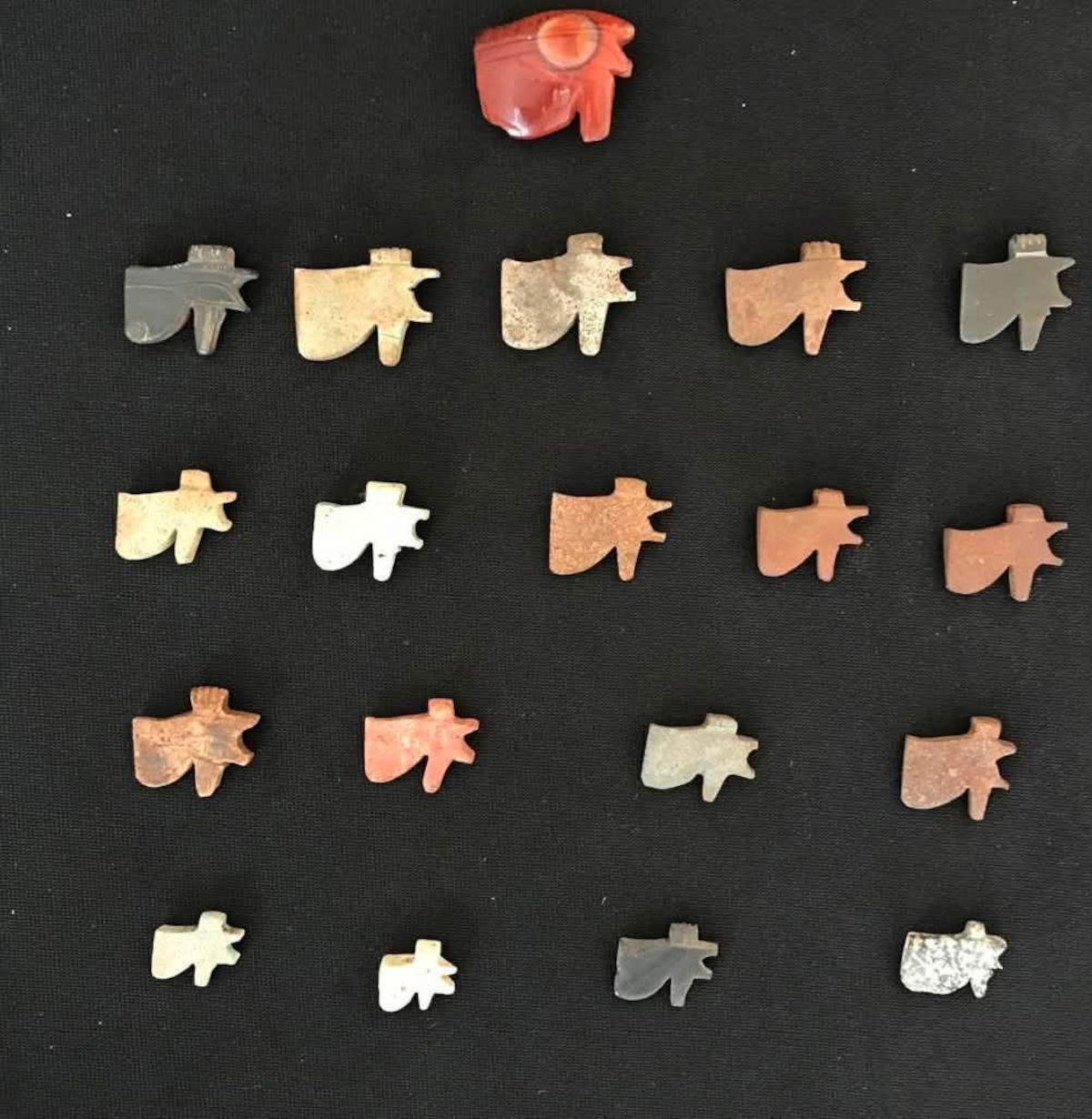
Inside the unit, several human burials in the Osirian position were discovered, in varying states of preservation, along with numerous objects related to funerary rituals. Among the most significant finds are 560 ushabti figurines , grouped into two large clusters within one of the chambers. The figurines, characterized by the traditional Osirian form, vary in size, and some bear inscriptions taken from the Book of the Dead. The excavations also unearthed protective amulets made of semiprecious stones, including various amulets such asthe Eye of Horus and the Knot of Isis, as well as depictions of certain deities of ancient Egypt. These objects were associated with the concepts of protection, strength, and rebirth central to Egyptian religion.
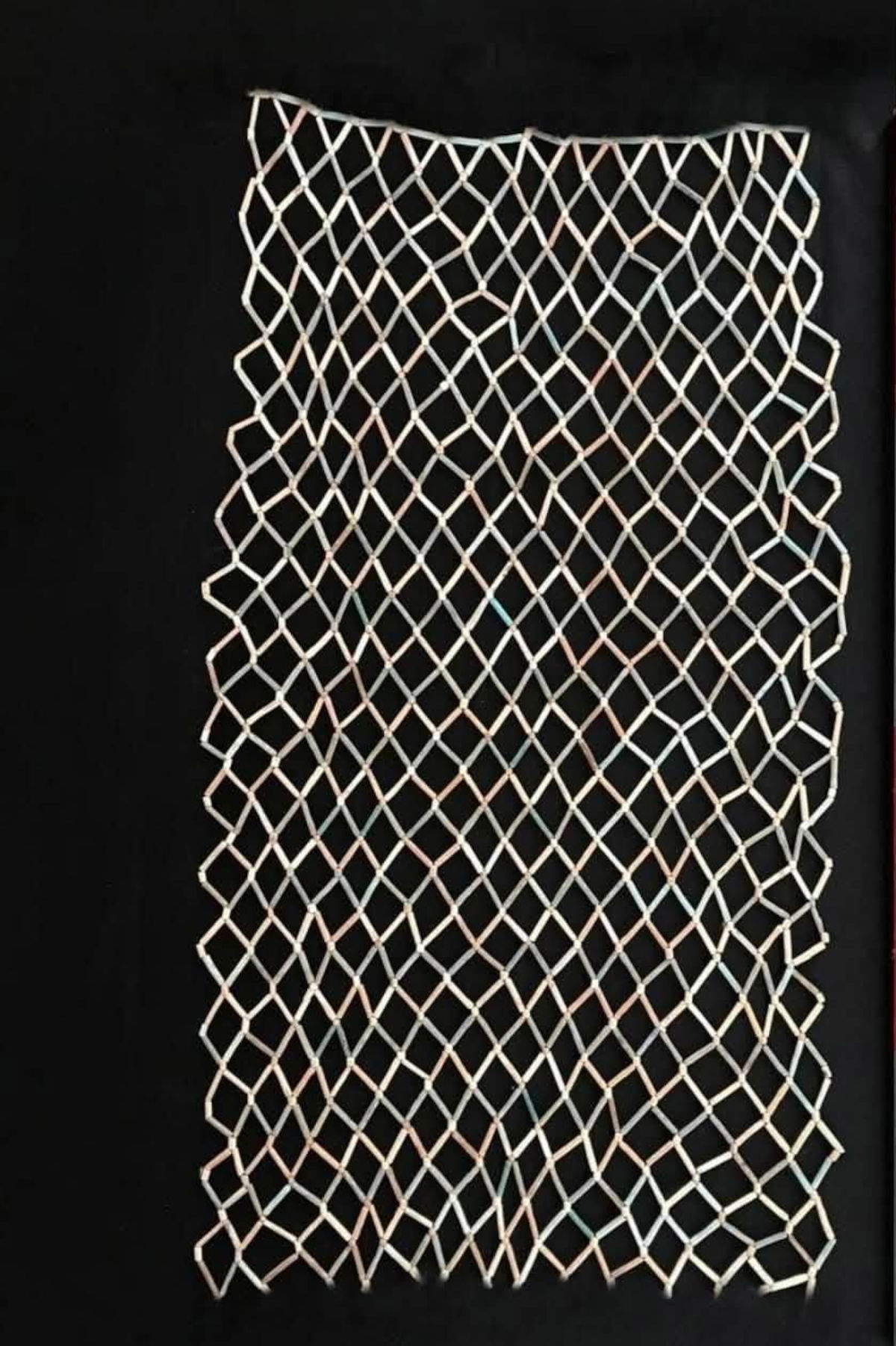
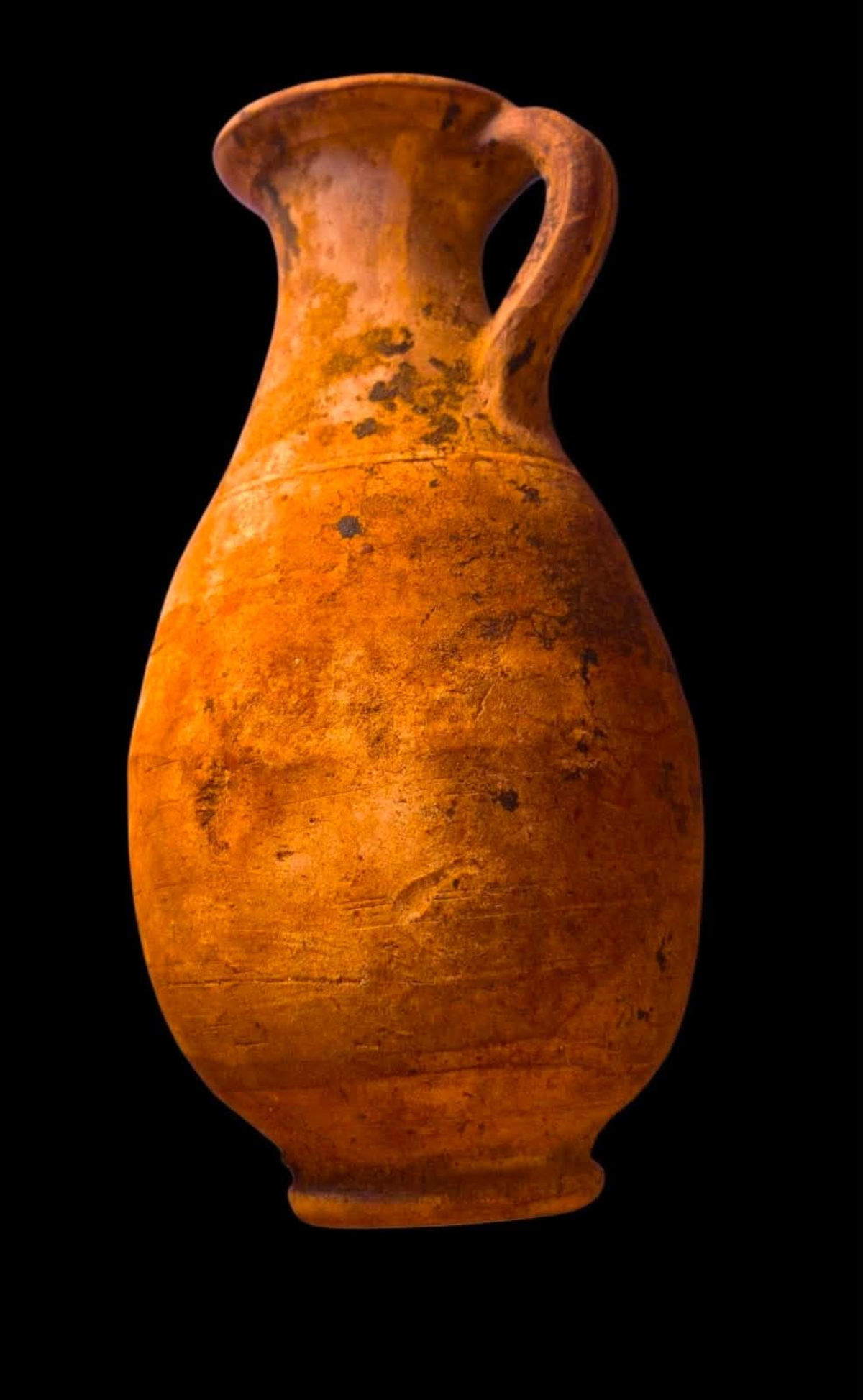
The recovered material also includes numerous ceramic artifacts, such as plates and vessels of various sizes, a jar containing residues of substances likely used in mummification processes or funeral rituals, as well as two terracotta lamps. The mission also uncovered large quantities of blue and green beads, likely belonging to a net or a funerary covering placed over one of the burials.
Among the artifacts attesting to contacts with the Mediterranean is a fragment of pottery imported from the island of Rhodes, part of a vase handle bearing the name of its maker. The find provides tangible evidence of trade relations between Egypt and the Mediterranean region during the Late Period and the Greco-Roman era.
Preliminary documentation of the excavations has also revealed certain burial practices considered unusual for the Tell Quesna necropolis, which is currently under study. In particular, ceramic plates were found placed under the arms of a burial in the Osirian position, and another vessel was placed between the deceased’s thighs. Some containers held residues of materials likely associated with funerary rituals, providing new insights into the burial practices employed at the site. Discovered in 1991, the Tell Quesna necropolis comprises several burial units dating from successive historical periods and is considered a key site for studying the evolution of burial practices, beliefs, and funeral rituals in the Egyptian Delta region.
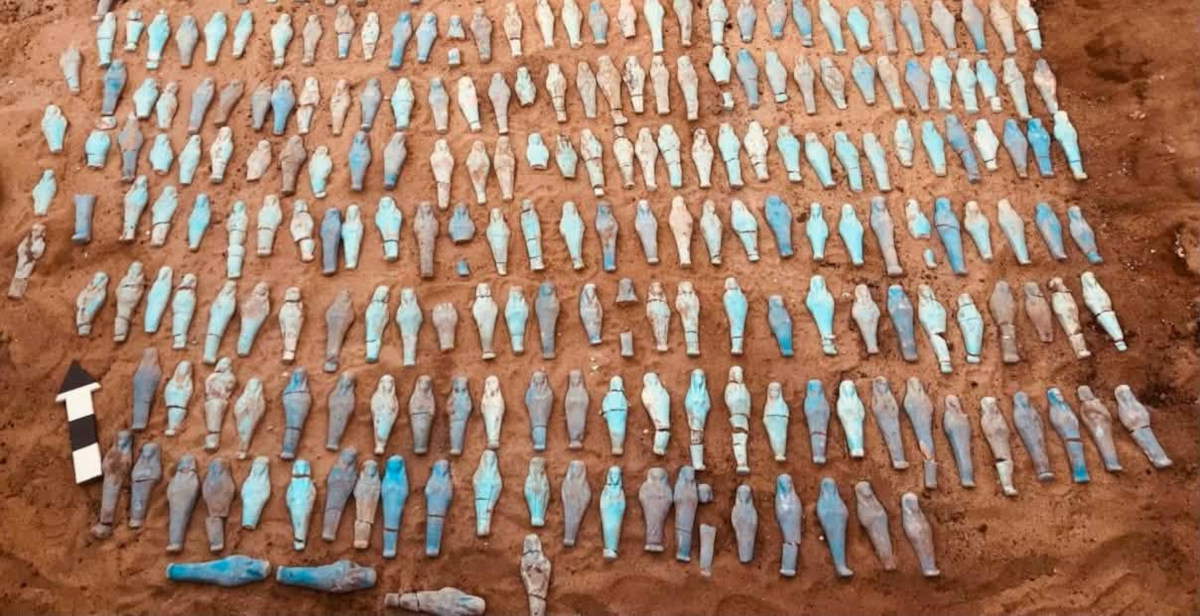 |
| Egypt: 560 ushabti figurines and funerary amulets discovered in the Egyptian necropolis of Tell Quesna |
Warning: the translation into English of the original Italian article was created using automatic tools. We undertake to review all articles, but we do not guarantee the total absence of inaccuracies in the translation due to the program. You can find the original by clicking on the ITA button. If you find any mistake,please contact us.