



by
Noemi Capoccia  @noe_capo
18/11/2026


Categories: Archaeology / Disclaimer
At the Tell Abu Billo archaeological site in the Egyptian province of Menoufia, a necropolis has been uncovered containing hundreds of stone and terracotta sarcophagi, human remains, amulets, and precious gold artifacts. The tombs date back to the Late Period, the Ptolemaic period, and the early Roman era.


A necropolis containing hundreds of sarcophagi, human burials, amulets, and gold artifacts has been discovered in Egypt, at the archaeological site of Tell Abu Billo in the province of Menoufia (al-Manufiyya). The news was announced by the Egyptian Ministry of Tourism and Antiquities, which released the results of excavations conducted by a national archaeological mission of the Supreme Council of Antiquities. The tombs identified date to the final phase of the Late Period, the Ptolemaic Period, and the early Roman Period.

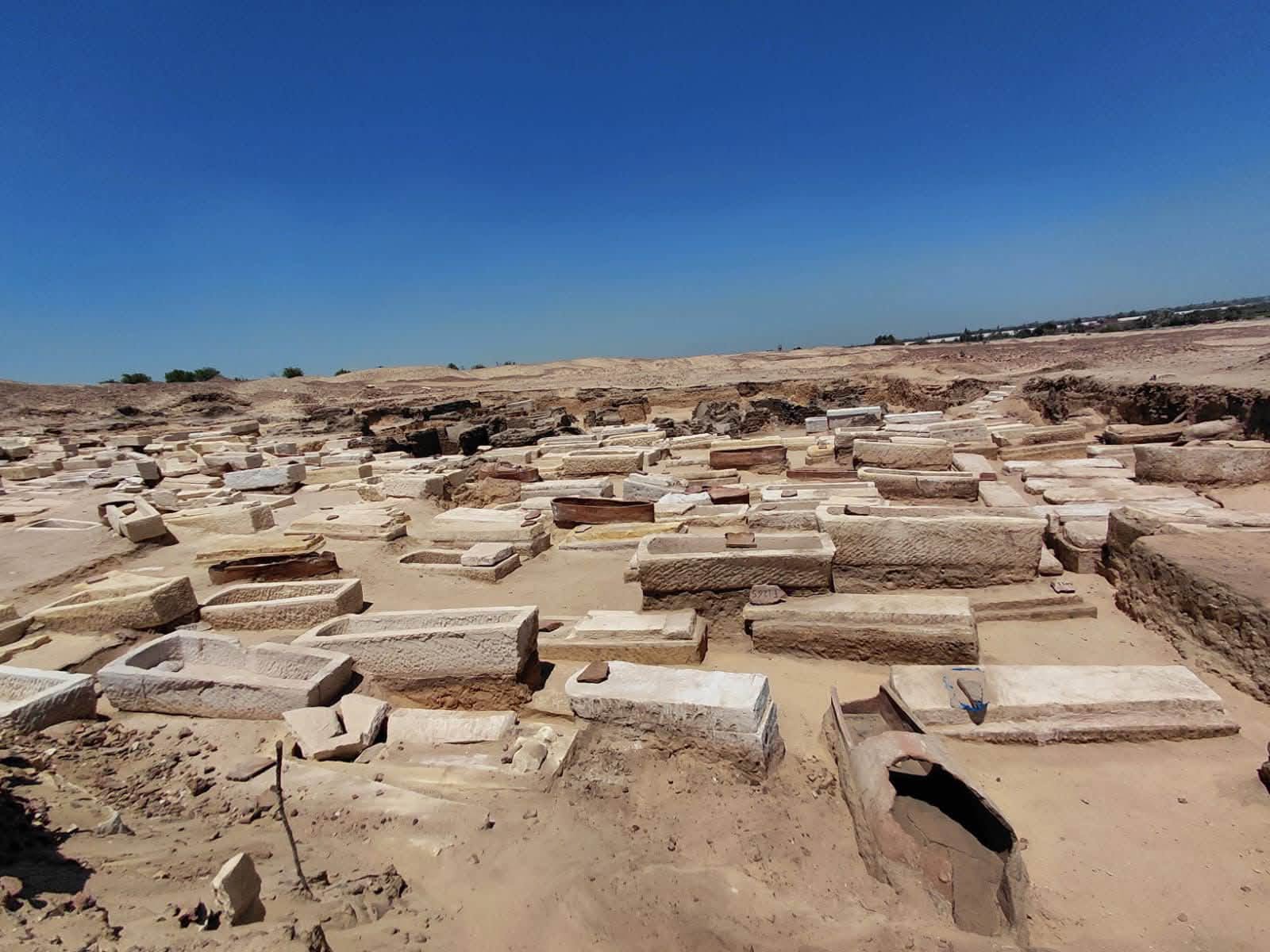
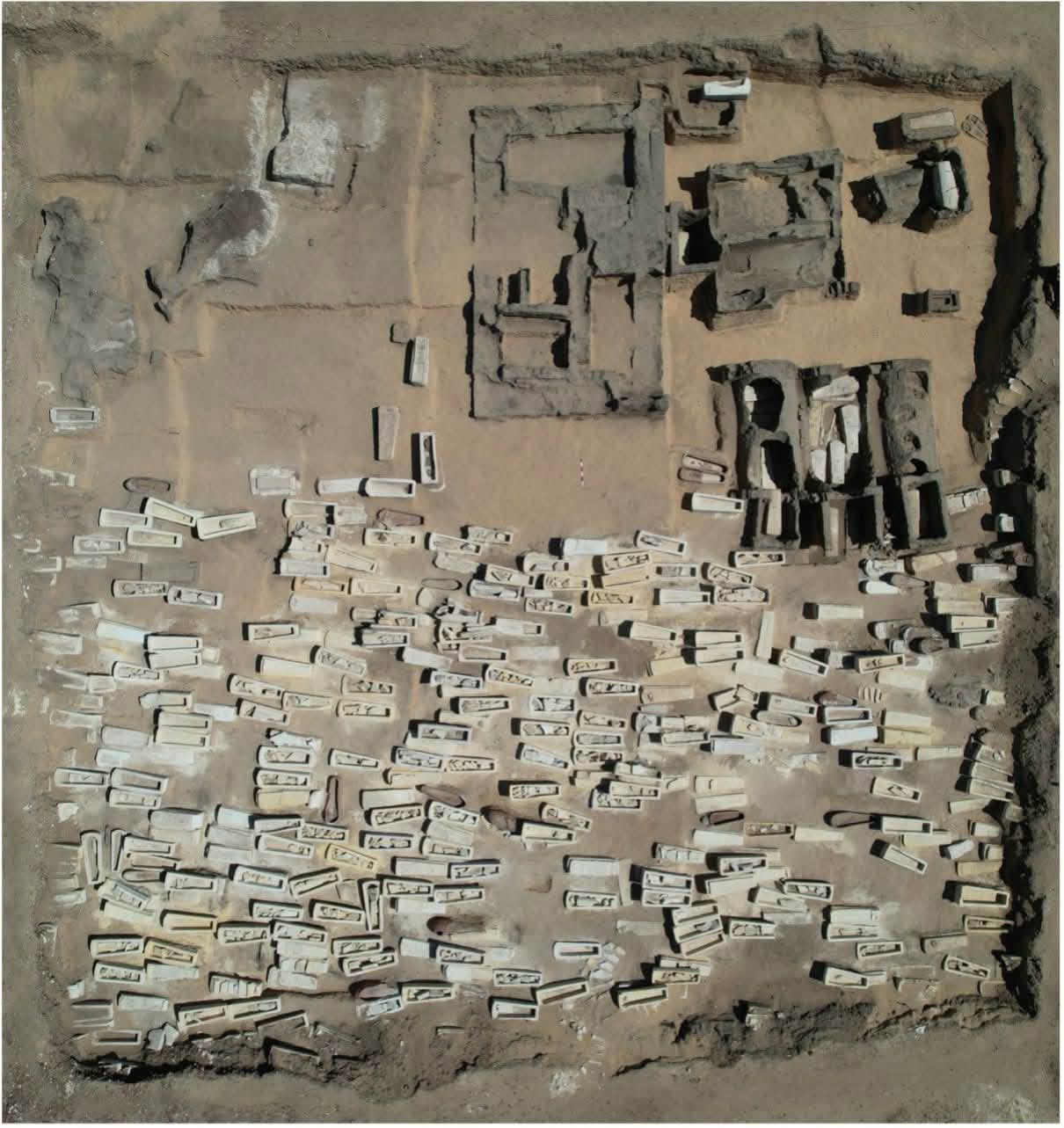
The funerary complex includes numerous stone and terracotta sarcophagi, remains of wooden coffins, vaulted tombs built of mud bricks, and a burial chamber lined with limestone. According to initial assessments, the site may have been used primarily for the burial of individuals belonging to the middle classes of society.
The Minister of Tourism and Antiquities, Sherif Fathy, placed the discovery within the context of the excavation and research program conducted by the Supreme Council of Antiquities at the country’s archaeological sites, emphasizing how these investigations contribute to deepening our understanding of Egyptian history and the evolution of funerary practices across different eras. The Secretary-General of the Supreme Council of Antiquities, Hisham El Leithy, described the discovery as unprecedented for the site, particularly given the number of burials and sarcophagi found in an open-air burial area. The architectural structures identified, he added, extend beneath the sand and debris in various directions, suggesting that the area may contain additional elements yet to be explored.



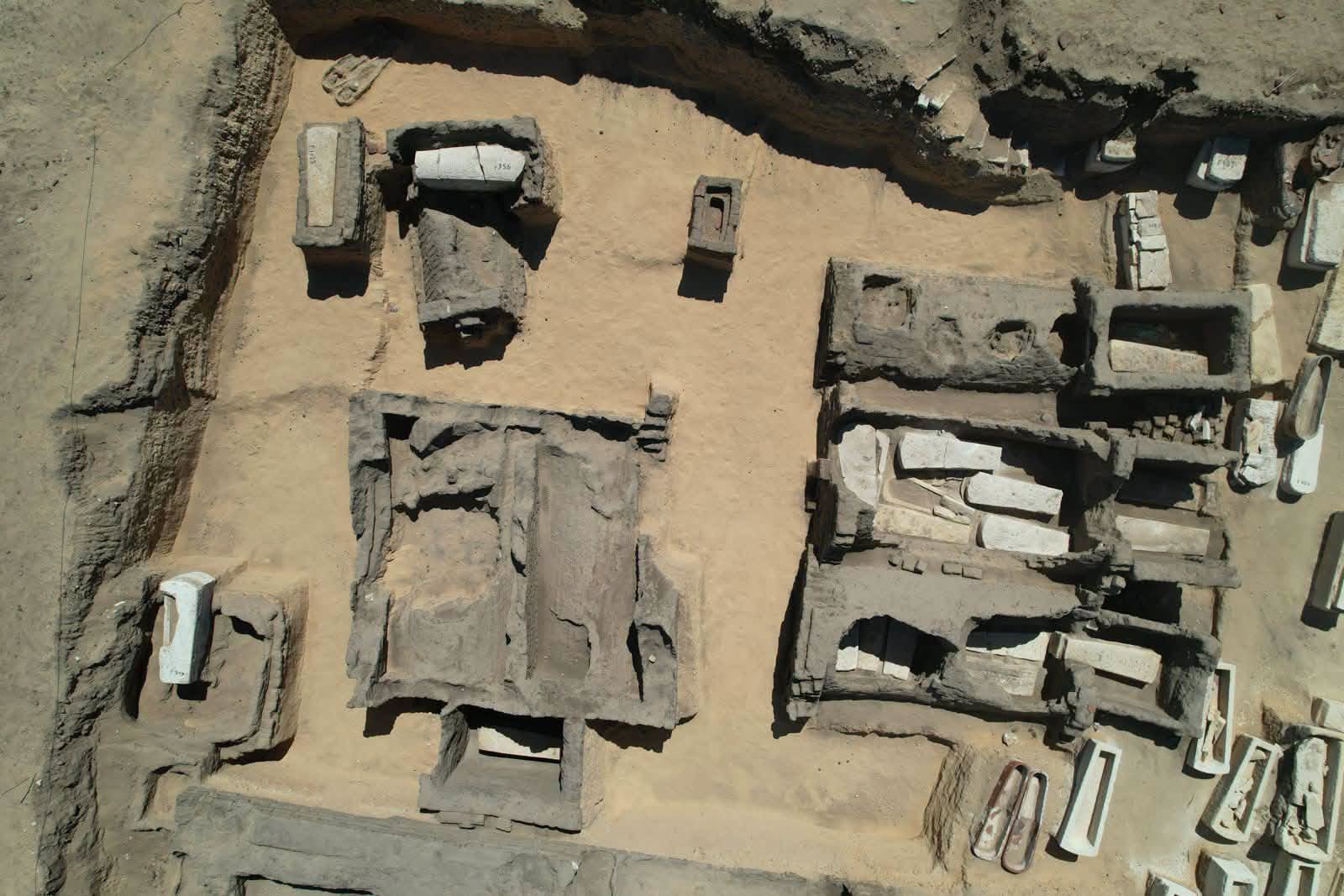
Initial analyses of the grave goods and artifacts suggest that the necropolis was used primarily by people from the middle class. Further investigations will shed more light on the composition of the community that used the complex and its burial customs. According to Mohammed Abdel Badie, head of the Egyptian Antiquities Sector at the Supreme Council of Antiquities, the characteristics of the stone and terracotta sarcophagi, the burials, and the recovered objects suggest a date predominantly in the Early Ptolemaic period, specifically between the 3rd and 2nd centuries B.C., with the presence of burials dating to the final phase of the Late Period as well. The grave goods document the persistence of funerary practices linked to the religion of ancient Egypt and the worship of deities such as Renenutet, Osiris, Isis, and Hathor. The worship of these deities is attested across various historical periods in the area of Teranothis (modern-day Taranah) and Kom Abu Billo.
The significance of the discovery is also linked to the location of the necropolis, situated within the territory of the ancient city of Teranothis, near the eastern entrance to Wadi al-Natrun. The region was historically known for the extraction of natron, a salt used in embalming processes. Previous archaeological investigations have documented human occupation of the area as far back as the earliest periods of Egyptian history and have unearthed the remains of the city and a temple dedicated to the goddess Hathor, who was worshipped under the epithet “Lady of Turquoise.”
The dating of the burials was determined based on several factors: stratigraphy, ceramic finds, sarcophagus types, the characteristics of the burials and their grave goods, as well as the techniques and materials used to construct the tombs.
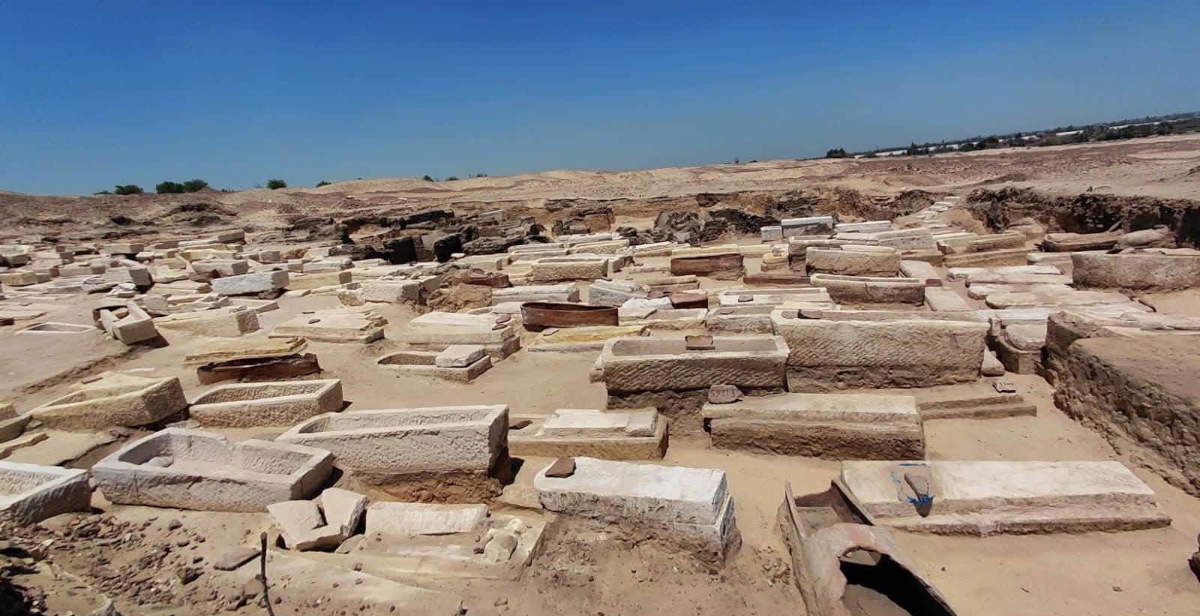
The excavations, explained Mustafa Rizk, general director of the Menoufia archaeological site, have uncovered a surface layer containing hundreds of stone sarcophagi. Some are missing their lids, while others are completely damaged, likely due to previous incidents of looting and mining activities in the area. Numerous fragments of terracotta sarcophagi were also recovered, some featuring stylized human faces with caricatured features, others crafted in the anthropoid style.
Cleaning the containers revealed human remains in a severely degraded state of preservation. Analyses, however, identified traces of embalming materials, resins, fragments of cartonnage, and layers of painted plaster. The decorations retain shades of yellow, red, blue, and gold. The methods used to treat the bodies are consistent with the beliefs and funerary practices of ancient Egypt.
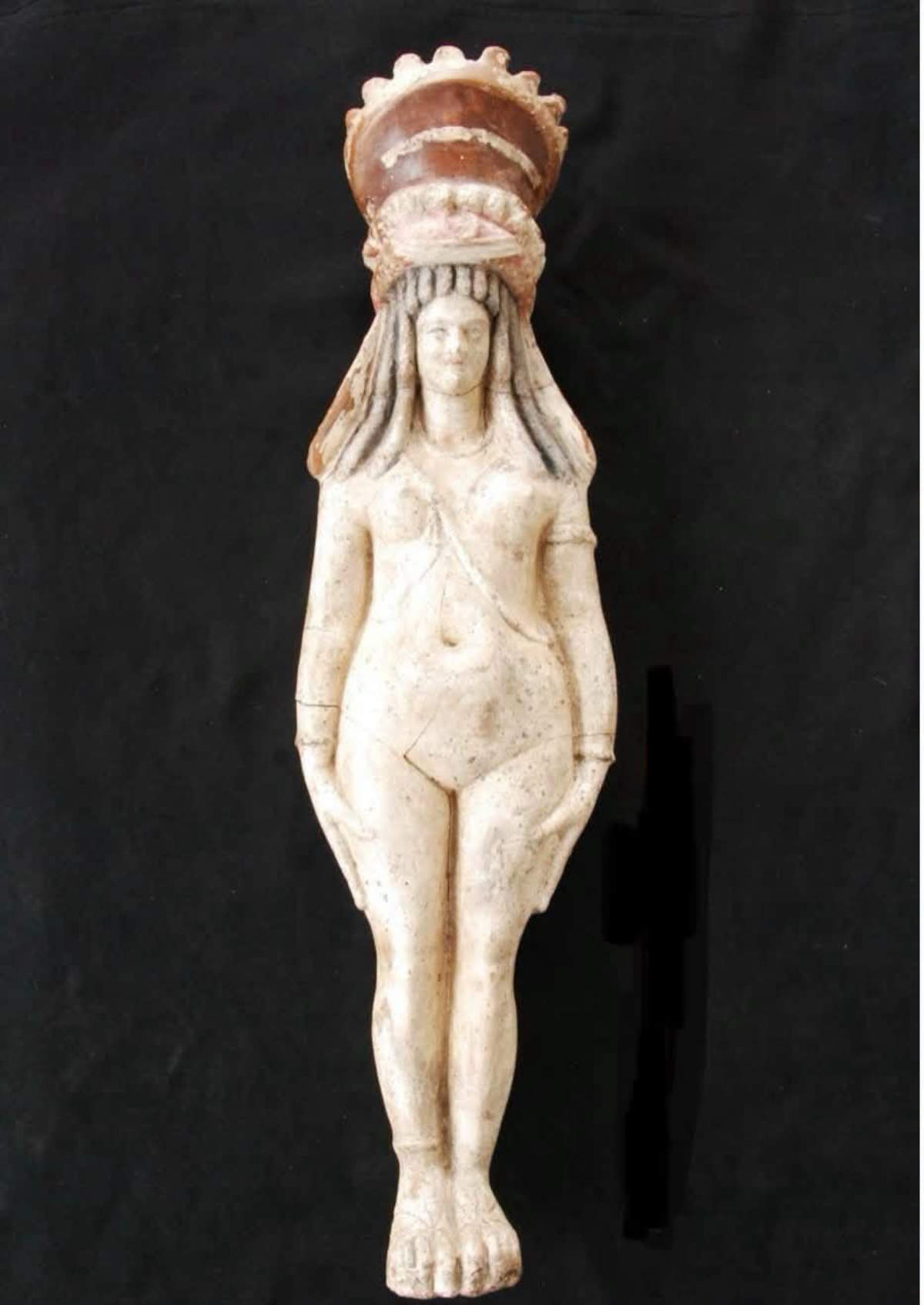
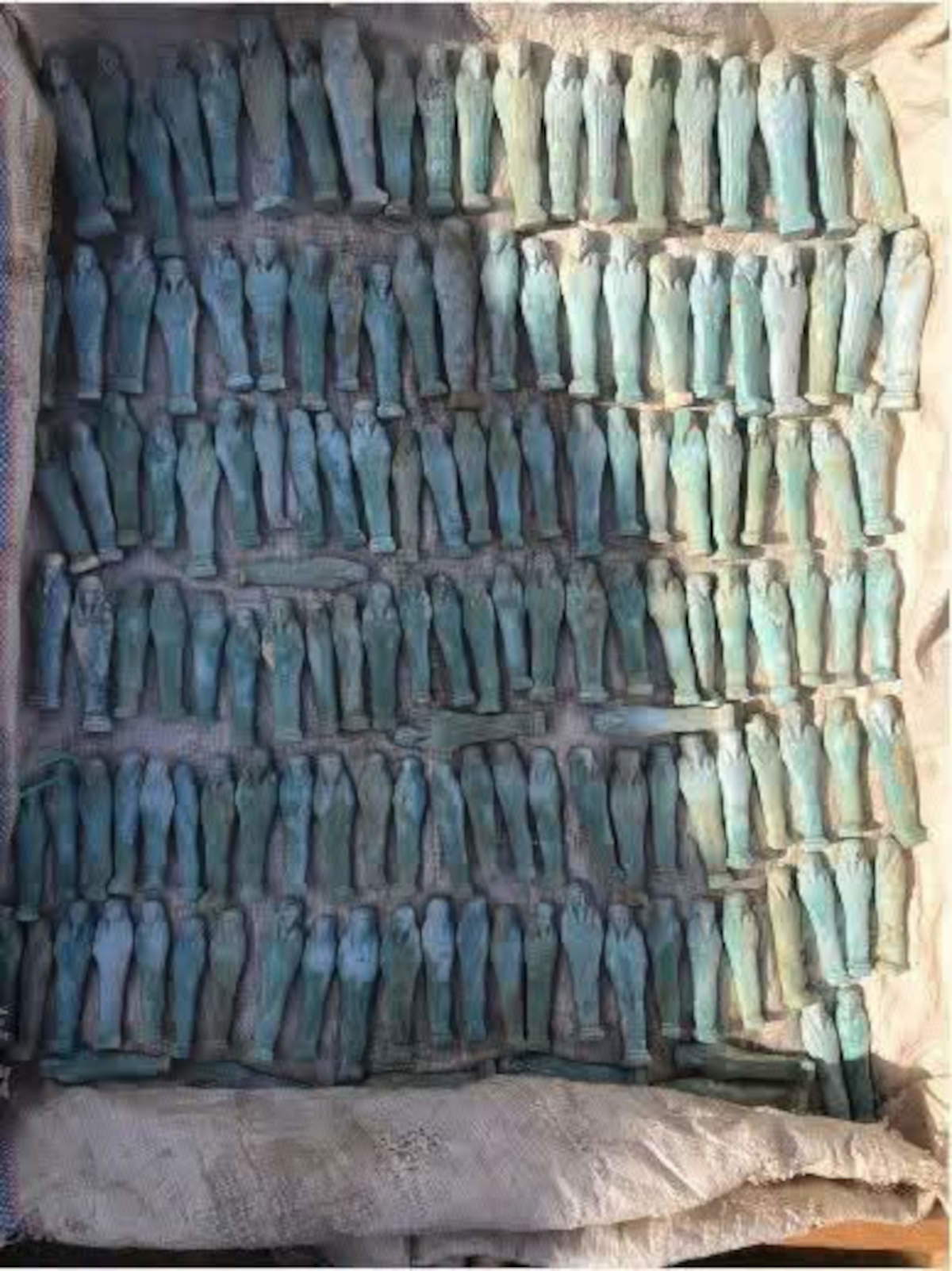
Among the recovered objects are gold tongues, an earring, a pendant from a necklace, and several metal foils, as well as scarabs and numerous faience ushabti (funerary figurines made of glazed ceramic, intended to symbolically perform the duties of the deceased in the afterlife), of various shapes and sizes. Some of the figurines bear hieroglyphic inscriptions. Also discovered were offering tables, small heads carved from limestone, and fragments of terracotta figurines depicting Isis-Aphrodite.
Of particular note is a fragment of the lid of a terracotta vessel shaped like Isis-Aphrodite seated on a lotus flower while nursing her son Harpocrates. The collection also includes small sphinxes, fragments of stone statues depicting the falcon Horus, and remains of clay elements coated with plaster, decorated with a depiction of the façade of a royal palace. The composition features two pylons surmounted by crouching lions facing each other, with falcon heads crowned by the double crown. Each of the animals rests its right paw on a djed pillar, a symbol of stability.
Other artifacts identified include schist scarabs, a blue lapis lazuli specimen, Udjat eyes (the Eye of Horus), and small amulets. Archaeologists have also identified two deposits of falcons placed between the sarcophagi and recovered three terracotta statuettes depicting Isis-Aphrodite. Excavation work will continue alongside the scientific study and documentation of the artifacts and architectural structures.
 |
| Egypt: Hundreds of Sarcophagi Buried Beneath the Sand—An Ancient Necropolis with Gold Artifacts Comes to Light |
Warning: the translation into English of the original Italian article was created using automatic tools. We undertake to review all articles, but we do not guarantee the total absence of inaccuracies in the translation due to the program. You can find the original by clicking on the ITA button. If you find any mistake,please contact us.