





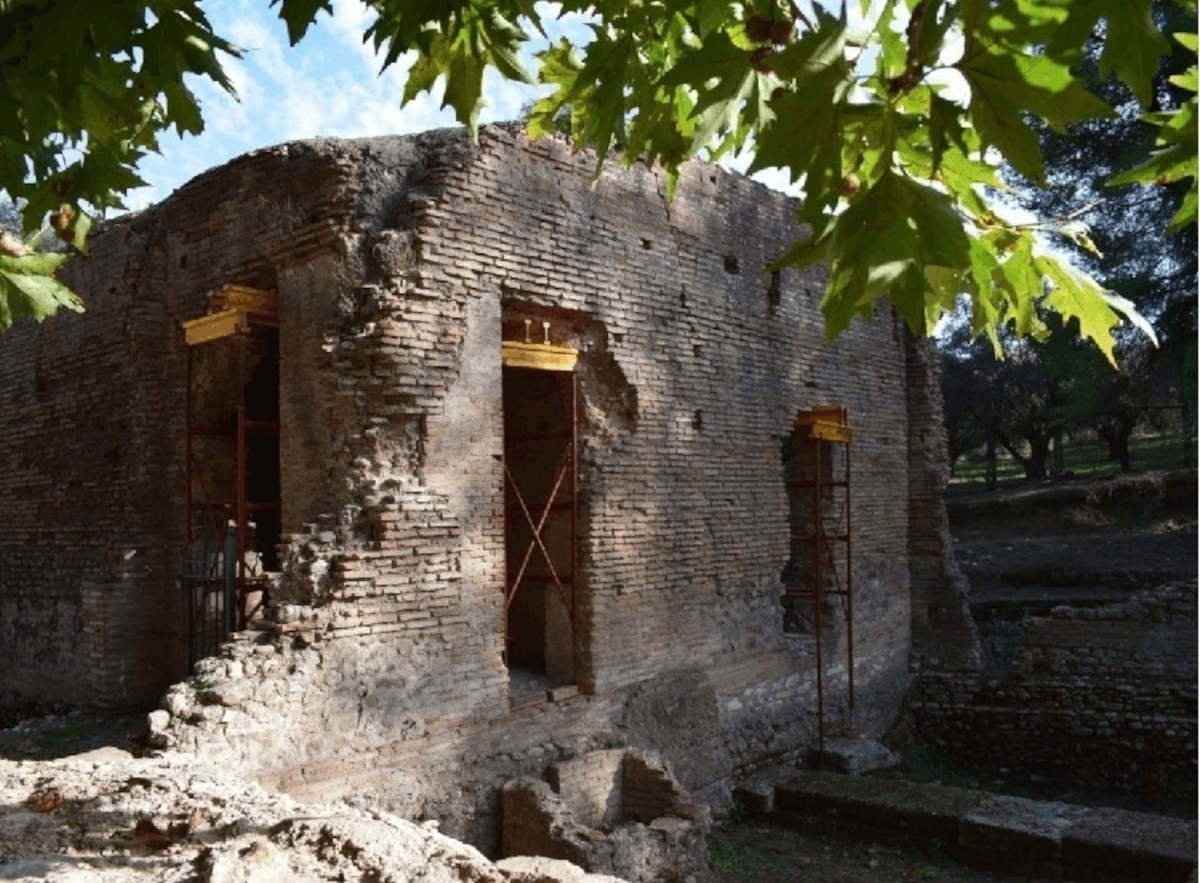
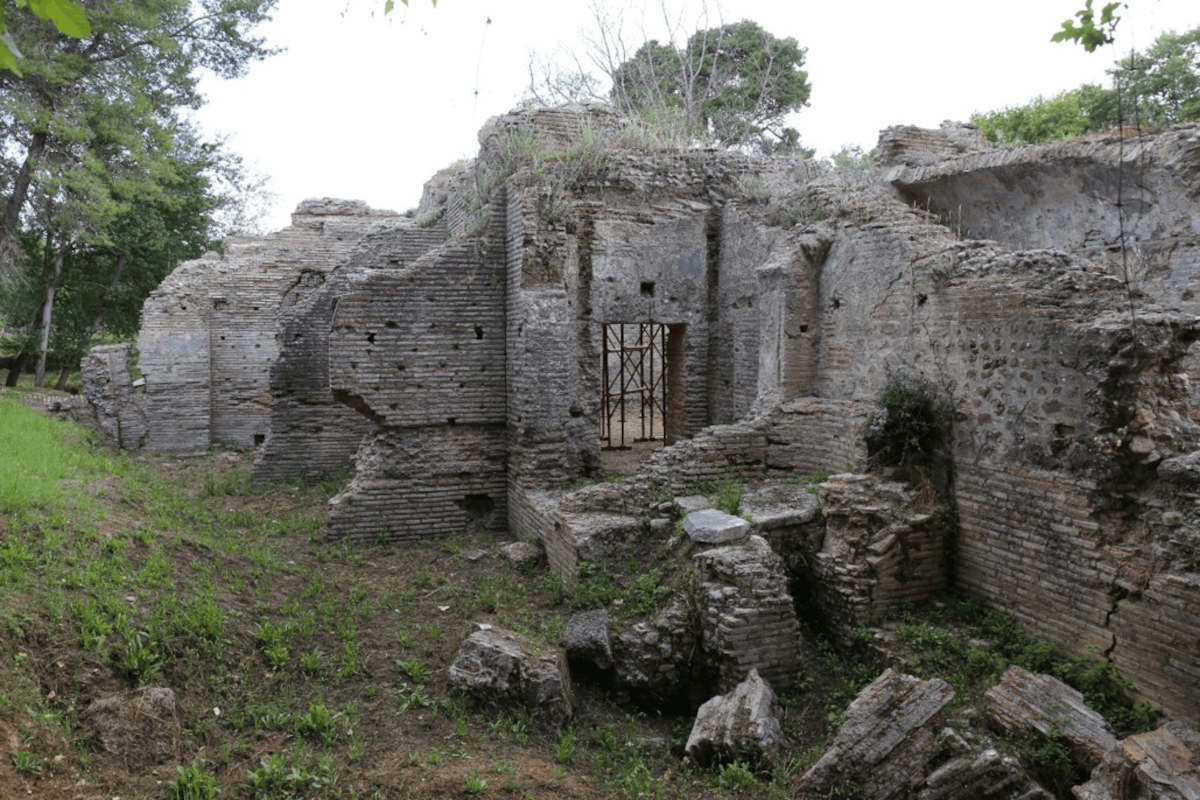
In Olympia, Greece—the site where one of the most significant religious and cultural centers of the ancient world flourished for centuries—a building tells a story of successive transformations. What is known today as the “House of Nero” was not, in fact, originally built as the Roman emperor’s residence: its origins date back to a sanctuary dedicated to Hestia in the 5th century B.C.; many centuries later, it became a luxurious residence intended to house Nero, and, even later, it was incorporated into a complex of public baths. Now this layered history will be at the center of a new restoration and enhancement project. The Greek Ministry of Culture has launched a new phase of the program for the protection, restoration, and enhancementof the archaeological site of Olympia, and among the planned interventions is the restoration of the House of Nero. The goal is to preserve the architectural and decorative elements still present, make them more accessible to visitors, and safely integrate them into the visitor route. The project is part of a broader program comprising three initiatives, with a total value of approximately 4 million euros, funded through the Regional Operational Program “Western Greece 2021–2027” and with national resources from the Ministry of Culture. In addition to the House of Nero, the program includes the third phase of excavation, discovery, and enhancement of the Gymnasium, as well as the protection and restoration of the retaining wall of the Treasures of Cronius Hill.
This new phase of work follows the completion, in April 2026, of projects on three other monuments within the archaeological site: the early Christian basilica—also identified as Phidias’s workshop—the Leonidaion Baths, and the Southern Baths. Taken together, these interventions aim to gradually expand the portion of the site open to visitors and to restore greater continuity to the interpretation of the archaeological complex. In the case of the House of Nero, the building’s history makes it particularly clear how inseparable the image of the Roman Olympia is from that of the Greek sanctuary. The complex’s earliest core dates back to the 5th century B.C., when a sanctuary dedicated to Hestia stood on the site. In the 3rd century B.C., a stoa and several service rooms were added. Between 65 and 67 CE, during the reign of Nero, the site underwent a profound transformation. A large villa was built to accommodate Emperor Nero during his visit to Olympia; this building subsequently continued to serve as the official guest residence. The complex included a large porticoed courtyard, various rooms, and gardens, while the southern part featured thermal baths.
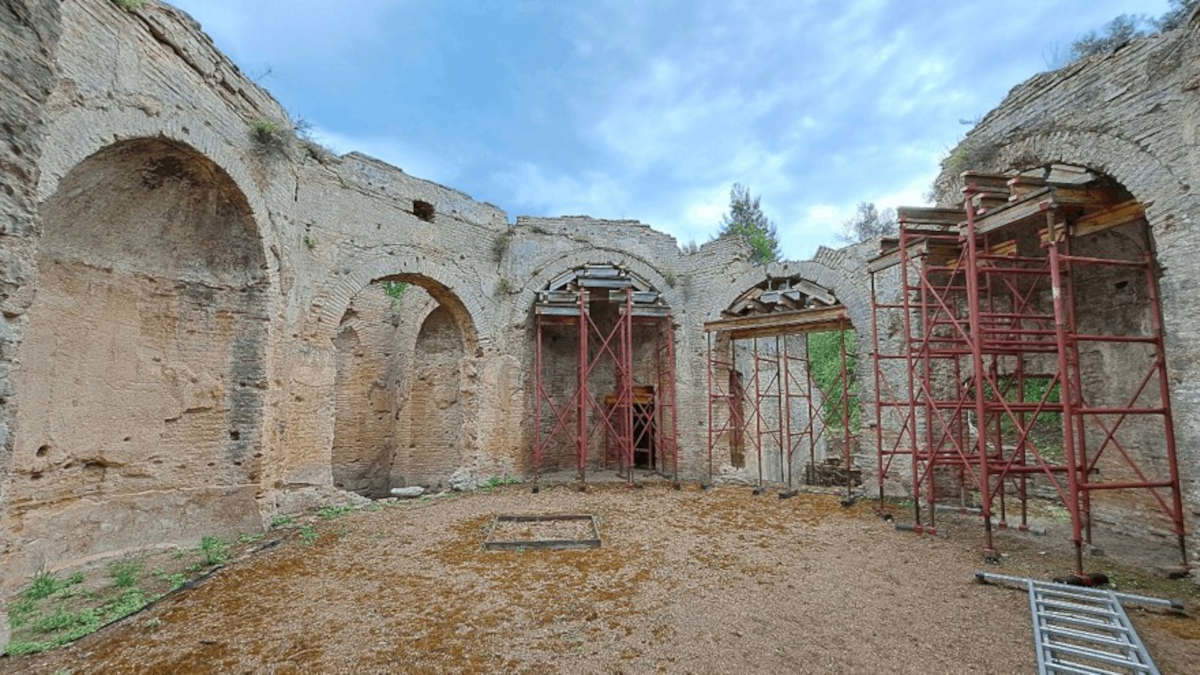
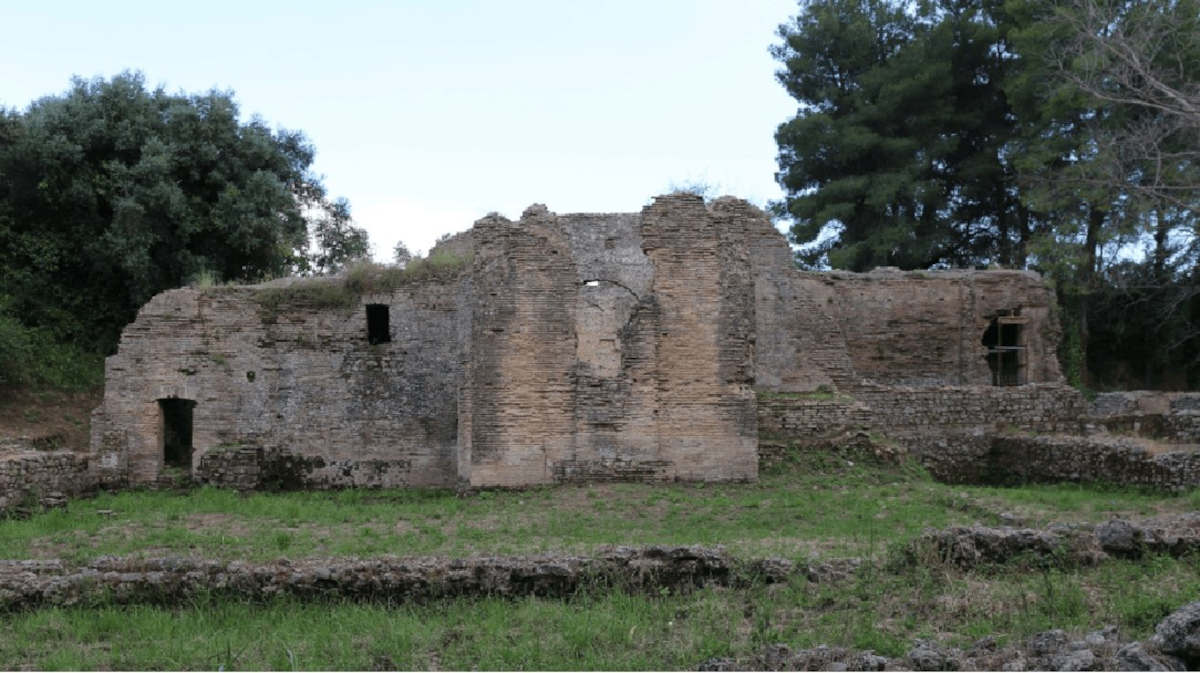
The function of the area would change again at the beginning of the 3rd century AD. The villa was reorganized and transformed into a complex of public baths, known as the Southeast Baths. This new configuration also includedthe Octagon, a large, monumental hall covered by a vaulted ceiling that served asthe hot room of the baths. The transformation did not entail the complete removal of the previous structures: in fact, the baths incorporated some parts of the villa and reused its architectural elements, and as a result, the complex preserves traces of the various functions that succeeded one another in the same space—namely, the sacred site from the Greek era, the residence associated with the emperor’s presence, and finally the Roman-era bath complex. Among the remains found in the area are stone architectural elements, marble slabs, a stone washbasin, and various ceramic elements associated with the baths’ heating and drainage systems. These artifacts differ in function and nature, but together they help reconstruct how the building operated.
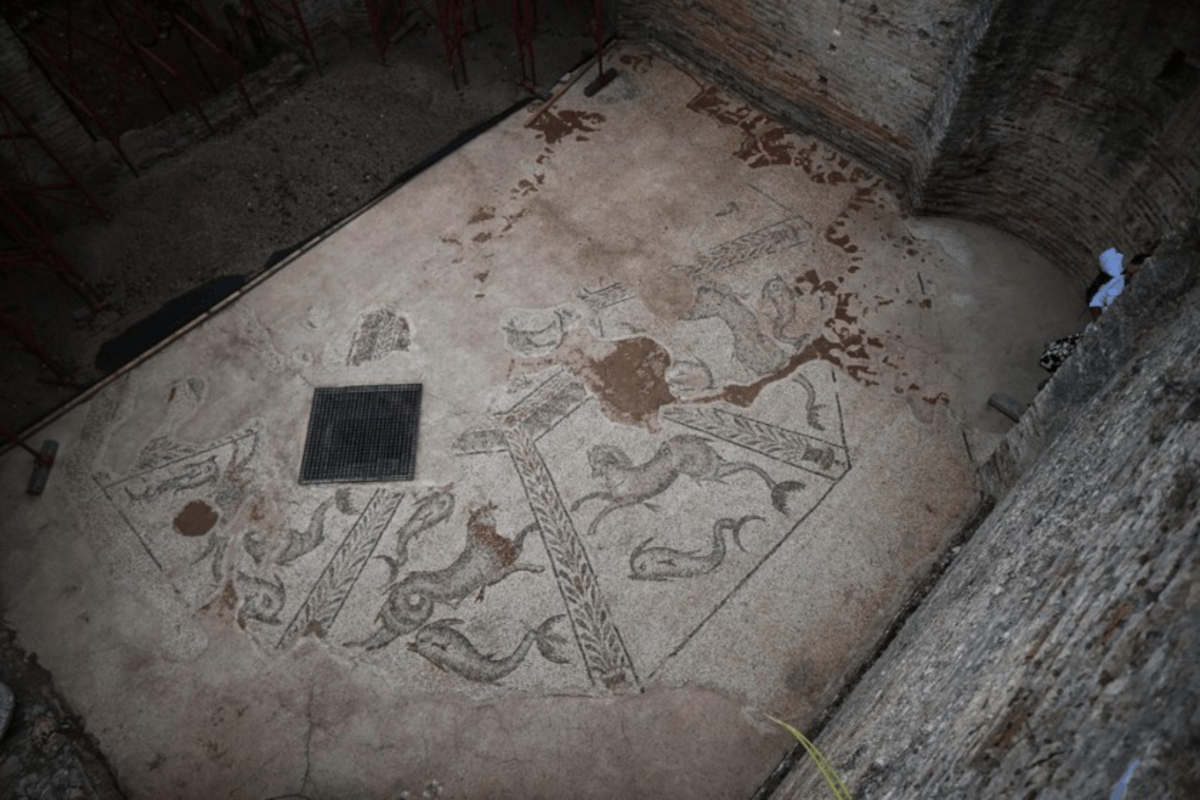
The new project aims not only to preserve the surviving structures: it includes the partial reconstruction of certain sections of the masonry and vaults, the restoration of openings, the reassembly of collapsed architectural elements, and the protection of structures still in situ. Particular attention will be given to the mosaic floor preserved within the monument. The mosaic will be uncovered and protected by the installation of a new roof, designed to ensure its long-term preservation. The project will also include the landscaping of the surrounding area and the construction of a new visitor route.
The design of this path is one of the most delicate aspects of the project. The goal of making the monument accessible must be balanced with the need to avoid placing additional stress on the ancient floors, mosaics, and existing restorations. The layout must also allow for any future conservation and maintenance work.
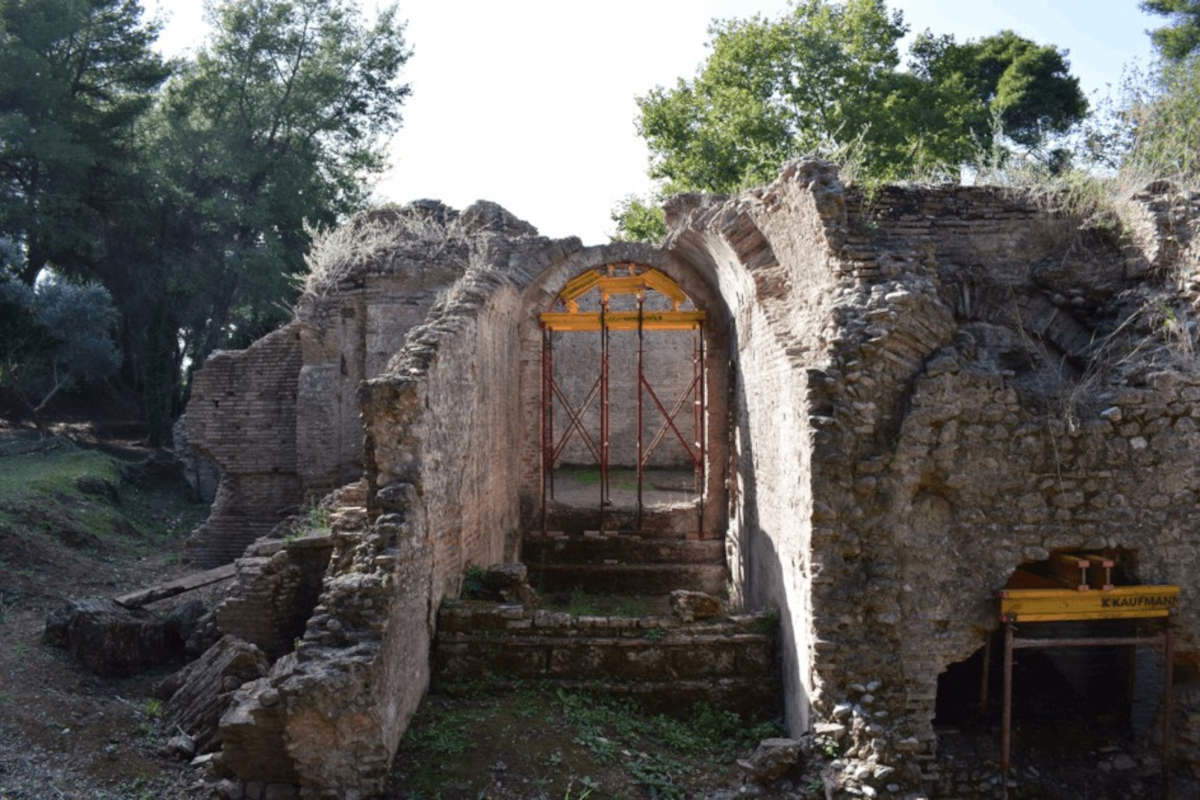
The new phase of work also includes the Gymnasium, for which a third campaign of excavation and enhancement is planned, and the retaining wall of the Treasures of Cronius Hill, which will undergo protection and restoration work. Together, the three projects should help expand the accessible and recognizable monumental heritage within the archaeological site. Alongside the work on the monuments, the Ministry also highlights the enhancement of visitor infrastructure and accessibility services, including digital solutions designed for people with hearing or visual impairments. The stated goal is to create a more accessible visitor experience, accompanying the opening of new spaces with tools designed to facilitate understanding.
“Ancient Olympia is at the center of the Ministry of Culture’s integrated, long-term plan for the protection, restoration, and enhancement of its monumental heritage,” stated Greek Minister of Culture Lina Mendoni, emphasizing that the new initiatives are part of a single program for preservation and enhancement. The project on the House of Nero thus restores to the Olympia itinerary a building whose importance does not depend solely on its association with the Roman emperor. It is above all the succession of its functions that makes it significant: a place that, over the centuries, has changed its character in step with the transformations of the sanctuary and the society that inhabited it.
|
| Greece: The so-called House of Nero in Olympia Will Be Restored and Preserved |

Warning: the translation into English of the original Italian article was created using automatic tools. We undertake to review all articles, but we do not guarantee the total absence of inaccuracies in the translation due to the program. You can find the original by clicking on the ITA button. If you find any mistake,please contact us.


























 IT
IT FR
FR DE
DE ES
ES CN
CN


