



by Redazione 27/11/2026



Categories: Archaeology / Disclaimer
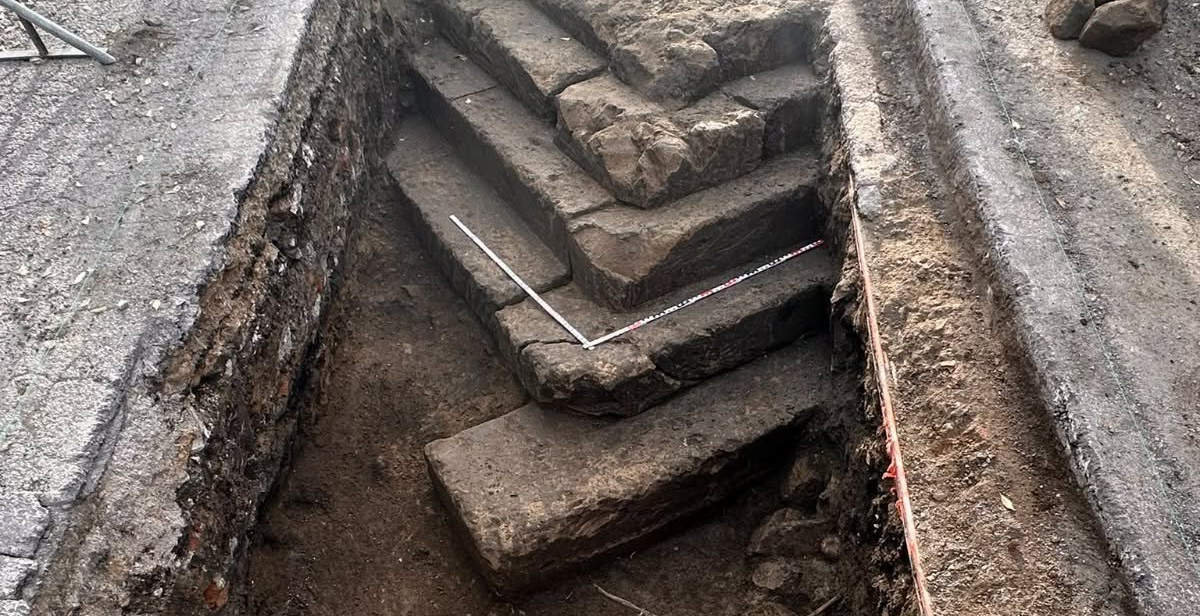
During work to install new electrical infrastructure in Contrada Civita, in Atripalda (Avellino), a Roman monument made of tuff blocks was uncovered; it features a stepped podium, columns, capitals, and fragments of an entablature, and dates back to the Imperial period.


A monument from the Roman Imperial period has been unearthed in Atripalda, in the province of Avellino, in the area outside the city walls of the ancient city of Abellinum. The discovery was made during preventive archaeological surveys conducted in conjunction with work carried out by E-Distribuzione to install new electrical infrastructure in the Contrada Civita area. The news was announced by the Superintendence of Archaeology, Fine Arts, and Landscape of Salerno and Avellino on its social media channels.


The excavation work, led by archaeologists Cristina Cappelli and Stefania Canonico, was carried out under the scientific coordination—on behalf of the Superintendency—of Elena Russo, the local archaeologist in charge. The work has brought to light new evidence related to ancient Abellinum, whose urban center—enclosed by a wall built using the opus reticulatum technique (a Roman building method involving a latticework pattern)—occupies the Civita di Atripalda plateau.


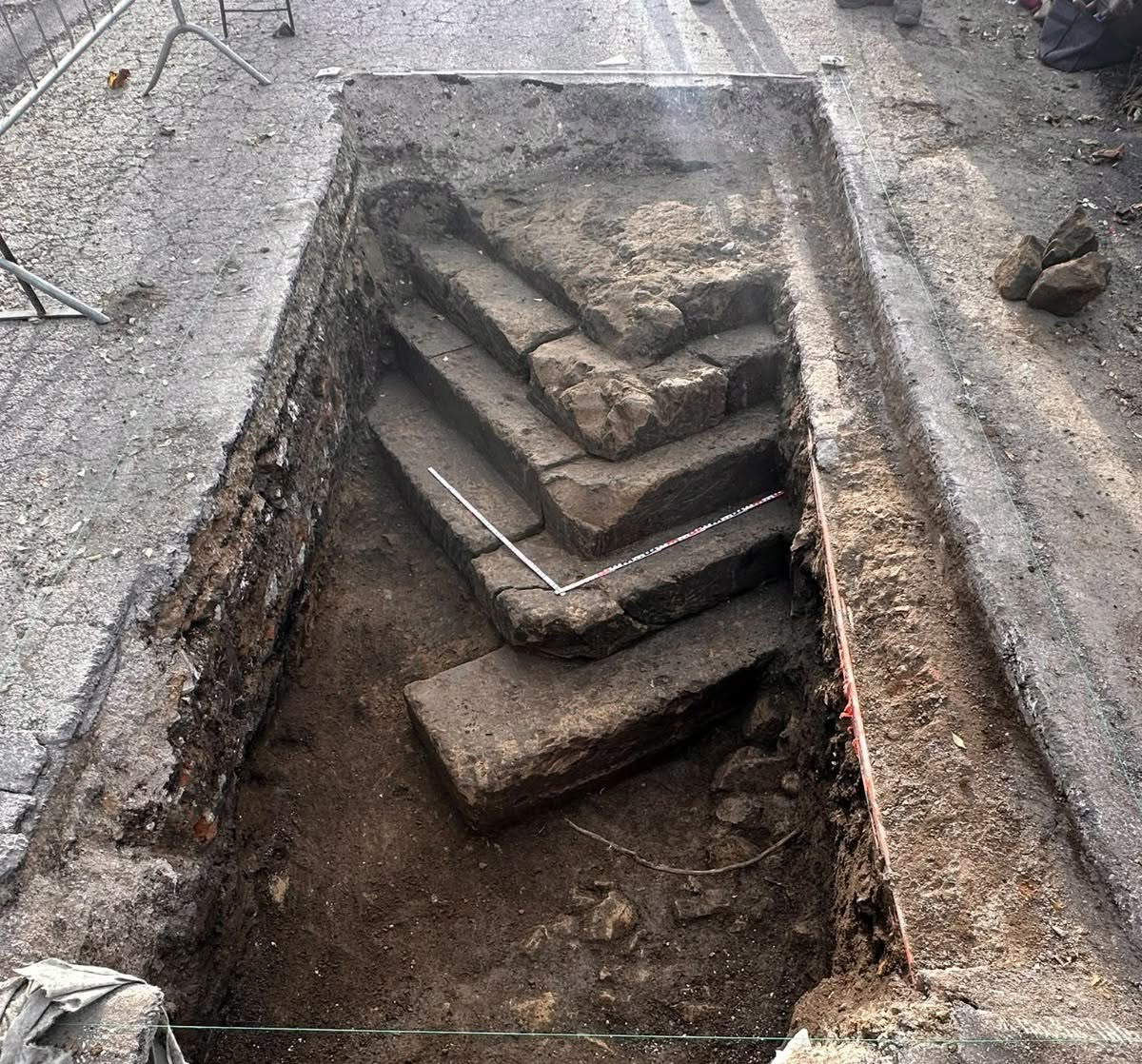
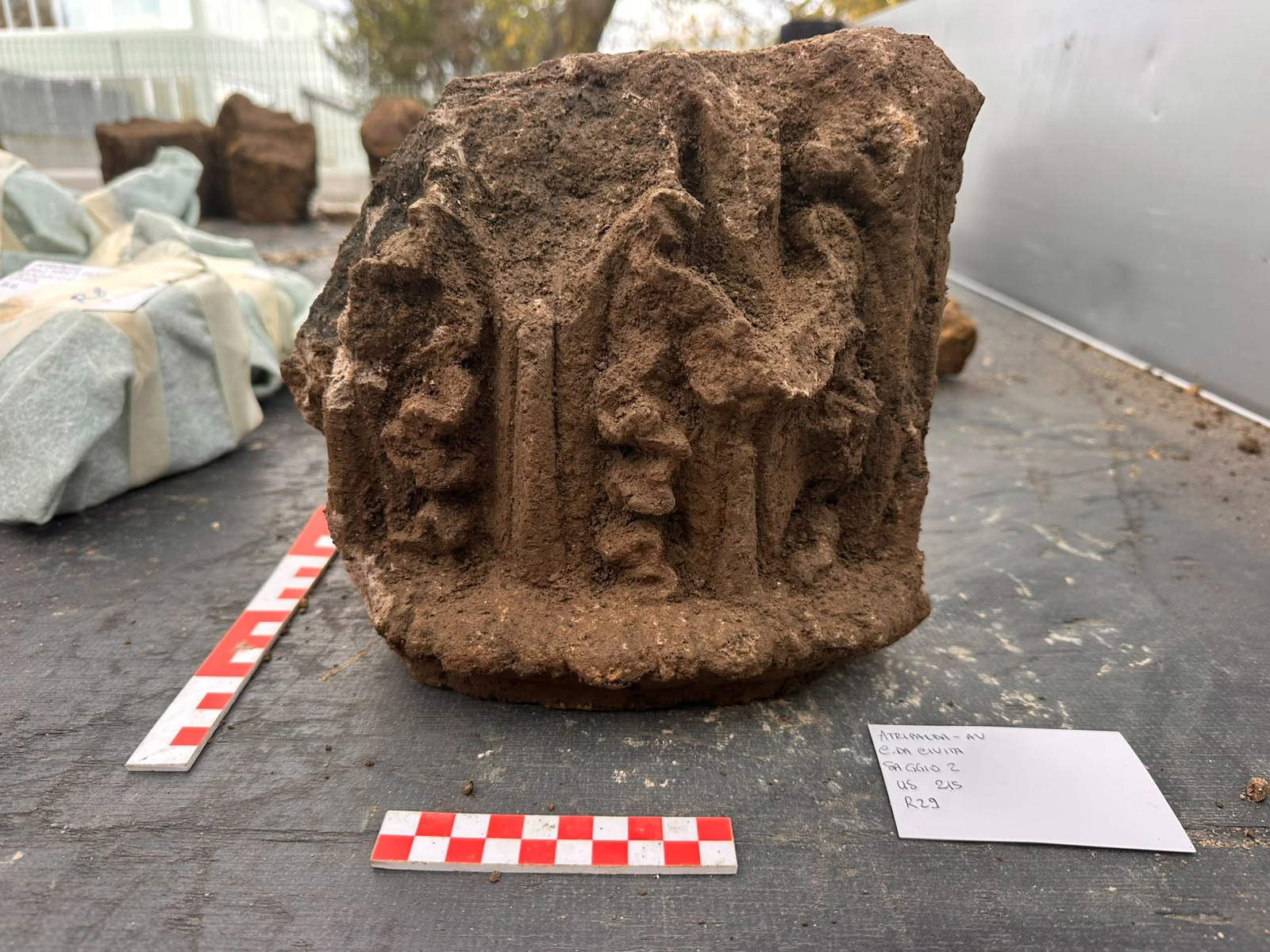
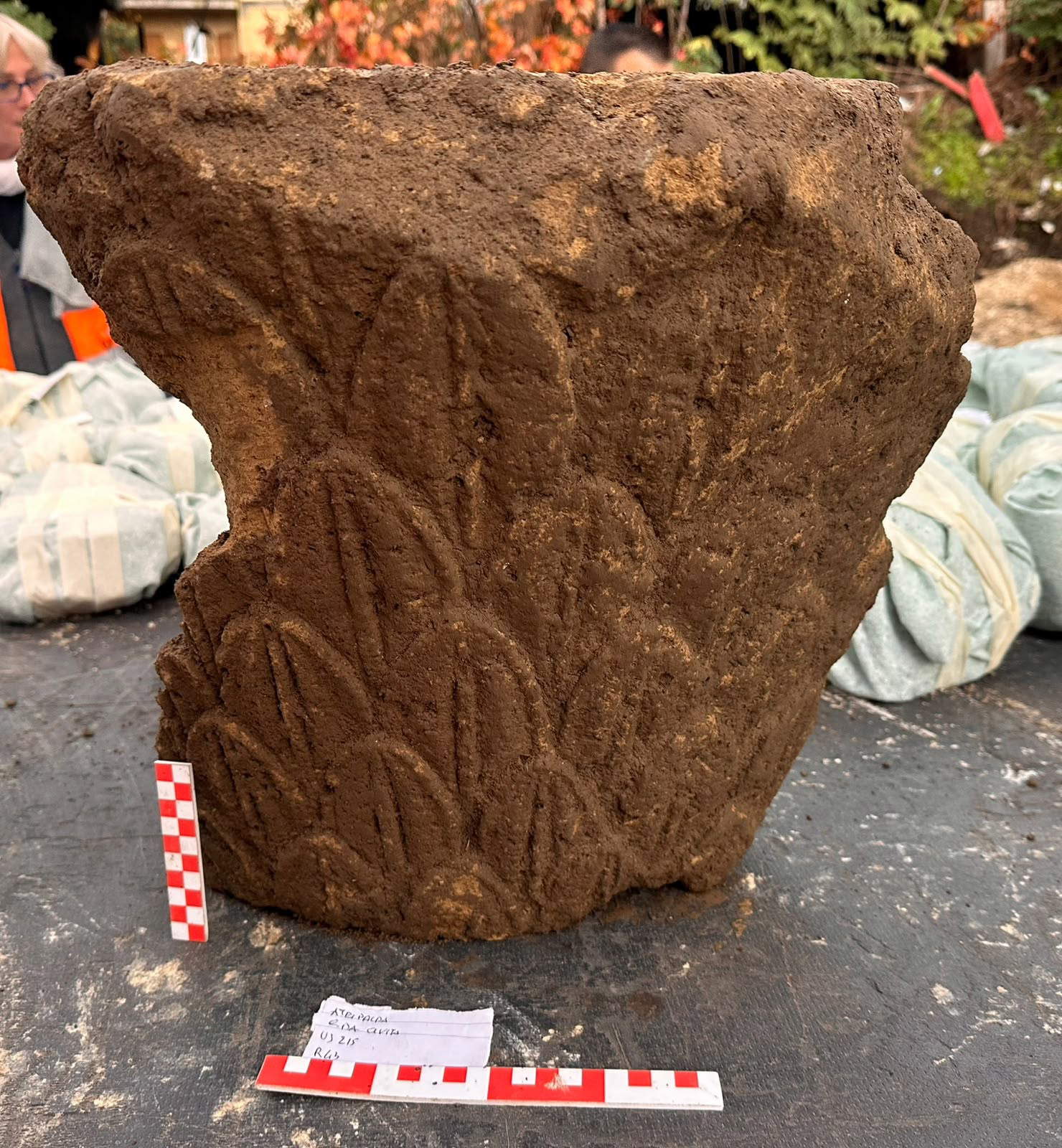
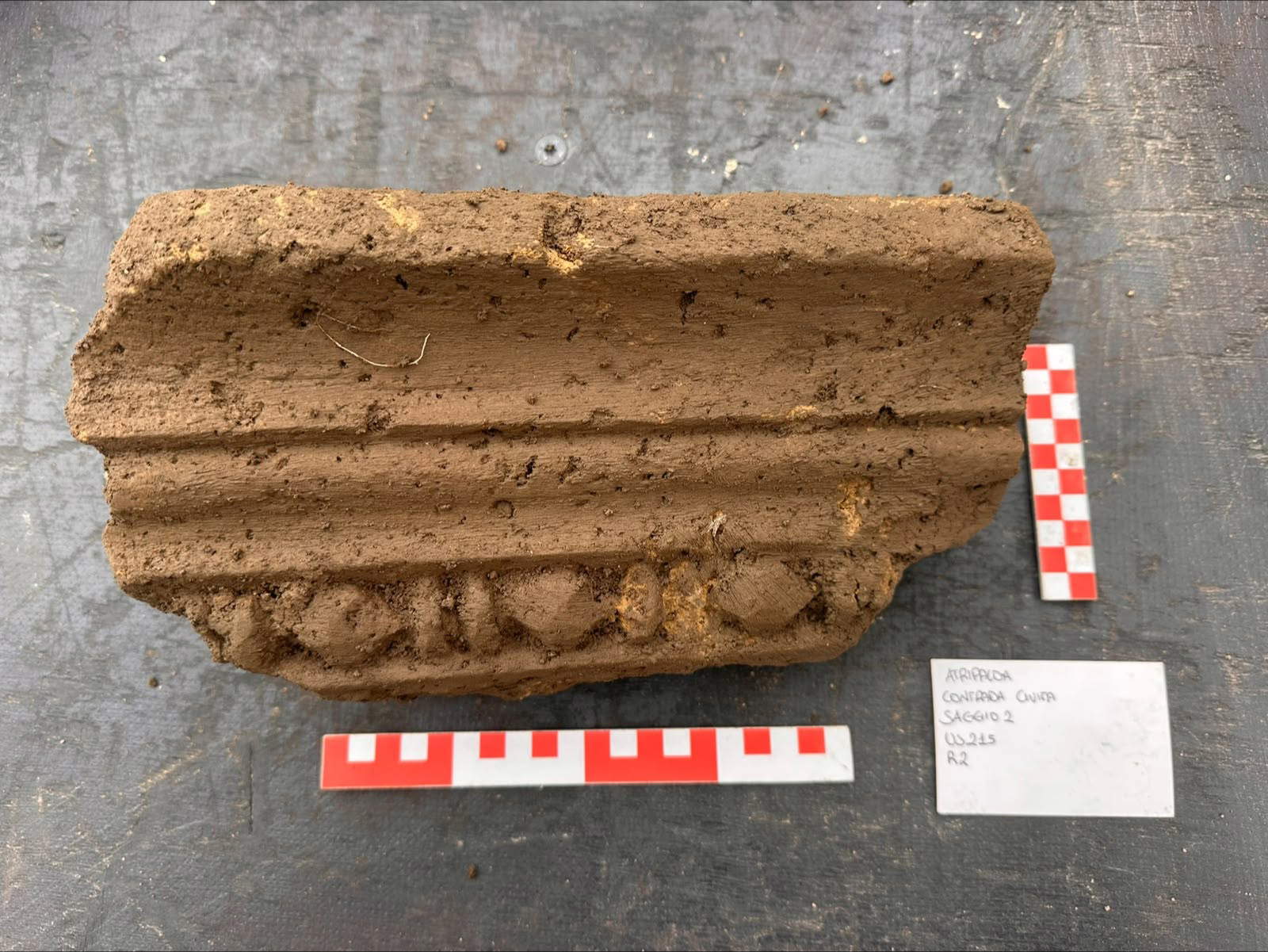
The most significant discovery concerns an imposing rectangular structure built of tuff blocks and located a few meters outside the northern section of the fortifications. The base measures 3.50 by 5 meters and constitutes the lower part of a more complex monument. This is suggested by the remains of a stepped podium with moldings, along with various architectural elements from the upper structure recovered in the surrounding area, where they had collapsed. These include columns, capitals, and fragments of the entablature, all made of yellow and gray tuff.


The architectural materials are currently being cataloged and studied. Initial analyses of the stratigraphic data and artifacts collected during the excavations allow the structure to be dated to the height of the Roman Imperial period.
The monument’s location, just outside the city walls of Abellinum, provides some useful clues for formulating a hypothesis about its function. A portion of a necropolis from the same period had already been discovered in the area, suggesting that it may have housed a space dedicated to funerary and commemorative practices. According to the initial interpretation put forward by the Superintendency, the structure may have been a commemorative or funerary monument, likely situated along one of the main thoroughfares leading out of the ancient city.
The investigations have also made it possible to reconstruct, at least preliminarily, some subsequent phases in the complex’s history. The monument, already in a state of collapse, appears to have been abandoned and buried in late antiquity, perhaps as part of a reconfiguration of the area outside the city walls.
An initial joint site inspection took place on Friday, November 20, attended by Anna Onesti, Superintendent of Salerno and Avellino; Paolo Spagnuolo, mayor of Atripalda; and representatives from E-Distribuzione. Operational discussions are currently underway among the involved agencies and the company to identify shared strategies that will allow for the protection of the monument while simultaneously continuing the archaeological investigations in the area.
The discovery is part of a broader research effort that is helping to expand our understanding of the suburban landscape of Abellinum. Preventive archaeological work conducted in the Atripalda area is, in fact, yielding new information about the organization of spaces outside the Roman city, its infrastructure, and the areas designated for burials and the commemoration of the deceased. This wealth of data, through continued research and the preservation of the artifacts uncovered, will be made available to the community.
 |
| In Avellino, a Roman monument is unearthed during work on the power grid |
Warning: the translation into English of the original Italian article was created using automatic tools. We undertake to review all articles, but we do not guarantee the total absence of inaccuracies in the translation due to the program. You can find the original by clicking on the ITA button. If you find any mistake,please contact us.