





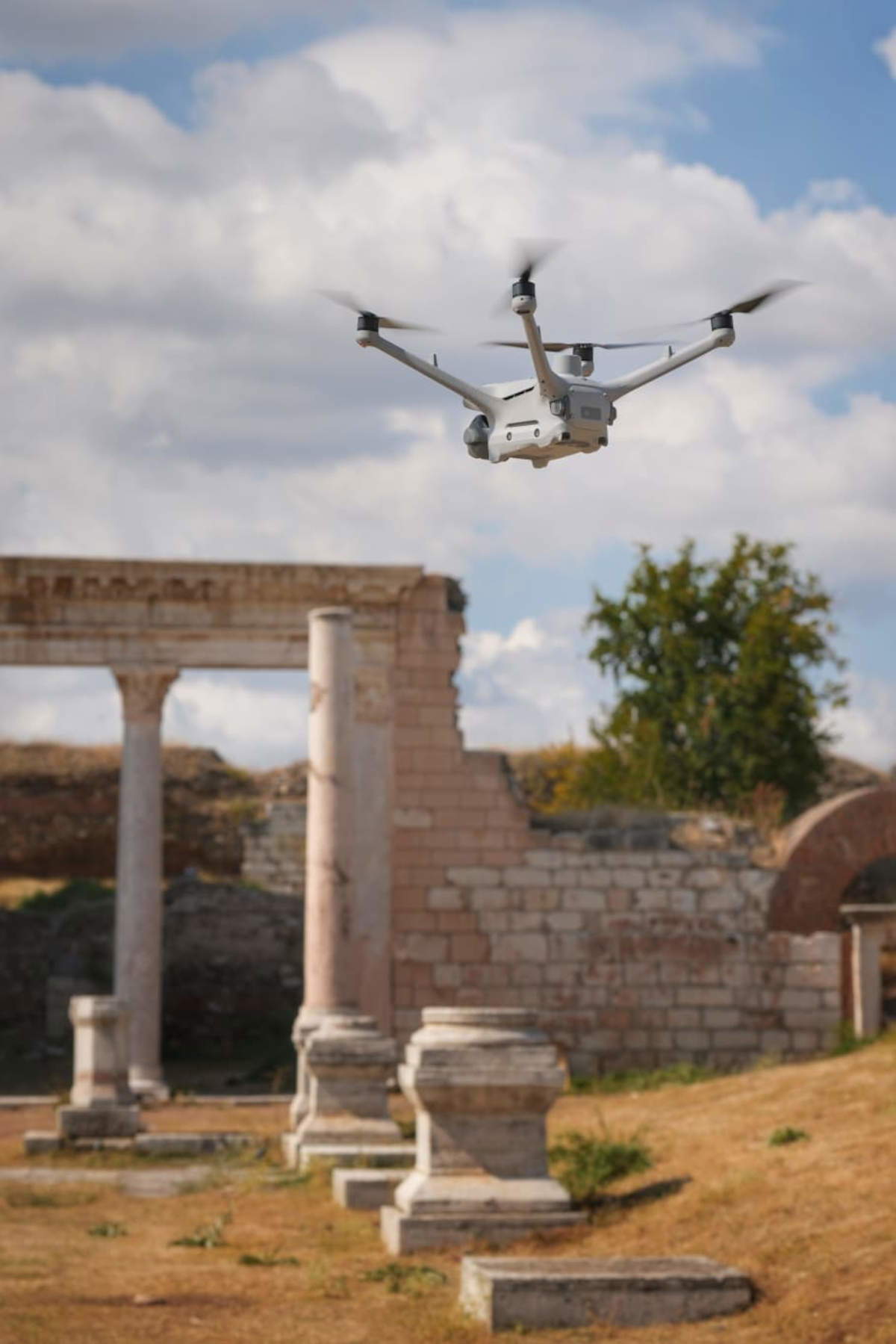
Technology is being integrated into Turkey’s strategies for protecting its archaeological heritage with a new aerial surveillance system installed in the ancient city of Sardis and in the area of the Bin Tepe coastal mounds, in the province of Manisa. The new Aerial Surveillance and Security Center for the Ancient City of Sardis was inaugurated by Minister of Culture and Tourism Mehmet Nuri Ersoy and features long-range drones equipped with night-vision systems, designed to monitor from above a particularly vast archaeological area that is difficult to surveil using ground-based systems alone.
The facility includes two long-range UAV systems, three antenna systems, monitoring stations, large screens, and security cameras. The staff responsible for managing the center has undergone specialized training in drone piloting and has obtained the relevant certifications. The system allows for monitoring the territory even at night and for identifying any suspicious activity. Alerts can be transmitted directly to Gendarmerie units, enabling a timely response in the event of threats to the site.
The center is housed in the former excavation headquarters located near Karnıyarık Tepe, in a position that provides a clear view of the Bin Tepe burial mounds. Its implementation was conceived as a pilot project: the model tested in Sardis can in fact serve as a reference for developing additional conservation and security systems for other archaeological sites in Turkey, adapting surveillance technologies to the characteristics of different contexts.
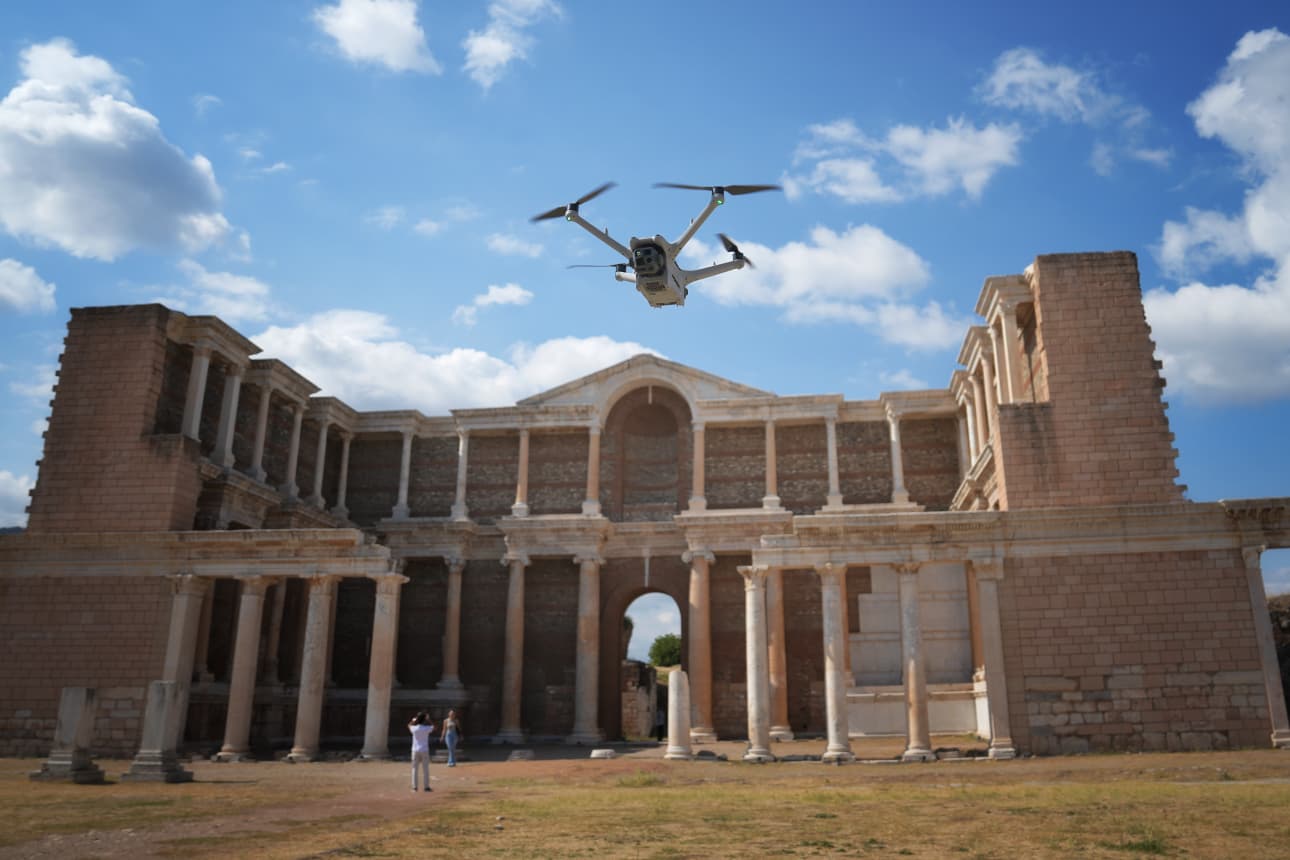
The decision to focus on Sardis and Bin Tepe stems from the historical and archaeological significance of these two sites. Sardis was the capital of the Kingdom of Lydia, one of the major powers of western Anatolia, which flourished between the 8th and 6th centuries B.C. The Lydian civilization is traditionally credited withthe invention of coinage, an innovation that would significantly alter the history of economic exchange. The city is also associated with Croesus, the last great ruler of Lydia, whose wealth had already become proverbial in antiquity.
A few kilometers from the ancient city lies Bin Tepe, the great royal necropolis of the Lydians. The area spans approximately 75 square kilometers and includes over 120 burial mounds, spread across a vast archaeological landscape. Among the funerary monuments is also the large burial mound traditionally attributed to Alyattes, king of Lydia and father of Croesus. The size of the area and the difficulty of monitoring its entire surface have been among the main reasons for strengthening security measures through aerial surveillance.
Over the years, in fact, some of the burial mounds at Bin Tepe have been subject to illegal excavations. These illegal activities have caused irreversible damage to the structures and archaeological contexts, making it necessary to supplement traditional monitoring activities with tools capable of detecting potential intrusions and unauthorized interventions before they can cause further harm to the heritage site. The ability to use long-range drones equipped with night vision expands surveillance capabilities precisely in the areas that are most difficult to monitor directly from the ground.
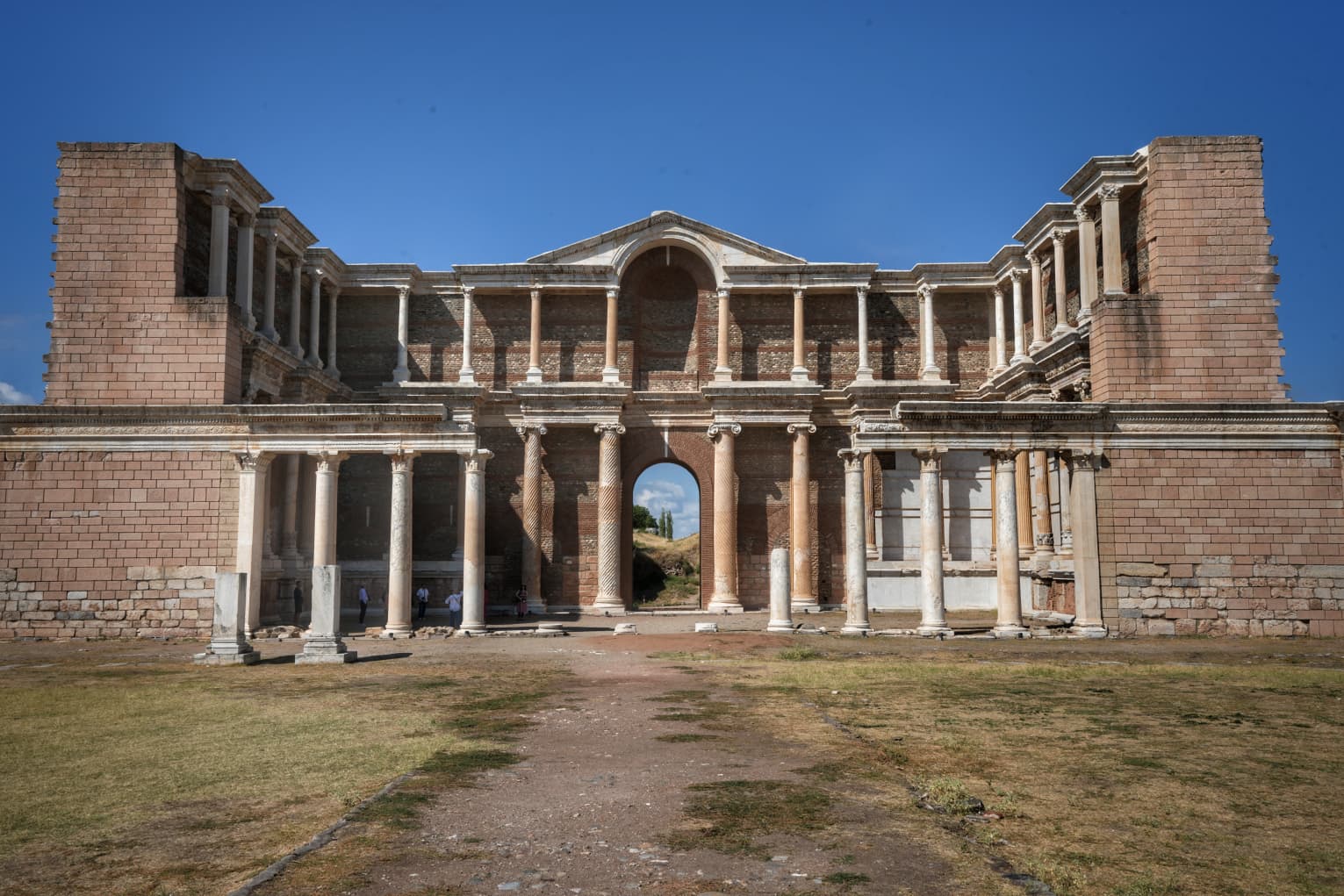
Sardis and Bin Tepe also entered a new phase in their institutional history in 2025, when the complex was inscribed on the UNESCO World Heritage List. With this recognition, Sardis and Bin Tepe became Turkey’s 22nd site to be included on the international organization’s list. The new surveillance center is therefore part of a framework of policies aimed at protecting cultural heritage, which the Turkish Ministry of Culture and Tourism structures primarily along three lines: prevention, international cooperation, and the recovery of cultural property illegally removed from the country.
The international dimension, in fact, represents a significant part of Turkey’s strategy against the illicit trafficking of artifacts and works of art. Turkey collaborates with UNESCO, INTERPOL, the World Customs Organization, and the United Nations Office on Drugs and Crime. In addition to these activities, there are bilateral agreements and collaborations with judicial and investigative institutions in other countries. In 2026, the Memorandum of Understanding signed with the United States in 2021—concerning restrictions on the import of cultural property from Turkey—was renewed for another five years.
This framework also includes collaborations with the Manhattan District Attorney’s Office and U.S. Homeland Security Investigations, which have contributed to the recovery of numerous works of art and archaeological artifacts. According to data released by the Ministry, 13,474 cultural artifacts have been returned to Turkey since 2002, 9,159 of which were returned in the last eight years. This figure includes artifacts and works recovered through various international operations and restitution procedures.
Among the recoveries listed are the bronze statue of Marcus Aurelius from the ancient city of Boubon, returned by the United States; the terracotta architectural plaques from Düver; and the İznik tiles recovered in the United Kingdom and Spain. Added to these are the Urartian bronzes returned from Switzerland, the head of Eros returned from the United Kingdom and reunited with the Sidamara Sarcophagus, a mosaic panel from Zeugma, and the inscription from the Bozgoca Mosque in Şile, returned from the Netherlands.
However, the protection of Sardi is not limited to site security and the prevention of illegal excavations. In recent years, initiatives have also been launched to change how the archaeological area is accessed, with the goal of allowing visitors to view some of its main monuments even after sunset. Sardi is, in fact, one of the sites included in the evening museum program developed by the Turkish Ministry of Culture and Tourism. A specialized lighting project allows visitors to explore part of the archaeological site in the evening, making some of the ancient city’s most iconic sites accessible after sunset. These include the Temple of Artemis, the Gymnasium, and the thermal baths complex.
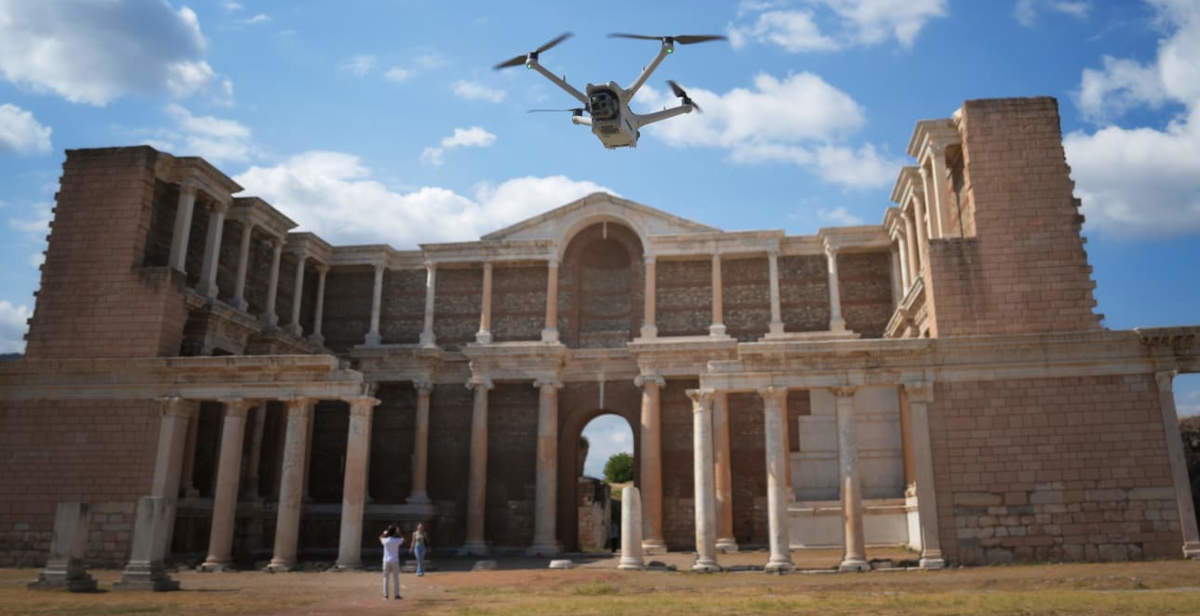 |
| In Turkey, drones monitor Sardi and Bin Tepe, UNESCO sites threatened by illegal excavations |

Warning: the translation into English of the original Italian article was created using automatic tools. We undertake to review all articles, but we do not guarantee the total absence of inaccuracies in the translation due to the program. You can find the original by clicking on the ITA button. If you find any mistake,please contact us.


























 IT
IT FR
FR DE
DE ES
ES CN
CN


