



by Redazione 28/10/2026


Categories: Archaeology / Disclaimer
The director of the Pompeii Archaeological Park has denounced the spread on social media of misleading and ethically questionable content about the victims of the eruption of 79 B.C., featuring images created using AI. One such case involves the House of the Golden Bracelet.

Images created using artificial intelligence, misleading stories, and the generation of revenue through a fundraising portal. This is the warning issued by Gabriel Zuchtriegel, director of the Pompeii Archaeological Park, who draws attention to the increasingly frequent use of artificial intelligence to create misleading and ethically questionable content. This phenomenon risks turning cultural promotion into its opposite, fueling misinformation and educational impoverishment. Of particular concern is a recent Instagram post dedicated to the House of the Golden Bracelet. According to the director’s report, both the image and the text exhibit characteristics consistent with AI-generated content and present a completely false reconstruction.


“The Archaeological Park has recently adopted guidelines for the display of casts of the eruption’s victims. It is truly disconcerting—indeed, I would say repugnant—to see, at the same time, a completely misleading and irresponsible use of artificial intelligence to create images and narratives about the victims of Pompeii on social media,” Director Gabriel Zuchtriegel stated in a note. “The latest case involves an Instagram post on a profile attributed to a chemistry professor at the University of Naples ‘Federico II,’ which discusses the House of the Golden Bracelet. It is completely fake: the image was created using AI, and the text reads as if it were generated by AI. Furthermore, this activity—which I struggle to call cultural promotion, because it is the exact opposite—is linked to generating revenue through a fundraising portal. We have written to the University to request a dialogue; we would like to understand whether something like this is compatible with the code of ethics of such a prestigious institution. More generally, we believe it is important to initiate a shared reflection on how AI can be used to advance cultural, social, and economic progress, rather than leading to a new form of cultural and educational poverty, as in the case cited.”


“I believe,” added Zuchtriegel, “that this is a cross-cutting issue, not least because I’ve recently heard from my children that the use of AI is spreading even in schools, and that there are teachers who don’t even delete ChatGPT questions from the materials they give to students. It is clear that a wide-ranging debate is urgently needed on the direction we are heading in, culturally and pedagogically, during this time of great transformation. This is not about condemning AI; on the contrary: the Archaeological Park of Pompeii is experimenting with the use of AI tools for research, promotion, security, and heritage monitoring, but I believe it is important that all of this take place within an ethical framework, which in the case mentioned seems to be completely lacking.”
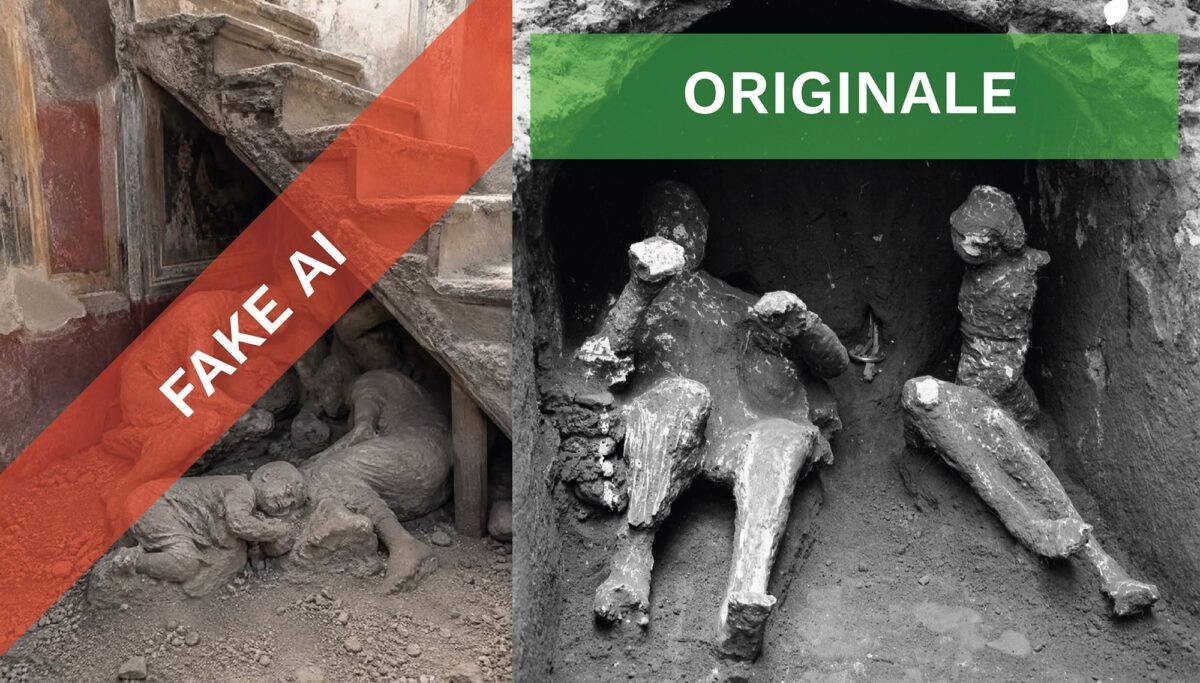
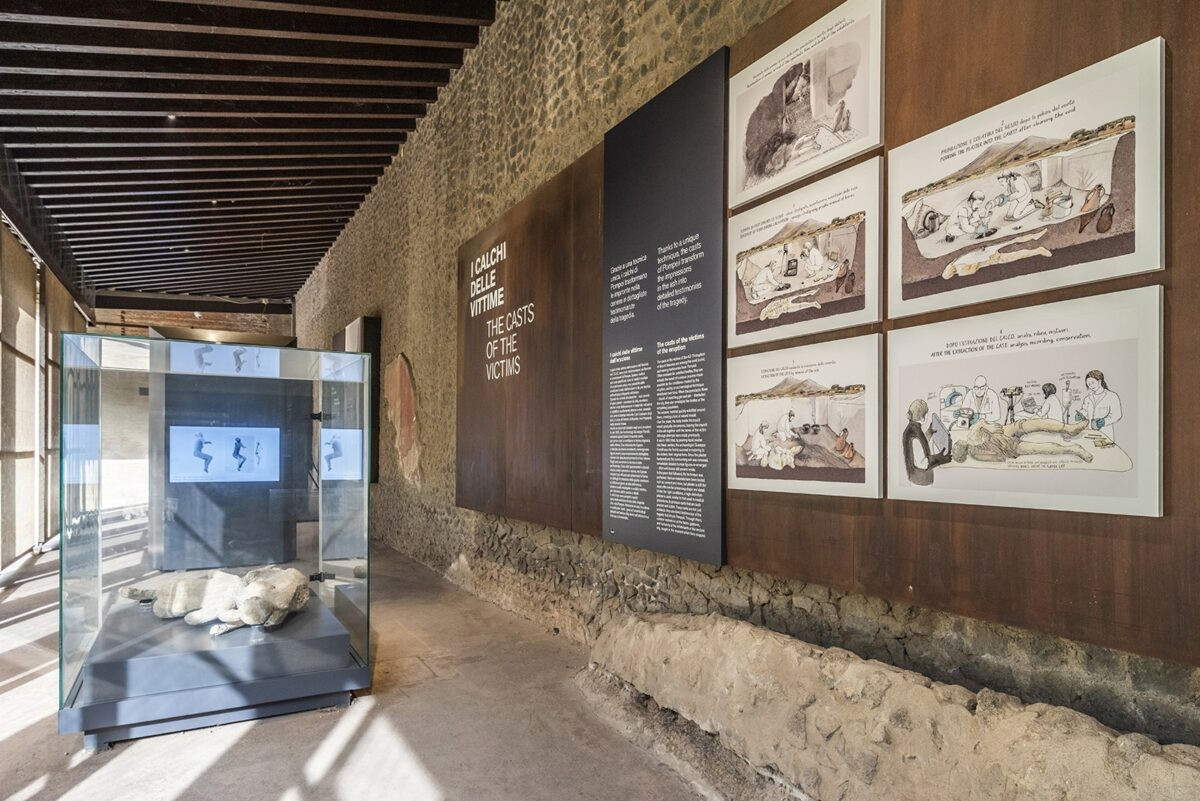
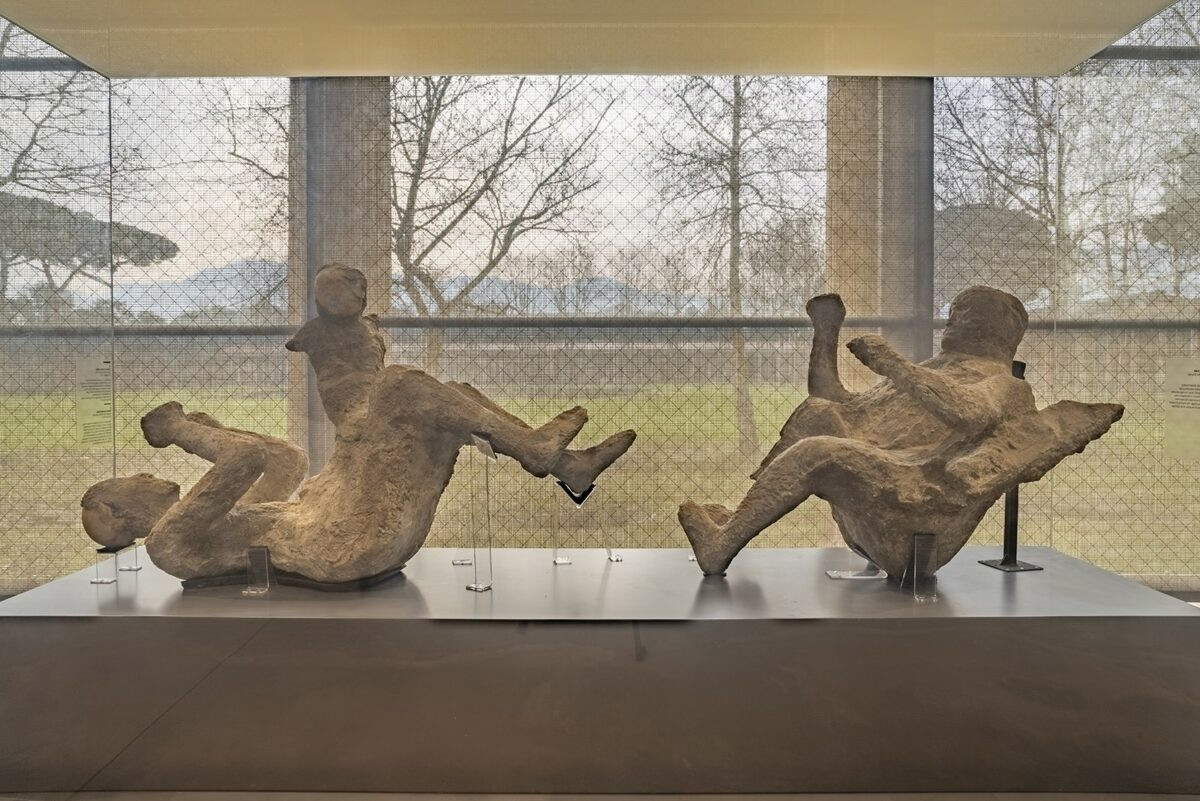
The matter takes on a particularly sensitive significance when considering the history of the House of the Golden Bracelet and the human remains of several victims discovered inside it. Following the initial explorations conducted in the 18th century, the building was fully excavated between the 1960s and 1970s. During the excavations, the remains of several people who died during the eruption of Vesuvius were recovered. Casts were made of four victims—two adults and two children—using a technique introduced in the 19th century: filling the cavities left by the victims in the volcanic ash with plaster. The four casts are now on display in the Palestra Grande of the archaeological site, as part of an exhibition dedicated to the eruption and the people who lost their lives in 79 AD. The exhibition, which opened on March 11, 2026, was designed to strike a balance between educational and museum objectives and the respect due to the victims. Specifically for this exhibition, the Park developed specific guidelines for the presentation and handling of human remains discovered in Pompeii, which were subsequently adopted by the Park’s Scientific Committee and Board of Directors. The contrast between this careful approach and the circulation of fake images and unsubstantiated narratives highlights, according to the Park, the importance of addressing the use of artificial intelligence from an ethical perspective as well, especially when human remains and evidence of a historical tragedy are involved.
The Archaeological Park of Pompeii does not rule out the use of artificial intelligence and digital technologies in the promotion of cultural heritage. On the contrary, a recent project carried out in collaboration with the University of Padua and the Digital Cultural Heritage Laboratory demonstrates how these tools can contribute to our understanding of the past, provided they are guided by a rigorous scientific method. The initiative led to the creation of a digital reconstruction of a man’s escape during the eruption of Vesuvius, developed exclusively on the basis of scientific evidence emerging from archaeological investigations conducted by archaeologists from the Ministry of Culture. The distinction, therefore, concerns not only the technology used but, above all, the method by which it is employed.
|
| Pompeii: Fake AI-Generated Images of the Eruption’s Victims—Gabriel Zuchtriegel Speaks Out |
Warning: the translation into English of the original Italian article was created using automatic tools. We undertake to review all articles, but we do not guarantee the total absence of inaccuracies in the translation due to the program. You can find the original by clicking on the ITA button. If you find any mistake,please contact us.