





A small roll of film, a few photos taken in Centuripe, and a wedding photograph from 1979 helped reconstruct the history of the Centuripe pyx—the precious 3rd-century B.C. terracotta vessel thatthe Allard Pierson Museum in Amsterdam has now returned to Sicily. Investigations into the artifact’s provenance have, in fact, brought new evidence to light, lending credence to the hypothesis that the artifact was illegally exported from Italy in the late 1970s.
The return also marks the beginning of a new scientific collaboration between Italian and Dutch experts, who have been called upon to further study the pyx and other artifacts of the same type.
The pyx is a lidded vessel belonging to a rare ceramic production made in Centuripe, Sicily, for a limited period during the 3rd century B.C. What makes it particularly valuable is its rich polychrome decoration, which depicts a wedding scene. At the center of the composition are the deities of love, while Apollo observes the scene. The figures and decorative elements also extend onto the lid, creating a refined and complex pictorial composition characteristic of this particular ceramic production.
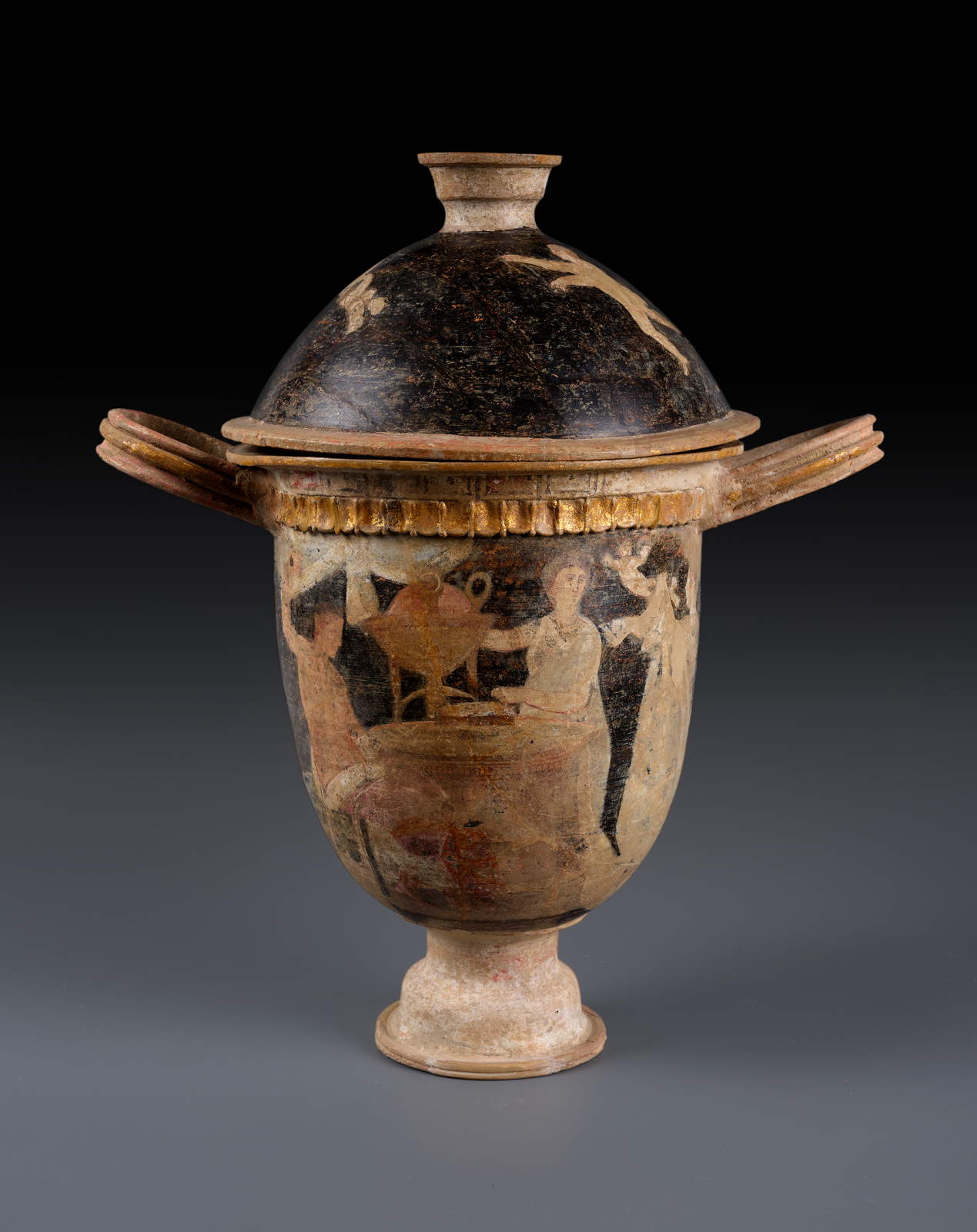
Since 1997, the pyx has been part of the archaeological collection ofthe Allard Pierson, a museum and research institute atthe University of Amsterdam dedicated to heritage, culture, and science. The museum acquired the vase in 1997 from a Swiss art dealer during the TEFAF art fair in Maastricht. At the time of the sale, the dealer stated that the pyx had belonged to a private Swiss collection prior to 1970. The date was no coincidence: it was precisely in 1970 that the UNESCO Convention on the Means of Prohibiting and Preventing the Illicit Import, Export and Transfer of Ownership of Cultural Property was adopted. However, at the time of purchase, no additional documents regarding the artifact’s provenance were presented, nor was an Italian export permit provided.
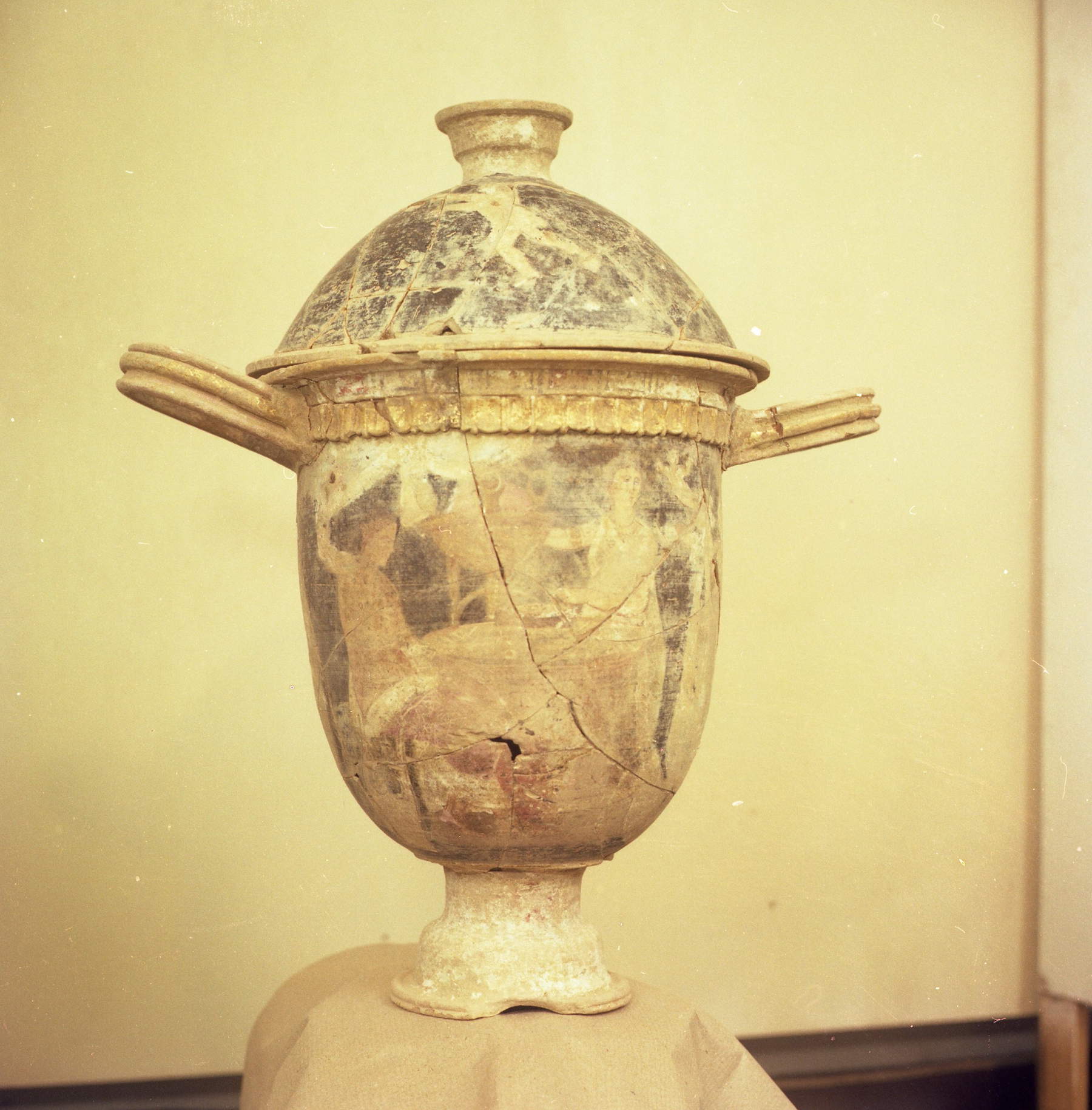
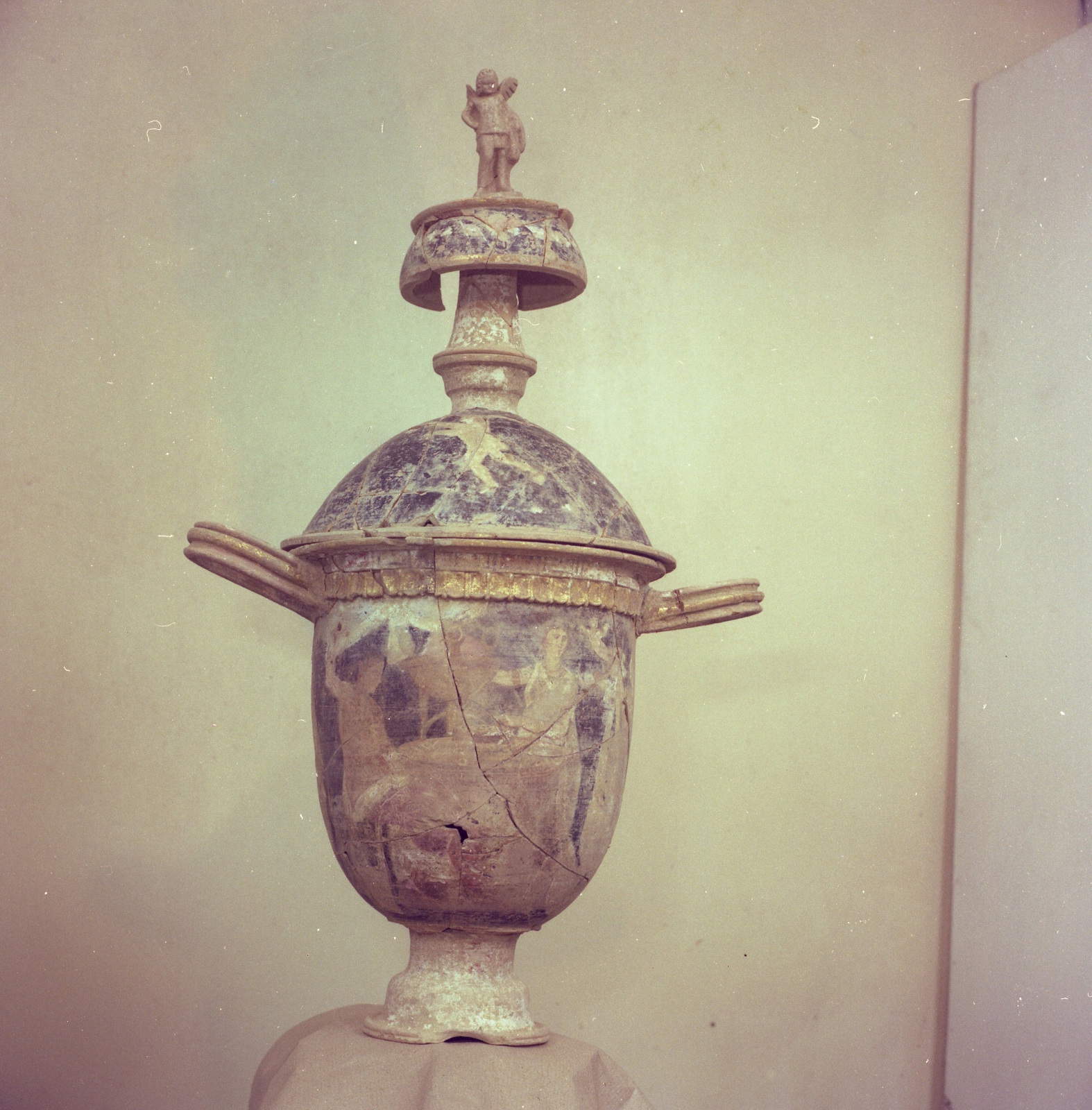
In 2017, the Sicilian authorities filed a request for restitution. Subsequent provenance research led scholars to examine the collections of the Sicilian Historical Society of Centuripe, where they discovered several photographs taken by a local photographer. In addition to his regular work, the photographer took pictures of freshly excavated archaeological artifacts that were intended for local grave robbers. Among the preserved negatives, a particularly important roll of film was identified: one of the photographs shows the pyx shortly after its excavation. A decisive chronological reference was provided by another image on the same roll: a group photograph taken during a wedding celebrated in Centuripe in 1979. The presence of the two images on the same roll of film made it possible to link the photograph of the pyx to that date, transforming that small photographic artifact into a key element in reconstructing the vessel’s provenance. Taken together, these clues make it plausible that the pyx did not come from a Swiss private collection prior to 1970, as stated at the time of sale, but that it had been illegally exported from Italy around 1979. This hypothesis is also consistent with the documented history of clandestine excavations in the rock-cut tombs in the Centuripe area.
At the time, the purchase of artifacts lacking definitive documentation was not unusual in the Netherlands and did not constitute a violation under Dutch law. In Italy, there was—and still is—a strict prohibition on the excavation and export of archaeological finds without explicit authorization from the state. The Netherlands did not ratify the 1970 UNESCO Convention until 2009. The corresponding implementing law entered into force that same year, while the provisions were subsequently incorporated into Dutch cultural heritage legislation beginning in 2016. Since these provisions are not retroactive, there was therefore no legal obligation to return the artifact in this specific case. The museum nevertheless chose to proceed with the return after evaluating the results of provenance research and consulting with the Sicilian authorities. The decision was made on a voluntary basis and for ethical reasons.
The return of the pyx also marks the beginning of a new phase of scientific collaboration. The Allard Pierson Museum, together with Sicilian and Dutch scholars and experts, is in fact establishing an international working group dedicated to the study of the pyx and other objects from the same production. The investigations will examine, among other aspects, the characteristics of the clay, pigments, and style, with the aim of expanding knowledge about these artifacts and contributing to the reconstruction of their history.
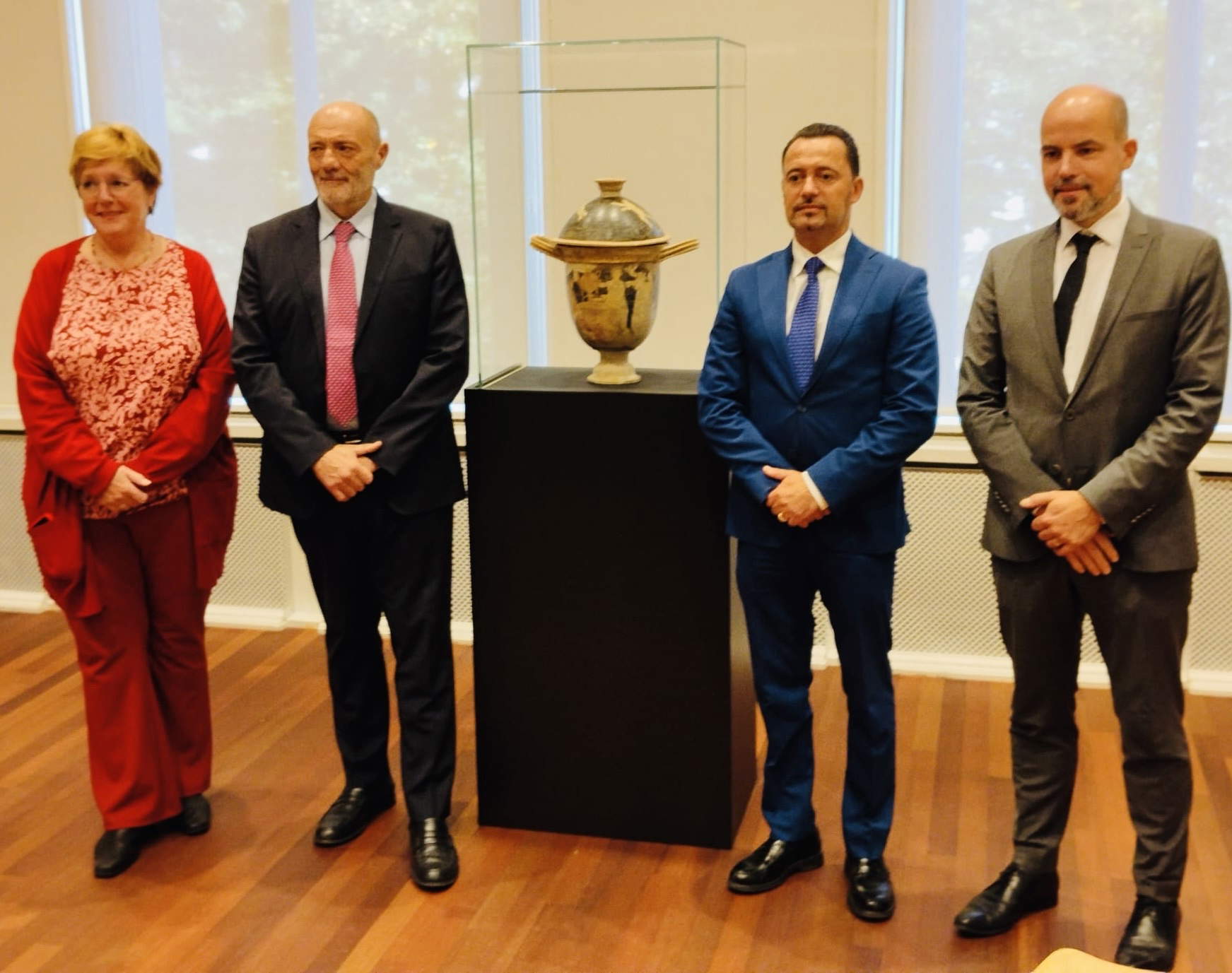
The repatriation ceremony took place at the University of Amsterdam in the presence of Councilor Francesco Paolo Scarpinato, the director of the Department of Cultural Heritage Mario La Rocca, the commander of the Carabinieri’s Cultural Heritage Protection Unit in Palermo, Lieutenant Vincenzo De Felice, the Director of the University of Amsterdam Library, Carlos Reijnen; the Ambassador for International Cultural Cooperation, Daniel Stork; the Italian Ambassador to the Netherlands, Augusto Massari; and the head of provenance research for the Allard Pierson’s archaeological collections, Rogier Kalkers.
The Allard Pierson is the University of Amsterdam’s museum and research institute for heritage, culture, and science. Its archaeological collection comprises approximately 20,000 objects, primarily from Southern Europe, Western Asia, and North Africa. Since 2023, the institution has intensified its work on the provenance of its archaeological collections, with the goal of identifying gaps in the documentation, gathering as much information as possible about the objects, and making this knowledge accessible to the public.
“This restitution is not an end in itself, but rather the beginning of further collaboration with Sicilian authorities, researchers, and museum institutions in the field of provenance research,” said Rogier Kalkers, head of provenance research at the Allard Pierson.
“This return marks an important step in the cooperative relationship between the Netherlands and Sicily,” stated Francesco Paolo Scarpinato, Regional Councilor for Cultural Heritage and Sicilian Identity. “We are particularly proud and delighted by this homecoming, which will undoubtedly further enhance the value of the precious collections containing the rare ceramics from Centuripe. The pyx will be on permanent display at the Regional Museum of Centuripe.”
“Due to thefts, looting, and forgeries, little is often known about the archaeological context of objects from this region. Even the authenticity of some objects and paintings is called into question,” stated Laurien de Gelder, curator of the archaeological collections for Western Asia and the Greek world at the Allard Pierson Museum. “By combining knowledge and research methods, we aim to deepen our understanding of the production and authenticity of this particular type of pottery.”
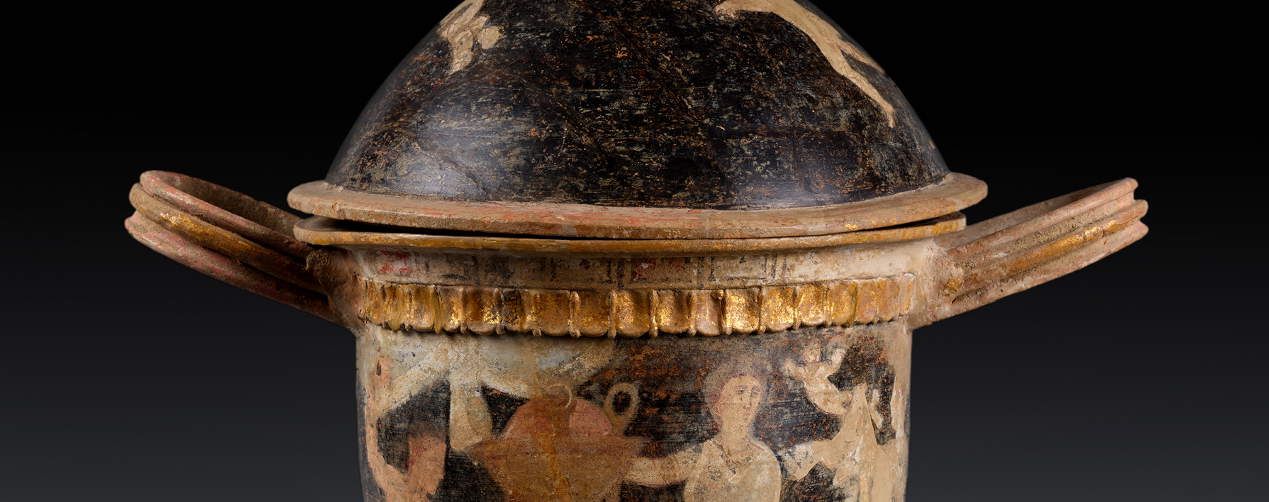 |
| The Centuripe pyx returns to Sicily: the Allard Pierson Museum returns the ancient vase following new research |

Warning: the translation into English of the original Italian article was created using automatic tools. We undertake to review all articles, but we do not guarantee the total absence of inaccuracies in the translation due to the program. You can find the original by clicking on the ITA button. If you find any mistake,please contact us.

























 IT
IT FR
FR DE
DE ES
ES CN
CN


