




by Redazione 09/09/2026



Categories: Archaeology / Disclaimer
Starting September 13, 2026, the Kouros of Lentini will return home and be on display at the city’s Regional Archaeological Museum. Since its reassembly in 2018, the statue has been exhibited in Athens and throughout Sicily, including Catania, Syracuse, and Lentini.

Starting September 13, 2026, the famous Kouros of Lentini will return to the halls of the city’s Regional Archaeological Museum. The sculpture, consisting of a head and torso carved from fine Parian marble and dating to the first decade of the 5th century B.C., is an extraordinarily valuable testament to the Greek presence and culture in the Lentini area, in the province of Syracuse.
The Kouros is the result of the reunification of two elements that had long been housed in different museums. The head, known as the “Biscari Head,” belonged to the collection of the Prince of Biscari and was later transferred to the Civic Museum of Castello Ursino in Catania. The torso, on the other hand, is the so-called “Leontinoi torso,” which was on display at the Paolo Orsi Regional Archaeological Museum in Syracuse. The two fragments were reunited in 2018, following thorough studies and archaeometric and petrographic analyses, spearheaded by archaeologist and interim councilor Sebastiano Tusa, which provided decisive evidence supporting the hypothesis that the head and torso belonged to the same statue. Since then, the Kouros has been displayed on a rotating basis at various venues. After being exhibited in Athens in 2021–2022, it returned to Sicily and made stops at museums in Catania and Syracuse, as well as in Lentini in 2024.
Its return to Lentini holds special significance precisely because of the direct connection both artifacts have to the Lentini area.


“It’s wonderful that the Kouros has returned home—a work deeply connected to the history and identity of Lentini,” stated Francesco Paolo Scarpinato, councilor for Cultural Heritage and Sicilian Identity. “Its presence in the museum adds value to the promotion and appeal of the region, enriching its cultural offerings and giving residents and visitors the opportunity to rediscover an important testament to its past. Promoting our heritage also means strengthening the bond between cultural assets and the places whose stories they tell.”
“For months, together with the staff of the Lentini Museum, we have been working toward this day,” emphasized Agostino Messana, director of the Leontinoi and Megara Archaeological Park. “The return of the Kouros to Lentini—whose two parts were recovered right here in this area—restores a fragment of history, of Lentini and its Greek roots. It will be an opportunity to look toward the museum’s future: as early as 2024, the Kouros has already proven to be a major draw for tourists and archaeology enthusiasts. A true driving force for boosting the local economy.”
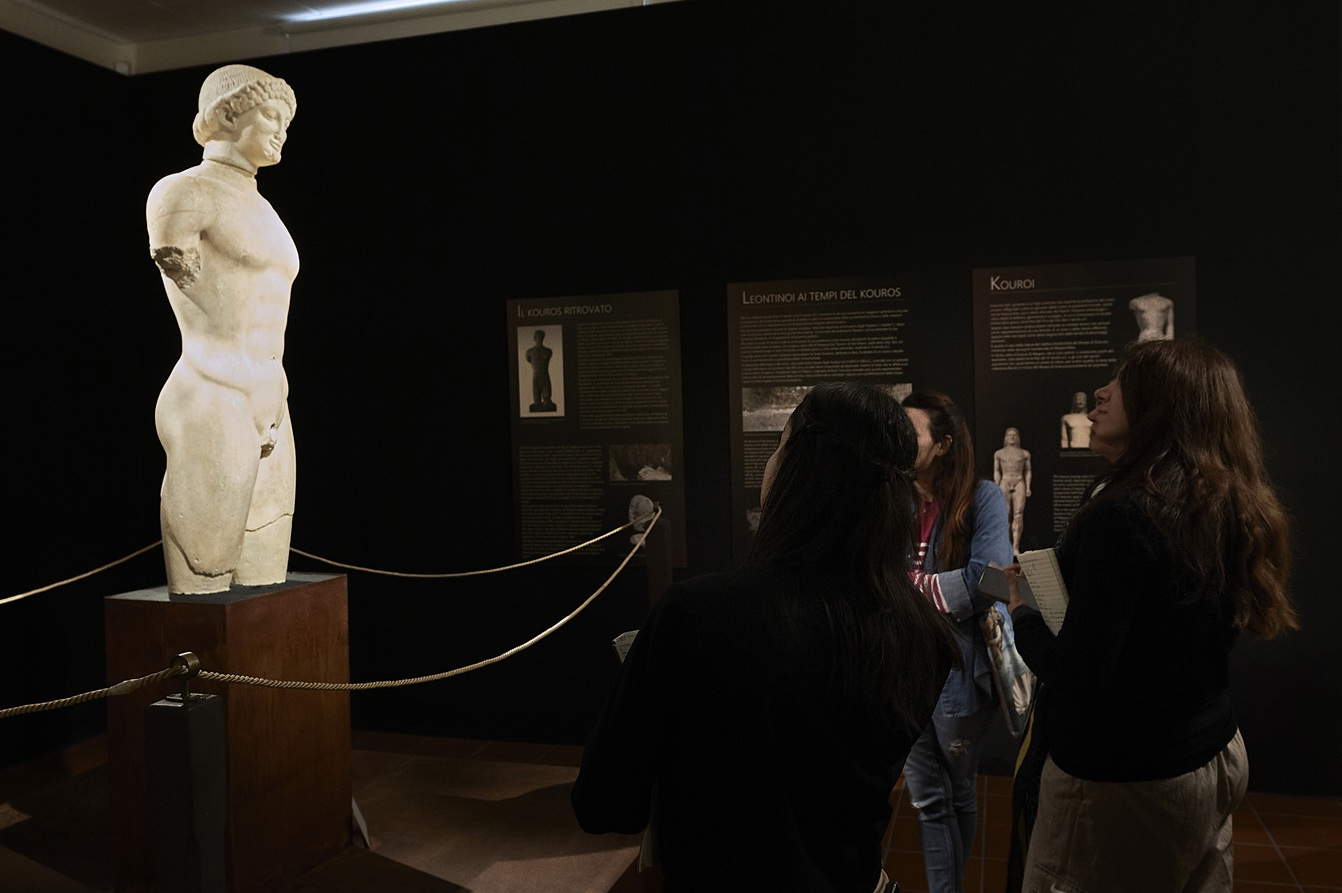
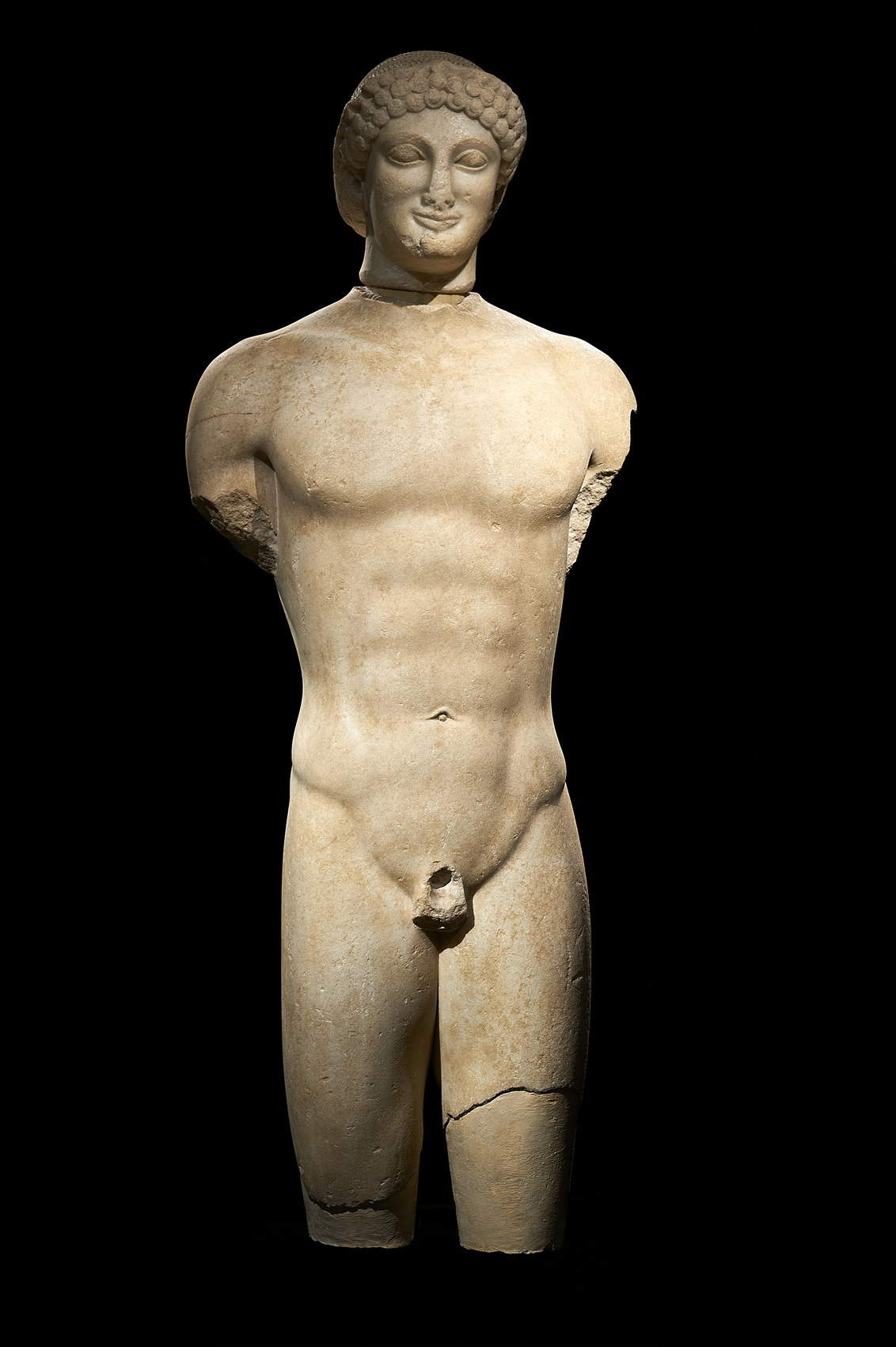
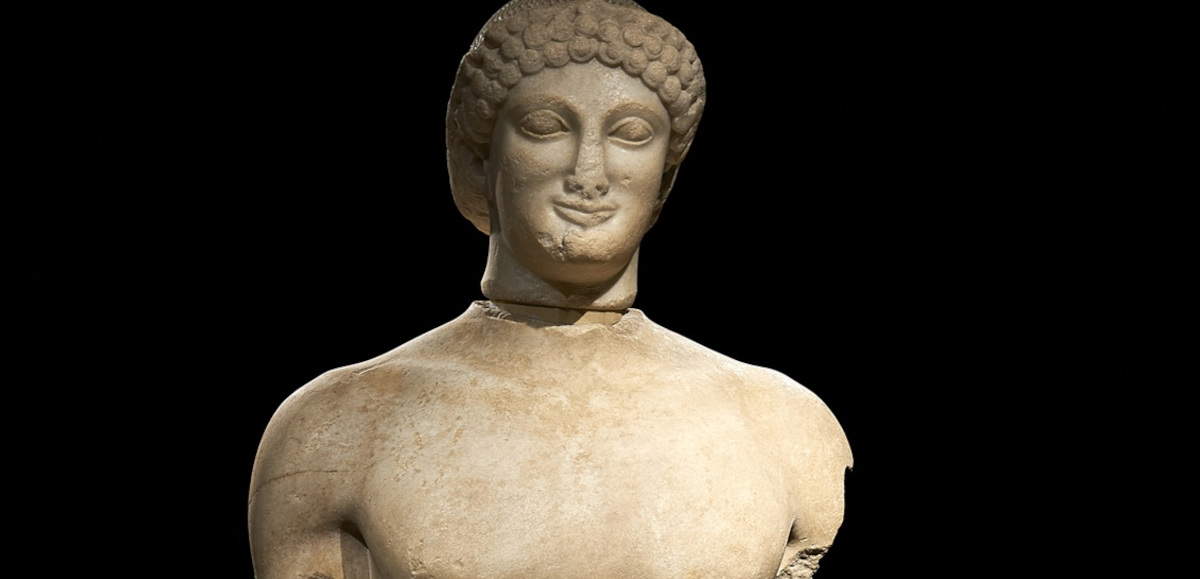
The head of the Kouros is carved from Parian marble, life-size, and dates to the first decade of the 5th century B.C. The artifact has a distinct fracture at the bottom, where it joins the neck. Its history is linked to the famous collection of the Prince of Biscari, now housed at the Civic Museum of Castello Ursino. An unpublished catalog from the Biscari Museum reveals a particularly important detail regarding its provenance: the head was reportedly discovered in the 18th century in the city of Lentini, referred to in the document by the Latin phrase “in Leontinacivitate.” The catalog, however, does not provide more precise details regarding the exact location of the discovery. Guido Libertini had already pointed out, some time earlier, the resemblance between this head and that of Apollo depicted on coins minted by the city of Lentini in the 5th century B.C.
The story of the torso is different. The archaeologist Paolo Orsi purchased the artifact from the Marquis of Castelluccio and recorded it in the inventory of the Syracuse Museum in 1904. According to Orsi’s own account in the publication dedicated to the torso, the discovery took place in the countryside near Leontinoi following the floods of 1902. After its discovery, the artifact remained abandoned on a farm for some time before being recovered by the Marquis. The documentation in Orsi’s notebooks also attests to the archaeologist’s repeated attempts to pinpoint more precisely the location where the statue had been discovered. His research, however, did not lead to a definitive conclusion.
The idea of reuniting the Biscari head with the torso from the Syracuse Museum did not originate in 2018. In fact, an initial proposal for reuniting the two parts came from Guido Libertini, who, on the advice of the scholar Ludwig Pollak, had a cast made of the head with the aim of attaching it to the torso. The result of this initial test, documented by a photograph published in the 1930 volume dedicated to the Biscari Museum, appeared convincing, though it could not be considered a definitive solution. A further step forward came many decades later thanks to the research of a group of scholars, who created a virtual anastylosis of the two fragments using 3D printing. The study, published in 2017 in the *Journal of Electronic Imaging*, reinforced the hypothesis that the head and torso might belong to a single sculpture.
The real breakthrough came in 2018, when the project to physically reassemble the two artifacts was launched. The process involved the restoration of the sculptures and a new campaign of archaeometric and petrographic analyses, commissioned by Sebastiano Tusa. Analysis of three marble micro-samples taken from the two parts of the statue established that the material comes from the Lakkoi quarry on the Greek island of Paros, renowned for the quality of its marble. The analyses also pointed to an even more significant possibility: the two elements may have been carved from the same block of marble.
 |
| The Kouros of Lentini Returns Home: Starting September 13, the Statue Will Be on Display at the Archaeological Museum |
Warning: the translation into English of the original Italian article was created using automatic tools. We undertake to review all articles, but we do not guarantee the total absence of inaccuracies in the translation due to the program. You can find the original by clicking on the ITA button. If you find any mistake,please contact us.