




Frescoes of extraordinary quality, a rare winged ichthyocentaur, marble capitals, decorated lead cistae, and surprising evidence of a construction site that was still active when Vesuvius obliterated the Vesuvian coast in 79 AD. These are some of the findings from the 2025–2026 excavation campaign conducted at Villa Sora (Torre del Greco) by the Herculaneum Archaeological Park and presented during a symposium held at Palazzo Vallelonga in Torre del Greco. The initiative, organized as part of the 2026 European Archaeology Days, was promoted by the Herculaneum Archaeological Park in collaboration with the Municipality of Torre del Greco and the Banca di Credito Popolare di Torre del Greco. Scientific coordination was entrusted to Domenico Camardo, Marina Caso, and Federica Colaiacomo, director of the Herculaneum Archaeological Park.
The findings presented during the meeting represent an important milestone in our understanding of Villa Sora, one of the most significant luxury residences on the ancient Campania coast. The complex, overlooking the Gulf of Naples in the territory of present-day Torre del Greco, is in fact one of the most imposingotium villas of senatorial and imperial rank built along the Vesuvian coast between the late Republican era and the early Imperial period. The villa was built around the middle of the 1st century B.C. and underwent a series of expansions and transformations over the following decades that enhanced its prestige. The complex extended along the coastline through a complex system of terraces sloping down toward the sea and occupied an estimated length of about 150 meters along the shoreline. Its panoramic location and the quality of its decorations place it among the most exclusive aristocratic residences in the Gulf of Naples.
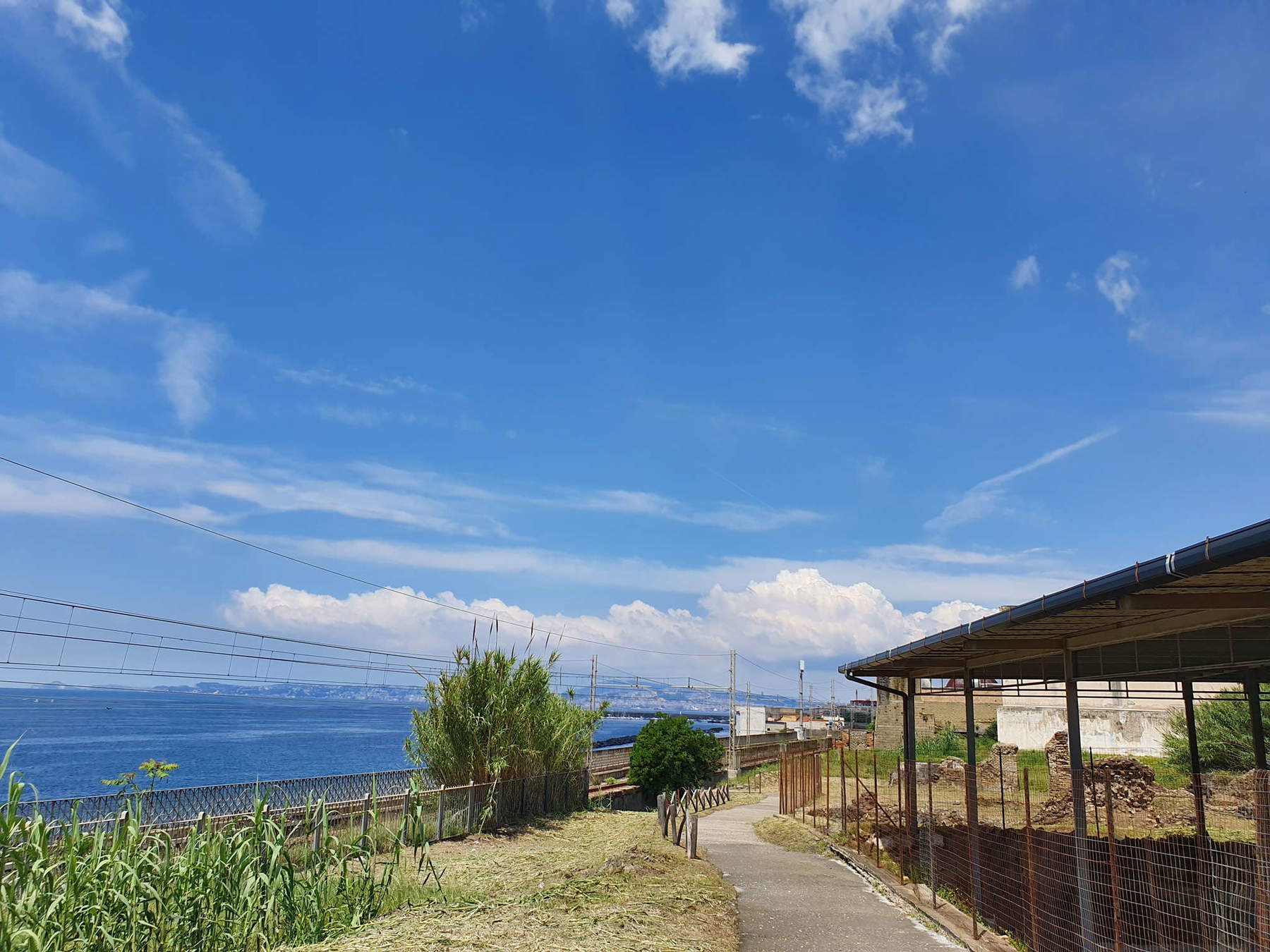
The archaeological investigations launched in November 2025 represent the first systematic intervention at the site in over thirty years. The project was made possible thanks to a grant of 150,000 euros obtained as part of the National Archaeological Excavation Campaign promoted by the General Directorate of Museums of the Ministry of Culture, which in 2025 allocated a total of 4.8 million euros to research activities across the country. In addition to the ministry’s support, the Packard Humanities Institute provided assistance, and the City of Torre del Greco contributed through an Art Bonus project.
Commenting on the results of the campaign, the director of the Herculaneum Archaeological Park, Federica Colaiacomo, emphasized the value of opening the excavation sites to the public and the importance of sharing: “Opening excavation sites and laboratories to the public, sharing discoveries the very moment they emerge: this is the deepest meaning of the European Days of Archaeology and the Park’s commitment at Villa Sora. The investigations from this campaign yield extraordinary data on the villa’s architectural and decorative quality, confirming its exceptional status among the luxury residences of the Gulf of Naples.”
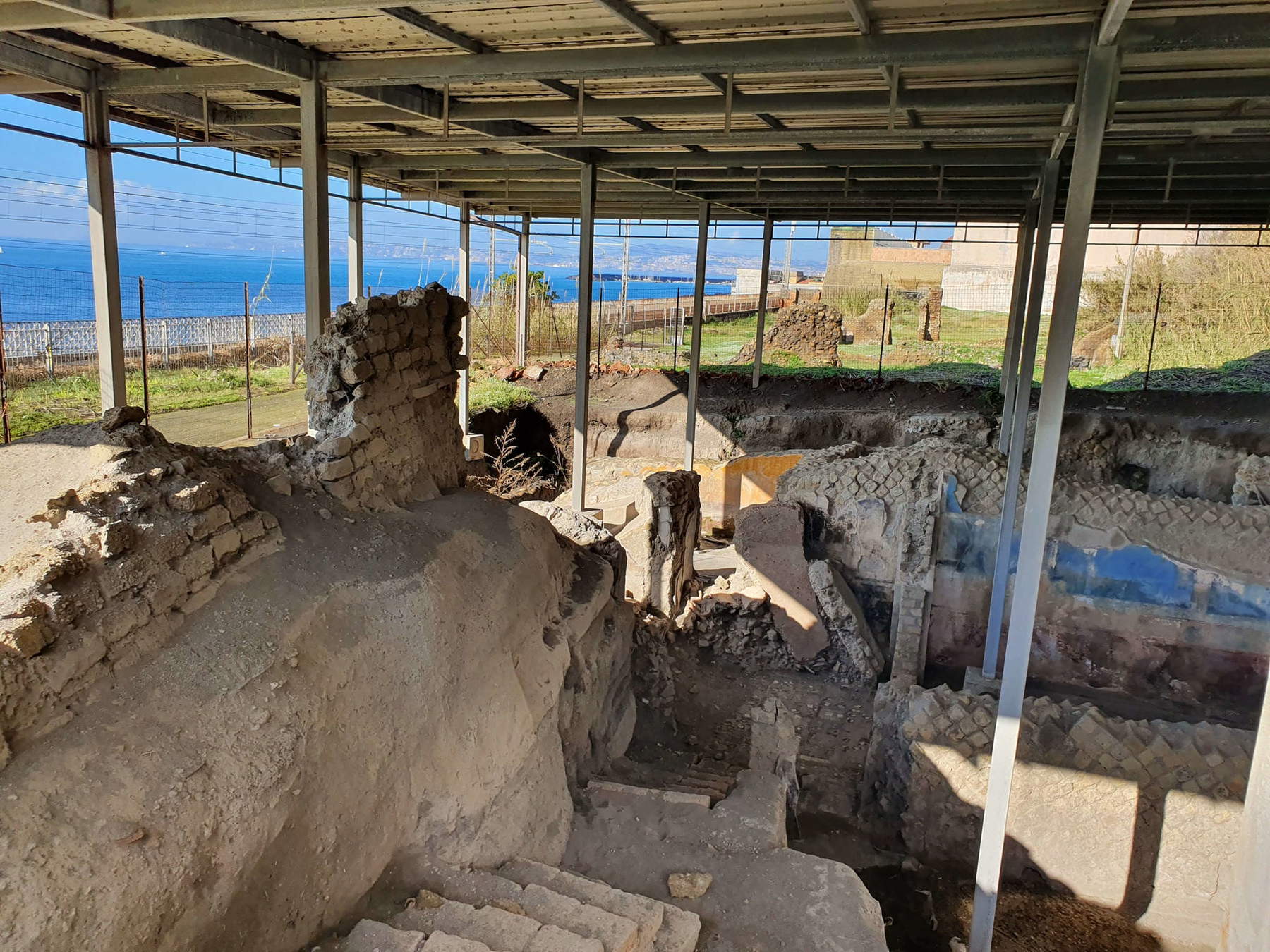
The excavation arose from the need to secure the northeastern face of the sector already explored between the 1980s and 1990s. However , the project also made it possible to expand our understanding of the archaeological complex and to extend the area open to visitors by extending the roof and reconfiguring the walkway for the public. Particular attention was paid to Room 22, a relatively small space—about ten square meters—but characterized by exceptional decorative quality. The room was already known because it was partially visible through a tunnel, but the new investigations allowed for a much more in-depth documentation of it.
The stratigraphic analysis of the archaeological layers allowed scholars to precisely reconstruct the sequence of events that led to the villa’s destruction during the eruption of 79 AD. Pyroclastic flows violently engulfed the structures, first causing the collapse of the roofs and ceilings and subsequently the collapse of the walls. The volcanic deposits thus preserved an extremely detailed picture of the building’s final moments.
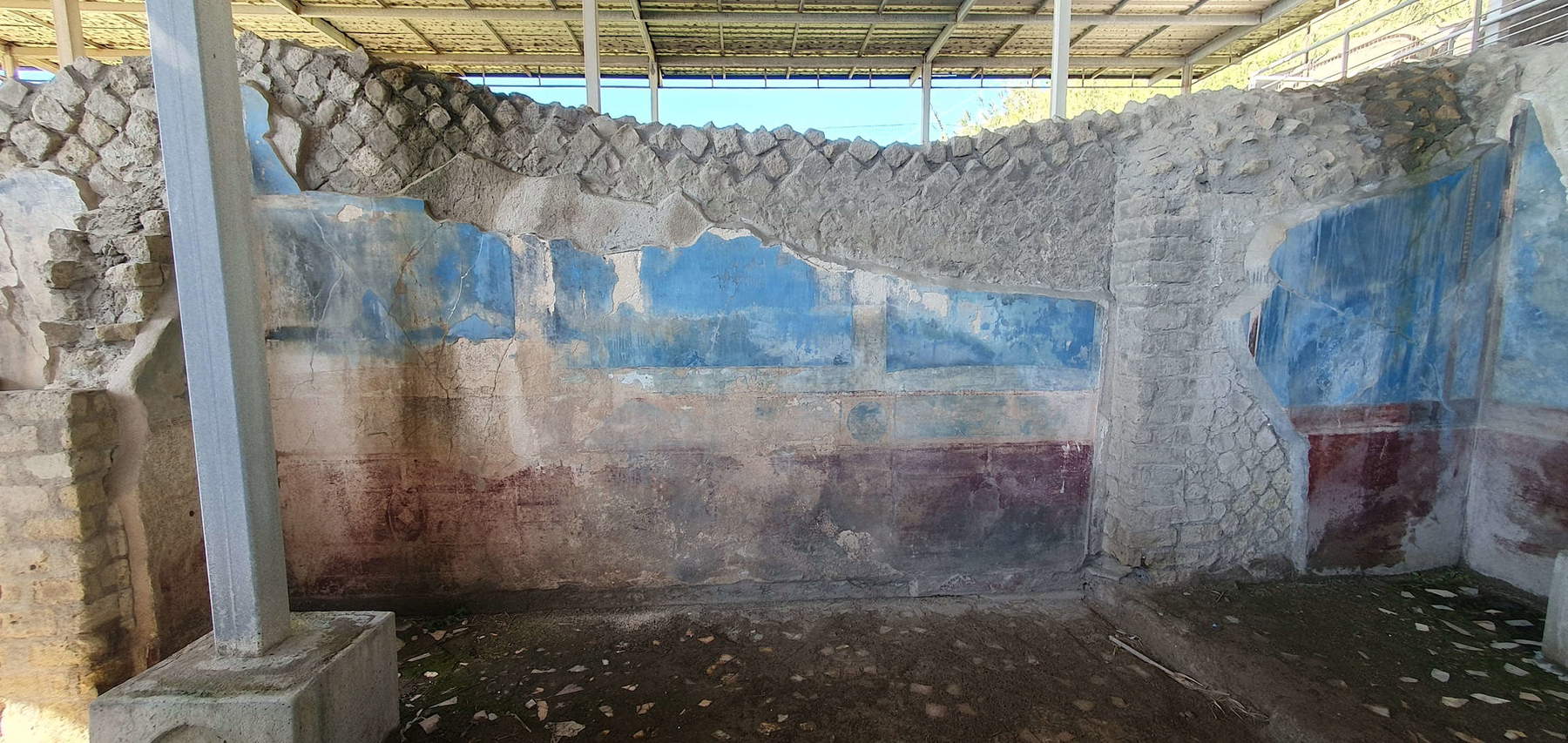
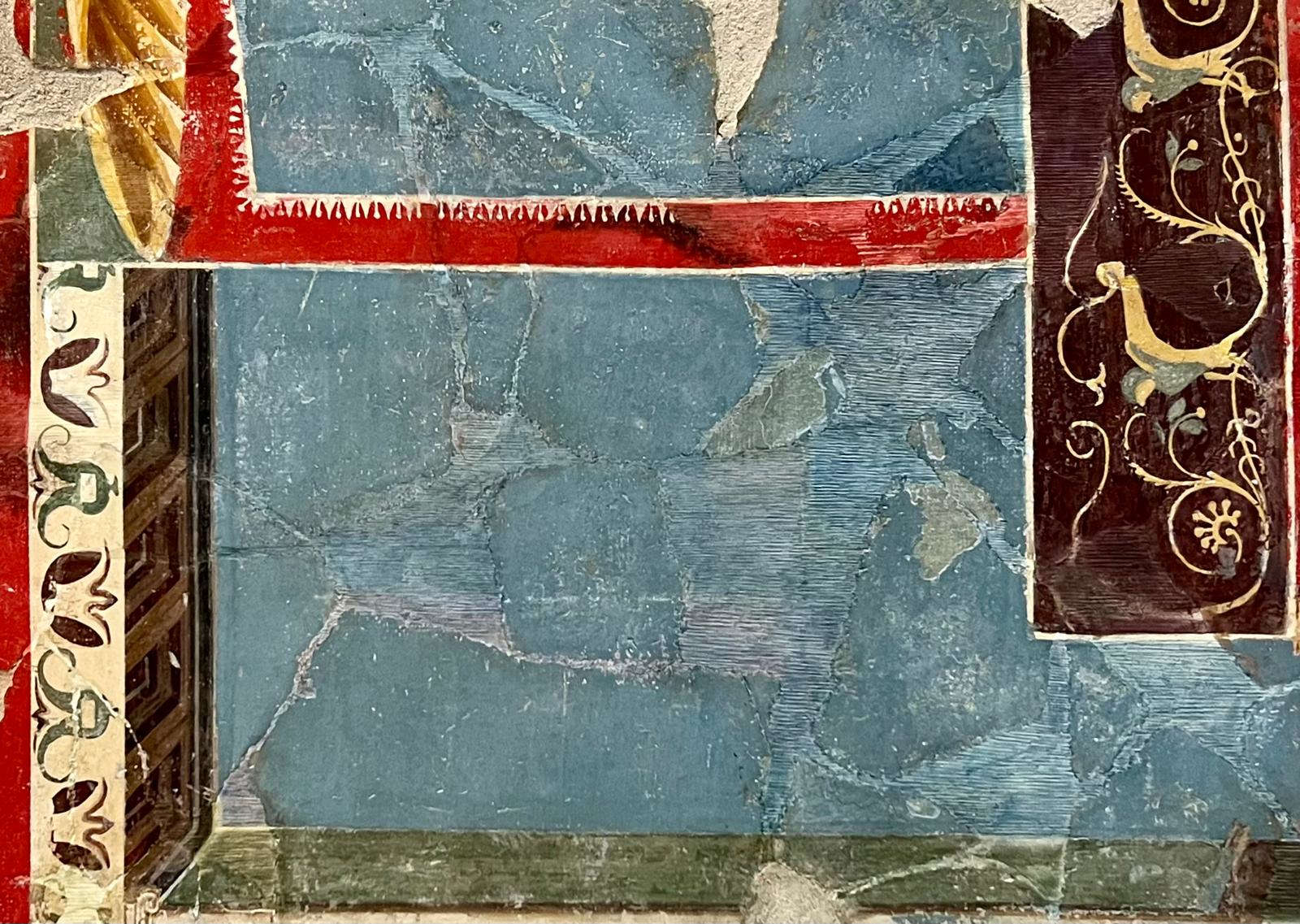
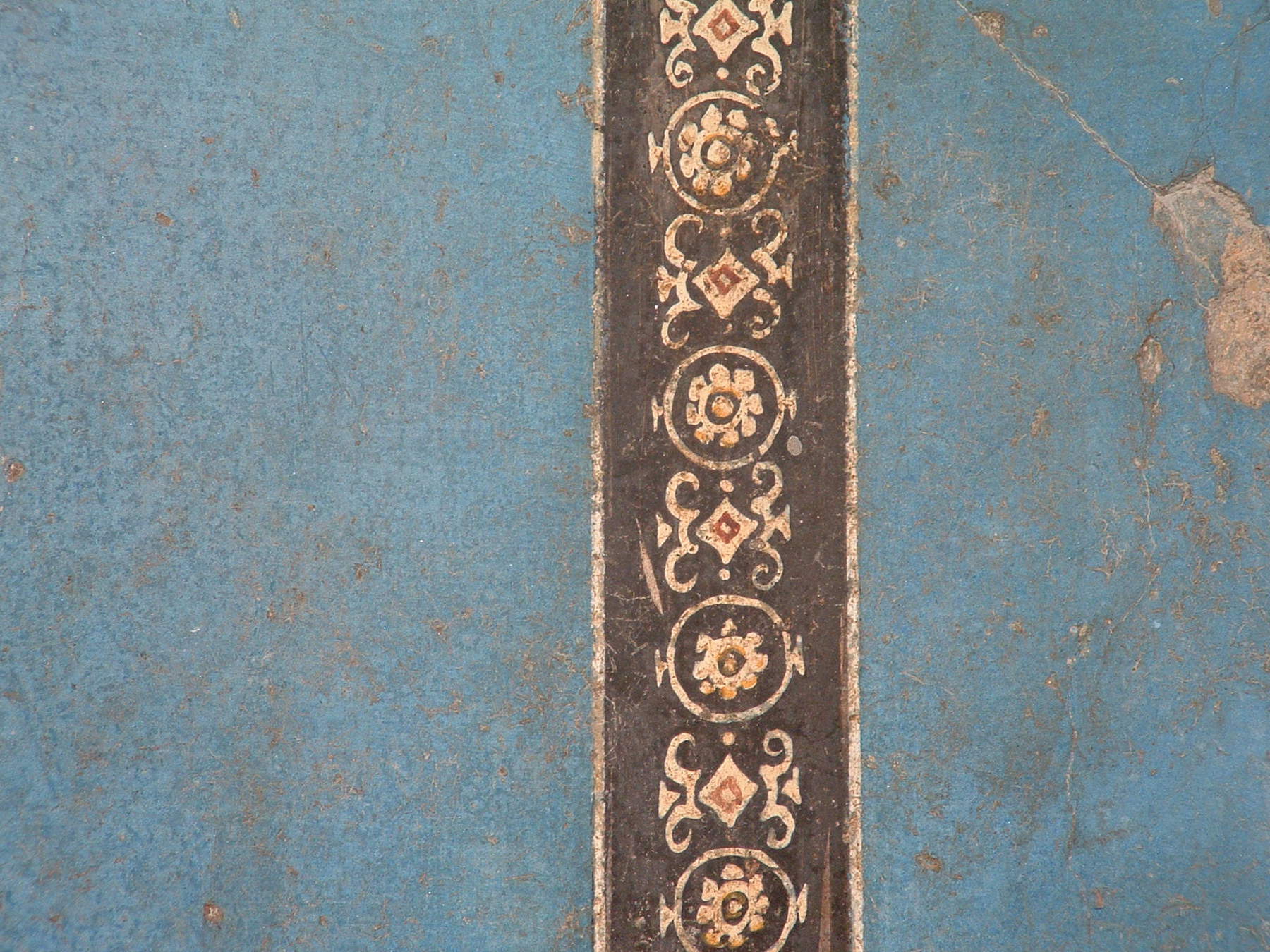
Among the most interesting elements uncovered during the excavation campaign is the rich decorative scheme that adorned the excavated room. Numerous fragments of frescoed plaster from both the walls and the ceiling attest to the existence of a particularly refined pictorial program. Preliminary analyses suggest a date around the mid-1st century AD, placing the decorations in a period of great artistic vitality and stylistic experimentation. Scholars believe that the artisans involved demonstrated remarkable innovative skill, combining traditional elements with original figurative solutions. The walls featured an elegant black background punctuated by bands of cinnabar. Within this decorative scheme appeared refined gilded metal candelabra enlivened by the presence of herons. The figures of the birds, executed with great attention to naturalistic detail, represent one of the most significant aspects of the ornamental scheme and attest to the high level achieved by the artists engaged in decorating the rooms.
The ceiling, too, displayed extraordinary iconographic richness. Against a light background unfolded a repertoire composed of garlands, ornamental friezes, and mythological figures. Among these, the griffins stand out, incorporated into a complex composition that was intended to create a strong visual impact on the villa’s guests.
The most important discovery, however, concerns the figure of a winged ichthyocentaur—that is, a centaur with a fish tail—which emerged from the reassembly of numerous fragments of the ceiling. This is an extremely rare iconographic subject and of particular interest to scholars. The mythological being, half-man and half-sea creature, does not appear to be relegated to a mere decorative element but occupies a central position within the figurative program. The image is striking for the quality of its execution and the complexity of its pictorial rendering. Chiaroscuro, highlights, and a highly dynamic posture lend the figure extraordinary plasticity. According to initial studies, the winged ichthyocentaur represents a case of exceptional iconographic uniqueness, destined to significantly enrich our knowledge of the pictorial decorations of Roman villas from the Imperial era.
The surprises were not limited to the decorations. Three finely decorated lead cistae, attributable to the same artisanal workshop, were discovered within the room. These containers, made of lead and embellished with exquisite craftsmanship, serve as a further indicator of the high economic and social status of the villa’s owners. Alongside the cistae, important architectural elements in white marble were uncovered. Among these, a Corinthian-style capital decorated with a lyre motif stands out, preserved in exceptional condition. The work was executed entirely with a chisel and appears to reflect the artistic style of the Augustan age. The quality of the craftsmanship immediately caught the attention of specialists. The capital is, in fact, a testimony of great value not only from an aesthetic standpoint but also for understanding the construction phases of the complex.
The collection of marble finds uncovered during the excavation has in fact made it possible to formulate one of the most interesting interpretations to emerge from the campaign. The presence of numerous architectural fragments, carefully preserved and stored in a specific area, suggests the existence of an intentional stockpile of materials intended for renovation or expansion work. According to archaeologists, Villa Sora was therefore undergoing a major construction phase at the time of the eruption of Vesuvius. The construction work in progress was suddenly interrupted by the catastrophe of 79 AD, freezing a situation that today offers scholars an exceptional opportunity to understand the dynamics of transformation in large Roman aristocratic residences. This evidence adds a particularly significant element to the history of the complex. In fact, this is not merely a luxurious villa destroyed by the eruption, but a building still fully active, the subject of investments and interventions likely intended to further enhance its prestige.
The analysis of the collected data is still ongoing. Particular attention is being paid to the reassembly of the fresco fragments and the reconstruction of the ceiling’s decorative program, which may hold further surprises once the study and restoration work is completed. Future research campaigns will focus on expanding the excavation areas and continuing investigations into the structures still buried. At the same time, the Herculaneum Archaeological Park aims to develop new visitor routes and enhancement initiatives, with the goal of making one of the most fascinating and least-known residential complexes on the Vesuvian coast increasingly accessible to the public.
|
| Torre del Greco, major discoveries at Villa Sora: frescoes, capitals, and more come to light |

Warning: the translation into English of the original Italian article was created using automatic tools. We undertake to review all articles, but we do not guarantee the total absence of inaccuracies in the translation due to the program. You can find the original by clicking on the ITA button. If you find any mistake,please contact us.



















 IT
IT FR
FR DE
DE ES
ES CN
CN


