



by Redazione 18/11/2026


Categories: Books / Disclaimer
Founded in 2020 in a former factory on the outskirts of Angera (Varese), the Kapannone dei Libri houses part of writer Andrea Kerbaker’s collection: rare volumes, historical magazines, library collections, and art books, all accessible to the public through exhibitions, talks, and activities for all ages.


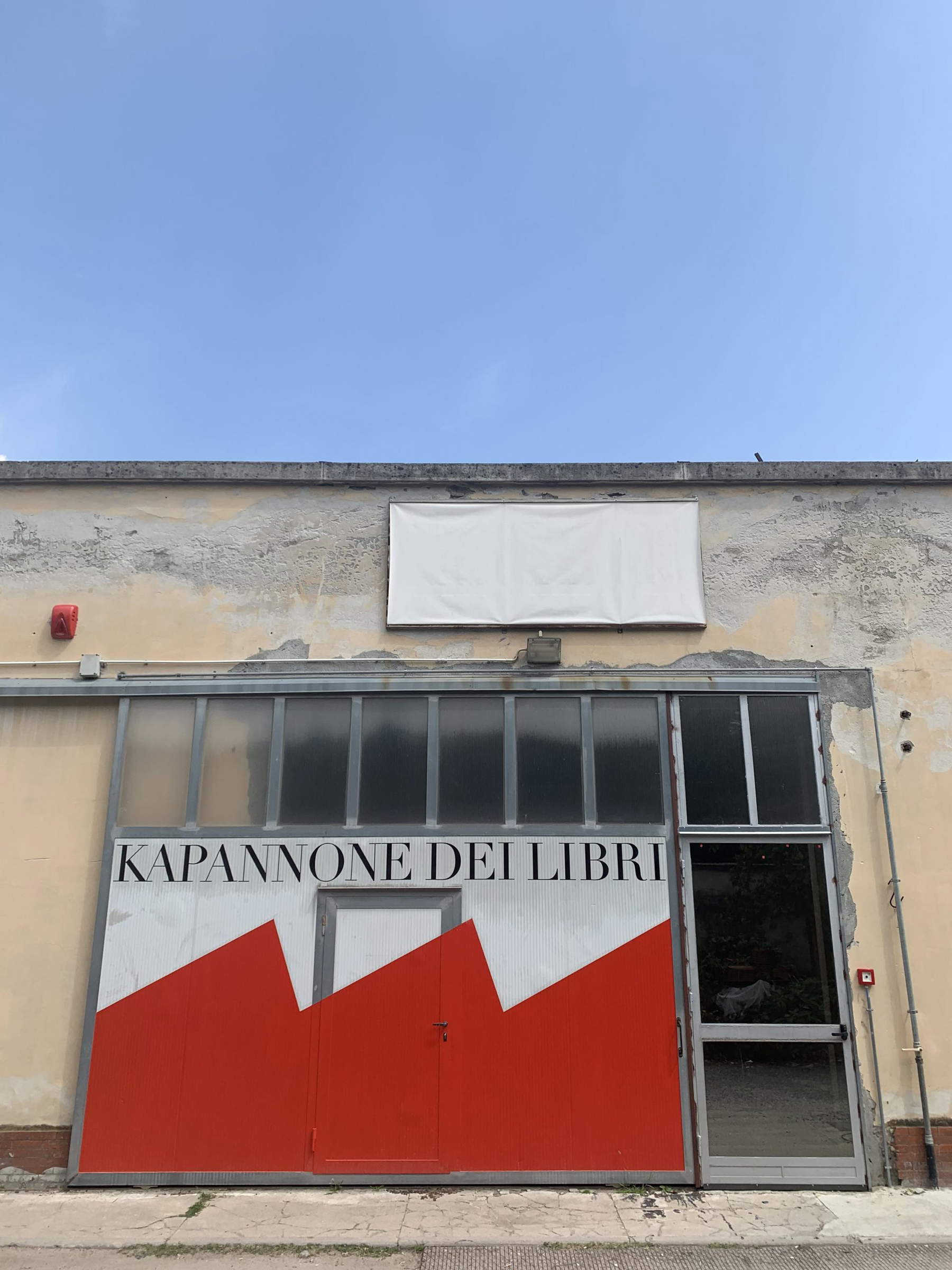
Just outside Angera, in the province of Varese,a former factory has been transformed into a space dedicated to art books, research, and cultural outreach. It’s called Kapannone dei Libri and was founded in September 2020 on the initiative of writer Andrea Kerbaker, who purchased and restored an industrial building that once belonged to the historic Borghi factory, transforming it into a place for consultation, gathering, and discovery. Four hundred square meters spread over two floors, with ceilings nearly seven meters high and rooms characterized by abundant natural light, now house a substantial portion of the founder’s book collection. The choice of a location so far removed from the traditional image of a library reflects a specific cultural vision.

“I chose a place that’s decidedly unconventional by conventional standards,” says Andrea Kerbaker, “partly to signal a departure from the traditional library model—all dust and solemnity—in the name of an open, free, and joyful culture. Where boredom is public enemy number one.”
This principle also guides the activities of the Kasa dei Libri in Milan, which opened in 2012 as a space dedicated to books and reading, with programs for both adults and children. Both locations share the “No Boredom” decalogue—ten rules designed to counter an overly austere conception of culture that is distant from the public.



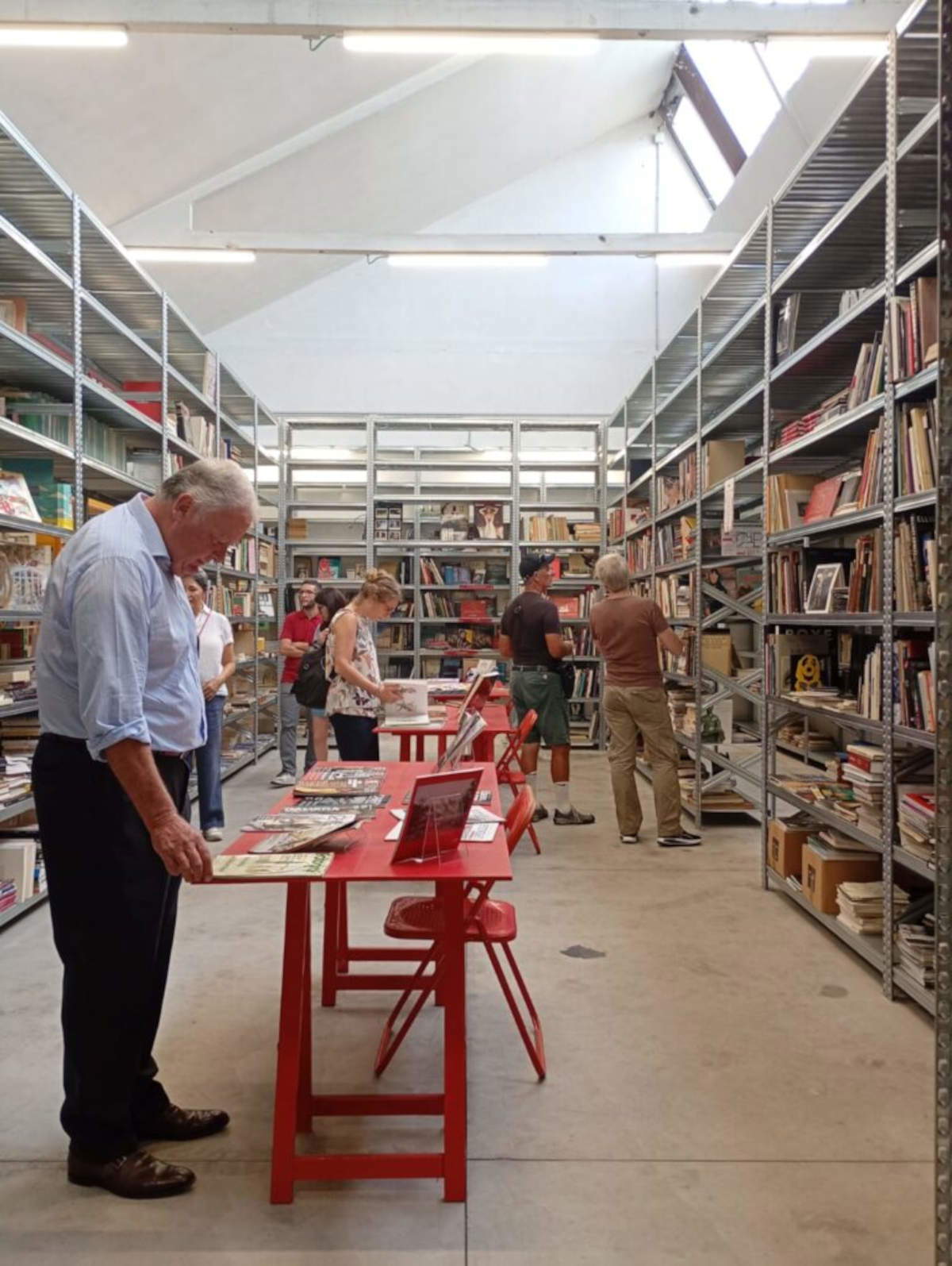
The Kapannone’s interior design also reflects this approach. Iron, concrete, and metal shelving preserve the building’s industrial character, while the arrangement of the furnishings creates a small metal labyrinth—composed of arches and circles—designed in compliance with fire department safety regulations. There is no set route: visitors can move freely among the shelves and let their curiosity guide them.
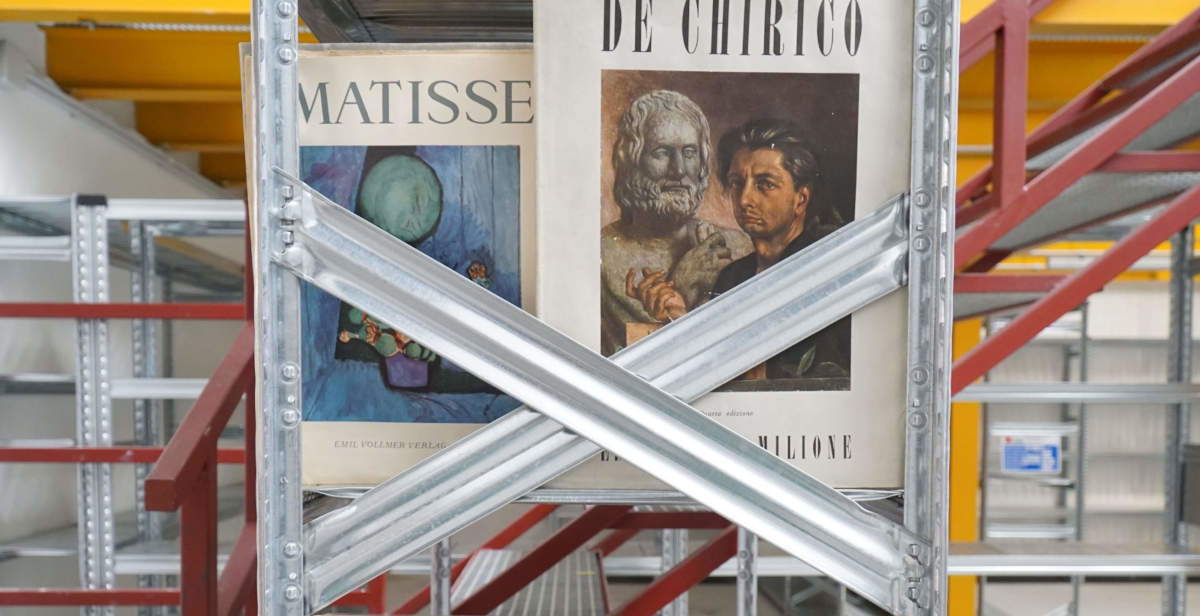
The core of the collection consists of art books, understood in the broadest sense of the term. The collection includes publications dedicated to the visual arts, painting, modern and contemporary sculpture, photography, design, and architecture, as well as volumes on the artistic output of companies and industries. Some sections are reserved for the major figures of the 20th century, selected according to Kerbaker’s personal taste: Pablo Picasso, Joan Miró, Henri Matisse, Salvador Dalí, and Giorgio de Chirico, each represented by a collection that also includes particularly rare editions.
A portion of the shelves is dedicated to banking publications, introduced by the historical catalog *La Banca e il Libro*, with a preface by Umberto Eco. Other sections feature publications by Franco Maria Ricci and volumes from the early Skira period, spanning the 1930s to 1970, with a recent and substantial addition donated by the Milanese publisher Massimo Vitta Zelman.
The collection also includes magazines from the second half of the 20th century, some preserved in complete sets and now difficult to find. Among these are *La Critica*, the journal founded by Benedetto Croce; the five series of *Nuovi Argomenti*, launched on the initiative of Alberto Moravia and edited over the years by Pier Paolo Pasolini and Leonardo Sciascia; *Paragone*, founded by Roberto Longhi and Anna Banti and dedicated to art and literature; and *Belfagor*, a leading journal for Italian academic culture.
There is also no shortage of books that focus on books themselves: bibliographies, histories of the press, bookstores, and libraries; publications on design and book graphics; catalogs from publishers and antiquarian booksellers; as well as texts written by scholars and bibliophile enthusiasts.
The Kapannone has also acquired several collections previously housed at the Kasa dei Libri. The first is the Paz Collection, which brings together approximately 2,500 volumes that belonged to the Argentine artist Julio Paz, who lived most of his life in Milan. The collection is particularly rich in publications dedicated to 20th-century graphic design and painting. Added to this is the library of art historian Maria Clotilde Magni, who, from the 1930s until her recent passing, collected thousands of volumes in numerous languages, including less common ones. The most recent acquisition, however, is the collection donated by Paola Comolli, a regular participant in Kapannone’s activities, consisting of art publications with a particular focus on the applied arts.
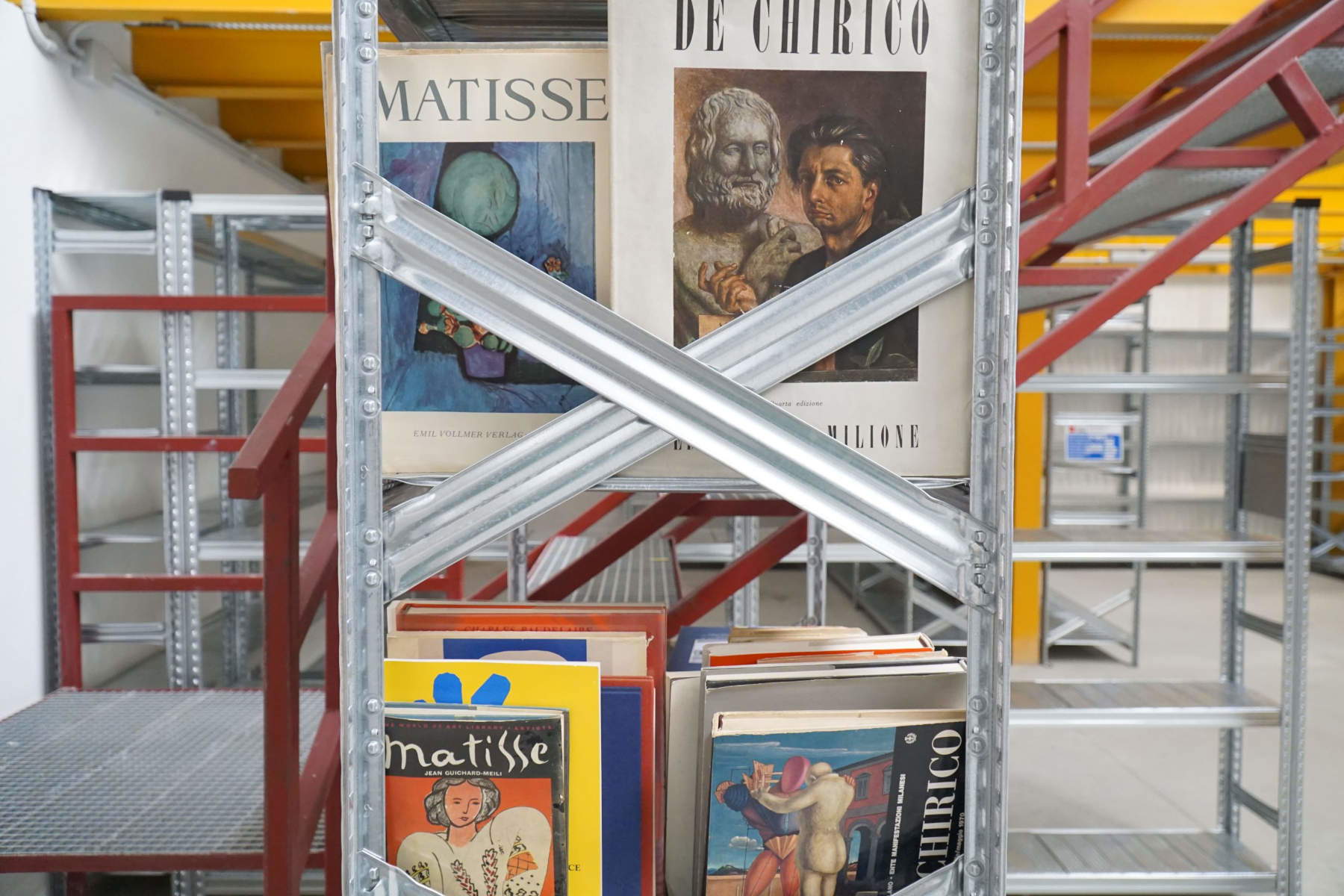
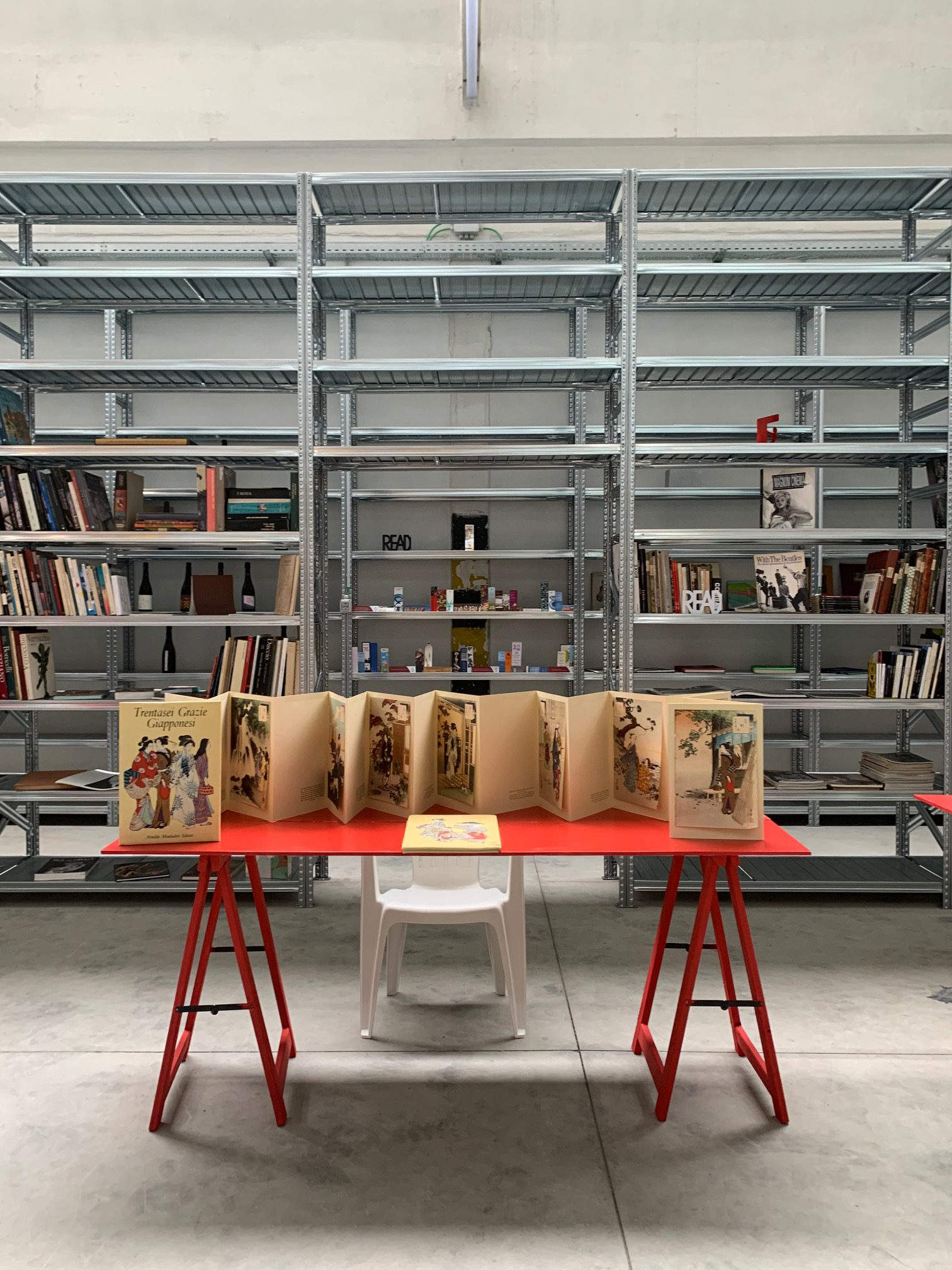
All the books are cataloged and available for consultation, but Kerbaker encourages visitors not to necessarily arrive with a specific title in mind. The idea is rather to explore the shelves, pick up a book, and stop to flip through it or read it. To encourage this approach, the books are not arranged according to the rigid organization typical of traditional libraries, but are distributed in a seemingly random manner, so as to stimulate unexpected encounters with publications. The signage also helps define the space’s identity: red signs, drawings, and informal instructions replace the usual institutional layout.
Alongside the books, the Kapannone also houses a film heritage consisting of approximately 12,000 movie posters and actor photos, organized into over one hundred large drawing folders. Over the years, this collection has also been the focus of thematic exhibitions.
The ability to draw directly from the collection forms the basis for the public activities organized throughout the year. The calendar includes temporary exhibitions, cultural walks, events dedicated to specific themes, and activities for schools and families, all aimed at exploring the history and languages of the arts through books. Among the initiatives already carried out are an exhibition dedicated to the *Divine Comedy* illustrated by Salvador Dalí, featuring 100 original lithographs created specifically for the occasion, and the first tribute exhibition to Philippe Daverio. The *Arte da copertina* series, meanwhile, showcased works on paper by artists such as Picasso, Léger, and Braque.
Some of the offerings are specifically geared toward younger visitors, who are engaged through art and writing activities dedicated to the masters of the 20th century—activities that continue to enliven the museum’s spaces.
 |
| In Varese, a former factory is being reborn as a large library: the Kapannone dei Libri |
Warning: the translation into English of the original Italian article was created using automatic tools. We undertake to review all articles, but we do not guarantee the total absence of inaccuracies in the translation due to the program. You can find the original by clicking on the ITA button. If you find any mistake,please contact us.