


by Redazione 29/10/2026


Categories: Cinema, theater and TV / Disclaimer
Released on April 24, 2025, *Clair Obscur: Expedition 33* reimagines Belle Époque Paris, 19th-century architecture, and French painting within a fantasy universe. In 2026, the Musée d’Orsay dedicated an exhibition to the video game, drawing parallels between its imagery and the works in its collections.

What if the streets of 19th-century Paris, the reflections painted by Gustave Caillebotte, and the monumental sculptures of the 19th century became part of a fantasy video game? This is one of the key themes of *Clair Obscur: Expedition 33*, the role-playing game developed by the independent French studio Sandfall Interactive, which reimagines the visual culture of the Belle Époque and the relationship between Pierre-Auguste Renoir ( Limoges, 1841 – Cagnes-sur-Mer, 1919) and his wife Aline to construct its own narrative universe. This connection to art history even reached the Musée d’Orsay in Paris in June 2026, where a special exhibition compared images from the game with works housed in the Parisian museum.


Published by Kepler Interactive on April 24, 2025, for PlayStation 5, Xbox Series X|S, and PC, Clair Obscur: Expedition 33 is a turn-based role-playing game with real-time mechanics. The story takes place in Lumière, a fictional city inspired by late-19th-century Paris. But what happens in the video game? Once a year, a mysterious figure known as the Painter paints a number on a monolith: everyone who has reached that age disappears. When the number 33 appears, a group of explorers sets out on a mission to break the cycle.


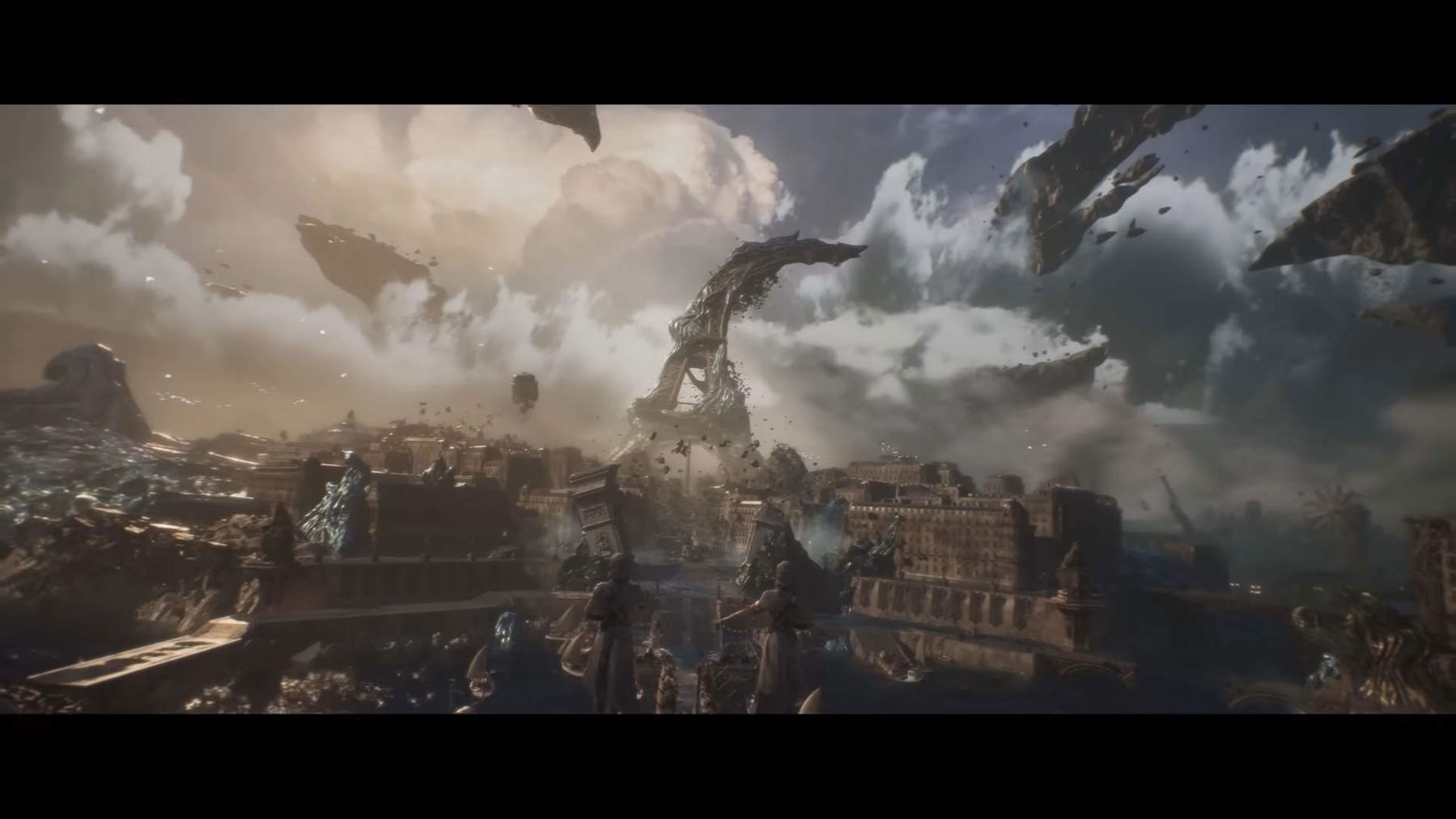
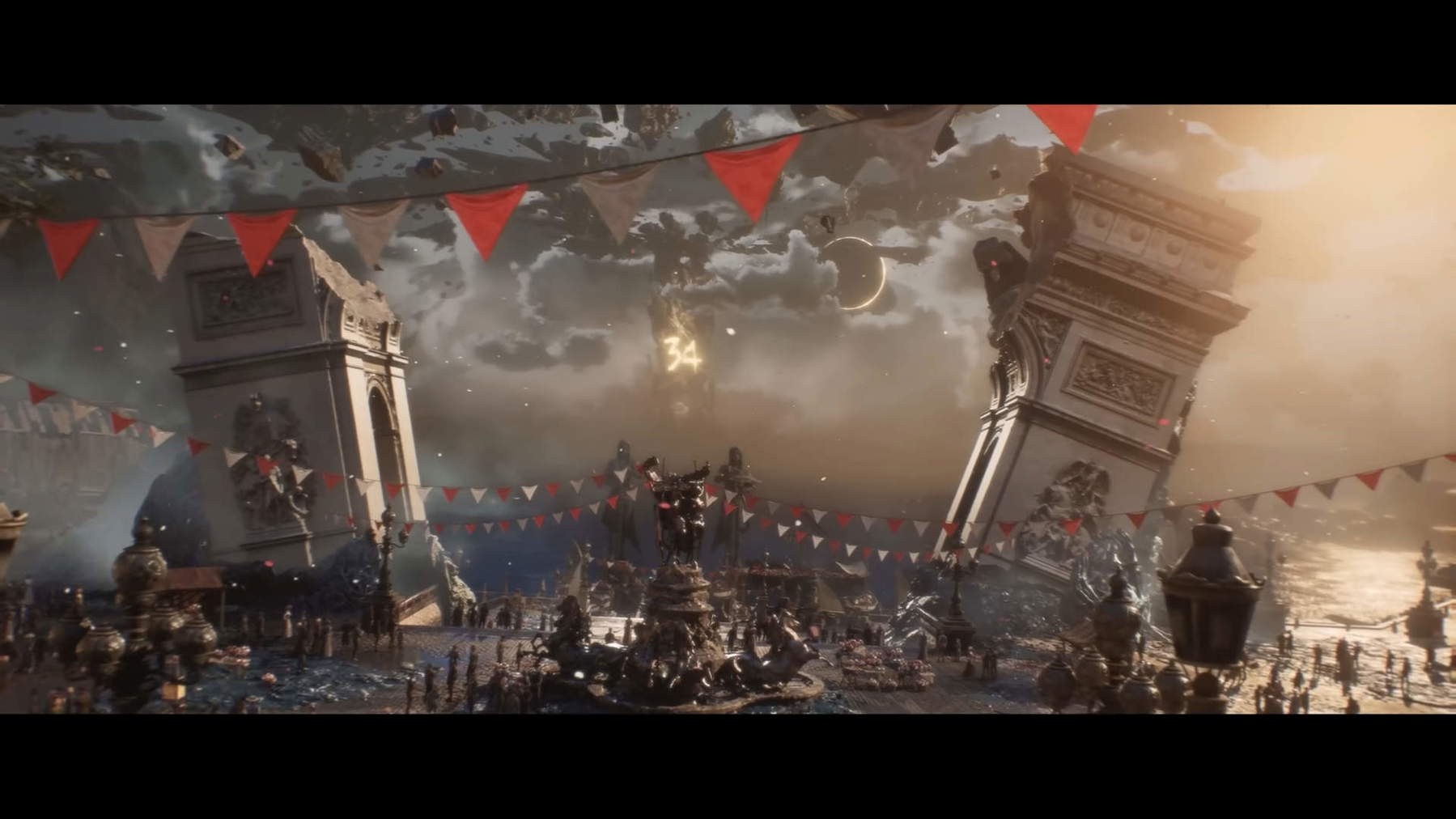
In Clair Obscur, painting is not merely a source of aesthetic inspiration but plays a direct role in the narrative. In fact, the Painter determines the fate of the inhabitants through her creative act, while the game world is built around references to European architecture, sculpture, and painting. As art director Nicholas Maxson-Francombe explained to France’s Centre national du cinéma et de l’image animée, the project’s sources of inspiration include the Belle Époque, Victorian motifs, and Art Deco elements, as well as influences from theater and the circus (such as Cirque du Soleil).


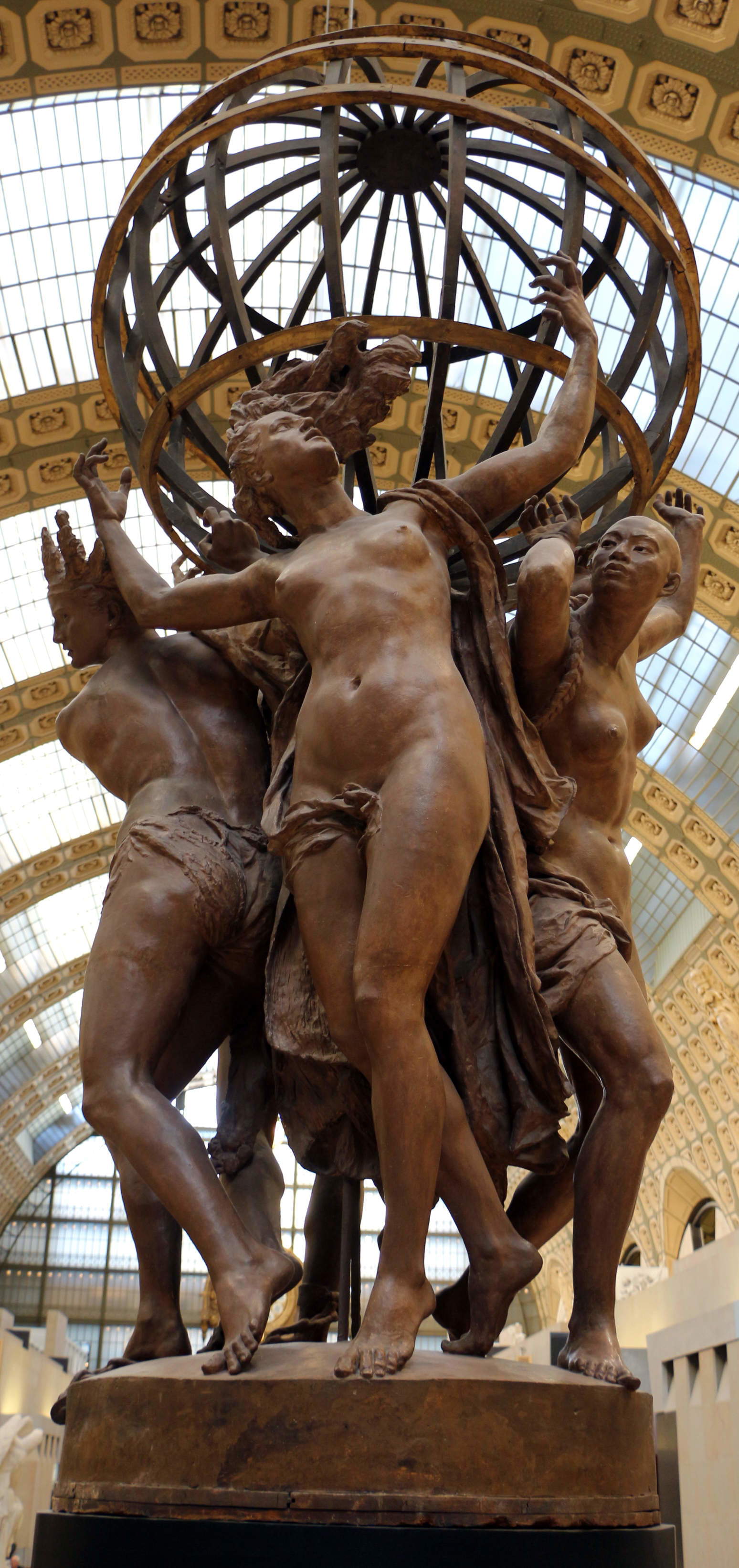
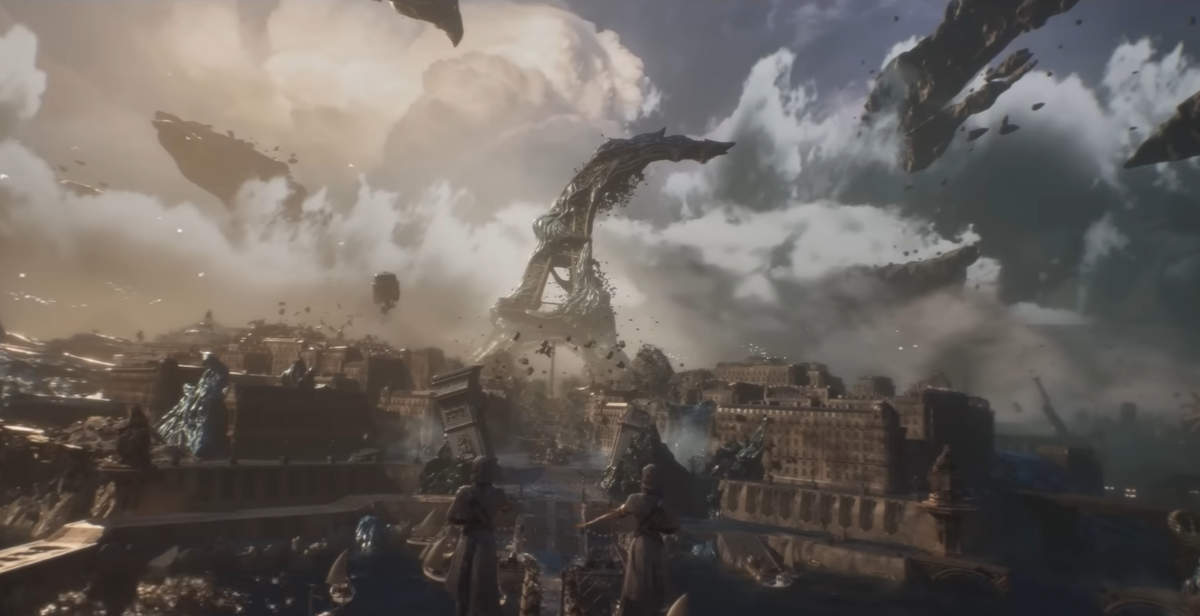
The connection to the collections of the Musée d’Orsay (and beyond) allows us to identify some specific references. Lumière’s glossy streets evoke Gustave Caillebotte’s *Rue de Paris, temps de pluie*, a 1877 painting in which rain transforms the urban landscape into a system of reflections. The aerial perspective of certain settings, on the other hand , finds a counterpart in Victor Navlet’s *Vue générale de Paris, prise de l’Observatoire, en ballon *. The architecture of the Orsay station and that of the fictional Monoco station (a playable character in *Clair Obscur*) also share similarities, while the monuments and street furniture of the French capital are reimagined in fantastical forms. The Eiffel Tower andthe Arc de Triomphe appear fragmented; the Wallace fountains take on a sculptural dimension, and Jean-Baptiste Carpeaux’s *Les Quatre Parties du monde* —a monumental group supporting the celestial sphere, created in 1872—is reimagined through images of fragmentation.

One particular reference concerns Renoir. In the game, Renoir is the patriarch of the Dessendre family, and his relationship with Aline echoes that between the Impressionist painter and his wife, Aline Charigot. The connection goes beyond just the name: love, joy, and grief are themes that run through both the characters’ story and a significant portion of the artist’s body of work. The reference to painting thus becomes a tool for addressing narrative and existential issues, as well as an element of the visual composition.
From June 23 to July 19, 2026, the Musée d’Orsay displayed images from the game and concept art—some of which had never been seen before—in its central nave to highlight the parallels with works from its own collections. The initiative was part of the program associated with the exhibition *Renoir et l’amour: la modernité heureuse (1865–1885)*. On June 25, the museum also organized *Orsay Live! Renoir au Clair Obscur, an evening featuring a discussion with Guillaume Broche, the game’s creative director, and Nicholas Maxson-Francombe, followed by a performance of the soundtrack with composer Lorien Testard and singer Alice Duport-Percier.
When works of art become part of a world to explore, the way we engage with them also changes. *Clair Obscur: Expedition 33* draws on images, architecture, and the evocative qualities of French painting, transforming them into a digital universe where references to art history can be discovered even by those who do not regularly visit museums. Can a video game, then, serve as a gateway to museum collections? The dialogue initiated by the Musée d’Orsay suggests that it may be worth exploring new ways to bring the public closer to the works, without sacrificing direct engagement with them.
 |
| Renoir's 19th-century Paris is a video game: The Case of Clair Obscur: Expedition 33 |
Warning: the translation into English of the original Italian article was created using automatic tools. We undertake to review all articles, but we do not guarantee the total absence of inaccuracies in the translation due to the program. You can find the original by clicking on the ITA button. If you find any mistake,please contact us.