


by Redazione 25/10/2026


Categories: Contemporary art / Disclaimer
Chinese calligraphy meets dance, transforming into an experience that unites body, movement, and thought. The new edition of East/West Calligraphy is taking place in Venice, organized by the Fondazione Musei Civici di Venezia in collaboration with the China Academy of Art.


Chinese calligraphy meets dance, transforming into an experience that unites body, movement, and thought. This marked the start in Venice of the new edition of East/West Calligraphy, the exhibition curated by Monica Viero and Monica Dengo and organized by the Fondazione Musei Civici di Venezia in collaboration with the China Academy of Art. Running through October 26 at the Doge’s Palace and the Fortuny Museum, the event features performances, workshops, and conferences dedicated to the dialogue between Eastern tradition and contemporary research.

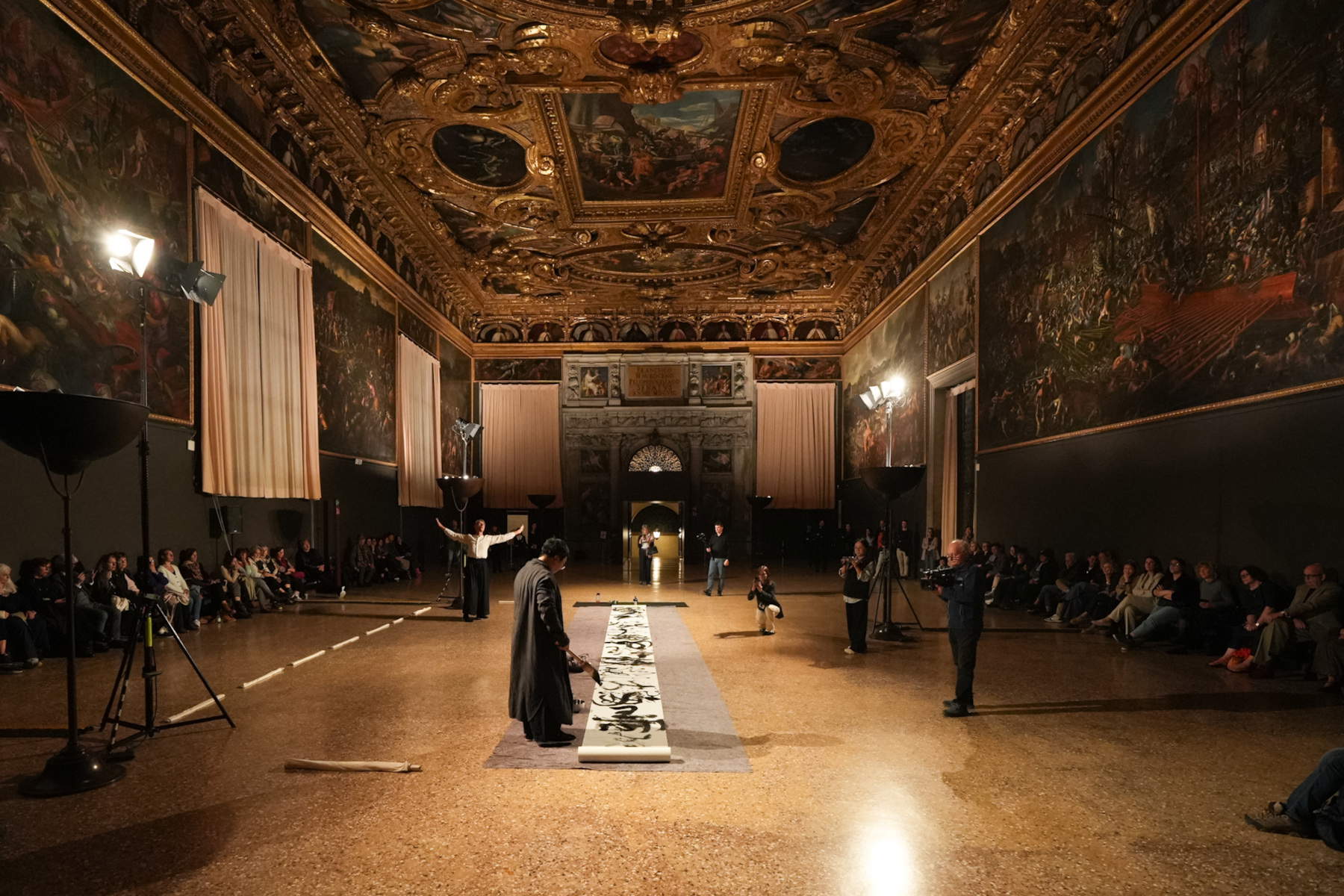
The performance *The Form and Dynamic Force of Calligraphy*, by invitation only, opened the 2026 edition of the festival on Friday, October 23, in the Sala dello Scrutinio of the Doge’s Palace. The event’s featured artist was Chinese artist Lu Dadong, whose calligraphic works entered into dialogue with the choreography of dancer Claudio Gasparotto. This encounter between writing and movement offered a deeper understanding of Chinese calligraphy through an experience in which the stroke becomes a gesture and the body becomes an instrument of artistic expression. In calligraphy, in fact, the movement of the brush is not merely a technical process: rhythm, energy, and physical presence all contribute to the creation of the work, in a constant interplay between body and mind. It is precisely this dynamic dimension that guides the entire exhibition, which continues in Venice through Monday, October 26, with events dedicated to artistic practice and scholarly reflection.


Organized by the Fondazione Musei Civici di Venezia, the event takes place at the Doge’s Palace and the Fortuny Museum thanks to a collaboration with the China Academy of Art in Hangzhou. The Chinese institution is participating in the program with a delegation of faculty members from the Department of Calligraphy led by Professor Kong Lingwei, director of the School of Arts Management and Education. The central theme of the 2026 edition is a reinterpretation of Chinese calligraphy as the poetic art of writing, shaped by time and rooted in the interaction between body and material. Paper, brush, ink, and stone are not merely tools, but elements that participate in the creative process and help transform the written mark into the expression of a physical and spiritual experience. Through performances, educational activities, and academic discussions, East/West Calligraphy invites us to consider writing as a language capable of connecting art and thought, individual gesture and collective heritage, tradition and experimentation. The dialogue between East and West thus unfolds through the relationship between body and brush, the connections between writing and movement, and the artistic and social transformations of contemporary calligraphy.

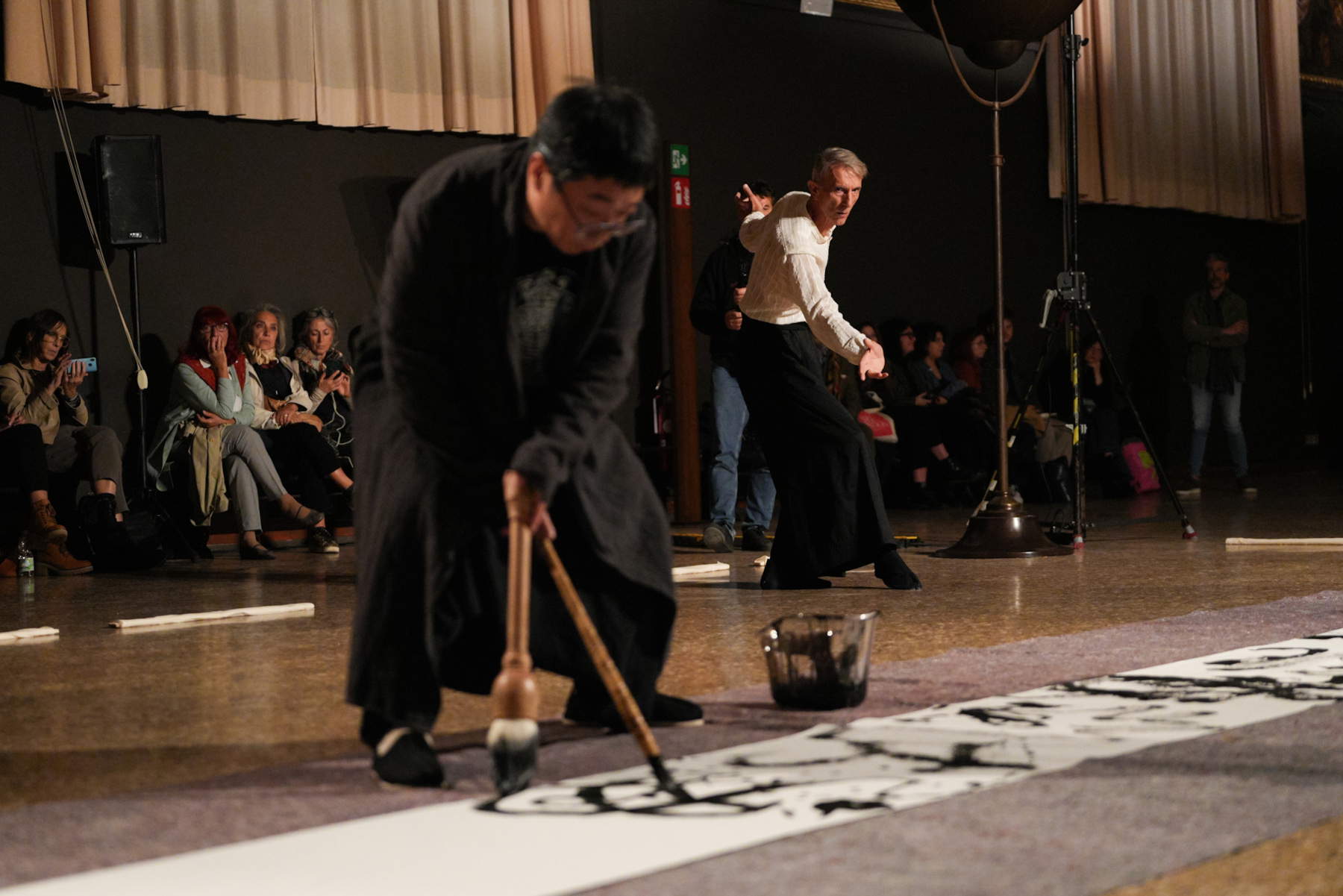
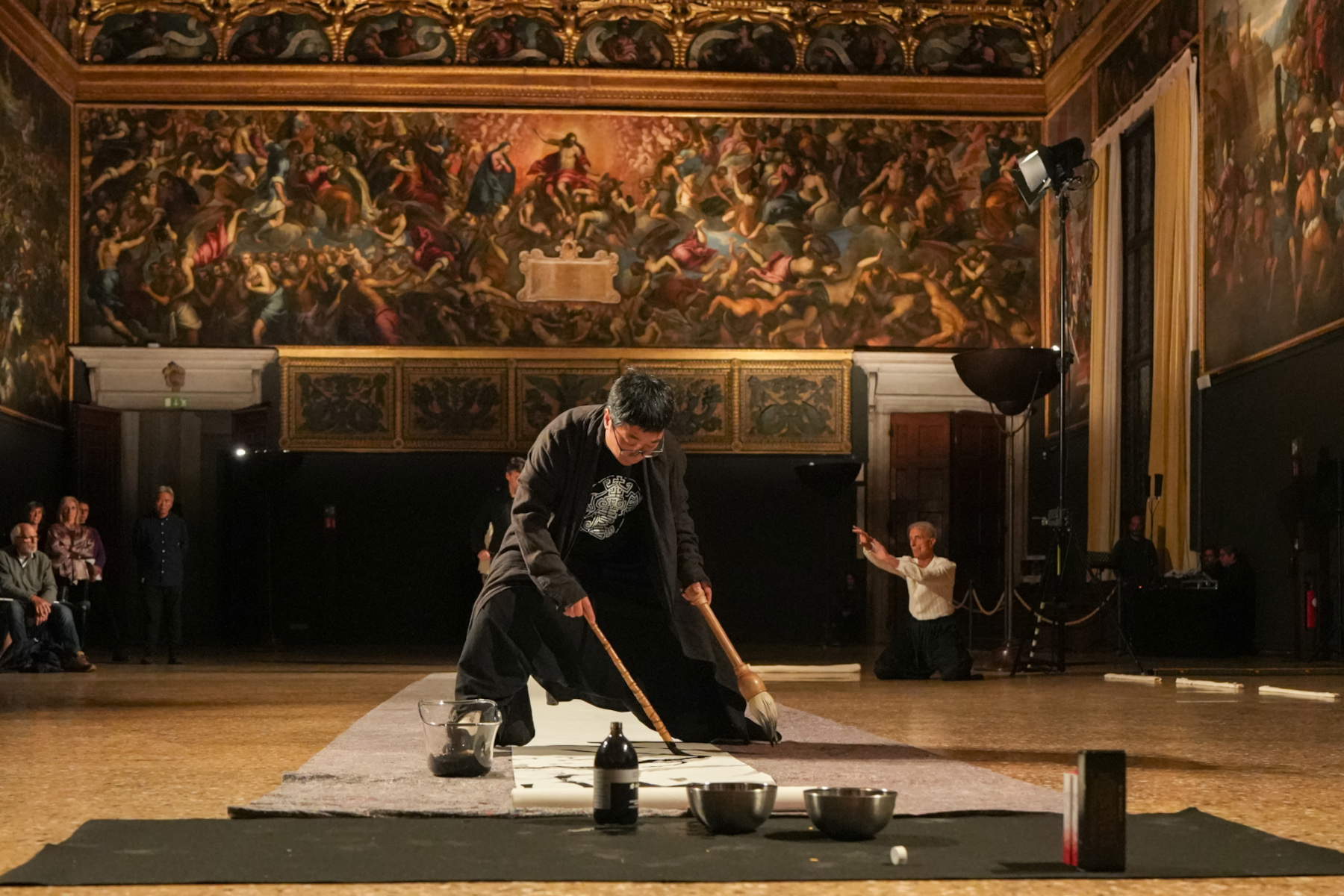
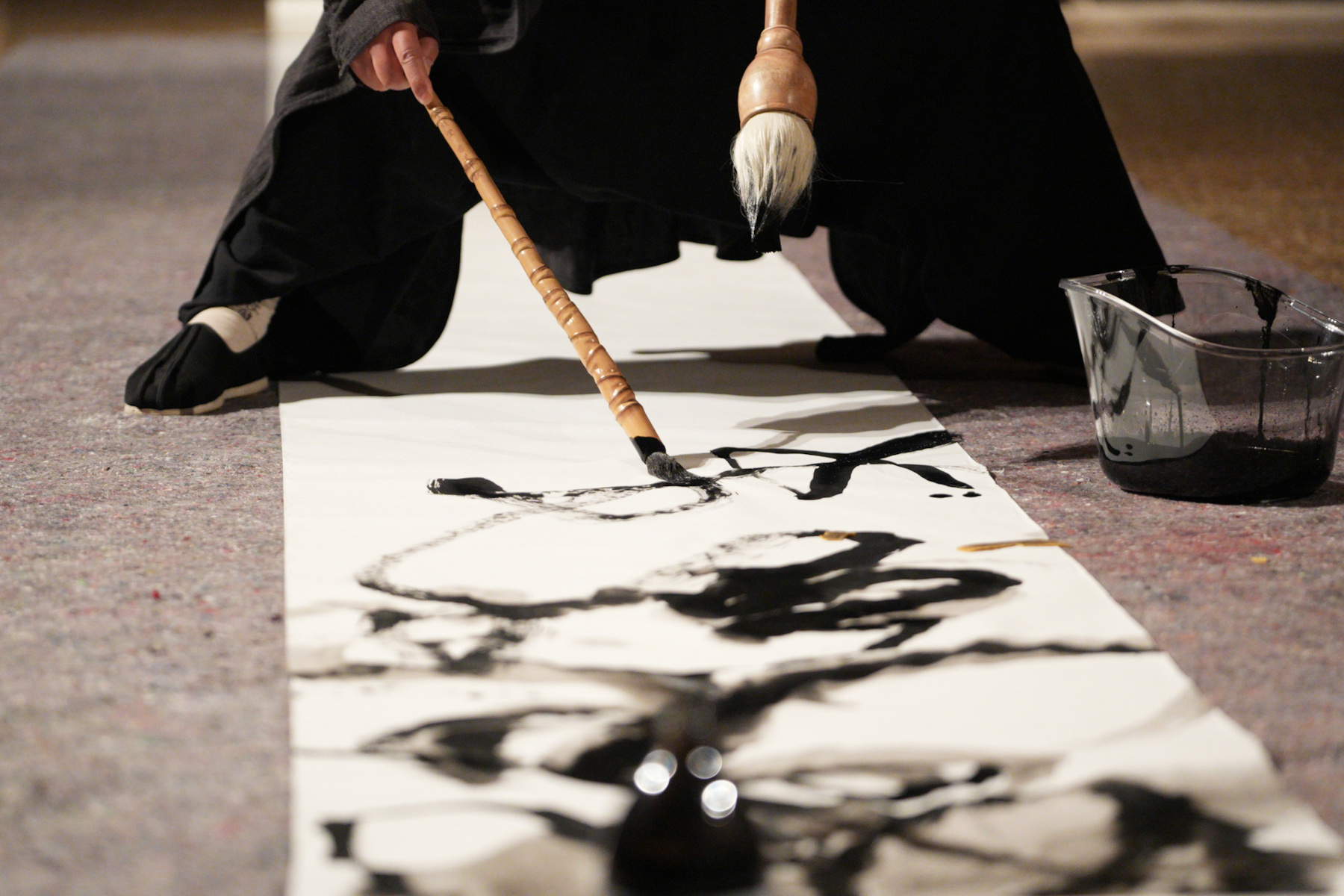
The exhibition continued on Saturday, October 24, and Sunday, October 25, from 9:30 a.m. to 5:00 p.m., in the galleries of the Fortuny Museum, with the masterclass “Chinese Writing: Time, Body, and Brush.” Leading the workshop are calligraphers Lu Dadong and Chen Liang, both professors at the School of Calligraphy of the China Academy of Art and leading figures in contemporary research on Chinese calligraphy. The initiative offers participants the opportunity to directly experience the principles of calligraphy through the use of traditional materials, exploring the expressive potential of the brush, ink, and paper. The program also includes the frottage technique on stone and offers an approach that combines technical learning with bodily awareness, breathing exercises, ritual elements, and creative experimentation with natural materials. Writing is thus interpreted as a practice that engages the whole person: control of the gesture goes hand in hand with listening to the body and the material, transforming the calligraphic exercise into an experience of attention and awareness.
On Monday, October 26, from 10 a.m. to 1 p.m., the Chiesetta del Doge in the Doge’s Palace will host the final event of the series: the academic conference “Calligraphy in Contemporary China: Art, Education, and Society.” Scholars and specialists from China and leading European universities will discuss shūfǎ, Chinese calligraphy, exploring its technical, artistic, and cultural dimensions. At the heart of the discussion will be a discipline in which body, breath, and thought merge into a single gesture, maintaining a deep connection to tradition while simultaneously opening up to new forms of research. The presentations will explore the relationship between writing, memory, and social experience through historical, artistic, anthropological, and linguistic perspectives. From popular writing practices to ancient graffiti, from epigraphic traditions to experiments spanning painting, performance, and fashion, the program will highlight the variety of forms and meanings of calligraphy. A specific focus will be dedicated to the teaching of handwriting in the Chinese school system and to the educational and social function of this practice, which remains a vibrant part of contemporary culture to this day.
|
| Venice: Chinese calligraphy takes center stage in a performance in the Sala dello Scrutinio at the Doge’s Palace |
Warning: the translation into English of the original Italian article was created using automatic tools. We undertake to review all articles, but we do not guarantee the total absence of inaccuracies in the translation due to the program. You can find the original by clicking on the ITA button. If you find any mistake,please contact us.