



by Redazione 19/11/2026


Categories: Design / Disclaimer
At Palazzo della Porta-Rodiani, in Rome’s historic center, collector Emilio Pennacchio is inaugurating Casa Aemilia with *Materia Intima*: a project in which seven artists, architecture, and design come together to create a domestic space conceived also as a single property available for purchase.


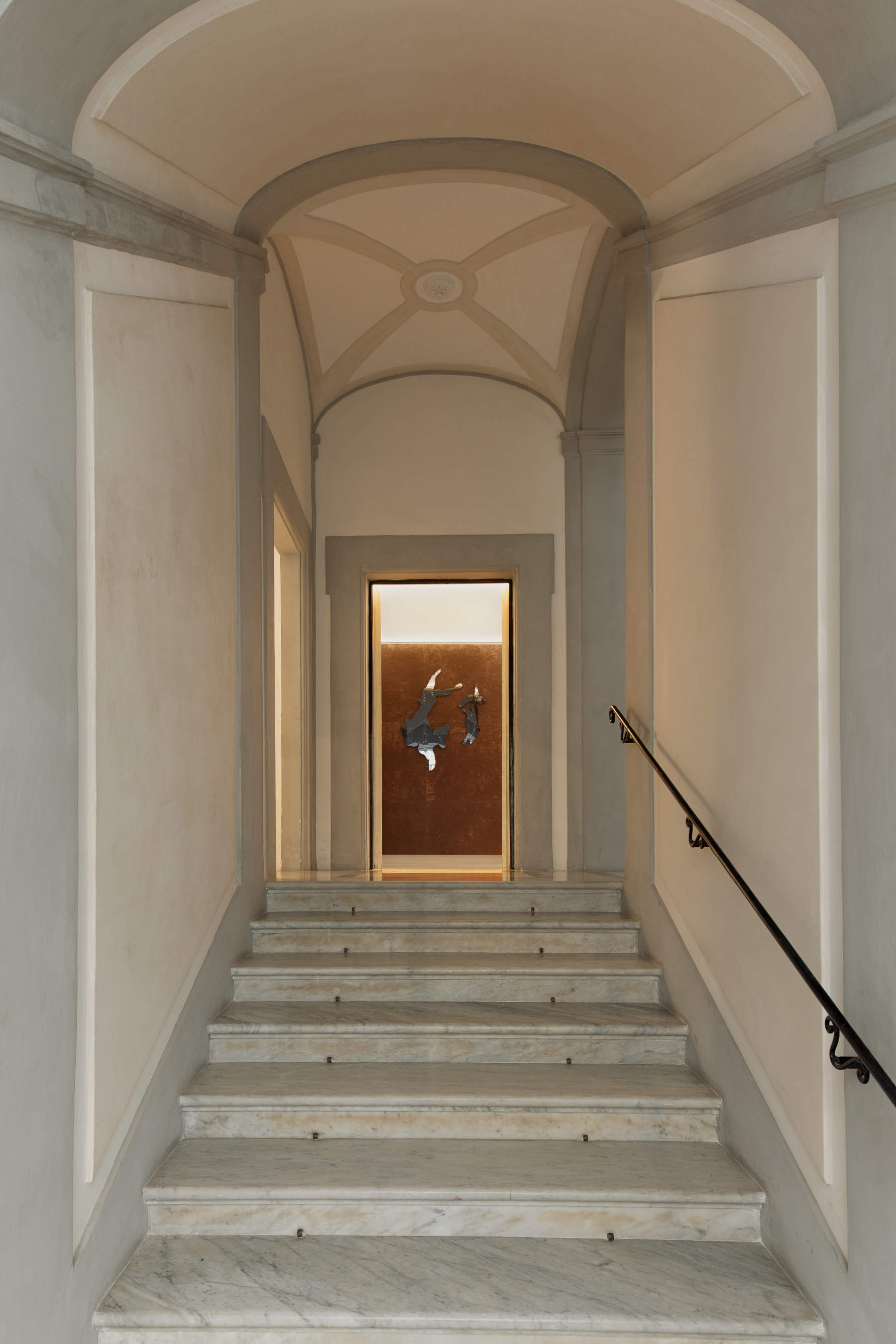
What happens when it’s not an art collection that finds a place in a home, but rather the home itself that is designed around the artworks? This is the principle behind Casa Aemilia, a project conceived by Roman collector Emilio Pennacchio that brings together contemporary art, architecture, and design through a unified vision of domestic space. Located on the main floor of Palazzo della Porta-Rodiani, a 17th-century building in Rome’s historic center, the house will inaugurate its first chapter, titled “Materia Intima,” on November 20, 2026. The initiative proposes a model in which artworks are not simply displayed in predefined spaces, but become the starting point for interior design.

“From the very beginning, I envisioned Casa Aemilia as a place where art, interior architecture, and design engage in dialogue under a single vision,” says Emilio Pennacchio. “A comprehensive curation of the domestic space, where the paradigm of the site-specific artwork is reversed in favor of the place itself becoming art-specific. Living thus becomes the way to experience a new balance among all the elements that give life to that project, to that idea, which we call home.”


The curatorial theme of this first edition, *Materia Intima*, explores the various dimensions of intimacy—from introspection to the body, from desire to sensuality, and on to memory, spirituality, and domesticity. The collection, curated by Lucia Longhi, brings together works by seven artists from different generations and professional backgrounds: Matteo Attruia, Silvia Giambrone, Ismaele Nones, Barbara Prenka, Adelisa Selimbašić, Flaminia Veronesi, and Shafei Xia. Their works engage in a dialogue with the interior design project by architect Manuela Tognoli, in a process where artistic research and architectural design proceed in parallel.


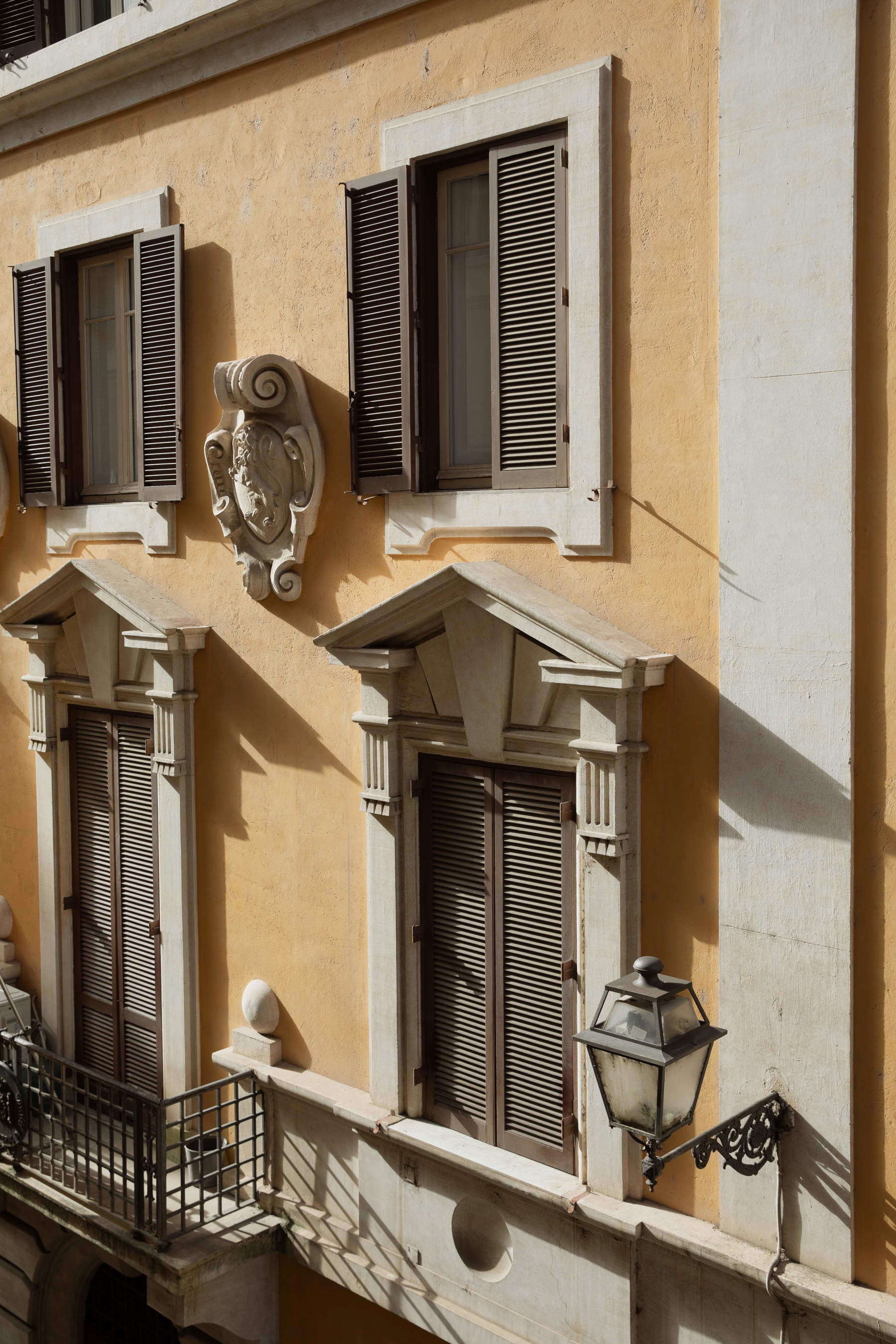
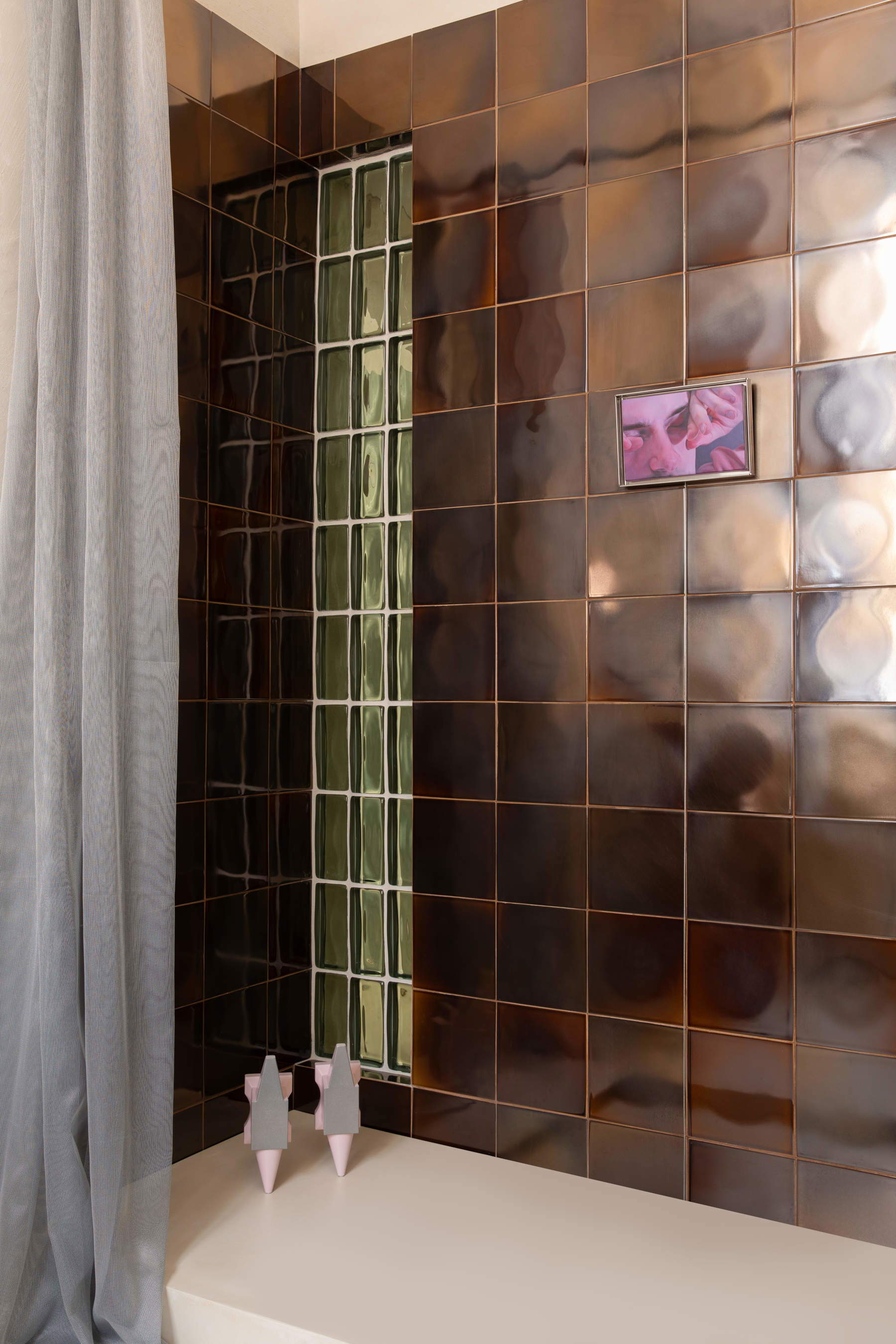
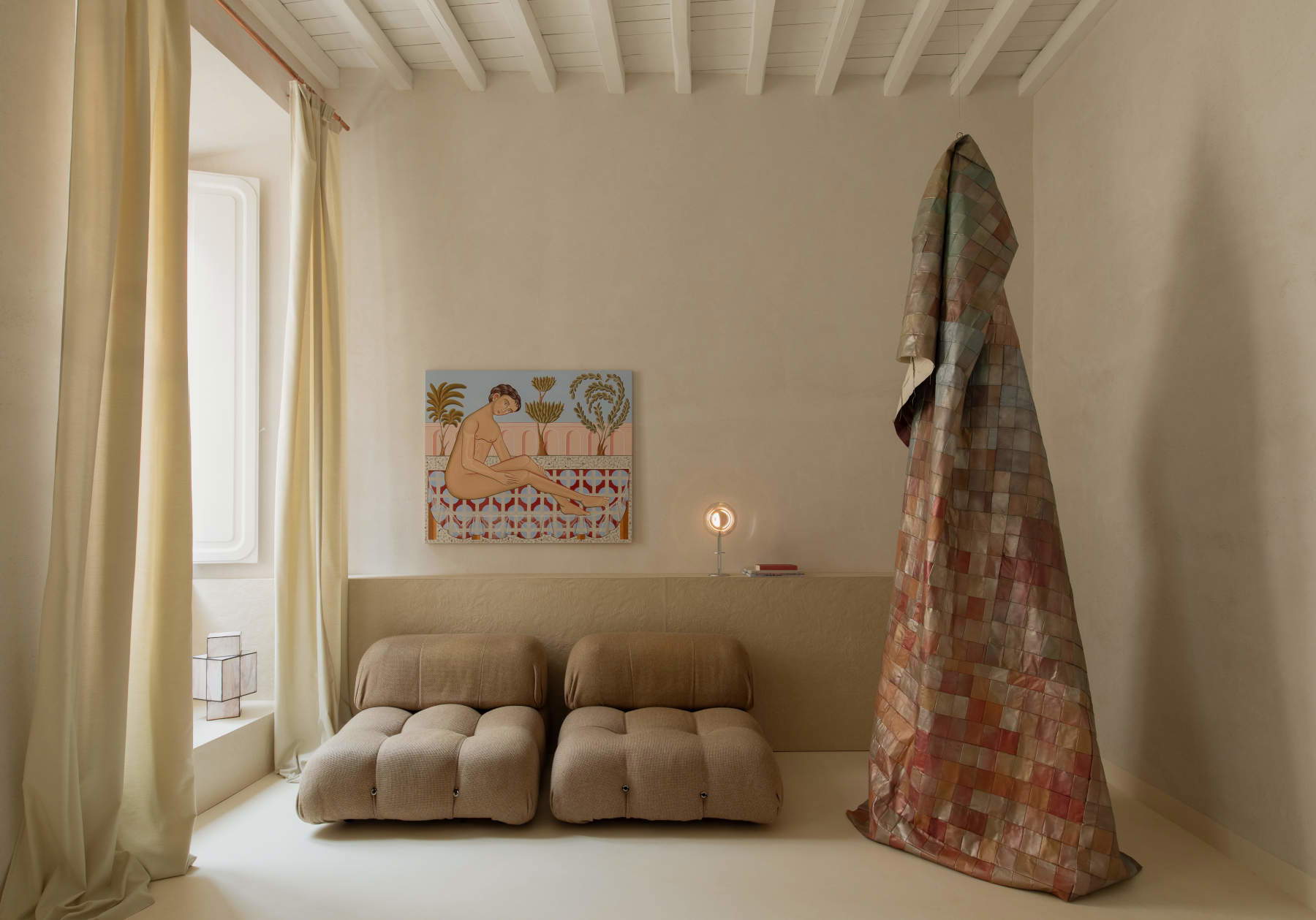
The apartment features a neutral color palette centered on off-white, paired with metallic surfaces, glass, glazed stone, and fabrics. The spaces are organized into three distinct areas, each dedicated to a different aspect of intimacy.
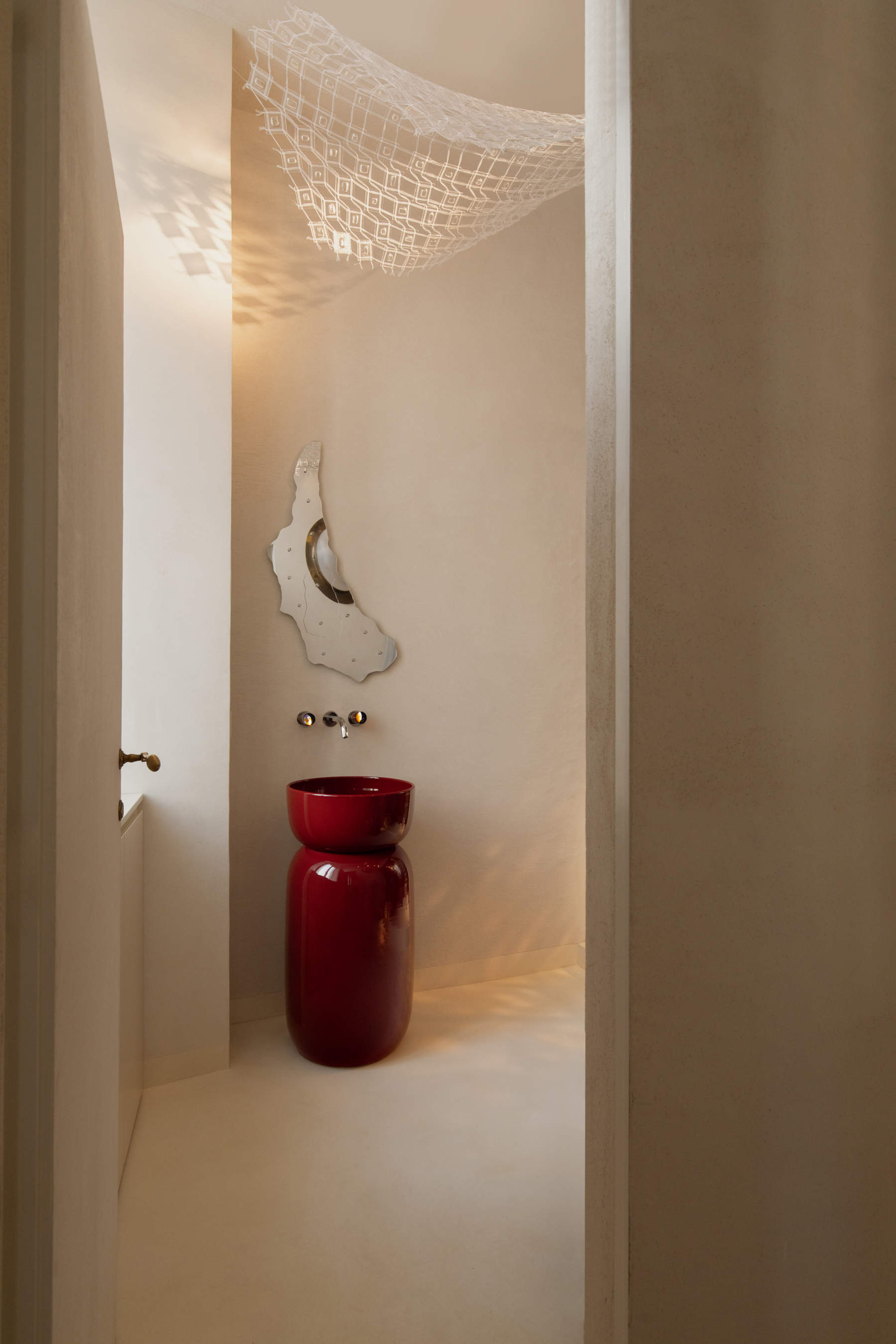
The entryway and bathroom address the introspective aspect, understood as an opportunity for self-reflection and connection with one’s own body. Light and reflective surfaces help alter the perception of space. In the entryway, the wall clad in cellulose fiber panels with a copper-colored metallic finish by Paper Factor interacts with the mirror by Millim Studio. In the bathroom, the handcrafted bronze-colored glazed porcelain by De Marchi Verona is paired with the pomegranate-shaped glazed terracotta sink by Ninefifty and the Murano glass faucets by Fantini Venezia, designed by Venini. The space is completed by the mirrored surfaces from Millim Studio and an “Azucena” wall sconce by Luigi Caccia Dominioni, sourced from Galleria Incanto.
The bedroom, on the other hand, embodies relational intimacy. Here, wax-white carpet covers the floor, the bed platform, and a portion of the wall, transforming the fabric into an architectural element. The softness of the surfaces complements the work by Flaminia Veronesi, while the ceramic diptych—comprising “Parker” by Shafei Xia and “Sparkling Water” by Adelisa Selimbašić—introduces references to the playful, sensual, and erotic dimensions. The space also features Matteo Attruia’s neon piece *Poco Dio*, the *Dudina* chair by Marta Sala Éditions, the *Sidra* lamps by LIT Studio, and the *Abatina* lamp, designed by Afra and Tobia Scarpa for Flos in 1980 and selected by Galleria Incanto.
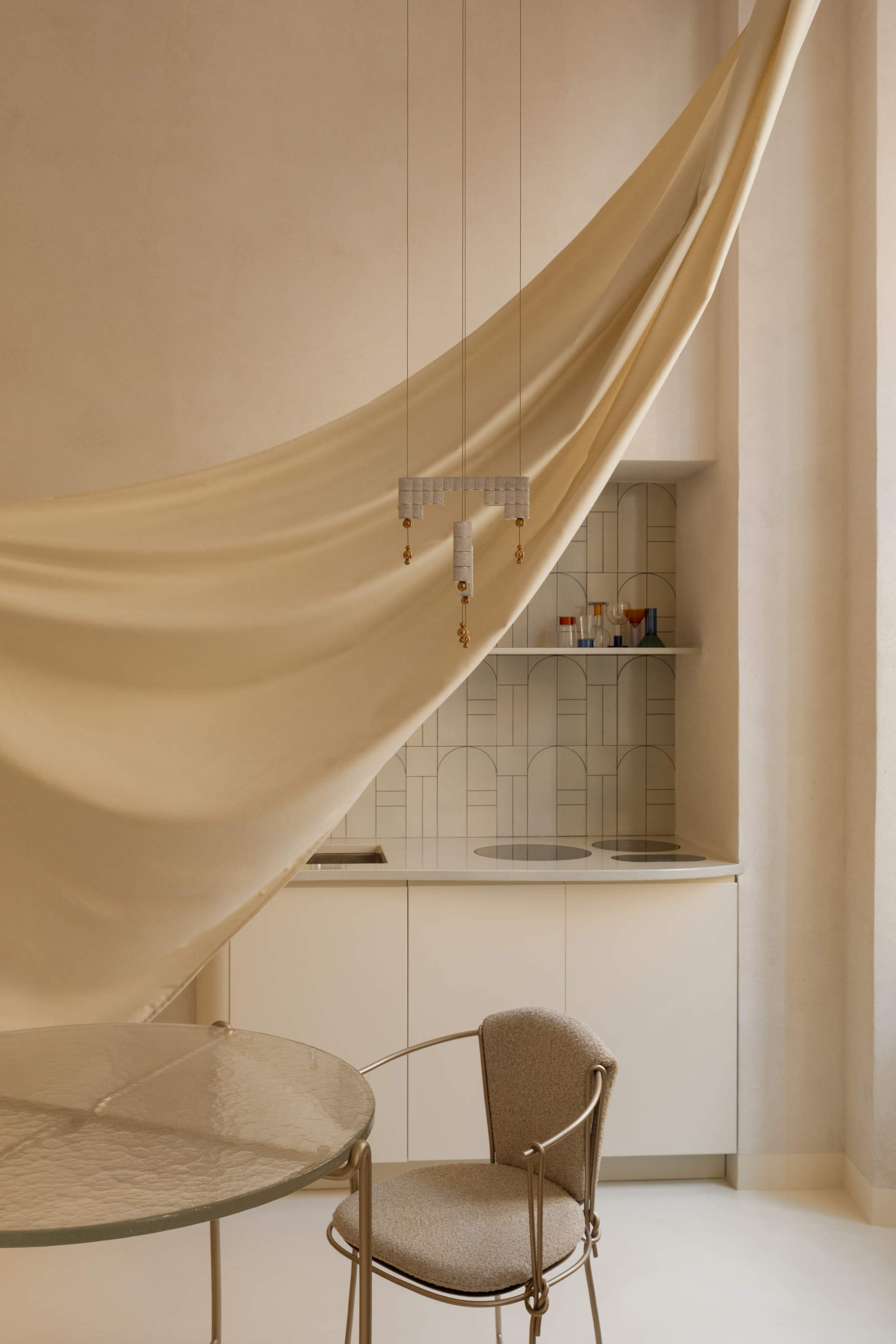
The living room is dedicated to convivial intimacy, conceived as a space for gathering and sharing. The Elmar kitchen plays a direct role in defining the room’s architecture thanks to its contoured countertop and butter-colored glazed lava stone cladding, crafted by Ninefifty, which extend onto the wall and countertop, creating a sense of continuity in color and texture.
In the conversation area, *Ecforìa* by Barbara Prenka—a large textile work created from reassembled fragments—explores the themes of memory and family ties. Ismaele Nones’ painting introduces a contemplative dimension, while Silvia Giambrone’s *Mirror No. 40* transforms the mirror into a reflection on vulnerability and resilience. On the storage cabinet, Daniela Pinotti’s metallic *Ray* wallpaper alters the perception of light. Dante Negro’s table, with a fused glass top and a champagne-colored wrought-iron frame, is flanked by Atelier Nuanda’s aluminum Inro lamp, ceramic objects by Arianna De Luca, and glasses by Traga.
The vintage Camaleonda sofa from the 1970s, sourced from Galleria Incanto, is paired with a marble shelf by Ilaria Bianchi, the “Pulse” rug from cc-tapis’s “Tempore” collection, the Facetas 04 wall sconce by Berto, and the Flare 40 candleholders by Studio Douze Degrés, featuring lenses that amplify the light of the flame.
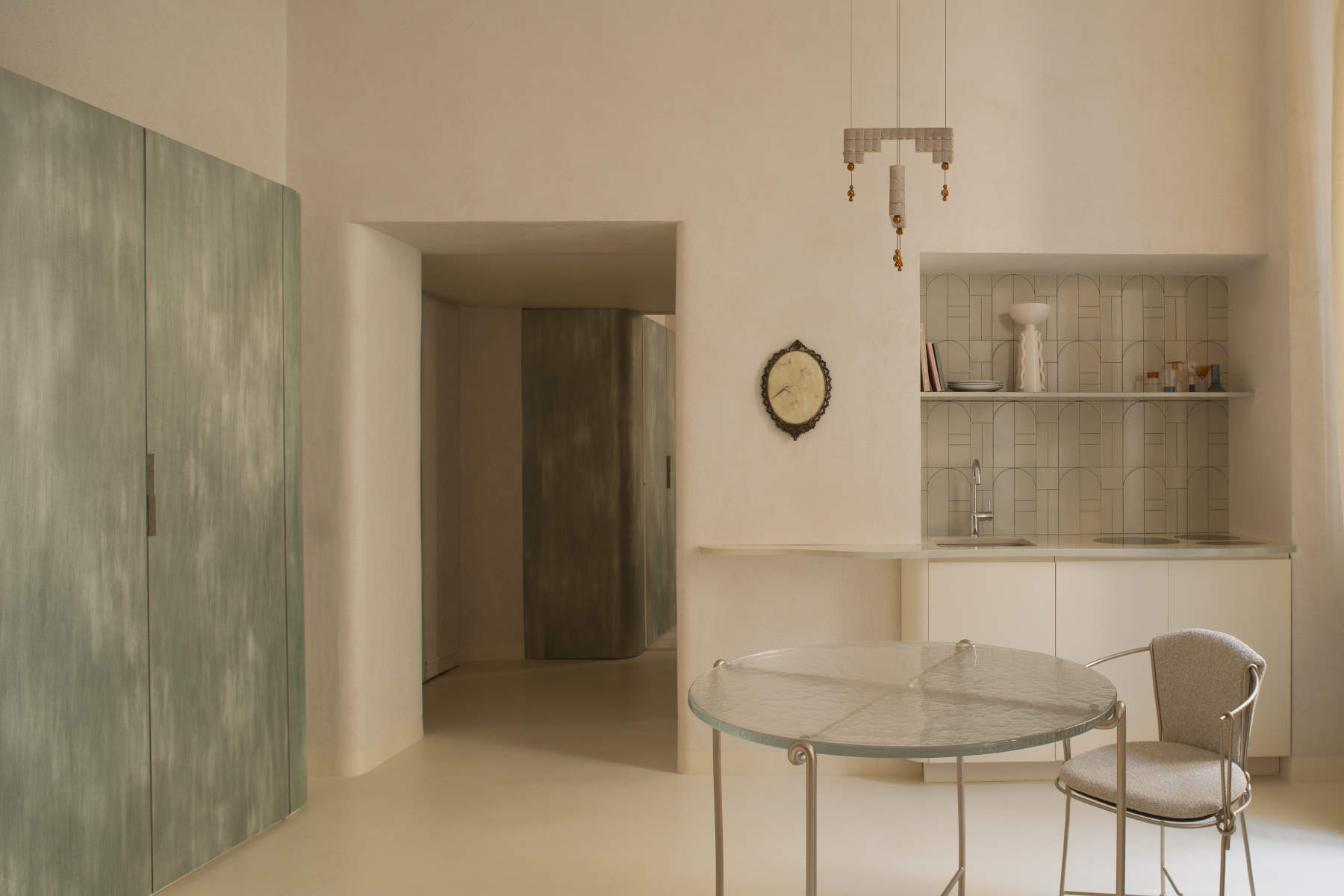
The project’s cohesion is further ensured by a series of cross-cutting elements: Kvadrat curtains, custom-made pieces by Teknocoop Wood Design Solution, and the lighting design by Luce e Design all contribute to creating a system of connections between the different spaces. Wax white, glass, and metallic surfaces recur as recurring elements, while the architecture plays an active role in constructing the artistic narrative.
The design research and curation of the design partnerships are led by Jacopo Manganiello, together with Manuela Tognoli and ATLANTE Design, the main design partner. The project also involves Arianna De Luca, Atelier Nuanda, Berto, cc-tapis, Daniela Pinotti, Dante Negro, De Marchi Verona, Douze Degrés, Elmar Cucine, Fantini Rubinetterie, Galleria Incanto, Kvadrat, Ilaria Bianchi, LIT Studio, Luce e Design, Marta Sala Éditions, Millim Studio, Ninefifty, Paper Factor, Teknocoop Wood Design Solution, and Traga. Rounding out the exhibition are a botanical installation by FLOVVER and a curated selection by Santedicola.
The bathroom also houses Project (bath) Room, a project room dedicated to emerging and independent artists, who are invited to engage with the domestic space and the language of interior design. The first exhibition features Krizia Galfo, Giorgia Prandin, and Guendalina Urbani, who create installations on the ceiling, walls, and floor, transforming the bathroom into an immersive exhibition space. Casa Aemilia was founded with the goal of developing into a permanent and replicable cultural platform through meetings, tours, talks, and events dedicated to the relationships between contemporary art, architecture, design, and collecting.
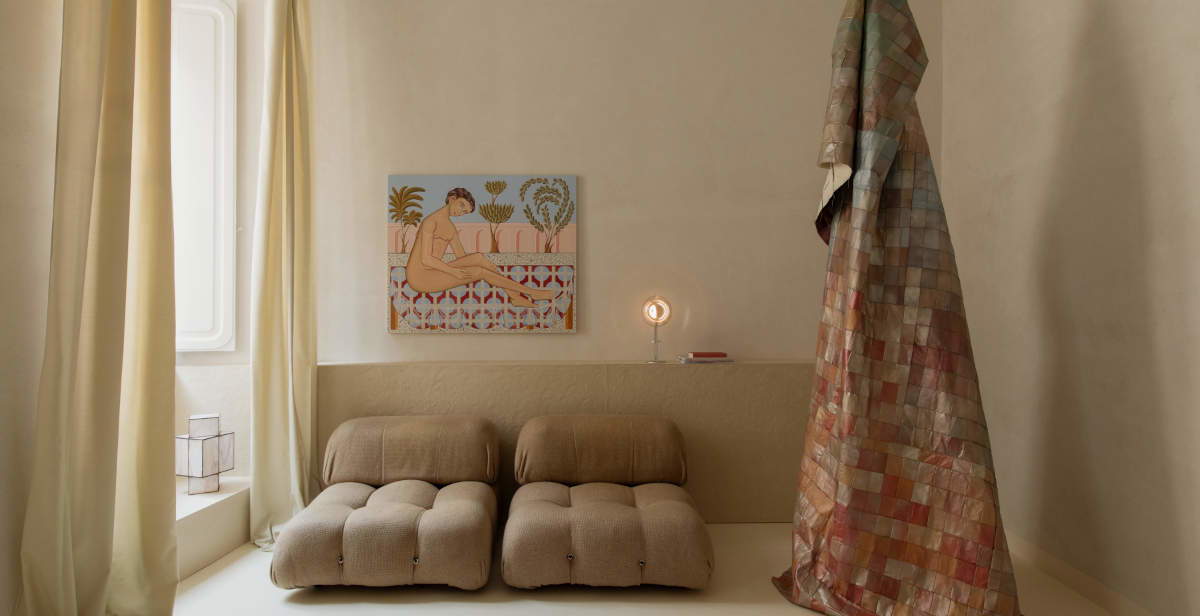 |
| In Rome, there is a house that was designed around works of art: it's called Casa Aemilia |
Warning: the translation into English of the original Italian article was created using automatic tools. We undertake to review all articles, but we do not guarantee the total absence of inaccuracies in the translation due to the program. You can find the original by clicking on the ITA button. If you find any mistake,please contact us.