





The Mediterranean as a constantly evolving space, shaped by environmental, social, technological, and cultural changes. This is the starting point for the third edition of the Biennale dello Stretto, running from September 18 to December 13, 2026. The chosen theme is “Mutations,” a word that serves as the central thread of a program spanning both sides of the Strait, featuring four months of exhibitions, performances, talks, and community-based projects.
The event was conceived by Alfonso Femia together with Annalisa Metta and Salima Naji, promoted by the Fondazione Le Città del Futuro, and organized by 500x100. At its core lies a question tied to the present: how is our way of living and perceiving the world changing in an era in which transformations seem to proceed faster than our ability to understand them? Bodies, identities, memory, and territories are undergoing a process of continuous redefinition. In this context, art can become a tool for observing change, capturing certain moments of it, and preserving its traces. The artist is not necessarily the one who anticipates what is to come, but can make the transformations already underway visible, revealing both their direction and their instability.
The section dedicated to art brings together works, installations, and performances that address the theme of transformation from different perspectives. Matter and memory, body and identity, landscape and community, technology and the future become some of the key themes through which to interpret the works on display.
Among the projects is *The Imperfection of the Absolute*, curated by Angela Pellicanò, featuring works by Fabrizio Cotognini, Giovanni Ozzola, Laura Paoletti, and Alfredo Pirri. The project considers the accident not merely as an anomaly, but as a possible point of origin for change. The idea of the absolute—toward which all classification tends—is thus inevitably confronted with imperfection and the possibility of deviation. Fabrizio Cotognini’s works depict figures suspended in the transition from one state to another, while Giovanni Ozzola alters maritime bells by engraving intimate and evocative phrases on them, allowing time to reshape their perception. Alfredo Pirri, on the other hand, presents a sculpture that alters the perception of space. Rounding out the project is Laura Paoletti, the artist-in-residence supported by Banca Patrimoni Sella & C., with a series of gouaches created using seawater from the Strait.
Accompanying this exhibition is *Fuorimisura*, a group show curated by Teodora Malavenda featuring works by DEHORS/AUDELA, Marco Labate, Giulio Manglaviti, and Gianfranco Scafidi. In this case, mutation is interpreted as a search for new formal possibilities and as a response to forms imposed from the outside.
Another important section is *Tra Terra e Forma. Mutazioni Lente*, curated by Pasquale Piroso (RespiraTerra). The project traces a journey through various dimensions of change, from primordial matter to humanity, community, and technology. The narrative unfolds through six stages—Earth, Fire, Landscape, Humanity, Community, and Future—following the rhythm of transformations that are often slow and profound. Giulio Cinti’s sculptures in refractory clay from Badolato evoke the geological memory of the material. With Roberto Giglio, transformation instead takes place through human knowledge and the slow metamorphosis of wood into charcoal. Alberto Timossi brings the material into the landscape with an installation situated in the moat, where PVC pipes take on the form of a forest and a bridge. The theme of journey and the transformation of identity recurs in the sculptures of Antonio Tropiano, while Dino Serrao’s photography focuses on the faces of the Badolato community, documenting the changes in people, relationships, and shared memory. Giulia Natalia Comito, on the other hand, explores the connection between memory, individual emotions, and transformation. The exhibition concludes with Matteo Basilé, who shifts the reflection toward the present and the future, questioning how the digital age is altering images, identities, and perception.
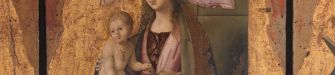
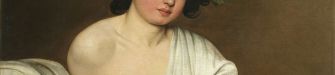
The dialogue between contemporary works and testimonies from antiquity becomes a reflection on the metamorphosis of the body, the face, and identity. Transformation thus takes on a poetic dimension, connecting memory and the contemporary world.
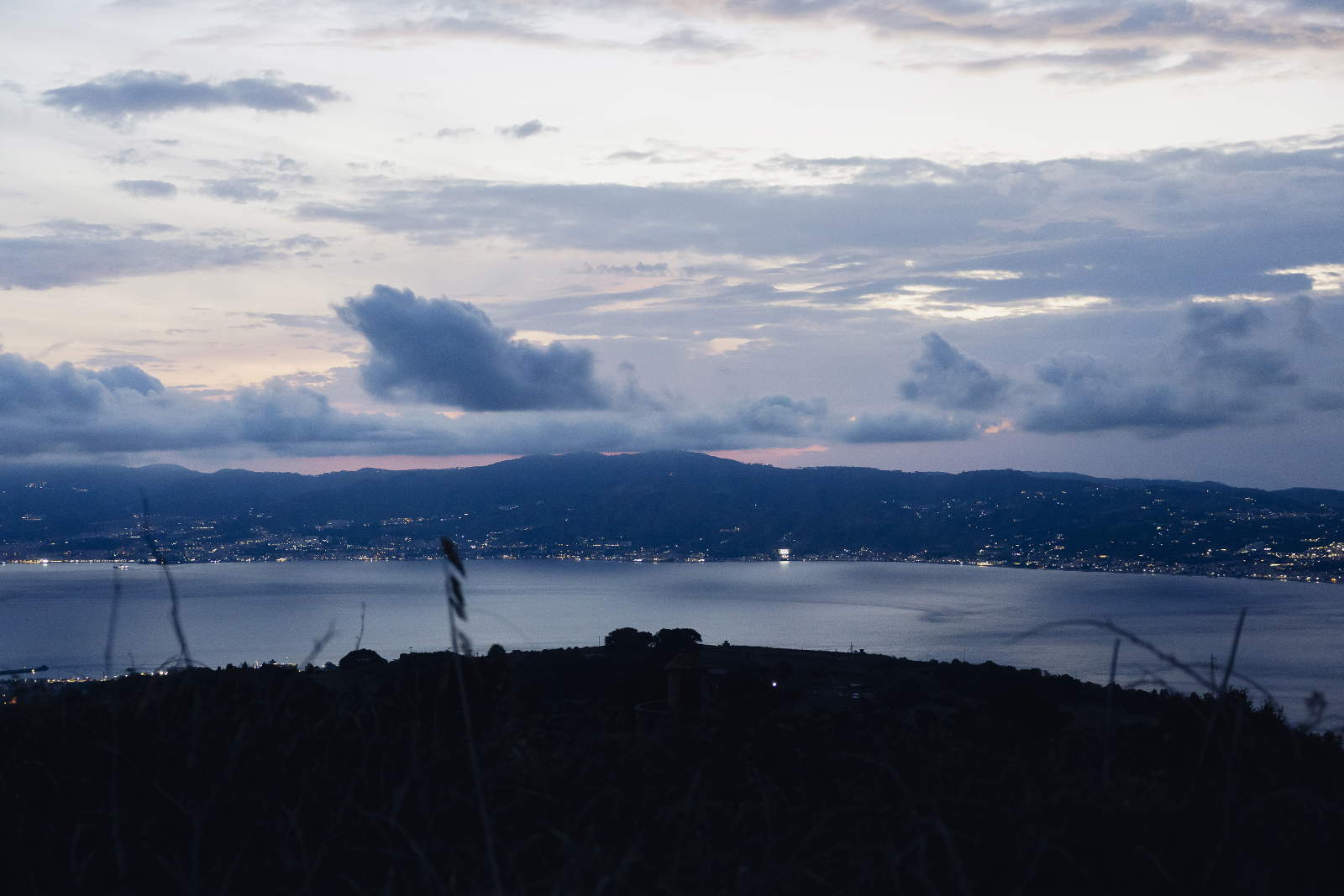
On October 10 and 11, the Biennale dello Stretto will make a stop in Badolato and Badolato Marina, with a program coordinated by Pasquale Piroso dedicated to art as a tool for urban regeneration. Independent projects include *breathe* by Ninni Donato and *La Machine à Décoller* by Gianni Brandolino. The first is a sound installation in which perception is gradually guided toward a deeper dimension, transforming listening into a physical experience. The second, on the other hand, arises from the juxtaposition of faces, symbols, and notes, creating a fragmentary universe suspended between imagination and reality. At the invitation of Alfonso Femia, the program is enriched by additional works dedicated to the theme of transformation. *Metamorfosi* by Aurelio Alberto Maria Giovanella, alias Albert Jill, curated by Maria Elena Giovannella, uses photography to depict the Calabrian coastline overlooking the Strait.
*Immutable Atoms* by British artist Judith Cowan, curated by Barbara Martorelli, is a site-specific installation in which lines of light reconstruct, from above, the image of a devastated city, stripped of its streets. White, opaque casts made from igneous rock absorb light and evoke the memory of a vanished civilization. The CaCo3 collective, meanwhile, explores the relationship between geometry and organic forms through mosaic works that construct a landscape in constant transformation. Difference thus becomes an element capable of generating relationships and new configurations of space.
In the fortress moat, *Traces of Mutation*, curated by AF*Design, features an installation by landscape architect Michelangelo Pugliese. *Campo di forze* is a structure composed of wooden poles varying in height, position, and color, connected by nearly invisible threads that form a network of tensions and relationships. An image of the web of transformations that traverses landscapes, communities, and individuals over time.
On Sunday, September 20, it will be the turn of *Orizzonti capovolti sul mare sospeso*(Upside-Down Horizons Over the Suspended Sea), a performance involving students from the Academy of Fine Arts in Catania as part of the set design workshop led by professors Aldo Zucco and Massimo Savoia. Reviving a format already tested in previous editions of the Biennale, the poetic parade will directly engage the audience, inviting them to become part of the journey. The horizon will no longer be merely a visual boundary, but a space open to possibility and transformation.
One of the defining aspects of the Biennale is its commitment to connecting diverse artistic practices within a space for collective dialogue. This model is evoked through the concept of “palaver,” a traditional form of community dialogue found in various African cultures. The palaver is a space in which a community addresses issues related to its collective well-being, without necessarily reaching a predetermined conclusion. Speech may be accompanied by dance, song, poetry, storytelling, theatricality, body language, and silence.
The Biennale adopts this model as a metaphor for open dialogue, in which art becomes an opportunity for listening, connection, and the building of potential cohesion across generations. From this perspective, “Mutations” does not simply narrate change. The Biennale dello Stretto invites us to reflect on what remains while everything else transforms: on the traces left by time, on identities that are being redefined, on landscapes that bear witness to these transformations, and on communities called upon to adapt, resist, or reinvent themselves. Change can be a necessity, a choice, or a form of survival. It can mean following a process or resisting it. Every transformation involves a loss, but also the birth of something new. It is precisely in this space between what disappears and what takes shape that the 2026 Biennale dello Stretto situates its reflection on the contemporary Mediterranean
|
| 2026 Strait Biennial, “Mutations”: Four Months of Art to Depict a Changing Mediterranean |

Warning: the translation into English of the original Italian article was created using automatic tools. We undertake to review all articles, but we do not guarantee the total absence of inaccuracies in the translation due to the program. You can find the original by clicking on the ITA button. If you find any mistake,please contact us.





















 IT
IT FR
FR DE
DE ES
ES CN
CN


