



by Marta Santacatterina 26/11/2026



Categories: Exhibition reviews / Disclaimer
At the Gallerie d’Italia in Vicenza, a major exhibition restores Giandomenico Tiepolo’s status as an artist in his own right—an artist too often regarded merely as Giambattista’s son, little more than a follower. From his early paintings to the Pulcinella stories, an original, ironic perspective emerges, one that pays close attention to the society of his time. A review by Marta Santacatterina.


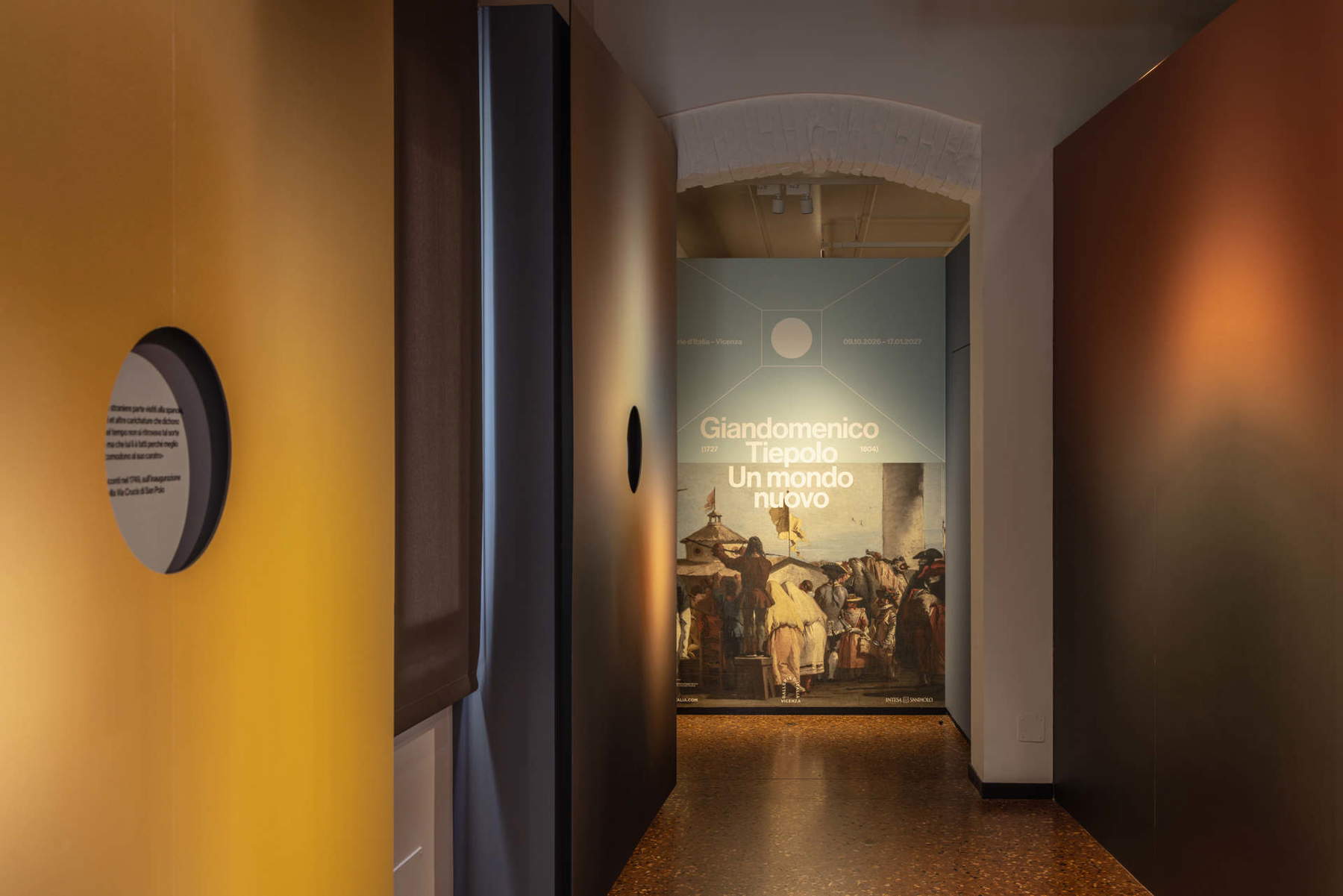
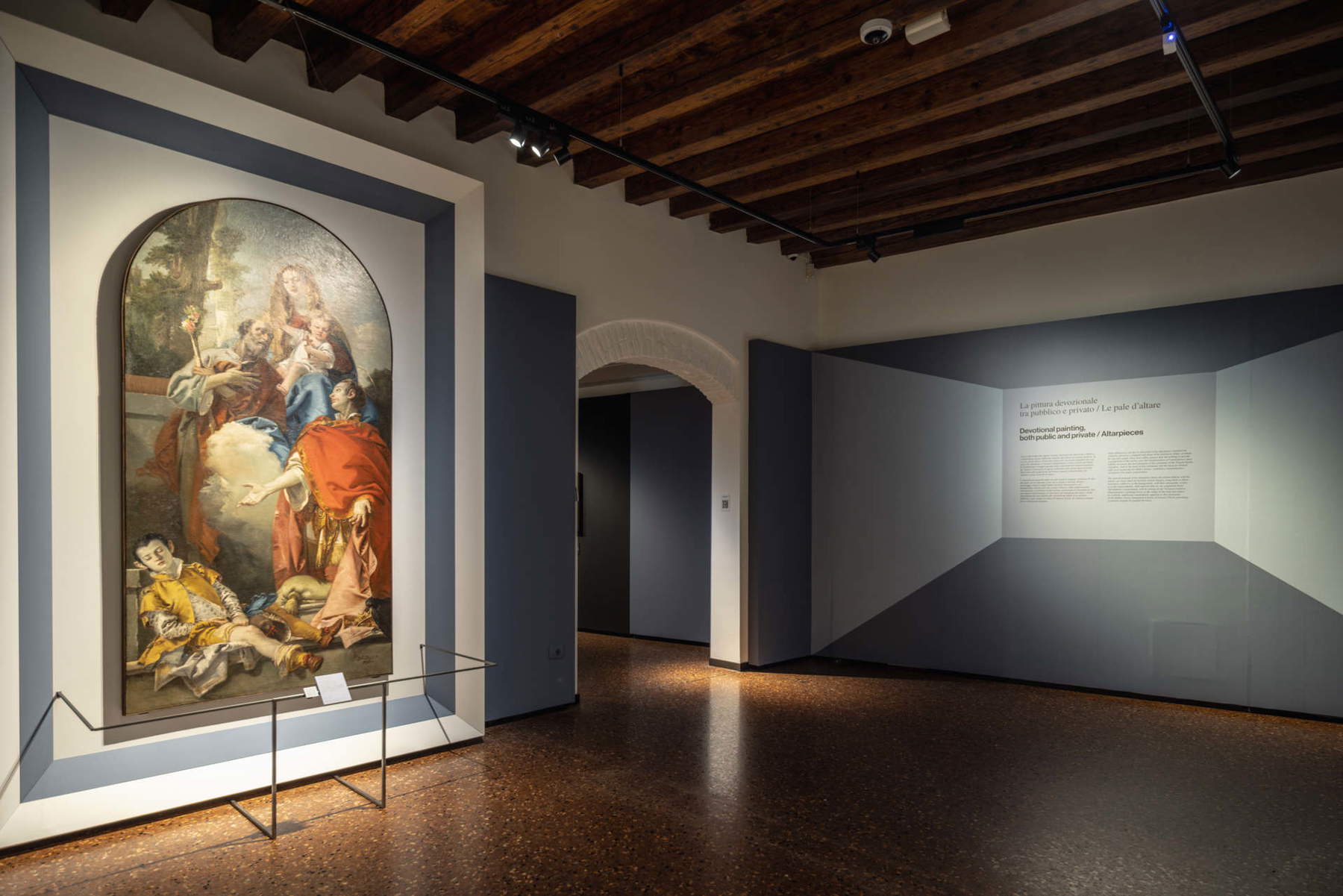
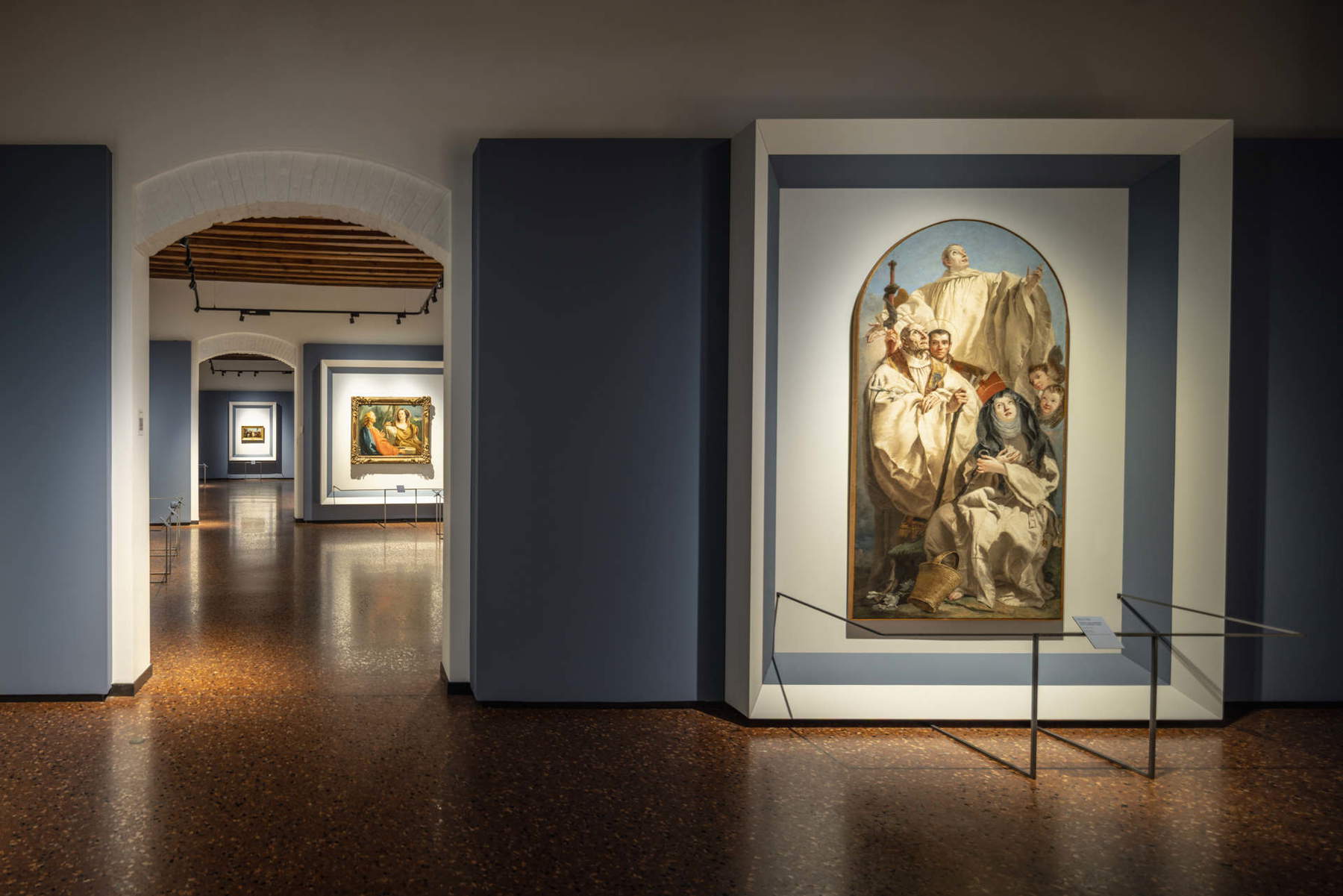
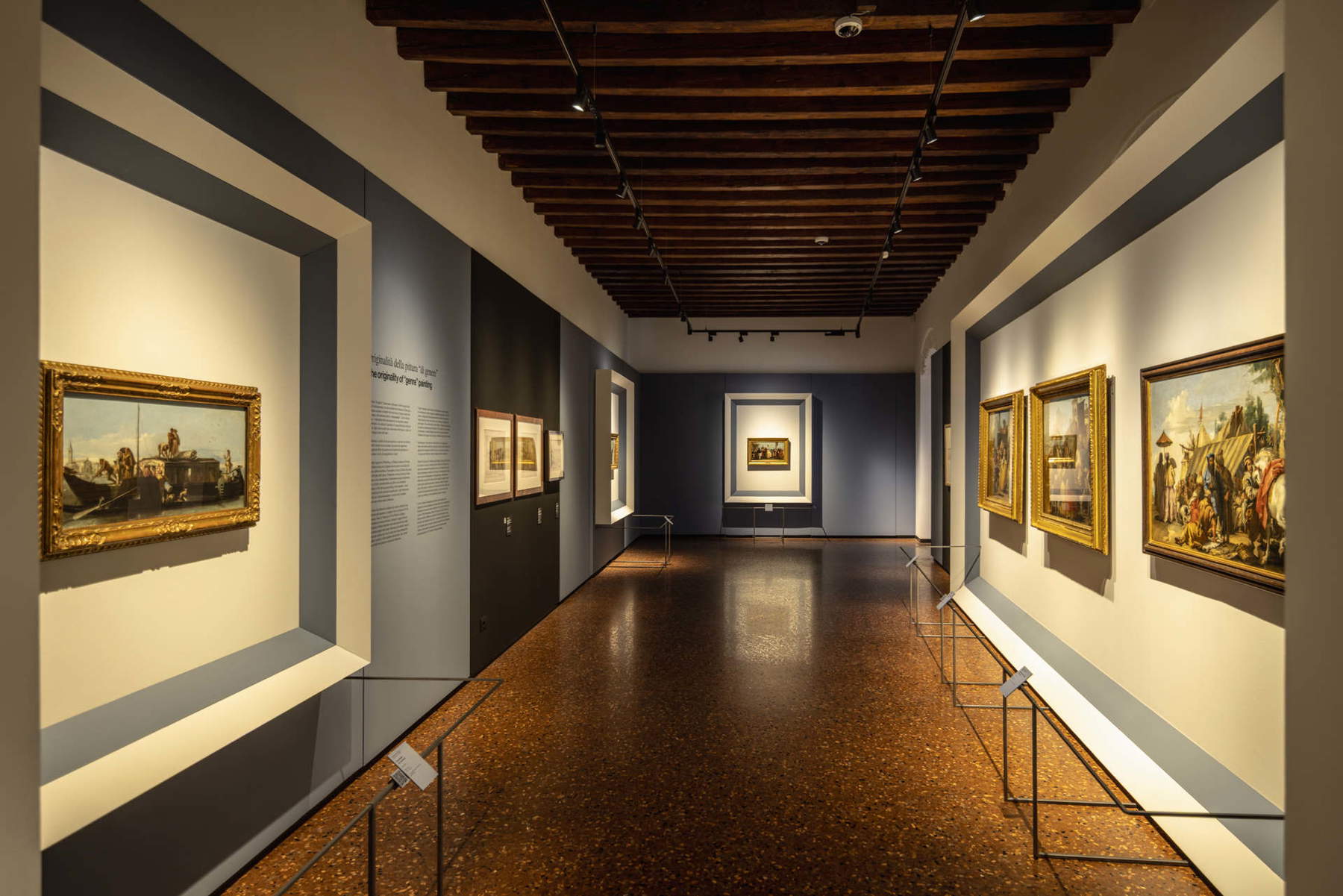
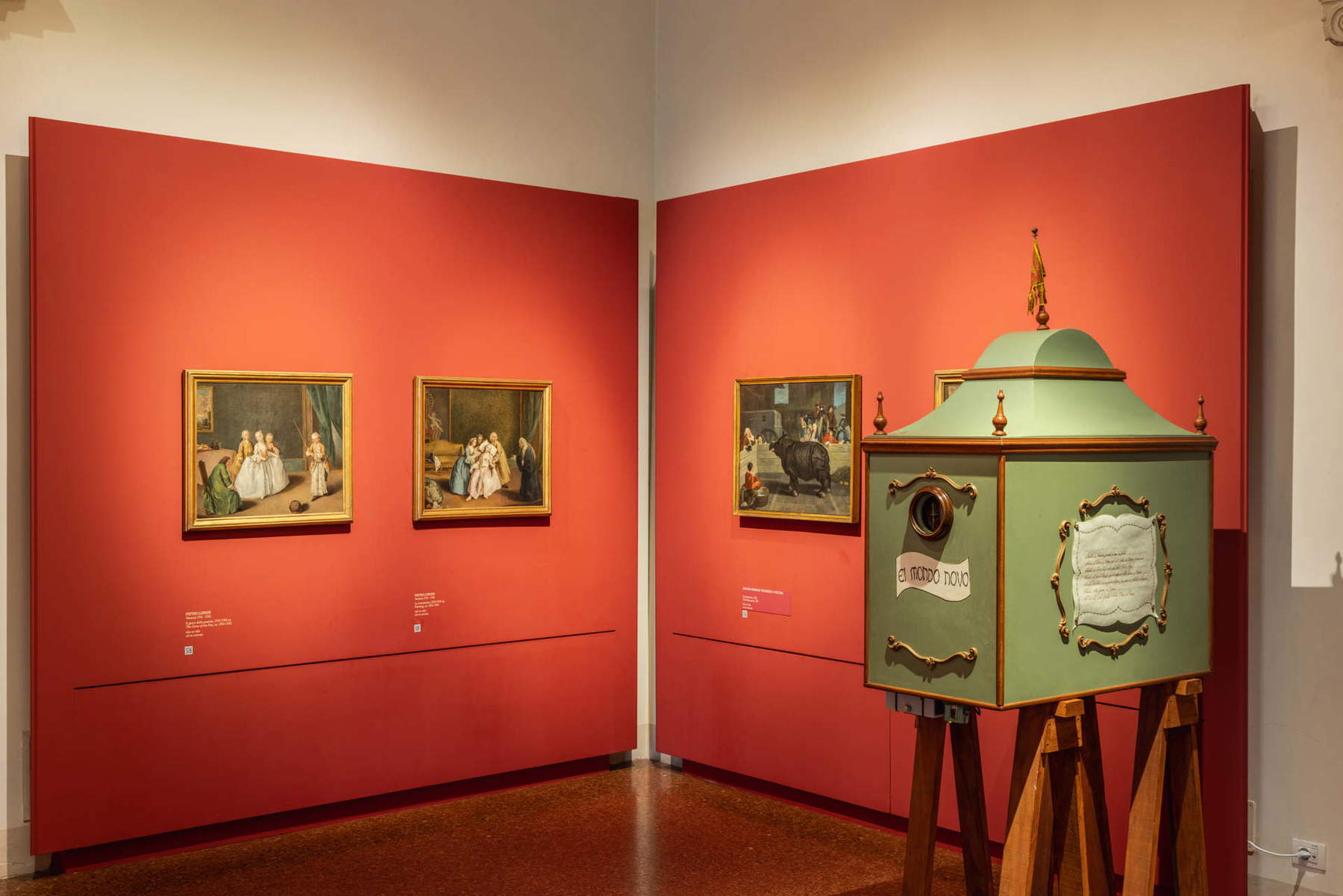
August 30, 2027, will mark the 300th anniversary of the birth of Giandomenico Tiepolo, son and faithful collaborator of Giambattista, who—among his contemporaries—was considered a true superstar and is still far better known today than his eldest son. The Gallerie d’Italia in Vicenza, housed in one of the city’s most sumptuous palaces, have therefore decided to launch a project curated by Carolina Brooks, Valter Curzi, and Fabrizio Magani, which aims to restore full artistic autonomy to a master who is often labeled a copyist and imitator of his father’s style, as well as to dispel a perception that remains, even today, too closely tied to Giandomenico’s work as a printmaker. The exhibition, with its impeccable design—characterized by refined graphic elements that enhance the visitor experience—brings together numerous paintings and is a monographic exhibition dedicated to Tiepolo Jr., with the exception of a few works by Giambattista, included to better define the similarities and differences between the two artists. The exhibition is not organized according to a strict chronological order but rather by thematic sections, and it should not be forgotten that Giandomenico was particularly active in Vicenza and that, as we will see later, other significant works by him are still preserved there. Furthermore, in the spaces of Palazzo Leoni Montanari reserved for the permanent collection, visitors will encounter numerous works by Venetian artists contemporary to the Tiepolos, particularly those by Pietro Longhi, which round out the overview of 18th-century genre painting and landscape painting in Veneto.


Before delving into the exhibition, we believe it is appropriate to summarize the key milestones in the life of Giandomenico Tiepolo, who was born in 1727 in Venice to his mother Maria Cecilia Guardi, sister of the painters Francesco and Giovanni Antonio Guardi. The Tiepolo-Guardi couple had a total of nine children, including Lorenzo, who also joined the head of the family’s workshop, and Giuseppe Maria, who instead chose a career in the church. At the time, Giambattista Tiepolo was already a famous artist, very well paid and the recipient of commissions that extended even beyond the territories of the Venetian Republic: the fate of his eldest son was therefore sealed: Giandomenico joined the workshop at around age 13, becoming his father’s first collaborator and accompanying him on decorative projects, first in the Venetian mainland (for example, at Villa Valmarana ai Nani in Vicenza), and then in Würzburg, Bavaria, and Madrid, to name just a few. Even in his role as “Tiepolo’s son” and the family business’s foremost representative, the young painter began to develop an independent artistic style, which he felt free to express especially after his father’s death in 1770. Giandomenico then returned to Venice, where a new chapter of his life began: he took possession of the family villa in Zianigo (in the Venetian hinterland), joined the Accademia di Pittura, Scultura e Architettura (on display is *The Institution of the Eucharist*, painted in 1778 as a sample work to be presented to the academicians), eventually becoming president of the institution, and continued to paint for another thirty years, until his death in 1804.


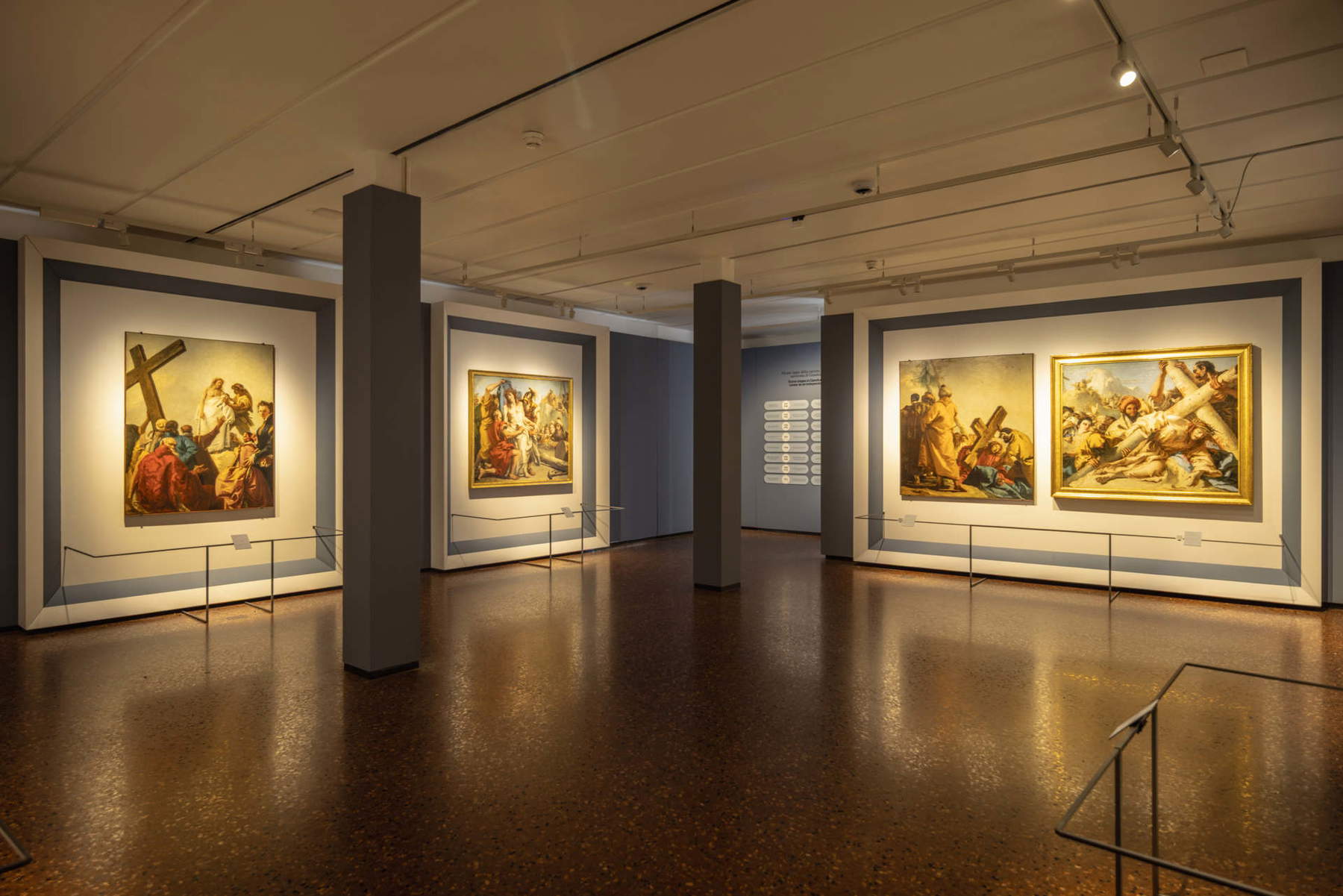
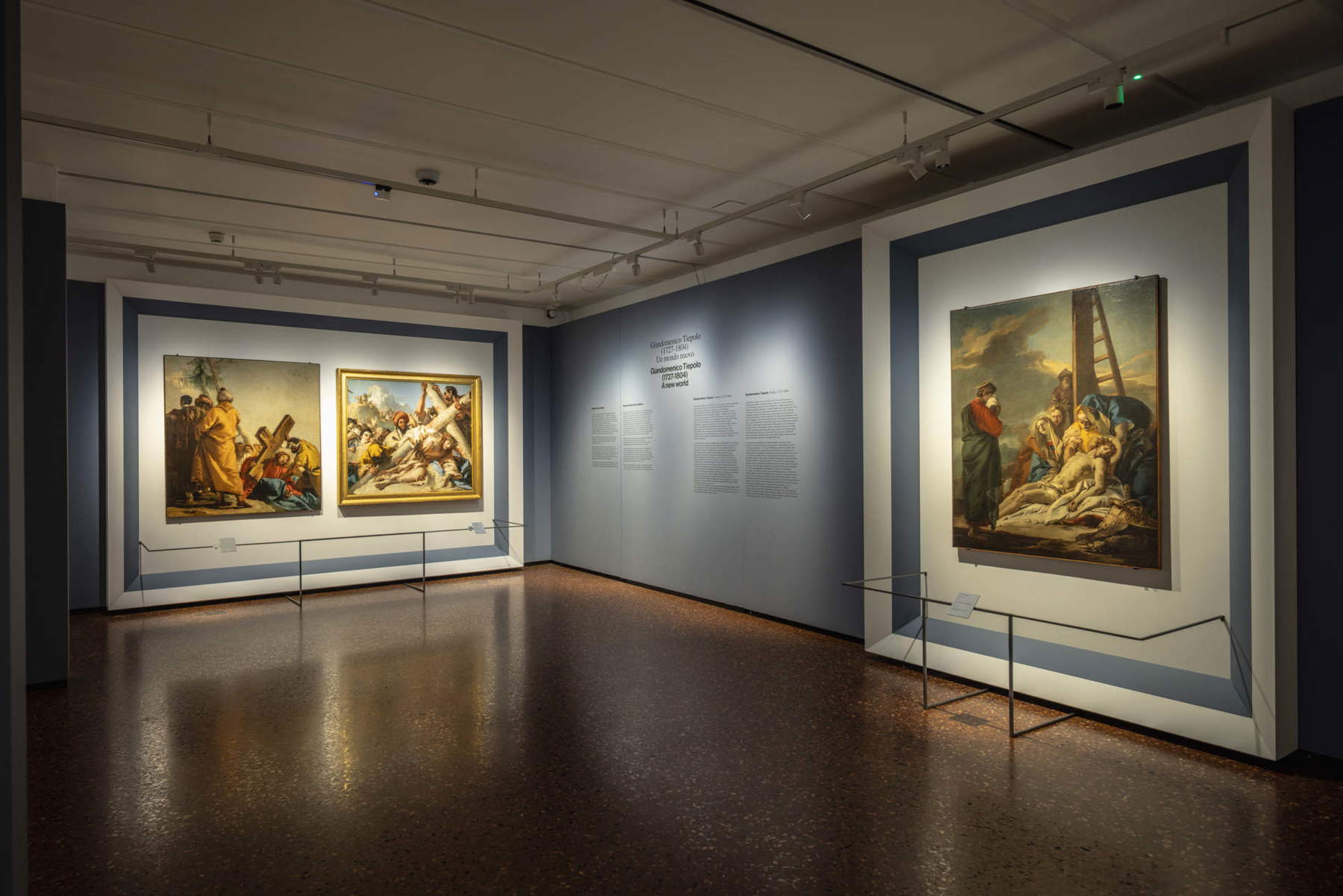
In 1747, Giandomenico, who was 19 years old at the time, was commissioned by Bartolomeo Carminati (pastor of the Church of San Polo in Venice) to paint the 14 Stations of the Cross as Pope Clement XIII had recently defined them. And so we can finally take our first steps into the magnificent hall where the canvases depicting Station X: Jesus Stripped of His Clothes, Station VII: Jesus Falls for the Second Time, and Station XIII: Jesus Taken Down from the Cross—which are still preserved today in the Oratory of San Polo, from which they are being displayed for the first time. The three paintings are flanked by three others that are part of a second Way of the Cross created by Giandomenico Tiepolo for the Church of San Filippo Neri in Madrid in 1770, after his return to Venice. The quality of the works and the comparison between the early scenes and those from his mature period are, perhaps, reason enough to visit the exhibition. While the earlier paintings certainly showcase the family patriarch’s figurative repertoire, they also feature elements that would eventually become Giandomenico’s distinctive hallmarks, such as the presence of figures from contemporary society unrelated to the depicted episode, Eastern-style clothing, views from behind or with faces in shadow. It is impossible not to admire, for example, the old man cloaked in a precious Venetian fabric (presumably Carminati) as he turns toward the viewer, gesturing with his hand to invite us to observe the stripping of Jesus, while on the right a young, refined lady looks at us, the viewers, as she rests her hand on the back of a little girl in pink, whom we see only from behind. In the second series, the composition of the paintings and the atmosphere change radically: the figures become more monumental, the viewpoint is much lower, and thus the “density” of the scene increases, thanks in part to a masterful use of planes, the chromatically striking drapery that contrasts with Christ’s deathly pale body, and splendid monochrome sections in the figures in the background.


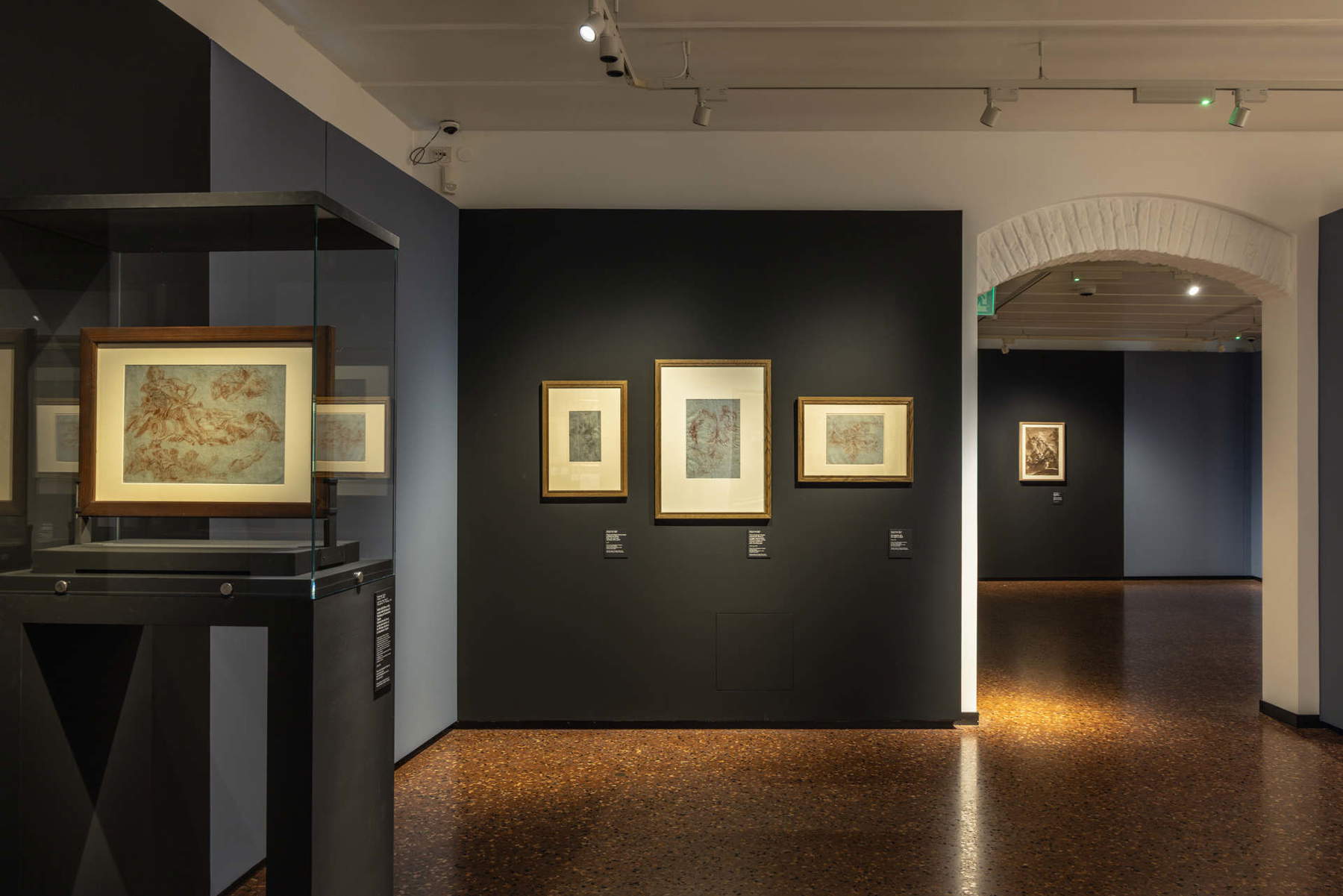
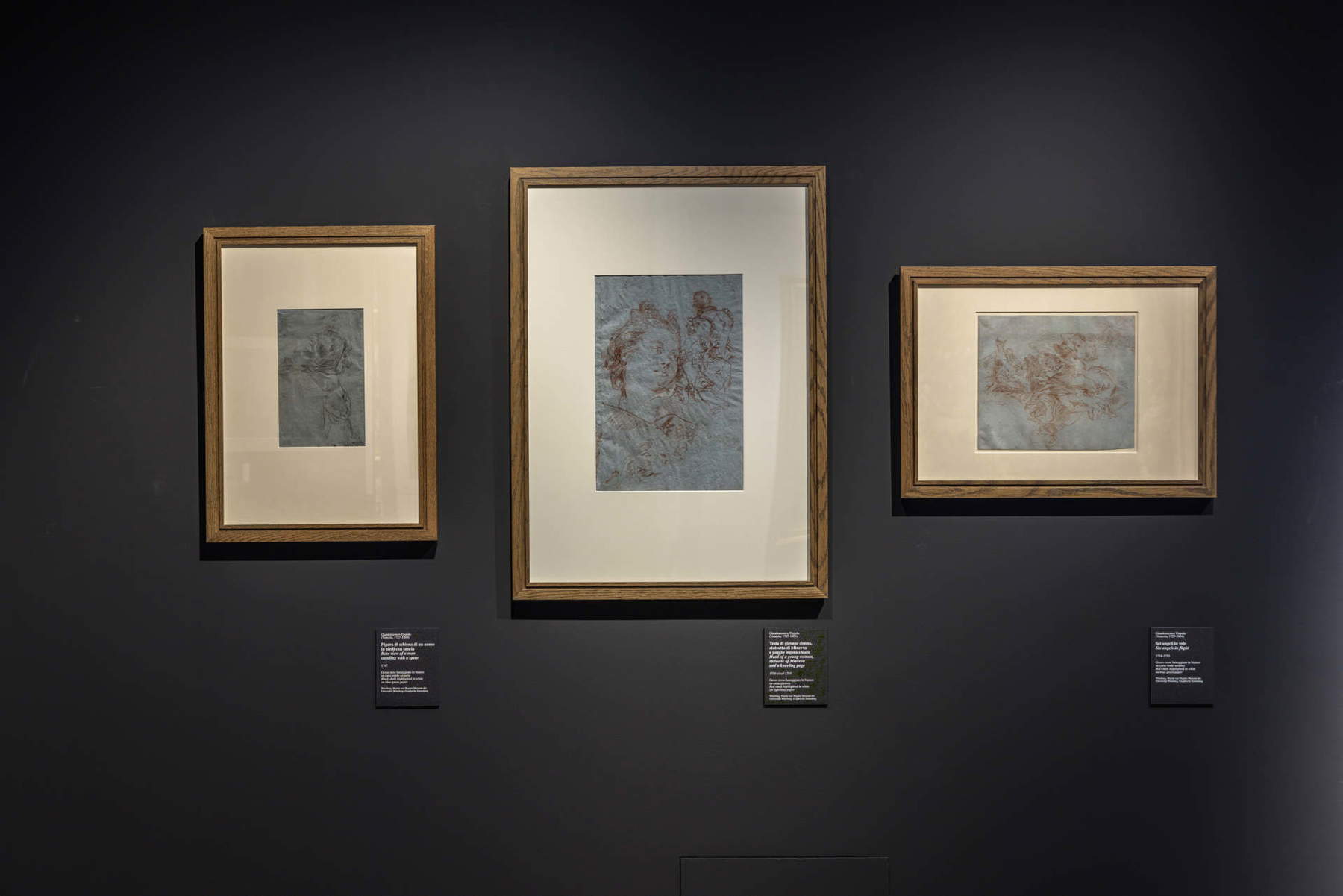
The exhibition continues with a section dedicated to the Tiepolo family’s stay in Würzburg, where, between 1750 and 1753, the workshop worked on both the monumental frescoes in the residence of Prince-Bishop Carl Philip von Greiffenclau and additional works for various patrons. From the collections of the Martin von Wagner Museum—which holds a substantial body of drawings and engravings by the Venetian artists—come Giandomenico’s sketches, which help document how crucial it was for the artist to copy his father’s paintings. Damian Dombrowski, director of the Pinacoteca and the Department of Drawings and Prints at the University of Würzburg Museum, points out that in the past, local scholars had focused solely on the works of Giambattista and on Giandomenico’s *Ricordi*, which draw on his father’s compositions, and that only recently have scholars begun to study the drawings of the younger Tiepolo and the role he played in the creation of the famous fresco on the Grand Staircase of the Residenz and the lunettes on the vault of the Imperial Hall.
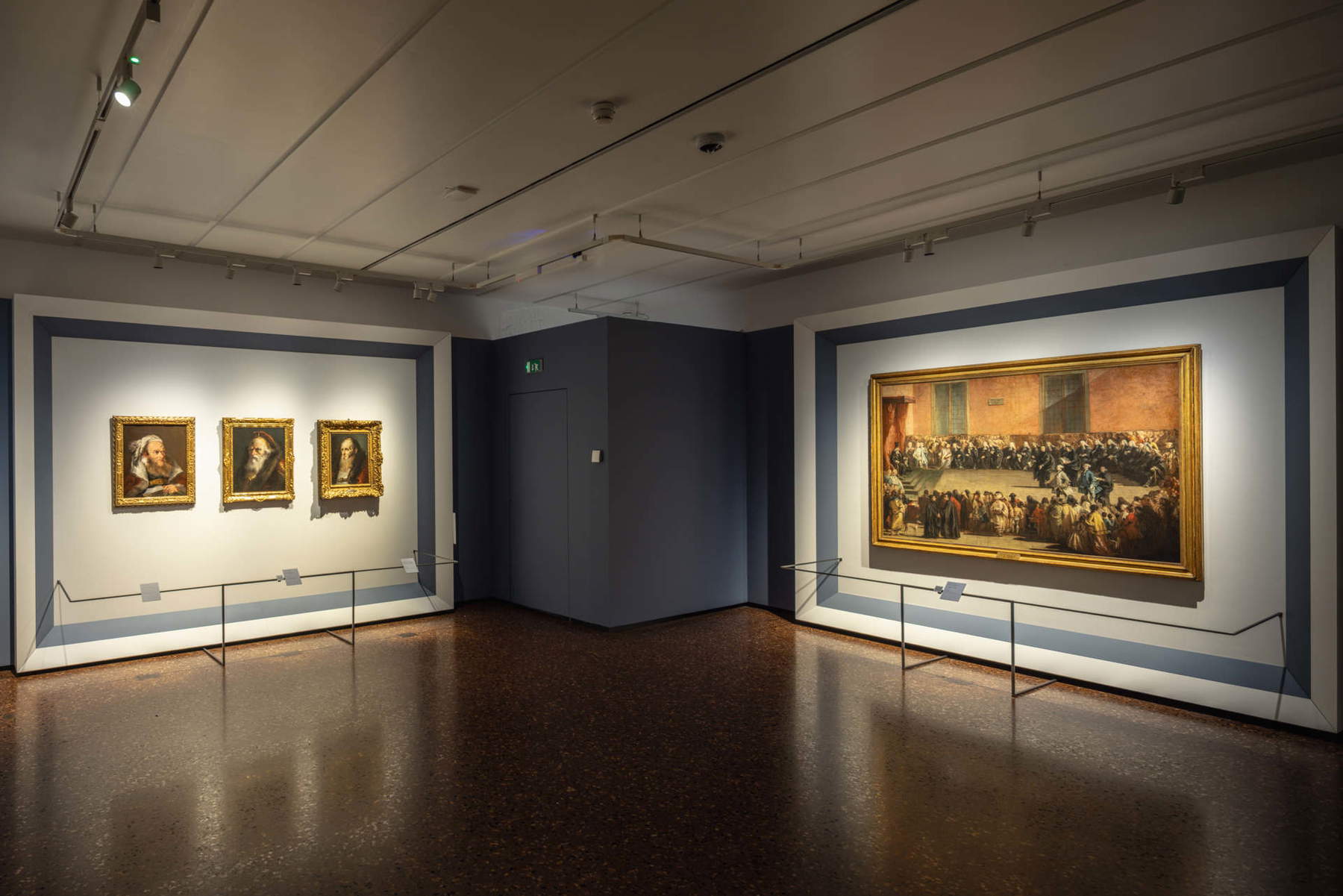
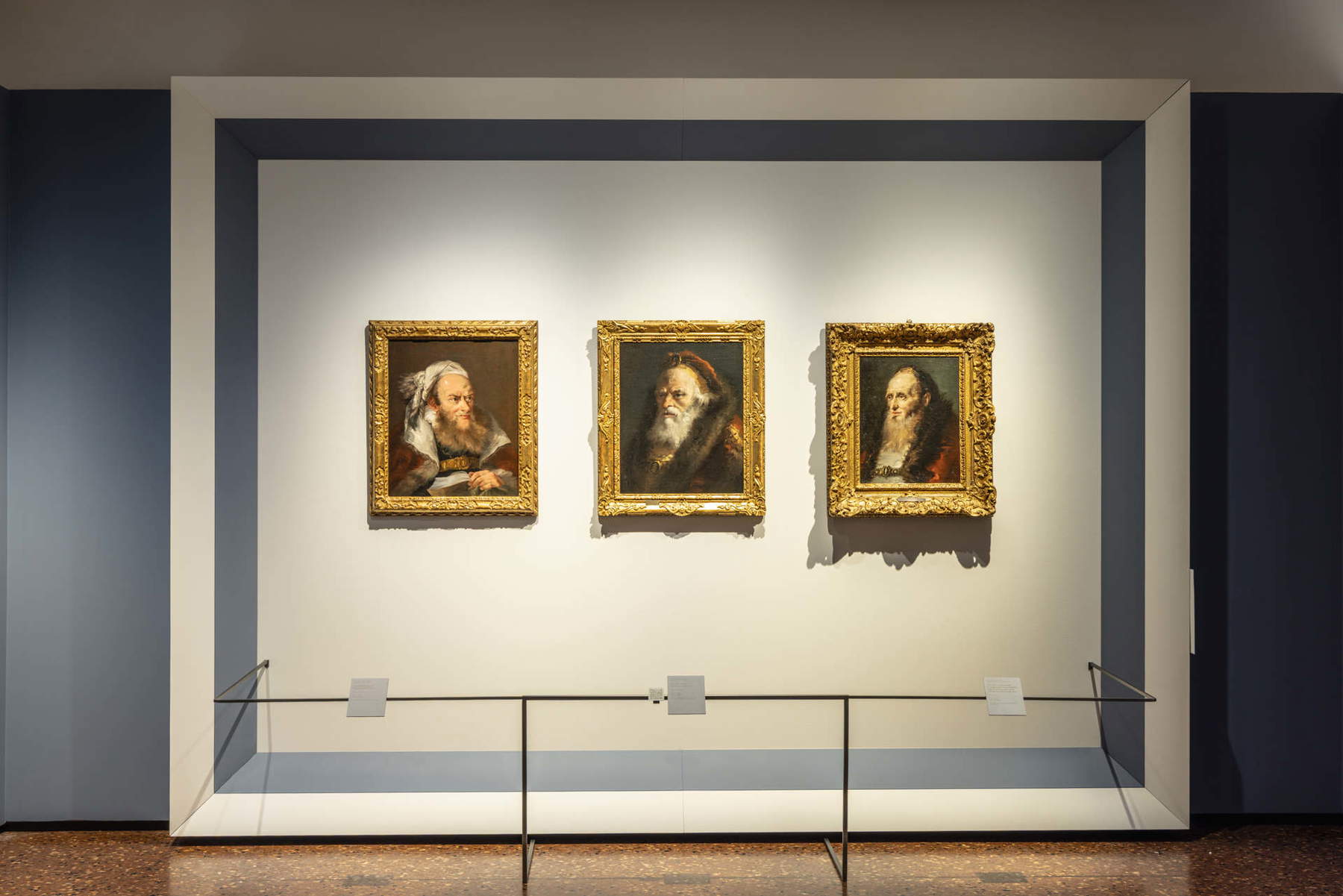
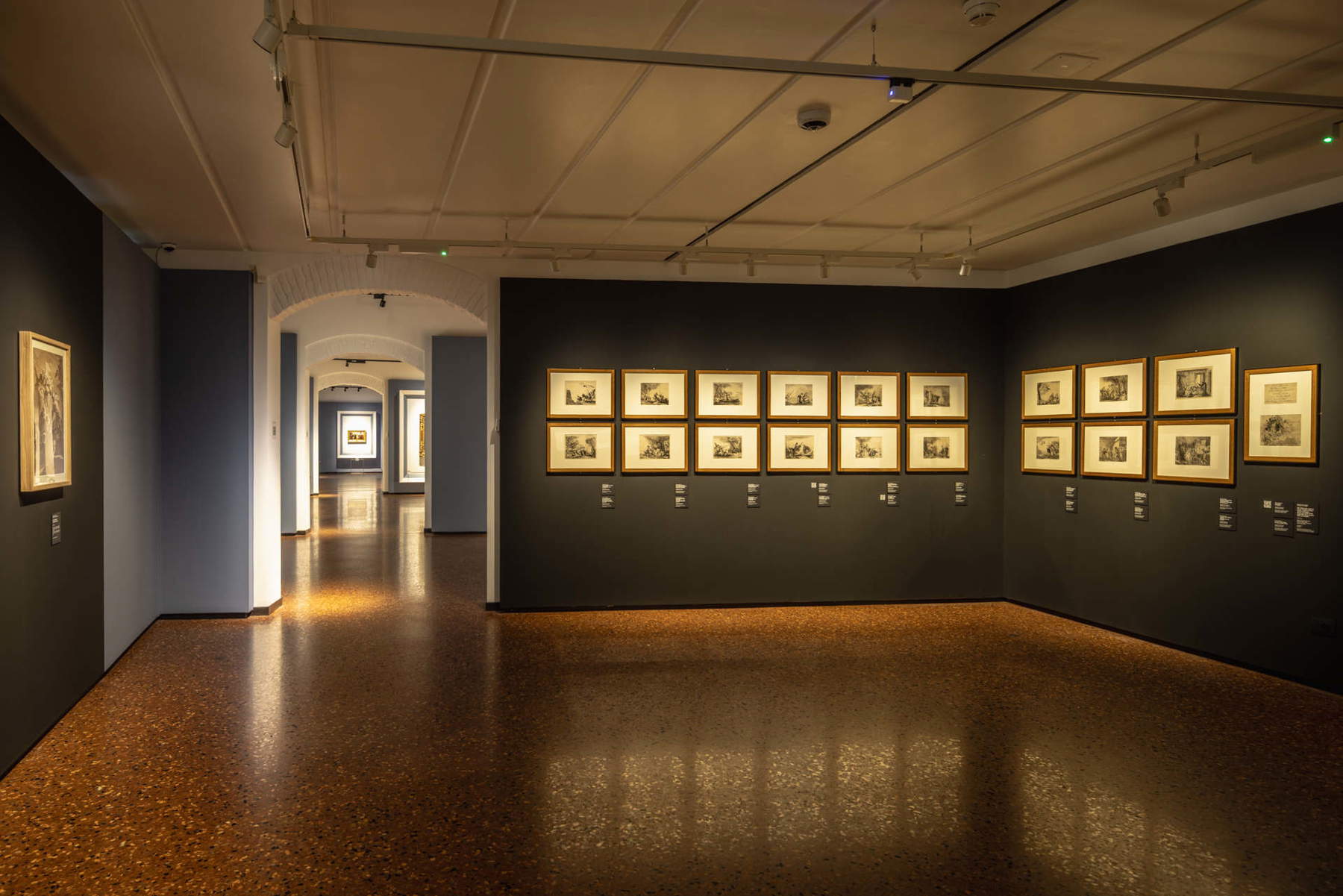
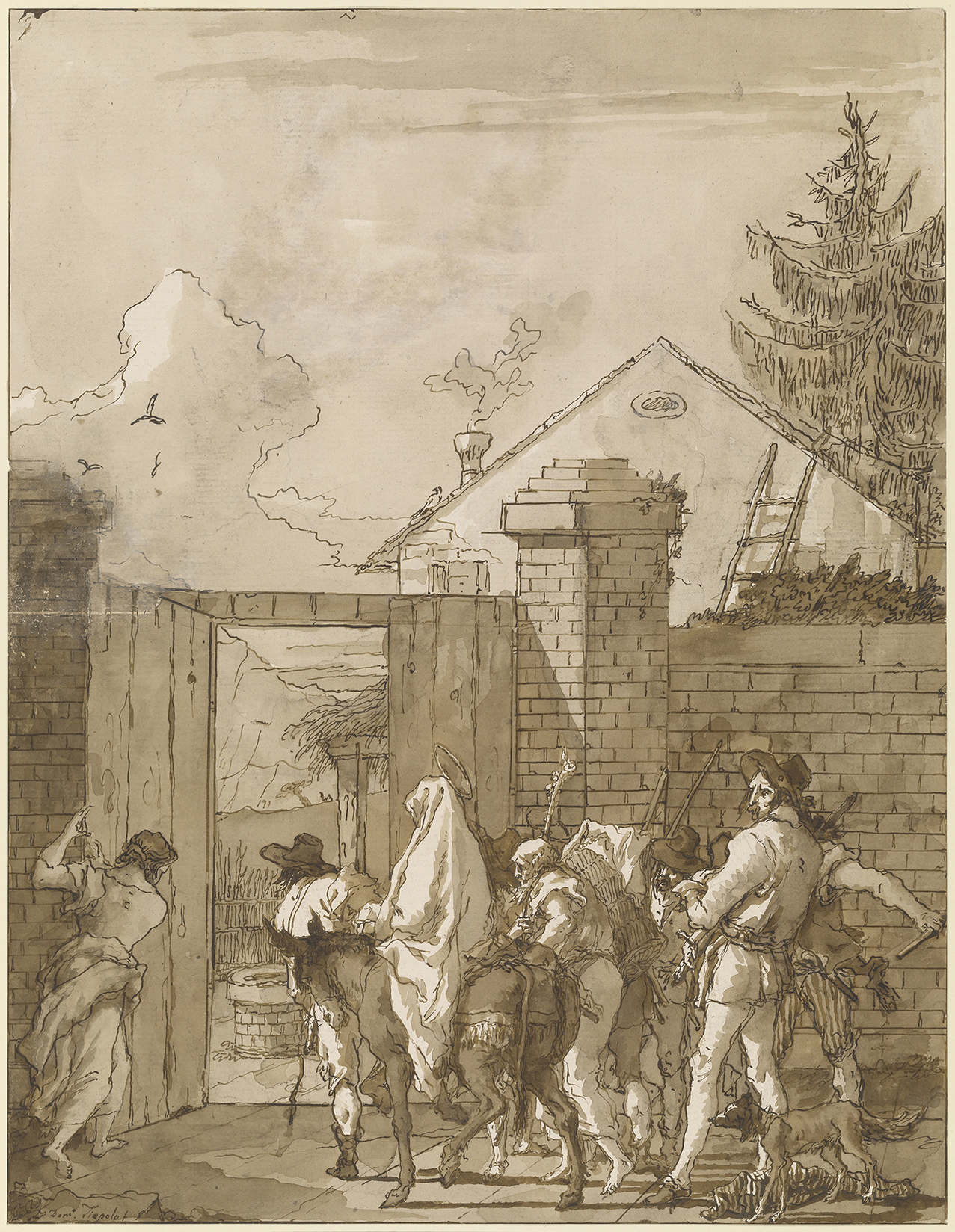
Before encountering the long sequence of *Idee Pittoresche* above the *Flight into Egypt*, engraved by Giandomenico during his stay in Germany and dedicated to von Greiffenclau, we see a small group of famous Heads of Elderly Men—often bearded—which the Tiepolos painted almost in series, given the great commercial success they derived from them. The first, by Giambattista, comes from the Paolo and Carolina Zani Foundation in Cellatica; the other two canvases by Giandomenico, on the other hand, have moved only a short distance from their “homes,” being housed, respectively, in the Civic Museum of Palazzo Chiericati in Vicenza and in the collection of the former Banca Popolare di Vicenza (now under compulsory administrative liquidation—a story that, should the courts ever close their files, will undoubtedly merit further investigation). Standing before these small paintings—as indeed when viewing the three splendid drawings on display in the next room, which serve to introduce the theme of the Flight into Egypt—visitors will find it impossible to resist playing “spot the differences” between the works of Tiepolo the father and Tiepolo the son. The album mentioned at the beginning of this paragraph, consisting of 26 etchings, is on display almost in its entirety (only the dedication to the prince-bishop is missing) and confirms, on the one hand, the skill of an artist capable of perfectly mastering the technique of engraving—using copper plates, chalk, and acids—to create highly complex plates where the linework is at times minimalist and at other times densely crisscrossed. On the other hand, Giandomenico displays in this suite the characteristics that would recur throughout his career and that we have already mentioned. We might add: the strongly narrative tone—so much so that the series almost resembles a storyboard for a comic or a screenplay—and the constant reworking of his father’s models, which nevertheless always take on new meanings.
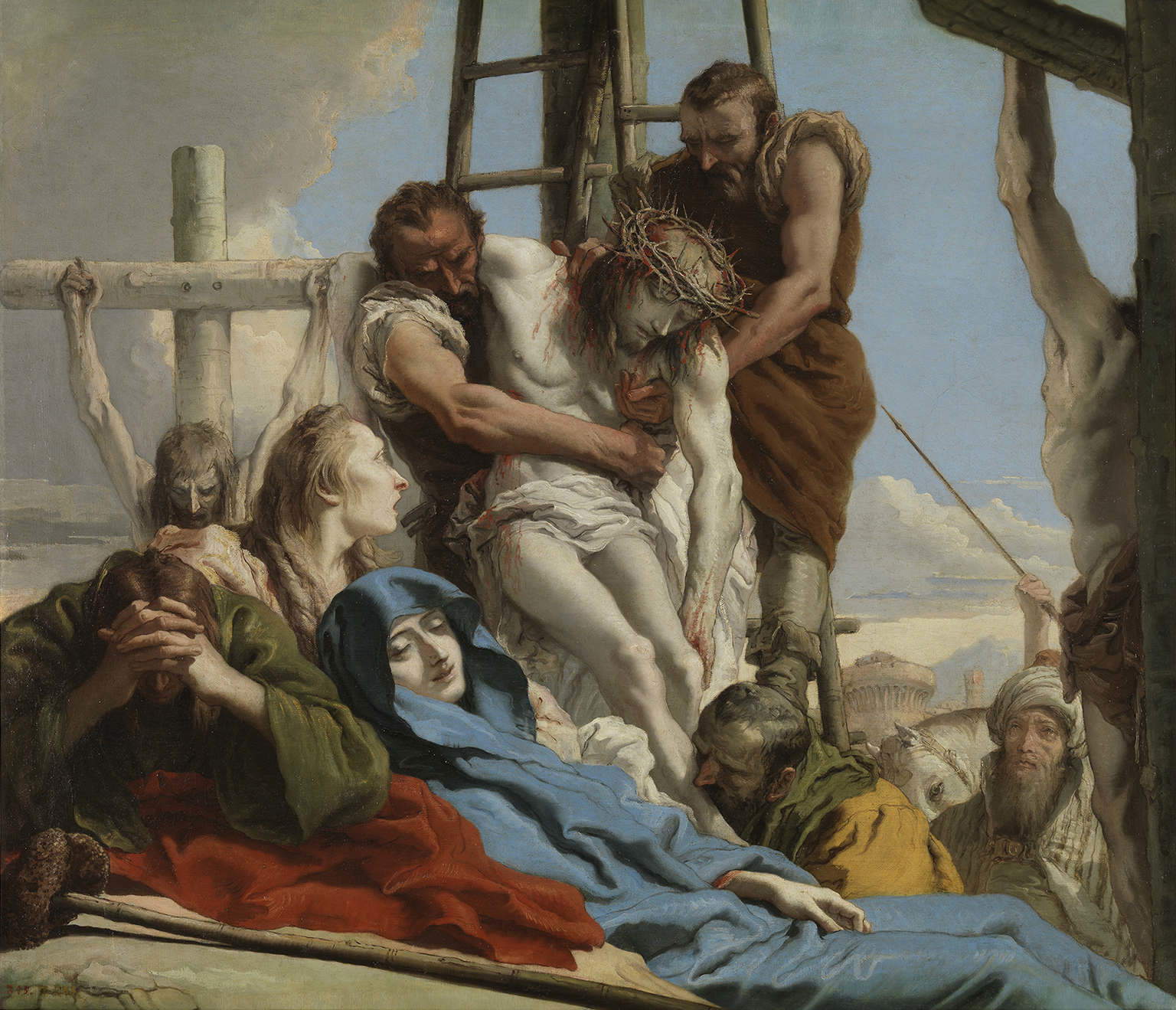
Three altarpieces and several paintings executed in a horizontal format and intended for private devotion revisit the theme of sacred art. The large altarpieces reveal a general adherence to Giambattista’s compositional models; however, Giandomenico inserts sublime moments here and there, such as the child in elegant clothes, pale as a ghost and with protruding ears, as he rests awaiting a miraculous healing, or the portrait of the elderly Camaldolese saint, his face marked by deep wrinkles, which partially overlaps the chubby, rosy face of the younger man. In his paintings for private worship, however, the artist seems freer; he draws on the common people to depict his figures (the dirty feet of the kneeling apostle in*The Institution of the Eucharist* from 1753, which also appear in other works— cannot help but remind us of Caravaggio’s Madonna of the Pilgrims ) and fills the scenes with a low-angle perspective, such as that seen in the Madrid *Via Crucis *. The results are not always successful, yet the sequence attests to the painter’s prolific output and the consistent appreciation he received from his patrons.
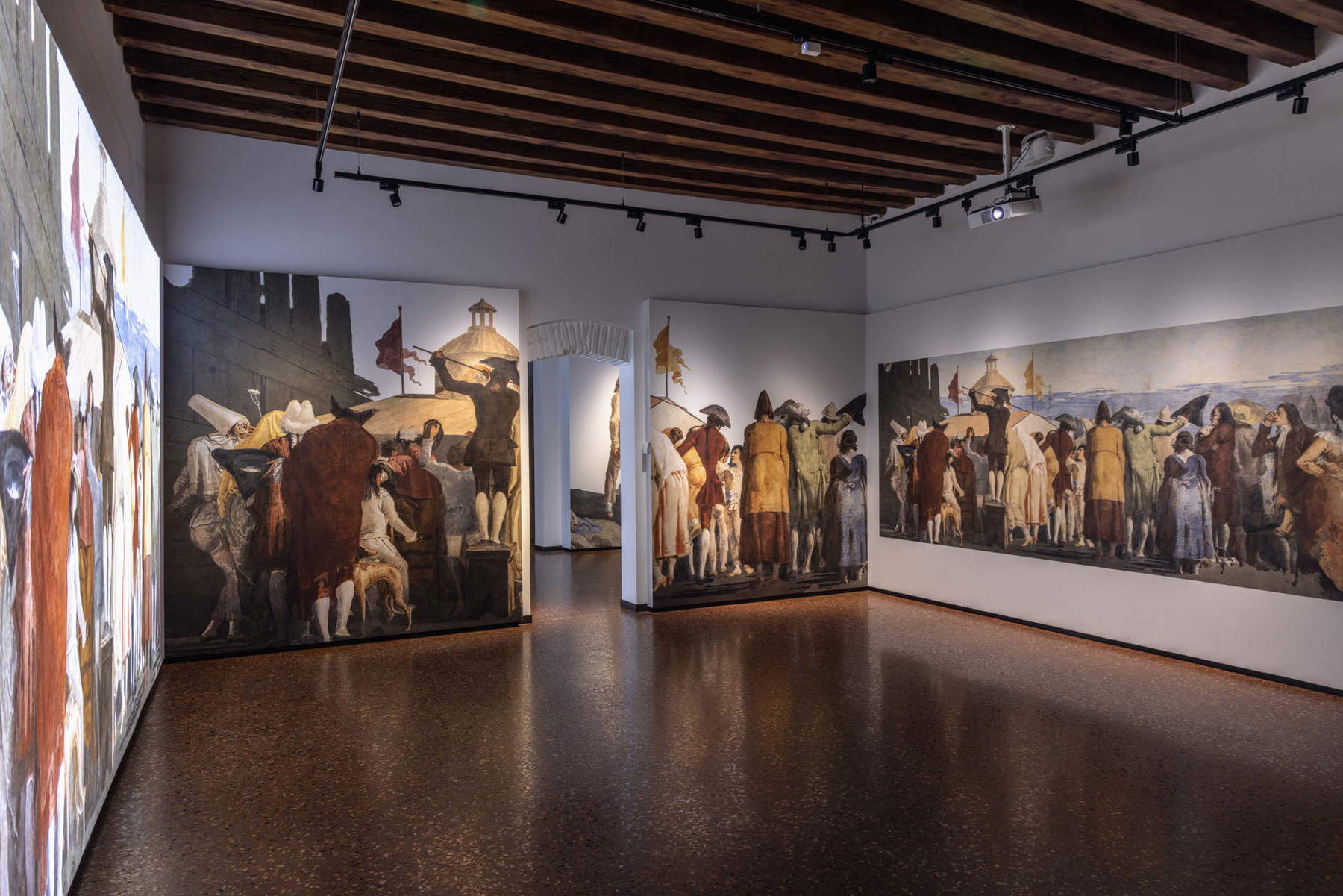
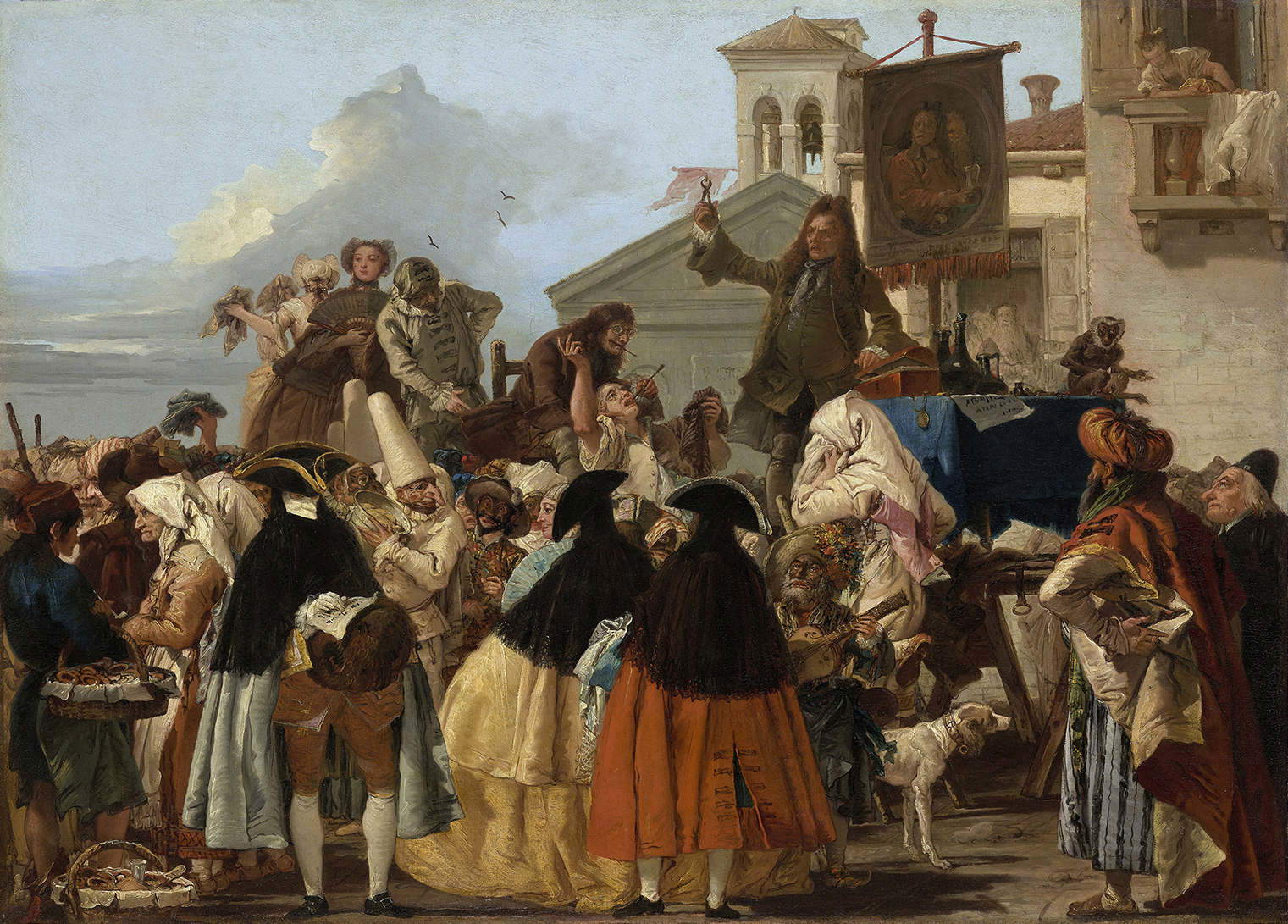
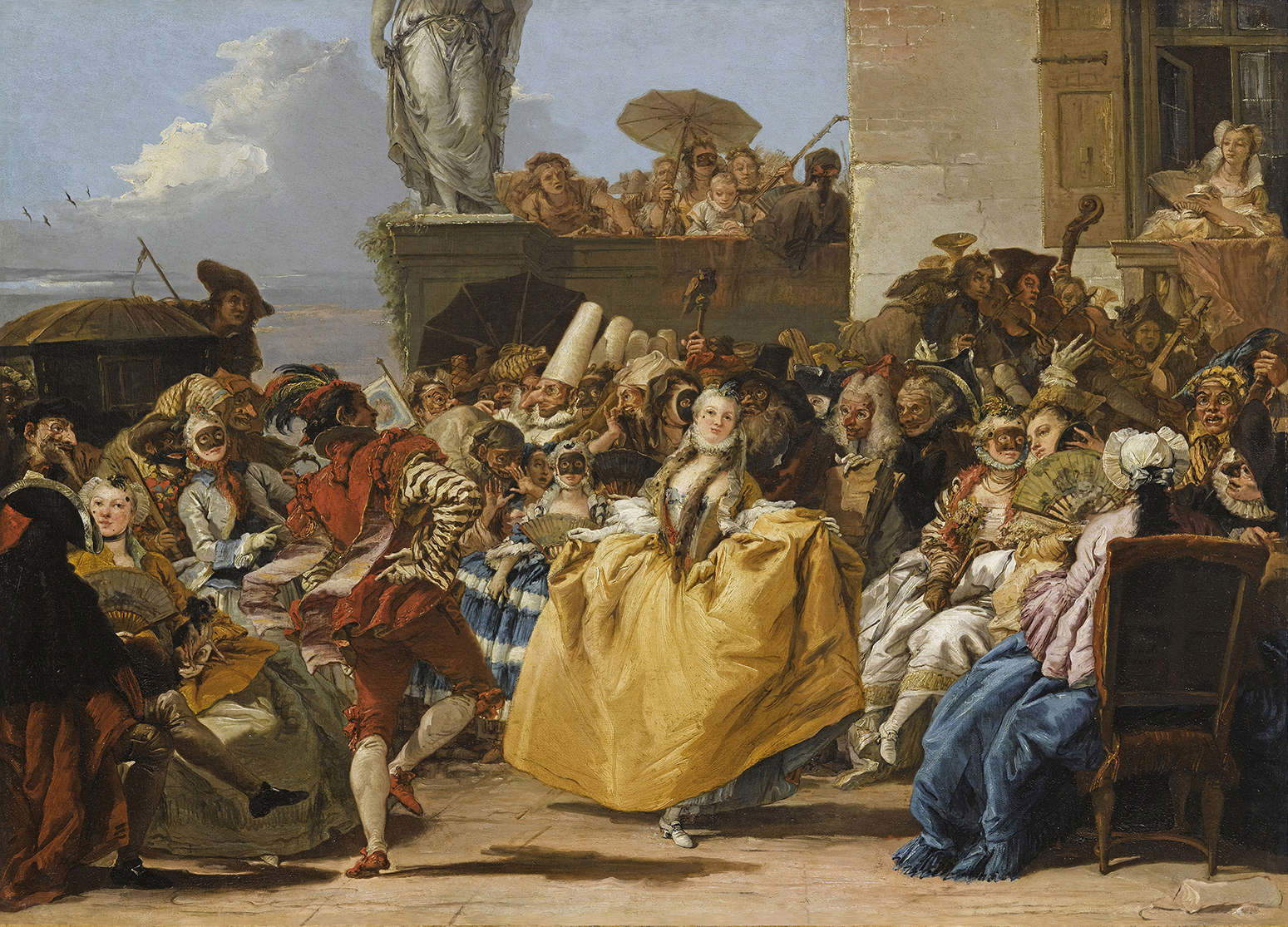
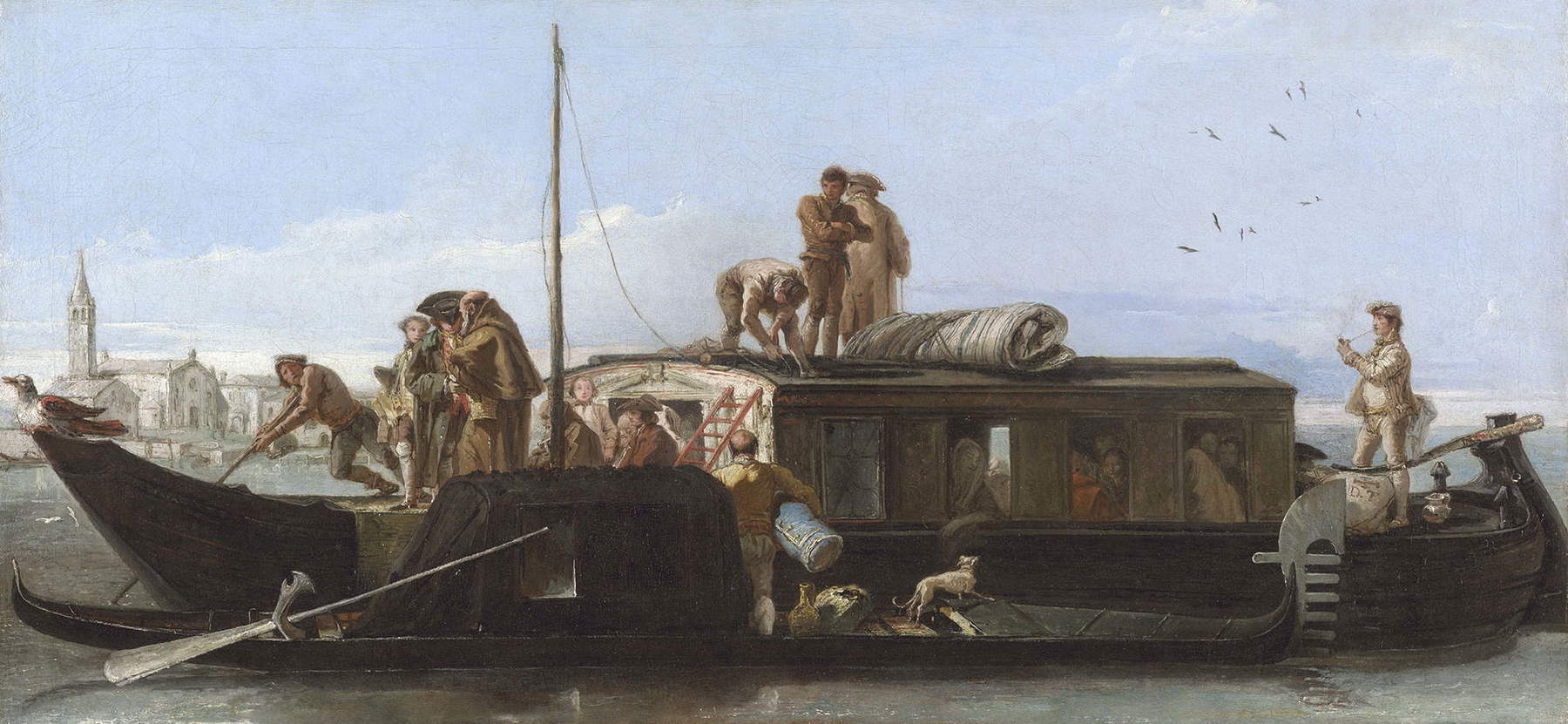
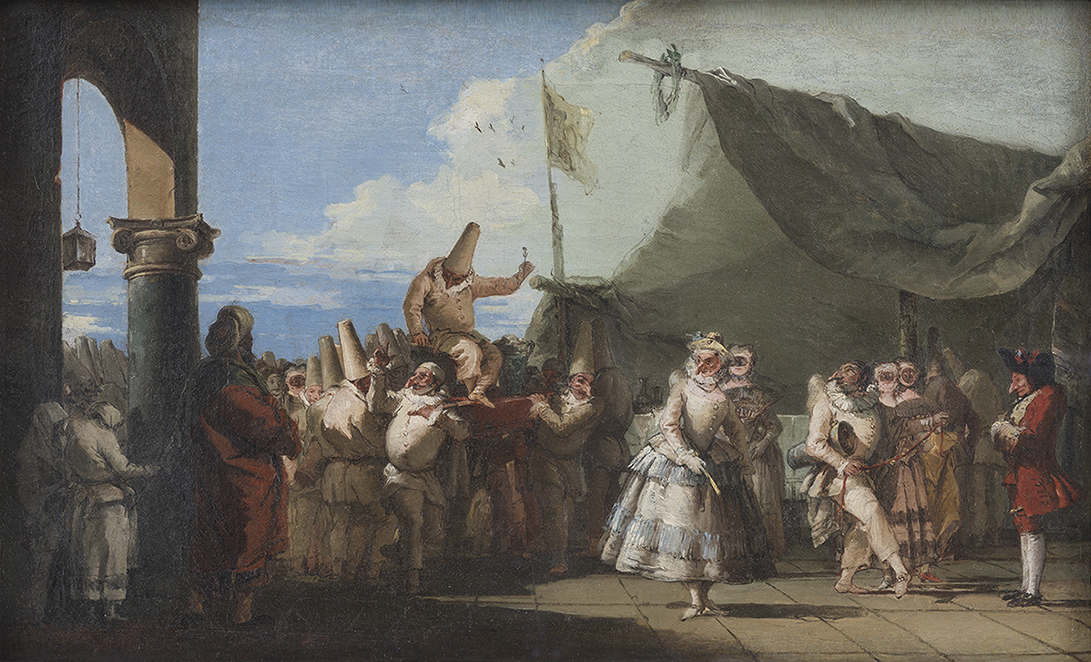
The finale of the exhibition is devoted to genre paintings and to a character from the Commedia dell’Arte whom Giandomenico Tiepolo chose as a favored subject during his final years of work: Pulcinella. Thus, works on various themes are brought together, ranging from*The Gypsy Camp* (1750–53, i.e., from his years in Würzburg) to *The Tooth Puller* (Francesco Algarotti, the work’s first owner, described it as “A dance party with an abundance of bizarre masks”) and *The Minuet*, dated a few years later. Critics link these scenes to contemporary theatrical works, particularly those by Carlo Goldoni, which offered an almost “anthropological” portrayal of the city during Carnival. Also on display is *Il burchiello* (1765–70), a snapshot of Venetian daily life at the time that is closer in style to the veduta genre of Canaletto and Guardi. Pulcinella already appears in some of Giandomenico’s works; this figure, moreover, frequently appears in Tiepolo the Elder’s formidable life drawings and caricatures of Venice’s most eccentric figures (an evocative drawing by him is included in the exhibition). His son, however, went far beyond a mere interest in “macchiette”: in the frescoes of the family villa in Zianigo, between 1793 and 1797, he dedicated an entire room to the Neapolitan mask. Those wall paintings, now detached, are preserved today at the Museum of the Venetian Eighteenth Century at Ca’ Rezzonico, from which they could not be moved; however, in the Vicenza exhibition, two multimedia installations clearly illustrate both the story of their rescue and the original iconography featuring Pulcinella. Furthermore, toward the end of the century, the artist created an entire album of 104 drawings titled *Divertimento per li regazzi*, in which he narrated the adventures of Pulcinella through images. Critics and philosophers (notably Giorgio Agamben’s analysis) have puzzled over—and continue to puzzle over—why Giandomenico Tiepolo focused his final creative efforts specifically on Pulcinella. Some link this choice to the political landscape of the Serenissima, given that in 1797 Napoleon’s advance brought about the fall of the glorious Republic of Venice; some believe the artist was drawn to the mask’s sarcastic spirit, while others maintain that Pulcinella represented, for Tiepolo, a mirror of human life. What is certain is that this figure dressed in white, with a ruff, the mask’s large nose, and a tall truncated-cone-shaped headdress, is quite “photogenic,” and so it cannot be ruled out that the elderly Giandomenico, after spending a lifetime in his father’s shadow, had finally decided to have some fun—or who knows, perhaps to entertain his grandchildren (we’re joking, of course, but in the absence of irrefutable evidence, we believe the possibility of a “lectio facilior” should never be overlooked).
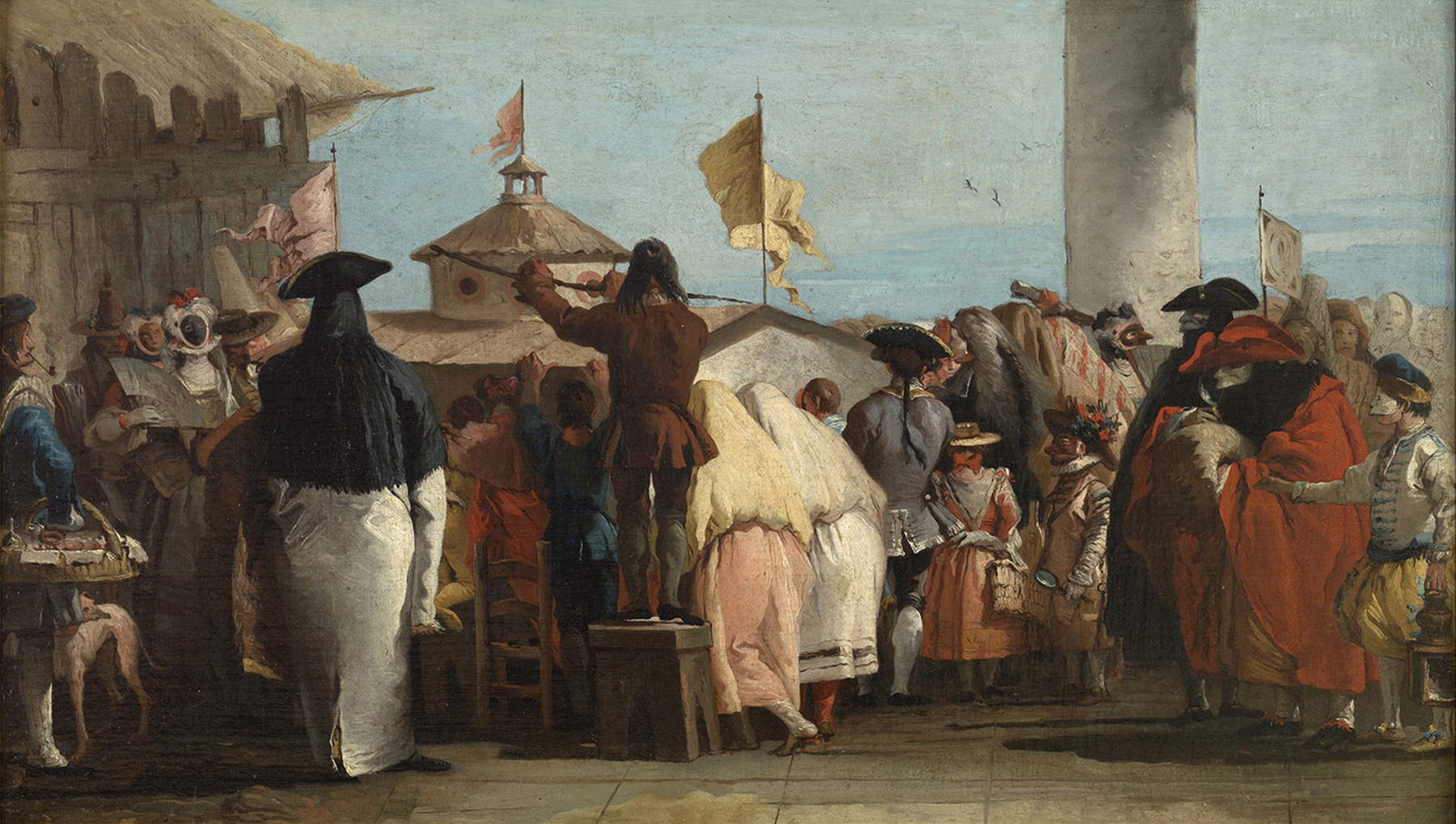
There remains one final work to discuss to conclude this “exhibition tour”: *Il mondo nuovo* (The New World), a miniature version of the frescoes painted by Giandomenico Tiepolo in 1757 in the guest quarters of Villa Valmarana ai Nani in Vicenza and in his residence in Zianigo. At the center of the scene, surrounded by a multitude of figures—as always, shown from behind or with their faces masked—stands an optical entertainment device that was very popular in the 18th and 19th centuries: a hole cut into the front of a large wooden box (which in the painting takes the form of a small building) Through this hole, one could observe a succession of prints—sometimes colored and depicting cityscapes, exotic landscapes, or historical scenes—combined with various light effects created by opening hatches or candles: at the time, it was an irresistible form of entertainment. And for a keen observer of his times like Giandomenico Tiepolo, the crowd of onlookers gathered in front of the device became a precious opportunity to observe with curiosity the customs, traditions, attitudes, and quirks of the Venetians. A portable pantoscope, also known asthe “mondo novo”(a reference to the Americas and as-yet-unexplored territories), is on public display at the Gallerie d’Italia, courtesy of a loan from the Museo del Precinema in Padua, and we’d like to take this opportunity to warmly recommend a visit to that place, as small as it is magical.
Once outside Palazzo Leoni Montanari, visitors can embark on a sort of “treasure hunt” to discover Giandomenico Tiepolo’s other works throughout the city. To make the visit easier, a “Tiepolo Card” has been created; thanks to special agreements, it directs visitors to the Civic Museum at Palazzo Chiericati, the Palladio Museum, and—just outside the city—Villa Valmarana ai Nani. At the city museum, visitors can see Giandomenico Tiepolo’s *Aeneas, Anchises, and Ascanius* (the *Head of a Merchant* and *The Beheading of John the Baptist* are included in the exhibition itinerary), as well as several works by Giambattista and other 18th-century masters. At the Palladio Museum, the permanent collections include seven frescoes removed from Palazzo Valmarana Franco in 1945 to protect them from the bombings that were then ravaging Vicenza; these frescoes are linked to those at Villa Valmarana ai Nani. The latter, in fact, were commissioned from the two Tiepolos in 1757 by Giustino Valmarana: Giambattista worked on the villa itself, painting mythological scenes and others inspired by the most famous poems of all time,from the *Iliad* tothe *Aeneid*,from *Orlando Furioso* to *Jerusalem Delivered*. Giandomenico, on the other hand, was entrusted with decorating the guest quarters: the artist adopted a very different style, focusing on scenes of bourgeois, rural, and contemporary life, with touches of exoticism that reach their peak in the Sala delle Cineserie. In 1773, Gaetano Valmarana, Giustino’s son, asked Giandomenico to work on his city palace: on that occasion, the painter abandoned the “lighthearted” style of the countryside and the common people, revisiting with a courtly language the classical-style scene of the Teatro Olimpico designed by Andrea Palladio in 1580. He also revisited one of its central motifs, namely Hercules: several frescoes are dedicated to the demigod, flanked by figures of Jupiter, Deianira, and several satyrs. In 2017, the exhibition *Tiepolo Segreto* (The Secret Tiepolo), curated by Guido Beltramini and Fabrizio Magani, was dedicated to these works—which had been returned to state ownership—at the Palladio Museum itself.
Finally, it is worth noting additional works by Tiepolo’s workshop scattered throughout the city of Vicenza and its surroundings: still in situ are the works created for the Church of Santo Stefano in Vicenza (1758–1760), for Villa Loschi in Monteviale (1734), for Villa Cordellina in Montecchio Maggiore (1743–1744), and for the churches of Santa Maria Maddalena in Rampazzo di Camisano Vicentino (1756) and Noventa Vicentina (1758). Other works, however, have found their way into major Italian and international museums: the paintings from Palazzo Valle Marchesini (1745–1760) are now at the Metropolitan Museum of Art in New York; those from Palazzo Dalla Vecchia (1750) are divided between Palazzo Isimbardi in Milan and the Cini Foundation in Venice; the frescoes from Palazzo Porto (1760–1761) are now at the Seattle Art Museum, while the main ceiling of Palazzo Valmarana in Trento, with its decorations from 1757, was unfortunately destroyed by bombs dropped by the Anglo-Americans on Vicenza during World War II.
Warning: the translation into English of the original Italian article was created using automatic tools. We undertake to review all articles, but we do not guarantee the total absence of inaccuracies in the translation due to the program. You can find the original by clicking on the ITA button. If you find any mistake,please contact us.