




by Redazione 26/11/2026



Categories: Exhibitions / Disclaimer
The year dedicated to Genoa and Urban Transformations concludes with an exhibition spread across six venues—from the Galata to Palazzo Rosso and Palazzo Bianco—and with the reopening of the Villa Croce Museum after three years of renovations. The exhibition explores the port, the streets, the museums, and fashion from the 19th century to the present.


In 1926, with the annexation of nineteen neighboring municipalities, “Greater Genoa” was born. One hundred years later, that date serves as the starting point for the exhibition marking the reopening of the Villa Croce Museum of Contemporary Art to the public after three years of renovations. “A Century of ‘Greater Genoa’: A Story in the Making,” running from November 27, 2026, to April 4, 2027, brings together over four hundred original drawings, paintings, models, photographs, archival footage, and interviews—most of which have never been exhibited before. It chronicles a century of urban and social transformations and juxtaposes the built city with the one “designed and imagined”: projects and plans that were never realized but are useful for understanding how Genoa has conceived of itself over the past century.


It is one of six sections of the large-scale, citywide exhibition *Urban Transformations*, with which the City of Genoa concludes the year dedicated to Genoa and Urban Transformations. The project was conceived to mark the 20th anniversary of the inscription of the *Strade Nuove* and the *Sistema dei Palazzi dei Rolli* on the UNESCO World Heritage List. Through the spring, museums, archives, and libraries will each offer their own perspective on how the city has changed from the 19th to the 20th century and up to the present day: the port, the streets, the museums, fashion, and neighborhood life. Photographs, architectural plans, historical documents, clothing, works of art, and everyday artifacts will illustrate how the city’s physical transformations have shaped the identity of its residents.


“Genoa is a city that has continually reinvented itself: from its opening up to the port to the creation of Greater Genoa, right up to the postwar revolutions in museum curation,” explains Giacomo Montanari, the city councilor for culture. According to Montanari, the 20th anniversary of UNESCO status and the 100th anniversary of “Grande Genova” should not be viewed as a mere celebration of the past, but as “a living framework for understanding who we are today.” Connecting neighborhood museums, archives, and libraries, he adds, means offering citizens and visitors “a collective and accessible narrative capable of bringing together the grand history of architecture and people’s everyday memories.”


The exhibition at Villa Croce, curated by Francesco Saverio Fera, Matteo Fochessati, Simona Gabrielli, Antonio Lavarello, Andrea Michelini, and Gian Luca Porcile —in collaboration with the Foundation of the Order of Architects and the Labò Foundation—brings together materials from major archives and public and private collections, both in Genoa and nationwide. The exhibition traces the transformations of the urban landscape in relation to the historical, political, and economic events that shaped them, as well as the ongoing dialogue between the visions of designers and the demands of society. Many of these materials were originally created as simple technical design tools, and today, according to the curators, they offer a new perspective on how the identity of a contemporary city is constructed.
The venue itself is also noteworthy: after three years of renovations funded by PNRR grants, Villa Croce reopens fully renovated and accessible on all floors. Great attention has been paid to the removal of architectural barriers and to inclusivity, with new pathways and tactile maps in Braille for blind and visually impaired visitors. Montanari emphasizes one point: managing civic museums must be a long-term commitment—“not the fleeting fireworks of a one-off inauguration with no follow-through, but the determination to lay the groundwork for a return of museum hubs to the center of citizens’ lives and the city itself.”
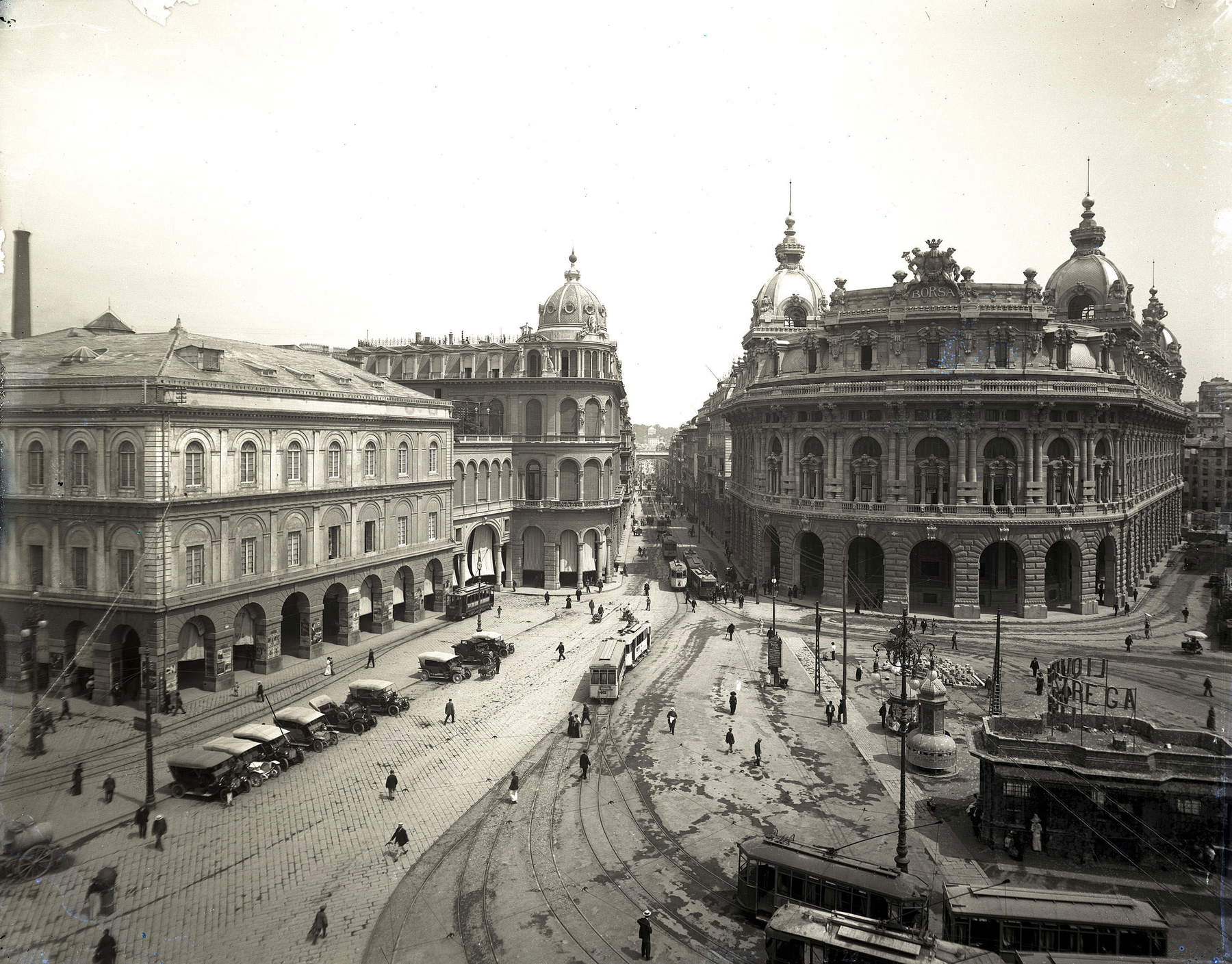
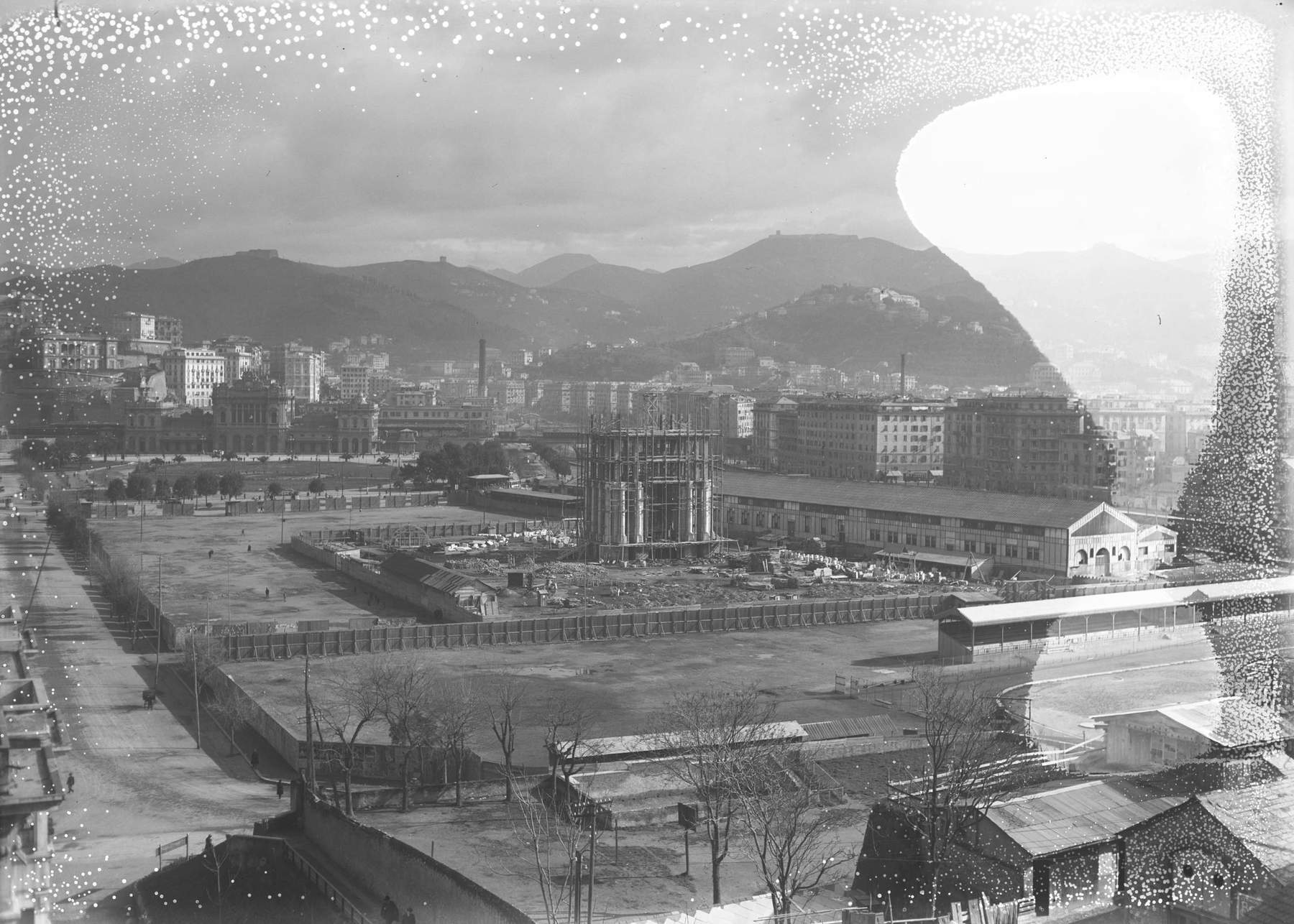
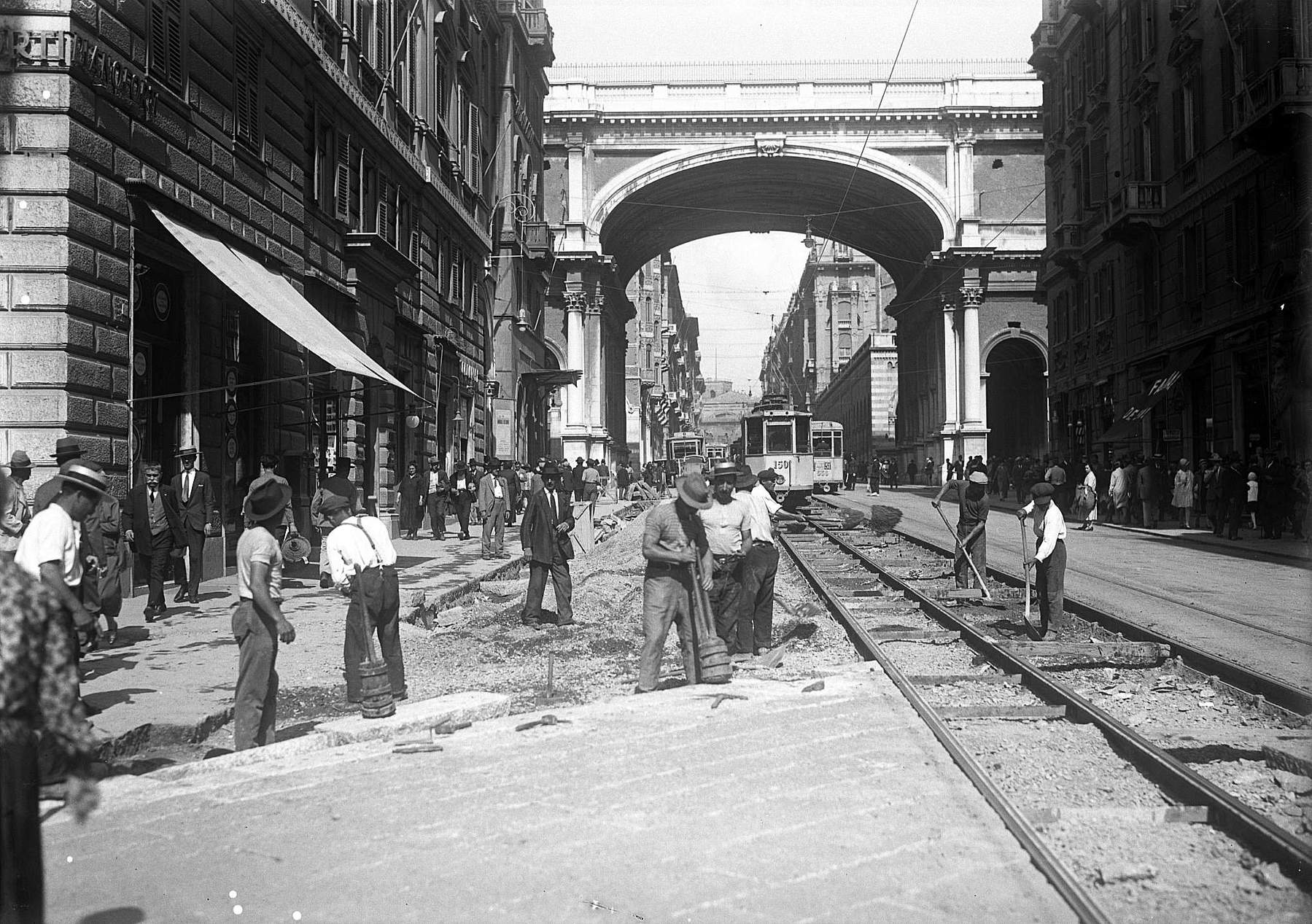
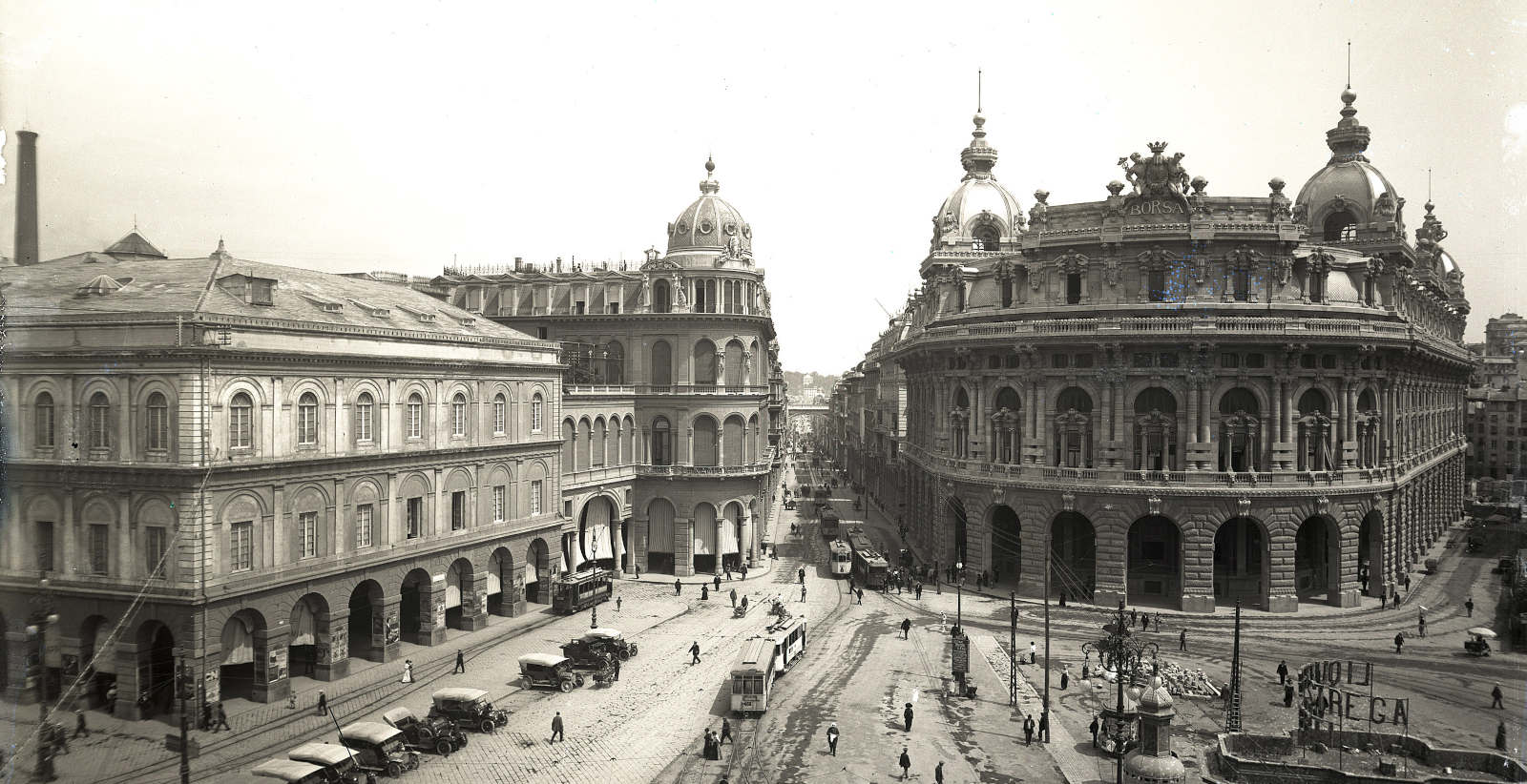
While the exhibition at Villa Croce looks back at the last century, the one at the DocSAI Center in Palazzo Rosso, Genoa, shifts focus. “Toward a Modern City: 1820–1935,” running from December 18 to April 4, chronicles the preceding period—the time when the city took on its modern form. Curated by Marta Focacci, Agnese Schena, Lorella Serranò, and Lorenzo Vivarelli, the exhibition features documents, maps, views, photographs, and volumes from Genoa’s Documentation Center for History, Art, and Image. It begins with the city as envisioned in the early 19th century, with its expansion and the creation of a new monumental center. It moves from views of the San Domenico convent to the square dedicated to Raffaele De Ferrari, from the 17th-century Via Giulia to the creation of Via XX Settembre, and from Acquasola to Piazza Corvetto. Finally, it arrives at the major projects of the 20th century: the covering of the Bisagno stream, the creation of Corso Italia, Piazza della Vittoria, and Piazza Dante. The exhibition does not shy away from the cost of this modernity. Demolitions, earthworks, and profound changes to the urban and hilly landscape have caused entire neighborhoods, important medieval buildings, and works of inestimable value to disappear. An interactive, multimedia installation allows visitors to experience these changes firsthand.
One of the symbols of that era has an exhibition all to itself. The Monumental Bridge, recently restored by the City, is the focus of *Ponte Monumentale: A Monument to Modernity in Late-19th-Century Genoa*, on view atthe City’s Historical Archives in Palazzo Ducale from December 16 to April 4. Designed by engineer Cesare Gamba and architect Riccardo Haupt, the bridge was the crowning achievement of the major urban planning project that led to the creation of Via XX Settembre and Piazza De Ferrari, opening the city toward the east. The exhibition, curated by architects Claudio Montagni and Elena Leoncini, features original documents, Haupt’s plaster model, and drawings that reveal the “belly” of the bridge—a hidden world visible only by walking through its interior. It also explores the techniques and materials of the era, such as Botticino marble. On the mezzanine level of the Archive, a video presentation with a narrator’s voice recounts the private lives of the two designers.
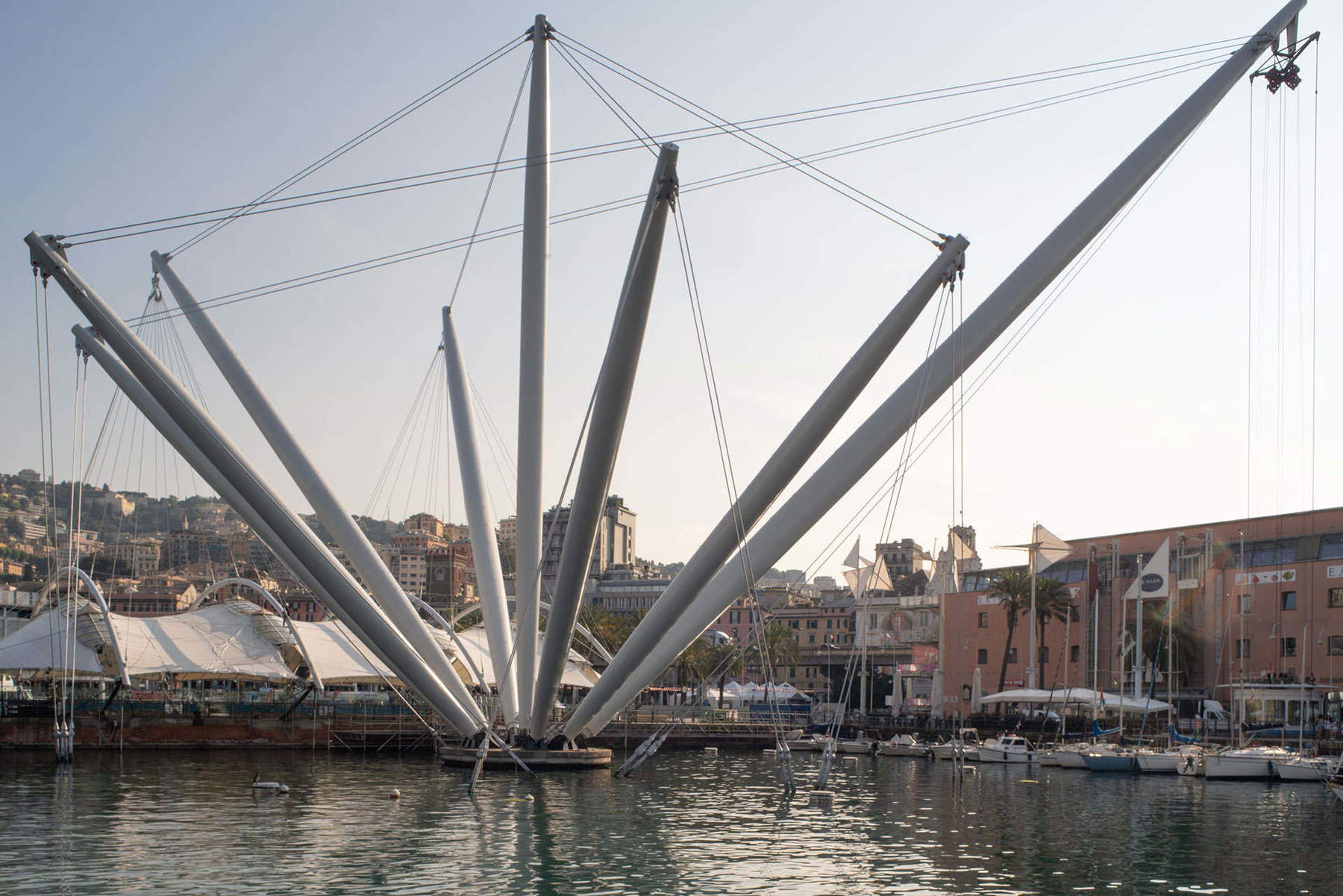
The focus then shifts to the sea. At the Galata Museo del Mare, in the Project Room, from November 26 to April 4, “Genoa, the City and the Port,” curated by architecture critic and photographer Emanuele Piccardo, begins with a simple fact: for centuries, the city and the port have formed a single system, and even today, Genoa’s economy cannot do without the port. The exhibition traces the projects that, from 1981 to the present, have reshaped the relationship between the city and its waterfront. It begins with the first major redevelopment projects: the Pré neighborhood and the Darsena, entrusted to Giancarlo De Carlo, and the pier designed by Renzo Piano. These are followed by the 1992 Colombian Exposition and the restoration of the Porto Antico. Then come Rem Koolhaas’s studies for the 1997 Port Master Plan and the competition for Ponte Parodi, won by the Dutch firm UNStudio with a project that was never realized. Finally, the exhibition covers the most recent transformations, up to the Levante Waterfront.
Alongside the projects are photographic studies by Marco Introini, Emanuele Piccardo, and Pietro Luigi Piccardo on the relationship between the city and the port. The exhibition hall also features two documentaries from the Ansaldo Foundation: *Sopraelevata, una strada d’acciaio* by Valentino Orsini and *Genoa, Portrait of a City* by Giuliano Montaldo. The exhibition is rounded out by a selection of podcasts dedicated to some of the writings that have best captured the bond between Genoa and its port.
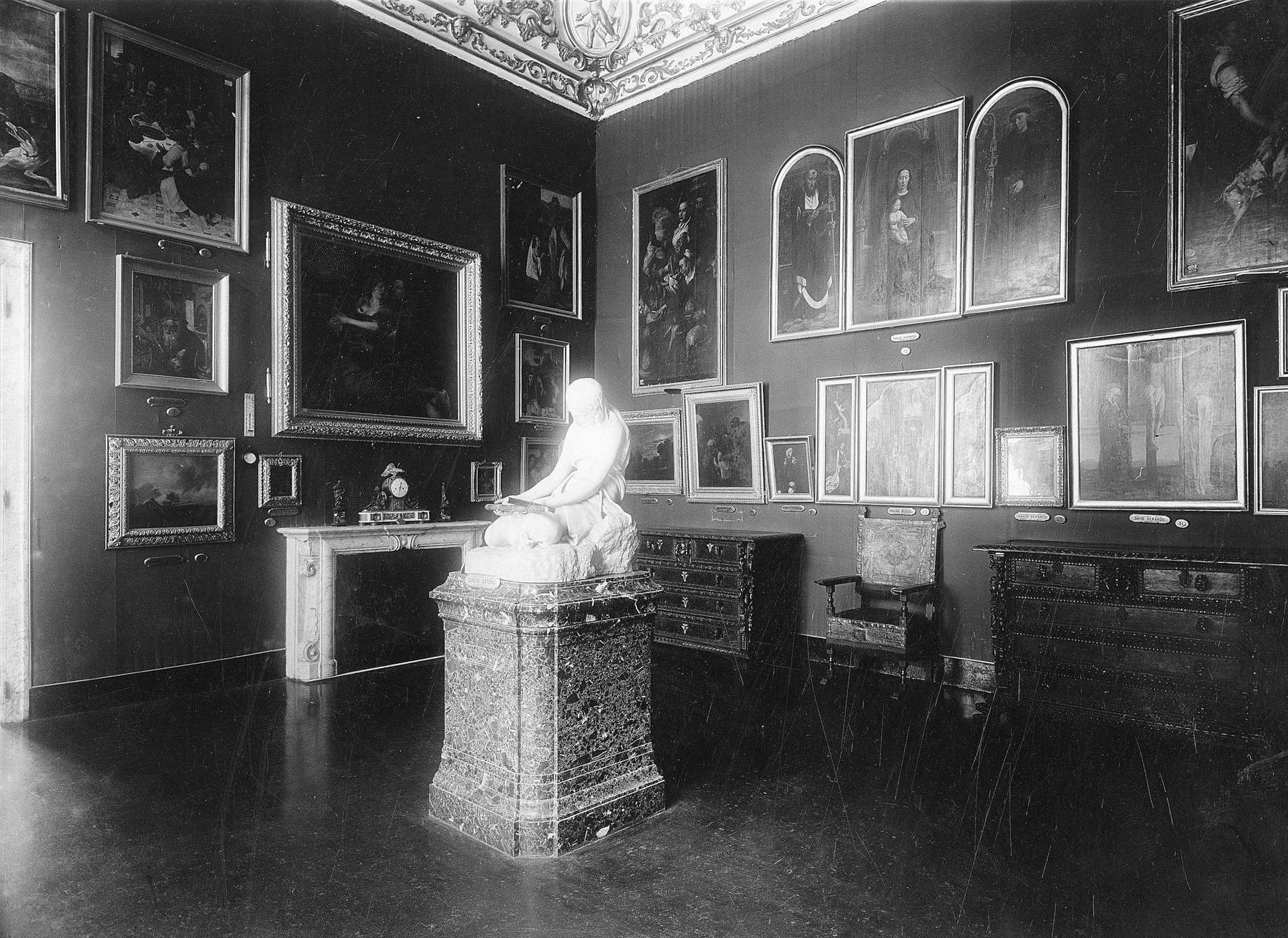
One section of the traveling exhibition focuses on the history of the museums themselves. *Museums in Black and White 1892–1970. A Century of Museum Exhibitions in Genoa: Shifting Tastes and Museum Concepts, on view at Palazzo Rosso and Palazzo Bianco from December 18 to May 16, is curated by Raffaella Besta and Margherita Priarone in collaboration with DocSAI. It is dedicated to Caterina Marcenaro on the fiftieth anniversary of her death. The story begins in the late 19th century, when the city’s ancient aristocratic collections and ecclesiastical assets became public property, leading to the founding of the first Museo Patrio. It was Palazzo Bianco, inaugurated in 1892—the year of the Columbus celebrations—with a major exhibition of ancient art. It joined Palazzo Rosso, already open to the public, which the Duchess of Galliera—the last heir of the Brignole-Sale family—had donated to the city in 1874.
Through photographs from the Civic Photographic Archive, the exhibition tells the story of how these two residences became museums. The changes that took place throughout the first half of the 20th century profoundly altered their appearance, leading up to the postwar renovations. It was then that Caterina Marcenaro and architect Franco Albini brought Genoa’s museums to international attention with ultra-modern and groundbreaking exhibitions, which have made them models of modern Italian museography. The project aims to pay tribute to the modernity and foresight with which Marcenaro reimagined the city’s institutions using a new visual language.
The final section tells the story of the city through clothing. The Civic Textile Collections of the Strada Nuova Museums are best known for their 18th- and 19th-century fabrics and garments. However, they also house clothing and accessories from the 1950s, 1960s, and 1970s, acquired through purchases and donations and never before shown to the public. “Dressing Genoa, 1950–1970: Fashion, Society, and the City,” on view at Palazzo Bianco from December 18 to June 27, displays these items for the first time, alongside photographs, documents, design objects, magazines, and vintage footage on loan from other institutions and private collectors. The exhibition is curated by Andrea De Pascale, curator of the textile collections, and Gabriella Campanella, technical assistant for the collections.
These were pivotal decades for fashion. In the 1960s, new synthetic fibers such as polyester, acrylic, nylon, and rayon entered the market. Between haute couture and retail clothing, prêt-à-porter gained ground, quickly winning over young people and families. These were also the years of student protests, women’s liberation movements, pacifism, and the desire for greater freedom. Fashion embraced this spirit and became “democratic” in both style and consumption. The 1970s continued along this path, marked by eclecticism, excess, and freedom, with new elements of rebellion. These were the same decades in which Genoa underwent profound urban and social transformations, and the exhibition aims to recount some of these moments through clothing and accessories.
The program also extends beyond museums into the neighborhoods, through public libraries and with the support of Iren, the City’s institutional sponsor. The “Three Centuries of the City” series builds on the legacy of “Three Centuries of the Nineteenth Century” and pairs, in each installment, a city, a literary work, and an artistic language (theater, music, hip-hop, folk traditions), taking the audience from the city center to the outskirts and on to the province. There are three events, each introduced by Alessandro Ferraro. The first took place on November 23 at the Teatro della Tosse and was dedicated to *Cuore* by Edmondo De Amicis. This will be followed on December 3 at the Ex Manifattura Tabacchi, featuring *Ragazzi di vita* by Pier Paolo Pasolini, and on December 11 at the Teatro della Gioventù, featuring *Christ Stopped at Eboli* by Carlo Levi. Guests include Margherita Oggero, Veronica Pivetti, Aurelio Picca, Donatella Alfonso, and Nicola Lagioia.
The Quartieri Narranti project, on the other hand, spans the city from west to east, passing through the city center and the valleys, with photography exhibitions, talks, urban walks, and workshops for children and teens. It involves the Berio, De Amicis, Brocchi, Benzi, Guerrazzi, Gallino, Saffi, Lercari, Cervetto, and Bruschi-Sartori libraries, and will culminate on December 3 in a collective event at the municipal libraries, featuring public educators, scholars, and musicians.
The citywide exhibition is supported by the Compagnia di San Paolo Foundation, Iren, Coop, and Cresta, with an Art Bonus contribution from SAAR Depositi Portuali, in collaboration with the Foundation of the Order of Architects of Genoa (FOAGE) and the Labò Foundation. “Genoa is a city that has been able to transform itself over time while maintaining a deep connection to its history and heritage,” says Nicoletta Viziano of the Management Committee of the Fondazione Compagnia di San Paolo. “This project offers an opportunity to reinterpret this journey, while also highlighting the role of museums as vibrant spaces, open to the city and capable of engaging with new audiences.” The complete program of exhibitions and events is available on the website visitgenoa.it.
 |
| 100 Years of Greater Genoa: Six Exhibitions Show How the City Has Changed, and Villa Croce Reopens |
Warning: the translation into English of the original Italian article was created using automatic tools. We undertake to review all articles, but we do not guarantee the total absence of inaccuracies in the translation due to the program. You can find the original by clicking on the ITA button. If you find any mistake,please contact us.